Tag: BBC Trust

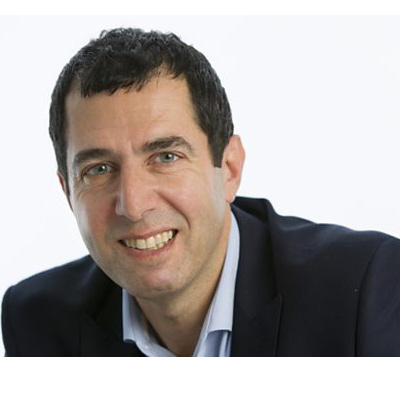
  • Jon Zeff quits as BBC Trust director after a nine-month stint

    Jon Zeff quits as BBC Trust director after a nine-month stint

    NEW DELHI: Jon Zeff is quitting his post as director of the BBC Trust just nine months after taking over, to “pursue other opportunities.”


    Zeff was presently earning around ?180,000 (€250,000) a year.


    A previous veteran official with the Department of Culture, Media and Sport, Zeff will be replaced by the Trust’s deputy director Alex Towers.


    Zeff played a key role advising the Trust’s new chairperson Rona Fairhead, who has been embroiled in controversy over her ?10,000 a day consulting with HSBC bank. She eventually gave up her banking role.


    The Trust is likely to be dismantled by whoever wins the general election following a string of scandals at the corporation; with Fairhead conceding last month that reform was inevitable.

  • Tina Stowell is BBC head of corporate affairs

    Tina Stowell is BBC head of corporate affairs

    MUMBAI: BBC has appointed Tina Stowell, currently Head of Communications for the BBC Trust, as head of its corporate affairs.

    In her new role, Stowell will be responsible for the implementation of an integrated corporate affairs, events and publishing strategy for the BBC.

    She will work closely with the executive team and report directly to Ed Williams, Director of Communications.

    She will take up the post in the New Year. Williams said: “Tina’s experience both at the BBC Trust and in Government makes her the ideal person to develop and lead our corporate communications strategy. She will bring a huge range of knowledge and experience to the role and I look forward to working closely with her. Tina takes over from Janie Ironside-Wood and I’m deeply grateful to Janie for stepping forward to cover this role, and for all she’s done in the last few months in corporate affairs.”

    Stowell said, “It has been a great privilege to work directly for three successive BBC Chairmen and to be part of the team which has established the BBC Trust and the new governance arrangements which are strengthening the BBC’s accountability. I am very excited to be joining the corporate communications team and I look forward to building strong links with a wide range of people and organisations to listen, learn and promote awareness and understanding of the positive changes being made at the BBC.”

  • BBC Trust begins public value test into local video proposal

    BBC Trust begins public value test into local video proposal

    MUMBAI: The BBC Trust has started its public value test (PVT) of UK pubcaster the BBC’s local video proposal. The Trust has published BBC management’s application as well as supporting documents, a service description and a full timetable for the PVT.

    BBC Trustee and Chair of the Trust’s Public Value and Fair Trading Committee Diane Coyle says, “Last year the Trust challenged BBC management to respond to licence fee payers wanting better local services. We wanted a proposal that would deliver public value with minimum adverse impact on local newspapers and other commercial media services.

    “We have now received the management’s application and are publishing their plans today. BBC management’s proposal for a local video broadband offer to complement existing BBC Local websites supersedes previous plans for a local television service. BBC management believes the proposition will help the BBC meet its public purposes and close the gap between the importance that audiences attach to the BBC’s local role and their view of current performance.

    “The Trust is inviting all interested parties to participate in our consultation on BBC management’s proposals. We want to receive all comments – positive and negative – from the public and the industry before we consider the application in detail. This input from people outside the BBC will be essential to the Trust reaching a decision in the interest of licence fee payers. Once we reach our initial conclusions, the Trust will consult again.”

    The new Charter, which came into effect in January 2007, transferred to the Trust responsibilities previously held by the Secretary of State for deciding major service-related investment proposals. The Trust must carry out a transparent and systematic process of scrutiny and evaluation before reaching its final decision.

    The public value test has three main parts:

    Public value assessment (PVA) by the Trust Unit
    Market impact assessment (MIA) by Ofcom
    The Trust’s decision

    The process includes two periods of public consultation. The first four-week consultation period allows contributions from interested parties about any relevant issue. A further period of consultation takes place after the Trust publishes its provisional conclusions. The Trust is scheduled to reach its provisional conclusion in November 2008 and its final decision in February 2009. Both will be published. This PVT is expected to complete within eight months, rather than the usual six, owing to the time needed to complete the more complex market impact assessment for this service.

    Ofcom is beginning its four-week consultation prior to conducting its market impact assessment of BBC management’s proposals.

  • BBC Trust announces public value test into local video proposal

    BBC Trust announces public value test into local video proposal

    MUMBAI: The BBC Trust’s Public Value and Fair Trading Committee has decided to apply a public value test (PVT) to UK pubcaster the BBC’s local video proposal.

    The PVT will begin on 24 June 2008. Documentation – including the BBC Executive’s application document and a timetable for the process – will be published at that time. The date marks the start of a four-week consultation period for both the public value assessment by the Trust and the market impact assessment by Ofcom.

    The Trust expects to publish its final decision by 25 February 2009. The BBC Trust’s public value test has three components. The first is a public value assessment, carried out by the Trust. The second is a market impact assessment, carried out by Ofcom to terms agreed jointly by the Trust and Ofcom. These run concurrently. The third is the Trust’s consideration of both assessments: the public value test, resulting in the Trust’s provisional conclusions which it publishes for consultation before reaching its final decision.

  • BBC Trust completes review of site bbc.co.uk

    BBC Trust completes review of site bbc.co.uk

    MUMBAI: UK pubcaster the BBC has announced that the BBC Trust has completed its review of the online service bbc.co.uk. This is the first service review undertaken by the Trust as part of its ongoing programme of reviews of all BBC services under the terms of the new Charter and Agreement.

    The Trust’s main conclusions are:

    – bbc.co.uk is an excellent service that is highly valued by users and makes a strong contribution to delivering the BBC’s public purposes

    – As bbc.co.uk develops and responds to the fast-changing online market and the demands of users, it is essential that the service remains distinctive and the boundaries in which it operates are strong enough to make this a reality. We are restructuring the Service Licence and distinctiveness criteria will be applied to all parts of bbc.co.uk

    – bbc.co.uk should continue to develop to meet changing customer needs, but the Trust will not approve new investments without further scrutiny and until confident that improved management controls are in place to ensure better financial accountability and editorial and managerial oversight.

    BBC Trust chairman Sir Michael Lyons said, “In the past, these extensive reviews of BBC services were a job for the Secretary of State. Our review of bbc.co.uk is the first of its kind under the new Charter arrangements and a clear example of how robust scrutiny by the BBC’s governing body works for the benefit of those who pay for and own the BBC.”

    BBC Trustee Dame Patricia Hodgson who led the review for the Trust said, “The purpose of this extensive review is to make sure the public receive the best quality and value for money from bbc.co.uk. It is clear that bbc.co.uk has become a central part of what the BBC offers licence fee payers and the evidence shows that the vast numbers who use it love it.”

    The Trust’s review began on 26 July 2007 with a 12-week public consultation and independent audience research. In 2006/7, the BBC spent 3 per cent of the licence fee on bbc.co.uk compared to 70 per cent on television channels and 17 per cent on its radio services; yet it is now the BBC’s fourth most widely used service.

    The Trust’s review also sought to establish the service’s performance within the context of the wider market and considered bbc.co.uk’s performance against the terms of its Service Licence. The Trust’s work revealed that in 2007/8 the actual spend on bbc.co.uk was £110m, 48 per cent higher than the Service Licence baseline budget. Most of this increase was not overspend, but the misallocation of £24.9m in overheads and costs to other budgets within the BBC, representing poor financial accountability. The Trust has concluded that tighter management controls are necessary for bbc.co.uk and has requested these be implemented to the Trust’s satisfaction before it will consider approval of the additional investment for the service as proposed by BBC management.

    The Trust approved the BBC’s high-level six-year creative future strategy in October 2007 which signalled a significant increase to bbc.co.uk of licence fee investment. BBC management has proposed to front-load £39m of this investment in 2008/09. The Trust will not approve this investment without greater scrutiny and in doing so will take account of public value, distinctiveness and competitive impact. The BBC’s proposals for local video and a new skills-based formal learning proposition will be subject to full Public Value Tests.

    Looking to the future Hodgson says, “The Trust endorses the management’s plans to develop the service further – particularly on areas like search and navigation, which audiences tell us could be improved. But we need to be sure that additional investment of licence fee payers’ money will deliver their expectations and – in doing so – does not stifle enterprise from others who seek to offer excellent online services to the public. For the benefit of those who pay, the Trust wants evidence of stronger management controls to improve financial accountability and strategic and editorial oversight before we consider new investment in the service. We hope to receive this soon so that audiences can enjoy an even more distinctive and improved bbc.co.uk.”

  • BBC Trust publishes new promise to audiences

    MUMBAI: The BBC Trust has published its new Promise to UK Audiences, making clear how it will engage with the public to hear their views, understand their expectations, and inform them of decisions taken on their behalf.

    The Trust’s Promise to Audiences is a formal requirement of the Royal Charter and has been drawn up in consultation with the public, who were asked how and when they’d like to hear from the Trust and what information is of most interest to them.

    In addition to an open consultation – online and via a questionnaire distributed to all UK public libraries – the Trust met a range of representative bodies and carried out research amongst the public at large to develop a set of principles to underpin its engagement.

    While evidence shows that very few people want to be personally involved in giving their views about Trust activities, there is strong support for the principle of public involvement, with 73 per cent agreeing the public should have a say in the running of the BBC and 95 per cent wanting the Trust to report back on its activities. Trust decisions about value for money, and particularly those linked to new BBC services and significant changes to existing services were seen as the most important for public consultation and reporting.

    The consultation and research also demonstrated the Trust needs to work harder in raising awareness of its work, when it is consulting and, crucially, the impact the public makes on the Trust’s final decisions.

    BBC Trust Chairman Sir Michael Lyons said, “Even though we’ve made real progress in giving a greater voice to the public and can demonstrate its influence, we know from the public’s feedback that we need to do more. The public want to know when they can get involved, but more importantly, they want to know what action has been taken by the Trust as a result, so they can assess whether it’s worth their time and effort.

    “We will continue to look for ways to reach and involve as many people as possible. For example, we are examining the option of trails on the BBC’s own networks – similar to those about digital switchover – to highlight the opportunity to give us your opinion, or to tell you what’s happened as a result.

    “The Trust will always have to use its judgement not least because our large and complex audience has many different views and preferences – but we will always explain the reasons for the decisions we make and how we used the information provided by the public in reaching our decisions.”

    The BBC Trust says that it needs to understand all of the various groups which make up the audience – 
    as such it has to carry out a wide range of public engagement. We will, however, be clear why it is carrying out this work.

    It has therefore, come up with a number of principles which should underpin any engagement activity.

    It wants to use methods of engagement which:

    1. are ones which the public believes will work and will use.

    2. will provide greater visibility for the work of the BBC Trust and, therefore, 
    encourage the public to participate.

    3. reach out to all members of the public, including those who might feel alienated from the BBC, while being resistant to capture by those with the loudest voices and vested interests.

    4. are practical, convenient and easy for those taking part.

    5. are open and transparent, including reporting the outcomes of our engagement.

     6. do not lose sight of the main aim of the BBC, which is to provide quality programmes and services.