Tag: BBC Radio

  • TV News and Facebook Live

    TV News and Facebook Live

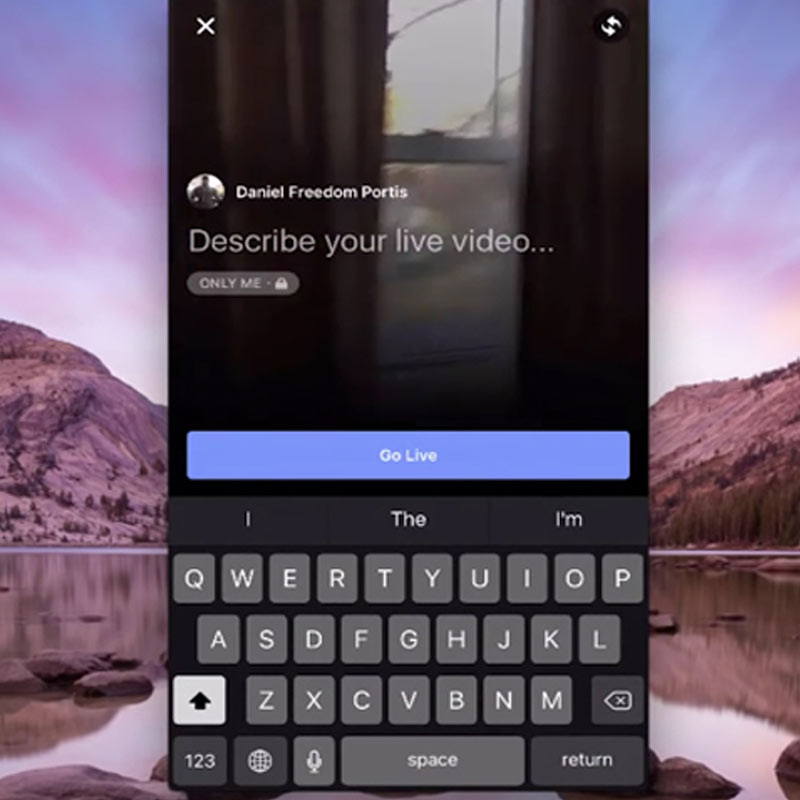
    Television’s last bastion – live news – could be under threat. At least if one goes by the traction that two events got when they were broadcast live on social media last week. These were not shot with fancy news cameras by specialist videographers; they were shot using simple smart phones. The broadcast platform: Facebook, which has more than a billion users world wide and more than 150 million in India.

    The first was when Lavish Reynolds opened up her Facebook Live app and started filming her boyfriend Philando Castile bleeding to death after being shot by the Falcon Heights, Minnesota police in their car at a traffic stop. And she kept continuously reporting from the aftermath of the scene. Apparently, the cops had stopped Castile’s car as it had a broken taillight. And they had asked him to bring out his ID and licence. Castile, Reynolds, states during the broadcast informed the police that he had a licensed firearm, but he was reaching in his pocket for his wallet to bring out his ID. The policeman, despite being informed of this, pumped four bullets into him, Reynolds says.

    That video on Facebook has got more than 5.6 million views at the time of writing.

    And it led to protests and rallies against police violence across the US of A the next day.

    In Dallas, bullets rang out loud and clear during one of the rallies protesting police brutality. Six policemen were shot at by a sniper – Micah Xavier Johnson – from a building. Five of them died. Others were injured. Johnson who holed out against the policeman in a garage was later killed with the help of a robot and an explosive device.

    The action on the streets, with the police scrambling around, was filmed by Michael Kevin Bautista and streamed live on Facebook. The video had been watched 5.6 million times once again at the time of writing. Michael got instant fame, getting onto CNN, BBC Radio, CBS, the Washington Post and TMZ apart from a host of other news outlets.

    While a large chunk of TV viewers in the US have switched to OTT and VOD services, for their entertainment, cutting off their cable TV connections, most of them are still relying on TV channels for news. This is because TV broadcast helps make understanding news developments easier. But the fact is that news and its analysis is dependent on the slant that producers, reporters, owners – some with vested interests – give it.

    Media observers say that the two developments mentioned above could be the fore bearers of the new age of un-curated, raw, reportage of developments – or news – as they happen on the ground during crime scenes, war, accidents, acts of violence or what have you. What would make this kind of reportage interesting is that it would be presented without any bias or agenda.

    Imagine the scenario: lay Facebook users the world over whipping out their phones, filming incidents and reporting on them live. This could run into thousands and even hundreds of thousands. With viewers possibly running into millions as happened in the case of Reynolds and Bautista. The numbers could be higher too. Take Candace Payne who went live on Facebook, filming herself wearing a Chebacca mask and cackling away. The video has until the time of writing grossed 150 million views.

    What could the emergence of tools such as Facebook Live and Twitter’s Periscope mean for Indian news TV? There’s disruption waiting to definitely happen with Indian news channels. Some amount of cynicism has crept in among those in the know about the way news is being presented by a majority of the news outlets. There’s always doubt on top of most viewers minds as most TV news channel promoters either have political or economic linkages or leaning.

    The time could not be very far when Facebook Live could really start kicking in India. India is a mobile first nation with more than 250 million smart phone owners and around the same number surfing the net on their phones. Around 150 million young and old alike are always logged onto their Facebook accounts.

    Give it a thought: if even 10 per cent of them tune into a development shot by a Facebooker and streamed live, the numbers would be more than the viewers than what the top TV news channels attract.

    Clearly this is a phenomenon waiting to happen. Again and again. All it would require is a trigger or triggers. And a million news channels would suddenly pop up on Facebook. Giving out unadulterated, independent updates of developments.

    In such a scenario a few questions need to be answered. Are not the regulations for broadcast news TV pretty rigid? Will the government seek to regulate and monitor the millions of Facebook live streams? Should it do so at all? Television news broadcast has a code of conduct, some of which is being followed. Could a new code of conduct be put in for Facebook Live news bearers? And will it be followed? How will that happen?

    There are many other queries that could need an answer.

    For that it’s over to the ministry of information and broadcasting. And if needed to the Telecom Regulatory of India.

  • TV News and Facebook Live

    TV News and Facebook Live

    Television’s last bastion – live news – could be under threat. At least if one goes by the traction that two events got when they were broadcast live on social media last week. These were not shot with fancy news cameras by specialist videographers; they were shot using simple smart phones. The broadcast platform: Facebook, which has more than a billion users world wide and more than 150 million in India.

    The first was when Lavish Reynolds opened up her Facebook Live app and started filming her boyfriend Philando Castile bleeding to death after being shot by the Falcon Heights, Minnesota police in their car at a traffic stop. And she kept continuously reporting from the aftermath of the scene. Apparently, the cops had stopped Castile’s car as it had a broken taillight. And they had asked him to bring out his ID and licence. Castile, Reynolds, states during the broadcast informed the police that he had a licensed firearm, but he was reaching in his pocket for his wallet to bring out his ID. The policeman, despite being informed of this, pumped four bullets into him, Reynolds says.

    That video on Facebook has got more than 5.6 million views at the time of writing.

    And it led to protests and rallies against police violence across the US of A the next day.

    In Dallas, bullets rang out loud and clear during one of the rallies protesting police brutality. Six policemen were shot at by a sniper – Micah Xavier Johnson – from a building. Five of them died. Others were injured. Johnson who holed out against the policeman in a garage was later killed with the help of a robot and an explosive device.

    The action on the streets, with the police scrambling around, was filmed by Michael Kevin Bautista and streamed live on Facebook. The video had been watched 5.6 million times once again at the time of writing. Michael got instant fame, getting onto CNN, BBC Radio, CBS, the Washington Post and TMZ apart from a host of other news outlets.

    While a large chunk of TV viewers in the US have switched to OTT and VOD services, for their entertainment, cutting off their cable TV connections, most of them are still relying on TV channels for news. This is because TV broadcast helps make understanding news developments easier. But the fact is that news and its analysis is dependent on the slant that producers, reporters, owners – some with vested interests – give it.

    Media observers say that the two developments mentioned above could be the fore bearers of the new age of un-curated, raw, reportage of developments – or news – as they happen on the ground during crime scenes, war, accidents, acts of violence or what have you. What would make this kind of reportage interesting is that it would be presented without any bias or agenda.

    Imagine the scenario: lay Facebook users the world over whipping out their phones, filming incidents and reporting on them live. This could run into thousands and even hundreds of thousands. With viewers possibly running into millions as happened in the case of Reynolds and Bautista. The numbers could be higher too. Take Candace Payne who went live on Facebook, filming herself wearing a Chebacca mask and cackling away. The video has until the time of writing grossed 150 million views.

    What could the emergence of tools such as Facebook Live and Twitter’s Periscope mean for Indian news TV? There’s disruption waiting to definitely happen with Indian news channels. Some amount of cynicism has crept in among those in the know about the way news is being presented by a majority of the news outlets. There’s always doubt on top of most viewers minds as most TV news channel promoters either have political or economic linkages or leaning.

    The time could not be very far when Facebook Live could really start kicking in India. India is a mobile first nation with more than 250 million smart phone owners and around the same number surfing the net on their phones. Around 150 million young and old alike are always logged onto their Facebook accounts.

    Give it a thought: if even 10 per cent of them tune into a development shot by a Facebooker and streamed live, the numbers would be more than the viewers than what the top TV news channels attract.

    Clearly this is a phenomenon waiting to happen. Again and again. All it would require is a trigger or triggers. And a million news channels would suddenly pop up on Facebook. Giving out unadulterated, independent updates of developments.

    In such a scenario a few questions need to be answered. Are not the regulations for broadcast news TV pretty rigid? Will the government seek to regulate and monitor the millions of Facebook live streams? Should it do so at all? Television news broadcast has a code of conduct, some of which is being followed. Could a new code of conduct be put in for Facebook Live news bearers? And will it be followed? How will that happen?

    There are many other queries that could need an answer.

    For that it’s over to the ministry of information and broadcasting. And if needed to the Telecom Regulatory of India.

  • Sur-kshetra:Colors takes DTH roadblock route

    MUMBAI: A roadblock strategy on two DTH platforms, heavy usage of radio and a marketing spend of Rs 60 million. That is how Colors will promote its new singing reality show, ‘Sur-Kshetra‘, which it will simulcast with Sahara One.

    The half-hour block will be on Dish TV and Tata Sky from 6-8 September at 7 pm. Colors is also creating a two-day roadblock on the music streaming website, Gaana.com.

    A singing battle between the Indian and Pakistani singers, the show will be promoted on Yahoo and other social media websites.

    Starting 8 August, ‘Sur-Kshetra‘ will run every Saturday and Sunday at 7.30 pm for 90 minutes.

    Says Colors marketing head Rajesh Iyer, “It is a co-branded show with Sahara One but the marketing effort is done through us. Wherever there is an opportunity to reach out to consumers, we have utilised that. We have a contextual advertising plan for the digital space as well. Since this show is targeted at masses, we are majorly relying on the traditional mediums and will not use on-ground activities to promote it.”

    Colors, according to a source, will be spending Rs 60 million to market the property.

    ‘Sur-Kshetra‘ is being promoted on leading radio stations with 6000+ spots. Big FM, Radio Mirchi and Radio City will also be connected with three FM stations in Pakistan – BBC Radio, Karachi FM and City FM. The RJs from India will be talking to the RJs of Pakistani radio stations about music with the main focus on ‘Sur-kshetra‘. “The promotion will be broadcast in 35 cities of India,” says Iyer.

    With the main focus on Hindi Speaking Market (HSM), Colors is rolling out print ads in leading newspapers across 40 cities.

    The promos of the show started airing during the screening of ‘Ek Tha Tiger‘. “They were aired in 250+ screens with 6750 shows of the movie,” says Iyer.

    There will be 500 OOH sites across 10 cities.

    “We are running a four-week campaign amounting to 2000 spots. We have also roped in cyber cafes in HSM, which will have ‘Sur-kshetra‘ theme on the homepages. For a week, selected mobile customers of Airtel, Idea and Tata Docomo will get the ‘Sur-kshetra‘ caller tune activated free,” says Iyer.

    Sur-Kshetra is produced by Sahara One in association with Gajendra Singh‘s Saaibaba Telefilms.

    In 2010, Star Plus had launched a singing reality show with India and Pakistan pitted against each other. Titled ‘Chhote Ustaad – Do Deshon Ki Ek Awaaz‘, the show was directed by Gajendra Singh. It also aired on Geo Entertainment Television in Pakistan.

    Ad sales drive

    Colors has roped in Philips as the presenting sponsor while the show will be powered by Dabur. The channel is looking at getting six associate sponsors to back the early prime time property.

    Philips has shelled out around Rs 80 million while Dabur has paid around Rs 66-70 million, according to industry estimates. The title sponsor is common to Colors and Sahara.

    Says Havas Media CEO- India Anita Nayyar, “Any musical show in India has a loyal viewership. ‘Sur-kshetra‘ is also bringing elements of sensitivity (India-Pakistan contest) which will give it an added advantage. The success of the show will depend on the quality of singers and the format.”

    Colors has sold around 70 per cent of its ad inventory while keeping the other 30 per cent to sell later so that it can earn premium rates. While the sponsors are consuming 60 per cent of the inventory, the remaining 40 per cent will be consumed by spot buys.

  • BBC radio now available on Bangladesh’s bdnews24.com

    MUMBAI: UK pubcaster BBC has teamed up with Bangladesh‘s news website bdnews24.com so that its users can listen to BBC World Service radio.

    Visitors to the site across the world can now access BBC radio programmes in English and Bangla. bdnews24.com is the first news site in Bangladesh to carry BBC radio content.

    bdnews24.com chief editor Toufique I Khalidi said, “We‘re absolutely delighted to be associated with BBC World Service. I‘m certain that this partnership will not only be of great convenience to many who‘d gotten out of the habit of listening to the radio but also will prove beneficial to BBC and bdnews24.com.”

    BBC World Service regional business development manager for Asia Neil Curry says, “We are committed to working with like-minded organisations across the widest possible range of platforms.”

    “Bangladesh is a very important country for the BBC, and this tie-up with bdnews24.com reflects our commitment. Availability of our radio content on this news website means further growth of the BBC‘s outreach around the world. It‘s an exciting development for us,” adds Curry.

  • BBC invites pitches for youth shows in UK

    MUMBAI: Finding original drama for a younger audience remains an ambition for UK pubcaster the BBC. It has invited a range of in-house and independent production companies to pitch two series for young audiences to be broadcast on BBC Three and BBC Switch in the UK.

    The shows will air in 2009 and have a fully integrated multimedia campaign to run alongside the series.

    BBC Three controller Danny Cohen says, “Building loyalty with young viewers is crucial to BBC Three. Developing a slate of returnable, authentic and youthful drama can play a vital role in this.”

    BBC Switch controller Andy Parfit says, “BBC Switch is a distinctive offer for UK teenagers across BBC Radio, TV and on the web. Producing originated British drama for this audience is key for us and I welcome the opportunity to work with Danny on this important collaboration.”

    The series will follow in the footsteps of other recently-commissioned dramas which will include Spooks Liberty, P.A.s and Things I Haven’t Told You.

  • Mihir Bose is the BBC’s first sports editor

    Mihir Bose is the BBC’s first sports editor

    MUMBAI: UK pubcaster The BBC has appointed Mihir Bose as its first Sports Editor. he used to be a sports columnist for the Daily Telegraph. Bose will provide analysis and context to the major sports news stories across the BBC’s news programming.

    Having concentrated on business journalism in his early years, he subsequently specialised in investigative sports reporting and moved to the Daily Telegraph in 1995, where he started the paper’s Inside Sports column.

    His journalism has won a number of awards, including Business Columnist of the Year, Sports Story of the Year and Sports News Reporter of the Year.

    He has also presented on radio and television, including BBC Radio 4’s Financial World Tonight, South Asia Report on BBC World Service and What the Papers Say for Channel 4.

    He said, “I was brought up on the magical World Service, and believe that the BBC is the greatest broadcaster there is. It’s a wonderful challenge and I can’t wait to start. However, I must add that I’ve had 12 very happy years with the Telegraph and will miss working with some of the finest print journalists there are.”

    The BBC’s head of newsgathering Fran Unsworth said, “This is a terrific appointment for us. Mihir brings an encyclopaedic knowledge of sport, together with an unbridled passion for the subject. Add to that his ability to explain the most complex of stories and a fantastic catalogue of contacts.”

  • BBC reveals interactive TV plans for Soccer World Cup ’06

    BBC reveals interactive TV plans for Soccer World Cup ’06

    MUMBAI: In conjunction with BBC Sport, BBCi announces its plans to offer interactive services for the Soccer World Cup 2006. These services will be available on all three major digital TV platforms (satellite, cable, terrestrial) both during and between game broadcasts.

    In an attempt to enhance the football fever during live games, digital cable and satellite viewers can enter an interactive application by simply pressing a red button, whenever a “BBCi” icon appears on-screen.

    This application will feature a menu bar along the top of the screen, with various options linked to the colour fasttext keys of their remote controls. According to the BBC, this service has been designed with step-by-step on-screen instructions.

    The red menu key will provide alternative audio streams:which allows viewers to choose between listening to commentators from BBC Radio Five Live or selecting a “No Commentary” option which allows them to listen to the sounds of the crowd.

    The green menu key will provide viewers with rolling highlights-enhanced with graphics-from the current game. In addition to this, the blue menu key will allow them to access a statistics menu with a review of updated facts and figures from the current game, such as possession, corners won, fouls conceded and results and tables.

    Finally, the yellow button will take viewers to an area, dubbed “Your Shout,” devoted to user-generated content, including text messages, emails and player ratings (viewers will be able to rate players via interactive TV, the Web and mobiles). The simultaneous group matches in the final group phase will also be accessible here.

    Viewers on UK’s free-to-air digital terrestrial platform, Freeview, will also have access to the above facilities.

    Between live broadcasts, the BBC will offer a service called “BBCi World Cup Zone.” Digital cable and satellite viewers will be able to access the service by first pressing the text button on their remote to reach the BBCi-bar (appears on the bottom of the screen); then press “Select” to enter the service.

    The service’s “homepage” will consist of a display with three mini-screens, providing a quick guide to what’s on currently and a schedule of upcoming games. Viewers will be able to scroll down to their preferred screen using the arrow keys on their remote and press “select” to watch it in full-screen mode.

    Viewers will also be able to access an interactive service devoted primarily to the England team. It will provide interviews with team manager Sven-Goran Eriksson, coverage of press conferences, video profiles of players, news and opinions on the World Cup and repeats of England games.

    In addition, viewers will be able to access 15-minute highlight reels of every game, and a reel dedicated to notable goals from the tournament. Also, Freeview viewers will be able to access the 15-minute game highlights, the goals round-up and a less comprehensive selection of content devoted to the England team.

    The BBC will also offer a show, called BBC World Cup Extra, on its interactive TV platform. The show will provide analysis and commentary, after every England game and other significant games.

  • Mary Hockaday is BBC Radio News deputy head

    Mary Hockaday is BBC Radio News deputy head

    MUMBAI: Mary Hockaday has been announced as the BBC’s Deputy Head of Radio News, a new post working across the whole department in the UK. At present she is BBC Radio’s Editor of World Service News and Current Affairs.

    The move follows the appointment of Ceri Thomas as Editor of Radio 4’s Today programme. Ceri and Mary both deputised for Radio News head Stephen Mitchell, will be covering domestic and world affairs respectively.

    Mitchell said, “Mary has significant editorial experience both in the field and on programmes on World Service and Radio 4. I am very confident that she will now help us to transform the way we deliver our journalism across the board in the light of the major changes that are affecting our audiences and the wider BBC. Mary has been an outstanding part of the radio news family for several years and I am delighted to be able to appoint her to this important new post.”

    Part of Mary’s new role will be to further enhance coverage of foreign affairs across the department. She said, “I am really looking forward to working with colleagues right across BBC Radio News, to help deliver traditional and modern news services to big and varied audiences and to help bring closer together the editorial strength and creativity of staff from across domestic and World Service news departments.”

    Hockaday begins her new role at the end of the month. BBC Radio News will now seek to appoint a new editor of World Service News and Current Affairs, as well as a Radio newsgathering editor, to replace Ceri Thomas.