Tag: BBC iPlayer

  • Anil Kapoor acquires ‘Prison Break’ rights; moots Indian version

    Anil Kapoor acquires ‘Prison Break’ rights; moots Indian version

    NEW DELHIi: Versatile actor Anil Kapoor, who is currently busy finishing the second series of his television series 24, has acquired the rights of another American TV series Prison Break.

    The actor, who had earlier taken the rights of Modern Family, said he normally went with a gut feeling that Indians would love a story when he acquires it to adapt it to Indian situation.

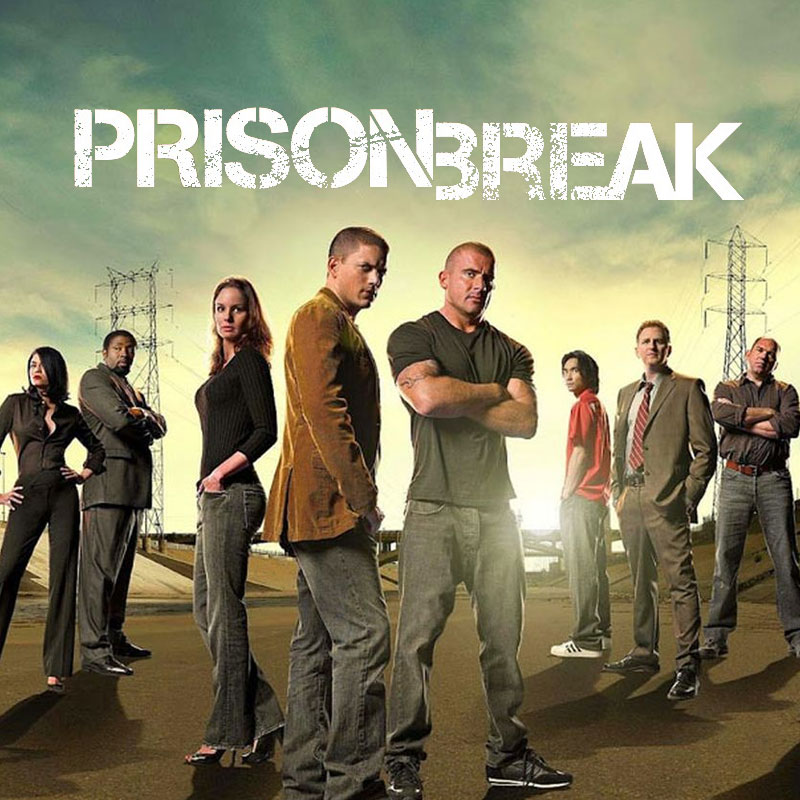
    Prison Break, of which the fifth season is about to commence, revolves around two brothers. One has been sentenced to death for a crime he did not commit while the other devises an elaborate plan to help him escape and clear his name. The actor said he had only acquired the rights of the first season.

    In a statement, Kapoor said: “The show is about sibling love. It has just the right amount of emotions and of course some mind blowing action. In the past, films like Do Aankhen Barah Haath and Umar Qaid, which revolved around jailbreak, have been appreciated by the audience.”

    The actor-producer is not yet sure whether he will be on the show himself as he says he is concentrating on the second season of 24 which had been telecast on Colors in the first season.


  • Anil Kapoor acquires ‘Prison Break’ rights; moots Indian version

    Anil Kapoor acquires ‘Prison Break’ rights; moots Indian version

    NEW DELHIi: Versatile actor Anil Kapoor, who is currently busy finishing the second series of his television series 24, has acquired the rights of another American TV series Prison Break.

    The actor, who had earlier taken the rights of Modern Family, said he normally went with a gut feeling that Indians would love a story when he acquires it to adapt it to Indian situation.

    Prison Break, of which the fifth season is about to commence, revolves around two brothers. One has been sentenced to death for a crime he did not commit while the other devises an elaborate plan to help him escape and clear his name. The actor said he had only acquired the rights of the first season.

    In a statement, Kapoor said: “The show is about sibling love. It has just the right amount of emotions and of course some mind blowing action. In the past, films like Do Aankhen Barah Haath and Umar Qaid, which revolved around jailbreak, have been appreciated by the audience.”

    The actor-producer is not yet sure whether he will be on the show himself as he says he is concentrating on the second season of 24 which had been telecast on Colors in the first season.


  • 44% adults used Internet TV via STBS in the last 12 months: Ofcom

    44% adults used Internet TV via STBS in the last 12 months: Ofcom

    MUMBAI: Close to 44 per cent (over four in ten) adults in the UK had used an internet connected TV – most via set-top boxes such as TiVo or Sky – in the last 12 months. Some 34 per cent had watched catch-up TV services via connected TVs or set-top boxes.


    Moreover, Ofcom’s research into UK audience attitudes to content on TV and radio showed that households surveyed owned two TV sets on average.


    This research covered what people find offensive on TV and radio, their awareness of and attitudes towards regulation and their understanding of advertising and product placement.


    The report also includes research on consumers’ access to and views on internet ‘connected devices’, which are used to watch services like the BBC iPlayer, 4oD, ITV Player, YouTube and Netflix.


    The research further found that nearly half (49 per cent) of adult TV viewers felt the quality of TV programmes had stayed the same in the past year, three in ten (30 per cent) felt they had got worse, and around 16 per cent said TV had improved.


    Among those who thought programmes had got worse, the top reasons were repeats (57 per cent), a lack of variety (43 per cent), a general lack of quality (32 per cent) and too many reality shows (30 per cent). Among those who said programmes had improved, the top reasons were a wider range of shows (50 per cent), improved quality (48 per cent), more entertaining shows (37 per cent) and better dramas (33 per cent).


    Offensive material on TV


    Close to 79 per cent people had not been offended by anything on TV in the past year. However, one in five had found something offensive, rising to a third (33 per cent) for people aged 65 and over. Those aged between 16 and 24 were least likely to be offended (nine per cent compared with 33 per cent of over 65s).


    Of those who had been offended, bad language (44 per cent), violence (41 per cent) and sexual content (41 per cent) were the top concerns. Adults below 45 years old were more likely to say they had been offended by some type of discrimination (29 per cent compared with 19 per cent of over-45s).


    On average, about half of all people thought current levels of sex (57 per cent), violence (47 per cent) and swearing (52 per cent) on TV were acceptable. Four in ten felt there was too much violence (43 per cent) and swearing (40 per cent), while nearly three in ten (28 per cent) said there was too much sex.


    Attitudes differed by age: younger adults were more likely to feel there is an acceptable amount of violence, swearing and sex, while older adults tended to feel there is too much.


    High awareness of regulation


    The vast majority of adult TV viewers (90 per cent) knew about the 9 pm watershed, with over half (57 per cent) saying about 9 pm was the right time while around a quarter (27 per cent) said the watershed should be later.


    The report found a clear understanding about what broadcast content is regulated, with over eight in ten (82 per cent) adults aware that TV is regulated. Most adults felt the current levels of TV and radio regulation were about right (61 per cent), or did not have an opinion (18 per cent for TV and 33 per cent for radio).


    The research showed that 14 per cent of adult TV viewers could identify the ‘P’ symbol, which is designed to let viewers know the channel, or the programme-maker, has been paid to include products in that programme.


    Protecting viewers


    Ofcom has a duty to protect viewers from harmful and offensive material on TV and radio, as well as ‘TV like’ content on internet connected devices. When broadcasters break the rules, Ofcom takes robust enforcement action and has issued guidance to broadcasters on how they should enforce the watershed.


    The majority of viewing today is live on the TV and many of the programmes delivered over the internet to connected devices in the UK were first aired on TV; because of this, they are subject to Ofcom’s rules.


    However, people now watch programmes in a variety of ways, and on different devices, which poses challenges for parents and regulators. Hence, Ofcom is working with government, other regulators and industry to bring about a common framework for media standards.

  • AXN bets big on 2015; launches new shows

    AXN bets big on 2015; launches new shows

    MUMBAI: Come April and English entertainment channel AXN from the Multi Screen Media (MSM) stable is all set to redefine itself. The channel will be extending its content offering and has lined up a slew of new shows for this year. Moreover, April will also see the launch of the channel’s high definition offering – AXN HD.


    Speaking on the launch of the HD channel, Sony Pix and AXN EVP and business head Saurabh Yagnik says, “Due to digitisation, issues relating to distribution and availability have been addressed. The category has now become more amenable to appointment based viewing and audiences are seeking two kinds of shows – iconic and fresh shows from the US.”


    As part of its revised strategy, the channel will do away with telecasting movies.


    Brand New FPC


    Keeping consumer insights in mind, the channel has increased its programming line up. For instance, the weekday programming slot from Monday to Thursday has been re-jigged to Monday to Friday. The 8 pm slot will have signature shows like Guiness, Ripley’s, American Ninja Warrior and Wipeout.


    This will be followed by reality shows at 9 pm like Fear Factor, So You Think You Can Dance, Top Chef, Survivor and The Amazing Race


    The 10 pm slot will have famous crime shows like 24, Elementary, NCIS and CSI amongst others.


    Finally, the 11 pm slot will have edgier content with shows like Sex and the City, Dexter, Ray Donovan and Californification.


    Weekend Slot Strengthened


    In August 2014, AXN introduced a new weekend slot, ‘Not So Ordinary Weekend,’ which aired on Friday and Saturday. Since the weekday slot will now be extended from Monday to Friday, the ‘Not So Ordinary Weekend’ slot has been moved to Saturday and Sunday. During this slot, the channel will air fresh content airing closer to US dates. Shows that air in this slot are: Sherlock (season four), Supernatural (season eleven), Orphan Black (season three), Hannibal (season three), Elementary (season four), Voice (season nine and 10), Madam Secretary (season two), Extant (season two), and Scorpion (season three).


    New Shows:


    Beginning 6 April, fresh seasons of shows like 24 and Dexter will be telecast at 10 pm and 11 pm respectively on weekdays. Top Chef Masters season five will begin from 9 April at 8 pm during the weekdays. Another long running reality show Survivor is back in its season 27 from 21 April from Monday to Friday at 9 pm.


    The channel has partnerships with 20 global studios like CBS, Sony Pictures, BBC, WB, MGM, NBC Universal, Buena Vista International, Fremantle Media, Endemol, and FOX for content deals. The channel also has 2000 plus hours of content supply every year.


    AXN HD Launch


    On 6 May, 2014 MSM received two licences from the Information and Broadcasting Ministry (I&B). The aim was to increase its high definition (HD) offering to its viewers. The licences obtained were for AXN HD and SET HD. The network today announced that AXN HD will be launched on 6 April, 2015. It will have 1080i HD picture clarity and 5.1 sharp surround sound. The network is currently in talks with various platforms for its distribution. It is currently priced at Rs 30.


    “While the shows will be same on the two channels, we will be tweaking some of the content for the HD feed. We could also have certain exclusive content for the HD feed in the future,” informs Yagnick.


    Social Engagement


    Providing some inputs from digital agency Social Bakers for the period December 2014 to February 2015, the channel claims to have an engagement rate on social media of 5.80 per cent versus its closest rival Zee cafe at 2.90 per cent. For the same period, FX, Comedy Central and Star World had an engagement rate of 1.70 per cent, 1.36 per cent and 0.76 per cent respectively. A third of the channel’s marketing budget is dedicated for digital activations that are handled both by AXN and digital agency Tonic Media. Through this, AXN targets to reach an additional five million fans on social media. 


    The target audience for the channels is the 15-34 age group.


    Marketing


    AXN has also put in place an aggressive TV plan where promotions will run across the MSM network channels. A print plan targeted in four cities on 6 April is on the anvil besides robust social media promotions. However, radio and OOH will not feature for the promotions.


    Sharing an insight about the genre’s growth, Yagnick says that the average weekly viewing (time spent) of 10 minutes on the genre has increased by approximately 50 per cent. While the metros have been performing well for the channel, the U.P. market has grown substantially as distribution has helped increase availability.


    Pix and AXN vice president and head programming and acquisitions Amogh Dusad informs that drama is the biggest performing genre on the channel. “Comedy is well being explored and reality shows too have performed well for the channel,” Dusad adds.


    With a robust line up and a focus ahead on retaining its leadership position, AXN is aiming at making it big this year.


  • Viacom18: The ‘Bigg Boss’ of brand integrations

    Viacom18: The ‘Bigg Boss’ of brand integrations

    MUMBAI: Evolution is the key to survival. And the Media and Entertainment industry has mastered the art.


    With changing times, the broadcasters, advertisers along with media agencies are coming up with newer and better ways to put forth their message to their viewers beyond the 10 sec or 30 sec TVC. Innovative ways are being found and negotiated to go beyond the 12 minute ad cap authored by the government.


    One such network, which through its numerous entities, can be said is at the forefront of it is Viacom18. Take a look at its latest film Mary Kom or Colors’ Bigg Boss. They are a perfect example of how brands can be integrated.


    According to Viacom18 group CEO Sudhanshu Vats, as the network offers sponsorships, it will continue to strengthen the value additions like in the case of Snapdeal and Bigg Boss.


    Madison Media, recently did brand integrations with the reality show for TVS Scooty Zest and Britannia. Says the media planner from the agency, who didn’t want to be named, “No other network has so many reality shows under its belt. And they all provide a perfect platform to showcase what the sponsor needs to communicate to the audience.”


    The deal is made on the table when sponsor and title sponsors come on board. The value additions help the brands to get value for the big bucks they spend on them.


    For instance, in Bigg Boss, the key carriers of the brand integration which is also an integral part of the show’s format are the various ‘tasks’ that are given to the housemates to prove themselves. “We ideate in a manner that a brand /product gets woven beautifully in a given task and their positioning and offerings gets highlighted in a seamless manner. For example, the Snapdeal portal used by the housemates to buy essential household items,” says Colors CEO Raj Nayak.


    Brands that associate as sponsors, gets branding presence in the house most suitable for their category.  The Garnier Men’s Products posters are put up in the bathroom, which gets featured in the show every day; similarly, making a call to a loved one, using the Oppo Smart Phone.  Nayak adds, “Suitable to the format and content, brand consumption/ usage is also integrated within the day’s activities.”


    The network’s youth entertainment channel, MTV, started embedded advertising in the beginning of the year and since then have had many clients willing to take the new form of advertising. The first few ones being Nokia, Tuborg, ITC and Gionee. 


    The phenomenon isn’t new, but a lot of broadcasters are taking the route to keep the advertisers happy as well as get in the mullah. The network, which follows the restricted advertisement air time, hikes its rates at regular intervals to keep the in-flow going. And through its numerous properties keeps the marketers happy. 


    With the onset of reality shows, advertisers have got more opportunities. Also, one can have repeat messaging in non-fiction shows, which is not too easy to introduce in fiction shows.  However, if ample development time is given, then even in fiction shows brand stories can be fused, as Colors did with Tata Motors for its show 24.


    IPG Mediabrands India GM (content and experiences) Dhruv Jha elaborates on the Tata Motors and 24 deal. “These integrations are more like an extension of the media deals, but they need to done in a smart manner. A forced-upon integration can put off a viewer and not benefit both the channel and the brand as well.”


    To make the integration an integral “part” of the show, one needs to draw the fine line. The task isn’t easy.


    Ideation starts with the brand brief; next comes synergising the key messaging of the brand with the most suitable content piece so as to hit the viewers/ consumers in the most fitting manner.  It is also important to review the operational aspect during ideation – arranging for the products, branding scope in the scene, feasibility of integrating the brand ambassador etc.  Social media is often used to create pre and post telecast buzz around the integrations.


    “Innovation is something that has been ingrained in our channel’s DNA, and as the saying goes, if you’ve seen it before, it ain’t innovation. We challenge ourselves with every show – whether its Bigg Boss, Khatron ke Khiladi, Jhalak Dikhhla Jaa, India’s Got Talent or 24 to ensure that there’s a delight factor both for the viewers as well as the sponsors,” boasts Nayak.


    The brands which show the most interest to come on board are e-commerce and smartphone companies. And now with the markets stabilising, the channels are also seeing renewed interests from auto sector, food and FMCG sectors.


    The trend is now veering towards integration of brands “strategically” across all engagement points and not be uni-dimensional or have a shotgun approach. 

  • Does ‘finite’ spell death for long sagas?

    Does ‘finite’ spell death for long sagas?

    MUMBAI: Once upon a time, there was only Doordarshan and viewers lapped up whatever it served without complaint. Then came the satellite and cable TV explosion, giving DD a run for its TRPs. That’s when daily soaps like Kyunki Saas Bhi Kabhi Bahu Thi and Kahani Ghar Ghar Ki and KumKum became popular, carrying on for years at a stretch, without audiences, especially women, tiring of them.


    However, viewers today are an altogether different breed and broadcasters cannot engage them in the same manner, given their restlessness and constant need for new, fresh content.


    A common tactic fast gaining traction among broadcasters is opting for limited episodes not just in non-fiction but also in the fiction space. Does this mean death for the long sagas of yore? Indiantelevision.com spoke to a cross-section of industry to find out.


    Given that Star India is all set to launch three finite shows Airlines, Hospital and Everest next month, we asked Star India senior vice president programming Ashish Golwalkar whether finite shows had already become a trend?


    “Trends are formed on the basis of consumers. Our consumers are our viewers. It is not yet a trend, because people have to come and see success. By the nature of content, non-fiction always had limited episode series, but in fiction, that wasn’t happening and we thought if we could offer something fresh and different. Currently, we all are experimenting,” he replied. “At Star Plus, we constantly endeavour to give something fresh to our viewers. In order to do that, we think there is a set of talent that works for television.”


    Recalling the good old DD days when legends like Shyam Benegal penned finite series for the channel, Golwalkar said, “Legends used to work for television and all of a sudden, they all disappeared. And we realised that television is very tiring. To produce for six days a week is very tough, but we are happy that we have cracked it and there is where the numbers are coming.”


    Stressing that there was a need for people who could bring a fresh new perspective to storytelling, he said, “But all those creative people and creative talent, they will never be able to do a show that will last for two to three or five years. The other reason is that while there are shows which keep going on and on, there are other shows which just have a finite story.”


    Speaking of Channel V which believes in doing bi-weeklies and has been fairly successful at that, Golwalkar said, “When we at Channel V select those stories, we realize that at the end of the day, our selection has to be based on the story and not on our convenience. We do not want to unnecessarily stretch shows. If there is a show which can go beyond 10 years, let it be. But if there is a show which needs to close in 25 episodes, then let that be.”


    “When you know it is a finite show, the net of story selection widens. So now, you have more number of stories to tell. Technically, in a traditional conventional way, we wouldn’t select those stories, here we can,” Golwalkar added.


    He expressed the view that if the shows being launched in the coming months get a good response, they would definitely introduce more finite series in future. “Because of the change in the content of ecosystem, if we can get fresher and different talent and different stories which are limited in nature and if viewers respond well to it, maybe later on, we will think of doing all our shows like that,” he said.


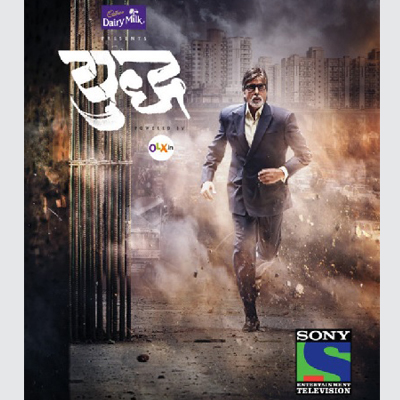
    Shows like 24 on Colors and Encounter on Sony demonstrated the rise of finite in the non-fiction space. At the same time, Sony Entertainment Television’s big bet with Amitabh Bachchan’s Yudh saw the rise of finite fiction as well.


    Sudhir Sharma of Sunshine Productions said broadcasters and viewers were becoming more quality- and content- conscious day by day and keeping that in mind, limited episode series were definitely coming in a big way. “Almost all broadcasters are doing this. The reason behind this is better control on content and it’s very sharp and worked out content so your quality definitely goes up,” he said.


    With this move however, the challenge would be to attract viewership in a big way. “Now, the task for broadcasters is how to attract new viewers, because viewership is getting stale from the last two to three years and the numbers are dipping day-by-day for all Hindi GECs. However, it doesn’t mean that daily soaps will vanish. They are here to stay because there is a large number of viewers and their staple TV diet continues to be soaps,” Sharma said.


    Beyond Dreams producer Yash Patnaik said that finite fiction was not a new trend but a trend that had made a comeback recently. “The advantages of finite series are you can pack the story, you know the beginning till the end. So, drama can be created at a different level,” he said.


    According to Patnaik, thrillers would work best in the finite fiction space. “It is another variety of entertainment where you don’t need a commitment to watch for a longer time… particularly in a finite series, a thriller falls into this category better… because you can’t drag a thriller for long.”


    Patnaik said finite series would do well for broadcasters and would have their own set of audiences. “It all depends on the slots the channels are planning to put and the kind of audience they want to create for finite series. They will have their own set of viewership and good finite series on a good platform will definitely work,” he concluded.
  • First full-length trailer for ’24: Live Another Day’ released

    First full-length trailer for ’24: Live Another Day’ released

    MUMBAI: Jack Bauer returns from his sabbatical, and makes his way through the streets of London, as seen in the recently released full-length trailer of 24: Live Another Day by FOX. Along with the trailer, FOX has also released the first official key art for the 12-part television event.

    The high-octane saga reunites the Emmy Award-winning team of executive producer Howard Gordon; star and executive producer Kiefer Sutherland; co-creator Robert Cochran; executive producers, Evan Katz, Manny Coto, David Fury, Brian Grazer and director Jon Cassar. It also will retain the real-time, pulse-pounding, fast-paced format with split screens and interweaving storylines.

    Set and shot in London, the suspenseful event series once again will follow the exploits of the heroic agent Jack Bauer (Sutherland). Four years ago, Jack was a fugitive from justice. Now in exile, he nevertheless is willing to risk his life and freedom to avert yet another global disaster.

    Tracking Jack are CIA head Steve Harris played by Benjamin Bratt (Law & Order); CIA agent Kate Morgan played by Yvonne Strahovski (Chuck, Dexter), who is both resourceful and ruthless; Jordan Reed played by Giles Matthey (Jobs), a smart and sophisticated CIA computer tech; and Erik Ritter played by Gbenga Akinnagbe (The Wire), a sharp, strong and arrogant field operative.

    Calling the shots is James Heller played by William Devane (The Dark Knight Rises), now President of the United States. Heller is flanked by his Chief of Staff Mark Boudreau played by Tate Donovan (Damages, Hostages), who is married to Heller’s daughter – Jack’s former flame, Audrey played by Kim Raver (Revolution). Meanwhile, a hardened Chloe O’Brian played by Mary Lynn Rajskub (Firewall), Bauer’s CTU confidante, is now working underground with high-profile hacker Adrian Cross played by Michael Wincott (The Crow).

    Click here to watch the trailer

    Guest stars on 24: Live Another Day include Golden Globe Award winner Judy Davis (Life with Judy Garland) and Golden Globe Award nominee Stephen Fry (Alice in Wonderland, Bones). The harrowing day will have Jack attempting to thwart an unthinkable terrorist attack that could change the world forever. 

  • Television…. will remain eternal

    Television…. will remain eternal

    MUMBAI: Television will continue to be a dominant medium notwithstanding the emergence of new means of consuming content. New mediums of content delivery are likely to change viewing habits, but more importantly are likely to increase the time spent on watching the stories that are delivered and also provide more opportunities to content creators.


    Rather than fragment television viewership, new mediums of content delivery would open up new opportunities for content creators as well as platform providers.


    To drive home this message, India’s largest broadcaster Star India COO Sanjay Gupta pointed out that 10 years ago the topic of discussion was that newspapers are dead. The fact is that in the last 10 years the size of the newspaper industry has doubled.


    The topic now is ‘Television is Dead’ but like the newspaper industry television will continue to grow, said Gupta, participating in a panel discussion on “Television is Dead – Long Live Television” on the second day of FICCI Frames 2014.


    Fundamentally, new mediums provide new avenues to carry content and to tell stories, Gupta said underlining that there will be greater opportunities with the digital medium opening up.


    IndiaCast Media Distribution Group CEO Anuj Gandhi said, “Fundamentally, we as a nation are a daily soap market. In India daily soaps sell.”


    IndiaCast distributes a multitude of content but in the global markets it has found demand for its serial 24, based on an American thriller series in a real-time format, and not for the Indian staple daily soaps. IndiaCast is mandated to drive domestic and international channel distribution, placement services and content syndication for TV18 Broadcast, Viacom18 and A+E Networks I TV18.


    Celestial Tiger Entertainment CEO Todd Miller echoed the prevalent view. He said, “It is still the living room that is the bulk of our business.” Celestial Tiger is a Hong Kong-based diversified media company that focuses on Asian consumers.


    TELEVISION TO TRANSFORM


    Television as a medium is expected to undergo a transformation from being a linear gadget to a multi-functional smart device. The reinvention of television will allow it to not only survive but blossom despite the onslaught of new mediums of content delivery.


    Effective use of the mobile as a means of content delivery is still a distant given the bandwidth constraints. “For me the biggest challenge is bandwidth. 3G and 4G will change consuming patterns. It will still be sports and news that will be largely consumed on mobiles,” said IndiaCast’s Gandhi.


    There have been so far no serious efforts at making differentiated content. With 3G and 4G, there would be real efforts at making meaningful content.


    Star India’s Gupta said Star Sports’ tie-up with Vodafone has shown there is deep desire among consumers to view content on mobile, even though not at huge costs but by spending smaller amounts.


     “Millions are coming in to check content on Vodafone. They may not want to spend in small amounts,” Gupta said.


    Consumers will seek more and more stories, different stories with the rise of the digital medium of content delivery.  The broadcasters as they now exist and the new means of content delivery and the new content creators would be collaborating rather than working at cross-purposes.


    IndiCast’s Gandhi reiterated that TV Everywhere in the digital era will still remain largely confined to shorter duration content.


    CHANGING DYNAMICS


    Almost 50 per cent of Olympics was watched on mobile. This suggests there is great opportunity to deliver what the consumer wants.


    “We can’t wish it away. Dynamics are changing fast. The distinction between the content creators and platforms is blurring,” said Gupta.


    Industry players expect disruptions to happen but are wary as history shows an outsider has most of the time been the disruptive force.


    New mediums will provide new platforms for content. The broadcasters may go downstream to business to consumer model and the distributors may move up the chain to be the content producers.


    In the US, the average time spent watching television is six hours. In India the average time spent is three hours and the new mediums are seeing an increase in the time spent watching television content.


    Celestial Tiger’s Miller said, “Most of the innovation that comes is from Telcos and DTH.”


    Media Partners Asia executive director Vivek Couto, anchoring the panel discussion, said, “Precedents have already been set for digital deals in the US.”


    Gupta, however, said the cap on prices of television content is hindering creation of quality content. “People are willing to spend. We have 2.5 million HD customers, which is likely to rise to 8 million by the end of this year,” he said.


    The whole ecosystem of story-telling is set for a transformation aided by improved delivery platforms and more creative content creation, and a dominant part of the viewership would still be on television.

  • FOX renews four shows, cancels one

    FOX renews four shows, cancels one

    MUMBAI: Early this year, at the Television Critics Association Press Tour, officials at FOX Broadcasting announced that the network had decided to pass the traditional pilot season henceforth. At the tour, FOX had announced that it would order series all year long, which is clearly evident from the series order of 24: Live Another Day, M. Night Shyamalan’s Wayward Pines and the Batman-prequel Gotham, all ordered to series before the traditional pilot season schedule.


    Usually during the pilot seasons, the fate of the older programmes is announced. Last April, the ground-breaking teen phenomenon Glee was renewed for two seasons. However, later creator Ryan Murphy said that the sixth season would be its last. In October, Sleepy Hollow became the first new series to be renewed for a second season during its 13 episode first season run. In January this year, FOX renewed its veteran forensic procedural Bones for a tenth season.


    Last week, FOX announced renewals for four of its series – the Critics Choice Television Award winning New Girl and The Mindy Project, along with the Golden Globe Award winning comedy Brooklyn Nine-Nine and the Kevin Bacon-starrer The Following. Along with renewals come cancellations too, in order to balance the weekly schedule. As announced on Monday, 10 March, the first series to be passed on is the quirky comedy Raising Hope. The acclaimed comedy will bow out with an hour-long farewell with the season four finale now airing as the series finale next month.


    In India, The Mindy Project and Brooklyn Nine-Nine airs on Comedy Central, while Glee, Bones and New Girl air on STAR World. Sleepy Hollow will be finishing its first season run on STAR World Premiere and The Following completed its first season run on Zee Cafe.

  • Thinkbox: Portable devices account for 1.5% of TV viewing

    Thinkbox: Portable devices account for 1.5% of TV viewing

    MUMBAI: New TV viewing figures from Thinkbox reveal that 98.5 per cent of television viewing is still done on the traditional TV set in the UK, while 1.5 per cent is on other screens such as tablets and mobile devices.

    The average daily TV viewing in the UK (during January to June 2013) was four hours, one minute a day per person. This was comprised of three hours, 58 minutes a day of linear TV on a TV set – this is three minutes a day less than the same period last year – and three minutes, 30 seconds a day via devices such as tablets, smartphones and laptops. The majority of this is on-demand viewing, with some live streams.

    Viewing on non-TV devices via established services such as ITV Player, Sky Go, 4OD and BBC iPlayer, as well as new services like Dave on-demand, accounted for 1.5 per cent of overall TV viewing in the country during the first half of 2013. This is a slight increase from the full-year figure for 2012, when it accounted for 1.2 per cent.

    According to Broadcasters’ Audience Research Board (BARB), it’s estimated that 58 per cent of households own digital TV recorders, and in these homes 83.8 per cent of linear TV was watched live during the period, down from the 84.4 per cent in the same period a year ago. Also, 81 per cent of all time shifted viewing is watched within two days of recording, while 47 per cent is seen within 24 hours of it being recorded. BARB’s figures suggest that the growth in the number of TVs that is recorded and played back is slowing down.