Tag: BBC India

  • Zee5 partners with BBC to expand its premium content offerings

    Zee5 partners with BBC to expand its premium content offerings

    Mumbai: Video streaming platform Zee5 has announced a partnership with BBC Studios India. The two top entertainment companies will work to build a robust content slate of new Zee5 originals in Hindi across genres exclusively for Zee5 viewers.

    With this partnership, Zee5 aims to further bolster its existing premium content offerings with captivating and diverse stories based on successful British formats.
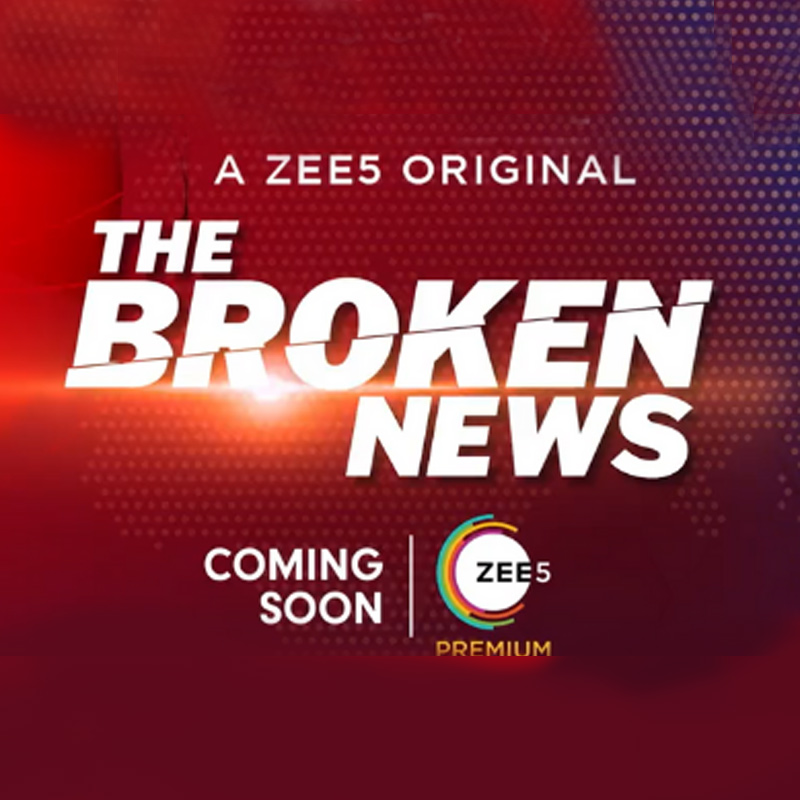
    The first Hindi project introduced as part of this ongoing partnership is an original drama series titled “The Broken News,” which also marks actor Sonali Bendre’s debut on OTT.


    A post shared by ZEE5 (@zee5)

    In line with the theme of the new series; to generate excitement amongst the news viewers, Zee5 will announce  the release of “The Broken News” in the primetime slot across prominent news channels on 11 May.  

    It is an adaptation of the  popular British series “Press,” directed by award-winning director Vinay Waikul with a stellar star cast featuring  theatrical favourites like Jaideep Ahlawat, Shriya Pilgaonkar, Indraneil Sengupta, Taaruk Raina, Aakash Khurana, Kiran Kumar, amongst others. The plot of the show features two rival news channels based in  Mumbai – Awaaz Bharati, an independent, ethical news channel, and Josh 24/7 News, which offers sensationalist and invasive journalism, and what transpires between the main characters in their quest for news.  

    Commenting on the partnership, Zee5 India chief business officer Manish Kalra said, “This year  we have a fantastic line-up with many big titles announced in the first quarter of the year.”

    “The focus for 2022  is to bring premium quality content across genres and languages. Zee5, in addition to bolstering its portfolio  of Hindi originals, is simultaneously working on curating a list of unique stories across formats and languages  to build a platform of varied choices for its viewers,” he explained.

    “With ‘The Broken News’ we are marking the beginning of  another partnership with a reputed content studio to bring interesting and unique story narratives for our audiences. This partnership is in line with Zee5’s strategy to build a portfolio of unique and compelling content for an enhanced value from the services. We are sure our audiences will enjoy and love it as much as they have  loved our content so far. Zee5 has been working with the best talent in the creative ecosystem to create a  riveting slate of originals, in line with our content strategy of keeping the viewers at the centre of the business,” added Kalra.

    On the announcement of the new title, Zee5 Hindi originals chief content officer Nimisha Pandey said, “’The Broken News’ is an extremely relevant story for the times we live in. We are glad to partner with BBC Studios India and director Vinay Waikul to bring this story to life.”

    “It is a riveting drama depicting the  nuances of the media houses and the daily hustle-bustle of a newsroom. The story revolves around the  ideological differences of the protagonists, beautifully played by Shriya Pilgaonkar and Jaideep Ahlawat. The  story has a strong, contemporary and compelling narrative making it a perfect addition to our content bouquet,” she added.

    Speaking on the partnership, BBC Studios India general manager Sameer Gogate commented, “We are  thrilled to join forces with Zee5 as part of this partnership to produce this riveting BBC Studios format, set  in the fascinating world of TV news journalism. The strength of our formats lies in their ability to transcend across cultural boundaries and languages. We are honoured that Jaideep Alhawat, Sonali Bendre and Shriya  Pilgaonkar will be a part of this journey directed by Vinay Wiakul and we hope Zee5’s Hindi audience will enjoy the gripping personal and professional dramas facing the characters under the pressure of a 24-hour news cycle.”

  • Advertisers cannot be fence-sitters in today’s time: BBC’s Rahul Sood

    Advertisers cannot be fence-sitters in today’s time: BBC’s Rahul Sood

    NEW DELHI: 2020 has been a wild year for the news industry. On the up side, viewership skyrocketed in the wake of Covid2019 pandemic; then again, it drew aggressive flak from viewers and advertisers alike for their reportage in a number of high-profile cases, including the Sushant Singh Rajput suicide. Adding to the woes of the industry was the TRP rigging scam, which left a bitter taste in the mouth of many.

    Addressing all these issues and the grave concern of brand safety that has risen in these sensitive times in a chat with Indiantelevision.com, BBC Global News MD – India and South Asia Rahul Sood shared that it is high for brands to stop sitting on the fence and take some concrete steps to ensure they are not placing their products with any content they wouldn’t want to be associated with. 

    He said, “I am happy that there are a few advertisers like Parle, who have taken this conscious call of taking out their ads from problematic channels. But there is still a lot of work to be done in that area. I think it’s time that advertisers start putting their money where their mouths are. The industry doesn’t need more fence-sitters as silence means compliance. This really needs to change.”

    Sood added that media planners and marketers, who are the prime brand custodians, should really ponder whether they want to support the misogyny, communalism, and baseless stories that most news channels are propagating these days. “If they can’t let their children watch those channels, how can they advertise on them?” 

    On being asked whether TRPs are to be blamed for most of the advertisers still being cautious about taking their investments out of news channels, Sood noted that TRP numbers are not anyway reflective of the true set of audience interest, especially for English news channels. 

    “There are 120-odd boxes placed in some remote households, which anyway doesn’t have the audience for English news. And then with the TRP rigging scam, we saw that even that data is not authentic,” he quipped. 

    Sood insisted that advertisers should instead rely on currencies like subscriptions on a particular channel or website, their social media handles, and the sort of discussions that are happening online on one’s content to decide where they want to invest. 

    He continued, “There is also a need to do a qualitative analysis of one channel’s content and then advertise there.”

    So, how’s BBC ensuring that brands find a safe environment at the network to publish their content?

    “There is a very stringent advertising compliance policy that we have in place at the BBC. To add to that, our 100-year-old legacy is proof of the sort of content we create and brands can see that,” Sood explained. He also added that they are strictly against signing “private treaties” with brands. 

    “We are also very particular about what ads we put on our channel. For example, we will not run any ads of fairness creams, any brand communication that is racist, communal, or misogynist. We have stopped running ads of fossil brands taking cognisance of climate change. We also do not allow any individual to utilise a government platform to appear larger than life and promote himself/herself on our channels,” he elaborated. 

    Sood also addressed the recent Tanishq controversy and said that brands will need to stand up for themselves and not give in to bullies. 

    “I have friends in Pakistan, who used to tell me that they look up to India for the kind of social fabric we have, the sovereignty we display. But after the Tanishq controversy, he called me up and said ‘tum bhi hamare jaise nikle yaar…’ (‘you are also like us’). It is very embarrassing. I think, what is going on right now, and not just in India but in many other countries too, that the people in power are dog-whistling. They will divert the attention of people to things like this to stop them from focusing on the real issues,” he said. 

    However, he is not without hope that the current situation with several brands taking the call of removing ads from controversial channels will start a course correction within the industry. 

    “There is a grave deficit of trust and credibility and decaying of truth right now and I am hopeful that this will change with more brands and advertisers standing up against the content that certain channels are spewing these days. I wish there is more news and less noise and credibility in the media's work, going ahead,” he signed off. 

  • Aaj Tak’s Documentary bags award at MIFF 2002

    Aaj Tak’s Documentary bags award at MIFF 2002

    A two-part documentary aired on Aaj Tak in October 2001 has bagged the best film/video award in the national category at the recently concluded Mumbai International Film Festival.
     

    Two Assassinations and An Accident was part of 25 Incredible Years – a 10 part TV mini series in Hindi and English, each of 25 minutes, commissioned by the India Today group to commemorate 25 years of its existence. The films were made by Moving Picture Company, the production house of documentarist-auteur Ramesh Sharma. The award carries a cash prize of Rs 1,00,000.
     

    The Mumbai International Film Festival for Documentary, Short and Animation Films is a biennial competitive event in film and video format organised by the Films Division, an I& B department, in co-operation with the Maharashtra government. Outstanding films in various categories are selected by an International Jury, with cash prizes aggregating to 2.7 million Indian rupees (approx. US$ 60,000). The festival serves as a platform where the filmmakers of the world can meet, exchange ideas, explore the possibility of co-production and market their films. 
     

    Two Assassinations and An Accident is a collage of interviews and reconstructions through the days of the Emergency till the end of the Rajiv Gandhi era, focussing of the careers of the Gandhi family members and the Indian polity through the decades. The first two episodes go behind what really happened during the Emergency-and why it happened in the first place. Among those interviewed for these segments were former prime minster Chandra Shekhar, photographer Raghu Rai, journalist Khushwant Singh, union home minister L K Advani, former BBC India bureau chief Mark Tully and Nehru family member Arun Nehru.