Tag: BBC Global News

  • BBC Global News announces new sponsorship campaign with Hyundai

    BBC Global News announces new sponsorship campaign with Hyundai

    Mumbai: BBC Global News has announced the launch of a month-long multi-platform sponsorship campaign with Hyundai. The deal sees Hyundai become the exclusive sponsor of ‘Memories of the Future 2045’ – a series of six short films and a half hour documentary produced by BBC Studios,’ Science Unit – which will be broadcast on BBC World News – the BBC’s global television news channel, which is available in 450 million households across 200 countries and territories around the world. 

    It will be accompanied by six articles on BBC Future, which will also host the films. The deal reflects Hyundai and BBC Global News’ mutual desire to examine the issues facing the planet and showcase solutions from across the world, said the statement.

    Narrated by Ivor Novello-winning and multi-million selling musical artist KT Tunstall, ‘Memories of the Future 2045’ deep dives into the hopeful solutions we need for a better, healthier planet. The programme features leading voices and experts on everything from the future of energy to housing, food to aviation and cities to fashion. The story is told as though it is already 2045 and radical changes have taken place. It includes a number of interviews with global sustainability leaders such as Danish inventor, Professor Henrik Stiesdal, who helped create the first offshore wind farm, climate scientist Angel Hsu, Professor Dilys Williams – founder of the Centre for Sustainable Fashion – and Professor Cheong Koon Hean from the Centre For Innovative Cities – the first women to head Singapore’s Urban Development Agency and the visionary behind the greening of Singapore.

    In addition, BBC StoryWorks – the commercial content studio of BBC Global News – is creating a bespoke 30 second piece of commercial content to appear in ad breaks around the programme.  The ad focuses on ‘generation one’ – children being born today who could be the first generation to benefit from a carbon neutral world. It features Hyundai Motor Group’s executive chair Euisun Chung speaking about his desire to create a more sustainable future for them.

    Hyundai Motor Company executive vice president and global CMO Thomas Schemera said, “Collaborating with global media platforms like the BBC allows us to advance our Progress for Humanity vision and help further the collective understanding that we – people, brands and businesses – all have a responsibility to act.”

    The deal also includes the renewal of Hyundai’s successful sponsorship of BBC Future Planet. Future Planet is the BBC’s home for in-depth, evidence-based stories on potential solutions addressing the pressing environmental challenges around the world. Launched last year in response to a growing audience interest in sustainability, Future Planet was the first major online publication with a sole focus on climate change that also aims to be as close to zero carbon as possible.

    Under the banner of Our Planet Now, the BBC’s global services will deliver unrivalled and comprehensive coverage of COP26, as well as a wide range of programming throughout the autumn and winter exploring, in depth, the topics of environmental sustainability and the world’s changing climate.  It includes reporting and analysis led by the BBC’s first ever climate editor  Justin Rowlatt and science editor David Shukman as well as reporters on the ground across the globe, including West Africa correspondent Mayeni Jones, South Asia correspondent Rajini Vaidyanathan, and Australia correspondent Shaimaa Khalil.

    BBC Global News EVP of international advertising sales Sean O’Hara stated, “We are delighted to continue building on our work with Hyundai through this global sponsorship campaign.  With climate change currently at the top of the news agenda, this series, along with the BBC’s extensive range of coverage across its platforms, raises important issues which our global audience cares deeply about. It is a powerful examination of how innovation allows us to instigate meaningful change and protect our planet.”

  • Commitment to sustainability adds value to a brand : BBC News study

    Commitment to sustainability adds value to a brand : BBC News study

    Mumbai: Demonstrating a commitment to sustainability adds value to a brand, according to two waves of surveys conducted by BBC Global News to understand how consumers in APAC and across the globe feel about sustainability.

    The survey focused on three industries – automotive, technology, and finance.

    It found that 81 per cent of respondents thought that demonstrating a commitment to sustainability adds value to a brand. 79 per cent surveyed agreed that sustainable practices and commitments are an important consideration when making purchase decisions. 68 per cent were happy to pay for more brands with strong sustainability and eco-friendly practices. 57 per cent said they would stop buying a product they were previously loyal to, if they discovered it was not committed to sustainability.

    For the 27 brands surveyed across the three industries, on average, half of all the consumers said they are not aware of the brand’s sustainability practices. Finance brands ranked the highest with 63 per cent of consumers being unaware of their sustainability practices.

    Consumers believe that it is important for all brands’ sustainability practices to involve research and education, according to the survey. 83 per cent of consumers believe that brands should invest in education about the importance of sustainability and 79 per cent agree that brands should be financing research for sustainable practices.

    The research showed that, for consumers across the region, brand trust is seen as the most important brand association, indexing particularly high in the automotive and technology sectors at 87 and 83 per cent, respectively, with finance scoring at 63 per cent.

    66 per cent of respondents said that interviews with an international news partner are the most influential way for consumers to learn about a brand’s CSR, followed by branded content within a premium environment at 39 per cent.

    “These results demonstrate the importance that consumers place on a brand’s sustainability credentials and show that they are willing to use their wallets to make their feelings known,” said BBC Global News’ senior vice president, commercial development, Alistair McEwan. “For brands to retain loyalty from their customers, they need to be absolutely clear about their commitment to taking action.  Those that fail to do so open themselves to criticism, so it is vital that brands shape their narrative and communicate their message in a transparent and authentic way and working with trusted storytellers like the BBC will enable that.”

  • Audiences realise that they need to pay for quality news: Alistair McEwan

    Audiences realise that they need to pay for quality news: Alistair McEwan

    NEW DELHI: 2020 has been an interesting year for news organisations, their journey marked by various peaks and troughs. It was no different for the global news outlet BBC, too. From gaining the highest spike in audience numbers on both TV and digital format to struggling with lower ad revenues, the firm managed to clock in a rather productive year. In a recent chat with Indiantelevision.com founder, CEO, and editor-in-chief Anil Wanvari, at the recently concluded Pubnation (print & digital), BBC Global News SVP – commercial development for Asia & ANZ Alistair McEwan talked in details about the same. Edited excerpts follow: 

    On how BBC tackled the Covid2019 lockdown

    Our experience was, probably, not dissimilar to many publishers around the world, where we have been on a roller coaster. I think there is a sweet irony in the fact that we’ve never seen bigger audiences coming to our platforms, whether that’s television or digital. And that has pretty much sustained through the year. We saw about a 180 million unique visitors coming to BBC.com in March and we have just beaten the figure in November with the US elections. 

    But whilst the audience flocked to BBC in millions, advertisers who were deeply impacted by the lockdown remained cautious. So, in ordinary times, you would hope to be able to monetise that effectively but of course, at the moment, that has not been the case. 

    On how they managed to deliver to the audiences 

    We have seen massive audio and digital growth this year. For us, TV production remained a challenge with lockdown norms and 
    health hazards. Albeit, one good thing that this crisis promoted was the agility and the ability of the people to pivot into new processes. And that’s what we have exactly done at BBC. It has driven high levels of productivity. 

    For example, on the news side, we’ve been creating a lot of Covid-related content. And it is not just reporting but also solutions-oriented stories and non-news reporting. That’s where we have seen, probably, the biggest growth levels coming across all the verticals. So, from a consumer consumption perspective, we have grown immensely. 

    Read more on BBC News 

    On Indian audiences

    Indian audiences have stayed very true and loyal to us, certainly through the early stages of Covid. We saw significant growth on both television and BBC.com. We saw a 5X growth in our audience. We have 18 to 20 million unique audiences on our digital side and through our television channels. We have over 300 journalists across the BBC World Service Group, including our Delhi bureau. We prioritise our investment into India as a market – we now publish in eight different languages in India in addition to our English language output. 

    On virality and its rules

    My personal line on virality is that it's almost completely unpredictable anywhere in the world. There are so many different levellers that are variables to it but there are certain sort of formats that you can use to try to encourage it; for example, ensuring the format fits the devices, the context is right, and you are having a singular message across the products. With respect to BBC, we are globally producing world-class output that becomes highly emotive and highly shared. 

    It is much more difficult to achieve that kind of virality effect with branded content, which is why we always sort of try to pin our branded content style right back to what we do in the editorial. 

    On offerings to the advertisers

    For advertisers, we bundle and package our offerings across TV, radio and digital media. All of these have a fundamentally important part in the way you bring a holistic solution to an advertiser. And, of course, audiences exist independently in all of those different areas. So for us on the commercial side, it's really all about where the target audience is, discovering those audience insights and then being able to deliver to those custom targets across group assets and really utilising all of the data insights. 

    The media industry, so far, has not been able to drive empirical measurement of the content it produces; how the audience feels about it and how it impacts society. We are using a variety of neuroscience technology, eye-tracking, and facial decoding to be able to track emotional engagement. That's actually allowed us to measure all the different suites of platforms that we have there. 

    On taking news industry behind the paywall

    The industry has reached a tipping point and it has been a while back that we have consumer acceptance towards paying for quality news content. Take the New York Times, for instance. They have been the benchmark international news organisation in this space. They started way back in 2008 and the initial commentary was that they would struggle to survive post this move. But today, they are earning 64 per cent of their revenues from paid subscriptions. So that boat has sailed. Audiences have been conditioned to understand and accept the need to pay for quality news. We have to fund it. You can be the Guardian and ask people to fund it out of goodwill and love for the brand or whether you are requiring people to pay through a paywall; you need to figure out a sustainable way to go ahead. In India, it will take some time to evolve. 

  • Will going subscription-based improve news content on Indian television?

    Will going subscription-based improve news content on Indian television?

    NEW DELHI: As per a recent Media Partners Asia (MPA) report, India is going to be the most scalable pay-TV market in the APAC region, with a CAGR of 6 per cent, touching $15 billion by 2024. India will also contribute almost half of the net subscriber additions in the Asia Pacific over the next five years, it highlighted. The increase in consumer awareness, the choices they have, and growing disposable income are a few factors that are going to contribute to this. 

    More and more, Indian news channels are toying with the idea that if they go the subscription way, a course correction in terms of content they are serving will also happen. 

    Certain players like Times Network, Aaj Tak (SD), Zee News (SD), and News 18 Bihar Jharkhand have already made a successful transition from being FTA to pay-TV in the past few years, while still maintaining their viewership and ad revenues. And there are others who are willing to move to that model. 

    Times Network MD and CEO MK Anand also advocated the subscription-based model for news channels at the recent Indiantelevision.com News Television Summit.

    He had said, “When you go the subscription route, there is no need to be ratings-led. The current subscription numbers are 10X of what they were in 2014 when I joined the Times. We have to benchmark ourselves on net distribution income (NDI). When it comes to NDI, a news channel should look at the top of the population pyramid more.” 

    Anand had estimated that 54 per cent of the Times Network’s revenue in FY21 is going to come from subscription. “The total ratings-led business in our topline is less than 25 per cent. Earlier it used to be 90 per cent. Back then we didn’t have branded content or premium-led ground or digital business. Specifically, Times Now’s TRP-led business is less than 11 per cent of the total.”

    In a similar vein, ABP News Network CEO Avinash Pandey had shared in an earlier virtual fireside chat with Indiantelevision.com that he’s quite determined to make all the channels and websites in his network subscription-based – because anything free in this country is taken for granted. 

    “Our regional channels were already on a pay model. We only went FTA because of the uncertain environment caused by NTO 1.0. From a carriage perspective, NTO 2.0 is favourable. In today’s world when you have WhatsApp circulating all the videos you are likely to show in the evening and Twitter already debating views and counter views, before you discuss anything on TV it’s already discussed online. In this scenario, how to build a pay channel is the challenge,” he had remarked.

    Channels like BBC and CNN that have always been subscription-based also vouched for the success of the model, even from an advertising standpoint.

    BBC Global News MD – India and South Asia Rahul Sood noted that having more subscription-based news channels will move it to a point where the players will have to be conscious of which space they want to be in – serious, investigative journalism, or competing with TikTok and cat-and-mouse videos of Facebook. He insisted that going subscription-based will attract the niche audience, thereby helping the pricing. 

    However, the top marketing executives have mixed views on the pay-tv option for news improving editorial content. They were, however, more positive about the impact on ad revenues. 

    Wavemaker India chief client officer and head – west Shekhar Banerjee pointed out that merely shifting to a pay structure will not solve the content issue on TV news channels. He said, “We have seen such migrations in the past. While the subscription model brings in a bit of cushion for the business, the dependence of the channel on advertiser revenue still remains significant and so will be the pressure to top the viewership race. We will see a real impact in editorial content only when a news channel is brave enough to only earn from subscription and not chase popular journalism.”

    Dentsu International CEO – India Anand Bhadkamkar was a bit more optimistic on the impact of subscriptions on quality of content as he noted, “Yes, a course correction in the sort of content that we are seeing today will happen if more and more news channels start moving towards subscription-based entities. And the ad rates will also be reflective of that, considering bundled rates for websites and digital content. Also, it will provide a better return on investment to the advertisers as they will have more breadth to understand the sort of audience they will be getting.”

    As for advertising revenue, Pay channels are in a better position to demand a premium on ad rates because they will have the niche audience, who are also going to be better spenders, according to IdeateLabs MD Amit Tripathi.

    But does this entail that FTA channels will lose out on ad revenues? The industry doesn’t think so. 

    Bhadkamkar said, “I don’t think FTA channels will have anything to lose even if more channels start going subscription-based. The advertising revenues will still be dependent on the viewership that they are getting and if you see the likes of NDTV and Republic Bharat, they have really benefited from being FTA.”

    Hindi FTA news channels have enjoyed the privilege of quoting higher ad rates because the viewership is high there, Bhadkamkar observed. Meanwhile, it’s the opposite for English news channels. He insisted that it will depend upon the viewership in the future as well. 

    Tripathi also agreed with the sentiment, adding that the type of advertisers might see a little shift with more premium brands choosing to go for the subscription-based channels. However, the final trend will only be decided by viewership numbers as certain premium customers might still be watching FTA channels. 

    As advertisers and viewers alike repudiate toxic, tone-deaf content, the penny has finally dropped for news channels. They’ve realised it’s high time to switch gears and focus on editorial content, and whichever way they decide to go – whether pay or FTA – broadcasting responsibly should be their guiding principle from here on out; if news organisations serve the viewers (and not their own political agendas), they will come to the channels of their own volition.

  • Indiantelevision.com strives to decode brand safety in association with BBC World News

    Indiantelevision.com strives to decode brand safety in association with BBC World News

    NEW DELHI: Brand safety has emerged as a serious concern for the advertising industry, especially in the past few months, with content on television and web getting more controversial. From racist, misogynist, to inflammatory communal content, various publishers and broadcasters are facing flak from viewers and advertisers alike. In recent days, we also heard about several advertisers taking their money out of many news channels. 

    This has sparked a great deal of conversation, within all stakeholders involved, on how a trustworthy environment can be created for the advertisers and ensure them positive brand equity. From content operations to weighing in what other advertisers are present in the realm, everything is garnering a closer look. 

    To shed light onto the same and discuss the way ahead with leading advertisers and agencies, Indiantelevision.com, in association with BBC World News and BBC.com, will be hosting a webinar titled “Is Your Brand Truly Safe: Decoding The Right Brand Equity With The Power of Trust” on Wednesday, 2 December 2020 at 11:30 am. 

    The panel will include worthies like: Wavemaker CEO – South Asia Ajay Gupte, Parle Products Pvt Ltd senior category head- marketing Krishnarao S. Buddha, Future Group India CMO – FBB Prachi Mohapatra, BBC Global News MD Rahul Sood, Accenture director – supply chain, network and sales operations Shekhar Tiwari, and Initiative CEO Vaishali Verma. The panel will be moderated by Indiantelevision.com founder, CEO, and editor-in-chief Anil Wanvari. 

    Register now at https://lnkd.in/eyWJ8Bk 

  • Broadcaster trio commits $50 mn of ad inventory to promote vital public health messages

    Broadcaster trio commits $50 mn of ad inventory to promote vital public health messages

    MUMBAI: Three of the world’s biggest international broadcasters have come together to donate free airtime to public health bodies for the promotion of messages to combat the global coronavirus health crisis. 

    BBC Global News, CNN International and Euronews have committed a combined inventory worth up to $50 million. This is available to major multilateral organisations and national health ministries whose aim is to communicate information to help protect citizens and stop the spread of the virus.

    Demand for trusted news has been unprecedented in recent weeks and, together, the three broadcasters reach over 800 million people, ensuring that important public health advice can reach vast populations around the world at a time of global crisis. Campaigns running via this scheme will be across TV and digital platforms, with the ability to target messages to reach audiences in specific regions.  This is the first time that the three broadcasters have come together for a joint initiative, signalling how important it is to them to play their part in the worldwide effort to bring vital health information to people across the globe. They are encouraging other publishers and platforms to replicate the model in order to help spread the message even more widely.

    The World Health Organisation is the first body to take up the offer.  Its initial campaign will focus on seven steps to prevent the spread of the virus and will run across all three broadcasters.  Other public health bodies are invited to contact the broadcasters by emailing internationalsales@bbc.com, cnnicmarketing@turner.com, and sales@euronews.com.

    BBC Global News CEO Jim Egan said, “Accurate information is one of the best weapons in our collective armoury for fighting this virus.  We are telling the global story across our editorial output, but it also feels right to do whatever we can to help health agencies get their message out to the world as widely as possible.”

    CNN International Commercial president Rani Raad said, “Wherever you are in the world, this situation we find ourselves in is unprecedented. Whilst CNN’s editorial staff are working tirelessly to ensure people everywhere have the most up to date and accurate facts, it also makes sense to promote the public health agencies’ messaging. By working with our competitors, I hope this combined effort has a positive impact and our global footprint helps reach as many people as possible.”

    Euronews CEO Michael Peters said,  “In these challenging times for the world, we have an even higher responsibility to bring our audiences accurate information in real-time, across our 12 language editions. Our newsroom has been working round-the-clock, including with major multilateral organisations like the WHO, to ensure that our audiences stay up to date with the latest recommendations to avoid the virus spreading. But we want to go one step further. We are proud to be launching this initiative with our long-time peers BBC Global News and CNN International: together, we want to help health authorities broadcast their vital messages more widely, and we hope many other media will follow suit.”

  • Convergence, consolidation & collaboration to fuel growth of cable, broadcast & OTT sectors

    Convergence, consolidation & collaboration to fuel growth of cable, broadcast & OTT sectors

    MUMBAI: In 2019, the Indian cable, broadcast and OTT industry witnessed many fundamental changes from digital dynamics to behavioural change of broadcasters moving from B2B to B2C model to industry stakeholders adjusting to the new tariff order (NTO). Indiantelevision.com’s VBS 2019 provided a platform to the industry experts to discuss and address the key issues faced them. Industry doyens revealed that convergence, consolidation and collaboration are the three 'C's to fuel the growth of the industry.

    VBS 2019’s panel discussions on ‘Transforming the sector to fuel growth’ included Elara Capital VP-research analyst Karan Taurani, Shemaroo Entertainment chief operating officer Kranti Gada, BBC Global News South Asia distribution head Sunil Joshi, PwC India partner and leader- media, entertainment Raman Kalra along with moderator SBICAP Securities equity research head Rajiv Sharma.

    Sharma set the tone of the discussion by briefing the audience on the major issues faced by the industry's stakeholders like cable, DTH, broadcasters, OTT, consumers and regulators in 2019.

    Kalra said, “We have been talking about convergence for a very long time and consolidation will keep on happening if we are willing to provide relevancy to the consumer. In the entertainment media space it is important to find a model which is relevant at scale. But how do you make relevant at scale? The relevancy for scale will trigger the consolidation because it leverages number on the financial statements and on the balance sheets of the company. It brings about so many synergies to the business models to run profitable, long term and sustainable business.”

    Taurani shared his view on consolidation in the cable space. He said, “Firstly it is important to highlight that business dynamics are changing completely. Broadcasters have been used to the B2B model since inception but now we are moving to B2C kind of a model. Basically everyone is well aware that if we really want to move to next level on digital, scalability is a very big factor and OTT platforms just offering about 10, 15, 20 movies will not help. So, to achieve that scale we need to invest in content. Apart from driving the partnership with other DTH cos or MSOs, achieving the scale on the digital part is needed. So I think it would take some more for them to understand the market and move to the next level.”

    Gada believes it is a great time for the media industry. With the emergence of OTT, the industry has added one and a half hours of screen time on digital front along with the television screen. Therefore the engagement of the end consumer with the content or with media or films has increased multifold.

    Gada says, “With deep-pocketed players cost goes haywire because short-term profitability is not their outlook, maybe their content is not their mainstay investment. It is sometimes just for consumer stickiness."

    Joshi said that convergence is the mantra of the day. “We have broadcasters, DTH, cable, OTT, consumers and a regulator who are the stakeholders of the value chain. If we look at post NTO and market dynamics, OTT is being discussed so widely because of its crispness and on-point approach to the consumers. Most of the broadcasters have direct consumer reach on their OTT to take care of and keep the stickiness on the linear also both compliments.”

    “Going forward, television needs to learn from OTT on what is been offered. So that on a quality level, both competes and at the operational level both collaborate. We have seen the collaboration of distribution platform and OTT because of their synergy and potential to exploit the potential consumers. Though they are competing at some level they are collaborating as well,” added Joshi.

    The panellists also elaborated on the digital monetisation model. They believe that there are three ways to monetise on digital platforms. The first is the business model, second is consumer centricity and third is the experience. Consumer centricity focuses on investing in knowing consumers. The second point of experience focuses on delivering the right experience. With respect to the business model, one has to experiment with multiple business models.

    The panellists also dwelled on the importance of the subscription model as AVOD does not lead to profitability because of the delivery cost, customer acquisition cost etc.  

    Stating an example of TataSky's binge initiative, Gada urged MSOs to become digital distributors and come up with aggregated and discounted offering for the consumer and make it convenient for those who are struggling with five to eight OTT apps. Gada asked MSOs to apply similar principles they used to offer TV channels to come up with bouquets of digital channels.

    The panel also highlighted the surge in term of telcos spending towards OTT. The new emerging game-changers today are e-commerce, smart TV and VMC.

    Sixty per cent of the money on digital advertising spent between Facebook and Google network. But now that is changing and the share is moving more towards OTT. The panel discussion ended on a positive note expecting that share of digital advertising will be 20-30 per cent whereas video advertising will be 40 per cent plus.

  • BBC Global News ropes in Rahul Sood as south Asia, India MD

    BBC Global News ropes in Rahul Sood as south Asia, India MD

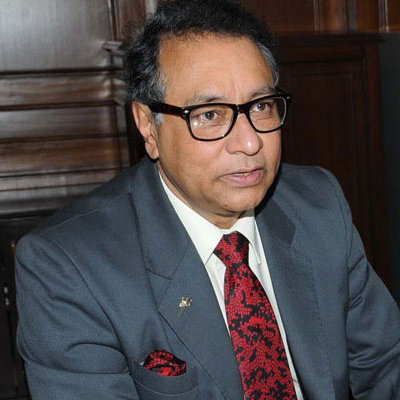
    MUMBAI: The Beeb has a new Indian boss. In an announcement earlier today, BBC Global News stated that former NDTV India professional Rahul Sood will be taking over as its managing director for India and south Asia, come January 2020. Sood will have responsibility for leading the strategic growth of commercial activities across the business which is the International commercial news, sport and features arm of the BBC.

    In fact, a new position has been created for the media vet, reflecting India and the wider region’s position as a key market for BBC Global News. India is BBC News’ largest overseas market, with an audience of over 50 million people. Its India bureau is one of BBC’s largest outside the UK, becoming a video, TV and digital content production hub for the whole of South Asia.

    Sood will report to global EVP marketing and distribution Chris Davies and SVP commercial development, Asia and ANZ Alistair McEwan. He will assume management of the commercial sales teams across the region with distribution head Sunil Joshi, and advertising sales director Vishal Bhatnagar, reporting directly to him. 

    Sood has had experience at NDTV (New Delhi Television Ltd) where, as sales and business development head he successfully launched NDTV channels across linear and digital in over 70 countries. He previously worked for Fox International channels in Singapore, monetising and expanding their south east Asian markets, and started his media career at Turner Broadcasting.

    BBC Global News SVP commercial development, Asia & ANZ, Alistair McEwan says: “We are delighted to be welcoming Rahul to the new post of managing director of BBC Global News, India and South Asia. He brings a wealth of knowledge and experience which is sure to add great value as we continue to realise our significant ambitions in the region, bringing together the expertise of our current teams on the ground.”

    Says Sood: “Working for the BBC in the current news environment is a privilege. My goal will be to further develop the BBC’s presence and profit across the region, ensuring audiences across India and South Asia can benefit from the BBC’s impartial, trusted journalism.”

  • Rahul Mishra Shemaroo’s new general manager marketing

    Rahul Mishra Shemaroo’s new general manager marketing

    MUMBAI: Shemaroo Entertainment (Shemaroo) has appointed Rahul Mishra as general manager marketing. He will be reporting to the company’s director, Hiren Gada. Mishra’s new role has been specially created to spearhead the brand in its current transitional phase.

    Mishra comes with experience of over 14 years, demonstrating strong leadership in helping brands excel in the media and entertainment sector. Prior to Shemaroo, he has had a successful stint with BBC Global News, wherein he was the marketing manager APAC for eight years and has also worked with IndiaCast (a viacom18 & TV18 venture) and a start-up digital film studio CinePlay. Mishra is an alumnus of INSEAD and IMI and is an expert in marketing management, channel launches, digital strategy and partnerships.

    Gada said, “At Shemaroo, we take pride in our people and consider them our biggest asset. We are pleased to welcome Rahul on board at this exciting juncture where we gearing up for innovative opportunities. We look forward to the positive impact of his leadership, dynamism and proven abilities in scaling our brand in the industry.”

    On his new role Mishra added, “Shemaroo is an iconic 55-year-old brand and I am extremely delighted to join the family. I am looking forward to working with the teams and leading the journey of making Shemaroo the most preferred brand in the media and entertainment space not only in India but also globally.”

  • BBC Global news Appoints Charlie Villar as new COO

    BBC Global news Appoints Charlie Villar as new COO

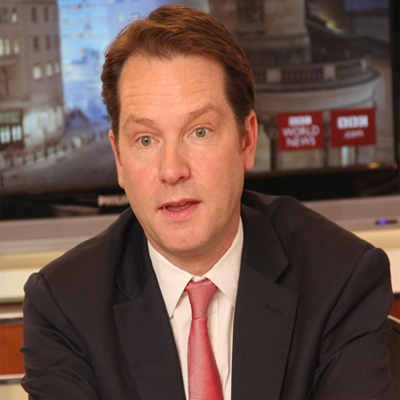
    MUMBAI: BBC Global News Ltd, the BBC’s commercially funded international news arm, has announced the appointment of Charlie Villar to its newly-created Chief Operating Officer position.

    Villar, who is currently the BBC’s Director of Tax, Treasury and Corporate Finance, will start with immediate effect and will be responsible for the financial and operational leadership of the company, bringing together  finance, engineering, internal and external communications, HR and legal and business affairs.  

    He will join the management team and will be one of two directors of the company, reporting to CEO Jim Egan. The appointment comes as the company expands to incorporate the advertising sales arm of the BBC.

    Speaking about the appointment, Egan said, “I am delighted to be welcoming Charlie to BBC Global News Ltd as our first COO. As we complete the expansion of the business and embark on a new phase for BBC World News and BBC.com, Charlie brings the ideal mix of private and public sector experience to the leadership team. High quality commercially funded journalism has never been more important but it has also never been under greater pressure. Charlie’s appointment will bring expertise, energy and a fresh perspective to our enduring mission of staying true to the BBC’s unique editorial values and running a business which continues to be commercially successful.”

    Villar added, “This is a hugely exciting time to be joining BBC Global News, especially as the business comes together with BBC Advertising. External market forces and changing consumer behaviours are resulting in the rapid evolution of how people across the world consume news on TV, online and mobile devices; ‘fake news’ and social media are causing audiences to seek out reliable, trusted sources; and media companies are looking for new business models to be fit for purpose in a demanding environment. Global News Ltd benefits from the BBC’s outstanding reputation for high quality, together with its deep experience of responding to changes in technology and audience behaviour. I am really looking forward to joining the team to guide the business as we respond to the challenges and opportunities that lie ahead.”

    In his role as the BBC’s Director of Tax, Treasury and Corporate Finance,Villar developed the BBC’s long-term financial plan following last year’s renewal of the BBC’s Royal Charter and he was also responsible for managing the relationship of the BBC’s commercial subsidiaries with the BBC Public Service.

    Villar spent the first part of his career in the commercial sector. He is a qualified accountant, having trained with Arthur Andersen.  He then moved onto Deloitte where he worked in Audit and Corporate Finance, advising clients across the Financial Services, Media and the Telecoms sectors. 

    Prior to joining the BBC in 2010, he was a Director at the Shareholder Executive – HM Government’s in-house corporate finance and shareholding arm – where he led high profile restructurings of Northern Rock, The Royal Mint, and Ordnance Survey.