Tag: BBC.com

  • BBC World News hosts 16th edition of Annual Golf Connect

    BBC World News hosts 16th edition of Annual Golf Connect

    MUMBAI: BBC World News’ 16th annual Golf Connect brought around 100 top corporate golfers in India under one roof. The event took place on 1 February at the ITC Classic Golf and Country Club in Gurgaon, attended by legendary cricketer Kapil Dev and professional Indian Golfer Tvesa Malik.

    The event attracted over 100 of India’s top corporate golfers highlighting the sought after nature of the occasion and showcasing the BBC’s commitment to engaging corporate leaders across India.

    The special guest of the event was Indian cricketer Kapil Dev. Dev is regarded as one of the sport's best all-rounders and as one of the greatest captains in the history of cricket, helping India win its first ever Cricket World Cup in 1983. He is also a professional golfer and represented India in the 2018 Asia Pacific Seniors in Japan.

    Since its launch in 2004, the BBC World News Golf Connect event has offered India’s corporate leaders the opportunity to demonstrate their skills on the fairway whilst building valuable relationships with colleagues from across their industries, with the event attracting C-suite leaders from top brands across the country.

    Hosted by BBC World News, the day showcased the BBC’s substantial global offering across both the World News channel and online at BBC.com, demonstrating the BBC’s commitment to the Indian market, which now holds the biggest BBC news global audience, having grown from 30 to 50 million people in a year.

    BBC World News and BBC.com, the BBC’s commercially funded international 24-hour English news platforms, are owned and operated by BBC Global News. BBC World News television is available in more than 200 countries and territories worldwide, and over 465 million households and 3 million hotel rooms. The channel is also available on over 180 cruise ships, 53 airlines, including 13 distributing the channel live inflight.

    BBC.com offers up-to-the-minute international news, in-depth analysis and features, including BBC Worklife, BBC Culture, BBC Future, BBC and BBC Reel, for PCs, tablets and mobile devices to more than 110 million unique browsers each month.

  • BBC.com sees record traffic in India post Brexit results

    BBC.com sees record traffic in India post Brexit results

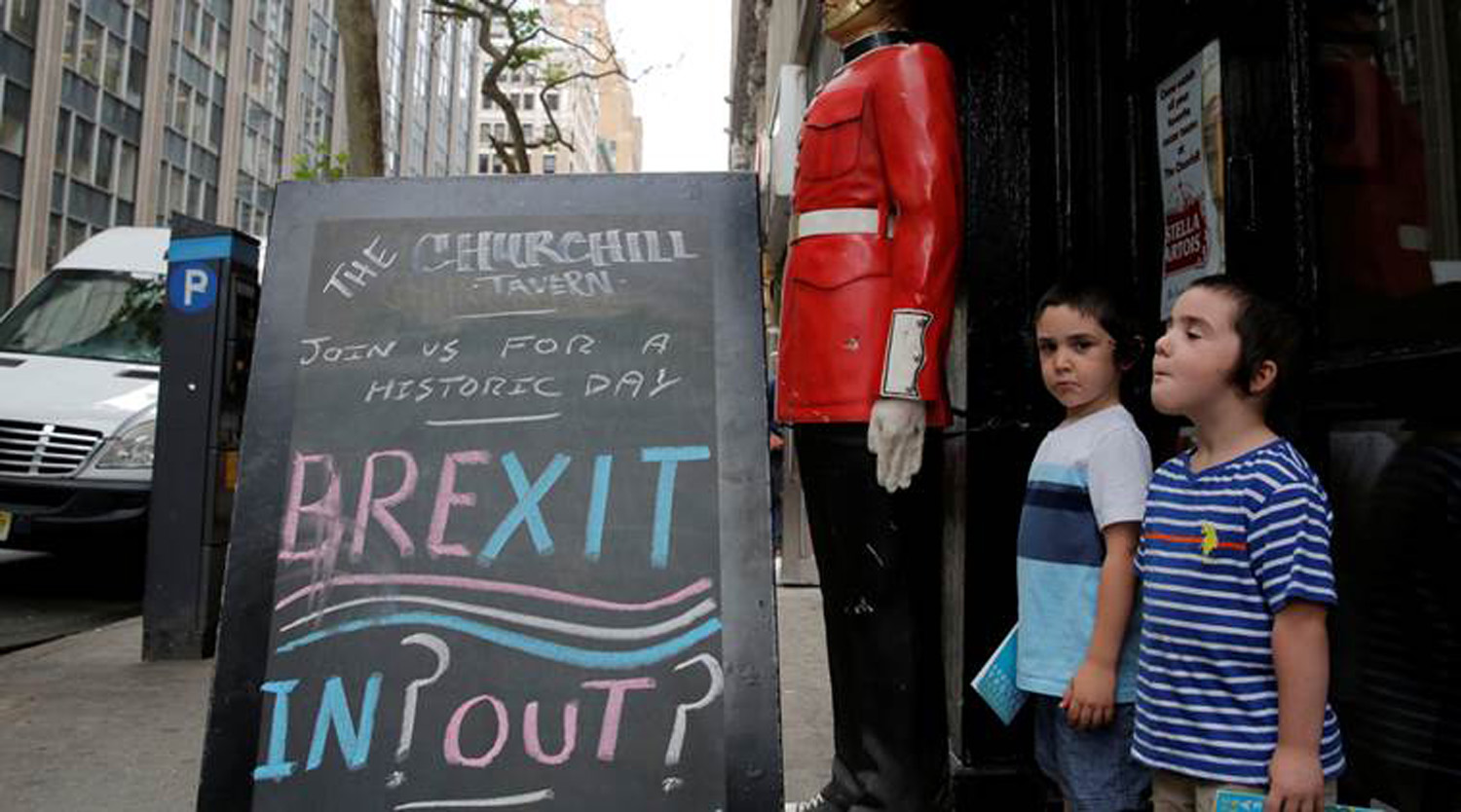
    MUMBAI: Indians seeking the latest on the UK’s vote to leave the European Union have helped BBC.com reach a record breaking spike in traffic. On the day the historic result became clear– June 24, the BBC’s international news services were in demand as people around the world sought to understand what the next steps are and what it could mean for them.

    Operating a dedicated url during the campaign at bbc.com/eureferendum and following up with bbc.com/brexit to bring audiences updates after the result, meant the global news platform has been able to provide a continuing wealth of content drawing on the BBC’s network of experienced correspondents particularly across politics, business and finance (such as EU referendum: Will India benefit from Brexit? and UK starts post-Brexit trade talks with India)

    Globally BBC.com attracted more than 21million unique browsers and 114million page views on results day (Friday 24hJune) alone – with 30million unique browsers and 170million page views across the weekend*.

    In India alone, unique browsers increased by 170% with page views going up by 324%, when compared to the average daily amount in May 2016 as per Adobe Digital Analytix.

    Page views per browser stood at 3.9 on the day of the result which was +56% compared to average daily figure in May 2016*. Even after the initial furore around the result had died down in India the daily average of unique browsers and page views was still 44% and 43% more respectively after 72hours, than the average daily traffic for May*.

    Speaking about the spike in traffic, BBC Global News COO Naveen Jhunjhunwala said,“These record figures are testament to the effort of the BBC World News teams, as they have worked tirelessly to help our global audiences make sense of this historic and fast paced story. That so many people, not just in India but around the world, made BBC.com their go to place for impartial trusted, information and analysis on the decision by UK voters to leave the European Union is incredibly heartening.”

  • BBC.com sees record traffic in India post Brexit results

    BBC.com sees record traffic in India post Brexit results

    MUMBAI: Indians seeking the latest on the UK’s vote to leave the European Union have helped BBC.com reach a record breaking spike in traffic. On the day the historic result became clear– June 24, the BBC’s international news services were in demand as people around the world sought to understand what the next steps are and what it could mean for them.

    Operating a dedicated url during the campaign at bbc.com/eureferendum and following up with bbc.com/brexit to bring audiences updates after the result, meant the global news platform has been able to provide a continuing wealth of content drawing on the BBC’s network of experienced correspondents particularly across politics, business and finance (such as EU referendum: Will India benefit from Brexit? and UK starts post-Brexit trade talks with India)

    Globally BBC.com attracted more than 21million unique browsers and 114million page views on results day (Friday 24hJune) alone – with 30million unique browsers and 170million page views across the weekend*.

    In India alone, unique browsers increased by 170% with page views going up by 324%, when compared to the average daily amount in May 2016 as per Adobe Digital Analytix.

    Page views per browser stood at 3.9 on the day of the result which was +56% compared to average daily figure in May 2016*. Even after the initial furore around the result had died down in India the daily average of unique browsers and page views was still 44% and 43% more respectively after 72hours, than the average daily traffic for May*.

    Speaking about the spike in traffic, BBC Global News COO Naveen Jhunjhunwala said,“These record figures are testament to the effort of the BBC World News teams, as they have worked tirelessly to help our global audiences make sense of this historic and fast paced story. That so many people, not just in India but around the world, made BBC.com their go to place for impartial trusted, information and analysis on the decision by UK voters to leave the European Union is incredibly heartening.”

  • BBC World News encrypts across APAC

    BBC World News encrypts across APAC

    MUMBAI: The BBC has encrypted the SD feed of its 24 hour international news channel, BBC World News, across the APAC region.


    The move aims to bring the SD feed in line with the HD offering and counter piracy by ensuring that consumers can now only view the channel through approved suppliers. The encryption has been through a two month testing phase and will be enforced across all 119 sites in the region by the end of January.


    BBC World News director of distribution Colin Lawrence said, “We are constantly looking for ways to improve the service we offer our partners and affiliates across APAC and this is the latest in a long line of investments we’re making to further strengthen our international news offering in the region and ensure that our commercial relationships are fully protected.”


    In September, a new state-of-the-art digital newsroom and studio opened in Singapore and saw all of BBC World News’ Asia broadcasts switch to HD. The facilities, which are the main hub for BBC World News and bbc.com in Asia, bring the BBC’s news, business and digital teams together. 


    The BBC also appointed Karishma Vaswani as its new Asia business correspondent and launched bbc.jp – a Japanese-language version of its global website bbc.com.

  • BBC World News encrypts across APAC

    BBC World News encrypts across APAC

    MUMBAI: The BBC has encrypted the SD feed of its 24 hour international news channel, BBC World News, across the APAC region.


    The move aims to bring the SD feed in line with the HD offering and counter piracy by ensuring that consumers can now only view the channel through approved suppliers. The encryption has been through a two month testing phase and will be enforced across all 119 sites in the region by the end of January.


    BBC World News director of distribution Colin Lawrence said, “We are constantly looking for ways to improve the service we offer our partners and affiliates across APAC and this is the latest in a long line of investments we’re making to further strengthen our international news offering in the region and ensure that our commercial relationships are fully protected.”


    In September, a new state-of-the-art digital newsroom and studio opened in Singapore and saw all of BBC World News’ Asia broadcasts switch to HD. The facilities, which are the main hub for BBC World News and bbc.com in Asia, bring the BBC’s news, business and digital teams together. 


    The BBC also appointed Karishma Vaswani as its new Asia business correspondent and launched bbc.jp – a Japanese-language version of its global website bbc.com.

  • BBC.com users hit 100 million mark

    BBC.com users hit 100 million mark

    MUMBAI: BBC.com, the BBC’s international website, has started 2015 on an all-time high. More than 101 million unique browsers used the website and news app globally during the month of January, generating a record 1.35 billion page views, as per Adobe Analytics new figures.


    The figures come after a year, which saw BBC.com achieve sustained growth, with more unique browsers every quarter. Mobile and tablet usage of BBC.com has increased, with year-on-year unique browsers up 67 per cent and 45 per cent respectively, as greater choice and responsive technology encouraged users to turn to BBC.com for news on the go. A fully responsive tablet version of the site launched in late 2014 and a new feature-packed update to the BBC News app is due to launch in the coming months.


    The driving factors for January’s figures were coverage of major global news stories, such as the Paris attacks, along with human interest stories including the resurgence of a piece about why Finnish babies sleep in boxes. Features sections such as BBC Capital and BBC Earth achieved new peak figures for page views of 7.1 million and 5.1 million, respectively, with stories on the world’s best places to retire and the Earth’s biggest turning points proving particularly popular.


    In India, unique browsers for January were 3.9 million (monthly average is 3.7 million) and unique page views for January stood at 19.7 million (monthly average is 16 million).


    BBC World Service Group director Fran Unsworth said, “These fantastic figures demonstrate the global demand for comprehensive coverage of world events. Our ambition is to ensure audiences are able to access world-class, up-to-the-minute news and in-depth analysis across both text and video, regardless of which platform they’re on – as the stories break and beyond.”


    BBC Worldwide CEO Tim Dave added, “It is tremendous news that BBC.com has been enjoyed by over 100 million browsers in the past month. The fact that audiences are responding positively to the innovation that we have delivered across the site is particularly encouraging. Specifically, our investments across genres as well as our increasing availability across all devices, is driving strong growth.” 


    The BBC’s digital success also extends to social media where it was the most-shared news brand on Twitter every single month last year according to NewsWhip, with stories being shared up to four million times a month. 

  • BBC World News and bbc.com announce month of China specials programmes

    BBC World News and bbc.com announce month of China specials programmes

    MUMBAI: BBC World News and bbc.com have announced the launch of a month-long season of programmes focusing on China. Designed in China, will be shown on TV and online from 6th October to 2nd November 2014. It will explore how China is innovating across a range of sectors from medical research and science, through consumer technology to the creative world of film and art.


    Global consumers are familiar with the “Made in China” label, but the BBC asks how long it will be before “Designed in China” becomes the mantra. China is continuing its rise and emergence as the world’s second superpower, and a range of specially commissioned specials for TV and online asks whether it can surpass its U.S., European and North Asian competitors.


    Liz Gibbons, Commissioning Editor, Editorial, BBC Global News Ltd, says: “Innovation has been the engine of economic growth, and lies at the heart of increased living standards; unsurprisingly, the impressive recent growth in innovation in emerging economies has been led by China. The BBC has called on its unrivalled network of bureaux in Beijing, Shanghai and Hong Kong and on its China experts and correspondents to report on what China is doing to get ahead of the rest, and whether this increase in innovative activity will come at the expense of the West.”


    Click here to read more

  • Global bbc.com figures and Twitter shares hit record high

    Global bbc.com figures and Twitter shares hit record high

    MUMBAI: The BBC today announced that bbc.com reached a record 96 million unique users and generated an all-time high of 1.3 billion page views in March 2014. BBC World News welcomed its five millionth Facebook fan and new figures also reveal that the BBC is by far the most-shared news brand on Twitter (source: Newswhip), with its stories shared a record 2.71 million times across the month – almost 50% more than any other publisher.  The driving factors were its coverage of major global news stories including the crisis in Ukraine and the disappearance of Malaysia Airlines Flight MH370 and the increased popularity of bbc.com’s feature sections including BBC Future, BBC Travel and BBC Culture.


    The site, which offers up-to-the minute international and local  news and in-depth analysis, saw unique user figures up 26% on the monthly average of 76 million, whilst page views rocketed by 35%.  Over 34 million video views were seen during the month, with a record-breaking 11 million viewed via the bbc.com apps.


    James Montgomery, Director of Digital and Technology for bbc.com, said, “As the leader in global breaking news, our users rely on the BBC to provide impartial and accurate news on developing stories and significant global events, whatever their nature or location. We are incredibly proud that so many people chose us as their trusted source for news on the major stories that captivated the world last month.”


    March also marked a record month for traffic across the five feature sections of bbc.com – BBC Travel, BBC Future, BBC Autos, BBC Capital and BBC Culture which together attracted 7 million visitors and 63 million page views; resulting in a month-on-month increase of 42% and year-on-year growth of 106%.  Popular articles included: BBC Future’s  ‘The Future of Safe Sex’ which received over 269,000 page views, BBC Culture’s ‘Beyond Jodorowsky’s Dune: 10 Greatest Movies Never Made’ attracted  almost 3.2 million views across the month and BBC Travel’s game ‘Geoguesser’ ‘How Well Do You Know The World’ drew an impressive 270,000 unique users.


    Jonathan Fildes, Managing Editor, Features, BBC.com added,  “The feature sections offer users of the site an alternative and in-depth take on a variety of current and unusual topics complementing bbc.com’s news output.  We are delighted that these sections are growing in popularity and drawing record figures from fans of bbc.com.”


    Bbc.com has seen a rise in mobile usage of 88% year on year to 24 million browsers per month, whilst figures for desktop have remained stable at 56 million.

  • Taking news back to the floor: Outside Source launches on BBC World News TV

    Taking news back to the floor: Outside Source launches on BBC World News TV

    MUMBAI: The BBC’s new global news programme, Outside Source goes live next week, testing new ground in TV news presentation.

    The new half hour week day show will begin broadcasting live on BBC World News TV from Monday, February 17th at 12.30pm. The innovative programme, presented by Ros Atkins, embraces the technology available in the BBC’s new Broadcasting House in London, moving news presentation away from the traditional studio environment.

    Using a bespoke touch screen, Ros is able to bring audiencesthe latest on the stories of the day. From his base position in the heart of the BBC’s state of the art news room he is able to share packages as they are filed by correspondents out in the field, monitor instant reactions on social media and show live feeds of a developing story, all at the swipe of the screen.

    Outside Source will use a combination of fixed cameras and radio cameras and will be the first programme to use multiple radio cameras out of new Broadcasting House. This will allow Ros to present segments of the show live from anywhere in the building.

    Moving out of the studio means the show can tap in to the wealth of experience provided across the BBC’s language services such as BBC Persian, also based in Broadcasting House.Audiences can thenhear direct from teams as they work on developing stories and learn the latest updates.

    Outside Source aims to open up the news process, enabling people to discover the latest on the stories that matter to them. A version of the programme began broadcasting on BBC World Service Radio in October and following the launch of the TV show work will begin on developing the online offer for BBC.com

    Recognising the impact social media now plays in journalism, Outside Source will also connect with BBC Trending (#bbctrending), the new online and radio offering which explains the stories the world is sharing.Plus audiences will be encouraged to engage with Outside Source both during and outside of the broadcasts, using the twitter handle @bbcos.

    Outside Source presenter Ros Atkins said:

     
    “I’m incredibly excited this show has come together. It’s taking BBC News into new territory and allowing us to maximise the vast resources of New Broadcasting House. We have journalists working in 28 different languages, and because I am broadcasting in the newsroom, I can reach the right people on the most important stories as quickly as possible. It will be real-time news in which stories evolve as we combine our latest information and expertise with everyone else’s. The OS touchscreen also allows me to share exactly what information, pictures and analysis is available to us at any one time. It’s like no other TV news programme I’ve seen, and I’m thrilled to be hosting it.”

    Richard Porter, Controller of English, Global News, said: “Outside Source is about opening up the process of telling stories. It moves away from the news reader presenting to the audience in a traditional studio environment towards engaging with viewers and inviting them to be part of what is going on; sharing what they know about the stories that matter to them. We are breaking new ground by deconstructing a news bulletin, while still providing the reliable and authoritative coverage our global audience expects.”

    Outside Source will launch on BBC World News on Monday February 17th at 12.30pm and will be broadcast live Monday to Thursday.

    Notes to Editors: The BBC attracts a weekly global audience of 256 million people to its international news services including BBC World Service, BBC World News television channel and bbc.com/news.

    BBC World Service is an international multimedia broadcaster, delivering a wide range of language and regional services on radio, TV, online and via wireless handheld devices. It uses multiple platforms to reach its weekly audience of 192 million globally, including shortwave, AM, FM, digital satellite and cable channels. Its news sites include audio and video content and offer opportunities to join the global debate. BBC World Service offers its multilingual radio content to partner FM stations around the world and has numerous partnerships supplying content to news websites, mobile phones and other wireless handheld devices as well as TV channels. For more information, visit bbc.com/worldservice

    BBC World News and bbc.com/news, the BBC’s commercially funded international 24-hour news and information platforms, are owned and operated by BBC Global News Ltd, a member of the BBC’s commercial group of companies.  BBC World News is available in more than 200 countries and territories worldwide, and over 360 million households and 1.8 million hotel rooms. The channel’s content is also available on 173 cruise ships, 53 airlines and 23 mobile phone networks. For further information on how to receive BBC World News, download schedules or find out more about the channel, visit bbc.com/tvschedule. bbc.com is one of the most respected brands on the internet and the global news content on the site offers up-to-the minute international news and in-depth analysis  for PCs, tablets and mobile devices to more than 58 million unique users each month.


  • BBC.com and BBC World News launch second series of Power of Nature

    BBC.com and BBC World News launch second series of Power of Nature

    MUMBAI: Starting 14th January, Power of Nature, sponsored by Nikon, returns to bbc.com and BBC World News for a new 10 part series revealing there’s more to the Earth’s great wild places than just their natural beauty.


    Using extraordinary HD imagery,the individualfour minute filmsfocus on a diverse range ofthe Earth’s most spectacular places and uncover the profound impact some of our planet’s animalshave on their habitats. From the gardener elephants of the tropical rainforests to the sea otters of the North Pacific, the series will include stunning natural imagery and will feature interviews with world renowned scientists and biologists who explain the importance of these complex ecosystems that allow our planet to thrive.


    Dr M Sanjayan, Lead Scientist with The Nature Conservancy and contributor for the Power of Nature series, said:“Viewers will see these animals and the worlds they inhabit in an entirely different way. They will learn how animals are critical actors, shaping the health and well-being of the human race.Putting these stories on bbc.com and BBC World News, underscores the importance of understanding these new, surprising facts about our world.”


    The Power of Nature series will be available as short films on 14th January at 3.30pm BBC World News and online at www.bbc.com/powerofnature.


    Further details about each short film include:


    ELEPHANTS: Mega-gardeners of the Forest
    The tropical rainforests of Africa and Asia play a crucial role in keeping our planet healthy.  In this film Lead Scientist with The Nature Conservancy, Dr M Sanjayan, Dr Valerie Kapos of the UN Environment Programme, and tropical field biologist and conservationist Dr Ian Redmond uncover the crucial role that forest elephants play in keeping these forests strong and resilient. 


    WOLVES: Forest Stewards
    After a seventy year absence, wolves were reintroduced to Yellowstone National Park in 1995. It was hoped they would protect the rising elk population – but they did much more than that. In this film Lead Scientist with The Nature Conservancy, Dr M Sanjayan, Dr Valerie Kapos of the UN Environment Programme and animal behaviourist Kirsty Peake describe the surprising effect the returning wolves have had – not just on their prey, but on the rivers, forests and even the landscape.


    WHALES: Gardeners of the Ocean
    Whales are among the biggest animals that have ever lived.  In this film Conservation Biologist Dr Joe Roman and Marine Scientist Stephanie Wear describe how whales restore valuable nutrients to surface waters, starting a chain reaction that stretches into the atmosphere and our lives.


    SEA OTTERS: Guardians of the Kelp
    The kelp forests fringing the North Pacific coast are one of the most bountiful marine ecosystems on Earth. One of the kelp’s most endearing denizens, the Sea Otter, is key to its success.  In this film, marine ecologist Professor James A Estes, cameraman Doug Allan, ecological economist PavanSukhdev, and lead scientist with the Nature Conservancy, Dr M Sanjayan reveal how sea otters eat sea urchins which would otherwise devour the kelp and disrupt the web of life that relies on it.


    SALMON:  Heart of the Forest
    The Great Bear Rainforest on Canada’s Pacific Coast is the largest temperate rainforest left on Earth. This forest owes its existence to an ocean-dweller – the Pacific Salmon. In this film ecological economist PavanSukhdev and Lead Scientist with The Nature Conservancy reveal the unlikely hero at the core of the success of these ancient woodlands.


    VULTURES: Earth’s Clean-up Crew
    Vultures soar above some of our planet’s most spectacular scenery – from the vast plains of Africa to the stunning Andes mountain range in South America. In this film Ecological Economist PavanSukhdev, Lead Scientist with The Nature Conservancy Dr M Sanjayan, Jemima Parry-Jones Director of the International Centre for Birds of Prey and Dr Ananya Mukherjee, Vulture Safe Zone Coordinator explain what happened when India’s vultures almost went extinct at the turn of the century.


    HIMALAYAS:  Water Tower of Asia
    The Himalayas are the greatest mountain range on Earth. In this film Environmental Economist, PavanSukhdev, wildlife cameraman, Doug Allan, and Ecological Economist, Dr Trista Patterson reveal not only the natural beauty and diversity of the Himalayas but also the hidden and essential contribution they make to life on the planet. 


    SAHARA: Life Giving Sands
    The Sahara is hot, barren and dusty. But hidden within the dust are minerals left from an earlier more fertile time. In this film Professor of Sedimentology at Birkbeck College, Charlie Bristow, Lead Scientist at The Nature Conservancy, Dr M Sanjayan and Environmental Economist, PavanSukhdev reveal the Saraha’s hidden ability to nourish ecosystems round the planet.


    SUNDARBANS: Nature’s Bioshield
    TheSundarbans is the largest mangrove forest in the world. Stretching along the coastline of India and Bangladesh, this delicately balanced ecosystem is the haunt of tigers. In this film Sustainability Advisor and Author, Tony Juniper, Environmental Economist, PavanSukhdev, and Lead Scientist with The Nature Conservancy, Dr M Sanjayan, reveal the wildlife this strange and magical forest supports. 


    CORAL REEFS: Underwater Pharmacy
    Coral reefs are one of the most bio-diverse habitats on the planet – a kaleidoscope of colour and life – a quarter of all marine species are found here. In this film Ecological Economist, Dr Trista Patterson, Lead Scientist with The Nature Conservancy, Dr M Sanjayan and Professor Callum Roberts, Marine Conservation Biologist, reveal the richness of life supported by Coral Reefs but also the contribution these colourful ecosystems are making to medical science. 

    The sponsorship arrangement was facilitated by BBC Advertising, which sells advertising and sponsorship solutions on behalf of BBC World News and bbc.com.