Tag: Basu Chatterjee

  • Not Just for Laughs: Tracing Humour In Indian Advertising

    Not Just for Laughs: Tracing Humour In Indian Advertising

    NEW DELHI: One of the Navarasa, hasya (humour) has been an integral part of Indian performance and creative arts since 500 CE. From its presence in the scriptures to medieval performing arts of the nakkal, bhands, bahurupi, bhagatiya, etc in the form of small skits heavy on slapstick comedy, humour has always been a source of entertainment for Indians. At one point in time, Indian movies, be they melodramas or potboilers, were incomplete without the comic relief – an actor whose role was to break the tension with his jokes and shenanigans, without disrupting the narrative.Even the classic action blockbuster Sholay had the characters of Jailer and Soorma Bhopali. Admittedly, it took some time for us to adapt to more subtle and satirical forms of comedy. Take Bollywood for instance – from Mehmood, Asrani and Keshto Mukherjee in the 70s and 80s, to Johnny Lever, Shakti Kapoor and Govinda who ruled the roost in the 90s – there isn’t much difference in their brand of zany, in-your-face humour.

    There were filmmakers like Hrishikesh Mukherjee, Basu Chatterjee and writers like Premchand who were experimenting with more subtle forms of comedy, but the attachment of humour with a performance created a blanket view for most of the audience. Certain programmes in the earliest days of television in India were also humorous in nature; ZabaanSambhalKe, Tu Tu Main Main, Ye Jo Hai Zindagi, and Office Office being some examples. Almost all of them relied on a slice-of-life but very heavy-handed humour that aimed to elicit loudguffaws ratherthan leave a pleasant smile on viewers’ faces. A similar flow could very well be traced in the Indian advertising too, of which humour has been a great part. 

    How Humour Found Its Way In Indian Advertising

    "Indian ads have been using humour in various forms for more than five decades. The early ads used to be in cartoon form in newspapers. Then it went to TV and now in digital formats,” Brand Building founder and brand strategist Ambi Parameswaran shares. According to him, humour is just another emotional appeal that connects well with the consumers and has done a good job in increasing the brand propensity among the masses.

    Here’s a look at how the element of humour has evolved in Indian advertisements. 

    The Early Pun-tastic Days 

    If we look at the early print ads of the 1940s and 1950s, humour was largely missing from all brand communications. Those were the days of long-form, simple, informative copies aimed at hard-selling the products; be it for Rexona, Lux, or Tata Benz. 

    It was in the mid-1960s that brands like Amul and Parle started experimenting with quirkier messaging, thereby introducing humour to Indian advertising. With the use of puns, these brands sought to catch the reader's eye in an instant and also tickle their funny bone.However, the underlying messaging remained the same, indicating the what and why of the product.

    Brands like Binaca Talc and political parties like Shiv Sena also made some bold moves with their tongue-in-cheek way of stating things. Both the ads came out in 1967.

    The 70s were much braver and incisive with their comedy; Amul took jibes at major social and political matters, while Surf’s Lata Ji tried to claim her territory back from the new entrant Nirma, which offered a similar product experience at a cheaper price. 

    This was probably the turning point in Indian advertising as brands started getting in more deeply into the humour space. Vicks (Vicks Ki Goli Lo, KhichKhich Door Karo), Luna (Chal Meri Luna La),  and LijjatPapad (KurramKurram) were some of the other iconic ads of those days.

    The Jibes of the ‘90s & ‘00s

    The following two decades saw a great influx of creativity in Indian ad-making. As the economy liberalised, creating greater competition in the market, brands were forced to fight for attention and loyalty. As a result, a great number of print and video ads were churned out during this period. 

    This era also witnessed a finer form of humour, with personification and exaggeration, taking centre stage. However, most ads still focussed on getting a loud laugh from the viewers. The impact of sitcoms and serials with family values also reflected in the new slice-of-life form of advertising, which had already begun in the 80s but only got refined. 

    Pepsi (Oye Bubbly), Cadbury (Duniya Dairy Milk Ki Bann Jaye Re), Mentos (Daddu) ads were some of the top commercials to experiment with personification in that era.

    As the larger-than-life personalities of the film world made their way to television sets, hyperbole became a key element in many ads, primary examples being the Fevikwik (Chutki Mein Chipkaye), Happydent White (Smile Please), and Center Fresh Fruit (KaisiJeebhLaplapayee) commercials.

    Enter The Internet

    MICA co-chairperson fellow program in management Prof Varsha Jain states that from 2007 onward, with the advent of the internet and its penetration, humour in advertising took on a new form and direction. As the consumer became smarter, more alert, and better connected with the global world, the ads started becoming more creative, the slapstick humour turned into subtle satire, and more brands started taking into cognizance social and political matters. 

    Fevikwik (TodoNahi Jodo) is one of the finest examples. Released in 2015, the ad took a beautiful take on the Indo-Pakistan relationship. The Mauka Mauka ads for the World Cup were also very tasteful in their humour.

    More recently, there are a number of brands which have had a stunning journey on the funny and quirky side of the scripts. Be it food-delivery platform Swiggy or fantasy sportsapp Dream 11, their ads are always a big hit with netizens.

    Brands like Zomato and Durex are making the best use of social media, their moment marketing initiatives always relying on great puns and anecdotes. In the age of internet virality, humour helps businesses make a positive impression on audiences, which can boost revenue and brand awareness.


    congrats everyone who voted for team Rajasthan

    A post shared by zomato (@zomatoin) on


    The only condition: Be reeaaaaly good at it! #FathersDay

    A post shared by Durex India (@durex.india) on


    Why Humour

    As per Varsha Jain, humour serves great cognitive benefit for a brand as the ads are more viewable and memorable. That’s why most ads in the early days of advertising were created in a way to start word-of-mouth discussions around the products. This has only transferred to online modes with social media now, but the objective still remains to get people talking. 

    However, this might not be the only reason making brands stick to funny campaigns with catchy slogans. Another prime reason to play with humour is that the genre allows space for better storytelling in little time, says The Script Room co-founder Ayyappan Raj. 

    Humour as a genre doesn’t demand much of a scale, therefore offering logistical benefits too. “You can crack a joke in a conversation between two people in a lift, you don’t need to go to Ladakh and do drone shots,” quips Raj.

    The Recipe to Strike The Right Chords with Humour

    Speaking to Indiantelevision.com on Ad Break, iconic adman Bharat Dabholkar had pointed out that to make humour work, one has to ensure that they stay away from religion, communalism, and sexism; otherwise, pretty much everything can be made to look funny. 

    Hyper collective founder and global CCO KV Sridhar (Pops) points out that ads with high cultural relevance, quirky, un-dramatised humour and relatable anecdotes for the viewers will always strike the right chords. One perfect example is the ongoing Dream 11’s #ApnaGame campaign. 

    He adds, “You cannot be offensive or crude in your humour. There is no need to dramatise a joke. If you see today, the donkey campaign (for UpGrad) and the CRED campaigns, they do not work for me at all.”

  • DD Bharati brings back ‘Byomkesh Bakshi’ after 22 years

    DD Bharati brings back ‘Byomkesh Bakshi’ after 22 years

    NEW DELHI: At a time when a feature film has just been made on the subject, Doordarshan is re-telecasting the popular series Byomkesh Bakshi, which was made more than twenty years earlier in 1993.


    The series is being telecast on DD’s cultural channel DD Bharati.


    It was the first Hindi series based on the Byomkesh Bakshi character created by Sharadindu Bandyopadhyay. The series was made over two seasons, a 14-episode series in 1993 and a twenty-part series in 1997.  The series achieved cult status and was even repeated several times on DD National.


    The series stars Rajit Kapur and K K Raina as Byomkesh Bakshi and Ajit Bandyopadhyay respectively. Both actors known for their stage experience also went on to act in many films later.


    The series was directed by one of the masters of art cinema in the seventies and eighties, Basu Chatterjee.


    Byomkesh Bakshi, a Bengali detective takes on spine-chilling cases with his sidekick Ajit Bandyopadhyay. 


    The series will be aired every Friday at 10 pm on DD Bharati.

  • A boring week for box office

    A boring week for box office

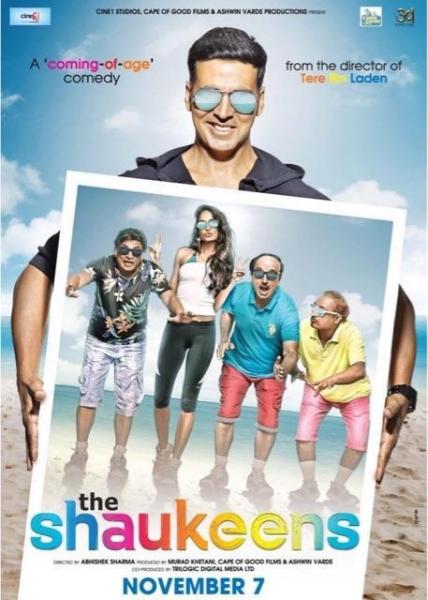
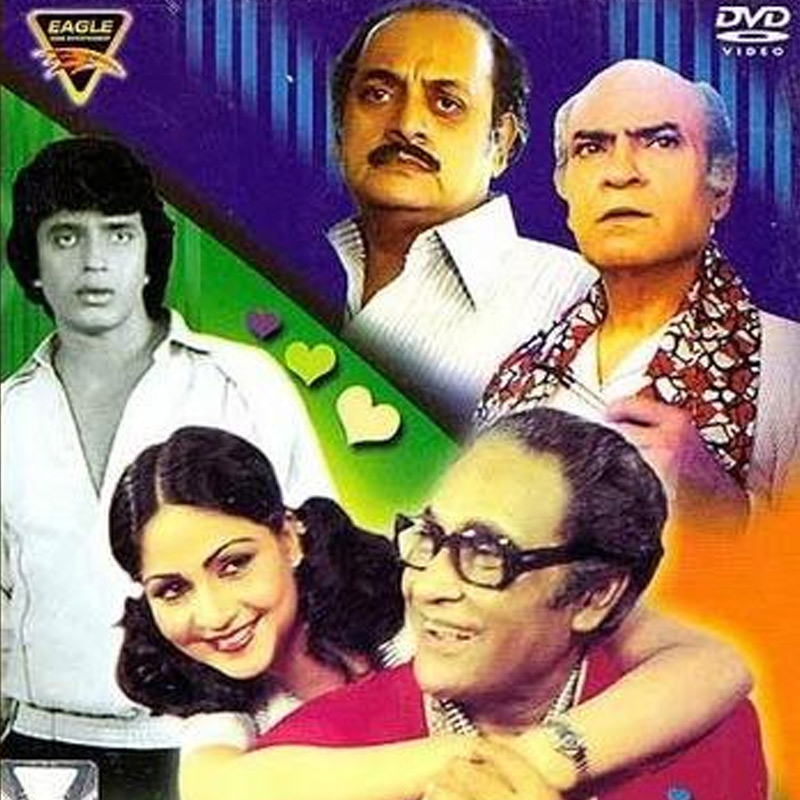
    MUMBAI: Shaukeens, the remake of 1982 Basu Chatterjee film, Shaukeen, starring old stalwarts Ashok Kumar, Utpal Dutt and AK Hangal is below the mark. The three characters being re-enacted by Anupam Kher, Annu Kapoor and Piyush Mishra are no patch on the veterans they replace. Plus, the script has been mutilated badly in an attempt to better it (old classics can’t be bettered).  The film opened low despite a weak opposition. And, the film has managed to collect just Rs 13.5 crore for its opening weekend.


    Rang Rasiya, an attempt to sell some nudity in the name of an artistic biopic about a celebrated artist Raja Ravi Varma, has not worked. Biopics about known recent heroes don’t work with our audience and this film working was a long shot. The film fares poorly, missing a first day crore by miles and going onto end the weekend with a poor Rs 2.1 crore.


    Super Nani fails at the box office. The subject, despite Rekha enacting the protagonist, is outdated and treated badly. The film has managed to collect a meagre Rs 2.75 crore in its first week.


    Roar, a rare film on human vs man eater tigers in a game of survival offered some novelty value which was not enough to save it at the box office. Laden with heavy special effects, which costs dearly, the film has managed just Rs 7.85 crore in its first week.


    Happy New Year, despite its negative reports, gets the advantage of poor oppositions and does better than merited in its second week. Even while on decline after its opening day, the film manages to collect Rs 32.4 crore in its second week taking its two week total to Rs 162.4 crore.


    Haidar has added Rs 10 lakh in its fifth week to take its five week total to Rs 40.5 crore.


    Bang Bang has collected Rs 15 lakh in its fifth week to take its five week total to Rs 145.75 crore.


  • Akshay Kumar strives hard for the National Award, in ‘The Shaukeens’

    Akshay Kumar strives hard for the National Award, in ‘The Shaukeens’

    MUMBAI: With Akshay Kumar’s latest flick The Shaukeens ready for release, his character in the movie was recently announced. The actor will play a real life version of himself, but with a surprising twist. He will be seen playing an alcoholic superstar in the feature.


    Director Abhishek Sharma reveals, “In the film, Akshay desperately wants to win the National Award. There is this huge conflict between him and his business manager (Cyrus Broacha), who wants him to break box-office records instead. But Akshay is ready to do anything to bag the most respected award in the country.”


    This interesting spin to the character goes on to form the highlight of the movie produced by Murad Khetani and Ashwin Varde.


    Sharma further reveals that the manner in which the superstar achieves his goal goes on to become a crucial part of the films plot.


    “In the middle of all this mad conflict are a greedy secretary, an eccentric director and a commercial filmmaker — all driving Akshay crazy, who’s wasted, anyway! It is madness like never seen before,” adds Sharma.     


    The Shaukeens is a remake of 1982 comedy movie Shaukeen directed by Basu Chatterjee. It stars Anupam Kher, Annu Kapoor, Piyush Mishra and Lisa Haydon along with Akshay Kumar.


    Produced by Cine1 Studios, Cape Of Good Films and Ashwin Varde Productions, the film is set to release on 7 November 2014.

  • Anupam and Lisa get drunk: Behind the scenes of ‘The Shaukeens’

    Anupam and Lisa get drunk: Behind the scenes of ‘The Shaukeens’

    MUMBAI: To give a scene reality touch while shooting, actor Anupam Kher and Lisa Haydon downed a little too much red wine on the sets of The Shaukeens.

    Tired after a hard day at work, where the lead actors Anupam Kher, Annu Kapoor, Piyush Mishra and Lisa Haydon were scheduled to travel to three different locations to shoot three different scenes in one day, with each location about two hours away from the next. Haydon and Kher decided to break away from the tradition of using mock drinks for shooting the last scene for the day where they were to be filmed while drinking wine by having actual red wine.

    By the time the final shot was taken, the two had downed three to four glasses each, a source from the sets revealed. “Luckily, it was the last scene for the day. So, no one noticed that the actors were actually in high spirits.”

    The Shaukeens is a remake of 1982 comedy movie Shaukeen directed by Basu Chatterjee. It stars Anupam Kher, Annu Kapoor, Piyush Mishra and Lisa Haydon along with Akshay Kumar in a special appearance. Produced by Cine1 Studios, Cape Of Good Films and Ashwin Varde Productions and directed by Abhishek Sharma, the film is set to release on 7 November 2014.


  • Zee Classic celebrates the life and works of renowned Director Basu Chatterjee

    Zee Classic celebrates the life and works of renowned Director Basu Chatterjee

    MUMBAI: Over the past 100 years, Bollywood has made spectacular contributions to the world of art. Beautiful portrayal of human emotions, innovations in the technical aspects of cinematography, actors and musicians of unparalleled talent – India’s film industry has a lot to be proud of. Keeping the mood alive, Zee Classic, India’s only Hindi movie channel shows films from the classic era of Hindi cinema. The channel has taken a step forward to enthral the movie lovers with a robust line up of evergreen movies and experience the magic of the Golden era of Indian cinema.

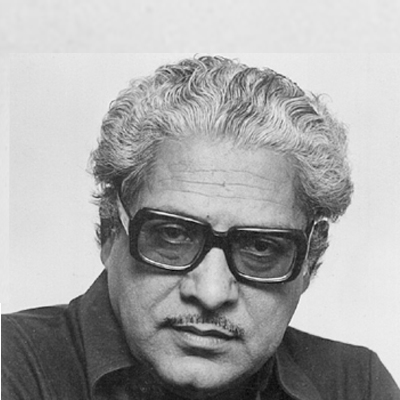
    Come March and the channel will screen works of Basu Chatterjee – one of the stalwarts of Hindi Cinema every Saturday from 1st March to 5th April 2014.  Basu da, as he is lovingly referred to, is known for his light comical take on issues revolving around the lives of middle class families.  The repertoire of his ‘middle-of-the-road’ films have catered to Indian sentiments of the time he came from and went on to be timeless classics which is enough to describe the legendary filmmaker.

    The film festival – Khatti Meethi Life includes a line-up of movies such as the comedy drama Pasand Apni Apni, romantic comedy musicals follow with Laakhon Ki Baat, moving on to a funny tale of Four old men Shaukeen, the beautiful love story Baaton Baaton Mein and Chitchor. The festival comes to a close with Piya ka Ghar – a movie about the ups and downs of living in India’s city of dreams and Bollywood’s home – Mumbai.

    Commenting on the channel’s endeavour, Mr. Akash Chawla, ZEEL Marketing Head, National Channels said, “Our film industry has grown manifold from where it started. There are new genres being explored and each artist comes with his/her own set of expertise and innovations.  In the field of arts, looking back to one’s roots is always a great source of inspiration. The themes and plots from the golden era are relevant to this very day. Zee Classic believes that such great works of cinema should not go unnoticed and hence we have recreated that evergreen era for the viewers of today. We have a great lineup of some of the best works of Basu Da for the audience and we look forward to offering many such specials in the coming future.”

    Flashbacks to good things of the past are a favourite for all movie buffs. With Zee Classic bringing you the best of one of Bollywood’s greatest movie-makers – this March is going to be a wonderful throwback. Here’s to Zee Classic standing true to the promise of bringing forth ‘Timeless Movies. Timeless Moments’ and many more movies from that unmatched era!

  • Jury for Jagran Film Festival Mumbai 2013 announced

    Jury for Jagran Film Festival Mumbai 2013 announced

    MUMBAI: Ahead of the fourth edition of Jagran Film Festival Mumbai 2013, the jury for the event has been announced. For the film festival which commences from 24 September, the jury members for the ‘Indian Showcase’ (feature in competition) section include film maker Basu Chatterjee, actress, film director and producer Aditi Ninad Deshpande, cinematographer Raamachandraah, film editor Suresh Pai and the current commander-in-chief of Indian theatre Feroz Abbas Khan.

    The event which will be held at Fun Republic cinema in Andheri west, Mumbai, will see more than 20 feature films, made in Indian regional languages, including Hindi blockbusters compete with each other in this category. The section also encourages debut directors to showcase their work in front of a global audience and compete with some of the bests, at both national and international level, in the industry.

    Apart from Indian showcase section, where India’s best feature films are competing with each other, the festival has also organised a competition for short films. Under the section ‘Jagran Shorts’ more than 35 short films made in various Indian regional as well as international languages are going to compete with each other. These short films will be judged by a panel of eminent jury including French actress Dorothy Briere, film director N Chandra and Rajshri Media managing director and CEO Rajjat A Barjatya.

  • Sachin, Basu Chatterjee mourn A K Hangal’s death

    Sachin, Basu Chatterjee mourn A K Hangal’s death

    MUMBAI: The month of August has been really very bad for the film industry with several film stalwarts like Dara Singh, Rajesh Khanna and now A K Hangal passing away to eternity.

    Having started in films with the Hindi adaptation of Nobel laurette Rabindranath Tagore‘s story ‘Post Office‘ titled Dakghar was back in the 60s, he went on to do more than 100 films, notable among them being his role as Ram Shastri in Aaina (1977), Inder Sen in Shaukeen, as Bipinlal Pandey in Namak Haraam, as Imaam Sa‘ab in Sholay and as Anokhelal in Manzil among others. Incidentally, he was the only character actor who did 17 films with the late Rajesh Khanna.

    Reminisces actor-director Sachin, who played Ahmed to Hangal‘s Imaam Saheb, “The industry is indeed grieved at the passing away of Hangal saab as we dearly called him. His memory becomes all the more important to me because he started his career with me and Balraj Sahni in the Zul Vellani-directed children‘s film Dakghar in 1965.

    Besides his association with IPTA then, he was actively involved in patriotism-related activities. It was for this, that the government of India conferred the Padma Bhushan to him in 2006. Known for his subtle performances, Hangal saab was loved by one and all.

    After a long time, we both had the occasion of working together again in the Rajesh Khanna-Shabana Azmi film Avatar in which we both had important roles. Then we did Sholay together but after that I had no chance to work with him.

    Once, I remember when he was reminiscing about his past, I asked him, “Hanagl saab, people know you as A K Hangal, but please tell what does A and K mean. That is when he said, “My name is Avtar Kishan Hangal.” With his demise, we have not only lost a great actor but also a good human being. May his soul rest in peace.”

    If one may remember, Hangal played one of the three elderly gentlemen who decide to go away to Goa for a while to have some enjoyment in their late lifetime in Basu Chatterjee‘s 1982 film Shaukeen. While in Goa, the three men get in hilarious situations with Rati (Agnihotri) as they try to impress her and try to get lucky with her.

    It was a kind of an offbeat role for Hangal saab and that too with seasoned artistes like Ashok Kumar and Utpal Dutt. Remembers Basu Chatterjee, “Never did he feel out of place acting with the two veterans and never did the two allowed him to feel out of place. All the three gelled as a unit and acting wise, all the three performed equally well.

    Hangal saab was a versatile actor who did a variety of roles. He did many films with me. Hangal saab was very dear to me because it was me along with Basu Bhattacharya who picked him up from his tailoring shop in Crawford Market somewhere in 1862-63.

    But it was a pity that the funeral of Hagal saab was barely attended by industry bigwigs. Hangal saab must have moaned from his pyre, “Itna sannata kyon hain bhai.”

    Character actor AK Hangal, who had the rare ability to imbue the smallest and the most ordinary of roles with quality and dignity, passed away at a private hospital in Santa Cruz, Mumbai following health complications caused by a recent hip fracture. “He was not keeping well for quite some time,” his son Vijay told a news agency. He was 98.

    Even in a crowded multi-starrer like ‘Sholay‘ (1975), Hangal‘s cameo of the blind Rahim chacha stood out. Many still remember his dialogue, Yeh itna sannata kyun hai bhai. His emotional speech, on learning that his son has been killed by the dacoits, is among the most moving moments in the film.

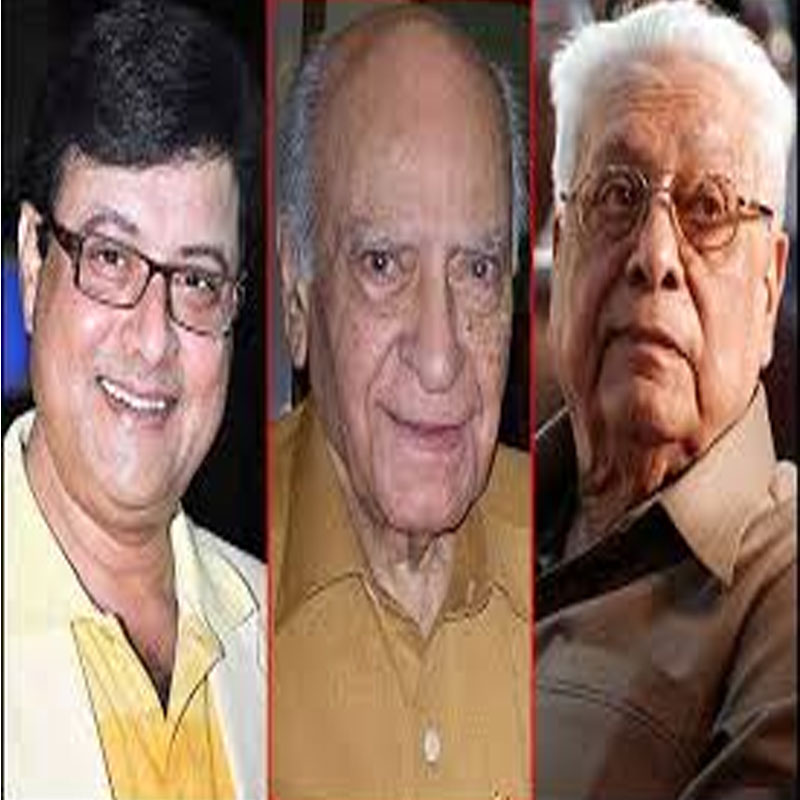
    “He was a brilliant and versatile actor who could modulate his voice very effectively,” says director Basu Chatterjee, who gave the Sialkot-born actor his most shaded roles in films such as ‘Manzil‘ (1979) and ‘Shaukeen‘ (1982). In Manzil, Hangal played a suave crook and in Shaukeen, he was one of the three lecherous old men out to have adult fun. With his death, all the three protagonists- Ashok Kumar and Utpal Dutt being the other two – in the film are gone.

    Recalls director Rahul Rawail, for whom Hangal acted in ‘Arjun‘ (1985) and ‘Dacait‘ (1987),” “He had a complex role in Arjun, where he played Sunny Deol‘s father. But he was brilliant in the role of a man in conflict amidst a rebellious son and a domineering wife.”

    Hangal was 50 plus when he made his Hindi film debut playing the brief role of Raj Kapoor‘s elder brother in ‘Teesri Kasam‘ (1966). Another early role was that of a ruthless businessman who wants to build multi-storeys over jhuggi-jhopris and tries to lure a journalist to join his fold in KA Abbas‘ ‘Bambai Raat Ki Bahon Mein‘ (1967).

    His best roles happened in the 1970s and 1980s when the actor was a regular fixture in dozens of movies. He played some of his more distinctly-etched characters in Hrishikesh Mukherjee movies such as ‘Bawarchi‘ (1972) where he played a clerk with a weakness for the evening tipple and ‘Namak Haraam‘ (1974) where he was an honest trade unionist. The actor is survived by his only son, Vijay.

  • Basu Chatterrjee is jury chairperson of Jaipur film fest

    Basu Chatterrjee is jury chairperson of Jaipur film fest

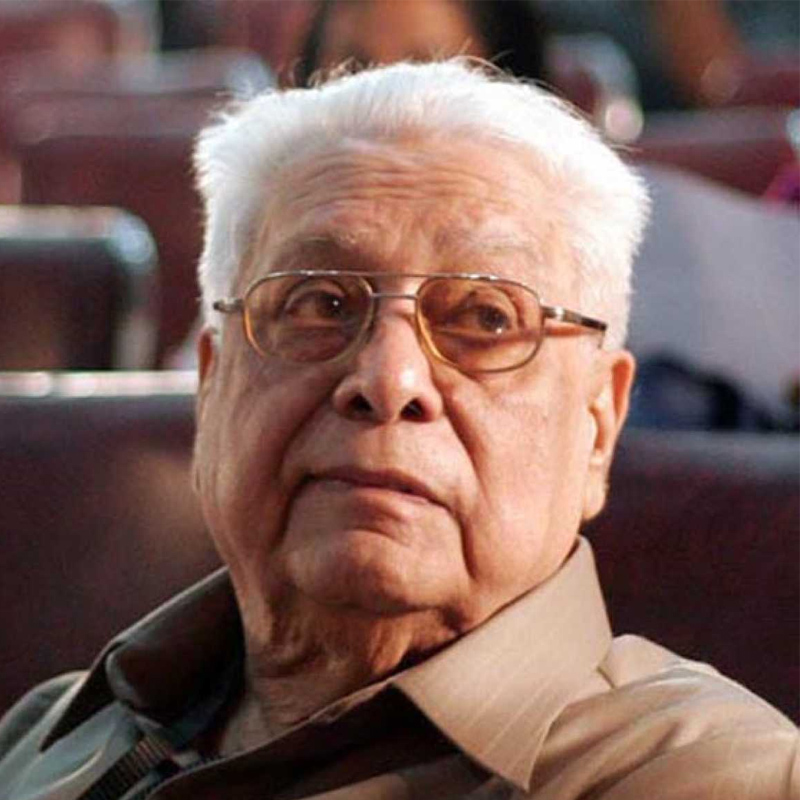
    MUMBAI: The Jaipur International Film Festival (JIFF) has selected veteran filmmaker Basu Chatterjee as this year’s jury Chairperson.

    Born 10 January 1930 in district Ajmer, Rajasthan, Chatterjeee won as many as five Filmfare Awards and in the year 2007 he was bestowed with the IFFA Lifetime Achievement Award.

    As a professional filmmaker, he had directed nearly 42 titles and also wrote the screenplay and dialogues of numerous films.

    The major films that are credited under his name include Kamla ki Maut (1991), Jeena Yahan (1980), Swami (1977), Choti Si Baat (1976), Rajnigandha (1975) and Saara Aakash (1972).

    The Jaipur International Film Festival will be held from 27-29 January.

  • Remake of 1982 film Shaukheen in offing

    Remake of 1982 film Shaukheen in offing

    MUMBAI: Filmmaker Rohit Roy is planning a remake of Basu Chatterjee‘s Shaukheen with Rishi Kspoor, Naseeruddin Shah and Boman Irani who will play 60-plus men who not only chase girls but also have a good time in life.

    The older version had three seasoned actors Ashok Kumar, Utpal Dutt and AK Hangal playing three lecherous old men.

    Kapoor was quoted in media saying that he has agreed to do the project.

    Talking about the script, Kapoor added, “In this day and age, Shaukeen wouldn‘t work. It‘s less Shaukeen now and more Zindagi Na Milegi Dobara. It is the story of three senior guys out to do the things they never dared to do before.”