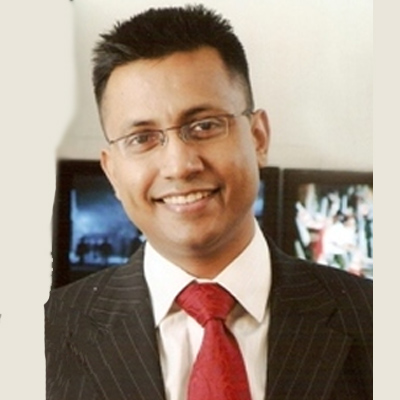
Tag: Barun Das

  • Stage set for 3rd News and Television Awards and Summit

    Stage set for 3rd News and Television Awards and Summit

    MUMBAI: The news television industry is gearing up for the most prestigious Indian News Television (NT) Awards.

    Currently in the third year, the awards are conducted by Indiantelevision Dot Com to recognise and honour news channels and professionals in the country.

    This is for the first time that the NT Awards have been judged by the peer group, that is senior members of the news industry as well as eminent personalities are among the judges.

    According to Indiantelevision.com founder, CEO and Editor-in-Chief Anil Wanvari, “After consulting the industry, we have decided to implement peer judging this year as there is no better way than to be judged by the industry itself. And we are delighted by the response of the news television industry towards the 3rd edition of the NT Awards and Summit. We look forward to taking this from strength to strength with the involvement and support of the industry. Our aim is to establish the NT Awards as the recognition and encouragement of excellence in the news television industry.”

    In all 700 entries were received for 26 categories. The awards will be announced at a glittering ceremony on 25 March at Hotel Ashoka in New Delhi from 7.30 pm onwards.

    The NT Awards will be preceded by the Third Indian News Television Summit, which will be held at the same venue earlier in the day on the theme of “Wake Up Call for the TV News Business”. The summit is endorsed by the Information and Broadcasting Ministry.

    The panellists include Ashok Venkatramani (Star News), Barun Das (Zee News), G Krishnan (TV Today), Jyoti Narain (P7 News), LV Krishnan (TAM), Narayan Rao (NDTV), Shazi Zaman (Star News), QW Naqvi (Aaj Tak), Barkha Dutt (NDTV), Nalin Mehta (Author), Rajdeep Sardesai (CNN IBN), Sanjeev Srivastava (Sahara), NVN Murthy (TV9), Shailesh Reddy (Zee 24 Ghantalu), Rani Reddy (Saakshi TV), and Ramachandra Murthy (HMTV).

    The panel discussions will see participation from a host of practitioners from the news television fraternity. The three sessions are on ‘Reality dawns in the News Business’; The Telugu News Titans’; and ‘Content Story’.

    The NT Awards will have categories that will cover programming and personality awards. The NT Awards will be presented to channel programmers, anchors, presenters, technicians, producers, editors, reporters and management.

    Ernst and Young is the auditors for the awards, while the jury meetings were organised in Mumbai, Hyderabad and New Delhi.

  • The Business of News

    All of us in the business will agree that 2009 was not the best of years. But the good thing about it was that the world of business learnt the hard way that business is not just about excel sheets and that the valuation on those excel sheets does not attract attention in a hurry.

    Media was possibly one of the worst hit sectors across the world. Quite logically so; one of the first cost cutting steps, if not the first, is usually, if not always, slashing of advertising expenses. More often than not, in recessionary circumstances, advertising is no more considered as an essential investment.

    News industry in India, however, was not that badly hit as the country went through a General Election. But there’s much more in the news on TV News industry! Read on…

    News television is supposed to have two distinct identities. As the fourth estate, it is supposed to inform and empower the viewers, work as a watch dog to the policy makers and implementers. It is supposed to perform the role of a facilitator for our citizens, many of whom are disadvantaged and aggrieved, or for those groups which believe they have a legitimate and justifiable grievance against the powers that be. All this requires us to act as custodians of public interest. The other identity is as private sector organisations we are bound by the rules of the big bad market of balance sheets and ROI.

    Most people seem to think that these two distinct identities are at conflict, but I‘m willing to take a bet that they are not. But we sure have a lot to worry about – both our public and private interests.

    First about our reducing role in the public interest space. The viewership (GRP) figures of news television in India paint a disquieting picture. The GRPs slipped from 236 in 2007 to 221 in 2008 and to 166 last year, a 30 per cent shrink in just two years. I am at a loss to pinpoint a particular reason for the slide. However, regional channels are robustly augmenting. As a thumb rule, a regional news channel should have 70 to 80 per cent local news. Are audiences then more interested in closer home realities than the larger canvass?

    Are viewers deserting news channels? Is there a significant change in rating base which has caused this decline? Does our gut-feel endorse these slipping numbers?

    Let me cite a small anecdote. Once when former US president Lyndon B Johnson was asked his views about the media, he had quipped: “If one morning I walked on top of the water across the Potomac River, the headline that afternoon would read: “The President Can‘t Swim.”
    He may have said this decades ago but it captures to a great extent how Indian media too can influence or draw interferences from a simple and straightforward piece of news. In the spider-web of competition, the truth sometimes gets strangled. But is that all? I wish, it was.

    Like for instance, what would you call “Breaking News” in today’s context? Before that, how would you define “News” ? In my own understanding, reporting of any incidence that is “topical” and “relevant” is news. Tabloid journalism possibly compromises with the relevance factor, but still remains topical. And thus “breaking news” would be an initial (ideally first!) reporting of an incident or development which would be relevant for a certain section of audience.

    But the Indian news media has redefined “Breaking News”. It could be anything from what the babas and tantriks have to say to what the astrologers’ take on eclipses is, what the cats, dogs, snakes and the likes are engaged with! This unthinking, wavered ways of the news channels has taken the sheen away from the respect we used to command as organisations with social responsibility.

    Thankfully, we in our ( Zee News Limited) news channels do not have such wide canvas for “Breaking News” and our editors still stick to the literal translation of the two words under reference. And it was thus with some sense of concern, as also with an equal feeling of social responsibility, that in May 2008 Zee News took a conscious decision to break free from the trend of hype and hoopla. Respecting the intellect of Indian audience, we brought our focus back to facts, analysis, perspective, reportage and the likes. I can say today, with some satisfaction, that we have not wavered from our path since, despite pulls and pressures from the policies of competition. We held steadfast in dishing out for our viewers news that was accurate and relevant, across all bands and in all languages that we deal with. Clearly, our guiding principles worked and we witnessed all-round growth across channels.Let’s now look at the business of news. Did you notice that the sole criterion that a media brand or organisation is evaluated in India is nothing but the TRP numbers? Logically there’s nothing wrong in it as higher TRP would lead to higher advertising. Advertising is still about 80 per cent of the broadcast sector‘s revenues in India and hence that should lead to higher profitability. However, in India, as known to most by now, profitability is not just TRP numbers. Rational cost structure, innovative strategy, network economy of scale etc have significant influence on the way business is done and hence on the bottom-line of any business. Thankfully, the economic recession has brought the attention back to current bottom-line. Valuation is no more the buzzword. Current deliveries are at the core of all decisions with respect to a business outfit. While the marketing and programming departments still get credit for the TRP numbers, the business leaders would have to wake up to serious questions on returns and profitability from those who are funding the businesses. I assure you that the TRP rankings and profitability do not always have a direct corelation. At least in our case the latter far out-performs the former.

    Yet, I‘m not without hope. As an eternal optimist, I feel that the future of news TV is far more promising than what seems on the surface. The industry body, the News Broadcasters Association (NBA), has come up with commendable achievements in its effort to self-regulate. It is encouraging for NBA to get significant acknowledgement from the Ministry of Information and broadcasting.

    I firmly believe that the most potent regulator has always been the “market”. Here in our case, finally the audience has the last say on what they want from news TV and they would make their verdict loud and clear, eventually. And then digitisation would ease out the distribution bottle neck and the news genre would experience explosive growth. As I have always mentioned, regionalisation of TV would be a primary growth driver.

    As I debate the minutiae about dropping viewership trends in my mind, I feel that there is no one distinct phenomenon for the present exodus and it is possible that it just a matter of perspective.

    So I leave it to you to mull it over as well.

  • Zee News to drop ads during 9 pm bulletin

    Zee News to drop ads during 9 pm bulletin

    MUMBAI: How often have you been bugged by the commercial break which crops up just as the news anchor on prime time is about to take you over to a correspondent in another city? Pretty often enough for the Zee News management to take advantage of the irritation that viewers might experience.

    The channel has announced Nonstop@9 a prime time 9 pm news bulletin from 9 February which will offer “rapid-fire break-free and non-stop” news. All the important news stories of the day will be crisply wrapped up in 24 minutes without any commercial breaks, claims the channel.

    Zee News Ltd CEO Barun Das says: “Non-stop news at 9 is an effort to cater to the hard nosed news viewer by redefining the set parameters of news presentation. We have always believed in providing content which is not only informative but also presented in a unique format. Nonstop@9 is yet another approach from the Zee News stable to update its viewers about the happenings in a short and comprehensive format.”

    Will viewers sink their teeth into the new news offering? Well, we will find out after the commercial break.

  • ‘The downturn will bring in corrections not just in carriage but in every other aspect’ : Barun Das – Zee News Ltd CEO

    ‘The downturn will bring in corrections not just in carriage but in every other aspect’ : Barun Das – Zee News Ltd CEO

    Churn. The television industry has been going through turbulent times with the economy downsliding and ad growth decelerating. Like its peers Zee News Ltd (ZNL) too has been riding the wave of turbulence with its unique mix of national news and regional language channels.

    While Zee News, Zee Marathi and Zee Bangla have been growing rapidly and notching up profits, Zee Telugu has turned operationally cash positive. The management has managed to keep losses from its ‘new businesses’ (channel launches in the south and Zee Talkies) under control; full fiscal loss forecasts stay unchanged at Rs 700 million, even though it is planning to launch a regional channel targeted at Uttar Pradesh. Simultaneously, it has decided to pull the shutters down on Zee Gujarati from 30 April as it was bleeding.


    ZNL is also pursuing growth through the franchisee model, an experiment not tried yet by the other news broadcasters. After partnering with SB Multimedia for a regional news channel in Chattisgarh, the company is keen to tap local entrepreneurs who desire to get into the TV news space in regions which do not occupy Zee’s immediate direct expansion plans.


    In an interview with Indiantelevision.com’s Sibabrata Das, Zee News Ltd CEO Barun Das talks about the success of the Zee News channel following a repositioning exercise, the turn around of Zee Business, the emergence of new driver channels within the bouquet, the challenges of tiding over the global economic turmoil, and the company’s growth plans.


    Excerpts:

    Media companies are reeling under a severe ad slowdown. How has Zee News Ltd bucked this trend so far?
    We are helped by the fact that the regional language markets are growing faster. What is working for us is the composition of the bouquet. Some of the new regional channels have started delivering while the driver channels continue to post strong growth. The positive thing is that more channels like Zee Telugu, Zee Kannada and Zee Business are positioning themselves to get into the driver category over the next 12-18 months.

    Isn’t the economic downturn affecting regional markets as well?
    There is an overall slowdown. But regional television media markets are still in their nascent stages. The size of these markets is small and there is a lot of potential to grow them. The Marathi news market, for instance, is new. Even in the general entertainment space, the regional channels arrived much later than the invasion of private satellite television in national languages. Outside the southern region, it is the Marathi and Bengali markets that really matter. The other regional markets are small and I don’t see them growing to any significant size in the near future.

    Is this the time to take hard calls like shutting down Zee Gujarati?
    We critically reviewed the channels that are not likely to make profit in the near future and decided to close down Zee Gujarati with effect from 30 April. Our learning in that market shows that the revenue is too small as entertainment consumption happens primarily in Hindi. It didn’t make sense to linger with the channel and burn cash any more. We would rather focus on the bottom line of the company while strategically expanding our presence in other markets, products and services.

    Has the break even success of the Telugu general entertainment channel put you in a comfort zone in the southern region to launch more channels?
    We are backing up the progress of Zee Telugu with the launch in this quarter of Zee 24 Ghantalu, a Telugu news channel. Though Zee Kannada will not break even this fiscal, it would happen in the first or second quarter of FY’10. So yes, we have managed to open up the southern space for ourselves.

    How bullish are you about cracking the Tamil market, particularly when the Marans (Sun TV promoters) and DMK party chief and Tamil Nadu chief minister M Karunanidhi have smoked the peace pipe?
    We are investing Rs 900 million for the Tamil channel in the first year (capex+one year opex). We expect Zee Tamil to break even over 36-48 months. We have signed up with Sun Group’s cable TV arm SCV and the channel is well distributed. We are also in talks with Sun Direct for a presence of the channel on the DTH platform.


    What makes us stay bullish is that Tamil Nadu is the biggest regional market. Besides, there is only one player (Sun TV) in that market, giving us space to climb the ladder. We feel we have a good opportunity to be a strong No. 2 or No. 3. Also, we have started understanding the nuances of the southern market from our experience, planning and research in running a Telugu and a Kannada channel.

    What is working for us is the composition of the bouquet. Some of the new regional channels have started delivering while the driver channels continue to post strong growth. The positive thing is that more channels like Zee Telugu, Zee Kannada and Zee Business are positioning themselves to get into the driver category over the next 12-18 months

    How much is ZNL going to lose from its new businesses this fiscal?
    We are sticking to our original guidance of an EBITDA loss of Rs 700 million from our new businesses (Zee Telugu, Zee Kannada, Zee 24 Taas, Zee Tamil, Zee Talkies and Zee 24 Ghantalu) this fiscal. There is no revision upwards despite us planning to launch a regional news channel in Uttar Pradesh.

    With the Indian economy coming under the shadow of a global recession, have you shelved plans to launch an English news channel?
    There is no additional expansion plan at this stage outside the launch of Zee 24 Ghantalu and a regional news channel in Uttar Pradesh. But we are exploring opportunities in the English business news space. There is a lot of potential, but we have not concretised our plan as yet.

    Marathi movie channel Zee Talkies got transferred from Zee Entertainment Enterprises Ltd (ZEEL) to ZNL. Will the company launch regional movie channels in each market where it runs a GEC?
    Theoretically, we should have a GEC, a news, a movie and a music channel in each regional market where we have a presence. But we are not getting into that gear at this stage. Our Marathi presence is the most widest, followed by Bengali where we are involved in two GECs. While we have the market leader in Zee Bangla, we have taken a 26 per cent stake in Akaash Bangla along with a channel management agreement.

    Will you be expanding in the near future through the franchisee model?
    After launching Zee 24 Ghante Chattisgarh under this model, we are exploring more such opportunities. There is a huge upside in revenues when the economic climate is more favourable; and the money goes straight into the bottom line.

    Is the flagship Hindi news channel growing at a slower pace?
    Along with the growth in viewership share, there is a significant revenue growth as well. After we relaunched the channel with a game-changing strategy, premium brands from sectors like cosmetics, automobiles, and IT – who were earlier not present as our advertisers – have come on board.

    How are you planning to push Zee Business which is considered as a laggard in comparison to its competitive channels?
    Zee Business has made rapid strides over the last several weeks and has moved up from a 11 per cent share in a four-channel market to a 26 per cent share in a five-channel market scenario. We have changed the look and feel of the channel, beefed up our research team, took it beyond a eight metro approach, targeted specific audiences, and focused on the SME sector. We have also concentrated on events; we would have conducted 47 events in the second half of the year. All this seems to be working for us.


    In fact, 2008 is also the year when 24 Ghanta went ahead to emerge as a leader in the Bengali news market with its focus on content, events and communications. We nullified Star Ananda’s strength in football coverage by acquiring the rights of the National Football League.

    Do you have plans to launch add-on channels like Tez to guard your flagship Hindi news channel?
    Primarily, our strategy is to have state-based news channels. This will continue to be our going-forward direction in the near future.

    Is subscription revenue looking positive with the entry of more DTH players?
    DTH is a growing segment and we stand to benefit from it. It currently accounts for 32 per cent of our subscription income.
    Will carriage costs continue to climb as more channels launch and continue to jostle for space on cable networks?
    With digitalisation growing, carriage rates will continue to slide. The downturn will bring in corrections not just in carriage, but in every other aspect.
    Including downsizing staff?
    Retrenchment is not required. But going forward, we will see how much we need to rationalise on our costs. We will scrutinise every cost, review every deal, and re-negotiate with our suppliers.
    In such a tough market, will you cut down on rates and play the volume game to consume ad inventory?
    The right strategy would be to provide better value than cut rates. Our plan is to offer tailor-made solution for clients and work on innovations. We are, for instance, getting four co-branded programmes on Zee News channel. The truth is that all of us have to stretch more than what we have ever done so far.
    How do you plan to survive the woes of 2009-10?
    It will probably be the worst year any of us have ever seen. Our endeavour will be to strongly hold on to the ground and use this period to prepare ourselves for being able to take the next big leap when we finally move out of the global recession.
  • Zee News inks content deal with Voice of America

    Zee News inks content deal with Voice of America

    NEW DELHI: Zee News has inked a deal with Voice of America for syndication of content.

    As part of the syndication, Zee News will air a five-minute daily segment ‘America Live’, which will be a part of the 8 am news bulletin.

    Zee News will also telecast relevant stories in the afternoon 2 pm and prime time news bulletin, News Top 10. Apart from the regular news feed, Voice of America will also develop half-hour specials on topical issues for Zee News.

    Zee News CEO Barun Das said, “Our alliance with Voice of America will expand our reach in the international market. We strongly believe that adding value to viewers depends on our leverage, access and global leadership.”

    Added Voice of America director Danforth Austin, “In our first broadcast, the Indian audience heard US leaders condemn the violent acts in Mumbai and expressed solidarity with India in this difficult time. America live also relayed to Zee News audience the sentiments of members of the Indian-American community in the US as they shared the grief experienced by the people of India. Through this new partnership, Voice of America hopes to contribute to Zee News’ programming with leading news from the United States and its reaction to events that shape the world today.”

    In addition to the routine stories on business, human interest, politics and special half-hour reports, Voice of America will be covering all the major events and news stories live from different parts of the United States to give Zee News an informative peek into daily affairs.

  • Zee News Q2 net up at Rs 114.7 million

    Zee News Q2 net up at Rs 114.7 million

    MUMBAI: Zee News Limited (ZNL) has posted a consolidated net profit of Rs 114.7 million for the quarter ended 30 September, 2008, up 104.4 per cent from Rs 56.1 million in the previous year.

    During the period, the company’s revenue jumped 60 per cent to stand at Rs 1.27 billion as compared to Rs 798.1 million in the prior year.

    Advertisement revenue increased 60.8 per cent to Rs 1.01 billion while subscription revenue grew 56.2 per cent to stand at Rs 234 million.

    Zee Group chairman Subhash Chandra said, “In this time of a perceptible global economic slowdown and challenging macroeconomic environment during which investor confidence is certainly not at its peak, Zee News Limited has delivered excellent results in the second quarter of FY’09. The company has maintained its growth momentum and recorded a healthy 60 per cent increase in top line of Rs 1.27 billion. Consolidated EBIDTA stood at Rs 212 million, up 99.3 per cent. As per our guidance given, the Telugu channel has broken even in this quarter.”

    After launching the Tamil general entertainment channel on 12 October, ZNL plans to launch the Telugu news channel, Zee 24 Ghantalu, in November. Plans are also afoot to launch UP news channel Zee 24 Ghante. “In line with our vision of regional expansion, we may as well look for certain innovative strategic investments in the coming period,” Chandra added.

    Marathi movie channel Zee Talkies has been transferred to ZNL with effect from 1 August.

    Commenting on the results, ZNL MD Laxmi Narain Goel said: “The existing businesses continued to grow and recorded around 45 per cent growth in operating revenues while the same for new businesses was 226 per cent. Viewership too experienced an upward spiral with almost all the Zee News Limited channels experiencing a growth in channel share compared to the corresponding quarter last fiscal.”

    Added Zee News CEO Barun Das, “In our new businesses, both Zee Telugu and Zee Kannada are gaining traction in their respective markets and delivering growing revenues and GRPs. While Zee Telugu has broken even, Zee Kannada is strongly on the path to break even as per our previous guidance.”

  • G Krishnan to stay as NBA president

    G Krishnan to stay as NBA president

    NEW DELHI: News Broadcasters Association (NBA) has re-elected TV Today CEO G Krishnan as its president for the second term, at the first annual general meeting (AGM) held in the Capital today.

    Ibn18 Broadcast joint MD Sameer Manchanda holds the position of vice president for the second term while NDTV group CEO KVL Narayan Rao will continue as the treasurer.

    Krishnan said, “The future before us is very complex and challenging. The question we have to ask is, do we have the vision to move together to meet these challenges? The Indian broadcasting industry will change enormously and we will have to change willingly. Instead of reluctantly drifting into the future, we should drive the future using all the tools available to us, given of course that government policies adapt to new realities.”

    “The movement forward is a collective initiative supported with a sound policy environment. The industry and government must work together in a public private partnership to meet the new challenges and to strengthen the broadcasting industry rather than strangulate the industry. A meaningful dialogue is needed with the government and the various stakeholders,” he added.

    In addition NBA announced the names of office bearers and board of directors for 2008-09 which includes G Krishnan, Zee News CEO Barun Das, Times Global Broadcating CEO Chintamani Rao, KVL Narayan Rao, Independent News Services COO Rohit Bansal, Sameer Manchanda and Media Content and Communications Services (India) managing editor Shazi Zaman.

    The board of directors of NBA remains exactly the same as it was last year.

  • NBA to put in place content code based on self-regulation within 4 weeks

    NBA to put in place content code based on self-regulation within 4 weeks

    NEW DELHI: The News Broadcasters Association (NBA) will put systems in place for a content code based on self- regulation for news television channels within four weeks.

    “The Information and Broadcasting ministry is only entitled to give the licence and the rest should be left to the industry. NBA has worked out an answer to the Content Code where it has dealt with redressal mechanism, the details of which would be released in another four week’s time”, said TV Today Network CEO and NBA president G Krishnan while speaking at the second edition of the NT Summit, organised by Indiantelevision.com.

    The morning session on “The Commercial Imperative” focused on striking the right balance between the editorial and commercial imperatives.

    Distribution was emerging as a large cost that was hurting news broadcasters, speakers at the session agreed.

    “News channels are paying Rs 5 billion as carriage fee. The surge in distribution costs is killing the industry,” says Krishnan.

    The news TV business is raking in over Rs 10 billion in revenues and is employing over 25,000 people directly,” Krishnan added.

    The distribution issues, however, need to be sorted out. Times Now CEO Chintamani Rao blamed the huge pressure on cost of distribution as the major force impeding the growth process of the industry.

    Digicable CEO Jagjit Singh Kohli said digitalisation through Headend-In-The-Sky (HITS) and Cas was the only way out. “In analogue mode, a cable operator has a capacity to carry 70 to 80 channels. However the numbers of channels are increasing every day. So till the time complete digitalisation takes place, the situation will remain grim.”

    Kohli blamed the government for not coming out with policies on Cas extension and HITS. “We applied for HITS licence but the government said the policy was not ready yet,” he said.

    The market was being spoilt by new entrants from across all sectors. The ministry of information and broadcasting ministry recently cleared 33 licences for news channels.

    “A multi-media approach can only help succeed in this clutter. Single news channels will find it very difficult to exist,” said CNN IBN and IBN7 editor-in-chief Rajdeep Sardesai.

    While the commercial aspect is imperative, it should not be forgotten that news is a unique product which is built over a period of time and is known for its credibility and genuineness, Sardesai added. “The ‘Chinese wall’ between content advertisements and content should be maintained.”

    Star News CEO Ashok Venkataramani added, “Commercial side of the news business is very important..”

    The market has to rule. Zee News CEO Barun Das said that there was space for real news, evident from the success that the relaunched Zee News channel is enjoying.

    Tam India CEO L V Krishnan stated that news channels have drawn in new audiences and advertisers. The afternoon slot, for example, used to barely have any viewership. But now it has opened up women audiences. “Almost 44 per cent of viewership in the afternoon comes through women. There are 3400 new advertisers that have flocked in.”

    India TV COO Rohit Bansal stressed on the reason behind showing news and non news programmes, “The family audiences have certain choices, likes or dislikes; depending on that we create our programmes. We are also scoring on real news. The ministry of Information and Broadcasting looks at us as hard as it looks at any channel. And till date we have never faced a situation where we had to apologise for showing distressing content. As a news channel our job is to satisfy the regulator, advertisers and viewers and we are all trying our best to maintain the balance.”

  • Zee Business, Reliance Money to hunt India’s smart investors

    Zee Business, Reliance Money to hunt India’s smart investors

    MUMBAI: Zee Business, in partnership with Reliance Money, has announced ‘Hunt for India’s Smart Investor’.

    The initiative is an attempt to identify India’s smartest investor and in the process feature the ideal investment plans of typical Indian families chosen from across various Indian towns and cities, with wide-ranging family backgrounds.

    ‘Hunt for India’s Smart Investor’ will feature a series of ground events across 21 carefully selected towns and cities representing the entire length and breadth of the country.

    Sharing his views, Zee News Limited CEO Barun Das said: “With multiple investment options available today, it becomes difficult to choose the perfect investment plan. Hunt for Smart Investor is an attempt by Zee Business to empower its viewers in their investment related decision making. It will endeavour to give a new direction to the way transacts in financial markets.”

    The hunt will identify the three best smart investors in every city on the basis their investment acumen. One family out of the three nominations will represent the city in the zonal short listing. After the rigorous competition, the search will culminate in Mumbai where the final winner will be felicitated and crowned as ‘Smart Investor.’

    Reliance Money CEO and director Sudip Bandyopadhyay said, “As a company, we aim to change the way people select and use financial services. We are working on expanding the financial products and services market by taking our offerings to the masses of the country in a cost effective, convenient and secure way. Educating investors and providing them with the right information forms an integral part of this venture and we are confident that the Smart Investor show will achieve this objective”.

    The ‘Zee Business Hunt for India’s Smart Investor’ will start with the Gwalior round on 8 August. The grand culmination is scheduled for December 2008.

    ‘Our objective is to empower viewers on smart decision-making related to investments, savings and spending. The Smart Investor Show is an effort in this direction. It will not only promote the need for investment planning but will also provide expert advice to plan investments systematically. We are happy to have Reliance Money partnering with us on this initiative.” said Zee Business business head Raktim Das.

    Talking on the occasion, Zee Business editor Samir Ahluwalia said “Our endeavour is to meet the highest standards of editorial excellence and make our content always relevant to the work and lives of our viewers. We are positive that our viewers will not only find the concept interesting, but helpful as well. We will continue to entertain our viewers with informative and educative initiatives.”

  • Bhushan Khot is Zee 24 Taas biz head

    Bhushan Khot is Zee 24 Taas biz head

    MUMBAI: Bhushan Khot has joined as the business head of Zee 24 Taas, Zee’s Marathi news channel.

    Prior to this appointment, Khot was head of the language brand team at Times group.

    Khot will report to Zee News Ltd CEO Barun Das. “I have taken charge and will see the business expansion of Zee 24 Taas,” avers Khot.