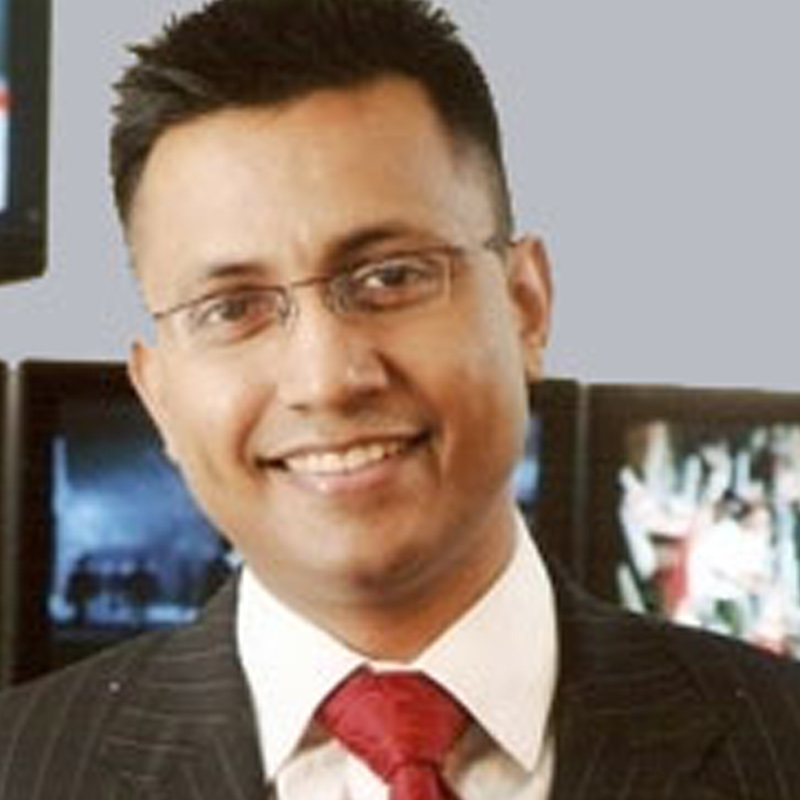
Tag: Barun Das

  • TV9 Bharatvarsh CEO Barun Das fires back at NBA

    TV9 Bharatvarsh CEO Barun Das fires back at NBA

    MUMBAI: The young and wiry-looking Barun Das is in a pretty belligerent mood. The CEO of Associated Broadcast Networks that runs the No 2 news channel in India TV9 Bharatvarsh has responded to the allegations that have been hurled against its meteoric rise by the News Broadcasters Association (NBA) to the Broadcast Audience Research Council (BARC).

    In a release issued today, Das has stated that the NBA’s reasoning about TV9 Baratvarsh’s rise in ratings possibly reveals “a lack of basic understanding of the television news business. The fundamental reason behind our success is a concerted strategy of content, distribution and promotion aided by the astronomical rise in viewership during the early weeks of the lockdown.”

    Das has added in the release that the NBA is incorrectly giving “credence to anonymous WhatsApp videos and messages doing the rounds to defame the TV9 network. These videos have already been dismissed as fake by BARC as per media reports. The network has already lodged an official complaint against this with the Telangana police.”

    According to Das, there is no question of TV9 rigging viewership numbers as it was he who wrote to the NBA to suspend the viewership measurement of news channels on 22 March, two days before the lockdown, so that lives of journalists and camera persons would not be impacted by the coronavirus in the quest for ratings by the news channels.

    His request was turned down by the NBA committee. “Now that TV9 Bharatvarsh has garnered the biggest share of the market during the pandemic, obviously the shoe is on the other foot,” he says.

    Das has questioned if the NBA through these efforts is trying to coerce him to renew his membership of the association. “After much persuasion, we chose not to renew it in June and one month later we are in the NBA’s bad books,” he has alleged in the press release.

    The 50-year-old executive who has seen many a battle in his previous associations with media companies such as Zee News, ABP News and India Today has said there are some allegations which the NBA has made against the TV9 network which are defamatory and they will be addressed in an appropriate manner very soon.

    Earlier in the day, the NBA officially sent out a release asking third party intervention into BARC to investigate any hanky panky associated with TV9 Bharatvarsh’s sudden rise.

    On 14 July, Das also got into a conversation with Indiantelevision.com group founder, CEO and editor in chief Anil Wanvari on all things related to news television and the current controversy.

    You can watch the fireside chat here:

  • TV9 appoints Raktim Das as COO of Studio9

    TV9 appoints Raktim Das as COO of Studio9

    NEW DELHI: Beefing up its management team and adding momentum to its pan-network digital expansion plans, TV9 Bharatvarsh announced the appointment of former Zee executive cluster head, innovation studio, and custom content Raktim Das as COO of its property Studio9. 

    In his new role, Das will be responsible for driving the convergence of TV and digital revenue function, with focus on branded content innovation. He will be mandated with setting up an independent profit centre that will design and monetise Web+TV custom content products across multiple language platforms. He will also be responsible for building talent relationships and strategic partnerships for nurturing new growth avenues.

    TV9 Network CEO Barun Das said, “Studio9 is a concept which will enable the convergence of traditional TV and digital in our network. Digital is the future – Hindi and regional news will certainly make a transition from traditional TV to web format. This convergence in the revenue field is of extreme importance. Studio9 will also work with clients to develop creative solutions for their communication challenge. Raktim is certainly the best in the industry to build it from scratch.”

    Looking ahead, Barun Das added that the expects the way the M&E industry conducts its business to change drastically in the post-Covid2019 world. “Those who will adapt to solution-driven models in business, with the infusion of right technology, will lead the revival. While the broader economic environment will be highly challenging, the television news industry will possibly be better off compared to other genres,” Barun Das pointed out

    Raktim Das said, “I am looking forward to be part of the TV9 family. I see huge opportunity for growth in the language markets as nine out of every 10 new internet users in India are likely to be Indian language users. In the new normal, when we are all managing tight business situations, clients and agencies are looking for compelling solutions that are woven around smart innovation to enable purpose-driven, meaningful brand engagement. Ultimately, driving cross-screen engagement will provide the edge to brands.”

    Barun Das added, “I believe that video content across linear TV and digital platforms will converge before completely shifting to digital model. Our digital business model will centre around 3Cs: content, context, and commerce. To me, the digital content business is as much a tech business. Technology is a differentiator and not an enabler. Then comes the ability to innovate as per changing viewers taste.” 

    Prior to Raktim Das’s induction, the network had in June made some strategic leadership moves, including promotion of erstwhile President Sales, Vikram K as COO south to drive the group’s flagship channels TV9 Telugu and TV9 Kannada, while Amit Tripathi was brought on board from Network 18 to serve as the new chief revenue officer.

    In his previous assignment as executive cluster head – innovation studio & custom content at Zee Entertainment, collaborated with leading brands to co-create many award-winning content campaigns. Raktim collaborated with leading brands to co-create many award-winning content campaigns. His media career features many success stories in organizations like the Times of India, India Today Group, Zee Media Corporation Limited, and Network 18.

  • TV9 Group appoints Barun Das as CEO

    TV9 Group appoints Barun Das as CEO

    MUMBAI: TV9 Group has appointed Barun Das as Chief Executive Officer to lead its plans for becoming a dominant national player in the broadcast and digital news space.  Mahendra Mishra, who was acting as the interim CEO of the group, would now be Principal Advisor to the Board of TV9.

    The Group, which enjoys leadership position in multiple languages in the South and West of India, recently launched TV9 Bharatvarsh in Hindi, its first national news channel.

    Das, a veteran of the media business, will be charged with the responsibility of driving synergies among all the channels and to build future-ready new businesses of the Group.

    Dasis an alumnus of Indian Institute of Technology, Madras, Indian Institute of Management, Kolkata and the London School of Economics. His last corporate assignment was as the CEO of Zee Media limited where he worked for over five years. 

    Das has over 25 years’ experience and before Zee News, Barun worked in leadership positions in ABP News, India Today Group, Astro All Asia Network in Kuala Lumpur, ABP Group etc.

    Commenting on Barun’s new role, TV9 Board Whole Time Director and member Singa Rao said, “Our group is committed to the roles and responsibilities of the Fourth Estate. Given our leadership position in the southern and western parts of the country, we are now aiming at achieving similar success in the rest of the country and in the new media domain. We are confident that Barun, with his all-round and vast experience and track record, will power this foray. We welcome Barun on board.”

    Das said he was looking forward to the honour and challenges of the assignment. “I am excited about this new opportunity given the Group’s vision. Every new opportunity comes with fresh challenges and I wish to contribute my bit along with the team. Since TV9 has impressive leadership in the regions of its current operations, it will be my pleasure and privilege, to drive its expansion in the national arena.”

    Mishra commented, “ I am delighted to be a part of the next big leap that the organization is going to take in the national arena. I welcome Barun on board and I am confident that under his leadership our team would scale new heights.”

  • Alok Agarwal replaces Barun Das as Zee News Ltd CEO

    Alok Agarwal replaces Barun Das as Zee News Ltd CEO

    MUMBAI: Alok Agarwal is replacing Barun Das as chief executive officer of Zee News Ltd (ZNL) with effect from 1 October.

    Das, who had a five-year stint has resigned and will be serving his notice period. He will complete the handover formalities to Agarwal.

    ZNL managing director Punit Goenka said, “Over the last five years, Barun has contributed immensely to the growth of Zee News and taken the company to greater heights. We wish him the best for his future endeavour.”

    Agrawal, an alumnus of IIT Kanpur and MBA from IIM Bangalore, moves in from CHEIL where he held the position of chief operating officer. He comes with a rich experience of over 22 years.

    Said Goenka, “We welcome Alok into the Zee News family. His rich experience in the media domain would help us take Zee News to the next level of growth.”

  • ITV Network’s Karthikeya Sharma picks up majority stake in Barun Das’ ad sales firm

    ITV Network’s Karthikeya Sharma picks up majority stake in Barun Das’ ad sales firm

    MUMBAI: ITV Network MD Karthikeya Sharma has picked up majority stake in private equity backed ad sales agency Cent Percent Media Solutions, a company co-founded by former Zee News CEO Barun Das and Amit Tripathi, who was heading the ad sales function of Zee News.


    Sharma owns ITV Network, which runs a clutch of news channels. Besides Hindi news channel India News, the other regional-language channels are India News Haryana, India News Bihar-Jharkhand, India News Rajasthan, India News Chhattisgarh and India News UP.


    Last year, ITV Network acquired English news channel NewsX from Vinay Chhajlani and Jehangir Pocha.


    With this stake dilution to Sharma, Cent Percent Media Solutions will handle the ad sales of the ITV-owned channels. The plan is to have a slew of regional-language news channels.
        

    Commenting on this acquisition, ITV Network MD Karthikeya Sharma said, “Barun and his team have tremendous track record in managing news television business in the highly competitive genre. Also given the proliferation of niche and regional channels that I foresee, riding the digitisation of cable distribution, Cent Percent is an extremely exciting proposition.”


    ITV Network CEO R K Arora added, “Our thrust is on content and marketing strategy, which has already started showing results.”


    Cent Percent Media Solutions is outsourcing adverting sales organisation with its core focus on regional and niche channels.


    Cent Percent Media Solutions co-founder Das said, “Regionalisation and Digitisation are the primary growth drivers of TV media, where so far the profitability has been the prerogative of only a select few. With capacity growing exponentially due to digitisation, Indian TV industry is poised for the next big leap. In a country of 1.24 billion people with 22 official languages, niche and regional language channels would realise their true potential, now. I expect more 200 new channels, mostly regional and Niche would be launched in next 3-5 years. Cent Percent would be a one-stop shop to meet the advertising revenue challenge of all niche and regional channels who may not find it viable to build a strong national sales team.”


    Tripathi added, “We would have a strong national team with about 70 leading sales professional. Our initial plan is to build a bouquet of regional news channels which would be the biggest and most effective one from the point of view of national advertisers. Within the first fortnight of its operations, Cent Percent has signed up with seven high potential regional news channels. We are confident that before the new financial year, we would be setting up a bouquet of 10 regional news channels. Our primary bouquet would have one channel each from leading regional TV markets of India. We would carefully handpick those channels.”

  • ‘Future bright for only right TV news players’ : ZNL CEO Barun Das

    ‘Future bright for only right TV news players’ : ZNL CEO Barun Das

    It’s the festival of lights. And for many the festival of noise courtesy exploding fireworks. In the hope of reducing the number of those belonging to the latter tribe, we, at indiantelevision.com, decided to put a display of firecracker articles for visitors this Diwali. We have had many top journalists reporting, analysing, over the many years of indiantelevision.com’s existence. The articles we are presenting are representative of some of the best writing on the business of cable and satellite television and media for which we have gained renown. Read on to get a flavour and taste of indiantelevision.com over the years from some of its finest writers. And have a happy and safe Diwali!

    (Written By Sibabrata Das in 2012. He continues to write on the cable TV industry)


    Subhash Chandra could end his long wait to expand his television news empire in the two main language segments of the business. After slimming Zee News Ltd’s (ZNL) balance sheet by demerging the regional-language entertainment channels from the bouquet in 2010, he is now planning to launch an English general news channel towards the exit quarter of the fiscal.


    The main reason behind the timing: digitisation in the four metros by 1 November. ZNL, which runs a clutch of seven news channels, has also grown to a turnover of Rs 3 billion while its Ebitda stands at Rs Rs 533.5 million for FY’12.


    Shepherding ZNL’s growth has been Barun Das, the chief executive of the company. His key strategy: staying profitable while being true to the identity of the fourth estate.


    Das, thus, took the bold step of cutting ad cut the commercial time of ZNL‘s flagship Hindi news channel, Zee News, by 30 per cent from April while upping the ad rates by 40 per cent. The move followed the change in positioning of Zee News as it shed trivial news content to differentiate itself. His belief: viewership for serious news and ad rates will rise in tandem.


    Das could possibly follow the Zee News model for the English news channel. He believes there is space for a less opinionated and more research-driven kind of reportage.


    He is optimistic about the future of TV news in India but cautions that “it is bright only for the right players”. He warns news broadcasters of not repeating the mistake of paying unrealistic carriage by masking it under placement fees in a digital environment.


    In an interview with Indiantelevision.com’s Sibabrata Das, the ZNL CEO also talks about the growth of regional news markets and the challenges that they face in each language space.


    Excerpts:


    Q. Will TV news broadcasters have to expand their bouquet to scale up revenues as growth engines of flagship news channels are aging across the sector?
    Yes, flagship channels are maturing in revenues. And it is difficult for established existing channels to post ad revenue growth beyond 10 per cent unless there is a repositioning or reinvention of the brand. Expanding the bouquet and strengthening it is key to a TV news broadcaster’s growth strategy.


    Q. Sources say ZNL is planning to launch an English-language general news channel towards the exit quarter of the fiscal. Are you waiting for digitisation to come into force in the four metros before you join the ring?
    We have been planning to launch an English general news channel for some time. The approval process is not yet formalised. Any launch plan will, however, be linked to digitisation as distribution cost will ease to a large extent with there being no capacity constraint on digital cable networks.


    Q. So ZNL is now in a position to take the load of a new channel that would consume large capital in the gestation period?
    After demerging the regional general entertainment channels from ZNL in 2010, we decided to consolidate before firming up big expansion plans. We did launch a few regional news channels just before the demerger, but then slowdown started biting the industry. Our focus was to stay profitable rather than build scale. Now that our balance sheet has grown in size and our turnover has touched Rs 3 billion, we are in a position to make heavy investments.


    Q. In the past interactions, you have always maintained that the prime business model that you follow is protecting the Ebitda margins. Will the English channel not erode the margins and make ZNL operate in the red for at least some years?
    We want to maintain the 18-20 per cent Ebitda margins. While growing in size, we have a guiding time target to return to those margins.

    ‘There are three-and-a-half English news channels. People may think it is a crowded space to be in, but we see it as an opportunity. With the kind of content that is being currently broadcast, we feel there is a lacuna and void for us to fill the gap and exist profitably. There is space for a less opinionated and more research-driven kind of reportage‘


    Q. But wouldn’t you require to make investments of Rs 3 billion over three years and wait for a longer break-even period?
    I wouldn’t like to comment on how much we plan to invest. But yes, the break even period of an English news channel is normally 4-5 years. But there is cash flow coming in before that. So it is not like we have to wait for that long to correct the Ebitda erosion. It is too early, though, for me to give a target date when we have not even launched. But there will be a significant drop in distribution payouts for all TV news broadcasters in a digitised environment. The other channels in the bouquet will also post growth. So it’s not red ink all over.


    Q. How much would you expect distribution expenses to fall for news broadcasters in a digitised environment?
    There is nothing set as a rule. But as per the former Trai chairman (JS Sarma), carriage should fall by 90 per cent. We are expecting a formalisation of that in a digitised environment.


    Q. That is a figure hard to digest. But when you launch your English channel, it is only the four metros (Delhi, Mumbai, Kolkata and Chennai) that would have digitised if the government sticks to the 31 October sunset deadline for analogue cable. How much of carriage payout is doled out by English news broadcasters to cable networks in these metros?
    It is tough to guess but it should be around 60-70 per cent of their distribution budgets. The focus of the English channels is the metros. Distribution expenses are bound to fall for these channels.


    Q. There are five English news channels jostling for a share in the Rs 5.5-6 billion ad market. So will it be a market share fight for you or there is scope for expanding the ad revenue size substantially?
    I don‘t know how you are coming to five English news channels. To my mind, there are three-and-a-half of them.

    People may think it is a crowded space to be in, but we see it as an opportunity. With the kind of content that is being currently broadcast, we feel there is a lacuna and void for us to fill the gap and exist profitably. The thumb rule in media, and even in TV news in every genre, is that the top three channels can be profitable. Even the fourth player can make money if run and managed efficiently.


    Q. ZNL weighed the option of consolidating the English TV news market and even looked at swallowing NewsX. Why did the deal fall through during the due diligence process?
    The buyout would have given us a lead time of at least six months as it is a running channel. But we did not find it a viable proposition.


    Q. ZNL cut the commercial time of its flagship Hindi news channel, Zee News, by 30 per cent from April while upping the ad rates by 40 per cent. The move followed the change in positioning of Zee News as it shed trivial news content to differentiate itself. So will the English channel follow the Zee News model of serious news?
    Most definitely. However, I can’t talk about the positioning and other specific details now. We will work out those operational details when we have finalised the launch plan. But from a personal point view, I think there is space for a less opinionated and more research-driven kind of reportage. There is scope for significant differentiation to model upon and we hope that will make an impact in the marketplace.


    Q. Flagship channel Zee News is not in the top three even after changing its positioning to a serious Hindi general news channel. Now that you have also reduced the ad time, how long do you think it will take to drive in more viewership?
    The success criteria for a media product should not be the viewership rankings. The business of TV news is primarily about profitability while being true to the identity of the fourth estate. I am sure that in both these counts Zee News channel has significant lead over its nearest competitors.

    However, viewership raking numbers is also important which I believe we should be able to improve in the near future. We have also started rolling out content initiatives. The strategy seems to be working for us at this stage, albeit a bit slower than what we had expected.


    Q. Will you also scale back on commercial time for your other six channels?
    There is no such plan. The other channels are not under so much of inventory pressure.


    Q. Are you revamping Zee Business and isn’t slowdown in the financial services sector going to affect the Hindi business news channel?
    Zee Business is one channel with which we have never stopped our revamping work. I think that our content team will come out with at least one game changing idea in every 15 days. It is possibly the most dynamic news channel.

    There is undoubtedly a pressure on airtime advertising. But we are doing events and sponsorship programmes to tide over this tight situation. Besides, it is a strong subscription-driven channel.


    Q. Akash Bangla, the Bengali infotainment channel where ZNL holds 18 per cent stake, is loss-making and you had to provide for Rs 166.7 million. Will ZNL exit from the JV as it runs a successful channel, 24 Ghanta, in that market?
    Akash Bangla channel and our joint venture for 24 Ghanta are two different arrangements. We made strategic investment in Akash Bangla channel in 2009 and given the current circumstances, we decided to provide for that funding. 24 Ghanta is a strong No. 1 Bengali news channel with strong financial performance as well.

    Bengal, after all, is a news hungry market. The advertising size for TV news is around Rs 1.20 billion, and growing.


    Q. Isn’t the Marathi TV news market a sharp contrast?
    Unlike the GEC space, the Marathi news market has not yet not grown as per its potential. There is a lot of news consumption happening in English and Hindi. In fact, the Marathi TV news market is half the size of the Bengali market. The potential, though, is very high and it should catch up to the Bengal market sooner or later. We have Zee 24 Taas and are pushing it aggressively.


    Q. Won’t the Andhra market be the toughest for ZNL to crack as it is flooded with news channels?
    While it is the largest TV news market in terms of ad revenue, it is a weird market too. There are many politically motivated channels in that market and are, therefore, not run as typical business outfits. Thus, it is a difficult market, but we do have specific plans for that too.


    The advertising size is pegged at Rs 1.40 billion, and growing. Zee 24 Ghantalu has not yet steadied in that market but we hope that our positioning as a non politically aligned channel should work .


    Q. How is Zee News UP faring?
    It is the No 1 channel there, though it is a small market with combined ad revenues of around Rs 300 million. However, we are on course with our break-even target.
     

    Covering social issues of the area is important. Being close to Delhi, national news channels are an important part of television viewing in that region. So there is need for content differentiation.


    Q. When will ZNL’s new channels turn profitable?
    There are only two of them under the new channels category. We expect them to turnaround next year.


    Q. What is the future of TV news channels in India?
    Extremely bright, but for the right players.


    Q. What do you mean by right players?
    One thing which had ailed news channels to my mind is that we have consistently converted potential revenue sources into our cost heads. That is one of the first mistakes to be classified and corrected if you want to be the right player in the market. As an example, carriage is one of the largest cost heads for TV news operations while subscription is a miniscule part of that.


    Q. Aren‘t the news channels themselves to blame for burdening themselves with such high carriage costs?
    Possibly, I tend to agree with that. However, it is a long discussion that we can have later. Bye!


    Q. Just one last related question. Won‘t news channels replace carriage with what can be termed as placement fee in an addressable digital environment?
    I wouldn‘t like to answer this question. However, in general at a philosophical level, repetition of any mistake is an offence.
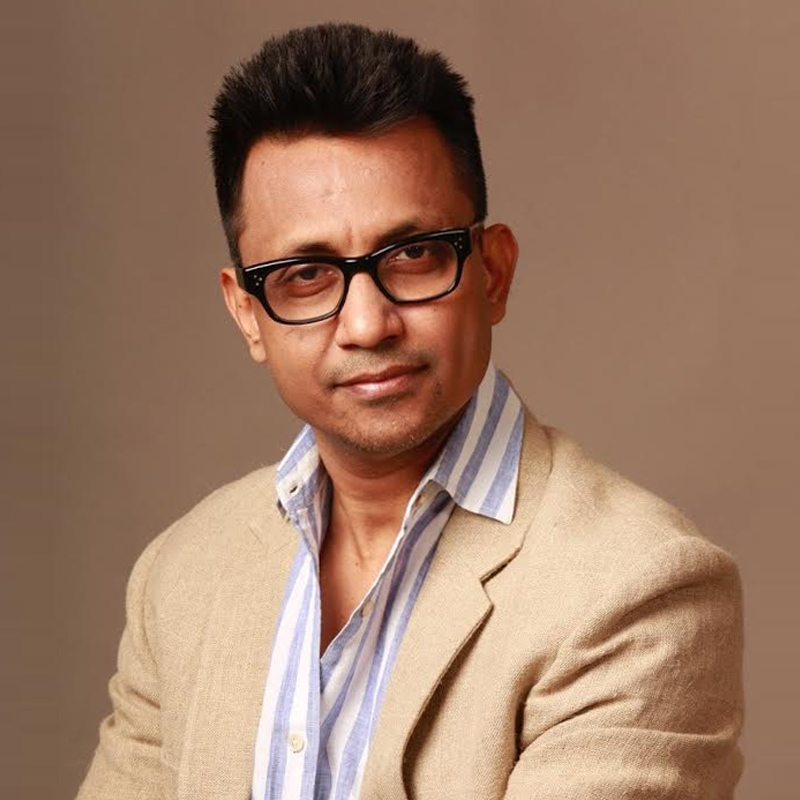
  • Broadcasters set to challenge Trai regulation on ads

    Broadcasters set to challenge Trai regulation on ads

    NEW DELHI/MUMBAI: Irate with the Telecom Regulatory Authority of India (Trai) for its order on restricting advertisements to 12 minutes to the clock hour, broadcasters are burning the midnight oil to work out steps they can possibly take.

    Sources say senior officials of the Indian Broadcasting Foundation (IBF), which represents the general entertainment channels, today held day-long discussions with legal experts in Mumbai and Delhi on whether the regulations which have already been notified can be challenged in Court.

    The News Broadcasters Association (NBA) representing the news channels are also working out their plan of action.

    Though neither of the two have issued any formal reaction, it is understood that both are in the process of working out their reaction to the press keeping in perspective the argument given by a Trai official that most channels would be able to make their revenue through subscriptions after digitisation and, therefore, it would not be fair to impose advertising on the consumer who is paying for the channels he sees.

    “The IBF and the NBA will soon take up with the relevant bodies the Trai regulation on ad duration on TV channels. We will share our point of views. Like there is a sunset time of three years given for digitisation in the country, sufficient time should be given to channels for capping ad time,” says TV Today Network chief executive officer Joy Chakraborthy.

    Besides the 12-minute cap per hour, Trai has said part-screen and drop-down advertisements shall not be permitted. This piece of regulation is sure to hurt news and sports broadcasters.

    Says Zee News Ltd. chief executive officer Barun Das, “We are looking into the issue and will decide on what course of action to take.”

    According to an official in the Advertising Standards Council of India, since the regulations were about timing and not content, Asci did not want to react. This was also the reason for India‘s advertising watchdog not to give any reaction when Trai had asked all stakeholders to voice their views.

    The broadcasters are likely to approach the Tdsat, industry sources say.

  • Zee News cuts ad air time by 30%, ups rates

    Zee News cuts ad air time by 30%, ups rates

    MUMBAI: Zee News Ltd (ZNL) has set the pace for other television news broadcasters to follow, cutting the commercial time of its flagship Hindi news channel while upping the ad rates by 40 per cent at a time when the genre is bogged down by a slowdown in the economy.

    Zee News has decided to slash its ad air time by 30 per cent, trusting advertisers to pay premium for a channel that has differentiated itself by doing away with trivial content.

    “We have taken a bold step. We expect the industry to react positively so that the TV news genre can grow,” says ZNL CEO Barun Das.

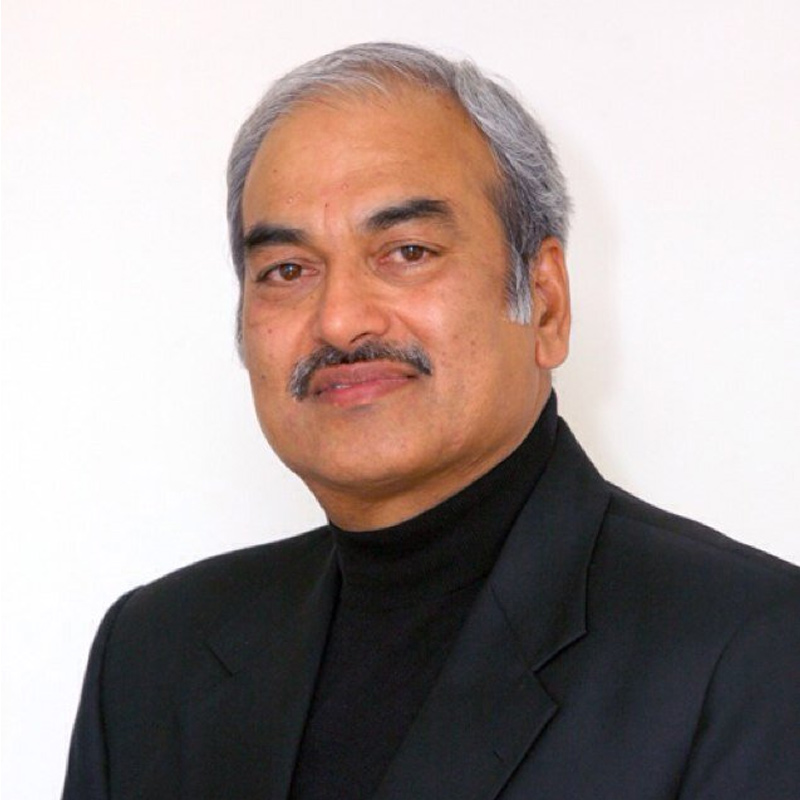
    Zee News‘ ‘Maximum News, Minimum Break‘ journey will start from 2 April. The channel will devote eight minutes towards advertisements for every half-hour slot.

    The channel, which had nine per cent viewership share in the Hindi news genre last year as per TAM data, hopes to climb the ratings ladder as it opens up more time for content.

    “We are also stepping up our content drive. Research tells us that long commercial breaks tend to disrupt news viewing, forcing people to either switch off or surf other channels,” says Das.

    Market leader Aaj Tak is also examining ways to up its ad revenues. In an earlier interview with Indiantelevision.com, TV Today Network CEO Joy Chakravorthy had said that the news genre was terribly under-priced and there was a lot of untapped revenue potential.

    Zee News‘ hard push to get its effective ad rates up by 40 per cent won‘t be an easy task. Says Aegis Media India chairman and CEO
    Ashish Bhasin, “Zee‘s move is most likely to be met with resistance from the advertisers in this present ad scenario where we are

    expecting another slowdown. Any increase in rates will be difficult for advertisers to digest. It may be a different case if ratings go up.”

    Das, however, believes advertisers would see value in a move that is beneficial for viewers.

    “I think leadership is not running the TRP rat race. In fact, besides strong business performance, leadership is also about setting precedent and giving direction to the industry you work in,” he says.

    Star India president ad sales Kevin Vaz agrees that it could be a win-win situation for viewers as well as advertisers. “It makes sense to cut down airtime because shorter ad break means higher recall. Advertisers don‘t mind paying a premium for that. At the end of the day, advertisers prefer a better environment and shorter breaks help.”

    Lintas Initiative Media CEO Sudha Natrajan does not think that there would be any big impact if the other channels do
     not join hands. “Unless the whole industry or the key leading players take this call together, I think it is going to be difficult for just one channel to make a difference,” she says.

    Maxus managing partner Ajit Varghese echoes Natrajan‘s sentiment. “One guy doing it will not help drive the genre. From the viewer‘s perspective, it is a relatively good move. As far as the revenue goes, one cannot say as of now. It will depend ultimately on ratings,” he avers.

    Vivaki Exchange VP Sejal Shah, however, believes Zee‘s strategy to control clutter and, hence, increase viewership could only work in the long run. “In the short term, Zee News will not be able to make revenue out of this. This may work in in the long run,” she says.

  • Narayan Rao re-elected NBA president

    Narayan Rao re-elected NBA president

    MUMBAI: NDTV Group executive vice chairman KVL Narayan Rao has been re-appointed president of the News Broadcasters Association (NBA) for 2011-12.

    In the Annual General Meeting held today, Zee News Ltd CEO Barun Das has been re-elected as vice president, while Media Content and Communications Services (which manages news television channels Star News, Star Majha and Star Ananda) CEO Ashok Venkatramani is the honorary treasurer.

    The other members on the NBA board are Independent News Services chairman Rajat Sharma; Times Television Network MD and CEO Sunil Lulla; and Network18 Group COO B Sai Kumar.

  • Challenge for the TV news industry is to find the right balance: Barun Das

    Challenge for the TV news industry is to find the right balance: Barun Das

    NEW DELHI: The TV news industry in India is going through a tough phase with high distribution cost, softening of ad revenues, falling standards of news and too many players fighting for a small pie.

    But what happens when suddenly the industry realises that the challenges are too many and efforts are too less? It calls for the top bosses to sit together and scratch their heads to find the right balance.

    Delivering the keynote address at the fourth News Television (NT) Summit in New Delhi, News Broadcasters Association (NBA) VP Barun Das said the need of the hour is to find the right balance.

    Das, who is also CEO of Zee News Ltd, accepted that the challenges the news TV business is facing are bigger than what the industry can handle.

    Ruing the overdependence on ad revenue, Das said: “We are dependent on advertising revenue to run the business. Unlike other markets, subscription, which should have been the revenue leader, has turned into a cost head.”

    Das said there is a mad race for eyeballs and the need to attract the lowest common denominator, which is leading to trivialisation of news. “We should present content in an exciting manner but we have to strike a balance here,” he said.

    Das also mentioned three milestones that shaped the news industry. The first was in 1992 when the government allowed private channels to broadcast news; the second important milestone was the 26/11 Mumbai terror attack coverage, which led the NBA to swing into action and come out with guidelines and advisories. He quoted the example of the coverage of the Ayodhya Verdict, when “everything went right.”

    The third and the most significant milestone was the recession. “Though the Indian economy was never exposed to the kind of recession that gripped the other parts of the world, it helped the Indian news channels to get their focus back on costs,” Das said.