Tag: Bartle Bogle Hegarty

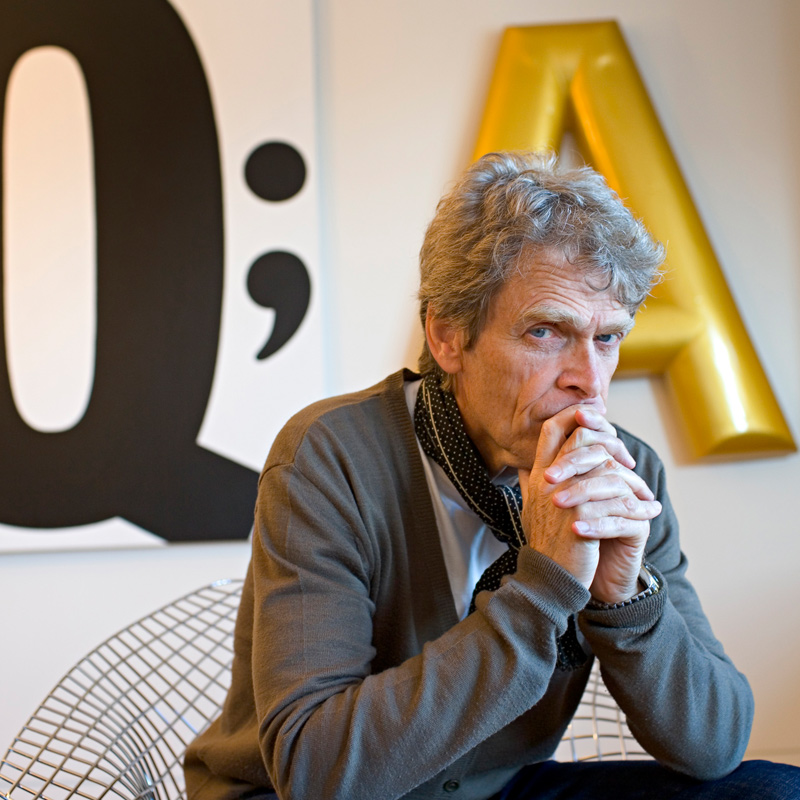
  • Brands shouldn’t be mindlessly global or needlessly local: Subhash Kamath, BBH

    Brands shouldn’t be mindlessly global or needlessly local: Subhash Kamath, BBH

    MUMBAI: Born British but adapted to India. That’s the way full service global creative agency Bartle Bogle Hegarty (BBH) functions. You may not know the name but you’ve definitely caught sight of the latest ads of Tinder or Behrouz Biryani.

    The agency’s first ad was for Levi’s and it showed a black sheep going against the herd. It became the agency icon and coined the phrase, “When the world zigs, zag”. It was a challenge to get this ad out, because all jeans ads of the time had people and here you had Levi’s showing off a sheep! But the bet paid off.

    Founded in 1982 by British ad men John Bartle, Nigel Bogle, and John Hegarty, BBH today has offices in London, New York City, Singapore, Shanghai, Mumbai, Stockholm and Los Angeles and employs more than 1000 staff worldwide.

    When BBH took the mandate for Johnnie Walker, the campaign “Keep Walking” boosted brand sales from 13 per cent of the global market when the campaign broke in 2000, to over 20 per cent at the end of 2013 according to IWSR.

    When BBH decided to open its India office in 2008, one of the first hires for the agency was former Bates group CEO Subhash Kamath. He joined the agency with a vision to get rid of hierarchies and corporate silos. Kamath juggles between being an advertising professional and entertaining audiences with his guitar playing skills. BBH recently completed 10 years in the Indian market. In a free flowing conversation with Indiantelevision.com, BBH India CEO and managing partner Subhash Kamath talks about the agency’s journey, his views on creativity in advertising, his passion and much more.

    You’ve been with BBH for a decade now. Do these ten years seem like a lifetime or the beginning of the journey?

    When BBH started its India business in 2008, India was the only country where BBH didn’t bring the expat management and rather wanted a local management. You can’t treat the Indian audience the same way you would treat any other country as there is so much cultural influence here. All of us here have come from bigger agencies and networks and we had the opportunity to work in a different organisation here. We all knew the good and bad about larger networks and would always complain about too much structure and hierarchy. We at BBH wanted to create an organisation without any of that. Despite being a decade old, I still think of BBH as a startup. We like to think of ourselves as a small-big agency where we have big agency thinking in a small agency of nimble size. I honestly don’t ever want to change that and I hope we never grow far too much that we have to change this structure.

    How do you choose your clients?

    We are very choosy about whom we want to work with. While we want to grow, we are very clear that we don’t want to work with every kind of client. We do a lot of soul searching before we decide on a client. It is not out of arrogance but just out of humility because if you decide to work with a wrong client, it may spoil the agency culture.

    So what is great creativity for you?

    Traditional pure creative awards are more about the craft. BBH has been known for the impact that the creative has on business. For me, great creative comes when a client is genuinely interested in building a brand and not just looking out for tactical outcome in the short term.

    Is that why BBH stays away from awards?

    It is not that we stay away from awards but, yes, if you look at the creative awards in India, 90 per cent of the print and OOH work is scam. As a culture, we don’t do scam. We do not believe in putting out work only for awards.

    What’s your ratio between project base v/s retainer clients?

    In recent times, we have seen more work coming in on project basis. But we still have 80 per cent of the business coming in from retainers. We have also diversified our business into design, agile production, content and animation in the recent years and these businesses have more project-based work.

    What’s your male to female ratio in the agency?

    When we started off BBH in India, the male to female ratio was 90:10 but it has come up to a 50:50 ratio now. Our biggest client today is Marico which has over five types of hair oil. We need a female creative person in such a team and can’t have only men making ads for a beauty care product.

    Do you think your clients have changed or evolved over the years?

    I don’t think that clients have changed a lot but there is one disturbing trend at client’s end is that there are too many structural changes in companies on the marketing end. The CMOs, brand managers keep changing every two to three years. These brand managers and CMOs then want to change the agency or campaign thinking that, “We must do something new”. I find this a little disturbing as at the end of it, the brand gets affected because everyone questions what the past person has done. That’s why in India, we don’t see a lot of long running campaigns.

    How do you ensure BBH always comes up with out-of-the-box creatives?

    It is a constant pressure that we take upon us as to how we come up with new innovative campaign ideas and question everything.

    Looking at a larger picture, what do you think about the advertising scenario in India right now? Everyone is always talking about how international concepts and campaigns don’t work here.

    It’s not that international campaigns don’t work here. We launched the international Lee jeans campaign in India, the jeans that built America, and it worked because the consumer wanted to buy American products. When it comes to international brands, I think the globalism of the brands works well in India. Do you buy an Audi or a BMW because of its Indian connection? No! But there are categories when you can’t just borrow an international campaign. McDonald’s and Amazon are great examples for that where they have had to Indianise their brands. Brands need to Indianise the creative whenever necessary but they should neither be mindlessly global nor needlessly local. Brands need to find the right balance.

    How would you explain digital advertising in one sentence?

    An ex-colleague of mine once told me that, “You don’t need digital ideas, you only need ideas for a digital world”.

    You are credited to be one of the few CEOs who are passionate about advertising. So what keeps Subhash Kamath going every day?

    I realised fairly early in life that work isn’t everything. In the initial years of my career, I was too focused on climbing the corporate ladder but realised later that there are other things in life which are equally important. My family is extremely important to me. I am very interested in movies, books, music, travel and food and I make sure I create enough time for these things. You shouldn’t take yourself so seriously in life. People have made it a virtue to work till late in the evening, which is so not right. I used to stay back in the office till late, but not anymore. I encourage people not to come to office on weekends unless there’s an important pitch. I believe if you have other interests in life, it helps you to write better and be a better creative person.

  • Sorrell’s exit could lead to a breakup of the large agency structure says John Hegarty

    Sorrell’s exit could lead to a breakup of the large agency structure says John Hegarty

    MUMBAI: He’s seen it all – print, radio, TV and now digital. With over six decades of advertising industry under his belt, John Hegarty has had the privilege of being knighted by the UK for his services. With early days at Saatchi and Saatchi (then called Cramer Saatchi) to co-founding global media agency, Bartle Bogle Hegarty (BBH), the septuagenarian is still as youthful and optimistic as he was in the 1960s.

    After co-founding TBWA, he teamed up with partners John Bartle and Nigel Bogle to launch Bartle Bogle Hegarty in 1982. The agency swiftly became one of the most talked about and awarded advertising agencies in the world.

    The advertising mogul was in Mumbai, India recently where he spoke his heart out about creativity and advertising industry at large. The creator of acclaimed campaigns for brands such as Levi’s, Audi, BA and Johnnie Walker, Hegarty thinks that brainstorming as a concept at the modern workplace can kill creativity. According to him, just 10 per cent of the creativity today is good and advertisers inflict that tiny amount on the audience. For him, the advertising industry has a great responsibility to shoulder.

    He first came to India 25 years ago to meet Piyush Pandey. Admitting that he isn’t a hardcore follower of Indian advertising, he still believes that Indian creativity is far better than other parts of the world. 

    Hegarty warned of the danger of globalisation that has led to a bland advertising world where ad execs and brand managers from one part of the country want to target the entire world with global campaigns rather than creating local campaigns. One reason they resort to this mass targeting is their constant search for cost-effectiveness. But they don’t realise that they lose out on communication efficiency. Instead, all ad work should be more representative or reflective of the local culture. 

    Hegarty’s response to nineteenth century Philadelphia retailer John Wanamaker’s famous oft-stated quip – ‘Half the money I spend on advertising is wasted; the trouble is I don’t know which half’ –  is that those who exclaim this don’t know what they’re doing. “Brands need to go out and converse with people. Advertising is all about conversations,” he said.

    “A brand is made not just by the people who buy it but also for the people who know about it.  Agencies today have forgotten that brands need to persuade the consumer and not promote the product. We have confused persuasion and promotion, persuasion will yield long-term results whereas promotion will only last for a short term,” he said.

    While the world lauds the power of digital, Hegarty thinks that brands and agencies are still in the dark about the best way to approach the medium. Light heartedly cracking a joke at his age, Hegarty said that he won’t be around long to watch machines take over man, referring to artificial intelligence increasingly being used to help take advertising and creative decisions. “Machine-made ideas are easy to recognise and it can’t get the nuances correct all the time.”

    A writer from BBH London recently publicly accused sports television channels group Sky Sports and its agency, Sky Creative, of ripping off a recruitment video. Hegarty was not disturbed by this theft and responded by stating that plagiarism will always happen in the industry where an artist is inspired by another and has happened forever and will continue to take place ad infintum. He added, “Everything gets plagiarised today and I don’t think we need a body to regulate it.”

    He rubbished the concept of the word ‘content’ calling content marketing a boring topic. “What exactly is content? My garbage bin is full of content. I wonder who invents these words! They are completely meaningless. I think content should only be informative and useful,” he said.

    A recent major shakeup in ad world was the departure of ad mogul Sir Martin Sorrell from WPP. Hegarty said that the legend’s eviction could be a harbinger of a fission of WPP and other ad behemoths.

    “With his exit, the talk is that the company will now be broken up and the groups are now also under threat because of the value they are giving clients. It could be a serious problem for them unless they get back to basics and the core of the advertising profession: focus on creativity.”

    Well said John!

  • ‘If you don’t innovate, somebody else will take it from you’ : Sir John Hegarty – BBH chairman & worldwide creative director

    ‘If you don’t innovate, somebody else will take it from you’ : Sir John Hegarty – BBH chairman & worldwide creative director

    Sir John Hegarty stands tall in whatever he does. Starting Bartle Bogle Hegarty (BBH), of which he is chairman & worldwide creative director, four years into the run the agency was voted Campaign magazine’s Agency of the Year in 1986. Awards galore have seen been following the man who launched the famous Levis “Live Unbuttoned” campaign. In 2007, Hegarty received a knighthood in the Queen’s birthday honours for services to advertising.


    At Goafest 2009, Hegarty explained why recession is the best time to be in advertising as it induces innovation and makes change acceptable.


    In an interview with Indiantelevision.com’s Tarachand Wanvari, Hegarty talks about the current status of the advertising industry, the need to address the digital medium and the fantastic future of television as people can now watch it from anywhere.


    Excerpts:

    How different are the agencies and clients in India as opposed to those in the Western world?
    People always talk about what’s different, but there are more similarities. You really have to understand the complexities of India, the diversity of its culture. You also have to remember that advertising is about converting people, it’s about unifying people. Great ideas unify people, and that’s what you are looking to do. Music’s done it, painting’s done it, films have done it, why can’t advertising do it?

    Everyone’s speaking about the new media. But is the industry, the client ready for it?
    Yes, everyone’s speaking of the industry not being ready and responding to it. I mean, this is probably the most competitive business you can be in. I can start an agency tomorrow – we just started one. It’s not a difficult thing to start an agency. I think agencies are moving as fast their clients allow them. I think that it’s more often that I found that clients often talk a good digital story, but when it comes to actually doing it, they are rather hesitant. Certainly BBH is responding and so is the industry. We are looking at how we put these things together and how we create a roadmap for our client. I think we are doing as much as we can, but we can only be so far in front.

    Are the agencies ready for the new media – technologically and with manpower skills?
    I still think that it’s a developing market and you are looking at how far ahead are consumers. You can look at Japan, I mean they are tech-mad. They live their lives on the mobile. They are texting each other, which is not the case here in India. You have got to look at the market place and see what is it doing and how is it doing it and then respond to that. I think agencies are by and large doing that in India.

    Audio visual is one of the best forms of communication. What do you think is going to happen next – television episodes, internet access, voice communications on the mobile or a hand held device? Are we ready with the content?
    The first thing that we fundamentally believe is that the world’s going to go mobile. There’s no question. You are going to take your devices with you. You will still want to sit down in front of the television at home, you know three hours of cricket, it’s fantastic, I just love doing it. But you are also going to be taking it with you. Television has got a fantastic future if it realizes that people can now watch television anywhere. Imagine if you had a newspaper etched on stones, you couldn’t carry it with you to read. Television is going to have an ever expanding influence in my view, because people love watching it.

    But are we ready with the content?
    It’s very hard to be ready with the content when the audience is not there yet, when they haven’t got the devices. It’s going to take another five to ten years when we have fantastic devices with great screens that give us actual clarity of picture. I have watched bits of television on an i-Phone. It’s brilliant, and I think it will happen more and more, but it won’t stop me watching TV at home.

    If you just narrowcast, then you are not going to be talking to the expanding market. And in a funny way, people talk about narrowcast. The world actually is going broadcast

    People are talking of mobisodes for TV consumption on mobile devices, because one can’t capture facial expressions and fine details on the small screen. Do you think that there is an opportunity to create more mobile-centric television content with which agencies could weave in their ad strategies?
    I think I’d rubbish that. People’s eyes adjust. I have watched a bit of Star Wars on the i-Phone. Of course it’s not the same as watching it on a flat screen television, but, then, that too is not the same as watching it on cinema screen. We are incredibly adaptable and will adjust. You put the device closer to your eyes, so the ratio changes. It’s got to do with entertaining the mind, how you embellish it with sound and visual. We’ll see what people want to watch on the very very small screen and what they want to watch on the big screen.

    Where do you think the industry is headed here in India? I mean during one of panel discussions we had people saying that there is no recession in the industry, despite the fall in ad agencies revenue. Do you think that the industry needs a bigger shock to awaken and realise that they are going down economically?
    I can’t answer that. I think that people are being na?ve if they are saying that there is no recession. There is a recession, a downturn, that is a reality. If they don’t respond to it, they are going to go out of business. As I said before, this is an extremely competitive industry. You don’t need any special training to start an agency, you don’t need any licence. You don’t need a Phd, you just need courage. If you don’t innovate, if you don’t change, if you don’t move forward, somebody else will take it from you. But I think recessions are very good at getting to accept change and that’s what we should be focusing on. I think the advertising industry has a fantastic future.

    Digital has one of the best ways to measure the success of any campaign. For television advertisements, even today people depend on Tam’s peoplemeters which can never give a true reach picture. Yet, marketers are allocating a major chunk of their budgets for conventional media, rather than digital media.
    I consider digital as more than just a medium, it is a whole lifestyle change the way people communicate. I think you have got to be very careful about how you use it. I will quote a little – a very very important quote – ‘A brand isn’t just made by the people who buy it. A brand is also made by the people who know about it.’ That’s a very very important point! That is fundamental to the future. Broadcast – you define broadcast in some sense or another – you won’t convert, you won’t build a fantastic brand. If you just narrowcast, then you are not going to be talking to the expanding market. And in a funny way, people talk about narrowcast. The world actually is going broadcast.