Tag: Barkha Dutt

  • Barkha Dutt bids adieu to NDTV; hints at new venture

    Barkha Dutt bids adieu to NDTV; hints at new venture

    NEW DELHI: It’s the season for saying good-byes and starting afresh. It’s now Barkha Dutt’s turn to do so.

    “It’s been a super ride at NDTV but new beginning in 2017. I shall be moving on from NDTV to explore new opportunities & my own ventures!” on a cold and partially grey Sunday tweeted Dutt, one of the few public faces of NDTV media house and one of the most trolled journalists of recent times.

    In a series of tweets, evoking reactions ranging from puerile to dismissive to congratulatory to scepticism, Dutt said, “As I move on after 21 Great NDTV yrs; a team I’m SO proud of, an Emmy Nomination & many other awards to cap it all, I count on your wishes… Did my last `We The People’. At 16 yrs its longest running TV show which I built from scratch, won scores of awards for & am hugely proud of.”

    In a co-ordinated move, NDTV put out an official statement, which too surfaced on Dutt’s Twitter TL. The two paragraph statement read: “In 1995, Barkha Dutt joined NDTV straight out of college, and now, after 21 wonderful years together, Barkha has requested that she would like to explore some new opportunities, pursue other interests and work on her own ventures.

    “In all her years with NDTV, she has been hugely productive and has grown with the organisation, becoming an acclaimed, award-winning journalist of repute across India and many parts of the world. We are certain that Barkha will go from strength to strength and NDTV wishes her all the very best.”

    Though criticised within her fraternity too for many of her actions, Dutt is said to have inspired a couple of Hindi film characters, including that of Rani Mukherjee in `Nobody Killed Jessica’ and that of Preity Zinta in Farhan Akhtar-directed ‘Lakshya’ based on the reclaiming of Tiger Hill by the Indian Army during Kargil War.

    In recent times, NDTV, built by a team lead by Prannoy Roy, one of Indian news television’s original poster boys, has been under pressure from several quarters, including financial. Considered by the followers of the present BJP-led government in New Delhi a product of Congress-era, NDTV has been a nursery for several television journalists and anchors, many of whom went on to become as big a celebrity as a movie actor or a cricketer in India and household names, while quite a few moved on to start their own successful ventures in the media. And this list includes the likes of Arnab Goswami, Rajdeep Sardesai, Vikram Chandra, Arup Ghosh and Sonia Singh.

    If the gossip in Capital’s favourite watering hole for journalists is to be believed, then the top management of a financially-beleaguered NDTV, including Dr. Prannoy Roy and Executive VC and CEO Narayan Rao, recently took a decision to shed sizable manpower weight. The target list for pruning staff was said to include many of those drawing a monthly salary of over Rs. 100,000.

    However, it must be admitted that Indiantelevision.com could not independently confirm these rumours from NDTV, always considered to be a leading flag-bearer for impartial journalism in a world when old school professional values are being shed and being OTT (over-the-top) is considered to be the new normal.

    She wrote on her FB page:

    A new year means that new beginnings beckon. After a great two decades at NDTV I will be moving on to explore new opportunities, diversify my interests and build my own multi media content and events company as well as special projects. It’s been an eventful and super ride at NDTV with an Emmy Nomination among the multiple awards capping a wonderful journey. I am especially proud of We The People the last episode of which I hosted today – at sixteen years it’s the longest running show on Indian TV. But am hugely excited about the many adventures that await me. And I now count on everyone’s best wishes for my next new and wonderful innings. Excited wish me luck !!

  • Barkha Dutt bids adieu to NDTV; hints at new venture

    Barkha Dutt bids adieu to NDTV; hints at new venture

    NEW DELHI: It’s the season for saying good-byes and starting afresh. It’s now Barkha Dutt’s turn to do so.

    “It’s been a super ride at NDTV but new beginning in 2017. I shall be moving on from NDTV to explore new opportunities & my own ventures!” on a cold and partially grey Sunday tweeted Dutt, one of the few public faces of NDTV media house and one of the most trolled journalists of recent times.

    In a series of tweets, evoking reactions ranging from puerile to dismissive to congratulatory to scepticism, Dutt said, “As I move on after 21 Great NDTV yrs; a team I’m SO proud of, an Emmy Nomination & many other awards to cap it all, I count on your wishes… Did my last `We The People’. At 16 yrs its longest running TV show which I built from scratch, won scores of awards for & am hugely proud of.”

    In a co-ordinated move, NDTV put out an official statement, which too surfaced on Dutt’s Twitter TL. The two paragraph statement read: “In 1995, Barkha Dutt joined NDTV straight out of college, and now, after 21 wonderful years together, Barkha has requested that she would like to explore some new opportunities, pursue other interests and work on her own ventures.

    “In all her years with NDTV, she has been hugely productive and has grown with the organisation, becoming an acclaimed, award-winning journalist of repute across India and many parts of the world. We are certain that Barkha will go from strength to strength and NDTV wishes her all the very best.”

    Though criticised within her fraternity too for many of her actions, Dutt is said to have inspired a couple of Hindi film characters, including that of Rani Mukherjee in `Nobody Killed Jessica’ and that of Preity Zinta in Farhan Akhtar-directed ‘Lakshya’ based on the reclaiming of Tiger Hill by the Indian Army during Kargil War.

    In recent times, NDTV, built by a team lead by Prannoy Roy, one of Indian news television’s original poster boys, has been under pressure from several quarters, including financial. Considered by the followers of the present BJP-led government in New Delhi a product of Congress-era, NDTV has been a nursery for several television journalists and anchors, many of whom went on to become as big a celebrity as a movie actor or a cricketer in India and household names, while quite a few moved on to start their own successful ventures in the media. And this list includes the likes of Arnab Goswami, Rajdeep Sardesai, Vikram Chandra, Arup Ghosh and Sonia Singh.

    If the gossip in Capital’s favourite watering hole for journalists is to be believed, then the top management of a financially-beleaguered NDTV, including Dr. Prannoy Roy and Executive VC and CEO Narayan Rao, recently took a decision to shed sizable manpower weight. The target list for pruning staff was said to include many of those drawing a monthly salary of over Rs. 100,000.

    However, it must be admitted that Indiantelevision.com could not independently confirm these rumours from NDTV, always considered to be a leading flag-bearer for impartial journalism in a world when old school professional values are being shed and being OTT (over-the-top) is considered to be the new normal.

    She wrote on her FB page:

    A new year means that new beginnings beckon. After a great two decades at NDTV I will be moving on to explore new opportunities, diversify my interests and build my own multi media content and events company as well as special projects. It’s been an eventful and super ride at NDTV with an Emmy Nomination among the multiple awards capping a wonderful journey. I am especially proud of We The People the last episode of which I hosted today – at sixteen years it’s the longest running show on Indian TV. But am hugely excited about the many adventures that await me. And I now count on everyone’s best wishes for my next new and wonderful innings. Excited wish me luck !!

  • I am not stepping into Arnab Goswami’s shoes at Times Now – Rajdeep Sardesai

    I am not stepping into Arnab Goswami’s shoes at Times Now – Rajdeep Sardesai

    MUMBAI: Arnab Goswami’s Times Now exit has sent tremors through the news television industry, something that many can’t believe as yet as his name was so strongly associated with the channel. Speculation is rife about who will be his replacement, and who will fill the big fat void that has been created owing to his departure. And, questions are being asked about where he is headed. 

    Among the names being mentioned as someone who will hop into his chair is that of Rajdeep Sardesai, who is currently with the Aroon Purie’s TV Today Network. Rajdeep cut his teeth early on in his career at The Times of India and ended up being the city editor of the Mumbai edition. So, it will be like a homecoming for him or so is what the grapevine is muttering.

    Television happened, and the son of the former Indian test bat Dilip Sardesai, and even an Oxford cricketer himself, Rajdeep plunged heavily into it. After stints in NDTV, he went on to found the channel GBN (now CNN News18) before quitting and becoming the consulting editor at TV Today Network. 

    Rajdeep, however, was pretty candid when indiantelevision.com got in touch with him about the strong buzz that he was replacing Arnab as the editor-in-chief at Times Now. “Rubbish,” he said. “I  have not even met anyone for anything of that kind to happen. I am just coming back from a teaching assignment in Georgetown, and there is no way  that I will step in for Arnab. At least for now…”

    That there is no love lost between the two is no doubt, but Arnab’s style of opinionated journalism is a total antithesis of what classical Rajdeep purports he practices. 

    Other names being bandied about include Barkha Dutt, and Rahul Joshi. The facts are not forthcoming as the Times Television Network has not put out an official statement as yet.

    The expectation was that Rajdeep would reportedly  take over as  the Times Now editor-in-chief, and enable the smooth transition. When indiantelevision.com reached out to Times Network MD MK Anand, he said, “I have no comments to make at this juncture.”

    Have we heard the last of L’affaire Arnab? Most unlikely as the media does indeed want to know! This time at least!

    Also Read:  From reporting news to becoming news

    The after-effect of Arnab Goswami’s exit


  • I am not stepping into Arnab Goswami’s shoes at Times Now – Rajdeep Sardesai

    I am not stepping into Arnab Goswami’s shoes at Times Now – Rajdeep Sardesai

    MUMBAI: Arnab Goswami’s Times Now exit has sent tremors through the news television industry, something that many can’t believe as yet as his name was so strongly associated with the channel. Speculation is rife about who will be his replacement, and who will fill the big fat void that has been created owing to his departure. And, questions are being asked about where he is headed. 

    Among the names being mentioned as someone who will hop into his chair is that of Rajdeep Sardesai, who is currently with the Aroon Purie’s TV Today Network. Rajdeep cut his teeth early on in his career at The Times of India and ended up being the city editor of the Mumbai edition. So, it will be like a homecoming for him or so is what the grapevine is muttering.

    Television happened, and the son of the former Indian test bat Dilip Sardesai, and even an Oxford cricketer himself, Rajdeep plunged heavily into it. After stints in NDTV, he went on to found the channel GBN (now CNN News18) before quitting and becoming the consulting editor at TV Today Network. 

    Rajdeep, however, was pretty candid when indiantelevision.com got in touch with him about the strong buzz that he was replacing Arnab as the editor-in-chief at Times Now. “Rubbish,” he said. “I  have not even met anyone for anything of that kind to happen. I am just coming back from a teaching assignment in Georgetown, and there is no way  that I will step in for Arnab. At least for now…”

    That there is no love lost between the two is no doubt, but Arnab’s style of opinionated journalism is a total antithesis of what classical Rajdeep purports he practices. 

    Other names being bandied about include Barkha Dutt, and Rahul Joshi. The facts are not forthcoming as the Times Television Network has not put out an official statement as yet.

    The expectation was that Rajdeep would reportedly  take over as  the Times Now editor-in-chief, and enable the smooth transition. When indiantelevision.com reached out to Times Network MD MK Anand, he said, “I have no comments to make at this juncture.”

    Have we heard the last of L’affaire Arnab? Most unlikely as the media does indeed want to know! This time at least!

    Also Read:  From reporting news to becoming news

    The after-effect of Arnab Goswami’s exit


  • From reporting news to becoming news

    From reporting news to becoming news

    The journey from reporting news (as an anchor) to becoming news (if Twitter India trends are to be believed) could be many a journalist’s dream. But Arnab Goswami has traversed the path and reached that point in a short period of time. A decade to be precise. And, it’s certainly an achievement for which Arnab definitely needs a pat on the back — if not for anything else, though that list too is long.

    The very fact his resignation — announced by him on Tuesday at an editorial meeting, but the act was actually done over a week back — whipped up media frenzy with social media going on the boil is an indicator that Arnab is a true student of the Steve Jobs school of thinking: damn the status quo. In other words be a disruptor.

    If people say that Arnab changed the rules of the news game in India by resorting to in-your-face and being over the top (OTT), it won’t be wrong. If critics opine that he dumbed down viewers and made tabloid journalism mainstream, then they too won’t be off the mark. Simply because, he did both and in an unapologetic fashion. And, Times NOW and the owners of the news venture, who also control India’s biggest unlisted media company spanning print, radio, music and television, gained much in terms of eyeballs, if not revenue. But then how many electronic news ventures in India are profitable business entities?

    When people say Arnab and Times NOW changed colours to be popular after the present BJP-led government in New Delhi came to power in 2014, they are wrong. Arnab’s style, which began reflecting in how news was served up for viewers on Times NOW and later on ET NOW (he was made in-charge of both the news channels as President-News and Editor-in-Chief ), started gaining popularity much before the present government came to power.Simply because an increasing number of people wanted some spice. No wonder, Arnab declared with aplomb at a recent media conference in Delhi that the “era of polite (TV) anchors was over” and journalism of reporting news as it is without an opinion was “rubbish” as “facts are sacred but opinion is supreme.”

    The US experienced this news-views mish-mash when Rupert Murdoch’s Fox News decided to differentiate itself from legacies like CNN and BBC a few decades back and openly mixed news with views and opinion and even took political sides during elections. Arnab, however, says he’s on the side of the common man — if not on the side of a political thought or belief.

    If the likes of Prannoy Roys, Raghav Bahls, Vinod Duas and later the Rajdeep Sardesais, Vikram Chandras, Zaka Jacobs, Barkha Dutts, Sonia Singhs, Ravishs, etc followed the old school of traditional journalism in India, for good or bad, Arnab realised quickly the new age viewer has little understanding of such traditions as they consume video on the go more often than not where attention time span is short. So, in a way, Arnab also quickly learnt that Fox-isation is the way forward to be heard and be popular. Again, to quote, the man himself, one has to shout to be heard in this country.

    So, the popular quiz show KBC’s jackpot-winning question today could be: What will be the new venture of Arnab Goswami, if the Jains, owners of Times of India group of which Times NOW is a part, let him go ultimately?If Arnab specialises in understanding the new age viewer-consumer and his style is foxy (the pun is intended), then that’s the type of a product he’d like to be associated with in an entrepreneurial avatar — a product that addresses the digital savvy consumer, is world class, slick and, of course, spicy, sensational and very unlike the legacies.

    There would be many funders who would be ready to bet on Arnab at present. And, why not? He’s not only the darling of the masses (at least the English speaking ones), but also the present government.

    So if media gossip says, a certain tech-savvy South Indian businessman-turned-Member of Parliament of the Indian Parliament’s Upper House is putting in money in a fresh news venture with Arnab, it’s worthwhileto lend an ear. If you mix Rupert Murdoch and another Delhi-based TV journalist-turned-entrepreneur, then you have a recipe for an exciting dish. Remember, the government liberalised foreign investment norms in TV news ventures and upped the level to 49 per cent from the earlier 26 per cent earlier this year.

    Whatever Arnab does in the coming days, the nation would want to know (including a rumoured meeting with a media czar-turned-politician) and therein lies his success formula; his on-screen patronising attitude, love for the two S (spice and sensation) and jingoism notwithstanding.

  • From reporting news to becoming news

    From reporting news to becoming news

    The journey from reporting news (as an anchor) to becoming news (if Twitter India trends are to be believed) could be many a journalist’s dream. But Arnab Goswami has traversed the path and reached that point in a short period of time. A decade to be precise. And, it’s certainly an achievement for which Arnab definitely needs a pat on the back — if not for anything else, though that list too is long.

    The very fact his resignation — announced by him on Tuesday at an editorial meeting, but the act was actually done over a week back — whipped up media frenzy with social media going on the boil is an indicator that Arnab is a true student of the Steve Jobs school of thinking: damn the status quo. In other words be a disruptor.

    If people say that Arnab changed the rules of the news game in India by resorting to in-your-face and being over the top (OTT), it won’t be wrong. If critics opine that he dumbed down viewers and made tabloid journalism mainstream, then they too won’t be off the mark. Simply because, he did both and in an unapologetic fashion. And, Times NOW and the owners of the news venture, who also control India’s biggest unlisted media company spanning print, radio, music and television, gained much in terms of eyeballs, if not revenue. But then how many electronic news ventures in India are profitable business entities?

    When people say Arnab and Times NOW changed colours to be popular after the present BJP-led government in New Delhi came to power in 2014, they are wrong. Arnab’s style, which began reflecting in how news was served up for viewers on Times NOW and later on ET NOW (he was made in-charge of both the news channels as President-News and Editor-in-Chief ), started gaining popularity much before the present government came to power.Simply because an increasing number of people wanted some spice. No wonder, Arnab declared with aplomb at a recent media conference in Delhi that the “era of polite (TV) anchors was over” and journalism of reporting news as it is without an opinion was “rubbish” as “facts are sacred but opinion is supreme.”

    The US experienced this news-views mish-mash when Rupert Murdoch’s Fox News decided to differentiate itself from legacies like CNN and BBC a few decades back and openly mixed news with views and opinion and even took political sides during elections. Arnab, however, says he’s on the side of the common man — if not on the side of a political thought or belief.

    If the likes of Prannoy Roys, Raghav Bahls, Vinod Duas and later the Rajdeep Sardesais, Vikram Chandras, Zaka Jacobs, Barkha Dutts, Sonia Singhs, Ravishs, etc followed the old school of traditional journalism in India, for good or bad, Arnab realised quickly the new age viewer has little understanding of such traditions as they consume video on the go more often than not where attention time span is short. So, in a way, Arnab also quickly learnt that Fox-isation is the way forward to be heard and be popular. Again, to quote, the man himself, one has to shout to be heard in this country.

    So, the popular quiz show KBC’s jackpot-winning question today could be: What will be the new venture of Arnab Goswami, if the Jains, owners of Times of India group of which Times NOW is a part, let him go ultimately?If Arnab specialises in understanding the new age viewer-consumer and his style is foxy (the pun is intended), then that’s the type of a product he’d like to be associated with in an entrepreneurial avatar — a product that addresses the digital savvy consumer, is world class, slick and, of course, spicy, sensational and very unlike the legacies.

    There would be many funders who would be ready to bet on Arnab at present. And, why not? He’s not only the darling of the masses (at least the English speaking ones), but also the present government.

    So if media gossip says, a certain tech-savvy South Indian businessman-turned-Member of Parliament of the Indian Parliament’s Upper House is putting in money in a fresh news venture with Arnab, it’s worthwhileto lend an ear. If you mix Rupert Murdoch and another Delhi-based TV journalist-turned-entrepreneur, then you have a recipe for an exciting dish. Remember, the government liberalised foreign investment norms in TV news ventures and upped the level to 49 per cent from the earlier 26 per cent earlier this year.

    Whatever Arnab does in the coming days, the nation would want to know (including a rumoured meeting with a media czar-turned-politician) and therein lies his success formula; his on-screen patronising attitude, love for the two S (spice and sensation) and jingoism notwithstanding.

  • …and journalism just happened to Bhupendra Chaubey

    …and journalism just happened to Bhupendra Chaubey

    Sometimes the best things in life which make you stand out are unplanned. Mapping his way from a postgraduate in films to senior journalist in CNN-News18 is Bhupendra Chaubey. Set out to become a filmmaker in life, journalism just happened to him. Being good at theatre, public speaking, essay-writing and elocution, etc, cinema is something that still excites him.

    The Delhi-based graduate heard about Dr Prannoy Roy looking for bilingual people to come on board. Although not too excited by the news to boost his friend’s confidence who was applying for a job at NDTV, Chaubey went along and dropped his CV as well.

    As they did not know anyone working there, the duo randomly dropped their CVs a couple of times at NDTV and forgot about it.  After a few days, not the other guy but Chaubey received a call from the HR for a meeting scheduled with Dr Roy. Declining to meet would have looked mean, and so Chaubey decided to meet him just to convey his regards. The co-founder of NDTV, after going through Chaubey’s CV, immediately offered him a job right there. But, Delhi was not the place where this young budding journalist’s heart was. He wanted to work in Mumbai.

    Bhupendra Chaubey’s resume

    Chaubey has been a TV journalist since 2000, when he started his career with NDTV. In 2005, he left NDTV and was a part of the team that started CNN IBN. As a political journalist, he has travelled the length and breadth of the country and has covered three general elections and assembly elections in a majority of Indian states.

    A graduate in Mathematics and a postgraduate in films, Chaubey has been among the finest political journalists of his generation. He has that unique ability to grasp things at a micro level, and then present them with a macro-level understanding. He is amongst those journalists who depend more on (political) awareness on the ground supplementing it with academic awareness of issues that confront the nation.

    Chaubey moved up the ladder by becoming the executive editor of CNN News18. Today, he hosts the prime-time broadcast Big5 at 10pm. He also hosts a weekend interview show Hot Seat where he puts tough questions to key newsmakers and regularly writes columns for various English and Hindi newspapers, magazines and digital media. He lives in the national capital with his wife and two children.

    Chaubey till date remembers what Dr Roy told him that day: “I think I am seeing a journalist in you. You should give it a shot. If you think you can’t fit in, there is always an option to leave”.

    Thus started his journey with New Delhi Television. One thing led to the next which caught Chaubey’s interest and there was no stopping, then. Dating a girl then who is now his wife, going to Mumbai was still on the cards. “Working with NDTV was phenomenal and an enriching experience. Imagine a newsroom working alongside Rajdeep Sardesai, Barkha Dutt and Arnab Goswami under one roof. Today, they all are in different companies but I have learnt a lot from them,” shares Chaubey.

    Chaubey preferred putting himself as the third generation of TV journalists in India considering Dr Roy and Vinod Dua as the first generation, and Rajdeep, Barkha, Arnab and Ravish as the second generation. “The beauty of entering a different profession is that you start as a novice. As I did not know what was coming my way, each day was a new day. Barkha was an outstanding scriptwriter, and I also learnt a lot about storytelling formats from her. Arnab was a great political mind; all the conversations with him were enriching. Rajdeep was a big superstar even in those days.”

    Remembering his tough days and working in various shifts, the curious reporter credits three people in his life. His wife, who knew a bit about journalism, the one who trained him to think in 10 different ways. “In school, you debate at an elementary level. But, the ability to speak on a topic in multiple ways is something I learnt from her. (The second) Prannoy, the head of NDTV, was my ideal, but I made it a point to hang around Rajdeep (Sardesai) to see what he was doing”. Rajdeep handheld Chaubey and was always a dear friend and editor to him.

    Mentioning the time of during the Coffingate, the then defence minister George Fernandes was the main target of the critics accused in supplying coffins to the Indian army jawans. “One fine afternoon, on a weekday, as I was climbing down the stairs of NDTV office, Sardesai was seated in his car heading to some place”. He asked Chaubey to join him. In the next few minutes, they were right in front of Fernandes’s house opposite to Arun Jaitley’s place without any camera. Sardesai, being a star at that time, the duo was allowed to enter the minister’s house. Fernandes was not giving interviews to anybody because of the heat around the allegations. Sardesai, positioning himself completely on his side by saying a few things about Fernandes which made him feel very comfortable, sectretly messaged a cameraman. While, he was having the conversation with Fernandes, the man with a single camera entered. Sardesai convinced Fernandes to be patient with only five questions and got a 25-minute interview with him. “Rajdeep was sitting behind the camera. So, after George answered his last question, the cameraman was asked to focus only on Rajdeep and he repeated the questions which he had put to Fernandes. He was blessed with a photographic memory. That was my first encounter wherein I learnt how to convert a single cam entity to two cam entity”.

    “He has always motivated and helped me. There is a certain kind of bond and friendship that I have with him. He made me understand the nuances of journalism. That is why when he left NDTV, I too left.”

    “Bhupendra is a dynamic and bright journalist. I wish him all the best for whatever he does in future,” says Sardesai.

    Right after that Arnab Goswami made an exit from NDTV. “Arnab was very keen on me working with him. But, I joined Rajdeep. So, for some time, he was not happy with it.”

    “Now the person who is really helping me and encouraging me to create, enhance and carve a niche for myself is Rahul Joshi. He is an absolutely great guy to work with completely different from any TV editor. I am enjoying working with him.”

    With Google not being efficient in those days, on several occasions, Chaubey has worked under pressure. Not knowing where political parties office were, he used to often dial AskMe service at that time to figure out addresses. It has led him to several wrong addresses, nonetheless. “Pressure and dilemma are there in every work life, every profession, and journalism is no different. The only point is that journalism allows you to take decisions completely on your own. What you do in your journalistic career, only you are accountable for that.  While it is a team game, it is often enormously an individualistic game where it enables you to own your individual skills”.

    One crazy experience that Chaubey cites during his tenure with NDTV was back in 2003 when Uma Bharti was the chief minister of Madhya Pradesh. The day he was supposed to meet her for an interview, Bharti resigned as she wanted to surrender herself in the court of law. She decided to undertake a train journey from Bhopal to Hooghly; it was a two-day long journey. While preparing to return to NDTV, he got a call from Sardesai asking to interview her during the jounery, and there was no option but to accept. “Rajdeep has a peculiar way of talking. I got on the train without a ticket. I remember, at some station, Bharti wanted to take a bath. Being in an express train, one of her followers came arrived with two buckets full of water for her. She simply took the buckets, went inside the loo and poured it on her person and came out in the same clothes”.

    At the Jim Corbett National Park, there was a story of dying elephants which smacked of corporate poaching. Chaubey was asked to follow up, and he obeyed. On reaching there, he recorded an interview with the forest conservator who game some interesting viewpoints. “At that time, we did not have OB vans. The park is 300 kms from Delhi. In my great enthusiasm, I sent the tape back to Delhi with the driver and asked him to return. Rajdeep got so angry with me for this two-way journey.”

    Chaubey’s journey with NDTV was full of twists and turns. He left the network in 2005 and was a part of the team that launched CNN IBN. He joined CNN-IBN (now, CNN-News18) as the chief political correspondent. Before joining CNN IBN, he got a call from Prannoy Roy. He said, “Only a stupid person would think of leaving The New York Times to join The Tribune hinting that NDTV is the NY Times and CNN-IBN is The Tribune.”

    “He comes with abundant energy to work everyday. His energy is infectious and sometimes gets transmitted to those working with him,” says IBN18 Network chief executive producer Rajen Garabadu about Chaubey. “You tend to work harder when you see him work so hard. He reaches on time for an early morning shoot even if he has worked till late the previous day. He remains fully charged and his energy does not fade through the day. Having spent more than two decades in news television, I can say there aren’t too many journalists who can match his energy,” Garabadu said.

    Always hoping to anchor ‘The Big Fight’ which Sardesai used to do, it was a difficult task for Chaubey to leave NDTV. “Prannoy Roy did not like it when I bid adieu to him. But, that is the way some of our media barons are. They expect extreme loyalty, and he thought it was disloyal on my part to be moving away with Rajdeep”.

    Chaubey went back and told this to Sardesai, to which he replied, “One day, we will make it bigger than the New York Times”.

    “Bhupendra is good for his place. There are few editors who can decide and put entertainment in primetime slots which Bhupendra understands well. Earlier, Rajdeep’s blue-eyed boy and now Rahul Joshi’s lad,” says a senior media expert.

    Chaubey has been termed as Rajdeep’s blue-eyed boy on various occasions. Contradicting this remark, Garabadu says, “I don’t think he is. I have worked very closely with Rajdeep for more than 11 years. The editor-in-chief of a channel will work closely with his senior journalists. Anyone who breaks big stories becomes the editor’s blue-eyed boy. And, in that sense, Bhupen did break stories from time to time”.

    Leading a team of bright reporters, Chaubey recollects how challenging it was for him to work with his peers. But, it came out well for him. Always believing in leading by example, he does not consider himself like a studio anchor. “I cannot sit in an AC office and ask everyone else to do the job”.

    One more instance that comes to his mind is when Sardesai wanted Ram Jethmalani as a guest for a primetime show. Chaubey barged into Jethmalani’s car without his permission. “I was not permitted to talk on the phone. So, I went to a place where he was a speaker and parked myself next to his car. When he arrived to board the car, I opened the other door and got inside his car. I requested him to speak to me”.

    On one occasion, Chaubey caught hold of Murli Manohar Joshi when he was passing by, at which he got furious. “Today, he is a good friend of mine. These events toughen you, and CNN-IBN has toughened me even more. Through the years, one improves through the experiences of various kinds,” he observes.

    Chaubey believes that there has been a complete change in the approach to journalism. The entire concept of journalism has been turned upside down. “News has been replaced by views, and the feeling right now is like views are news. Some channels have converted it into a fine art wherein you can just say what you want to and will present only one side of the truth. You would convert it into an opportunity, a scenario where no one else can question you which is a dangerous trend and should not be taking place. These dangers are the result of falling standards of journalism reflected in various forms now”.

    Chaubey himself became news after his CNN IBN interview with the Bollywood star Sunny Leone for which he received a lot of flak. After the drama post telecast, he explained that he was simply doing his job by questioning her. “If anyone felt offended, I am sorry. That was not my intention. My focus was to get, try and figure out who the real Sunny Leone was. In this country, people can object to anything. Viewers thought that my tone was not in good taste but this is the way it is. They just expect filmstars to be treated differently.”

    “In my opinion, he spoilt the interview with Sunny Leone. It was a bit awkward and in bad taste. But, soon enough, he felt it and apologised which was appreciated. The interview was certainly a miscalculation and he realised, adds a senior journalist.

    “The interview became more than what he said. His manner of asking questions, his expression, the tone, etc., made the issue bigger than its actual content. I am sure he did not mean to offend Sunny or belittle her. It was just the manner and a few wording which upset some people. In hindsight, he could have chosen his words better,” adds another senior reporter.

    For people who admire Chaubey and want to be successful, one thing that he follows is “be patient because if there is any profession that will check your patience, it is journalism.” Making a film is definitely on the agenda that Chaubey wishes to pursue. Writing a book is also his plan going forward.

    “Journalism should not be restricted to one platform or source, it should be across sources. I will be very keen if it works out well,” concludes Chaubey.

    “For Bhupendra, keep up the same level of energy as you bring to the newsroom everyday. Keep rocking. For others, there is much more to Bhupendra than what you see on screen. He puts in a lot of hard work which might not be visible on TV,” voices Garabadu.
  • …and journalism just happened to Bhupendra Chaubey

    …and journalism just happened to Bhupendra Chaubey

    Sometimes the best things in life which make you stand out are unplanned. Mapping his way from a postgraduate in films to senior journalist in CNN-News18 is Bhupendra Chaubey. Set out to become a filmmaker in life, journalism just happened to him. Being good at theatre, public speaking, essay-writing and elocution, etc, cinema is something that still excites him.

    The Delhi-based graduate heard about Dr Prannoy Roy looking for bilingual people to come on board. Although not too excited by the news to boost his friend’s confidence who was applying for a job at NDTV, Chaubey went along and dropped his CV as well.

    As they did not know anyone working there, the duo randomly dropped their CVs a couple of times at NDTV and forgot about it.  After a few days, not the other guy but Chaubey received a call from the HR for a meeting scheduled with Dr Roy. Declining to meet would have looked mean, and so Chaubey decided to meet him just to convey his regards. The co-founder of NDTV, after going through Chaubey’s CV, immediately offered him a job right there. But, Delhi was not the place where this young budding journalist’s heart was. He wanted to work in Mumbai.

    Bhupendra Chaubey’s resume

    Chaubey has been a TV journalist since 2000, when he started his career with NDTV. In 2005, he left NDTV and was a part of the team that started CNN IBN. As a political journalist, he has travelled the length and breadth of the country and has covered three general elections and assembly elections in a majority of Indian states.

    A graduate in Mathematics and a postgraduate in films, Chaubey has been among the finest political journalists of his generation. He has that unique ability to grasp things at a micro level, and then present them with a macro-level understanding. He is amongst those journalists who depend more on (political) awareness on the ground supplementing it with academic awareness of issues that confront the nation.

    Chaubey moved up the ladder by becoming the executive editor of CNN News18. Today, he hosts the prime-time broadcast Big5 at 10pm. He also hosts a weekend interview show Hot Seat where he puts tough questions to key newsmakers and regularly writes columns for various English and Hindi newspapers, magazines and digital media. He lives in the national capital with his wife and two children.

    Chaubey till date remembers what Dr Roy told him that day: “I think I am seeing a journalist in you. You should give it a shot. If you think you can’t fit in, there is always an option to leave”.

    Thus started his journey with New Delhi Television. One thing led to the next which caught Chaubey’s interest and there was no stopping, then. Dating a girl then who is now his wife, going to Mumbai was still on the cards. “Working with NDTV was phenomenal and an enriching experience. Imagine a newsroom working alongside Rajdeep Sardesai, Barkha Dutt and Arnab Goswami under one roof. Today, they all are in different companies but I have learnt a lot from them,” shares Chaubey.

    Chaubey preferred putting himself as the third generation of TV journalists in India considering Dr Roy and Vinod Dua as the first generation, and Rajdeep, Barkha, Arnab and Ravish as the second generation. “The beauty of entering a different profession is that you start as a novice. As I did not know what was coming my way, each day was a new day. Barkha was an outstanding scriptwriter, and I also learnt a lot about storytelling formats from her. Arnab was a great political mind; all the conversations with him were enriching. Rajdeep was a big superstar even in those days.”

    Remembering his tough days and working in various shifts, the curious reporter credits three people in his life. His wife, who knew a bit about journalism, the one who trained him to think in 10 different ways. “In school, you debate at an elementary level. But, the ability to speak on a topic in multiple ways is something I learnt from her. (The second) Prannoy, the head of NDTV, was my ideal, but I made it a point to hang around Rajdeep (Sardesai) to see what he was doing”. Rajdeep handheld Chaubey and was always a dear friend and editor to him.

    Mentioning the time of during the Coffingate, the then defence minister George Fernandes was the main target of the critics accused in supplying coffins to the Indian army jawans. “One fine afternoon, on a weekday, as I was climbing down the stairs of NDTV office, Sardesai was seated in his car heading to some place”. He asked Chaubey to join him. In the next few minutes, they were right in front of Fernandes’s house opposite to Arun Jaitley’s place without any camera. Sardesai, being a star at that time, the duo was allowed to enter the minister’s house. Fernandes was not giving interviews to anybody because of the heat around the allegations. Sardesai, positioning himself completely on his side by saying a few things about Fernandes which made him feel very comfortable, sectretly messaged a cameraman. While, he was having the conversation with Fernandes, the man with a single camera entered. Sardesai convinced Fernandes to be patient with only five questions and got a 25-minute interview with him. “Rajdeep was sitting behind the camera. So, after George answered his last question, the cameraman was asked to focus only on Rajdeep and he repeated the questions which he had put to Fernandes. He was blessed with a photographic memory. That was my first encounter wherein I learnt how to convert a single cam entity to two cam entity”.

    “He has always motivated and helped me. There is a certain kind of bond and friendship that I have with him. He made me understand the nuances of journalism. That is why when he left NDTV, I too left.”

    “Bhupendra is a dynamic and bright journalist. I wish him all the best for whatever he does in future,” says Sardesai.

    Right after that Arnab Goswami made an exit from NDTV. “Arnab was very keen on me working with him. But, I joined Rajdeep. So, for some time, he was not happy with it.”

    “Now the person who is really helping me and encouraging me to create, enhance and carve a niche for myself is Rahul Joshi. He is an absolutely great guy to work with completely different from any TV editor. I am enjoying working with him.”

    With Google not being efficient in those days, on several occasions, Chaubey has worked under pressure. Not knowing where political parties office were, he used to often dial AskMe service at that time to figure out addresses. It has led him to several wrong addresses, nonetheless. “Pressure and dilemma are there in every work life, every profession, and journalism is no different. The only point is that journalism allows you to take decisions completely on your own. What you do in your journalistic career, only you are accountable for that.  While it is a team game, it is often enormously an individualistic game where it enables you to own your individual skills”.

    One crazy experience that Chaubey cites during his tenure with NDTV was back in 2003 when Uma Bharti was the chief minister of Madhya Pradesh. The day he was supposed to meet her for an interview, Bharti resigned as she wanted to surrender herself in the court of law. She decided to undertake a train journey from Bhopal to Hooghly; it was a two-day long journey. While preparing to return to NDTV, he got a call from Sardesai asking to interview her during the jounery, and there was no option but to accept. “Rajdeep has a peculiar way of talking. I got on the train without a ticket. I remember, at some station, Bharti wanted to take a bath. Being in an express train, one of her followers came arrived with two buckets full of water for her. She simply took the buckets, went inside the loo and poured it on her person and came out in the same clothes”.

    At the Jim Corbett National Park, there was a story of dying elephants which smacked of corporate poaching. Chaubey was asked to follow up, and he obeyed. On reaching there, he recorded an interview with the forest conservator who game some interesting viewpoints. “At that time, we did not have OB vans. The park is 300 kms from Delhi. In my great enthusiasm, I sent the tape back to Delhi with the driver and asked him to return. Rajdeep got so angry with me for this two-way journey.”

    Chaubey’s journey with NDTV was full of twists and turns. He left the network in 2005 and was a part of the team that launched CNN IBN. He joined CNN-IBN (now, CNN-News18) as the chief political correspondent. Before joining CNN IBN, he got a call from Prannoy Roy. He said, “Only a stupid person would think of leaving The New York Times to join The Tribune hinting that NDTV is the NY Times and CNN-IBN is The Tribune.”

    “He comes with abundant energy to work everyday. His energy is infectious and sometimes gets transmitted to those working with him,” says IBN18 Network chief executive producer Rajen Garabadu about Chaubey. “You tend to work harder when you see him work so hard. He reaches on time for an early morning shoot even if he has worked till late the previous day. He remains fully charged and his energy does not fade through the day. Having spent more than two decades in news television, I can say there aren’t too many journalists who can match his energy,” Garabadu said.

    Always hoping to anchor ‘The Big Fight’ which Sardesai used to do, it was a difficult task for Chaubey to leave NDTV. “Prannoy Roy did not like it when I bid adieu to him. But, that is the way some of our media barons are. They expect extreme loyalty, and he thought it was disloyal on my part to be moving away with Rajdeep”.

    Chaubey went back and told this to Sardesai, to which he replied, “One day, we will make it bigger than the New York Times”.

    “Bhupendra is good for his place. There are few editors who can decide and put entertainment in primetime slots which Bhupendra understands well. Earlier, Rajdeep’s blue-eyed boy and now Rahul Joshi’s lad,” says a senior media expert.

    Chaubey has been termed as Rajdeep’s blue-eyed boy on various occasions. Contradicting this remark, Garabadu says, “I don’t think he is. I have worked very closely with Rajdeep for more than 11 years. The editor-in-chief of a channel will work closely with his senior journalists. Anyone who breaks big stories becomes the editor’s blue-eyed boy. And, in that sense, Bhupen did break stories from time to time”.

    Leading a team of bright reporters, Chaubey recollects how challenging it was for him to work with his peers. But, it came out well for him. Always believing in leading by example, he does not consider himself like a studio anchor. “I cannot sit in an AC office and ask everyone else to do the job”.

    One more instance that comes to his mind is when Sardesai wanted Ram Jethmalani as a guest for a primetime show. Chaubey barged into Jethmalani’s car without his permission. “I was not permitted to talk on the phone. So, I went to a place where he was a speaker and parked myself next to his car. When he arrived to board the car, I opened the other door and got inside his car. I requested him to speak to me”.

    On one occasion, Chaubey caught hold of Murli Manohar Joshi when he was passing by, at which he got furious. “Today, he is a good friend of mine. These events toughen you, and CNN-IBN has toughened me even more. Through the years, one improves through the experiences of various kinds,” he observes.

    Chaubey believes that there has been a complete change in the approach to journalism. The entire concept of journalism has been turned upside down. “News has been replaced by views, and the feeling right now is like views are news. Some channels have converted it into a fine art wherein you can just say what you want to and will present only one side of the truth. You would convert it into an opportunity, a scenario where no one else can question you which is a dangerous trend and should not be taking place. These dangers are the result of falling standards of journalism reflected in various forms now”.

    Chaubey himself became news after his CNN IBN interview with the Bollywood star Sunny Leone for which he received a lot of flak. After the drama post telecast, he explained that he was simply doing his job by questioning her. “If anyone felt offended, I am sorry. That was not my intention. My focus was to get, try and figure out who the real Sunny Leone was. In this country, people can object to anything. Viewers thought that my tone was not in good taste but this is the way it is. They just expect filmstars to be treated differently.”

    “In my opinion, he spoilt the interview with Sunny Leone. It was a bit awkward and in bad taste. But, soon enough, he felt it and apologised which was appreciated. The interview was certainly a miscalculation and he realised, adds a senior journalist.

    “The interview became more than what he said. His manner of asking questions, his expression, the tone, etc., made the issue bigger than its actual content. I am sure he did not mean to offend Sunny or belittle her. It was just the manner and a few wording which upset some people. In hindsight, he could have chosen his words better,” adds another senior reporter.

    For people who admire Chaubey and want to be successful, one thing that he follows is “be patient because if there is any profession that will check your patience, it is journalism.” Making a film is definitely on the agenda that Chaubey wishes to pursue. Writing a book is also his plan going forward.

    “Journalism should not be restricted to one platform or source, it should be across sources. I will be very keen if it works out well,” concludes Chaubey.

    “For Bhupendra, keep up the same level of energy as you bring to the newsroom everyday. Keep rocking. For others, there is much more to Bhupendra than what you see on screen. He puts in a lot of hard work which might not be visible on TV,” voices Garabadu.
  • Arnab-Barkha face-off amplifies disturbing trends

    Arnab-Barkha face-off amplifies disturbing trends

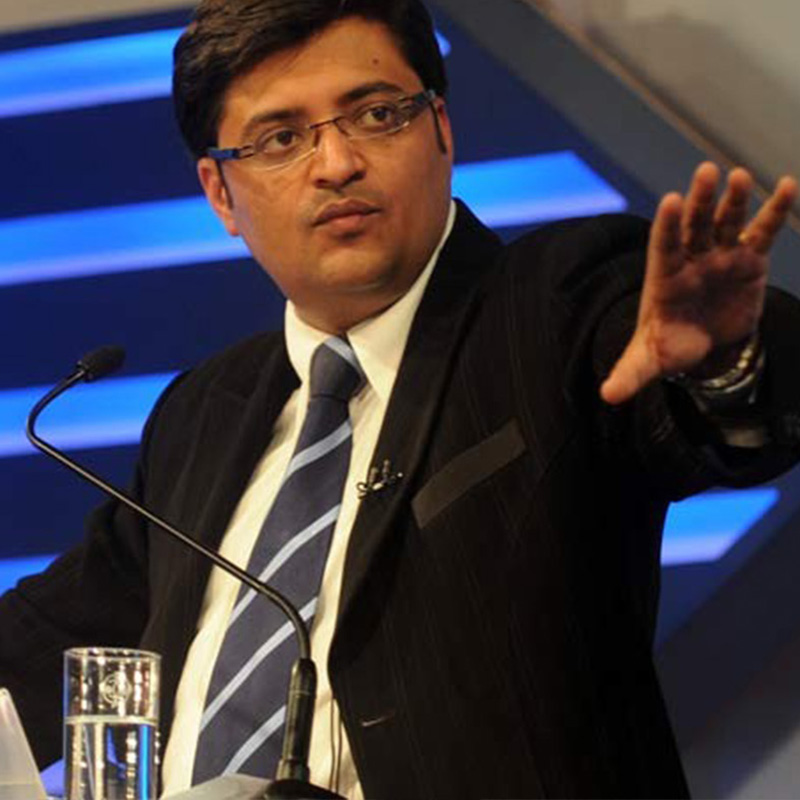
    When a section of the Indian media tries to make a case for prosecution of industry colleagues, it’s a disturbing trend. It’s more worrisome when the case being made out is based on the assertion either-you-are-with-us-or-against-us, implying that plurality of opinion (no matter how unpalatable the `other’ view is) is not welcome and that everyone needs to subscribe to just one narrative.

    Is it a case of bloated egos?

    Could be.

    Is it a case of a section of powerful media succumbing to political pressure?

    Very much possible.

    Is it a case of corporate vested interests at work?

    Why not? As most Indian media organisations, especially the big ones, are owned and run by corporations who treat media just as a business.

    Or, is it an example that in a big democracy like India a pillar of democratic right — freedom of expression — now is being readied for sacrifice at the altar of short-term gains?

    The Arnab Goswami-Barkha Dutt (AG-BD) spat that’s keeping the nation interested presently and consuming lot of online space probably is the result of all the reasons listed in the previous para – and much more.

    While the AG-BD scrap, which has spilled over everywhere, has managed to corner eyeballs (wonder whether BARC would have data on this saga), another media related development seems to have largely gone unnoticed.

    According to the Mukesh Ambani-controlled online publication Firstpost, controversial teleevangelist Zakir Naik, accused of allegedly spreading hate through his sermons on his TV channel Peace TV, has slapped a Rs 500 crore defamation suit on Times NOW and AG.

    Why are we mentioning this defamation suit by Naik at all here? Simply because such cases will chip away at the foundation of Indian democracy and Indian media’s role as a watchdog or the Fourth Estate. This will also encourage vested interests in the country to take on more often a divided news media.

    Coming back to the face-off between AG and BD, it echoes many things, but more sharply two facts: growing intolerance in the country towards plurality of thought and opinion and increasing commercialisation of a news media where fact and fiction mix freely without alerting the consumer.

    Old school journalists have been aghast at the public display of verbal fisticuffs and washing of dirty linen (and egos) terming such behaviour from two high-profile news anchors as “shrewish and infantile,” egoistical and unworthy of such perceived role models for youngsters in the media.

    On the other hand, there are supporters of AG too, who is said to have started it all when during one of his recent shows he advocated that everybody who’s seen as anti-national (to be defined, probably, as per standards laid down by him and like-minded people), including media persons, should be legally prosecuted and punished. BD and some others media pros waded into the debate sullying the waters further with views and counter views.

    Where does that leave thousands of faceless and not-so-high profile journalists trying to eke out a living being a watchdog far away from the limelight?

    That’s a question that the media itself has to answer if it has to regain its fast-losing credibility and also protect its freedom that’s so essential in a democracy like India. For the present, it seems the Indian media is reeling under the Donald Trump effect.

  • Arnab-Barkha face-off amplifies disturbing trends

    Arnab-Barkha face-off amplifies disturbing trends

    When a section of the Indian media tries to make a case for prosecution of industry colleagues, it’s a disturbing trend. It’s more worrisome when the case being made out is based on the assertion either-you-are-with-us-or-against-us, implying that plurality of opinion (no matter how unpalatable the `other’ view is) is not welcome and that everyone needs to subscribe to just one narrative.

    Is it a case of bloated egos?

    Could be.

    Is it a case of a section of powerful media succumbing to political pressure?

    Very much possible.

    Is it a case of corporate vested interests at work?

    Why not? As most Indian media organisations, especially the big ones, are owned and run by corporations who treat media just as a business.

    Or, is it an example that in a big democracy like India a pillar of democratic right — freedom of expression — now is being readied for sacrifice at the altar of short-term gains?

    The Arnab Goswami-Barkha Dutt (AG-BD) spat that’s keeping the nation interested presently and consuming lot of online space probably is the result of all the reasons listed in the previous para – and much more.

    While the AG-BD scrap, which has spilled over everywhere, has managed to corner eyeballs (wonder whether BARC would have data on this saga), another media related development seems to have largely gone unnoticed.

    According to the Mukesh Ambani-controlled online publication Firstpost, controversial teleevangelist Zakir Naik, accused of allegedly spreading hate through his sermons on his TV channel Peace TV, has slapped a Rs 500 crore defamation suit on Times NOW and AG.

    Why are we mentioning this defamation suit by Naik at all here? Simply because such cases will chip away at the foundation of Indian democracy and Indian media’s role as a watchdog or the Fourth Estate. This will also encourage vested interests in the country to take on more often a divided news media.

    Coming back to the face-off between AG and BD, it echoes many things, but more sharply two facts: growing intolerance in the country towards plurality of thought and opinion and increasing commercialisation of a news media where fact and fiction mix freely without alerting the consumer.

    Old school journalists have been aghast at the public display of verbal fisticuffs and washing of dirty linen (and egos) terming such behaviour from two high-profile news anchors as “shrewish and infantile,” egoistical and unworthy of such perceived role models for youngsters in the media.

    On the other hand, there are supporters of AG too, who is said to have started it all when during one of his recent shows he advocated that everybody who’s seen as anti-national (to be defined, probably, as per standards laid down by him and like-minded people), including media persons, should be legally prosecuted and punished. BD and some others media pros waded into the debate sullying the waters further with views and counter views.

    Where does that leave thousands of faceless and not-so-high profile journalists trying to eke out a living being a watchdog far away from the limelight?

    That’s a question that the media itself has to answer if it has to regain its fast-losing credibility and also protect its freedom that’s so essential in a democracy like India. For the present, it seems the Indian media is reeling under the Donald Trump effect.