Tag: BARC

  • BARC Week 33: Pay TV channels declines in ratings

    BARC Week 33: Pay TV channels declines in ratings

    MUMBAI: The standout of week 33 was the fall in ratings for all the major pay TV Hindi general entertainment channels, according to Broadcast Audience Research Council (BARC) all India data.

    Other noteworthy changes were: Big Magic exited the Rural HSM top ten channels list and Sab TV came in at number 10.  

    Urban + Rural HSM

    Star Plus continued as the  undisputed leader in the general entertainment channel genre even after a fall in ratings with 668069 Impressions (000s) as against 691536 Impressions (000). Star Utsav too witnessed a fall but maintained its position at number two with 549545 Impressions (000s) followed by Zee TV at third  position with 542520 Impressions (000s) against 598686 Impressions (000s). Fourth placed Colors generated 508811 Impressions (000s) as against 586734 Impressions (000s).

    Zee Anmol on the fifth spot with 479214 Impressions (000) against 490427 Impressions (000s) and number six was Life OK with 405279 Impressions (000s).

    In week 33, Sony Pal stood at seventh with 401288 Impressions (000s) and SPN’s other channels Sab TV and Sony Entertainment Television grabbed eight and ninth spot with 375133 Impressions (000s) and 369158 Impressions (000s) respectively.

    Rishtey bagged the tenth spot with 300669 Impressions (000s).

    Rural HSM

    In week 33, Star Utsav maintained its leadership position with 417767 Impressions against 4461095 Impressions (000s) in week 32, followed by Zee Anmol  at second position with 367641 Impressions (000s) and Sony Pal on the third spot with 309802 Impressions (000s). Zee TV retained its fourth position with 231427 Impressions (000s).

    Rishtey replaced Star Plus on fifth place with 222953 Impressions (000s)  and Star Plus  bagged the sixth spot with 216435 Impressions (000s) followed by Colors at number seven with 151145 Impressions (000s). Life Ok stood at eight with 147949 Impressions (000s) followed by Sony Entertainment Television at ninth place with 105116  Impressions (000s) while Sab TV entered the list at tenth spot with 103480 Impressions (000s). Big Magic exited this week.

    Urban HSM

    Star Plus garnered the pole position even after a dip ratings with 451634 Impression (000s)against   475066 Impressions (000s) in week 33 followed by Colors at second place with 357667 Impressions (000s) and Zee TV with 311093 Impressions (000s) stood at number three.

    Sab TV grabbed the fourth spot with 271653 Impressions (000s) followed by Sony Entertainment Television  at fifth with 257330 Impressions (000s) and Life Ok with 264041 Impressions (000s).
    In urban HSM,  &TV maintained its number seven position with 159776 Impressions (000s) followed by Star Utsav with 131778 Impressions (000s) on eighth and Zee Anmol bagged ninth spot with 111573 Impressions (000s).  Sony Pal was at tenth with 91486 Impressions (000s).


  • Rio 2016: Swimming, archery get high viewership in opening week

    Rio 2016: Swimming, archery get high viewership in opening week

    NEW DELHI: India may not have a Michael Phelps, rather one doesn’t remember if an Indian swimmer even participated in Rio, but surprisingly swimming garnered maximum viewership of 30.8 (000) Impressions in the initial days of Olympics 2016.

    According to BARC data for the period of August 6-12, 2016, swimming topped the list of Top 10 watched events/disciplines (basis sum of normalized impressions across 30 min) across the nine SD and HD TV channels of Star Sports and Doordrashan (TG: All India, 4+).

    The swimming discipline was followed by archery in the second spot as the most watched sports/discipline in India, though this could be understood as the Indian women’s team, lead by world champ Deepika Kumari, was expected to win a medal in the team and individual sections at Rio.

    Despite the fact the Indian men and women archers failed to shoot themselves to the medal podium, but viewership was an impressive 24.2 (000) Impressions; probably because in the land of Arjun and Karna, master mythological archers, archery is an attractive sport.

    http://www.indiantelevision.com/sites/drupal7.indiantelevision.co.in/files/styles/large/public/archery_1.jpg?itok=WNyiS6IPImpressions 000 is the number of individuals (in 000s) of a target audience who viewed an “event”, averaged across minutes. This is what is also known as TVT (Television Viewership in Thousands), according to BARC responsible for TV audience measurement in India.

    Though PV Sindhu (silver medalist in the women’s section at Rio) was probably just starting her campaign at the Olympics during the period under review, but the presence of bigger stars like Saina Nehawal, Jwala Gutta, K. Srikanth, etc gave badminton the No. 3 spot in terms of viewership with 9.3 (000) Impressions.

    http://www.indiantelevision.com/sites/drupal7.indiantelevision.co.in/files/styles/large/public/image004_1.png?itok=vsLAvGCY

    It would be worthwhile to see the viewership figures for the women’s final match played on August 19, 2016 as and when BARC comes out with its data as facing a dismal Olympics 2016 campaign, the whole of India was rooting for the lanky Sindhu to win the yellow metal. Ditto for Sakshi Malik’s wrestling matches where India finally ended up getting a bronze medal courtesy a 23-year-old woman hailing from a patriarchal State of Haryana.  


    Interestingly, the Indian men’s hockey match against Canada, which ended in a draw, pulled in 9.1 Impressions in terms of viewership. But when before this match, India had played Ireland in the opener and won, the audience was a low 5.7 Impressions.

    BARC’s Week 32 data on Rio 2016 telecast also highlights that telecast across nine channels for a cumulative 950 hours in the period 6-12 August garnered 210.9 million Impressions.

    The opening ceremony garnered 0.5 million Impressions across all the 9 channels.

    (Note: The viewership data corresponds to specific duration of the event/discipline and not a particular time band.)


  • Rio 2016: Swimming, archery get high viewership in opening week

    Rio 2016: Swimming, archery get high viewership in opening week

    NEW DELHI: India may not have a Michael Phelps, rather one doesn’t remember if an Indian swimmer even participated in Rio, but surprisingly swimming garnered maximum viewership of 30.8 (000) Impressions in the initial days of Olympics 2016.

    According to BARC data for the period of August 6-12, 2016, swimming topped the list of Top 10 watched events/disciplines (basis sum of normalized impressions across 30 min) across the nine SD and HD TV channels of Star Sports and Doordrashan (TG: All India, 4+).

    The swimming discipline was followed by archery in the second spot as the most watched sports/discipline in India, though this could be understood as the Indian women’s team, lead by world champ Deepika Kumari, was expected to win a medal in the team and individual sections at Rio.

    Despite the fact the Indian men and women archers failed to shoot themselves to the medal podium, but viewership was an impressive 24.2 (000) Impressions; probably because in the land of Arjun and Karna, master mythological archers, archery is an attractive sport.

    http://www.indiantelevision.com/sites/drupal7.indiantelevision.co.in/files/styles/large/public/archery_1.jpg?itok=WNyiS6IPImpressions 000 is the number of individuals (in 000s) of a target audience who viewed an “event”, averaged across minutes. This is what is also known as TVT (Television Viewership in Thousands), according to BARC responsible for TV audience measurement in India.

    Though PV Sindhu (silver medalist in the women’s section at Rio) was probably just starting her campaign at the Olympics during the period under review, but the presence of bigger stars like Saina Nehawal, Jwala Gutta, K. Srikanth, etc gave badminton the No. 3 spot in terms of viewership with 9.3 (000) Impressions.

    http://www.indiantelevision.com/sites/drupal7.indiantelevision.co.in/files/styles/large/public/image004_1.png?itok=vsLAvGCY

    It would be worthwhile to see the viewership figures for the women’s final match played on August 19, 2016 as and when BARC comes out with its data as facing a dismal Olympics 2016 campaign, the whole of India was rooting for the lanky Sindhu to win the yellow metal. Ditto for Sakshi Malik’s wrestling matches where India finally ended up getting a bronze medal courtesy a 23-year-old woman hailing from a patriarchal State of Haryana.  


    Interestingly, the Indian men’s hockey match against Canada, which ended in a draw, pulled in 9.1 Impressions in terms of viewership. But when before this match, India had played Ireland in the opener and won, the audience was a low 5.7 Impressions.

    BARC’s Week 32 data on Rio 2016 telecast also highlights that telecast across nine channels for a cumulative 950 hours in the period 6-12 August garnered 210.9 million Impressions.

    The opening ceremony garnered 0.5 million Impressions across all the 9 channels.

    (Note: The viewership data corresponds to specific duration of the event/discipline and not a particular time band.)


  • Average viewership of DD National according to BARC is 91 million: Rathore

    Average viewership of DD National according to BARC is 91 million: Rathore

    NEW DELHI: The average viewership of Doordarshan National is 91 million according to the Broadcast Audience Research Council.

    The BARC has given details of 21 DD Kendras with DD Kashir being at the botton with average viewership of 6.80,000.

    Minister of State for Information and Broadcasting Rajyavardhan Rathore told the Lok Sabha today that all the regional channels of Doordarshan telecast various programmes promoting the languages included in the Eight Schedule of the Constitution and popular dialects.

    No. Channel Language Average Gross Viewership (lakhs)

    1 DD National HINDI 910.0
    2 DD Punjabi PUNJABI 238.7
    3 DD Sahyadri MARATHI 153.3
    4 DD Podhigai TAMIL 94.8
    5 DD Chandana KANNADA 74.9
    6 DD News HINDI 72.1
    7 DD Kisan HINDI 56.2
    8 DD Bangla BENGALI 59.7
    9 DD Malayalam MALAYALAM 40.5
    10 DD Uttar Pradesh HINDI 53.4
    11 DD Sports HINDI 40.2
    12 DD Madhya Pradesh HINDI 30.7
    13 DD Yadagiri TELUGU 35.7
    14 DD Rajasthan HINDI 26.5
    15 DD Bihar BHOJPURI 26.5
    16 DD Girnar GUJARATI 32.7
    17 DD Oriya ORIYA 29.7
    18 DD Urdu URDU 16.1
    19 DD Bharati HINDI 20.7
    20 DD North East ASSAMESE 10.5
    21 DD Kashir URDU 6.8

  • Average viewership of DD National according to BARC is 91 million: Rathore

    Average viewership of DD National according to BARC is 91 million: Rathore

    NEW DELHI: The average viewership of Doordarshan National is 91 million according to the Broadcast Audience Research Council.

    The BARC has given details of 21 DD Kendras with DD Kashir being at the botton with average viewership of 6.80,000.

    Minister of State for Information and Broadcasting Rajyavardhan Rathore told the Lok Sabha today that all the regional channels of Doordarshan telecast various programmes promoting the languages included in the Eight Schedule of the Constitution and popular dialects.

    No. Channel Language Average Gross Viewership (lakhs)

    1 DD National HINDI 910.0
    2 DD Punjabi PUNJABI 238.7
    3 DD Sahyadri MARATHI 153.3
    4 DD Podhigai TAMIL 94.8
    5 DD Chandana KANNADA 74.9
    6 DD News HINDI 72.1
    7 DD Kisan HINDI 56.2
    8 DD Bangla BENGALI 59.7
    9 DD Malayalam MALAYALAM 40.5
    10 DD Uttar Pradesh HINDI 53.4
    11 DD Sports HINDI 40.2
    12 DD Madhya Pradesh HINDI 30.7
    13 DD Yadagiri TELUGU 35.7
    14 DD Rajasthan HINDI 26.5
    15 DD Bihar BHOJPURI 26.5
    16 DD Girnar GUJARATI 32.7
    17 DD Oriya ORIYA 29.7
    18 DD Urdu URDU 16.1
    19 DD Bharati HINDI 20.7
    20 DD North East ASSAMESE 10.5
    21 DD Kashir URDU 6.8

  • “TV ad rates will continue to be under pressure” – Ashish Bhasin

    “TV ad rates will continue to be under pressure” – Ashish Bhasin

    MUMBAI: From leading brands discussing the advertising fraternity’s readiness to deal with the digital onslaught to panel discussions after panel discussions dedicated to cracking the content code of the digital world in reputed conferences; the Indian media world is truly enamored with the word ‘digital.’ And rightly so, as the media has completely changed how the trade works in the sector.

    But little is being discussed on the specifics of digital media’s effect on television and its business. To put this into perspective and shed light upon the current realities of the television industry from a media executive’s point of view, indiantelevision.com reached out to Dentsu Aegis Network chairman and South Asia CEO Ashish Bhasin.

    In a free flowing conversation, Bhasin opens up on sophistication employed in a new age television plan with the help of data analysis, ad-rates discrepancies in India,  future of TV media from advertising perspective, and more.

    Excerpts:

    Does Big Data and interpreting it play a role in today’s TV plans?

    It is important to pay attention to Big Data and analyse it right. At Dentsu Aegis Network we have set up our own data stack, which is driving through econometric modelling. That team is using it…it is composed of a young team of statisticians and senior data analysts, economists, and technicians who are analysing and decoding the available data on behalf of our clients.

    For example, you can get 44 percent reach for a particular plan on television.  Now if you spend 10 percent extra on your budget, you probably can get 46 percent reach on the same plan. This 10 percent of budget spends for 2 percent of incremental reach isn’t viable for the client. Thats where the data team comes in, who have developed a software who figures out where is that wastage happening. They combine the television exposure and digital exposure and tells us here is the sweet spot for advertisers to spend that 10 percent on.

    The age old problem of advertising is that advertisers know 50 percent of their advertising works but don’t know which half. Our approach helps the advertisers to know to some extent which half works.

    Many fear that digital will eat into television’s ad revenues even as TV continues to grow. What are your thoughts on this?

    Well in the distant future, in theory, digital will eat into television’s market share because everything will become digital. It is already happening in the more mature western markets but in India that has a long way go because television penetration has some way to go. We are all seeing it still from a Mumbai-Delhi point of view but the growth is not going to come from these two metros, there is already 100 per cent penetration there. The growth will come from tier III tier IV rural towns.

    There it is a long way to go. Therefore for the next five to 10 years there is enough space for all media to grow. Even print, which is collapsing everywhere else in the world is still still growing in India because literary levels are growing. But we don’t doubt that digital will grow faster – at least we believe – than any other medium.

    Will the per unit realisation (valuation) of television go up?

    Per unit realisation is the function of the audiences you get. More your distribution, more your audience, more is the realisation. I don’t think it will go because there are contradictory factors acting. On the one side you are getting more audiences, on the other side, the time of these audiences is getting more fragmented. It is getting fragmented — within television, and also between television and digital.

    So, there will be a balancing factor. It won’t collapse like it has in many other parts of the world. It may go up but gradually because there will be the other factor of the fragmentation which will come into play. There will be the two paradoxical forces acting together.

    Compared to markets like US, Indian television ad rates are very low even after adjusting the purchasing power parity. Your comments?

    I think it is unfair to compare US national rates with Indian semi regional rates because they are operating on completely different bases. There are 300 million people in the US. Out of that the TV audience is about 150 million. Per person per secondage average if you compare the two, you will understand, there are two different bases you are operating from. It’s unfair to compare US national rates with Indian semi-national or regional programs. Because then what you should compare is the 0800 ads in Minnesota, Iowa. You see their rates, their rates are less than or equal to the rates in India, even though the ones there are in dollars. The Super Bowl, one refers to, is a dense packed audience nationally – it is a unique phenomenon.

    Could the IPL be that property in India?

    It probably could be, But the IPL has already peaked; it will not go beyond this. That’s why IPL is commanding the premium; one spot on IPL is so expensive. It is anywhere between Rs three to five lakh for a 10 second spot.  

    What trend do you notice in the current television advertising rates per spot?

    I feel that the pricing on television will further go down. Today, we are looking at 0.1 rated programs. There are hundreds of programs that rated 0.1 by BARC. Tomorrow, you will be having programs with e rated 0.05, hypothetically. An advertiser is ultimately paying for the eyeballs the show is getting. If that number will go down, suddenly the prices can’t go up right?

    It is true that some premier shows will command higher ratings, such as a cricket match etc. But I don’t see the ratings going up in general.

    An advertiser is only paying more money to get more audience. To an advertiser it does not matter whether the viewer is watching it on Zee, Sony, Star or Colors, he is interested in that my target audience, say a million people, where do I reach them? So, if the reach or number of people is going to get more and more fragmented, then the per spot rate is headed south. Overall the advertiser may end up spending more because he has to take that many more spots to reach the audience he wants, but the per spot rate realisation will not go up, it will come down.

    The problem with television is also that there is too much supply, too many channels, too much inventory. The TV industry had one chance to limit the supply when the TRAI asked them to limit ad time on TV to 12 minutes an hour. Limiting supply could have had to benefit of taking rates up. But the industry did not comply with this. Hence, now there has been a commodisation of television air time.

    Do you think we will need  TV broadcaster going forward?

    The reduction of dependency on a broadcaster is at least five to 10 years away in India, which is what I keep reminding people. We are at that sweet spot where everything is going to grow. While there will be a lot of digital pressure and digital will grow fast, actually if there were no other contradictory pressures, TV should have started collapsing. That will not happen because TV is growing.

    Doordarshan has started giving away its Free Dishes in the south now. They started this in the north earlier. With this the penetration of free to air channels is going to really rise. Hence the distribution increase is going to keep an inward positive upward pressure for TV coming up. Digital is going to put pressure on it to push it down. Therefore it will remain in balance for four to five years. Finally, digital will prevail. Once you more or less have penetrated India. You have more or less got everyone in. That stage, that will be tipping point when digital will take over.

    What will happen when Jio launches?

    Globally, if you see, smart phone penetration when it goes over one third, it’s the rule of thumb. That’s the inflection point in digital anywhere. In India we are probably at around 18-20 per cent. We are about 12-18 months away from that point. The moment smartphone penetration crosses 33 per cent, bandwidth gets available cheaper and cheaper. And you get good quality bandwidth. That inflection point is going to happen.

    How will that impact the advertising agency?

    Lines are blurring. There is no difference between media  or technology or content. There is only one solution. And the advertiser is looking at a comprehensive digital solution from his communications partner.

    What does a traditional client looking for digital solutions want from an agency these days?

    The client today doesn’t want generalists. He wants super specialists. If it is digital, he doesn’t want a normally media guy to handle it, he wants a digital specialist to handle its social media, a search specialist and then a display specialist.

    The clients today want the benefits of specialization but he does not want the hassles of silos. Fortunately or unfortunately, all the legacy agencies are constructed in silos. For a guy in a creative agency, it does not matter if the media goes to any other agency. Because they are all separate companies. Because of this they have not been able to provide a single solution under one umbrella.

    The reason we have been successful is that we are structured as one P&L. Everything from media in India reports into me – whether it is Carat or Isobar or iProspect or  Dentsu Creative or whatever. And that is our biggest strength because you can bring talent in, think around the client in one seamless way.  And almost all of the others have not focused on this.

    Your take on ad blockers?

    Ad blocking is a very tricky subject. As a consumer when I look at it, ad blockers are damn good because audiences don’t want an intrusion when they consume content. I think advertising businesses are to be blamed for getting the pushback from the consumers because people just went berserk with displays online. Consumers are not paying to see your advertising, they are paying for content. So if advertisers start intruding so much, there will be push back. And it will only go up unless we figure out some standardisation. The future of digital advertising is going to be opted.

    We see ad blocking in conjunction with bot fraud and click fraud, it will lead to a scenario where the media will collapse unless the cleaning up doesn’t happen.

    We have a large programmatic buying division. The biggest challenge they face is how do you that it’s a human being consuming the content on the other end. So ad blocking will continue to happen unless you have incentivized the consumer to opt it. Either by choice or by incentives. Privacy laws will get stronger, they are much stronger abroad than they are here.
     

  • “TV ad rates will continue to be under pressure” – Ashish Bhasin

    “TV ad rates will continue to be under pressure” – Ashish Bhasin

    MUMBAI: From leading brands discussing the advertising fraternity’s readiness to deal with the digital onslaught to panel discussions after panel discussions dedicated to cracking the content code of the digital world in reputed conferences; the Indian media world is truly enamored with the word ‘digital.’ And rightly so, as the media has completely changed how the trade works in the sector.

    But little is being discussed on the specifics of digital media’s effect on television and its business. To put this into perspective and shed light upon the current realities of the television industry from a media executive’s point of view, indiantelevision.com reached out to Dentsu Aegis Network chairman and South Asia CEO Ashish Bhasin.

    In a free flowing conversation, Bhasin opens up on sophistication employed in a new age television plan with the help of data analysis, ad-rates discrepancies in India,  future of TV media from advertising perspective, and more.

    Excerpts:

    Does Big Data and interpreting it play a role in today’s TV plans?

    It is important to pay attention to Big Data and analyse it right. At Dentsu Aegis Network we have set up our own data stack, which is driving through econometric modelling. That team is using it…it is composed of a young team of statisticians and senior data analysts, economists, and technicians who are analysing and decoding the available data on behalf of our clients.

    For example, you can get 44 percent reach for a particular plan on television.  Now if you spend 10 percent extra on your budget, you probably can get 46 percent reach on the same plan. This 10 percent of budget spends for 2 percent of incremental reach isn’t viable for the client. Thats where the data team comes in, who have developed a software who figures out where is that wastage happening. They combine the television exposure and digital exposure and tells us here is the sweet spot for advertisers to spend that 10 percent on.

    The age old problem of advertising is that advertisers know 50 percent of their advertising works but don’t know which half. Our approach helps the advertisers to know to some extent which half works.

    Many fear that digital will eat into television’s ad revenues even as TV continues to grow. What are your thoughts on this?

    Well in the distant future, in theory, digital will eat into television’s market share because everything will become digital. It is already happening in the more mature western markets but in India that has a long way go because television penetration has some way to go. We are all seeing it still from a Mumbai-Delhi point of view but the growth is not going to come from these two metros, there is already 100 per cent penetration there. The growth will come from tier III tier IV rural towns.

    There it is a long way to go. Therefore for the next five to 10 years there is enough space for all media to grow. Even print, which is collapsing everywhere else in the world is still still growing in India because literary levels are growing. But we don’t doubt that digital will grow faster – at least we believe – than any other medium.

    Will the per unit realisation (valuation) of television go up?

    Per unit realisation is the function of the audiences you get. More your distribution, more your audience, more is the realisation. I don’t think it will go because there are contradictory factors acting. On the one side you are getting more audiences, on the other side, the time of these audiences is getting more fragmented. It is getting fragmented — within television, and also between television and digital.

    So, there will be a balancing factor. It won’t collapse like it has in many other parts of the world. It may go up but gradually because there will be the other factor of the fragmentation which will come into play. There will be the two paradoxical forces acting together.

    Compared to markets like US, Indian television ad rates are very low even after adjusting the purchasing power parity. Your comments?

    I think it is unfair to compare US national rates with Indian semi regional rates because they are operating on completely different bases. There are 300 million people in the US. Out of that the TV audience is about 150 million. Per person per secondage average if you compare the two, you will understand, there are two different bases you are operating from. It’s unfair to compare US national rates with Indian semi-national or regional programs. Because then what you should compare is the 0800 ads in Minnesota, Iowa. You see their rates, their rates are less than or equal to the rates in India, even though the ones there are in dollars. The Super Bowl, one refers to, is a dense packed audience nationally – it is a unique phenomenon.

    Could the IPL be that property in India?

    It probably could be, But the IPL has already peaked; it will not go beyond this. That’s why IPL is commanding the premium; one spot on IPL is so expensive. It is anywhere between Rs three to five lakh for a 10 second spot.  

    What trend do you notice in the current television advertising rates per spot?

    I feel that the pricing on television will further go down. Today, we are looking at 0.1 rated programs. There are hundreds of programs that rated 0.1 by BARC. Tomorrow, you will be having programs with e rated 0.05, hypothetically. An advertiser is ultimately paying for the eyeballs the show is getting. If that number will go down, suddenly the prices can’t go up right?

    It is true that some premier shows will command higher ratings, such as a cricket match etc. But I don’t see the ratings going up in general.

    An advertiser is only paying more money to get more audience. To an advertiser it does not matter whether the viewer is watching it on Zee, Sony, Star or Colors, he is interested in that my target audience, say a million people, where do I reach them? So, if the reach or number of people is going to get more and more fragmented, then the per spot rate is headed south. Overall the advertiser may end up spending more because he has to take that many more spots to reach the audience he wants, but the per spot rate realisation will not go up, it will come down.

    The problem with television is also that there is too much supply, too many channels, too much inventory. The TV industry had one chance to limit the supply when the TRAI asked them to limit ad time on TV to 12 minutes an hour. Limiting supply could have had to benefit of taking rates up. But the industry did not comply with this. Hence, now there has been a commodisation of television air time.

    Do you think we will need  TV broadcaster going forward?

    The reduction of dependency on a broadcaster is at least five to 10 years away in India, which is what I keep reminding people. We are at that sweet spot where everything is going to grow. While there will be a lot of digital pressure and digital will grow fast, actually if there were no other contradictory pressures, TV should have started collapsing. That will not happen because TV is growing.

    Doordarshan has started giving away its Free Dishes in the south now. They started this in the north earlier. With this the penetration of free to air channels is going to really rise. Hence the distribution increase is going to keep an inward positive upward pressure for TV coming up. Digital is going to put pressure on it to push it down. Therefore it will remain in balance for four to five years. Finally, digital will prevail. Once you more or less have penetrated India. You have more or less got everyone in. That stage, that will be tipping point when digital will take over.

    What will happen when Jio launches?

    Globally, if you see, smart phone penetration when it goes over one third, it’s the rule of thumb. That’s the inflection point in digital anywhere. In India we are probably at around 18-20 per cent. We are about 12-18 months away from that point. The moment smartphone penetration crosses 33 per cent, bandwidth gets available cheaper and cheaper. And you get good quality bandwidth. That inflection point is going to happen.

    How will that impact the advertising agency?

    Lines are blurring. There is no difference between media  or technology or content. There is only one solution. And the advertiser is looking at a comprehensive digital solution from his communications partner.

    What does a traditional client looking for digital solutions want from an agency these days?

    The client today doesn’t want generalists. He wants super specialists. If it is digital, he doesn’t want a normally media guy to handle it, he wants a digital specialist to handle its social media, a search specialist and then a display specialist.

    The clients today want the benefits of specialization but he does not want the hassles of silos. Fortunately or unfortunately, all the legacy agencies are constructed in silos. For a guy in a creative agency, it does not matter if the media goes to any other agency. Because they are all separate companies. Because of this they have not been able to provide a single solution under one umbrella.

    The reason we have been successful is that we are structured as one P&L. Everything from media in India reports into me – whether it is Carat or Isobar or iProspect or  Dentsu Creative or whatever. And that is our biggest strength because you can bring talent in, think around the client in one seamless way.  And almost all of the others have not focused on this.

    Your take on ad blockers?

    Ad blocking is a very tricky subject. As a consumer when I look at it, ad blockers are damn good because audiences don’t want an intrusion when they consume content. I think advertising businesses are to be blamed for getting the pushback from the consumers because people just went berserk with displays online. Consumers are not paying to see your advertising, they are paying for content. So if advertisers start intruding so much, there will be push back. And it will only go up unless we figure out some standardisation. The future of digital advertising is going to be opted.

    We see ad blocking in conjunction with bot fraud and click fraud, it will lead to a scenario where the media will collapse unless the cleaning up doesn’t happen.

    We have a large programmatic buying division. The biggest challenge they face is how do you that it’s a human being consuming the content on the other end. So ad blocking will continue to happen unless you have incentivized the consumer to opt it. Either by choice or by incentives. Privacy laws will get stronger, they are much stronger abroad than they are here.


  • BARC week 30: Star Plus & Star Utsav remain No 1

    BARC week 30: Star Plus & Star Utsav remain No 1

    MUMBAI: In week 30, Star Plus continued to dominate the Hindi GEC genre while Zee TV maintained its position on the second slot in the urban plus rural Hindi speaking market. On the other hand, Star Utsav stayed firm at number one in the rural Hindi speaking market. Also, Star Plus ruled the urban HSM, as per the Broadcast Audience Research Council (BARC).

    Urban + Rural HSM

    Star Plus continued to lead the Hindi general entertainment channel genre with 685886 Impressions (000s) while Zee TV maintained its second position with 611276 Impressions (000s), followed by Colors in third place with 532339 Impressions (000s).

    Star India’s free to air channel Star Utsav grabbed the fourth position with 486363 Impressions (000s) and Zee Anmol got back to its fifth place with 471744 Impressions (000s).

    Life OK stood at sixth with 428199 Impressions (000s) followed by Sony Pal at number seven with 403285 Impressions (000s) and Sony Entertainment Television at number eight with 383937 Impressions (000s). Sab TV on number nine with 369043 Impressions (000s) and Rishtey maintained its tenth spot with 298741 Impressions (000s).

    Rural HSM

    In week 30, Star Utsav maintained its leadership position with 376906 Impressions (000s) followed by Zee Anmol  at second position with 362250 Impressions (000s) and Sony Pal on the third spot with 309097 Impressions (000s). Zee TV maintained its fourth position with 274163 Impressions (000s).

    Rishtey pushed Star Plus onto the sixth slot and garnered  fifth place with 218429 Impressions (000s) even as the former managed  217108 Impressions (000s) followed by Colors at number seven with 159629 Impressions (000s). Life Ok stood at eight with 147451 Impressions (000s) followed by  Big Magic at ninth place with 115308 impressions (000s) while Sony Entertainment Television stood tenth 107384 Impressions (000s).

    Urban HSM

    Star Plus garnered the pole  position with 468778 Impressions (000s) followed by Colors at second place with 372710 Impressions (000s) and Zee TV with 337113 Impressions (000s) stood at number three.

    Life OK grabbed the fourth spot with 280748 Impressions (000s) followed by Sony Entertainment Television at fifth with 276553 Impressions (000s) and Sab TV with 264731 Impressions (000s).

    In urban HSM,  &TV maintained its number seven position with 139318 Impressions (000s) followed by Zee Anmol with 109494 Impressions (000s) on eighth and Star Utsav bagged ninth spot with 109457 Impressions (000s).  Sony Pal  bagged tenth spot with 94189 Impressions (000s).

  • BARC week 30: Star Plus & Star Utsav remain No 1

    BARC week 30: Star Plus & Star Utsav remain No 1

    MUMBAI: In week 30, Star Plus continued to dominate the Hindi GEC genre while Zee TV maintained its position on the second slot in the urban plus rural Hindi speaking market. On the other hand, Star Utsav stayed firm at number one in the rural Hindi speaking market. Also, Star Plus ruled the urban HSM, as per the Broadcast Audience Research Council (BARC).

    Urban + Rural HSM

    Star Plus continued to lead the Hindi general entertainment channel genre with 685886 Impressions (000s) while Zee TV maintained its second position with 611276 Impressions (000s), followed by Colors in third place with 532339 Impressions (000s).

    Star India’s free to air channel Star Utsav grabbed the fourth position with 486363 Impressions (000s) and Zee Anmol got back to its fifth place with 471744 Impressions (000s).

    Life OK stood at sixth with 428199 Impressions (000s) followed by Sony Pal at number seven with 403285 Impressions (000s) and Sony Entertainment Television at number eight with 383937 Impressions (000s). Sab TV on number nine with 369043 Impressions (000s) and Rishtey maintained its tenth spot with 298741 Impressions (000s).

    Rural HSM

    In week 30, Star Utsav maintained its leadership position with 376906 Impressions (000s) followed by Zee Anmol  at second position with 362250 Impressions (000s) and Sony Pal on the third spot with 309097 Impressions (000s). Zee TV maintained its fourth position with 274163 Impressions (000s).

    Rishtey pushed Star Plus onto the sixth slot and garnered  fifth place with 218429 Impressions (000s) even as the former managed  217108 Impressions (000s) followed by Colors at number seven with 159629 Impressions (000s). Life Ok stood at eight with 147451 Impressions (000s) followed by  Big Magic at ninth place with 115308 impressions (000s) while Sony Entertainment Television stood tenth 107384 Impressions (000s).

    Urban HSM

    Star Plus garnered the pole  position with 468778 Impressions (000s) followed by Colors at second place with 372710 Impressions (000s) and Zee TV with 337113 Impressions (000s) stood at number three.

    Life OK grabbed the fourth spot with 280748 Impressions (000s) followed by Sony Entertainment Television at fifth with 276553 Impressions (000s) and Sab TV with 264731 Impressions (000s).

    In urban HSM,  &TV maintained its number seven position with 139318 Impressions (000s) followed by Zee Anmol with 109494 Impressions (000s) on eighth and Star Utsav bagged ninth spot with 109457 Impressions (000s).  Sony Pal  bagged tenth spot with 94189 Impressions (000s).

  • Arnab-Barkha face-off amplifies disturbing trends

    Arnab-Barkha face-off amplifies disturbing trends

    When a section of the Indian media tries to make a case for prosecution of industry colleagues, it’s a disturbing trend. It’s more worrisome when the case being made out is based on the assertion either-you-are-with-us-or-against-us, implying that plurality of opinion (no matter how unpalatable the `other’ view is) is not welcome and that everyone needs to subscribe to just one narrative.

    Is it a case of bloated egos?

    Could be.

    Is it a case of a section of powerful media succumbing to political pressure?

    Very much possible.

    Is it a case of corporate vested interests at work?

    Why not? As most Indian media organisations, especially the big ones, are owned and run by corporations who treat media just as a business.

    Or, is it an example that in a big democracy like India a pillar of democratic right — freedom of expression — now is being readied for sacrifice at the altar of short-term gains?

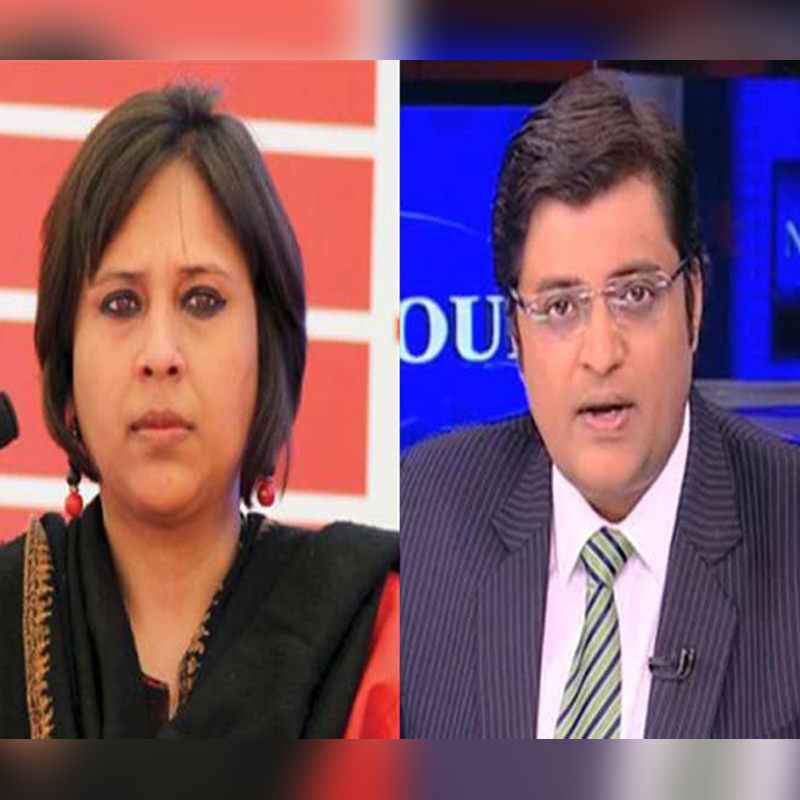
    The Arnab Goswami-Barkha Dutt (AG-BD) spat that’s keeping the nation interested presently and consuming lot of online space probably is the result of all the reasons listed in the previous para – and much more.

    While the AG-BD scrap, which has spilled over everywhere, has managed to corner eyeballs (wonder whether BARC would have data on this saga), another media related development seems to have largely gone unnoticed.

    According to the Mukesh Ambani-controlled online publication Firstpost, controversial teleevangelist Zakir Naik, accused of allegedly spreading hate through his sermons on his TV channel Peace TV, has slapped a Rs 500 crore defamation suit on Times NOW and AG.

    Why are we mentioning this defamation suit by Naik at all here? Simply because such cases will chip away at the foundation of Indian democracy and Indian media’s role as a watchdog or the Fourth Estate. This will also encourage vested interests in the country to take on more often a divided news media.

    Coming back to the face-off between AG and BD, it echoes many things, but more sharply two facts: growing intolerance in the country towards plurality of thought and opinion and increasing commercialisation of a news media where fact and fiction mix freely without alerting the consumer.

    Old school journalists have been aghast at the public display of verbal fisticuffs and washing of dirty linen (and egos) terming such behaviour from two high-profile news anchors as “shrewish and infantile,” egoistical and unworthy of such perceived role models for youngsters in the media.

    On the other hand, there are supporters of AG too, who is said to have started it all when during one of his recent shows he advocated that everybody who’s seen as anti-national (to be defined, probably, as per standards laid down by him and like-minded people), including media persons, should be legally prosecuted and punished. BD and some others media pros waded into the debate sullying the waters further with views and counter views.

    Where does that leave thousands of faceless and not-so-high profile journalists trying to eke out a living being a watchdog far away from the limelight?

    That’s a question that the media itself has to answer if it has to regain its fast-losing credibility and also protect its freedom that’s so essential in a democracy like India. For the present, it seems the Indian media is reeling under the Donald Trump effect.