Tag: BARC

  • Hindi news segregated into urban and rural: BARC week 39

    Hindi news segregated into urban and rural: BARC week 39

    MUMBAI: Broadcast Audience Research Council (BARC) All India data has divided Hindi news into rural and urban from week 39. Moreover, Times Now stood at the number one position in the English News space whereas CNBC TV 18 dominated the English business news genre.

    In the overall Hindi news genre Aaj Tak continued to lead. According to the data, the channel has an upperhand in the urban markets.  CNBC Awaaz ranked number one in Hindi Business News.

    English news

    Times Now maintained its first position with 1084 Impressions (000s). CNN News18 took the second position with 433 Impressions (000s). NDTV 24×7 settled on the third berth with 317 Impressions (000s). India Today television grabbed the fourth spot with 234 Impressions (000s) whereas BBC World News stood at the fifth position with 196 Impressions (000s).

    English business news

    CNBC TV 18 dominated the space with 299 Impressions (000s) followed by ET Now at the second slot with 185 Impressions (000s).  NDTV Profit and NDTV Prime with 73 Impressions (000s) and BTVi with 24 (‘000s) Impressions (000s) took the third and fourth positions respectively.

    Hindi news

    Aaj Tak stood at the first spot with 140557 Impressions (000s) followed by India TV at the second position with 110127 Impressions (000s).  India News sustained at third position with 107195 Impressions (000s) followed by Zee News securing the fourth position with 97935 Impressions (000s). ABP News took the fifth position with 97933 Impressions (000s).

    Hindi news – rural

    Aaj Tak dominated the rural market with 64614 Impressions (000s) followed by India News with 53759 Impressions (000s). India TV grabbed 51966 Impressions (000s). ABP News managed 45104 Impressions (000s) followed by News 24 with 39126 Impressions (000s).

    Hindi news – urban

    Aaj Tak was at the number one position with 75943 Impressions (000s) followed by Zee News at the second position with 59704 Impressions (000s).  India TV grabbed the third position with 58161 Impressions (000s) followed by India News at the fourth position with 53437 Impressions (000s). ABP News took the fifth position with 52829 Impressions (000s).

    Hindi business news

    CNBC Awaaz grabbed the first spot with 896 Impressions (000s) whereas Zee Business stood at the second spot with 734 Impressions (000s).


  • Star Utsav replaces Zee Anmol in rural HSM: BARC week 39

    Star Utsav replaces Zee Anmol in rural HSM: BARC week 39

    MUMBAI: Zee TV’s new weekend offering Brahmarakshas led the top five programmes list in Hindi GEC segment but Star Plus continues to dominate the genre in week 39, according to Broadcast Audience Research Council (BARC) all India.

    On the other hand, in the rural market, Star Utsav replaced Zee Anmol to claim the leadership position while Star Plus continues to be a leader in urban HSM as well.

    Hindi GEC

    Even though Zee TV’s two shows Brahmarakshas – Jaag Utha Shaitan and Kumkum Bhagya led the Hindi GECs top five, Star Plus continues to lead the genre with 690400 Impressions (000s) followed  by  Colors on second spot with 544831 Impressions (000s) and Zee TV on third with 522878 Impressions (000s).

    Star India’s free-to-air channel Star Utsav grabbed the fourth spot with 457548 Impressions (000s) while Zee’s FTA Zee Anmol with 439027 Impressions (000s) stood at number five.

    Life OK, Sony Entertainment Television and Sony Pal bagged the sixth, seventh and eighth spot with 430236 Impressions (000s), 424918 Impressions (000s) and 410720 Impressions (000s), respectively.

    Sab TV and Rishtey stood at ninth and tenth with 371912 Impressions (000s) and 325388 Impressions (000s).

    Hindi GEC Urban

    Star Plus continues to dominate the Hindi GECs genre with 456411 Impressions (000’s) followed by Colors on second with 370875 Impressions (000’s) and Zee TV on third with 30052 Impressions (000s).

    Leading with The Kapil Sharma Show in top five programmes of Hindi GEC, Sony Entertainment Television maintained its fourth place in the list with 298670 Impressions (000s).

    Life OK grabbed the fifth spot with 265376 Impressions (000s) followed by Sab TV on sixth with 263713 Impressions (000s) and & TV with 132576 Impressions (000s) stood at number seven.

    In Hindi speaking market,  free-to-air channels Star Utsav, Sony Pal and Zee Anmol grabbed the last three spots with 110677 Impressions (000s), 106315 Impressions (000s) and 100384 Impressions (000s), respectively.

    Hindi GEC Rural

    Star Utsav toppled Zee Anmol in week 39 to claim the leadership position with 346871 Impressions (000s) followed by Zee Anmol on second slot with 338643 Impressions (000s) and  Sony Pal on the third spot with 304404 Impressions (000s). Rishtey  maintained its fourth position with 239750 Impressions (000s).

    Star Plus bagged the fifth spot with 233990 Impressions (000s). Zee TV stood at sixth spot in rural HSM with 222326 Impressions (000s) followed by Colors at number seven with 173956 Impressions (000s). Life OK stood at number eight with 164861 Impressions (000s) followed by Sony Entertainment Television at the ninth place with 126248 Impressions (000s) while Sab TV at the tenth spot garnered 108199 Impressions (000s).

  • Star Utsav replaces Zee Anmol in rural HSM: BARC week 39

    Star Utsav replaces Zee Anmol in rural HSM: BARC week 39

    MUMBAI: Zee TV’s new weekend offering Brahmarakshas led the top five programmes list in Hindi GEC segment but Star Plus continues to dominate the genre in week 39, according to Broadcast Audience Research Council (BARC) all India.

    On the other hand, in the rural market, Star Utsav replaced Zee Anmol to claim the leadership position while Star Plus continues to be a leader in urban HSM as well.

    Hindi GEC

    Even though Zee TV’s two shows Brahmarakshas – Jaag Utha Shaitan and Kumkum Bhagya led the Hindi GECs top five, Star Plus continues to lead the genre with 690400 Impressions (000s) followed  by  Colors on second spot with 544831 Impressions (000s) and Zee TV on third with 522878 Impressions (000s).

    Star India’s free-to-air channel Star Utsav grabbed the fourth spot with 457548 Impressions (000s) while Zee’s FTA Zee Anmol with 439027 Impressions (000s) stood at number five.

    Life OK, Sony Entertainment Television and Sony Pal bagged the sixth, seventh and eighth spot with 430236 Impressions (000s), 424918 Impressions (000s) and 410720 Impressions (000s), respectively.

    Sab TV and Rishtey stood at ninth and tenth with 371912 Impressions (000s) and 325388 Impressions (000s).

    Hindi GEC Urban

    Star Plus continues to dominate the Hindi GECs genre with 456411 Impressions (000’s) followed by Colors on second with 370875 Impressions (000’s) and Zee TV on third with 30052 Impressions (000s).

    Leading with The Kapil Sharma Show in top five programmes of Hindi GEC, Sony Entertainment Television maintained its fourth place in the list with 298670 Impressions (000s).

    Life OK grabbed the fifth spot with 265376 Impressions (000s) followed by Sab TV on sixth with 263713 Impressions (000s) and & TV with 132576 Impressions (000s) stood at number seven.

    In Hindi speaking market,  free-to-air channels Star Utsav, Sony Pal and Zee Anmol grabbed the last three spots with 110677 Impressions (000s), 106315 Impressions (000s) and 100384 Impressions (000s), respectively.

    Hindi GEC Rural

    Star Utsav toppled Zee Anmol in week 39 to claim the leadership position with 346871 Impressions (000s) followed by Zee Anmol on second slot with 338643 Impressions (000s) and  Sony Pal on the third spot with 304404 Impressions (000s). Rishtey  maintained its fourth position with 239750 Impressions (000s).

    Star Plus bagged the fifth spot with 233990 Impressions (000s). Zee TV stood at sixth spot in rural HSM with 222326 Impressions (000s) followed by Colors at number seven with 173956 Impressions (000s). Life OK stood at number eight with 164861 Impressions (000s) followed by Sony Entertainment Television at the ninth place with 126248 Impressions (000s) while Sab TV at the tenth spot garnered 108199 Impressions (000s).

  • Channel ratings: Genre leaders continue to dominate

    Channel ratings: Genre leaders continue to dominate

    MUMBAI: Times network shone this week with Times Now as the undisputed leader in the English News space and ET Now dominated the English business news genre. According to week 37 of Broadcast Audience Research Council (BARC) all India data, in the Hindi news genre, Aaj Tak continued to lead whereas CNBC Awaaz ranked number one in Hindi Business News.

    English news

    Times Now maintained its first position with 446 Impressions (000s). CNN News18 took the second position with 204 Impressions (000s). NDTV 24×7 settled on the third berth with 193 Impressions (000s). India Today television grabbed the fourth spot with 139 Impressions (000s) whereas News X sustained its fifth position with 79 Impressions (000s).

    English business news

    ET Now dominated the space with 157 Impressions (000s) followed by CNBC TV18  that secured the second slot with 153 Impressions (000s).  NDTV Profit and NDTV Prime with 93 Impressions (000s) and BTVi with 13 (‘000s) Impressions (000s) took the third and fourth positions respectively.

    Hindi news

    Aaj Tak stood at the first spot with 82288 Impressions (000s) followed by India TV at the second position with 75059 Impressions (000s).  India News sustained was at third position with 75059 Impressions (000s) followed by ABP News securing the fourth position with 58691 Impressions (000s). Zee News took the fifth position with 52913 Impressions (000s).

    Hindi business news

    CNBC Awaaz grabbed the first spot with 877 Impressions (000s) whereas Zee Business stood at the second spot with 593 Impressions (000s).
     

  • Channel ratings: Genre leaders continue to dominate

    Channel ratings: Genre leaders continue to dominate

    MUMBAI: Times network shone this week with Times Now as the undisputed leader in the English News space and ET Now dominated the English business news genre. According to week 37 of Broadcast Audience Research Council (BARC) all India data, in the Hindi news genre, Aaj Tak continued to lead whereas CNBC Awaaz ranked number one in Hindi Business News.

    English news

    Times Now maintained its first position with 446 Impressions (000s). CNN News18 took the second position with 204 Impressions (000s). NDTV 24×7 settled on the third berth with 193 Impressions (000s). India Today television grabbed the fourth spot with 139 Impressions (000s) whereas News X sustained its fifth position with 79 Impressions (000s).

    English business news

    ET Now dominated the space with 157 Impressions (000s) followed by CNBC TV18  that secured the second slot with 153 Impressions (000s).  NDTV Profit and NDTV Prime with 93 Impressions (000s) and BTVi with 13 (‘000s) Impressions (000s) took the third and fourth positions respectively.

    Hindi news

    Aaj Tak stood at the first spot with 82288 Impressions (000s) followed by India TV at the second position with 75059 Impressions (000s).  India News sustained was at third position with 75059 Impressions (000s) followed by ABP News securing the fourth position with 58691 Impressions (000s). Zee News took the fifth position with 52913 Impressions (000s).

    Hindi business news

    CNBC Awaaz grabbed the first spot with 877 Impressions (000s) whereas Zee Business stood at the second spot with 593 Impressions (000s).
     

  • English entertainment: Neither channels nor advertisers look at ratings: Ferzad Palia

    English entertainment: Neither channels nor advertisers look at ratings: Ferzad Palia

    Colors shook the category from its slumber with the launch of its English general entertainment channel. It launched with the concept of Essential Viewing and went on to introduce Instant Premieres with Mr. Robot, Tyrant and Better Call Saul, etc. The channel revolutionized English entertainment viewing by introducing Live Binge of all-new seasons of Mad Dogs and Orange is The New Black eliminating the need for illegal downloads from the internet.

    Binge watching, simulcasts’ with international airings, the idea of viewers choosing their own premieres with Infinity-on-Demand are few decisions which made Viacom18’s Colors Infinity stand out.

    Colors Infinity, which recently turned a year old, is also credited with rolling out India’s first first-ever homegrown English language music TV show — The Stage. Geared up for a bigger and better season 2 is English and youth entertainment head Ferzad Palia.

    Right after the success of Vh1, Palia was given additional responsibilities of the English entertainment cluster with Comedy Central and Colors Infinity. He was also given the task of increasing the presence of MTV and MTV Indies. Palia is also credited with accomplishing organizational vision of drawing synergies across platforms and businesses.

    In conversation with IndianTelevision.com’s Megha Parmar, Palia sheds light on the journey of the two English channels, advertising, new show pipeline, plans to enter the English movies space, digital platforms booming in India,the way ahead for the channels and the English cluster, etc.

    Excerpts :

    How has been the journey of Colors Infinity in a year?

    It has been a fantastic. I don’t think we could have asked for anything more in a year. Right from putting some of the best content to scheduling back to back episodes of few shows, simulcasting content within 12 hours from the US through our property called Instant Premieres. The Stage has done extremely well, and is now coming with its second season. Colors on Demand offers viewers the first round of shows that they want to watch in weekends. It’s been a momentous year.

    Has the 10-second ad rate increased since launch?

    The first year was all about setting benchmarks. This will be a valid question a year from now. We have seen a very encouraging quarterly growth of 30 per cent in terms of the number of advertisers. We have over 100 advertisers on board, and we sell at a premium rate at par with the competitors. We have seen a significant growth in our ad sales.

    Which time slot is prime when it comes to English entertainment?

    It’s different for different advertisers largely. The prime time slot is between 7pm and midnight — for both our channels, Colors Infinity and Comedy Central. There is also a non-prime time slot in the genre which has a different set of audience watching the channel through the day.

    Do home-grown shows give you more rates than the acquired ones?

    Yes, they do. It allows you flexibility to integrate advertisers on prime. And, with these shows you can do a lot of customization. Plus, recall levels are very high for local productions.

    Approximately 250 million viewers in India watching English content which is a very sharp target compared to a Hindi GEC. Does that lead you to targeting only premium advertisers?

    250 million is definitely not a small number base by any imagination when compared with Hindi entertainment. Even when you look at the overall numbers, this is a significant figure. We have advertisers across the board from various categories.

    What is the ratio of original content to acquired content you are aiming at for both the channels?

    The number of hours of local programming is not very high when we look at it by percentage but it is significant in terms of the buzz that it creates. On Colors Infinity, we would like to have more home-grown content. We are looking to increase the local production content on Colors Infinity. It all depends on the feasibility and profit because it is far more expensive to produce. Thankfully, we are seeing great traction for our local shows. So, we will up the quotient of local production. The ratio is difficult to state, but we will keep increasing as much as we can. But, that does not mean we will not acquire new titles.

    You are launching the season two of The Stage. How was the response for the first season? What new will we see in S2?

    We received a phenomenal response and I think we exceeded our own expectations.  It was an experiment. It was the first time English speaking hunt was put on the national television. Soon after we concluded the first episode, we knew that we will have a second season. It’s been a fantastic journey.

    The second year is bigger and better. We have taken a lot of learnings from the first season. Last year, we could not do open auditions because we had not even announced the channel when we shot this show.

    So, this year we have conducted auditions across the country and have received a phenomenal response. People have come from all parts of the country both, online and on-ground. The talent pool has opened up significantly. Few of the best singers are on this platform now. It’s a very well represented set from across India. So, we have got into a larger set, bigger production; it’s much bigger this year.

    What will be the differentiator with S2?

    First, it would be the auditions that we have done. Second, the scale of production is much bigger. There are lots of twists and turns that take place in the show on a continuous basis. There will be several on-ground shows that we plan to do after the season ends. It’s set to take The Stage into another level.

    How did the advertisers react to The Stage? Were they keen to come on board? Will we see any brand integration in S2 of The Stage?

    The response has been very good. Renault who was our title sponsor last year has renewed its association with the show. That tells you clearly how the show has worked well. Advertisers have been very supportive of us. We also have Gionee as the ‘powered by’ sponsor and Unibic as another sponsor. Yes, there will be brand integration.

    How has The Stage added to the growth of Colors Infinity?

    I think, it has brought in a new set of audiences which were not sampled in the genre in the past including the metros. It also brings a balance of youth and mature audience on the channel because its programmed such that it plays very popular tracks, songs from the biggest International music artists.

    Shark Tank has done very well for the channel. Do you plan to have an Indian version of it?

    Yes that could happen in the near future. We are exploring options. This was a part of our aim to push forward differentiation and be disruptive.

    You are also planning to launch Vogue BFF in collaboration with Conde Nast India? What is the concept of the show?

    There is a show that we have created which is scheduled to go on air from the 24 September at 9 pm. It is a 10-episodic show and starts with Deepika Padukone and fashion stylist Anaita-Shroff Adajania. The weekly show will be hosted by the model Kamal Sidhu who promises to offer the audience insider access into the world of their favourite celebrities.

    We have got Maruti Ciaz, Yu Mobiles and Myntra as sponsors on board. It will also feature Kajol, Mickey Contractor, Sonam Kapoor and photographer Atul Kasbekar, Lisa Haydon and designer Tarun Tahiliani, producer Karan Johar, designer Manish Malhotra and Kareena Kapoor Khan, Arjun and Anil Kapoor, etc.

    How is Comedy Central fairing? Are you planning to have any home-grown content even there?

    We have experimented with local production on Comedy Central and we will continue to do so.

    How many households do you reach with your English entertainment channels? What is your target audience?

    We currently are reaching out to approximately 40-45 million households for each channel. We look at a TG of anyone in the age group of 15-50. We have certain shows that cater to the young as well as certain shows which cater to a mature audience.

    Our audiences are coming from everywhere. We are seeing some good traction coming from the metros as well. It is just not a metro phenomenon but far and wide into the 1 million-plus market. For a genre like English entertainment, we do not necessarily look at ratings too much. But, from the social media point of view, we are getting traction from across the country. 60 per cent of Colors Infinity’s viewership comes from the non-metro market, and our English cluster commands 53 per cent market share in the genre.

    How important is BARC as a metric?

    We essentially do not look at ratings for the English entertainment genre; nor do the advertisers. The sample is way too small and the error is way too high. We are working with BARC to see how we can fix it.

    With the number of VOD/OTT platforms increasing in India, is an English entertainment channel still relevant? Do you see any threat?

    No, it is not a threat to TV. I think the two will seamlessly co-exist and benefit each other over a period of time. The consumption on digital is very different.

    Television has its own relevance. The kind of content that we are putting out and at a fast pace, we are not letting the consumers miss on anything. There is no need to go beyond. We are extremely economical as television where a consumer is concerned. From the quality of content that we are putting out, the consumers have been appreciative of the way we have gone about our programming and, therefore, have not willingly downloaded.

    With several new players entering the English space, do you think that it is getting cluttered? Also, is Viacom18 planning to enter the English movie space?

    I think the entire English eco-system is still under-served. There is a scope for many more offerings for this audience. When you are in the niche segment, what happens is essentially there is a difference between specialty channels and general entertainment channels. So, you will continuously see the segmentation being happening as broadcasters build their portfolio. At Viacom18, we have an English music and lifestyle channel with VH1, comedy specialist channel with Comedy Central, and we have a general Entertainment channel Colors Infinity.

    We will see what the future holds. We will continue to evaluate various spaces including English movies, but there is no concrete thing to mention.

    The growth of the genre is mostly attributed to the rise of the English-speaking population in smaller cities. Besides this, what else could propel growth for this segment?

    I think English is growing into popularity tremendously and right now from the school level. Needless to mention, it is benefiting the genre a lot. And so is digitization. As it carries on, more households will have a chance to view and watch English entertainment. That is also going to help the genre grow. Our social engagement data and research clearly shows that the trend is growing with more and more people consuming it on television.
  • English entertainment: Neither channels nor advertisers look at ratings: Ferzad Palia

    English entertainment: Neither channels nor advertisers look at ratings: Ferzad Palia

    Colors shook the category from its slumber with the launch of its English general entertainment channel. It launched with the concept of Essential Viewing and went on to introduce Instant Premieres with Mr. Robot, Tyrant and Better Call Saul, etc. The channel revolutionized English entertainment viewing by introducing Live Binge of all-new seasons of Mad Dogs and Orange is The New Black eliminating the need for illegal downloads from the internet.

    Binge watching, simulcasts’ with international airings, the idea of viewers choosing their own premieres with Infinity-on-Demand are few decisions which made Viacom18’s Colors Infinity stand out.

    Colors Infinity, which recently turned a year old, is also credited with rolling out India’s first first-ever homegrown English language music TV show — The Stage. Geared up for a bigger and better season 2 is English and youth entertainment head Ferzad Palia.

    Right after the success of Vh1, Palia was given additional responsibilities of the English entertainment cluster with Comedy Central and Colors Infinity. He was also given the task of increasing the presence of MTV and MTV Indies. Palia is also credited with accomplishing organizational vision of drawing synergies across platforms and businesses.

    In conversation with IndianTelevision.com’s Megha Parmar, Palia sheds light on the journey of the two English channels, advertising, new show pipeline, plans to enter the English movies space, digital platforms booming in India,the way ahead for the channels and the English cluster, etc.

    Excerpts :

    How has been the journey of Colors Infinity in a year?

    It has been a fantastic. I don’t think we could have asked for anything more in a year. Right from putting some of the best content to scheduling back to back episodes of few shows, simulcasting content within 12 hours from the US through our property called Instant Premieres. The Stage has done extremely well, and is now coming with its second season. Colors on Demand offers viewers the first round of shows that they want to watch in weekends. It’s been a momentous year.

    Has the 10-second ad rate increased since launch?

    The first year was all about setting benchmarks. This will be a valid question a year from now. We have seen a very encouraging quarterly growth of 30 per cent in terms of the number of advertisers. We have over 100 advertisers on board, and we sell at a premium rate at par with the competitors. We have seen a significant growth in our ad sales.

    Which time slot is prime when it comes to English entertainment?

    It’s different for different advertisers largely. The prime time slot is between 7pm and midnight — for both our channels, Colors Infinity and Comedy Central. There is also a non-prime time slot in the genre which has a different set of audience watching the channel through the day.

    Do home-grown shows give you more rates than the acquired ones?

    Yes, they do. It allows you flexibility to integrate advertisers on prime. And, with these shows you can do a lot of customization. Plus, recall levels are very high for local productions.

    Approximately 250 million viewers in India watching English content which is a very sharp target compared to a Hindi GEC. Does that lead you to targeting only premium advertisers?

    250 million is definitely not a small number base by any imagination when compared with Hindi entertainment. Even when you look at the overall numbers, this is a significant figure. We have advertisers across the board from various categories.

    What is the ratio of original content to acquired content you are aiming at for both the channels?

    The number of hours of local programming is not very high when we look at it by percentage but it is significant in terms of the buzz that it creates. On Colors Infinity, we would like to have more home-grown content. We are looking to increase the local production content on Colors Infinity. It all depends on the feasibility and profit because it is far more expensive to produce. Thankfully, we are seeing great traction for our local shows. So, we will up the quotient of local production. The ratio is difficult to state, but we will keep increasing as much as we can. But, that does not mean we will not acquire new titles.

    You are launching the season two of The Stage. How was the response for the first season? What new will we see in S2?

    We received a phenomenal response and I think we exceeded our own expectations.  It was an experiment. It was the first time English speaking hunt was put on the national television. Soon after we concluded the first episode, we knew that we will have a second season. It’s been a fantastic journey.

    The second year is bigger and better. We have taken a lot of learnings from the first season. Last year, we could not do open auditions because we had not even announced the channel when we shot this show.

    So, this year we have conducted auditions across the country and have received a phenomenal response. People have come from all parts of the country both, online and on-ground. The talent pool has opened up significantly. Few of the best singers are on this platform now. It’s a very well represented set from across India. So, we have got into a larger set, bigger production; it’s much bigger this year.

    What will be the differentiator with S2?

    First, it would be the auditions that we have done. Second, the scale of production is much bigger. There are lots of twists and turns that take place in the show on a continuous basis. There will be several on-ground shows that we plan to do after the season ends. It’s set to take The Stage into another level.

    How did the advertisers react to The Stage? Were they keen to come on board? Will we see any brand integration in S2 of The Stage?

    The response has been very good. Renault who was our title sponsor last year has renewed its association with the show. That tells you clearly how the show has worked well. Advertisers have been very supportive of us. We also have Gionee as the ‘powered by’ sponsor and Unibic as another sponsor. Yes, there will be brand integration.

    How has The Stage added to the growth of Colors Infinity?

    I think, it has brought in a new set of audiences which were not sampled in the genre in the past including the metros. It also brings a balance of youth and mature audience on the channel because its programmed such that it plays very popular tracks, songs from the biggest International music artists.

    Shark Tank has done very well for the channel. Do you plan to have an Indian version of it?

    Yes that could happen in the near future. We are exploring options. This was a part of our aim to push forward differentiation and be disruptive.

    You are also planning to launch Vogue BFF in collaboration with Conde Nast India? What is the concept of the show?

    There is a show that we have created which is scheduled to go on air from the 24 September at 9 pm. It is a 10-episodic show and starts with Deepika Padukone and fashion stylist Anaita-Shroff Adajania. The weekly show will be hosted by the model Kamal Sidhu who promises to offer the audience insider access into the world of their favourite celebrities.

    We have got Maruti Ciaz, Yu Mobiles and Myntra as sponsors on board. It will also feature Kajol, Mickey Contractor, Sonam Kapoor and photographer Atul Kasbekar, Lisa Haydon and designer Tarun Tahiliani, producer Karan Johar, designer Manish Malhotra and Kareena Kapoor Khan, Arjun and Anil Kapoor, etc.

    How is Comedy Central fairing? Are you planning to have any home-grown content even there?

    We have experimented with local production on Comedy Central and we will continue to do so.

    How many households do you reach with your English entertainment channels? What is your target audience?

    We currently are reaching out to approximately 40-45 million households for each channel. We look at a TG of anyone in the age group of 15-50. We have certain shows that cater to the young as well as certain shows which cater to a mature audience.

    Our audiences are coming from everywhere. We are seeing some good traction coming from the metros as well. It is just not a metro phenomenon but far and wide into the 1 million-plus market. For a genre like English entertainment, we do not necessarily look at ratings too much. But, from the social media point of view, we are getting traction from across the country. 60 per cent of Colors Infinity’s viewership comes from the non-metro market, and our English cluster commands 53 per cent market share in the genre.

    How important is BARC as a metric?

    We essentially do not look at ratings for the English entertainment genre; nor do the advertisers. The sample is way too small and the error is way too high. We are working with BARC to see how we can fix it.

    With the number of VOD/OTT platforms increasing in India, is an English entertainment channel still relevant? Do you see any threat?

    No, it is not a threat to TV. I think the two will seamlessly co-exist and benefit each other over a period of time. The consumption on digital is very different.

    Television has its own relevance. The kind of content that we are putting out and at a fast pace, we are not letting the consumers miss on anything. There is no need to go beyond. We are extremely economical as television where a consumer is concerned. From the quality of content that we are putting out, the consumers have been appreciative of the way we have gone about our programming and, therefore, have not willingly downloaded.

    With several new players entering the English space, do you think that it is getting cluttered? Also, is Viacom18 planning to enter the English movie space?

    I think the entire English eco-system is still under-served. There is a scope for many more offerings for this audience. When you are in the niche segment, what happens is essentially there is a difference between specialty channels and general entertainment channels. So, you will continuously see the segmentation being happening as broadcasters build their portfolio. At Viacom18, we have an English music and lifestyle channel with VH1, comedy specialist channel with Comedy Central, and we have a general Entertainment channel Colors Infinity.

    We will see what the future holds. We will continue to evaluate various spaces including English movies, but there is no concrete thing to mention.

    The growth of the genre is mostly attributed to the rise of the English-speaking population in smaller cities. Besides this, what else could propel growth for this segment?

    I think English is growing into popularity tremendously and right now from the school level. Needless to mention, it is benefiting the genre a lot. And so is digitization. As it carries on, more households will have a chance to view and watch English entertainment. That is also going to help the genre grow. Our social engagement data and research clearly shows that the trend is growing with more and more people consuming it on television.
  • Saying traditional TV is dying in India is premature

    Saying traditional TV is dying in India is premature

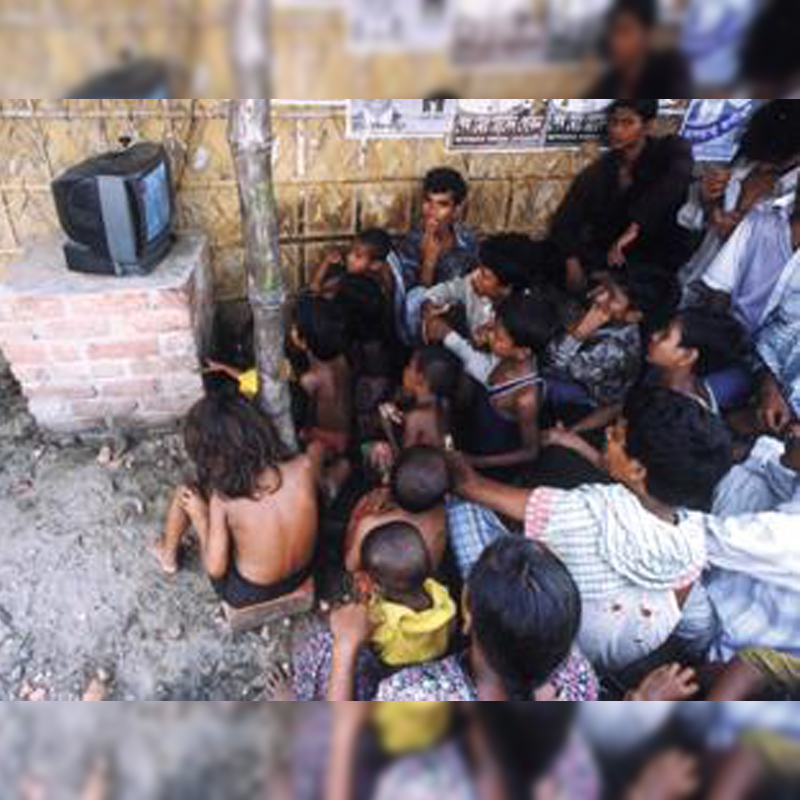
    On a recent road trip to Ladakh with friends we stopped at a nondescript roadside ‘dhaba’ (makeshift eatery) near the Himachal Pradesh and J&K border for tea and to stretch sore limbs. As tea was being boiled, stifled giggling from inside the hutment attracted me. While trying to see if my smart-phone was working so I could check-in on FB, I peeped inside. A group of local kids were enjoying a soap opera on television; courtesy DD FreeDish, a free-to-air DTH platform. My mobile phone, in the meanwhile, showed no signs of life with a No-Network message flashing.

    This, and many other such examples in India’s hinterland, highlight a fact loud and clear: India may be going digital, but Bharat (as non-urban hinterlands of India is referred to by some sociologists and marketers) still roots for the traditional. Such instances also tell us that in a country as diversified, complex and challenging as India, traditional habits, like TV watching, are there to stay despite technological disruptions like streaming video and smart-phones.

    Globally, death of traditional TV viewing has been predicted for past few years. But data and analytics from more mature and developed markets and even some East Asian nations – where digital is a big draw – show that TV as we know it is not going away anytime soon.

    A US Department of Labour Survey, released early 2016, states that watching TV was the leisure activity that “occupied the most time (2.8 hours per day), for those aged 15 and over.”

    BARB (UK equivalent of BARC India) data shows that average daily video viewing by all individuals is 4hrs 35mins and that TV accounts for 94 per cent of all video advertising time. Over the last decade, despite several “disruptive” technological developments, time spent watching TV has hardly dipped, as was being forecast. More importantly, TV continues to have largest reach of all media: it reaches 71per cent of population in a day, 93per cent in a week, and 98 per cent in a month.
    And, these are markets with near total saturation of TV homes, and a highly developed and widespread digital eco-system.

    What about India?

    Appetite for more TV content is only bound to grow given that only 153 million homes in India have TV out of a total of about 250 million (a penetration of about 60 per cent). Rise in disposable incomes, increasing fragmentation of families and continued challenges of Indian infrastructure are bound to push TV viewing higher.

    All-India BARC data for 47 weeks appear to validate that. Average daily TV viewing stands at 3 hours 16 minutes, showing headroom for growth, compared to more mature TV markets that have higher TV penetration rate of 97+ per cent.

    India has close to 900 licensed channels and while Ministry of Information and Broadcasting (MIB) agrees some of these licensees may not be on air, but scores of applicants are in queue too — another indicator of growth in appetite for TV.

    But, what about the perception that traditional TV viewership is losing out due to growth of digital platforms?

    Let’s look at BARC India data for a recent TV event, the Rio Olympics. TV viewership for Rio 2016 grew 2.65 times as compared to London 2012. While 16 million unique viewers watched the broadcast of London Games in India, the corresponding figure for Rio Games is 43 million (using the same viewership base – 1million+ towns). If one looks at the all-India (Urban+Rural) base, Rio 2016 set another high of 203.8 million unique viewers.

    This brings us to cricket, India’s fav sports (apart from politics). BARC data shows that a new viewership high was achieved during an India-Pakistan ICC T20 World Cup match in 2016, which generated a whopping 80.5 million impressions across Star Sports Network and DD National. And these numbers came on the back of not just a larger number of people watching TV, but also considerable higher time spent on TV.

    When asked about linear TV’s impending death in India owing to digital’s growth, Colors CEO and President of the Advertising Club (of India) Raj Nayak waved away the analysis asserting, “I am ready to stick out my neck on this. People who say that traditional television is dying don’t know what they are talking about. TV has been growing and there is still big headroom for its growth in India.”

    India may be adopting mobile phones faster than the US or other western countries, and a major percentage of them are smart-phones. Still, challenges for digital players are big and many ranging from costly data, indifferent bandwidth speed and getting the right content mix for a country that has 22 official languages and over 700 dialects.

    At Vidnet2016, an OTT conference organised by indiantelevision.com recently, Hotstar chief Ajit Mohan admitted that high cost of data is a major hurdle for expansion of streaming services like Hotstar and others like Voot, dittoTV, BoxTv, Arre, Savvn, Hooq, Viu, SonyLiv, etc.

    Data pointing to greater consumption of TV is one side of the picture. Globally, studies and data also indicate that TV remains a highly effective form of advertising.

    A study by the Institute of Practitioners of Advertising (UK’s equivalent of India’s AAAI) shows that TV continues to guarantee best commercial outcomes of campaigns for things such as sales, profit, market share, etc. Echoing similar sentiments, Colors’ Nayak added, “Digital advertising does not have the same impact that TV (advertising) has… Even Amazon, Google and other e-commerce companies have to use TV to make an impact.”

    US-based eMarketer (started in 1996 to study digital trends and considered one of the most widely cited research providers in the media) admits that despite a drop in TV watching time, in general, it hasn’t stopped marketers from pouring significant amounts of money into television advertising.

    Without discounting the strides being made by digital players in India (and they seem to be mushrooming all over like dotcoms during the dotcom boom of the late 1990s), traditional TV’s importance and reach still outstrips that of digital.

    Pointing out that digital does offer consumers choices of watching TV (government lingo for video consumption) at different time and in different formats, a senior government official, having worked at MIB, on condition of anonymity admitted that TV is not going away from India. Rather, the size of India will help it retain its pre-eminence as opposed to other media.

    GroupM too testifies to TV’s strong presence in India compared to other segments of media like print, OOH and digital. In projections made in January 2016, which are re-visited mid-year to do any course corrections if necessary, the company said television was estimated to grow by 17.6 per cent to touch Rs 27,074 crore (Rs. 2,7,0740 million) this year against Rs 23,022 crore (Rs. 23,02,20 million) last year as far as advertising spends go.

    Colors’ Nayak aptly sums up the issue: “There is no doubts that digital will see growth at a phenomenal pace especially with Reliance Jio addressing the bandwidth and speed issues, but digital must be seen as another platform for delivering content and that’s it. There will be lot of content consumption on digital platforms, but it will not be at the cost of (traditional) TV viewing.”

    Like Nayak, I too am ready to bet my bucks on linear or traditional TV in India. Digital has to travel many more miles in India before it can be a replacement for TV, which is still far off from near-saturation point or even plateauing off.

    (Author is Consulting Editor to indiantelevision.com)

  • Saying traditional TV is dying in India is premature

    Saying traditional TV is dying in India is premature

    On a recent road trip to Ladakh with friends we stopped at a nondescript roadside ‘dhaba’ (makeshift eatery) near the Himachal Pradesh and J&K border for tea and to stretch sore limbs. As tea was being boiled, stifled giggling from inside the hutment attracted me. While trying to see if my smart-phone was working so I could check-in on FB, I peeped inside. A group of local kids were enjoying a soap opera on television; courtesy DD FreeDish, a free-to-air DTH platform. My mobile phone, in the meanwhile, showed no signs of life with a No-Network message flashing.

    This, and many other such examples in India’s hinterland, highlight a fact loud and clear: India may be going digital, but Bharat (as non-urban hinterlands of India is referred to by some sociologists and marketers) still roots for the traditional. Such instances also tell us that in a country as diversified, complex and challenging as India, traditional habits, like TV watching, are there to stay despite technological disruptions like streaming video and smart-phones.

    Globally, death of traditional TV viewing has been predicted for past few years. But data and analytics from more mature and developed markets and even some East Asian nations – where digital is a big draw – show that TV as we know it is not going away anytime soon.

    A US Department of Labour Survey, released early 2016, states that watching TV was the leisure activity that “occupied the most time (2.8 hours per day), for those aged 15 and over.”

    BARB (UK equivalent of BARC India) data shows that average daily video viewing by all individuals is 4hrs 35mins and that TV accounts for 94 per cent of all video advertising time. Over the last decade, despite several “disruptive” technological developments, time spent watching TV has hardly dipped, as was being forecast. More importantly, TV continues to have largest reach of all media: it reaches 71per cent of population in a day, 93per cent in a week, and 98 per cent in a month.
    And, these are markets with near total saturation of TV homes, and a highly developed and widespread digital eco-system.

    What about India?

    Appetite for more TV content is only bound to grow given that only 153 million homes in India have TV out of a total of about 250 million (a penetration of about 60 per cent). Rise in disposable incomes, increasing fragmentation of families and continued challenges of Indian infrastructure are bound to push TV viewing higher.

    All-India BARC data for 47 weeks appear to validate that. Average daily TV viewing stands at 3 hours 16 minutes, showing headroom for growth, compared to more mature TV markets that have higher TV penetration rate of 97+ per cent.

    India has close to 900 licensed channels and while Ministry of Information and Broadcasting (MIB) agrees some of these licensees may not be on air, but scores of applicants are in queue too — another indicator of growth in appetite for TV.

    But, what about the perception that traditional TV viewership is losing out due to growth of digital platforms?

    Let’s look at BARC India data for a recent TV event, the Rio Olympics. TV viewership for Rio 2016 grew 2.65 times as compared to London 2012. While 16 million unique viewers watched the broadcast of London Games in India, the corresponding figure for Rio Games is 43 million (using the same viewership base – 1million+ towns). If one looks at the all-India (Urban+Rural) base, Rio 2016 set another high of 203.8 million unique viewers.

    This brings us to cricket, India’s fav sports (apart from politics). BARC data shows that a new viewership high was achieved during an India-Pakistan ICC T20 World Cup match in 2016, which generated a whopping 80.5 million impressions across Star Sports Network and DD National. And these numbers came on the back of not just a larger number of people watching TV, but also considerable higher time spent on TV.

    When asked about linear TV’s impending death in India owing to digital’s growth, Colors CEO and President of the Advertising Club (of India) Raj Nayak waved away the analysis asserting, “I am ready to stick out my neck on this. People who say that traditional television is dying don’t know what they are talking about. TV has been growing and there is still big headroom for its growth in India.”

    India may be adopting mobile phones faster than the US or other western countries, and a major percentage of them are smart-phones. Still, challenges for digital players are big and many ranging from costly data, indifferent bandwidth speed and getting the right content mix for a country that has 22 official languages and over 700 dialects.

    At Vidnet2016, an OTT conference organised by indiantelevision.com recently, Hotstar chief Ajit Mohan admitted that high cost of data is a major hurdle for expansion of streaming services like Hotstar and others like Voot, dittoTV, BoxTv, Arre, Savvn, Hooq, Viu, SonyLiv, etc.

    Data pointing to greater consumption of TV is one side of the picture. Globally, studies and data also indicate that TV remains a highly effective form of advertising.

    A study by the Institute of Practitioners of Advertising (UK’s equivalent of India’s AAAI) shows that TV continues to guarantee best commercial outcomes of campaigns for things such as sales, profit, market share, etc. Echoing similar sentiments, Colors’ Nayak added, “Digital advertising does not have the same impact that TV (advertising) has… Even Amazon, Google and other e-commerce companies have to use TV to make an impact.”

    US-based eMarketer (started in 1996 to study digital trends and considered one of the most widely cited research providers in the media) admits that despite a drop in TV watching time, in general, it hasn’t stopped marketers from pouring significant amounts of money into television advertising.

    Without discounting the strides being made by digital players in India (and they seem to be mushrooming all over like dotcoms during the dotcom boom of the late 1990s), traditional TV’s importance and reach still outstrips that of digital.

    Pointing out that digital does offer consumers choices of watching TV (government lingo for video consumption) at different time and in different formats, a senior government official, having worked at MIB, on condition of anonymity admitted that TV is not going away from India. Rather, the size of India will help it retain its pre-eminence as opposed to other media.

    GroupM too testifies to TV’s strong presence in India compared to other segments of media like print, OOH and digital. In projections made in January 2016, which are re-visited mid-year to do any course corrections if necessary, the company said television was estimated to grow by 17.6 per cent to touch Rs 27,074 crore (Rs. 2,7,0740 million) this year against Rs 23,022 crore (Rs. 23,02,20 million) last year as far as advertising spends go.

    Colors’ Nayak aptly sums up the issue: “There is no doubts that digital will see growth at a phenomenal pace especially with Reliance Jio addressing the bandwidth and speed issues, but digital must be seen as another platform for delivering content and that’s it. There will be lot of content consumption on digital platforms, but it will not be at the cost of (traditional) TV viewing.”

    Like Nayak, I too am ready to bet my bucks on linear or traditional TV in India. Digital has to travel many more miles in India before it can be a replacement for TV, which is still far off from near-saturation point or even plateauing off.

    (Author is Consulting Editor to indiantelevision.com)

  • Trai proposes radio audience measurement on lines of Barc

    Trai proposes radio audience measurement on lines of Barc

    NEW DELHI: The Telecom Regulatory Authority of India (Trai) has come out with a set of recommendations on radio audience measurement (Ram) in India setting limits on ownership of stakeholders in the ratings agency, but there is no limit on the number of such agencies.

    In a preface, the regulator said there is a need to prescribe “a soft touch, conducive, forward looking, growth oriented framework” for Ram, which protects the interests of all stakeholders.

    The guidelines for rating agencies will be notified by the Ministry of Information and Broadcasting (MIB) based on the recommendations of Trai and there will be no ceiling on the number of rating agencies.

    Trai has a recommendatory role on such issues as final decisions rest with nodal ministries like MIB, Department of Telecoms (DoT) and Department of Space (DoS). In the past, many recommendations of the regulator had not been implemented at all or done so partially by the Ministry concerned.

    The Ram proposed guidelines mandatorily cover registration, eligibility norms, cross-holdings, methodology for conducting radio rating, complaint redressal, sale and use of ratings, audit, disclosure, reporting requirements and penal provisions for rating agencies.

    This will be very similar to the existing policy guidelines for television rating agencies issued by MIB under which Barc operates.

    Trai suggested the ratings agency should have adequate and equal representation from the three associations concerned — Association of Radio Operators for India (AROI), Indian Society of Advertisers (ISA) and Advertising Agencies Association of India (AAAI).

    The salient features of the TRAI recommendations are as follows:

    (i)Guidelines for rating system to be notified by MIB.

    (ii)Any agency meeting eligibility conditions can apply and get registered with MIB for doing the rating work. No cap on number of rating agencies has been prescribed.

    (iii)All rating agencies, including industry led body are required to comply with the guidelines.

    (iv)Guidelines to cover registration, eligibility norms, cross-holding, methodology for conducting rating, complaint redressal, sale and use of ratings, audit, disclosure, reporting requirements and penal provisions.

    (v)Voluntary code of conduct by the industry for maintaining secrecy and privacy of the listeners included in the rating process.

    (vi)Restrictions on ‘substantial equity holding of 10% or more’ between rating agencies and broadcasters/advertisers/advertising agencies have been prescribed.

    (vii)The rating agency to set up an effective complaint redressal system.

    (viii)Data/reports generated by the rating agency to be made available to all interested stakeholders in a transparent and equitable manner.

    (ix)The rating agency to get its entire methodology/processes audited internally on quarterly basis and through an independent auditor annually. All audit reports to be put on the website of the rating agency.

    (x)Penal provisions for non-compliance of guidelines.

    Since All India Radio (AIR) has a large geographical and population coverage and is not a member of AROI, representation of AIR should be ensured in the technical committee formed within the industry led body for guiding and supervising various radio rating processes.

    Trai said in its report that once guidelines are issued and implemented by MIB, these will be made applicable to all the rating agencies including the industry-led body.

    An independent rating agency, carrying out the rating process, can also outsource the field work, data collection and processing to third parties. The guidelines will not be applicable to the entities which have been contracted to carry out the field work, data collection and processing.

    At present, radio audience measurement in India is conducted by AIR and TAM Media Research.

    The full TRAI recommendation can be obtained at http://www.trai.gov.in/WriteReadData/WhatsNew/Documents/Recommendations_15_September_2016.pdf