Tag: BARC

  • Most watched Hindi GEC primetime programmes by urbanites in 2017

    Most watched Hindi GEC primetime programmes by urbanites in 2017

    BENGALURU: In earlier papers, we had discussed the most watched Hindi GEC primetime programmes in the Hindi Speaking Market (HSM – U+R) and the HSM – Rural markets in India. We also mentioned the genres that both markets preferred. Both the reports were based on the weekly viewership ratings of the top 5 primetime programmes in the HSM (U+R) and the HSM (R) markets respectively published by Broadcast Audience Research Council of Indi (BARC) during the first 39 weeks of 2017.

    It must be noted that the ratings (impressions) mentioned for the programmes in this paper may not represent the actual ratings during the first 39 weeks of 2017. The ratings in the paper are a sum of the ratings garnered by a programme only when it has appeared in BARC’s top 5 programmes list during the period under consideration. Hence the actual ratings could be higher.

    So what Hindi GEC programmes does the urban Indian watch during primetime? Continuing with BARC data for the primetime (1830 to 2130 hours) HSM (U) NCCS 2+ individuals market as a reference, HSM (U) leads the HSM (U+R) market in terms of the most liked programmes during primetime, well almost… As in the case of the HSM (U+R), Balaji Telefilms productions Kumkum Bhagya and Naagin 2 are the genre leaders in that order. With a slight reshuffle, it is the long running Yeh Rishta Kya Kehlata Hai on Star Plus that is the third most watched Hindi GEC primetime programme in the HSM urban market, displacing the reality show Amul Sa Re Ga Ma Pa Little Champs on Zee TV to fourth place form its third place in the larger HSM (U+R) market.  And there is more, urbanites seem to prefer the sitcom Tarak Mehta Ka Ooltah Chasmah on Sony Pal during primetime, as compared to the overall HSM market that prefers the Balaji Telefilms produced family soap and spinoff – Kundali Bhagya. Please refer to the figure below for the ratings of the top five watched Hindi GEC primetime programmes by HSM urban India during the first 39 weeks of 2017.

    public://1111111111111111111_0.jpg

    Urban HSM markets prefer soaps the most, quite like the overall HSM (U+R) and the HSM (R) markets. Please refer to the genre preferences of the urban Hindi Speaking Markets in India during the first 39 weeks of 2017.

    public://2222222222222_2.jpg

    Soaps include all sub-genres such as family drama, comedy drama, sitcoms, mythology drama, supernatural drama. Reality includes music, dance, shows such as Fear Factor, Kaun Banega Crorepati, Bigg Boss, etc. Comedy includes shows such as The Kapil Sharma show, etc., Awards means award shows such as Star Screen Awards and Sansui Colors Stardust Awards


  • What viewers say about Bigg Boss: Chrome DM survey

    What viewers say about Bigg Boss: Chrome DM survey

    BENGALURU: Manveer Gurjar’s winning of the tenth season of Bigg Boss on Sunday 29 January 2017 was the second most watched primetime episode by the urban Hindi Speaking Market (HSM – urban) in week 5 of 2017 and probably had the highest rating among urbanites for any Hindi GEC programme for that day. Swami Om’s antics, the common man’s win, peccadilloes of the participants, maybe even the fact that demonetisation happened while the season was midway probably made season 10 the most liked season of Bigg Boss.

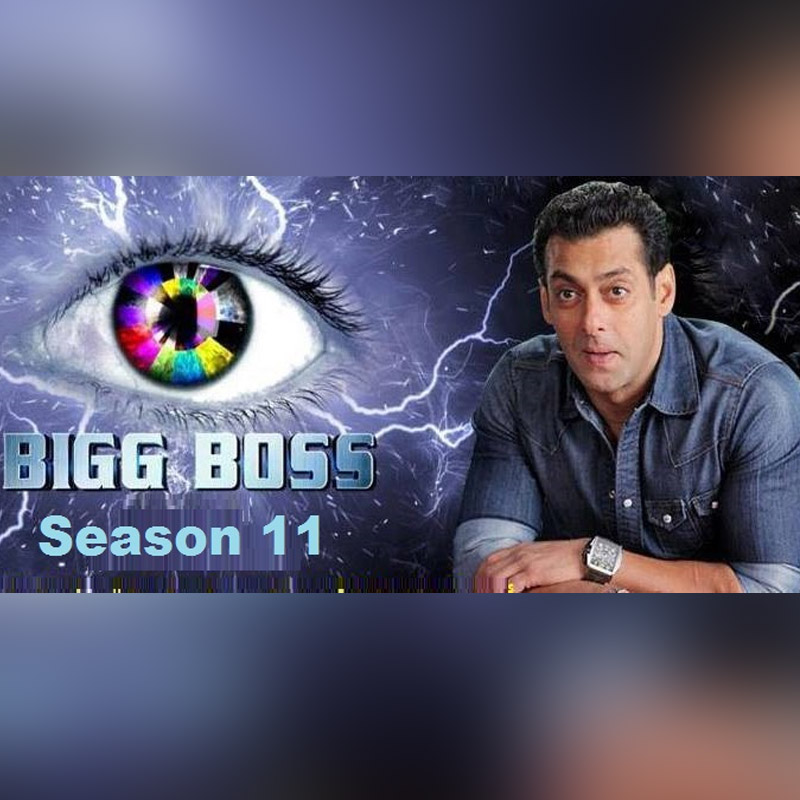
    Chrome Data Analytics & Media surveyed 3,257 respondents from HSM comprising of 31 percent respondents between the age group of 15 to 24 years, 29 percent between the age group of 25 to 34 years, 26 percent between the age group of 35 to 44 years and 15 percent of age 55 years and more. Sixty percent of the respondents were male and 40 percent were female. 98 percent of the respondents were aware about the Bigg Boss show. 90 percent of the respondents were aware of the current Big Boss season 11, while 10 percent didn’t know about it. Season 11 has the tagline Padosi Aa Rahein Hain Bajane Baarah.

    Season 10 was watched by 63 percent of the respondents as compared to 29 percent who had watched the first season of Bigg Boss. Among the 10 seasons so far, the second season was the least watched by 3,188 respondents – just 23 percent had watched it. Seasons 8 and 9 were the most watched seasons after season 10 – 52 percent of the respondents had watched them.

    Season 10 of Bigg Boss had the highest number of respondents who considered it their favourite season – 37 percent. Season 3 was probably the least liked with no one voting for it. After season 10, season 8 was the most liked – 15 percent of the respondents liked it. Only two percent each of the respondents considered three seasons – 2, 5 and 9 as their favourites. 10 percent of 3,188 respondents said that the first season was their favourite season.

    public://Untitled-3_20.jpg

    78 percent of 3,188 respondents had watched promos of season 11, while 22 percent hadn’t. 74 percent of the respondents who had watched promos had seen them on television, while 26 percent had seen the promos online.                                          

    About the concept of season 11 –  Padosi, 37 percent felt that it was more interesting, 18 percent felt that it was not more interesting, while 45 percent felt that maybe it was more interesting, than the Aam Aadmi concept. Will the Padosi concept of Bigg Boss Season 11 be better and garner a larger audience? Time will only tell.

    ALSO READ :

    MTV, HD+ to air ‘Bigg Boss Extra Dose’ for youth on weekdays from 9 Oct

    Highest rated Hindi GEC primetime programmes in rural India

    Viacom18’s social expt ‘Bigg Boss’ has ‘Super Bowl’-like fandom, says Raj Nayak, Salman to play ‘peacemaker’

    TV content: Madras HC seeks Centre’s clarification on regulatory mechanism

  • Differentiated brand critical as online video, mobile ads may expand at 40-51 pc CAGR by ’21: KPMG-FICCI

    Differentiated brand critical as online video, mobile ads may expand at 40-51 pc CAGR by ’21: KPMG-FICCI

    MUMBAI: The ‘Over the top’ (OTT) video consumption in India has rapidly evolved over the last year, given the advancements in digital infrastructure and efforts by platforms to create compelling content for consumers at price points which provide value.

    Growing internet penetration and data consumption is likely to help increase digital advertisement spends in India at 30.8 per cent CAGR between 2016 and 2021 with mobile advertisement spends and social media-aided digital video advertisement spends expected to expand at 50.9 per cent and 40 per cent CAGR between 2016 and 2021, respectively, according to the KMPG’s “The ‘Digital First’ Journey” report launched in FICCI Knowledge series 2017 conference – Fast Track India.

    The Fast Track India conference, in association with LA India film Council (LAIFC), was focused on building out a digital company, the impact of evolving digital infrastructure on content consumption and rise in online piracy.

    Fox Star Studios India CEO Vijay Singh highlighted the need for M&E businesses to be future-ready in his keynote speech. He said, “Digital transformation of the M&E industry is unstoppable, and companies will need to focus on innovation and disruption. It will be important to get the digital building blocks to fall in place – be it in content creation or getting the right business model.”

    At the inaugural, KPMG India partner and co-head of media and entertainment Girish Menon said, “OTT consumption in India has reached a tipping point, with the 4G rollout and related data wars which have resulted in a dramatic and rapid growth in internet penetration and video consumption. Building a digital business is an evolving process and organizations would need to adopt a systematic approach balancing scalability and flexibility with speed to market and customer centricity.”

    The conference focused on three key features, i.e., evolution of content strategies from creation to monetisation, the impact of evolving digital infrastructure on content consumption patterns and the rise of online piracy – threats and remedies.

    OTT consumers continue to demand seamless access to services, compelling stories and value for money. The era of on-demand content has reached a tipping point with consumption becoming on-demand across mobile screens and going ‘mass’ – particularly on the back of pan India 4G roll outs by telecom operators.

    During the discussion, panellist agreed upon the fact that the mass launch of 4G services by Reliance Jio in 2016 and subsequent launches by incumbents was an inflection point in India’s data story. This disruption led to a rapid surge in data usage on the back of promotional offers by all leading telecom operators.

    The conference was divided into three panel discussions. The first panel, who have discussed broadly on building a digital platform, was held with Arre co-founder Ajay Chacko, Culture machine president Tuhin Menon, Qyuki Digital Media COO Sagar Gokhale and ALTBalaji CEO Nachiket Pantvaidya and moderated by KPMG management consulting Neha Punater.

    Next panel on digital infrastructure transforming consumption of the content was addressed by the BARC business head Jamie Kenny, the Facebook India content head and media partnerships India-South Asia Saurabh Doshi, the Voot marketing head Akash Banerji and the Shemaroo director Hiren Gada.

    Lastly, on the protection of the online content in a digital economy, Disney India assistant regional counsel Anju Jain, the Viacom 18 SVP Thomas George, the Eros International general counsel Aamod Gupte, the TFCC governing council executive member Rajkumar Akella, the MPA Asia Pacific VP communications Stephen Jenner and The Indian Music Industry president and CEO Blaise Fernandes. Punnaryug Artvisions’ founder Ashish Kulkarni deliverd the welcome note.

    About the roadmap to become a digital company, Pantvaidya said, “The focus has to shift from just getting big numbers to actually engaging audiences. Watching videos on internet especially shows is slowly becoming an integral part of every Indian’s life – Thanks to quality internet being offered by Telco’s at affordable prices. We, at AltBalaji, believe that this trend can be effectively monetized by offering multi targeted, exclusive, original Indian content at a never before seen scale.”

    Qyuki Digital Media COO Sagar Gokhale said, “It’s a changing market, when we started, we saw 50 per cent split between mobile and computers but today it exceeds to 80 per cent towards mobile. Understanding of content is very important according to the consumer’s need. In India, large platform like Youtube is male dominated precisely under the age group of 18-35. So easy understanding is to create male centric content like comedy and music which works out the most. According to our data analysis, post-Jio, a lot of viewership was noted from tier 2-tier 3 cities like Jharkhand.”

    The four pillars of digital transformation outlined in the report comprise a holistic approach including; clearly defining the organisation’s digital vision and strategy, thorough understanding of the customer proposition, accurately assessing the business design and, lastly, carefully designing the execution plan.

    On building a robust enforcement model to protect content in a digital economy, MPA Asia Pacific VP communications Stephen Jenner said, “Around the globe, close collaborations between multiple stakeholders have lead to a number of successful content protection initiatives. This bodes well for growing digital economies, and the many creative people contributing to media and entertainment in those markets.”

    Doshi said, “Being passionate or even finicky about user experience is the key to building a successful digital platform. In this age of hyper-competition, it is imperative to focus on building a strong brand that is differentiated. With over 200 million people in India every month and millions globally on the platform, we think deeply on the best user experience we can provide and instant articles, live etc. are such examples.”

    Fernandes said, “Digital India is attracting lots of investments in content creation and distribution over the various digital platforms. This sets off a multiplier effect, employment generation, tax revenues and soft power. While all this happens it is necessary for protection measures to be in place, glad that FICCI and the LA India Film Council are giving copyright protection in the Internet age adequate weightage in their various forums”

    The path to digital transformation encompasses a holistic approach including; clearly defining the organisation’s digital vision and strategy, thorough understanding of the customer proposition, accurately assessing the business design and, finally, carefully designing the execution.

  • Patanjali conspicuous by protracted absence in top 10 TV advertisers’ list

    Patanjali conspicuous by protracted absence in top 10 TV advertisers’ list

    BENGALURU: Until week 26 of 2017 (Saturday 26 June 2017 to Friday 30 June 2017) Baba Ramdev’s Patanjali Ayurved was among the top 10 advertisers on television in Broadcast Audience Research Council of  India (BARC) weekly list of top 10 advertisers across genres each week. Weeks 27, 28 and 34 saw the company missing from BARC’s list and then the company made a reappearance in the list in week 35 of 2017 (Saturday 26 August 2017 to Friday 1 September 2017) at rank 7 with 19,121 weekly ad insertions. After week 35, Patanjali has been missing from the top 10 advertisers list for 3 weeks, the longest period in 2017 as yet until week 38 (Saturday, 16 September 2017 to Friday, 22 September 2017).

    This is the festival season in India and advertisers and brands have increased the tempo and the noise on television as mentioned by us earlier. This period is considered auspicious for purchase of apparel, consumer durables, automobiles and of course – the Indian women’s favourite – jewellery. Often, a major portion of annual sales targets for brands are achieved during this short period. A big bulk of annual advertisement and marketing budgets are splurged during this season. Discounts and offers are touted by advertisers to entice buyers. Television is the major medium used by most advertisers to convey brand messages, and viewers are bombarded with ads selling various products and services around and during the festival season..

    public://111111111111_1.jpg

    A number of advertisers have increased weekly television ad spots, but Patanjali seems to have failed to keep up with its peer advertisers. It is not as if it has stopped advertising. Baba Ramdev’s smiling and sometimes serious face as he passes on various brand messages is still very much a part of the company’s television commercials. Please refer to the figure below for details of the Patajali’s television ad insertions when it was a part of the top 10 advertisers list in 2017.

    public://2222222222222222_1.jpg

    With Ecommerce and mobile wallet players announcing their annual season sales at almost the same time, one more advertiser joined the list of 27 advertisers that were present in the top 10 advertisers list during the first 38 weeks of 2017 – this is the India Ecommerce giant Fliptkart.com.

    A total of 28 advertisers have found themselves in the weekly top 10 advertisers lists between weeks 1 and 38 of 2017. They are: Hindustan Lever Ltd; Reckitt Benckiser (India) Ltd; Cadburys India Ltd; Brooke Bond Lipton India Ltd; Patanjali Ayurved Ltd; Procter & Gamble; ITC Ltd; Colgate Palmolive India Ltd; Super Cassettes Industries; Smithkline Beecham; Amazon Online India Pvt Ltd; Coca Cola India Ltd; Ponds India; Godrej Consumer Products Ltd,; Vini Product; Marico Ltd; Pepsi Co; Lalitha Jewellery; Johnson & Johnson Ltd; Godrej Sara Lee Ltd; Bharatiya Janata Party; Dabur India Ltd; Emami Limited; TVS Motor Company; Bharti Airtel Ltd; Jyothy Laboratories Ltd; Procter & Gamble Home Products and Flipkart.com.

    ALSO READ :

    Patanjali Ayurved reappears in weekly top 10 advertisers’ list

    Epic TV launches OTT, sets million subs target

    Telecast of Patanjali’s two ads stopped by high court

    TV ads increase with approaching festival season in India, cliche but true


  • Zeel channels continue to rule Hindi GEC in steady across genres’ list

    Zeel channels continue to rule Hindi GEC in steady across genres’ list

    BENGALURU: The channels present in the top 10 channels Across Genres list for week 38 of 2017 (Saturday, 16 September 2017 to Friday, 22 September 2017) by Broadcast Audience Research Council of India (BARC) remained the same as in week 37 of 2017. There were small movements lower down in order with some channels moving up and some moving down the ranks in week 38 as compared to week 37.

    Once again, in what seems to have become almost normal over the last few weeks, Zee Entertainment Enterprises Limited (Zeel) channels Zee TV and Zee Anmol continued their Hindi GEC supremacy in the weekly top 10 channels across genres list for week 38 of 2017,with improved ratings as compared to the previous week. Zeel’s flagship Hindi GEC Zee TV was at second place behind the Sun Network’s flagship Tamil GEC Sun TV. At third place was Zeel’s FTA Hindi GEC Zee Anmol. Like in the previous week, the Balaji Telefilms produced Kumkum Bhagya and its spinoff Kumkum Kundali (Kumkums’) continued to contribute to Zee TV’s ratings in the overall Hindi GEC market (U+R).It was the Grazing Goat Pictures Pvt. Ltd produced soap Jamai Raja in the Hindi GEC rural markets that have helped Zee Anmol bolster its ratings. Both the Kumkums’ have also helped Zee TV gain ratings in the Hindi GEC urban markets.

    Seven Hindi GEC channels, two Telugu GEC channels and one Tamil channel made up BARC’s weekly list of top 10 channels across genre All India (U+R): 2+ Individuals list for week 38 of 2017. From the network’s perspective, three channels from Star India, two channels from Zeel, Sun Network and Sony Pictures Network India (SPN) each and one channel from Network 18 or Viacom 18 comprised the top 10 channels across genres list for week 38 of 2017.

    As mentioned above, Sun TV ruled the across genre list in week 38 of 2017 with 1,033.729 million weekly impressions followed by Zee TV with 717.655 million weekly impressions. Zee Anmol was at third place with 701.571 million weekly impressions followed by the Star Network’s flagship Hindi GEC Star Plus with 596.472 million weekly impressions as compared to last week’s 635.67 million weekly impressions, at fourth place.

    Star India’s newly renamed and FTA Hindi GEC channel Star Bharat was at fifth place in week 37 of 2017 with 594.202 million weekly impressions followed by Viacom 18’s flagship Hindi GEC Colors at sixth place with 592.831 weekly impressions, higher than the 571.014 million weekly impressions of week 37 of 2017. Once again led by the viewership of the Kaun Banega Crorepati, SPN’s flagship Hindi GEC Sony Entertainment Television was at seventh place with 547.79 million weekly impressions.

    Sun Network’s flagship Telugu GEC with 540.683 million weekly impressions was at eighth place as compared to the tenth place in week 37.  Star India’s flagship Telugu GEC Star Maa was at eighth place in the weekly top 10 channels across genre list with 537.934 million weekly impressions  at ninth place followed by SPN’s women focused Hindi GEC Sony Pal with 527.803 million weekly impressions completed the top 10 channels across genre list at tenth place in week 37 of 2017.

    Please refer to the figure below:

    public://Untitled-2_16.jpg


  • IDOS 2017: Television is growing and will continue to do so, says BARC’s Partho Dasgupta

    IDOS 2017: Television is growing and will continue to do so, says BARC’s Partho Dasgupta

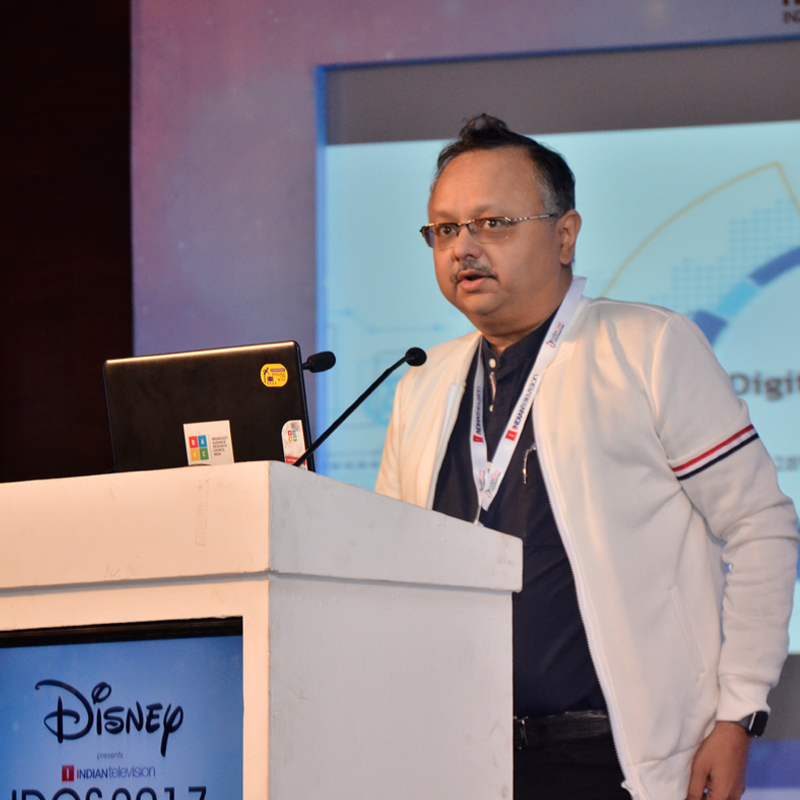
    NEW DELHI: Broadcast Audience Research Council (BARC) India CEO Partho Dasgupta sounded a positive note at Indiantelevision.com’s 13th Indian Digital Operators Summit (IDOS 2017) in New Delhi’s The Lalit on 28 September 2017. Dasgupta stated that the video distribution ecosystem will have place for all types of DPOs – DTH, cable TV, OTT, terrestrial, free to air and even FTTH.

    “India’s cable TV operators have been pretty resilient over the years,” said he. “There is a lot potential for them to distribute video in India. TV has till now reached around 64 per cent of the Indian households. Thirty-six per cent is still left. A 100 million households are still not connected with TV. Even if 50 million more were to get connected, that’s a lot of potential for everyone. Multiple players and multiple digital formats will exist,” he said.

    He explained that India is one of the few countries where around 40 (television) channels are being added (as per MIB permissions) every year. “The launches are happening because there is potential in the market,” he said.

    He pointed out that TV viewership is seeing growth like never before. “It spurted by 25 per cent to 27.0 billion impressions in 2017, from 22.4 billion impressions in 2016,” he stated. “Even the daily average time spent (ATS) has grown by 16 per cent from three hours seven minutes in week 41 2015 to three hours thirty-seven minutes in week 36, 2017.”

    Dasgupta exclaimed that Doordarshan’s FreeDish is emerging as a potent force. “Free TV with 80 channels is being watched in rural areas. For them, the fact that some of the programmes are repeats does not matter because viewers are watching them for the first time.”

    He highlighted that there is a lot of excitement around flat TVs, HD TV, 4K TV, but the reality in the Indian marketplace is that 86 per cent of TVs are CRT (cathode ray tube) sets. “There is movement upwards expected in this area too,” he added.

    Dasgupta was of the view that the new millenials are watching some TV but they are also consuming video on their handheld devices. “However, OTT has some way to go because of bandwidth issues in India,” he pointed out. “Though the situation could change soon with dropping bandwidth prices and quality. And, we are getting ready with our measurement of multiscreen viewing which will include handheld devices.”

    He stated that future of television looks healthy, as almost every genre is showing growth in terms of viewership. “GEC has expanded 12 per cent since the beginning of the year,” he elaborated. “News and movies have also grown. Hindi movies grew by 60 per cent in 2017 over week 41 of 2015; Hindi news by a whopping 93 per cent in 2017 over week 41 of 2015.”

    For TV industry professionals, that should surely come as good news.

  • Zeel channels continue to rule across genres

    Zeel channels continue to rule across genres

    BENGALURU: In what seems to have become almost normal over the last few weeks, Zee Entertainment Enterprises Limited (Zeel) channels Zee TV and Zee Anmol continued their Hindi GEC supremacy in the weekly top 10 channels across genres list for week 37 of 2017. Broadcast Audience Research Council of India (BARC) data for week 37 of 2017 (Saturday, 9 September 2017 to Friday, 15 September 2017) show Zeel’s flagship Hindi GEC Zee TV at second place behind the Sun Network’s flagship Tamil GEC Sun TV. At third place is Zeel’s FTA Hindi GEC Zee Anmol. While the Balaji Telefilms produced Kumkum Bhagya and its spinoff Kumkum Kundali (Kumkums’) along with Sa Re Ga Ma Pa Little Champs continue to contribute to Zee TV’s ratings in the overall Hindi GEC market (U+R), it is the Grazing Goat Pictures Pvt. Ltd produced soap Jamai Raja in the Hindi GEC rural markets that have helped Zee Anmol bolster its ratings. Both the Kumkums’ have also helped Zee TV gain ratings in the Hindi GEC rural markets. And Kumkum Bhagya and Sa Re Ga Ma Pa Little Champs in the Hindi GEC urban markets have also helped Zee TV in the ratings battle.

    Seven Hindi GEC channels, two Telugu GEC channels and one Tamil channel made up BARC’s weekly list of top 10 channels across genre All India (U+R): 2+ Individuals list for week 37 of 2017. From the network’s perspective, three channels from Star India, two channels from Zeel, Sun Network and Sony Pictures Network India (SPN) each and one channel from Network 18 or Viacom 18 comprised the top 10 channels across genres list for week 37 of 2017.

    As mentioned above and as has also been the norm, Sun TV ruled the across genre list in week 37 of 2017 with 1,008.79 million weekly impressions followed by Zee TV with 675.658 million weekly impressions. Zee Anmol was at third place with 673.992 million weekly impressions followed by the Star Network’s flagship Hindi GEC Star Plus with 635.67 million weekly impressions at fourth place.

    Star India’s newly renamed and FTA Hindi GEC channel Star Bharat was at fifth place in week 37 of 2017 with 617.819 million weekly impressions followed by Viacom 18’s flagship Hindi GEC Colors at sixth place with 571.014 million weekly impressions. Led the viewership of the Kaun Banega Crorepati, SPN’s flagship Hindi GEC Sony Entertainment Television was at seventh place with 558.178 million weekly impressions.

    Star India’s flagship Telugu GEC Star Maa was at eighth place in the weekly top 10 channels across genre list with 534.463 million weekly impressions followed by SPN’s women focused Hindi GEC Sony Pal with 532.615 million weekly impressions. Sun Network’s flagship Telugu GEC with 520.117 completed the top 10 channels across genre list at tenth place in week 37 of 2017.

    Please refer to the figure below:

    public://Untitled-2_15.jpg

  • Sports: Star India channels pocket four out of top five slots

    Sports: Star India channels pocket four out of top five slots

    MUMBAI: One would easily spot Star India taking over four of the top five positions in BARC India’s week 37 sports ratings data, doubling its tally as compared to week 36. Last week, Sony had conquered three slots out of the top five list.

    This week, Star Sports First has retained the top position whereas Sony Six slipped out of the top five channels’ list owing to the conclusion of India-Sri Lanka cricket series. The series had topped the sports programmes’ list in BARC’s all-India ratings in week 36.

    Star Sports First sat pretty at the top position with 182184 Impressions (000s) sum witnessing a hike in rating, from 167947 Impressions (000s) sum last week. Sony Six, which was on the second slot last week, has disappeared from the top five list in week 37. 

    Star Sports 1 Hindi jumped to the second position from the fourth slot with a slight increase in the ratings. Sony Ten 1 climbed two slots to reach the third position with 82642 Impressions (000s) sum. 

    Star Sports 2 and 1 entered the top five list at the fourth and fifth slot, respectively, with 52951 Impressions (000s) sum and 41291 Impressions (000s) sum which brings the tally to four channels of Star India’s sports bouquet in top five list.

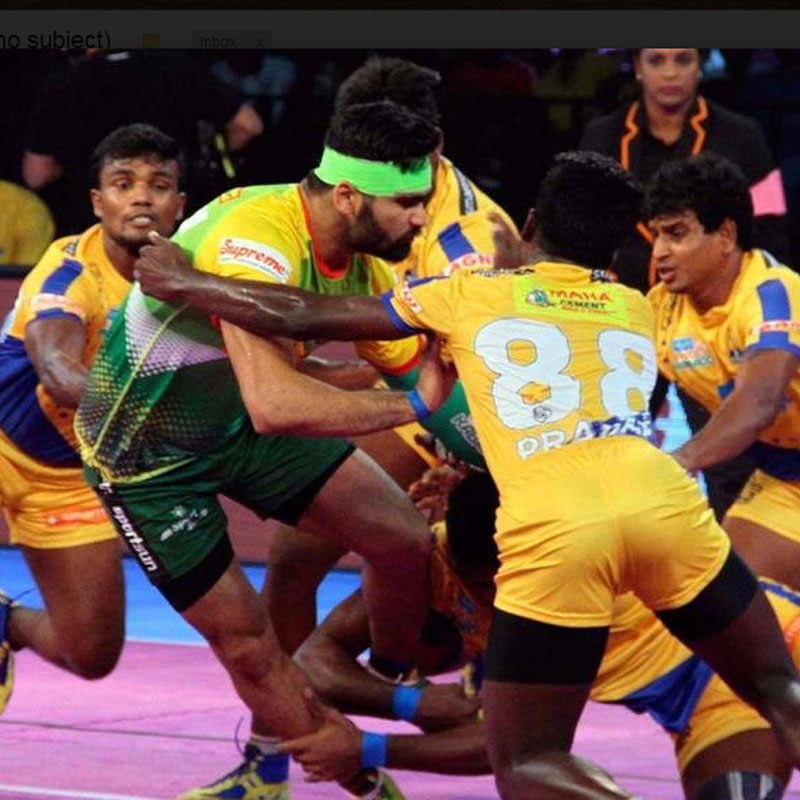
    If one looks at the top five programmes in BARC week 37, its Pro-Kabaddi League season 5 all the way — which was telecast on Star Sports First.

  • eCommerce, jewellery brands among most advertised on television

    eCommerce, jewellery brands among most advertised on television

    BENGALURU: The annual ‘Big Billion Day’ and ‘Great Indian Festival sale’ will be back soon – and the respective players are quite noisy about them on television. Innovative creatives, rehashes of previous creatives are back to announce the big great deals that will be on offer. Flipkart’s annual Big Billion Day television communication has newer stories from kids acting as adults while Amazon.in speaks of getting big discounts without the effort of having to check out the best deals in the market to promote its Great Indian Festival sale.

    The festival season in India is approaching, and, along with it offers from eCommerce players and jewellers. As decibels increase for attracting eyeballs and consumers, brands from these two genres are amongst the most advertised on television during the recent weeks according to Broadcast Audience Research Council of India (BARC) weekly data.

    In week 35 of 2017, (Saturday, 26th August 2017 to Friday, 1 September 2017), Amazon.in was the most advertised brand on television with 14,985 insertions and LalithaJewelly was the second most advertised brand with 13,856 insertions according to BARC’s weekly list ofTop 10 Brands Across Genre: All India (U+R) : 2+ Individuals. In week 36 (Saturday, 2 September 2017 to Friday, 8 September 2017), Lalitha Jewellery was the most advertised brand on television with a jaw-dropping 16,301 insertions followed by Amazon.in with 11,329 insertions at second place. Not far behind these two at rank 3 was Indian eCommerce player Flipkart.com with 11,900 and 10,130 insertions in weeks 35 and 36 respectively.

    Both Amazon.in and Lalitha Jewellery have been present 15 times each during the first 36 weeks of 2017 in BARC’s weekly top 10 brands list. Of these, Amazon.in has been the most advertised brand for eight weeks, including during the first three weeks of 2017. Lalitha Jewellers has been the most advertised brand on television in terms of insertions for five of the first 36 weeks of 2017. Flipkart.com found itself in BARC’s weekly top 10 brands list for the first time in week 35 of 2017 and again in week 36 of 2017, as the third most advertised brand in terms of insertions during both the weeks.

    Please refer to the chart below for the BARC’s list of most advertised brands in week 35 and 36 of 2017

    public://F_3.jpg

    While FMCG brands are the most advertised brands in general, as September 20 approaches viewers are likely to be bombarded with more and more eCommere ads.The period of Navratra’s and Diwali are considered as auspicious days for buying gold, automobiles, apparel, consumer durables, etc., by many Indians. Data for the most advertised brands over the next few weeksshould be quite interesting.


  • Rebranded FTA channel Star Bharat grabs second position in two markets

    Rebranded FTA channel Star Bharat grabs second position in two markets

    MUMBAI: Star Bharat has made its way to the top, becoming the second best channel in both, urban+ rural as well as rural, markets in week 36 of Broadcast Audience Research Council (BARC) India. Star Plus recaptured its leadership in the urban market, whereas Colors bagged the second slot.

    Hindi GEC

    Zee Anmol continued to lead the market with 819438 Impressions (000s) sum followed by Star Bharat which climbed to the second slot from the fifth slot last week with 669588 Impressions (000s) sum.

    Zee TV retained its third position in week 36 with 625640 Impressions (000s) sum followed by Star Plus on number four with 581618 Impressions (000s) sum. Colors stood on number five with 560456 Impressions (000s).

    Sony Pal, Sony Entertainment Television and Rishtey grabbed sixth, seventh and eighth position with 496335  Impressions (000s) sum, 491965  Impressions (000s) and 438215 Impressions (000s) sum, respectively.

    Sab TV and Star Utsav bagged the ninth spot with 383079 Impressions (000s) and 290273 Impressions (000s) sum, respectively.

    Hindi GEC Rural 

    Zee Anmol garnered the first position with 647267 Impressions (000s) sum followed by Star Bharat on the second with 378234 Impressions (000s) sum and Sony Pal  with 347856 Impressions (000s) sum on the third spot.

    Rishtey stood at number four with 324715 Impressions followed by Zee TV 255624 Impressions (000s) and Star Utsav with 221261 Impressions stood at number six.

    Star Plus, Colors and DD National grabbed the seventh, eighth and ninth spots with 186764 Impressions (000s) sum, 176103  Impressions (000s), and 171068 Impressions (000s) sum, respectively.

    Big Magic stood at the tenth position with 161225 Impressions (000s).

    Hindi GEC Urban

    Star Plus regained its top position with 394853 Impressions (000s) and pushed Colors on second spot with 384353 Impressions (000s) sum and Zee TV on third with 370015 Impressions (000s) sum.

    Sony Entertainment Television stood at number four with 364056 Impressions (000s) sum followed by Star Bharat  on number five with 291353 Impressions (000s) sum.

    Sab TV and Zee Anmol  stood on number six and seven with 273684 Impressions (000s) sum and 172171 Impressions (000s) sum, respectively.

    &TV, Sony Pal and Rishtey grabbed the eighth, ninth and tenth positions respectively with 162519 Impressions (000s) sum, 148479 Impressions (000s) and 113500 Impressions (000s) sum.