Tag: BARC

  • “BARC would like to make the entire TV ratings process future-ready”: BARC CEO Partho Dasgupta

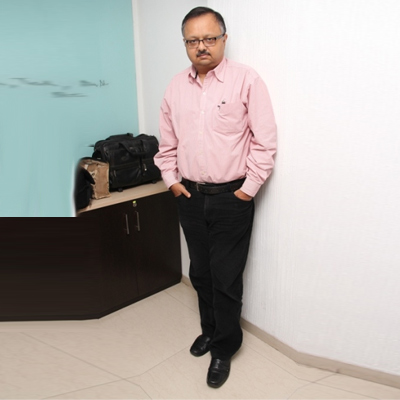
    “BARC would like to make the entire TV ratings process future-ready”: BARC CEO Partho Dasgupta

    At first appearance, Broadcast Audience Research Council (BARC) CEO Partho Dasgupta comes across as a pretty mild-mannered professional. But don‘t let that fool you: beneath the mild exterior is a steel-backed executive who has faced many a challenging task in diverse consumer industries and media where he has implemented large and small start up projects. Among this figure: Times Now, Future Media, The Economic Times and Times Multimedia. This apart, he also had an entrepreneurial stint where he co-founded a media company, apart from advising media startups and venture firms and their invested companies on brand strategies. So it is no surprise that the BARC board chose him to steer the setting up of a TV viewership monitoring system when there is a crisis of confidence around the only currency operational in India today – TAM Media.

    Indiantelevision.com‘s Seema Singh and Zeba Warsi spoke to Dasgupta to find out on what challenges await him, why he took up the job, and how he sees the road ahead.

    Excerpts:

    What are your feelings on being appointed the first CEO of BARC? What have you been busy with since joining it? And why did you take up the challenge considering the kind of brickbats that are being hurled at LVK now after years of doing the ratings? Who was it that coaxed you take it up?

    I am very happy to sit in the hot seat. Just before this I was managing the preschool business and the k12 school business growth of Educomp. I am looking forward to contribute to the broadcast industry, which I am very fond of. I love challenges – if you see my background none have been very easy roles. There was a time, then, when the joke was going around and similarly I am hearing now- whether one will ‘Bark or Bite‘ (pun intended). That is simply whether we will live up to all the hype surrounding BARC. It‘s all in good humour and I enjoy the challenge.

    You have worked with Times Now, Future Media and also worked with ET during their growth years. You also took a shot at entrepreneurship. How will you use that experience while working with BARC?

    I have been doing startups for the last 14 years – I love the whole drill – of blocking urls, looking for office, setting up new teams, new brands, processes and managing finances. I have also been on both sides of the table, as a broadcaster and also a client – so I guess I understand the pains of all sides. I am looking forward to go the whole hog again.

    What are the first few major tasks ahead of you taking over as the CEO?

    The single mandate is to design, commission, supervise and own India‘s Broadcast Measurement System. Towards this end, the establishment survey, covering approx 2.4 lakh individuals across India is already underway. This survey will give us details on television penetration in both urban and rural areas; viewership habits across all broadcasting modes, be it terrestrial, C&S, DTH, analog and digital platforms, and other developing and new platforms including newer modes of viewing; as well as viewer demographics. The study would become the basis of designing the rating panel.

    At the same time, separate RFPs for research and technology have been floated globally. Once the proposals are in, the technical committee will scrutinize all proposals in order to select the best in class research methodologies and technology. This will comprise senior experts from the industry representing all stakeholders. Experts in the technology domain are being co-opted to give us insights on the best technology available. So we are ensuring that thought leaders, domain experts and people with relevant skills are all on board from across our stakeholders to assess the best methodologies available globally.

    The group will look into all three parameters:

    • Technology of equipment across all broadcast mechanisms
    •  
    • Capture and analysis of data
    •  
    • Dissemination of data to users

    The global competitive bidding will ensure that India gets the best in class, cutting edge broadcast measurement system.

    Tell us about the structure of BARC, the members, representation and so on. Should there be equal representation from broadcasters, agencies and advertisers like it was initially envisaged?

    The broadcasters, agencies and advertisers are duly represented through their respective bodies namely IBF, AAAI and ISA. We are a neutral nodal body which will be working in a tandem with the three representative bodies. The members of each body find representation in the 10-member Board of BARC, which is already in place. The council will have its own management structure reporting to the Board.

    The tech committee has been working on certain presumptions? What are these and how do you see the tech committee contributing to making the BARC more relevant over the years?

    There are no presumptions that anyone of us are working on. Our one line mandate is to design, commission, supervise and own India‘s broadcast measurement system. And all of us are working to ensure that we get the best in class research and technology to deliver a product that would be the gold standard of broadcast research.


    BARC is striving to ensure the best of research methodologies combined with the best of technology to deliver world-class measurement.

     How do you envision the BARC office to be like – how many staff, how many people employed by it? How do you see this evolving? What will they be doing?

    We are evolving the structure. The mandate is clear and the structure will follow. We will be headquartered in Mumbai and we will be outsourcing a lot of professionals and services for specific functions.

    Tell us about the professionals you have hired so far from the industry…Any reputed names?

    We will be getting many professionals on board. Currently we have Mubin Khan as the vice president of BARC. (Khan has previously worked as senior AVP at Zee Network, media controller at Contract Advertising India Ltd., associate media controller at Mudra Communications Ltd. and was also vice-chairman of the Technical Committee of the IRS – the premier readership survey – conducted by Media Research Users Council among several other accolades.)

    What was the response to the RFIs like? Were there any surprising firms which have been observed on the list – like Infosys and TCS? Which other surprises popped up?

    The response has been very good across both research and technology companies. Global research and technology leaders have collected the RFP documents. I cannot reveal anything more at this point as NDAs have been signed with all firms concerned.

    How is the RFP process progressing? How many responses have you got? When do you expect to make announcements for the same?

    We haven‘t received any responses as of now. Separate proposals for research and technology have been sent to the various companies involved. As they go through the RFP, companies are raising certain queries, which are being formally addressed. The deadline to submit proposals is still more than a month away. The evaluation panel would scrutinize all proposals in order to select the best in class research methodologies and technology. This will comprise senior experts from the industry representing all stakeholders. Experts in the technology domain are being co-opted to give us insights on the best technology available. So we are ensuring that thought leaders, domain experts and people with relevant skills are all on board from across our stakeholders to assess the best methodologies available globally.

    What‘s the current status of the council? 

    The council is already operational. We are waiting for the RFP responses and talks are on with all bodies to better understand their concerns. The responses are expected next month.

    With the likelihood of TAM not being used as a barometer for the broadcast industry, it is quite likely that you will have to speed up your coming to market time to earlier than mid-2014? Do you think you are geared up to achieve that and what is the game plan and what signposts you will have to move forward to achieve this requirement quicker?

    The establishment survey is underway and should be out for us in December-January. After the panel discusses it, we may release it for public in February -March. The process is not an overnight one, it will take its due time and we don‘t want to rush. We are on course for a launch next year as originally planned

    Do you think what is happening to TAM is reasonable – the broadcaster back lash? What in your perception accelerated this? What is your advice to LVK and TAM?

    No comments.

    TAM has been accused of being ambiguous and lacking the required transparency. How do you plan to bring in transparency, accuracy and logical reasoning in the results?

    BARC is striving to ensure the best of research methodologies combined with the best of technology to deliver world-class measurement. To that end separate RFPs for research and technology have been floated globally. The evaluation panel will scrutinize all proposals in order to select the best in class research methodologies and technology. This will comprise senior experts from the industry representing all stakeholders. Experts in the technology domain are being co-opted to give us insights on the best technology available. So we are ensuring that thought leaders, domain experts and people with relevant skills are all on board from across our stakeholders to assess the best methodologies available globally.

    The baby is not born yet. It is too early to start speculating on how many siblings it should have. Besides, if others want to set up a rating agency, we are not stopping and cannot stop them. It is a free country.

     Do you think the ministry, TRAI and the industry as a whole prepared for a self regulatory mechanism of TV ratings? What kind of checks and balances are you going to put in to make everyone in the ecosystem comfortable?

    BARC is not a research agency. We will be working with specialists in research and technology to deliver cutting edge research. There would be adequate representation of various stakeholders in the process to ensure proper checks and balances.

    Do you think all categories will be content with BARC- GECs, news- English and regional and Niche? How will BARC achieve that? 

    It is obvious that we have to address the concerns of all stakeholders. And we are doing so through dialogues with all concerned. If anybody has a concern, they will obviously share it with their representative bodies, who are a part of the Board.

    Is the Indian TV universe more rural or more urban? How will you address issues of broadcasters who have seen a reduction of the TV universe under TAM‘s expansion into LC1 towns? Are you sure the results will not be the same as TAM‘s are currently?

    Let us await the results of the establishment survey before commenting on this.

    How will you address and cover a continually digitising India in terms of cable TV rolling out in phase III and phase IV of the cable TV universe? As well as expanding DTH homes…

    It is too early to comment on this. However, as mentioned earlier, we have a mandate to design, commission, supervise and own India‘s broadcast measurement system. This system will have to be inclusive, covering all aspects of our country‘s heterogeneity. We believe digitisation will actually make it easier for us.

    What kind of tech are you looking at putting in place? Stationary intrusive people meters which involve users to manually put in their inputs by pressing their remotes? Or more evolved ones which senses people‘s presence in the room via advanced tech? Or mobile hand held devices which have similar capabilities? And how will you incorporate tech which can be integrated with the STBs? In the next five years India will probably have about 100 million of these?

    It is too early to comment on the kind of technology, given that the RFP process is underway. Having said that, let me state that BARC would look at all technologies available. We would like to make the entire ratings mechanism process future-ready.

    How will the ratings system be funded annually? What kind of ratings are you hoping to deliver – overnight or weekly or monthly?

    BARC is a non-profit organisation under Section 25 of the companies Act, 1956. The various industry constituents would fund the research. All users of data and analysis will subscribe and pay for the same.

    TAM used only 8150-10,000 households for its rating system which was perceived as not being adequate to represent the population of 15.5 crore TV households in India. Tell us about your survey sample, how many homes, which markets, etc.

    The final contours of the panel size and dispersion will be decided only after the establishment survey is complete and the proposals studied. As mentioned earlier, the establishment survey is covering approx 2.4 lakh homes across urban and rural India.

    When the decision of setting up the council first came up in 2008, it was a joint venture only between IBF and ISA. Then how did AAAI enter the venture?

    BARC represents the entire industry. Hence, it made eminent sense to have all stakeholders on board.

    The initial investment for setting up BARC was Rs 300 million? Has the investment gone up? If yes, by how much? How was the breakup ratio between IBF, ISF and AAAI decided?

    No Comments

    Self-regulation mechanism has worked in some cases, and hasn‘t in some. How do you think BARC will envisage this mechanism in its functioning as opposed to TAM?

    BARC has representation from all stakeholders of the industry. It thus has an in-built mechanism.

    There is an accusation that “Self-regulation of television rating system in India has failed to take off as BARC has not been able to take any credible action on the recommendations made by TRAI and by Dr Mitra‘s Committee. What did the report say? Are the accusations true? How much has BARC worked on it?

    I have taken charge just this month, and the BARC team has also been just set up. We shall take up the issues as they come. Right now, the focus is on the RFPs.

    Following the report, BARC had also set up in-depth research team to study audience measurement system, particularly BARB, the UK‘s audience measurement system, how has that translated in your current structure? Are there any comparisons to be drawn between the two?

    BARC and its stakeholders have been studying the various models and methodologies adopted by broadcast measuring companies and organisations across more than 30 countries across the globe. And we will certainly look at incorporating the best research methodologies and technology available.

    Having said that, India has a lot many complexities that are unique to our country. Be it in the demographic or socio-cultural heterogeneity, the linguistic, geographic and economic disparities or even the hours of accessibility to electricity, any study done in India has to take cognizance of each of these unique complexities, and many more.

    BARC plans to be very robust. Does your set up involve putting in place a complaint mechanism system? If yes, please elaborate.

    For any organisation that is in the service industry, a robust feedback mechanism is a must. BARC is an industry body representing all constituents. There would definitely be continuous dialogue between BARC and its constituents. And this would also incorporate formal feedback mechanisms.

    We are aware that history has shown us that the market can only support one rating currency. But even as recently as yesterday, outgoing I&B secretary Uday Kumar Varma expressed reservations about a monopoly of ratings. He also said that maybe there should be more than one rating system to provide competition in the business, which will also result in enhancing the credibility of ratings. TAM which earlier was the sole rating system has allegedly goofed up and was highly criticised. What is your reaction to this? And why should BARC enjoy monopoly of ratings?

    The baby is not born yet. It is too early to start speculating on how many siblings it should have. Besides, if others want to set up a rating agency, we are not stopping and cannot stop them. It is a free country.


  • AAAI’s Sharma: “Use BARC to improve TAM now”

    AAAI’s Sharma: “Use BARC to improve TAM now”

    MUMBAI: Even as the day saw a couple of more notices to unsubscribe from TAM‘s TV ratings. The Advertising Agencies Association of India (AAAI) president Arvind Sharma proffered what could be the way out of the TV ratings crisis the industry is currently grappling with.

    “I understand broadcasters have shown a lot of dissatisfaction with TAM,” he said speaking to indiantelevision.com. Let us address the problems that they are having with TAM to a body which is mandated to do TV ratings in India going forward – that is the Broadcast Audience Research Council (BARC). It is an existing body with a CEO and a chairman. It has a strong technical committee and has representation from the IBF, the AAAI and the ISA.”

    Sharma highlighted that three constituents – advertisers, broadcasters and agencies – should filter down the various problems broadcasters are having with TAM to three or four issues of broad priority first.

    “The collective technical and business leadership of the industry under BARC will definitely find solutions. After all, BARC has developed an expertise and overview of what‘s happening in the world in terms of technology, methodology and what have you. They have gone through various requests for information. They are up to date,” Sharma said.

    And what about broadcasters‘ complaints that TAM has not paid heed and addressed their problems in the past? “Any player will listen to collective direction that is given in the interest of industry and business,” pointed out Sharma.

    Sharma once again reiterated that there is no question of a ratings blackout scenario becoming a reality in the industry. “We are reaching out to other BARC directors and other players,” he said. “I am optimistic that a solution is going to be found sooner before a situation of a total TV ratings blackout arises.”

    Are advertisers and broadcasters going to toe the same line?

    Watch this space for further developments!

  • Indian TV B’casters: ‘TAM’ing TV ratings

    Indian TV B’casters: ‘TAM’ing TV ratings

     Does the Indian TV broadcast industry want TAM? In one word, the answer is No. Definitely not in the form and manner it is monitoring TV viewership in India. Definitely not the kind of viewership numbers it has been spewing out for them week by week. The major Indian TV broadcast networks have already shown their utter disgust and disregard for its TV ratings by closing their checkbooks on TAM.

    On almost every front, the Indian TV broadcasters – through the IBF – have been flexing their muscles and showing that they mean business. And they have been sorting out troublesome issues: like striking a wage accord with TV industry technicians; setting set up a self-regulatory mechanism when government wanted to muzzle the media; getting the advertising industry to agree to net billing after the government demanded taxes for the gross advertising agency bills it used to make payments on.

    But one of the most vexatious issues it has been grappling with is the TV rating‘s one. And now that the lights have been put out on TAM, what now for the broadcast industry? What are the options before it? Let us take a look at a couple of them:

    *For one they can continue with TAM Media. However, they can give TV ratings a hiatus for a couple of months. It‘s quite possible the chaos that is happening on account of analogue shutoffs and digital set top box switch-ons, will settle down and the ratings will stabilise in that period. They can also dialogue with TAM and ask it to get back to basics and do an establishment survey once again (if possible), represent the peoplemeters appropriately in power-lit areas in LC1, rather than in power-dark areas. And finally, take a closer look at the entire process of churning out ratings that happens every week, through a committee constituted for the very purpose.

    There is a possibility that we could end up with a period of no TV ratings in India if issues are not sorted out by all concerned. How long that period will be is not clear (some say it could be until BARC comes up), but broadcasters will need to get advertisers and agencies’ support for their decision. So far, both have said they are not comfortable with ratings going away, and have spoken up for TAM.
    _____****_____


    With all major B‘casters unsubscribing from TAM TV ratings, only time will tell if the viewers‘ true choice can be reflected with the emergence of BARC

    * Or if this is not working out forget that TAM exists, cut off its blood supply, and watch it gradually bleed and die. Come up with a viewership metric that works in the interim for all concerned – broadcasters, advertisers and agencies – and allows the business of communicating brand messages through television for a fee to continue.

    The broadcast industry is torn between the two options. The first has been done before between October and December 2012 and it was painless for all concerned and allowed TAM to continue its existence in a profitable manner. 

    The second option, while it appears the easier one to see through, comes with its set of challenges.

    The Broadcast Audience Research Council (BARC)‘s TV ratings system seems nearly a year away and could take longer to get to the levels of coverage TAM is providing now. Unless, under the leadership of Puneet Goenka and Partho Dasgupta, BARC manages to do an Ambani on the system and get the establishment survey, the constitution of the sample, the installation of the meters, the development of the software, the stabilisation of the findings and everything down stream thereof completed in super record time. Most advertisers and agencies have been optimistic about BARC.

    Industry can learn some lessons from the experience of Turkey in 2011. Turkey‘s broadcasters and the industry shut down the ratings service run there by AGB Nielsen in late December 2011, amidst allegations of corruption, which were denied by the ratings service provider. The industry body – The Television Audience Research Committee (TIAK) – prematurely severed its contract with AGB and urged TNS – part of the WPP Group‘s Kantar Research – to set up an alternative ratings system which finally got going in May 2012 with a 1000 peoplemeter panel, as against 2,500 people meters earlier.

    Industry can learn some lessons from the experience of Turkey which faced a ratings blackout in 2011. During the blackout TV ad rates and prices were determined by using average ratings from the month before the shutdown, combined with monthly share performance from the whole of the year.
    _____****_____

    In the interim, adage.com reported in March 2012 that life went on for Turkish advertisers, agencies and broadcasters though the “TV-buying system has since been in shambles. Without reliable new-audience measurement data, prices have been determined by using average ratings from the month before the scandal erupted, combined with monthly share performance from the whole of 2011. The industry is working to regain media agencies‘ and advertisers‘ trust.”

    Agreed, we are not questioning the ethics of TAM in India, though many have hurled allegations against it. There is a possibility that we could end up with a period of no TV ratings in India if issues are not sorted out by all concerned.

    How long that period will be is not clear (some say it could be until BARC comes up), but broadcasters will need to get advertisers and agencies‘ support for their decision. So far, both have said they are not comfortable with ratings going away, and have spoken up for TAM.

    With reason. Two or three months without TAM mean they will have little data to support a TV advertising expenditure between Rs 3,600-4,200 crore. That‘s not an amount you can sniff away.

    Hence, all three will have to come to the table and agree on a performance metric to justify the expenditure and offer some accountability. Could the Turkish media industry‘s interim solution during the TV ratings shutdown there be adapted to work in India?

    Broadcasters are slated to huddle very soon (either this week or next) to get some consensus on which route they will take. Some broadcast CEOs have been travelling and hence have not been able to get together.


  • Advertisers rally around TAM; say TV ratings are imperative

    Advertisers rally around TAM; say TV ratings are imperative

    MUMBAI: It finally looks like the industry is rallying around TAM Media. First, the AAAI announced its support for TAM this morning. Now it is the turn of the Indian Society of Advertisers (ISA) which represents the interests of the marketing and advertising fraternity to do so.

    Bakhsi says: “Till the time we have BARC coming in, we need to continue to have TAM.”

    Speaking to indiantelevision.com, the ISA chairman media committee & HUL executive director Hemant Bakhsi emphasised that it is imperative that TAM continues with its TV ratings.

    He expounded: “TAM has been and is the currency which helps advertisers allocate their marketing expenditure better. While I agree that there is a need for a credible TV ratings system, we must remember that no measurement system is perfect. The industry has to work together to resolve the issues and move towards improved ratings. Till the time we have BARC coming in, we need to continue to have TAM. There cannot be a situation where we don‘t have ratings.”

    He pointed out that BARC is at a very early stage. “Yes we are putting together a very robust system under BARC which will be operational by next year at the timelines we have set for it. But we need TAM until that happens,” he emphasised.

    Bakshi said that he is very optimistic that the differences between IBF members and TAM – which have led to the former opting out of subscribing to its TV ratings service – will be sorted out. “Indeed things will get sorted. We will be working together to ensure they do,” he reaffirmed.

    To read the official release: Click here

  • BARC floats RFPs for new TV ratings system

    BARC floats RFPs for new TV ratings system

    MUMBAI: For long, there has been a hue and cry about the progress of the Broadcast Audience Research Council (BARC) and the development of an alternative TV ratings system. Things finally seem to be moving now. Earlier this month, BARC chairman Punit Goenka announced the hiring of industry veteran Partho Dasgupta as its CEO.

    Today, BARC has announced that it has issued the request for proposals (RFPs) asking global tech and research vendors to pitch in with their offers to revamp India‘s allegedly rickety existing TV rating system. This follows the overwhelming response it got for the request for information forms it had issued earlier.

    Says Zee MD & CEO and BARC chairman Punit Goenka, MD & CEO of ZEE: “We are happy with the interest shown by global vendors of technology and research in our project. The RFPs are going out to all of them. This will be followed by discussions and evaluation of these proposals.”

    Adds BARC CEO Partho Dasgupta: “This is our second step towards initiating a cutting edge measurement system which will see marriage of technology and research. The first step was the establishment survey which the TechCom (technical committee) led by Shashi Sinha and Paritosh Joshi has already initiated.”

  • TRAI extends date for TRP consultation paper comments

    TRAI extends date for TRP consultation paper comments

    NEW DELHI: The last date for receipt of comments on the Telecom Regulatory Authority of India‘s (TRAI‘s) consultation paper on accreditation of television rating organisations has been extended to 23 May. The last date earlier was 9 May.

    TRAI said that it had on the request of the stakeholders given 30 May (earlier 16 May) as the date for any counter-comments.

    In an effort to put an end to controversies generated by television rating points, TRAI had on 17 April issued a paper to deal with issues such as establishing an accreditation mechanism for the rating agency and methodology of audience measurement.

    The consultation paper on “Guidelines/Accreditation Mechanism for Television Rating Agencies in India” also seeks to get the views of stakeholders on sample size; secrecy of sample homes; cross holding between rating agencies and their users; complaint redressal; sale and use of ratings; disclosure and reporting requirement; competition in rating services; and audit.

    The consultation paper has been issued at the behest of the information and broadcasting ministry, which had earlier received a report from the Amit Mitra Committee on the subject. The Indian Broadcasting Foundation has since been working to set up the Broadcast Audience Research Council (BARC) as an alternative to TAM.

    The consultation paper aims to lay down comprehensive guidelines/accreditation mechanism for TRP (television rating points) rating agencies in India to ensure transparency and accountability in the rating system.

    A press note from TRAI says ‘incorrect ratings will lead to production of content which may not be really popular while good content and programmes may be left out. Therefore, there is a need to have an accurate measurement and representative television ratings for the programmes. The importance of a credible, transparent and representative television audience measurement system is recognised the world over. Presently television rating in India is being done by only one agency. Issues related to credibility and transparency of the ratings services in India has been raised by certain stakeholders. Lack of credible TRP system will hamper the growth of TV industry as a number of decisions having financial implications and also bearing on the type of content being watched are influenced by the TRP ratings supplied by rating agencies. So, there is a need to establish suitable mechanism/guidelines for the rating agencies which ensures that the data generated by the rating agencies is representative, credible and transparent.”

    The full text of the Consultation Paper is available on TRAI‘s website www.trai.gov.in

  • BARC appoints Partho Dasgupta as CEO

    BARC appoints Partho Dasgupta as CEO

    Mumbai: It has been in the making for around three years now. But the Broadcast Audience Research Council (BARC) – the Indian media sector‘s riposte to the government‘s irritation with ratings agency TAM – finally seems to be gathering some momentum. It today announced the appointment of Partho Dasgupta as its first chief executive officer.

    The announcement was made by BARC chairman and Zee MD and CEO Punit Goenka. He said: “We are delighted to have Partho on board. BARC is moving ahead aggressively with its plans. Partho has an excellent background in leadership, in successful start-ups, in broadcast, in research, in consumer products and in other industries. He will help us put the organisation in place and roll out BARC’s services in a tight time frame.”

    On his appointment Dasgupta said, “The foot is on the pedal – we have to just start accelerating. On a serious note, I am happy to do another start-up in broadcast and media. The Board is full of friends from the industry and I am looking forward to working with them and make BARC happen.”

    A general management professional having experience in diverse consumer industries and media management experience in print, television and out of home.

    A keen observer of consumer and media trends, Dasgupta is now in the leadership team of Educomp,an education company. His career has been in media and consumer industries where he did large and small startup media projects.

    He also had an entrepreneurial stint where he cofounded a media company. He also advised media startups and venture firms and their invested companies on brand strategies earlier.

    Dasgupta has led startup teams and management teams of Times Now, Future Media, The Economic Times and Times Multimedia.

    IPG Mediabrands India CEO Shashi Sinha is the chairman of the technical committee of BARC.

    BARC was officially launched in March 2012. It aims to set up a transparent and credible television audience measurement system in India, which is expected to give out its first report by March 2014.

    It would be the umbrella body and television audience measurement service providers like TAM Media Research, a joint venture of Nielsen and Kantar, will function under it for the purpose of providing ratings.

    BARC is 60 per cent owned by the Indian Broadcasting Foundation (IBF) and 20 per cent each by the Advertising Agencies Association of India (AAAI) and the Indian Society of Advertisers (ISA).

  • Trai seeks industry’s views on TV ratings system

    MUMBAI: In an effort to create a reliable television rating system, the Telecom Regulatory Authority of India (Trai) today issued a paper to deal with issues of establishing an accreditation mechanism for the rating agency and methodology of audience measurement.

    The consultation paper titled “Guidelines/Accreditation Mechanism for Television Rating Agencies in India” also seeks to get the views of stakeholders on sample size, secrecy of sample homes, cross holding between rating agencies and their users, complaint redressal, sale and use of ratings, disclosure and reporting requirement, competition in rating services, and audit.

    The consultation paper aims to lay down comprehensive guidelines/accreditation mechanism for TRP (television rating points) rating agencies in India to ensure transparency and accountability in the rating system. Written comments have been invited by 9 May with any cross-comments by 16 May.

    The Consultation paper has been issued at the behest of the Information & Broadcasting ministry, which had earlier received a report from the Amit Mitra Committee on the matter.

    The Indian Broadcasting Foundation (IBF) has since been working with the Advertising Agencies Association of India (AAAI) and the Indian Society of Advertisers (ISA) to set up the Broadcasting Audience Rating Council (BARC) as an alternative to TAM.

    “Incorrect ratings will lead to production of content which may not be really popular while good content and programmes may be left out. Therefore, there is a need to have an accurate measurement and representative television ratings for the programmes,” the Trai says.

    Seeking to ensure “fair competition, better standard and quality of services”, the government had asked the Trai to draft recommendations on comprehensive guidelines and accreditation mechanism for agencies involved in measuring television rating points.

    The consultation paper also outlines suggestions on the eligibility criteria for ratings agencies. Some of the suggested criteria include –
    a. The rating agency should be set up and registered as a company under the Companies Act, 1956.

    b. The Rating Agency should have, in its Memorandum of Association, specified rating activity as one of its main objects.

    c. The rating agency should have a minimum net worth (say rupees five crore).

    d. The rating agency should have professional competence, financial soundness and general reputation of fairness and integrity in business transactions, to the satisfaction of the Government;

    e. Rating agency should meet the prescribed cross holding requirements.

    Another key area that the consultation paper touches upon is the issue of cross holding between a ratings agency and its user. It has asked stakeholders to comment/suggest on the guidelines of cross holding of ratings agency which may include:

    a. There should be no cross holding between the rating agencies and broadcasters, advertisers, media agencies and advertising agencies.

    b. This cross-holding restriction should also be applicable in respect of individual promoters besides being applicable to legal entities.

    c. No single company/ legal person, either directly or through its associates or inter-connected undertakings, shall have substantial equity holding in more than one rating agency. Similarly no single company/ legal person, either directly or through its associates or inter-connected undertakings, shall have substantial equity in both rating agencies and broadcasters/advertisers/ media agencies/advertising agencies. Substantial equity could be defined as certain percentage (say 10% or more) of paid equity

    d. A promoter company/ legal person/ directors of the rating agency cannot have stakes in any broadcaster, advertiser and advertising agency either directly or through its associates or inter-connected undertakings.

  • TV ratings: NBA wants independent audit

    NEW DELHI: Though the Broadcast Audience Research Council (Barc) is expected to give out its first report by March 2014, the Government has been urged by the News Broadcasters Association (NBA) to set up a third party audit.

    Information and Broadcasting Ministry sources told indiantelevision.com that while it has been following up with Indian Broadcasting Foundation (IBF) for constitution of a transparent and credible audience research mechanism, the NBA has written to the Government for setting up an independent third party audit by a reputed agency to evaluate and measure the TAM system.

    Meanwhile, the Ministry had asked the Telecom Regulatory Authority of India (Trai) in December last year to make recommendations on comprehensive guidelines/accreditation mechanism for agencies studying television rating points to ensure fair competition, better standards and quality of services.

  • TV industry to debate digital dividends at Casbaa India Forum

    TV industry to debate digital dividends at Casbaa India Forum

    NEW DELHI: The ongoing satellite capacity crunch and the challenges of navigating a complex regulatory environment to identifying the future trends in the country‘s multichannel TV market in the era of digitization will be among the subjects under discussion at the India Forum of the Cable and Satellite Broadcasters Association of Asia (Casbaa).

    The meet on 7 March here will bring into focus the disparate voices of various television industry stakeholders.

    “India is undeniably a vast and complex market, but one that continues to provide unparalleled opportunities and potential to investors,” said Casbaa CEO Christopher Slaughter.

    “However, success depends on the ability to navigate the hurdles of the country‘s broadcasting industry and CASBAA‘s annual India Forum provides an ideal platform to hear from leaders and experts from across borders and market segments.”

    Industry leaders will bring their unique perspectives on the current state of Indian broadcasting and what to expect moving ahead.

    Headlining the respected roster of speakers at the event will be government representatives Information and Broadcasting Ministry Secretary Uday Kumar Varma, Telecom Regulatory Authority of India Chairman Rahul Khullar; TRAI Principal Advisor Parameswaran N., and Sudhir Gupta, and Ms. Supriya Sahu, both Joint Secretary (Broadcasting & Policies) in the Ministry.

    The varied list of speakers and panellists will also include Thomas Choi (CEO, Asia Broadcast Satellite), Smita Jha (Leader, Entertainment and Media Practice, PwC India), LV Krishnan (CEO, TAM Media Research), Sameer Manchanda (Chairman & MD, DEN), Ravi Mansukhani (MD, IMCL), Deepak Mathur (SVP, Commercial, Asia-Pacific and the Middle East, SES), Harit Nagpal (MD & CEO, Tata Sky), Bharat Kumar Ranga (Chief Content & Creative Officer, Zee Entertainment), Man Jit Singh (CEO, MSM; President, IBF), Shashi Sinha (Chairman of Technical Committee, BARC; CEO, IPG Mediabrands India), Bill Wade (President & CEO, AsiaSat), Robert Zitter (EVP & CTO, HBO), Deepak Jacob (President, Legal & General Counsel, STAR TV India) among others.

    Partners for the CASBAA India Forum 2013 include Supporting Sponsor SES and Sponsors AsiaSat, Brightcove, CSG International, Eutelsat, IBM and Star India.