Tag: BARC India

  • BARC India on role of big data in ad effectiveness: Zee MELT 2016

    BARC India on role of big data in ad effectiveness: Zee MELT 2016

    MUMBAI: BARC India’s Think session on ‘Role of Big Data in Driving Ad Effectiveness’, at the just concluded Zee MELT, delved into the need for Big Data and its use in ad campaigns. The session featured Romil Ramgarhia, Chief Business Officer, BARC India, Bjoern Kroog, Global Head POS Analytics and Integrated Market Intelligence, GfK and Sukanyya Misra, Senior Vice President, Mastercard Advisors Shared Services, India.The session was moderated by Senior Journalist Gurbir Singh.

    Romil opened the session by centering the conversation on the aim of ad campaigns: which is to increase sales, uplift brand KPI, stay ahead of competition and help sales forecasting.

    Romil underlined the need to drive ad effectiveness, especially in the highly fragmented Indian market, with 8000+ advertisers, 12000+ brands, and 90000+ new campaigns every year. He said that a combination of data engines, machine learning algorithms and advanced analytics are key to ensuring ad effectiveness, which would in turn lead to incremental uplift in sales for each rupee spent, understanding of cross channel synergies, less uncertainty with effective prediction, optimum utilisation of media budgets, real time analysis and sharper targeting.

    Sukanyya, spoke about transforming big data into actionable insights. She said, “We should focus on not just big data but the right data.” According to her Big data can yield benefits with right testing and learning.Speaking from the perspective of MasterCard, she elaborated on how purchase patterns can help infer motivations, priorities and preferences of consumers.

    Bjoern took the position that it is smart data and not just big data that drives ad effectiveness. He said that big data can be combined with reference data to yield smart data. He offered insights into how big data can be transformed into smart data. While globally Digital has already taken over print and is forecasted to become more important in TV in 2018 in terms of spending, in India he showed that based on surveys the majority of respondents watch TV and read newspapers on a daily basis. Therefore, instead of taking an either-or position, smart integration of big data and traditional approaches will guarantee valid and deep insights.

  • BARC India on role of big data in ad effectiveness: Zee MELT 2016

    BARC India on role of big data in ad effectiveness: Zee MELT 2016

    MUMBAI: BARC India’s Think session on ‘Role of Big Data in Driving Ad Effectiveness’, at the just concluded Zee MELT, delved into the need for Big Data and its use in ad campaigns. The session featured Romil Ramgarhia, Chief Business Officer, BARC India, Bjoern Kroog, Global Head POS Analytics and Integrated Market Intelligence, GfK and Sukanyya Misra, Senior Vice President, Mastercard Advisors Shared Services, India.The session was moderated by Senior Journalist Gurbir Singh.

    Romil opened the session by centering the conversation on the aim of ad campaigns: which is to increase sales, uplift brand KPI, stay ahead of competition and help sales forecasting.

    Romil underlined the need to drive ad effectiveness, especially in the highly fragmented Indian market, with 8000+ advertisers, 12000+ brands, and 90000+ new campaigns every year. He said that a combination of data engines, machine learning algorithms and advanced analytics are key to ensuring ad effectiveness, which would in turn lead to incremental uplift in sales for each rupee spent, understanding of cross channel synergies, less uncertainty with effective prediction, optimum utilisation of media budgets, real time analysis and sharper targeting.

    Sukanyya, spoke about transforming big data into actionable insights. She said, “We should focus on not just big data but the right data.” According to her Big data can yield benefits with right testing and learning.Speaking from the perspective of MasterCard, she elaborated on how purchase patterns can help infer motivations, priorities and preferences of consumers.

    Bjoern took the position that it is smart data and not just big data that drives ad effectiveness. He said that big data can be combined with reference data to yield smart data. He offered insights into how big data can be transformed into smart data. While globally Digital has already taken over print and is forecasted to become more important in TV in 2018 in terms of spending, in India he showed that based on surveys the majority of respondents watch TV and read newspapers on a daily basis. Therefore, instead of taking an either-or position, smart integration of big data and traditional approaches will guarantee valid and deep insights.

  • Introducing digital measurement is more a political hurdle, than technical

    Introducing digital measurement is more a political hurdle, than technical

    NEW DELHI: Who is afraid of the yardstick, and an authentic one? The digital media has been a victim of many a misnomers. “Easily measurable” media, for example. The assumption stems from advertisers taking their campaigns’ ‘views’ or social media numbers at face value, and not questioning agencies on the effectiveness of paid or inorganic reach gained through proxies or hoax accounts.

    This fundamental lack of understanding or ignorance of duping digital figures comes in the way of measuring effective digital media consumption — an issue that the four-person panel gathered at Broadcast Audience Research Council (BARC) India’s session at Zee MELT were keen to address.

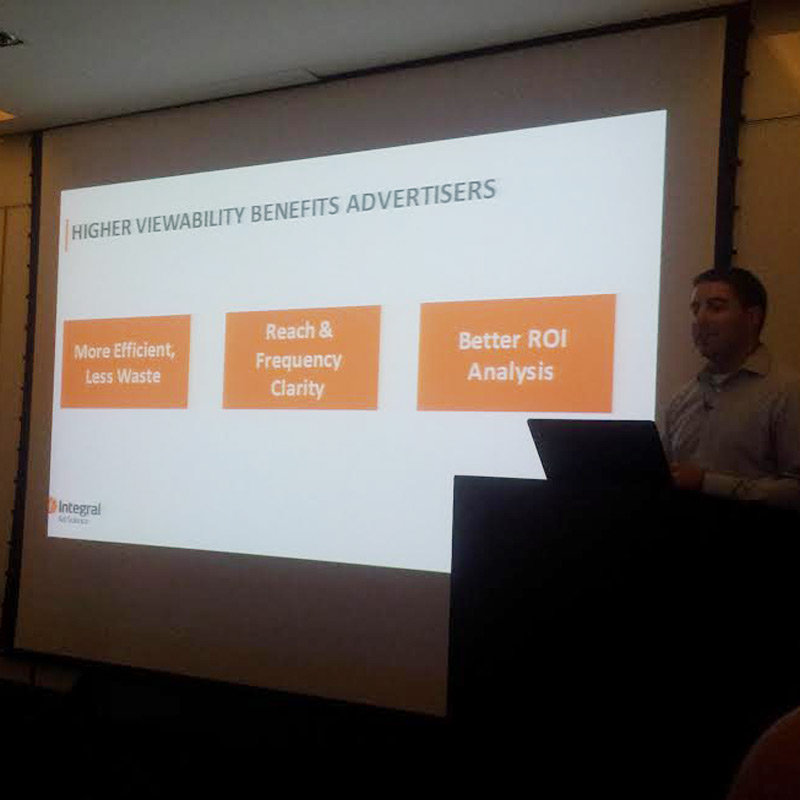
    The panelists were — Integral Ad Science product management VP Brian Murphy, comScore strategic partnerships SVP Paul Goode, Moat APAC director Guy Barbier, and BARC India CEO Partho Dasgupta.

    To put the panel discussion in context, BARC India is on an ambitious mission to roll out digital ratings in the country based on viewability in a few months. The aim is to measure unduplicated audiences across all devices and platforms together through a neutral third-party monitor. If that were achieved, BARC India will become the first rating agency to provide a TV+ digital viewership measurement service across the globe.

    Introducing a standard digital measurability in India was a high mountain hall, thankfully, the country could fast-forward the progress by learning from other mature markets such as the US, and Europe, Murphy suggested.

    “The first lesson learned is to accept that third-party javascript is not commonplace with publishers. There are both, policy and technological limitations,” he said. Secondly, Murphy observed, the stakeholders needed to be open about what could and could not be measured.

    The measurability standards need to be based on a realistic picture, after all.

    The panel also raised concerns that are perhaps unique to emerging markets such as India. From an advertiser’s perspective, a lot of the current digital traffic can be dismissed as invalid (due to duplication or its irrelevance to the brand). Given the fact that India is still at a nascent stage when it comes to digital marketing, will it deter advertisers from investing into the medium? Or else, advertisers can continue to rely on their existing media options that have been fruitful, and avoid the digital medium.

    While India has a relatively cleaner slate, it has already set out on the digital transformation path, however smaller it may be. Thus, there was no turning back for brands, Murphy noted. The real challenge would be to bring brands and publishers to come to terms if the standard measurement data, when rolled out, was below their expectations. “Coming to terms with the fact that you weren’t really getting the numbers you thought you were, is the real challenge,” Goode pointed out.

    The uneven brands-platforms power ratio was discussed as well, keeping in mind the growing digital ecosystem in India. “Those with the advertisement dollars will always have an upper hand. Its true for any market,” said Barbier, adding a global perspective. Traditional TV advertisers in India too are known to flex their muscle when it comes to getting their money’s worth. Advertisers buying spots during cricket matches sometimes refuse to pay the full worth of a spot if a part of the advertisement was cut out due to live coverage limitations, the panel cited.

    When it comes to programmatic media management, the assumption that the digital inventory is endless has been a hindrance to bringing in the advertisement dollars for premium inventory.

    Advertisement blocking was the elephant in the room that the panel dared to address. The panel established the fact that irresponsibly placing advertisement that causes the viewer inconvenience doesn’t serve anyone, be it the publisher or the advertiser. A huge advertisement that dominates the entire screen may not be able to provide an advertiser the desired viewability. On the contrary, it may put off the viewer from the publisher’s content. Success metrics can be driven by content and context, instead of blindly maximizing visibility of a campaign.

    Queuing back to introduction of digital measurement in a new market, the moderator raises the question: on which factors does the success of a digital measurement system depend? Threatened by the disruption that digital measurement may bring into their businesses, several publishers are bound to resist the introduction of a new digital currency, afraid that it will devalue their inventories.

    Broadcasters too are concerned that their metrics may not be able to keep up with that of digital, if both the mediums were to be judged on the basis of viewability numbers.

    Therefore, even after establishing the technological backbone for the measurement system, it cannot take off. This was seen in the case of Spain. Thus, establishing a digital measurement standard is a bigger political challenge than technological.

    When it comes to India, Dasgupta is optimistic that the level of resistance will not hinder the progress of the initiative in the market. “When it comes to videos, our confidence in the system comes from the number of major broadcasting partners that have signed up for this system. Moreover, the biggest push is coming from big brands and the Levers of the world who want an apple to apple comparison between television and digital videos,” Dasgupta concluded on an optimistic note.
  • Introducing digital measurement is more a political hurdle, than technical

    Introducing digital measurement is more a political hurdle, than technical

    NEW DELHI: Who is afraid of the yardstick, and an authentic one? The digital media has been a victim of many a misnomers. “Easily measurable” media, for example. The assumption stems from advertisers taking their campaigns’ ‘views’ or social media numbers at face value, and not questioning agencies on the effectiveness of paid or inorganic reach gained through proxies or hoax accounts.

    This fundamental lack of understanding or ignorance of duping digital figures comes in the way of measuring effective digital media consumption — an issue that the four-person panel gathered at Broadcast Audience Research Council (BARC) India’s session at Zee MELT were keen to address.

    The panelists were — Integral Ad Science product management VP Brian Murphy, comScore strategic partnerships SVP Paul Goode, Moat APAC director Guy Barbier, and BARC India CEO Partho Dasgupta.

    To put the panel discussion in context, BARC India is on an ambitious mission to roll out digital ratings in the country based on viewability in a few months. The aim is to measure unduplicated audiences across all devices and platforms together through a neutral third-party monitor. If that were achieved, BARC India will become the first rating agency to provide a TV+ digital viewership measurement service across the globe.

    Introducing a standard digital measurability in India was a high mountain hall, thankfully, the country could fast-forward the progress by learning from other mature markets such as the US, and Europe, Murphy suggested.

    “The first lesson learned is to accept that third-party javascript is not commonplace with publishers. There are both, policy and technological limitations,” he said. Secondly, Murphy observed, the stakeholders needed to be open about what could and could not be measured.

    The measurability standards need to be based on a realistic picture, after all.

    The panel also raised concerns that are perhaps unique to emerging markets such as India. From an advertiser’s perspective, a lot of the current digital traffic can be dismissed as invalid (due to duplication or its irrelevance to the brand). Given the fact that India is still at a nascent stage when it comes to digital marketing, will it deter advertisers from investing into the medium? Or else, advertisers can continue to rely on their existing media options that have been fruitful, and avoid the digital medium.

    While India has a relatively cleaner slate, it has already set out on the digital transformation path, however smaller it may be. Thus, there was no turning back for brands, Murphy noted. The real challenge would be to bring brands and publishers to come to terms if the standard measurement data, when rolled out, was below their expectations. “Coming to terms with the fact that you weren’t really getting the numbers you thought you were, is the real challenge,” Goode pointed out.

    The uneven brands-platforms power ratio was discussed as well, keeping in mind the growing digital ecosystem in India. “Those with the advertisement dollars will always have an upper hand. Its true for any market,” said Barbier, adding a global perspective. Traditional TV advertisers in India too are known to flex their muscle when it comes to getting their money’s worth. Advertisers buying spots during cricket matches sometimes refuse to pay the full worth of a spot if a part of the advertisement was cut out due to live coverage limitations, the panel cited.

    When it comes to programmatic media management, the assumption that the digital inventory is endless has been a hindrance to bringing in the advertisement dollars for premium inventory.

    Advertisement blocking was the elephant in the room that the panel dared to address. The panel established the fact that irresponsibly placing advertisement that causes the viewer inconvenience doesn’t serve anyone, be it the publisher or the advertiser. A huge advertisement that dominates the entire screen may not be able to provide an advertiser the desired viewability. On the contrary, it may put off the viewer from the publisher’s content. Success metrics can be driven by content and context, instead of blindly maximizing visibility of a campaign.

    Queuing back to introduction of digital measurement in a new market, the moderator raises the question: on which factors does the success of a digital measurement system depend? Threatened by the disruption that digital measurement may bring into their businesses, several publishers are bound to resist the introduction of a new digital currency, afraid that it will devalue their inventories.

    Broadcasters too are concerned that their metrics may not be able to keep up with that of digital, if both the mediums were to be judged on the basis of viewability numbers.

    Therefore, even after establishing the technological backbone for the measurement system, it cannot take off. This was seen in the case of Spain. Thus, establishing a digital measurement standard is a bigger political challenge than technological.

    When it comes to India, Dasgupta is optimistic that the level of resistance will not hinder the progress of the initiative in the market. “When it comes to videos, our confidence in the system comes from the number of major broadcasting partners that have signed up for this system. Moreover, the biggest push is coming from big brands and the Levers of the world who want an apple to apple comparison between television and digital videos,” Dasgupta concluded on an optimistic note.

  • BARC India launches BMW online certification

    BARC India launches BMW online certification

    MUMBAI: The TV audience measurement service BARC India has announced an online certification BARC India Media workstation (BMW), starting from 20 July. Its been more than a year since BARC India launched its TV measurement service.

    Media professionals and analysts working at various Broadcasters, Media Agencies and Advertisers have been trained on the BARC India Media Workstation (BMW), a powerful software application specially designed to analyse media and advertising audience results.

    After having successfully trained over 5000 media professionals on its BMW platform, the industry has been asking for a standardized testing and certification tool that would enable professionals as well as employers/organisations to evaluate their media proficiency.

    The BMW Online Certification will provide a standard for skill measurement and certification of professionals engaged in TV viewership measurement, research & analytics, media planning and sales & marketing, as well as students keen to pursue a career in these fields.

    BMW is a specialised software application specially designed to analyse media and advertising audience results, and subscribers are regularly trained so that they may make productive use of the application. BARC India now encourages BMW users to add the benefits of certification to their profile.

    “The certification programme will not only benefit BMW users by improving their employability quotient, but will also help an organisation appraise the skill level of their employees with the help of a pan-industry measurement standard. Students of media and Marketing courses would also benefit by taking these courses and be market ready” saidBARC India CEO Partho Dasgupta.

  • BARC India launches BMW online certification

    BARC India launches BMW online certification

    MUMBAI: The TV audience measurement service BARC India has announced an online certification BARC India Media workstation (BMW), starting from 20 July. Its been more than a year since BARC India launched its TV measurement service.

    Media professionals and analysts working at various Broadcasters, Media Agencies and Advertisers have been trained on the BARC India Media Workstation (BMW), a powerful software application specially designed to analyse media and advertising audience results.

    After having successfully trained over 5000 media professionals on its BMW platform, the industry has been asking for a standardized testing and certification tool that would enable professionals as well as employers/organisations to evaluate their media proficiency.

    The BMW Online Certification will provide a standard for skill measurement and certification of professionals engaged in TV viewership measurement, research & analytics, media planning and sales & marketing, as well as students keen to pursue a career in these fields.

    BMW is a specialised software application specially designed to analyse media and advertising audience results, and subscribers are regularly trained so that they may make productive use of the application. BARC India now encourages BMW users to add the benefits of certification to their profile.

    “The certification programme will not only benefit BMW users by improving their employability quotient, but will also help an organisation appraise the skill level of their employees with the help of a pan-industry measurement standard. Students of media and Marketing courses would also benefit by taking these courses and be market ready” saidBARC India CEO Partho Dasgupta.

  • Shuffling in English Entertainment genre: BARC 26

    Shuffling in English Entertainment genre: BARC 26

    MUMBAI: According to week 26 of BARC India, 6 Mega Cities : NCCS AB : 4+ Individuals rating, Zee Café sustained its top position in the English entertainment space. Meanwhile, Star Movies got back to its top spot, pushing Movies Now to second spot in the English movies genre. 
    Discovery, Living Foodz continued to dominate Infotainment and Lifestyle genre respectively.
    English Entertainment
    Zee Café sustained its number one position with a decline in rating from 296 Impressions (000s) to 228 Impressions (000s). Star World took the second spot with 201 Impressions (000s). Comedy Central with 148 Impressions (000s) grabbed third position.
    AXN with 116 Impressions (000s) and Colors Infinity SD with 81 Impressions (000s) took fourth and fifth positions respectively.
    English Movies
    Star Movies repossessed its top position replacing Movies Now with 3012 Impressions (000s). Movies Now dropped a rank with second spot scoring 2472 Impressions (000s). Sony Pix secured third spot with 2373 Impressions (000s). Zee Studio grabbed fourth position with 1594 Impressions (000s) and HBO got fifth spot with 1096 Impressions (000s).

    Infotainment
    The infotainment space continued to be topped by Discovery India with 4560 Impressions (000s), followed by History TV 18 with 3450 Impressions (000s) in BARC week 26.
    National Geographic Channel took third spot with 3363 Impressions (000s), Animal Planet with 3020 Impressions (000s) and Nat Geo Wild with 2299 Impressions (000s) were fourth and fifth place respectively. 
    Lifestyle
    Living Foodz was on number one position with 1826 Impressions (000s) in BARC week 26. Fox Life secured second place with 881 Impressions (000s), followed by Home Shop 18 on third spot with 763 Impressions (000s). Shop CJ was on fifth spot with 545 Impressions (000s). TLC took the last spot with 476 Impressions (000s).

  • Shuffling in English Entertainment genre: BARC 26

    Shuffling in English Entertainment genre: BARC 26

    MUMBAI: According to week 26 of BARC India, 6 Mega Cities : NCCS AB : 4+ Individuals rating, Zee Café sustained its top position in the English entertainment space. Meanwhile, Star Movies got back to its top spot, pushing Movies Now to second spot in the English movies genre. 
    Discovery, Living Foodz continued to dominate Infotainment and Lifestyle genre respectively.
    English Entertainment
    Zee Café sustained its number one position with a decline in rating from 296 Impressions (000s) to 228 Impressions (000s). Star World took the second spot with 201 Impressions (000s). Comedy Central with 148 Impressions (000s) grabbed third position.
    AXN with 116 Impressions (000s) and Colors Infinity SD with 81 Impressions (000s) took fourth and fifth positions respectively.
    English Movies
    Star Movies repossessed its top position replacing Movies Now with 3012 Impressions (000s). Movies Now dropped a rank with second spot scoring 2472 Impressions (000s). Sony Pix secured third spot with 2373 Impressions (000s). Zee Studio grabbed fourth position with 1594 Impressions (000s) and HBO got fifth spot with 1096 Impressions (000s).

    Infotainment
    The infotainment space continued to be topped by Discovery India with 4560 Impressions (000s), followed by History TV 18 with 3450 Impressions (000s) in BARC week 26.
    National Geographic Channel took third spot with 3363 Impressions (000s), Animal Planet with 3020 Impressions (000s) and Nat Geo Wild with 2299 Impressions (000s) were fourth and fifth place respectively. 
    Lifestyle
    Living Foodz was on number one position with 1826 Impressions (000s) in BARC week 26. Fox Life secured second place with 881 Impressions (000s), followed by Home Shop 18 on third spot with 763 Impressions (000s). Shop CJ was on fifth spot with 545 Impressions (000s). TLC took the last spot with 476 Impressions (000s).

  • BARC week 23: Nick continues to lead  the kids genre with Motu Patlu

    BARC week 23: Nick continues to lead the kids genre with Motu Patlu

    MUMBAI: Week 23 saw Viacom 18’s Nick staying strong in its top position as per Broadcast Audience Research Council (BARC) India’s all India (U+R) data in NCCS All 4-14 Individuals category.

    The channel has bagged a 95275 (000s sums) ratings, followed by Hungama with 71679 (000s sums) and Disney Channel on the third spot with 70307 (000s sums) ratings.

    Turner International’s Pogo TV was on the fourth spot with a viewership rating of 55133(000s sums), while its sister channel Cartoon network came last amongst the five most watched channels in the genre with a rating of 33996 (000s sums).

    When it comes to top five programs in the kids genre, Nick’s Motu Patlu was the uncontested ruler with all the top five positions taken by Nick’s flagship characters, and the trend seems to have continued for the past couple of weeks.

    While Motu Patlu In Alien World – Part I secured top spot with 1101( 000s sums) ratings, Motu Patlu In Carnival Island was second in the list with 1000(000s sums), followed by Motu Patlu 36 Ghantey Race Against Time with 934(000s sums) viewership ratings.

    Motu Patlu Mission Moon and Motu Patlu Deep Sea Adventure were fourth and fifth in the list with 929 (000s sums) and 807 (000s sums) respectively.

  • BARC week 23: Nick continues to lead  the kids genre with Motu Patlu

    BARC week 23: Nick continues to lead the kids genre with Motu Patlu

    MUMBAI: Week 23 saw Viacom 18’s Nick staying strong in its top position as per Broadcast Audience Research Council (BARC) India’s all India (U+R) data in NCCS All 4-14 Individuals category.

    The channel has bagged a 95275 (000s sums) ratings, followed by Hungama with 71679 (000s sums) and Disney Channel on the third spot with 70307 (000s sums) ratings.

    Turner International’s Pogo TV was on the fourth spot with a viewership rating of 55133(000s sums), while its sister channel Cartoon network came last amongst the five most watched channels in the genre with a rating of 33996 (000s sums).

    When it comes to top five programs in the kids genre, Nick’s Motu Patlu was the uncontested ruler with all the top five positions taken by Nick’s flagship characters, and the trend seems to have continued for the past couple of weeks.

    While Motu Patlu In Alien World – Part I secured top spot with 1101( 000s sums) ratings, Motu Patlu In Carnival Island was second in the list with 1000(000s sums), followed by Motu Patlu 36 Ghantey Race Against Time with 934(000s sums) viewership ratings.

    Motu Patlu Mission Moon and Motu Patlu Deep Sea Adventure were fourth and fifth in the list with 929 (000s sums) and 807 (000s sums) respectively.