Tag: BARC India

  • Star Plus & Rishtey continue to dominate respective markets

    Star Plus & Rishtey continue to dominate respective markets

    MUMBAI: Star Plus and Rishtey continued to dominate their respective markets last week. In BARC India week 4,  DD National continued to maintain its position in the top 10 channels across markets. In Hindi GEC rural market, Sab TV exited the list of top ten channels, and Sony Pal in Hindi GEC Urban departed from the list.

    Hindi GEC

    Star Plus bagged the leadership spot with 660084 Impressions (000s) followed by Colors on the second spot with 640585 Impressions (000s) and Rishtey on third spot with 435105 Impressions (000s).

    Zee TV maintained its fourth spot with 434591 Impressions (000s). This week Sony Entertainment stood on number five with 426238 Impressions (000s).

    Star Utsav fell on number five six with 389073 Impressions (000s). DD National grabbed seventh spot with 385299 Impressions (000s) followed by Life OK on eighth with 378428 Impressions (000s).

    Zee Anmol and Sony Pal  grabbed ninth and tenth slot with 357567(000s) and 356375 Impressions (000s) respectively.

    Hindi GEC Rural

    Rishtey continued to top the charts of Hindi GEC rural market  with 322903 Impressions (000s) followed by Star Utsav on second with 282399 Impressions (000s).

    Zee Anmol bagged three spot with 271375 Impressions (000s) and Sony Pal stood on number four with 251910 Impressions (000s).

    From number three, DD National fell on number five this week with 219027 Impressions (000s).

    Colors, Star Plus and Zee TV registered sixth, seventh and eighth spot with 197171 Impressions (000s),  192908 Impressions (000s) and 177016 Impressions (000s), respectively.

    Life OK and Sony Entertainment Television grabbed ninth and tenth spot with 135637 Impressions (000s) and 125840 Impressions (000s).

    Hindi GEC Rural

    In Urban market,  Star Plus continued to be the leader with 467177 Impressions(000s) followed by Colors on second 443414 Impressions (000s) and Sony Entertainment Television with 300398 Impressions (000s) stood on number three.

    Zee TV grabbed fourth spot with 257575 Impressions (000s) and  Sab TV maintained its fifth spot with 249748 Impressions (000s).

    Life OK on sixth with 242791 Impressions (000s) followed by DD National with 166272 Impressions (000s) on seventh slot.

    &TV, Rishtey and Star Utsav l stood on eighth, ninth and tenth  with 141416 Impressions (000s), 112203 Impressions (000s) and 106674 Impressions (000s), respectively.

  • Star Plus & Rishtey continue to dominate respective markets

    Star Plus & Rishtey continue to dominate respective markets

    MUMBAI: Star Plus and Rishtey continued to dominate their respective markets last week. In BARC India week 4,  DD National continued to maintain its position in the top 10 channels across markets. In Hindi GEC rural market, Sab TV exited the list of top ten channels, and Sony Pal in Hindi GEC Urban departed from the list.

    Hindi GEC

    Star Plus bagged the leadership spot with 660084 Impressions (000s) followed by Colors on the second spot with 640585 Impressions (000s) and Rishtey on third spot with 435105 Impressions (000s).

    Zee TV maintained its fourth spot with 434591 Impressions (000s). This week Sony Entertainment stood on number five with 426238 Impressions (000s).

    Star Utsav fell on number five six with 389073 Impressions (000s). DD National grabbed seventh spot with 385299 Impressions (000s) followed by Life OK on eighth with 378428 Impressions (000s).

    Zee Anmol and Sony Pal  grabbed ninth and tenth slot with 357567(000s) and 356375 Impressions (000s) respectively.

    Hindi GEC Rural

    Rishtey continued to top the charts of Hindi GEC rural market  with 322903 Impressions (000s) followed by Star Utsav on second with 282399 Impressions (000s).

    Zee Anmol bagged three spot with 271375 Impressions (000s) and Sony Pal stood on number four with 251910 Impressions (000s).

    From number three, DD National fell on number five this week with 219027 Impressions (000s).

    Colors, Star Plus and Zee TV registered sixth, seventh and eighth spot with 197171 Impressions (000s),  192908 Impressions (000s) and 177016 Impressions (000s), respectively.

    Life OK and Sony Entertainment Television grabbed ninth and tenth spot with 135637 Impressions (000s) and 125840 Impressions (000s).

    Hindi GEC Rural

    In Urban market,  Star Plus continued to be the leader with 467177 Impressions(000s) followed by Colors on second 443414 Impressions (000s) and Sony Entertainment Television with 300398 Impressions (000s) stood on number three.

    Zee TV grabbed fourth spot with 257575 Impressions (000s) and  Sab TV maintained its fifth spot with 249748 Impressions (000s).

    Life OK on sixth with 242791 Impressions (000s) followed by DD National with 166272 Impressions (000s) on seventh slot.

    &TV, Rishtey and Star Utsav l stood on eighth, ninth and tenth  with 141416 Impressions (000s), 112203 Impressions (000s) and 106674 Impressions (000s), respectively.

  • BARC India mulls client contract review & enforcing opt-out clause

    BARC India mulls client contract review & enforcing opt-out clause

    NEW DELHI: India’s TV audience measurement company Broadcast Audience Research Council of India (BARC India) is contemplating a complete review and legal overhaul of contracts it signs with subscribers and also enforcing the opt-out clause mentioned in agreements with an aim to streamline the whole measurement process and safeguard against increased litigation.

    Indian broadcast industry sources, while confirming such a move is afoot, indicated the thinking within BARC India is that to bring about more transparency in the ecosystem and further boost credibility of the viewership audit, it’s imperative to legally “review and amend” the way in which the contracts are phrased so there’s more clarity.

    The sources pointed out that under the present agreement terms, BARC India can opt out of providing measurement and ratings services to any subscriber, especially those that it sees as “compromising” its position in the industry.

    According to the wordings of its sample client contract, BARC India shall have the right to terminate an agreement, of course by giving written notice, if a subscriber “commit(s) an act, which brings BARC into public disrepute, contempt, scandal (and) ridicule”. This clause is amongst several other such conditions stipulated in an agreement that BARC India signs with an organization that starts subscribing to the paid, full and detailed services of the ratings audit firm.

    Industry sources, familiar with wordings in an agreement, said a legal interpretation states BARC is not obligated or under compulsion to provide or continue to provide its ratings service to a client. “In fact the onus of renewing the annual contract lies on the (paid) subscriber and, while BARC has so far been proactive in renewing contracts under the terms of the agreement, it can leave it up to the clients to seek renewal,” a source explained.

    BARC India, which is  promoted jointly by the Indian Broadcasting Foundation (IBF), the Advertising Agencies Association of India (AAAI) and the Indian Society of Advertisers (ISA), in November 2016 suspended for four weeks the review of viewership of three TV news channels. Reason: alleged activities aimed at manipulating viewership.

    The news channels concerned subsequently moved the Bombay High Court that immediately granted them temporary relief, while one of the channels also sued BARC India for defamation, seeking financial damages. The appeal is still in  the high court in Mumbai, the jurisdiction area for a legal dispute involving BARC India.

    The review process of contractual obligations, deliverables and suspension is being undertaken by BARC India  at a time when it prepares to rollout its digital measurement services some time later this year or early 2018. It is also set to expand its people meter sample in the next few months.

    For this, it had sought global expertise through a process that has elicited interest from several existing measurement firms, including Nielsen. BARC India replaced TAM India, a joint venture between Nielsen and WPP-owned Kantar Media, for viewership measurement in India little over two years back.

    ALSO READ:

    BARC India suspends three errant channels’ review

    In deference to court, BARC to release suspended channels’ data

    ‘Name and shame delinquent channels’


  • BARC India mulls client contract review & enforcing opt-out clause

    BARC India mulls client contract review & enforcing opt-out clause

    NEW DELHI: India’s TV audience measurement company Broadcast Audience Research Council of India (BARC India) is contemplating a complete review and legal overhaul of contracts it signs with subscribers and also enforcing the opt-out clause mentioned in agreements with an aim to streamline the whole measurement process and safeguard against increased litigation.

    Indian broadcast industry sources, while confirming such a move is afoot, indicated the thinking within BARC India is that to bring about more transparency in the ecosystem and further boost credibility of the viewership audit, it’s imperative to legally “review and amend” the way in which the contracts are phrased so there’s more clarity.

    The sources pointed out that under the present agreement terms, BARC India can opt out of providing measurement and ratings services to any subscriber, especially those that it sees as “compromising” its position in the industry.

    According to the wordings of its sample client contract, BARC India shall have the right to terminate an agreement, of course by giving written notice, if a subscriber “commit(s) an act, which brings BARC into public disrepute, contempt, scandal (and) ridicule”. This clause is amongst several other such conditions stipulated in an agreement that BARC India signs with an organization that starts subscribing to the paid, full and detailed services of the ratings audit firm.

    Industry sources, familiar with wordings in an agreement, said a legal interpretation states BARC is not obligated or under compulsion to provide or continue to provide its ratings service to a client. “In fact the onus of renewing the annual contract lies on the (paid) subscriber and, while BARC has so far been proactive in renewing contracts under the terms of the agreement, it can leave it up to the clients to seek renewal,” a source explained.

    BARC India, which is  promoted jointly by the Indian Broadcasting Foundation (IBF), the Advertising Agencies Association of India (AAAI) and the Indian Society of Advertisers (ISA), in November 2016 suspended for four weeks the review of viewership of three TV news channels. Reason: alleged activities aimed at manipulating viewership.

    The news channels concerned subsequently moved the Bombay High Court that immediately granted them temporary relief, while one of the channels also sued BARC India for defamation, seeking financial damages. The appeal is still in  the high court in Mumbai, the jurisdiction area for a legal dispute involving BARC India.

    The review process of contractual obligations, deliverables and suspension is being undertaken by BARC India  at a time when it prepares to rollout its digital measurement services some time later this year or early 2018. It is also set to expand its people meter sample in the next few months.

    For this, it had sought global expertise through a process that has elicited interest from several existing measurement firms, including Nielsen. BARC India replaced TAM India, a joint venture between Nielsen and WPP-owned Kantar Media, for viewership measurement in India little over two years back.

    ALSO READ:

    BARC India suspends three errant channels’ review

    In deference to court, BARC to release suspended channels’ data

    ‘Name and shame delinquent channels’


  • BARC India & Israeli company explore customised digital measurement tools

    BARC India & Israeli company explore customised digital measurement tools

    NEW DELHI: The Broadcast Audience Research Council of  India (BARC India) is said to be in talks with an Israeli media technology company to customise for it tools for digital measurement, which is likely to be rolled out in phases from sometime in 2017 or early 2018 and could go on to make BARC India an organisation measuring TV+digital eco-systems.

    After having issued Request for Information (RfI) for digital measurement in December 2015 and having received responses from 11 leading vendors from across the world, BARC India had come out last year Request for Proposals for the same.

    BARC India is presently working on digital proof of concept that will help it in testing different technologies, methodologies and potential capabilities of the shortlisted vendors.

    The companies that had responded to the RfI included agencies such as Kantar Media, IMRB, ComScore, Nielsen, MediaMetrie, Gracenote (in December 2016  it entered into an agreement to be acquired by Nielsen), Informate, GfK, Accenture, EY, eywa Media, Gemius and Verto Analytics.

    It was in October 2015 that BARC India CEO Partho Dasgupta had announced at a panel discussion on new TAM models at CASBAA Convention in Hong Kong that the audience measurement organisation was looking at launching digital measurement and will float a global tender for vendor(s).

    Industry sources indicated that the Israeli company could be Actus Digital, a global provider of broadcast media and video technologies, and that the exploratory talks between the company and BARC India could be revolving around customising measurement tools for India instead of simply re-deploying universal tools generally used by big companies for digital data collection.

    However, it must be admitted that Indiantelevision.com could not independently confirm the name of the Israeli company from either BARC India or the company concerned till the time of writing this report.

    The barely two-year-old BARC India, which initially focussed on measuring TV viewing habits via BAR-O-Meters through watermarking technology, is now expanding into the digital realm.

    BARC India is jointly promoted by the Indian Broadcasting Foundation (IBF), the Indian Society of Advertisers (ISA) and the Advertising Agencies Association of India (AAAI) with the latter two organisations holding 20 per cent each, while the broadcasting body holds 60 per cent.

    ALSO READ:

    BARC issues RFP for playout monitoring and DB system

    BARC India eyes digital measurement; calls for global RFIs

    BARC India ropes in Nielsen’s Jamie Kenny as DAM head


  • BARC India & Israeli company explore customised digital measurement tools

    BARC India & Israeli company explore customised digital measurement tools

    NEW DELHI: The Broadcast Audience Research Council of  India (BARC India) is said to be in talks with an Israeli media technology company to customise for it tools for digital measurement, which is likely to be rolled out in phases from sometime in 2017 or early 2018 and could go on to make BARC India an organisation measuring TV+digital eco-systems.

    After having issued Request for Information (RfI) for digital measurement in December 2015 and having received responses from 11 leading vendors from across the world, BARC India had come out last year Request for Proposals for the same.

    BARC India is presently working on digital proof of concept that will help it in testing different technologies, methodologies and potential capabilities of the shortlisted vendors.

    The companies that had responded to the RfI included agencies such as Kantar Media, IMRB, ComScore, Nielsen, MediaMetrie, Gracenote (in December 2016  it entered into an agreement to be acquired by Nielsen), Informate, GfK, Accenture, EY, eywa Media, Gemius and Verto Analytics.

    It was in October 2015 that BARC India CEO Partho Dasgupta had announced at a panel discussion on new TAM models at CASBAA Convention in Hong Kong that the audience measurement organisation was looking at launching digital measurement and will float a global tender for vendor(s).

    Industry sources indicated that the Israeli company could be Actus Digital, a global provider of broadcast media and video technologies, and that the exploratory talks between the company and BARC India could be revolving around customising measurement tools for India instead of simply re-deploying universal tools generally used by big companies for digital data collection.

    However, it must be admitted that Indiantelevision.com could not independently confirm the name of the Israeli company from either BARC India or the company concerned till the time of writing this report.

    The barely two-year-old BARC India, which initially focussed on measuring TV viewing habits via BAR-O-Meters through watermarking technology, is now expanding into the digital realm.

    BARC India is jointly promoted by the Indian Broadcasting Foundation (IBF), the Indian Society of Advertisers (ISA) and the Advertising Agencies Association of India (AAAI) with the latter two organisations holding 20 per cent each, while the broadcasting body holds 60 per cent.

    ALSO READ:

    BARC issues RFP for playout monitoring and DB system

    BARC India eyes digital measurement; calls for global RFIs

    BARC India ropes in Nielsen’s Jamie Kenny as DAM head


  • BARC India gets thumbs up for 2016…but challenges remain

    BARC India gets thumbs up for 2016…but challenges remain

    In the early part of the 2000 decade, Indians – still trying to settle down under a Bharatiya Janata Party (BJP)-led government at New Delhi with AB Vajpayee as the PM – always expected something unusual. And, journalists on the media beat were no exceptions. But it even took such scribes by surprise when many of them received an unmarked envelope. Inside was a list of all homes in which the then TV audience measurement company had installed peoplemeters to collect data on viewing patterns. The hint was clear: peoplemeter homes can be breached and, hence, viewership data could be manipulated.

    A small caveat and reference to the context needs to be added here: around that time, Star TV India having sunk in millions of dollars over the past decade was riding a wave of stupendous rise in terms of revenue, reach and viewership — all on the back of the success of the Amitabh Bachchan-hosted game-show Kaun Banega Crorepati. Other TV channels not only felt the heat, but had been seeing their bottomlines turn scarlet. And nothing they did on the programming front helped them change that colour. Panicking, they settled on attacking the credibility of the edifice that provided agencies and advertiserswith data to negotiate prices on advertising on the channels. A CEO of one of the top four GECs then called indiantelevision.com and told us that he could provide us the peoplemeter household details, if we were interested.

    The peoplemeter list incident was reported by media in few places and soon everything was forgotten. It was life as usual in an industry that believed then more in status quo rather than push for fresh changes and transparency.

    Cut to 2016. When in the third week of November the barely two-year-old Broadcast Audience Research Council (BARC), India’s current TV audience measurement company, in an unprecedented move conveyed to its subscribers that it was suspending for a four-week period the measurement process of three television channels there were ripples in the industry.

    The shockwaves, medium size on the Richter scale, if one can use that terminology, however, didn’t go unnoticed or unreported. Shock was more because of the fact that such moves by an industry body are few and far between in India and rarer in the television and entertainment industry, which has been the target of various allegations, starting from slush funding of movies, under-reporting of incomes by film and TV stars, the rampant casting couch and manipulation of data, amongst others.

    Why are we getting anecdotal — and being anecdotal and its criticism is a buzzword these days — for a year-ender piece on BARC? Simply because it’s one of the highlights of 2016 — a push, albeit minor, for more transparency, credibility of an organisation and the work it does.

    Though some critics would say BARC may have jumped the gun in show-causing the three news channels, it goes on to impress on the stakeholders of BARC, and the TV industry in general, that the status quo is likely to be shaken up and which could be good for the whole industry. That the three news channels pulled up by BARC got interim relief from the courts is another story.

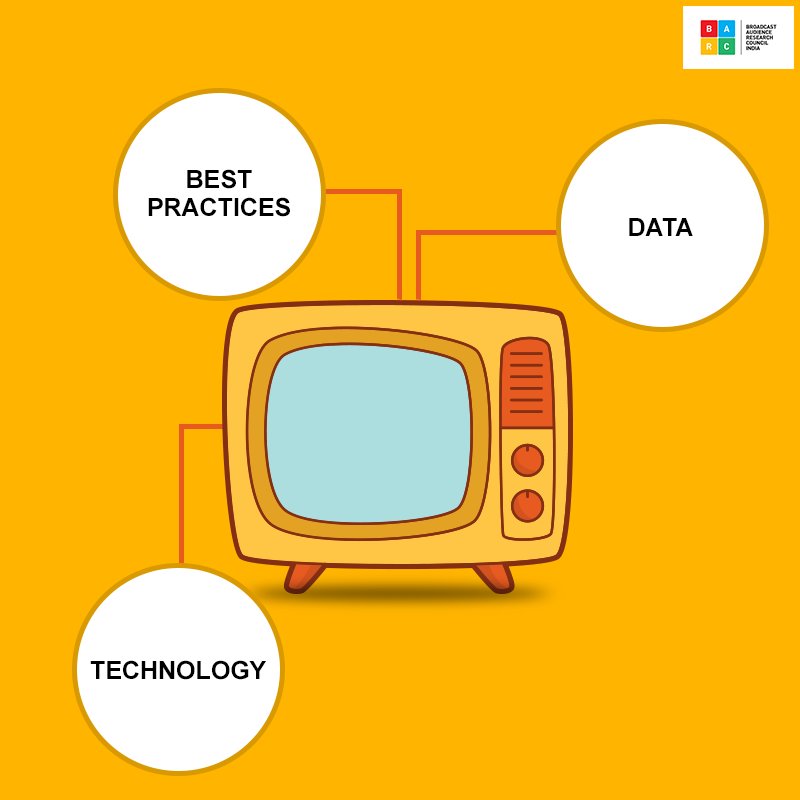
    That an organisation like BARC India, a joint venture amongst the Indian Broadcasting Foundation, The Indian Society of Advertisers (ISA) and The Advertising Agencies Association of India (AAAI), is holding its ground and trying to be real global in terms of best practices, technology used and data is laudable. However, we think its three stakeholders, probably, would do well to come out openly and more strongly in support of such BARC actions.

    Apart from such actions aimed at transparency, the year 2016 could be termed a usual one for the barely two-year-old BARC when its rural data opened up various opportunities for all stakeholders, its on-ground education initiatives bringing in more organisations within its fold for data (it’s not commonplace for government organisations to subscribe to private sector-generated data) and its weekly data itself generating excitement within the industry.

    But looking forward isn’t it time that BARC and its direct stakeholders start thinking of digital measurement?

    It may be argued that consumption of digital media by Indians is just a blip on the viewership radar vs. traditional TV, which still remains to be fully exploited in terms of numbers and reach, but independent digital data is always more credible than those handed out by individual companies.

    In Jan 2016, BARC India ushered in the terminology Impressions’000. A year down the line, Impressions’000 has become synonymous with TV viewership data. While the terminology was introduced keeping in view the long term perspective of digital measurement, it is now time to ask if 2017 should be the year when industry adopts Impressions’000 not only as the sole metric for public reporting of data, but also as the single, universal measure for judging channel/programme performance. There is sufficient justification for all sections of industry to reference Impressions’000 to understand trends or make comparisons.

    Why we making such suggestions? Firstly, the TV viewership ecosystem is growing. In fact when BARC India unveiled All-India (urban +rural) measurement, the TV universe had doubled. Along with this, there has been a year-on-year growth in the number of TV channels — not just at an absolute level, but also at the genre level like Hindi GECs, English GECs, and English Movies. A quick visit to Ministry of Information and Broadcasting website will reveal the increase in number of licensed TV channels and those standing in the queue. However, while such additions of new TV channels to the existing universe are welcome from the point of view of consumer choice, these, inevitably, lead to viewership fragmentation too.

    With an increase in the denominator of TV universe and fragmentation of viewers, it can be argued that growth in viewership is not captured when the same is represented in percentage terms or Ratings%. In fact, referring to Ratings% may give the mistaken notion of a decline, where if one looks at an absolute number of viewers (as represented by Impressions’000), one sees a healthy growth in viewership. This is also validated by the fact that India has witnessed in 2016 launch of many new channels (as well as addition of HD feeds) even in genres where many claim a “decline” was witnessed when seen from the perspective of Ratings% .

    Looking forward, the industry could move to using Impressions rather than Ratings% as the standard of TV viewership. But, as they say, while observers may have views, it’s the professionals – who are actually carrying out their businesses using BARC data – who know the best.

    Considering BARC is an audience measurement organistaion, what ratings/impressions should it get for 2016? We feel its thumbs up….but many challenges remain.
  • BARC India gets thumbs up for 2016…but challenges remain

    BARC India gets thumbs up for 2016…but challenges remain

    In the early part of the 2000 decade, Indians – still trying to settle down under a Bharatiya Janata Party (BJP)-led government at New Delhi with AB Vajpayee as the PM – always expected something unusual. And, journalists on the media beat were no exceptions. But it even took such scribes by surprise when many of them received an unmarked envelope. Inside was a list of all homes in which the then TV audience measurement company had installed peoplemeters to collect data on viewing patterns. The hint was clear: peoplemeter homes can be breached and, hence, viewership data could be manipulated.

    A small caveat and reference to the context needs to be added here: around that time, Star TV India having sunk in millions of dollars over the past decade was riding a wave of stupendous rise in terms of revenue, reach and viewership — all on the back of the success of the Amitabh Bachchan-hosted game-show Kaun Banega Crorepati. Other TV channels not only felt the heat, but had been seeing their bottomlines turn scarlet. And nothing they did on the programming front helped them change that colour. Panicking, they settled on attacking the credibility of the edifice that provided agencies and advertiserswith data to negotiate prices on advertising on the channels. A CEO of one of the top four GECs then called indiantelevision.com and told us that he could provide us the peoplemeter household details, if we were interested.

    The peoplemeter list incident was reported by media in few places and soon everything was forgotten. It was life as usual in an industry that believed then more in status quo rather than push for fresh changes and transparency.

    Cut to 2016. When in the third week of November the barely two-year-old Broadcast Audience Research Council (BARC), India’s current TV audience measurement company, in an unprecedented move conveyed to its subscribers that it was suspending for a four-week period the measurement process of three television channels there were ripples in the industry.

    The shockwaves, medium size on the Richter scale, if one can use that terminology, however, didn’t go unnoticed or unreported. Shock was more because of the fact that such moves by an industry body are few and far between in India and rarer in the television and entertainment industry, which has been the target of various allegations, starting from slush funding of movies, under-reporting of incomes by film and TV stars, the rampant casting couch and manipulation of data, amongst others.

    Why are we getting anecdotal — and being anecdotal and its criticism is a buzzword these days — for a year-ender piece on BARC? Simply because it’s one of the highlights of 2016 — a push, albeit minor, for more transparency, credibility of an organisation and the work it does.

    Though some critics would say BARC may have jumped the gun in show-causing the three news channels, it goes on to impress on the stakeholders of BARC, and the TV industry in general, that the status quo is likely to be shaken up and which could be good for the whole industry. That the three news channels pulled up by BARC got interim relief from the courts is another story.

    That an organisation like BARC India, a joint venture amongst the Indian Broadcasting Foundation, The Indian Society of Advertisers (ISA) and The Advertising Agencies Association of India (AAAI), is holding its ground and trying to be real global in terms of best practices, technology used and data is laudable. However, we think its three stakeholders, probably, would do well to come out openly and more strongly in support of such BARC actions.

    Apart from such actions aimed at transparency, the year 2016 could be termed a usual one for the barely two-year-old BARC when its rural data opened up various opportunities for all stakeholders, its on-ground education initiatives bringing in more organisations within its fold for data (it’s not commonplace for government organisations to subscribe to private sector-generated data) and its weekly data itself generating excitement within the industry.

    But looking forward isn’t it time that BARC and its direct stakeholders start thinking of digital measurement?

    It may be argued that consumption of digital media by Indians is just a blip on the viewership radar vs. traditional TV, which still remains to be fully exploited in terms of numbers and reach, but independent digital data is always more credible than those handed out by individual companies.

    In Jan 2016, BARC India ushered in the terminology Impressions’000. A year down the line, Impressions’000 has become synonymous with TV viewership data. While the terminology was introduced keeping in view the long term perspective of digital measurement, it is now time to ask if 2017 should be the year when industry adopts Impressions’000 not only as the sole metric for public reporting of data, but also as the single, universal measure for judging channel/programme performance. There is sufficient justification for all sections of industry to reference Impressions’000 to understand trends or make comparisons.

    Why we making such suggestions? Firstly, the TV viewership ecosystem is growing. In fact when BARC India unveiled All-India (urban +rural) measurement, the TV universe had doubled. Along with this, there has been a year-on-year growth in the number of TV channels — not just at an absolute level, but also at the genre level like Hindi GECs, English GECs, and English Movies. A quick visit to Ministry of Information and Broadcasting website will reveal the increase in number of licensed TV channels and those standing in the queue. However, while such additions of new TV channels to the existing universe are welcome from the point of view of consumer choice, these, inevitably, lead to viewership fragmentation too.

    With an increase in the denominator of TV universe and fragmentation of viewers, it can be argued that growth in viewership is not captured when the same is represented in percentage terms or Ratings%. In fact, referring to Ratings% may give the mistaken notion of a decline, where if one looks at an absolute number of viewers (as represented by Impressions’000), one sees a healthy growth in viewership. This is also validated by the fact that India has witnessed in 2016 launch of many new channels (as well as addition of HD feeds) even in genres where many claim a “decline” was witnessed when seen from the perspective of Ratings% .

    Looking forward, the industry could move to using Impressions rather than Ratings% as the standard of TV viewership. But, as they say, while observers may have views, it’s the professionals – who are actually carrying out their businesses using BARC data – who know the best.

    Considering BARC is an audience measurement organistaion, what ratings/impressions should it get for 2016? We feel its thumbs up….but many challenges remain.
  • India-Eng test catalyses Star Sports’ top viewership

    India-Eng test catalyses Star Sports’ top viewership

    MUMBAI: Star Sports Network continued its domination over Broadcast Audience Research Council (India) ratings in the penultimate week of the year. The 51-week data for the sports genre placed Star Sports 3 on the top spot in the channels’ ratings, to be followed by Star Sports 1. It is clear that these numbers have been obtained by the recently-concluded India-England test series, which saw the home team winning 4-0 after Karun Nair and R Jadeja’s exploits in the final test.

    Star Sports 3 was beaming the India-England fifth test live in Hindi, and got a total of 190571 impressions. Collated on an all India basis with 4+ audiences, the ratings proved that Test cricket, when exciting, will ensure good viewership. The second spot was owned by Star Sports 1 with 152792 impressions, a channel which broadcast the match with English commentary. In the third and fifth place were Ten network’s Ten 1 and Ten 2 with 9477 and 14031 impressions, respectively. The fourth spot was held by Star Sports 2, which got a total of 45625 impressions.

    The period in consideration is 17 December to 23 December and the last test was played from 16 December at Chennai. It was a mammoth innings from Karnataka batsman Karun Nair, who scored a record-breaking 303. The third day of the test saw Karun scoring the bulk of his runs, with Lokesh Rahul also getting out on a heart-breaking 199. The batting testimony got the highest viewership in terms of programs as the third day got 3013 impressions on Star Sports 3.

    The fourth day of the fifth test stood second, with 2978 impressions. Karun Nair had completed his triple century on this day, breaking several records on the way. The third spot went to the final day of the test with 2478 impressions, which saw Ravinder Jadeja picking up seven wickets to derail England batting and win the test. Both the second and third highest viewership were garnered on Star Sports 3.

    In the fourth spot is WWE Roadblock, featured on Ten 1. The program got 2390 impressions. The fifth and the final spot was sealed by the India-England series, garnering a healthy 2220 impressions on Star Sports 1. Star Sports network have benefited a lot from this highly exciting test series, getting good numbers in the last two tests which India won handsomely.

  • India-Eng test catalyses Star Sports’ top viewership

    India-Eng test catalyses Star Sports’ top viewership

    MUMBAI: Star Sports Network continued its domination over Broadcast Audience Research Council (India) ratings in the penultimate week of the year. The 51-week data for the sports genre placed Star Sports 3 on the top spot in the channels’ ratings, to be followed by Star Sports 1. It is clear that these numbers have been obtained by the recently-concluded India-England test series, which saw the home team winning 4-0 after Karun Nair and R Jadeja’s exploits in the final test.

    Star Sports 3 was beaming the India-England fifth test live in Hindi, and got a total of 190571 impressions. Collated on an all India basis with 4+ audiences, the ratings proved that Test cricket, when exciting, will ensure good viewership. The second spot was owned by Star Sports 1 with 152792 impressions, a channel which broadcast the match with English commentary. In the third and fifth place were Ten network’s Ten 1 and Ten 2 with 9477 and 14031 impressions, respectively. The fourth spot was held by Star Sports 2, which got a total of 45625 impressions.

    The period in consideration is 17 December to 23 December and the last test was played from 16 December at Chennai. It was a mammoth innings from Karnataka batsman Karun Nair, who scored a record-breaking 303. The third day of the test saw Karun scoring the bulk of his runs, with Lokesh Rahul also getting out on a heart-breaking 199. The batting testimony got the highest viewership in terms of programs as the third day got 3013 impressions on Star Sports 3.

    The fourth day of the fifth test stood second, with 2978 impressions. Karun Nair had completed his triple century on this day, breaking several records on the way. The third spot went to the final day of the test with 2478 impressions, which saw Ravinder Jadeja picking up seven wickets to derail England batting and win the test. Both the second and third highest viewership were garnered on Star Sports 3.

    In the fourth spot is WWE Roadblock, featured on Ten 1. The program got 2390 impressions. The fifth and the final spot was sealed by the India-England series, garnering a healthy 2220 impressions on Star Sports 1. Star Sports network have benefited a lot from this highly exciting test series, getting good numbers in the last two tests which India won handsomely.