Tag: BARC India

  • BARC week 30: Aaj Tak continues dominance in Hindi news genre

    BARC week 30: Aaj Tak continues dominance in Hindi news genre

    MUMBAI: The Broadcast Audience Research Council data for week 30 showed Republic TV continuing to dominate the English news genre, whereas Aaj Tak led in Hindi genre. CNN News18 was at fourth position this week, meanwhile, NDTV 24×7 replaced Mirror now in English news genre.  

    English News

    Arnab Goswami’s Republic TV stood unbeaten at top position in English news genre with 837 impressions as compared to 1057 impressions (000s) sum last week. Times Now maintained its second position with 806 impressions (000s) sum followed by India Today Television at third position with 377 impressions (000s) sum. Meanwhile CNN News 18 jumped up to fourth position with 243 impressions (000s) sum as compared to 201 impressions (000s) sum last week. This week NDTV 24×7 replaced Mirror Now at fifth position with 217 impressions (000s) sum.  

    English Business News

    CNBC TV18  maintained its top position in English business news genre with 644 impressions (000s) sum as compared to 673 impressions (000s) sum, followed by ET Now and BTVI at second and third positions with 169 impressions (000s) sum and 119 impressions (000s) sum. CNBC TV 18 Prime HD was at fourth position with 28 impressions  (000s) sum as compared to 16 impressions (000s) sum.

    Hindi News (U+R)      

    Aaj Tak continued to rule over Hindi news genre with 164150 (000s) sum impressions as compared to 150333 impressions (000s) sum last week. Zee News maintained its second position with 107966 impressions (000s) sum whereas India TV and ABP News were at third and fourth positions with 107597 impressions (000s) sum and 106482 impressions (000s) sum. News18 India was at fifth position with 101417 impressions (000s) sum as compared to 93105 impressions (000s) sum.

    Hindi News Rural  

    Aaj Tak also continued to to dominate in Hindi news (R) with 76189 impressions (000s) sum as compared to 69245 impressions (000s) sumlast week. ABP News maintained its second position this week with 48687 impressions (000s) sum, followed by India TV and Zee News at third and fourth positions with 42769 impressions (000s) sum and 40780 impressions (000s) sum. News Nation was at fifth position with 40241 impressions (000s) sum as compared to 38263 impressions (000s) sum last week.     

    Hindi News Urban
    Aaj Tak maintained its top position in Hindi news genre (U) with 87961 impressions (000s) sum as compared to 81078 impressions (000s) sum. Zee News maintained its second position with 67186 impressions (000s) sum followed by India TV and News18 India at third and fourth positions with 64827 impressions (000s) sum and 61301 impressions (000s) sum. ABP News maintained its fifth position with 57795 impressions (000s) sum.

  • IAA Leadership Award announced winners for sixth edition

    IAA Leadership Award announced winners for sixth edition

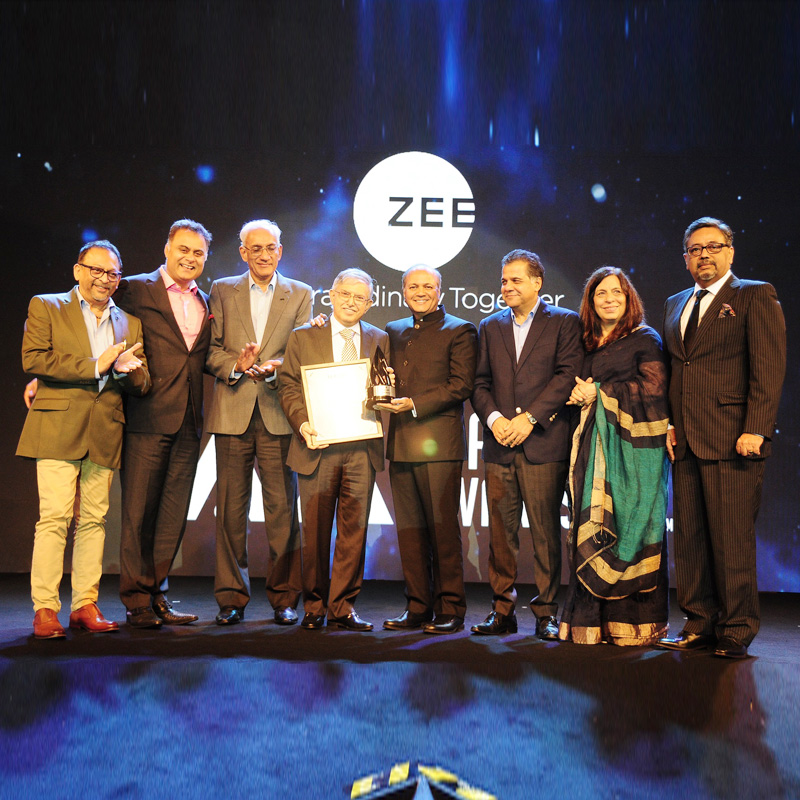
    MUMBAI: The International Advertising Association (IAA) organised the sixth edition of IAA Leadership Awards 2018.

    IAA president Ramesh Narayan said, “A unique power-packed event, we have with us advertisers, media, corporates all assembled to salute excellence in leadership. This is very inspirational. India chapter has been leading from the front to name a few initiatives #WorktoLivetoWork, IAA Mentorship for Women, IndIAA Regional Awards, Reigniting the Artist and Storyteller in you, IAA Olive Crown Awards, IndIAA national awards and for the first time in 80 years we have IAA World Congress being hosted in Kochi in February 2019.”

    A panel discussion was moderated by Partho Dasgupta, CEO, BARC India with eminent panellists –Sanjay Behl CEO Raymond, Shashi Sinha, CEO of IPG MediaBrands and Prathyusha Agarwal, chief marketing officer, ZEEL on television medium being a strong influencer. Sanjay touched upon the importance of reach, intensity and quality. Prathyusha mentioned how emotionally invested and involved people are when they see television and with the coming of Digital the loop can now be closed. Shashi Sinha urged marketers to explore as he was of the strong opinion that television is still under-utilised and holds immense potential.

     “TV today reaches 836 million individuals across India, we as Indians still are TV fanatics. People are spending 4 hours on TV in the South of India. Almost 12 hours of advertising gets telecasted in India. Hindi content is still ruling, 688 million viewers are watching GEC serials while at a similar number 680 million are watching movies which is a higher number than people who watch movies in the theatre. Sport as a genre is also going up. Overall, I would say TV is the biggest dominant medium today and will continue to grow,” said Dasgupta.

    Piramal Group chairman Ajay Piramal was honoured as the IAA Business Leader of the Year. He said “I am honoured to receive the Business Leader of the Year Award 2018 by International Advertising Association. At Piramal Group, our deep driving desire has been our values of knowledge, action, care and impact. This value-driven path has helped us create value for the group and our stakeholders, and provides us with a purpose of ‘Doing Well and Doing Good’. As trustees, we act in the best interest of all our stakeholders, to create mutual, enduring value; and make a positive difference to the world around us.” 

    IAA India inducted Sam Balsara into the IAA Hall of Fame for doing so much more than just founding and building a great communication company. Membership to the Indian Chapter of IAA is by invitation only and IAA has very senior marketing, advertising and media professionals as it members.  IAA in India is seen as the most active chapter by IAA Global. IAA India is well-recognized for some of its marquee events like the IAA Leadership Awards, IAA Olive Crown Awards, IAA Debates, IAA Conversations, IAA Young Turks Forum and an array of IAA Knowledge Seminars, Webinars, Workshops, Conclaves etc.

  • Bengali market gross viewership increased in BARC week 29

    Bengali market gross viewership increased in BARC week 29

    MUMBAI: Star continues to rule the south regions – Malayalam and Telugu with channels Asianet and Star Maa, while ZEEL’s regional channels Zee Bangla and Zee Marathi continue to rule their respective languages of Bengali and Marathi with Zee Bangla and Zee Marathi after BARC released its ratings for week 29. This week Colors Bangla didn’t do well and came down to fifth position, but in the Tamil market, Colors Tamil came as a new entrant. There wasn’t much change in the hierarchy for Bhojpuri, Kannada and Tamil with Big Ganga, Colors Kannada and Sun TV retaining their top slots.

    Bangla

    Zee Bangla continued to be placed in number one position in week 29 with an increase in viewership from 276815 impressions (000s) as recorded last week to 306953 impressions (000s) this week. Star Jalsha too remained in the second slot with 299539 impressions (000s) followed by Jalsha Movies, who maintained its third slot with 74170 impressions (000s). Colors Bangla and Aakash Aath exchanged their fourth and fifth positions this week with 56003 impressions (000s) and 59257 impressions (000s) respectively. This week, all channels in this market saw an increase in the viewership as compared to last week.

    Bhojpuri

    This week, Big Ganga managed to gain the highest number of viewership with 47281 impressions (000s), while Bhojpuri Cinema came second with 45442 impressions (000s), followed by Bhojpuri Dhamaka Dishum with 7230 impressions (000s). Mahuaa Plus climbed to fourth position from fifth with 2333 impressions (000s). Oscar Movies Bhojpuri came as a new entrant this week with impressions 1908 impressions (000s).

    Kannada

    Kannada region remained unchanged this week as well. Colors Kannada retained its top position but saw a decrease in viewership from 414372 impressions (000s) as recorded last week to 403690 impressions (000s) of this week. Zee Kannada and Star Suvarna retained their second and fifth positions with 382100 impressions (000s) and 151063 (000s) respectively. Udaya Movies and Udaya TV swapped their third and fourth positions this week with 228477 impressions (000s) and 2237431 impressions (000s) respectively.

    Malayalam

    Asianet, the Malayalam general entertainment channel of Star TV retained its first position this week as well with 299541 impressions (000s). Flowers TV got dragged down to fourth position from second position with 85860 impressions (000s) while Mazhavil Manorama crawled up to second position with 90247 impressions (000s). Surya TV and Asianet Movies retained their third and fifth positions this week with 86420 impressions (000s) and 75016 (000s) impressions respectively.

    Marathi

    This week, the Marathi market didn’t notice any change. Zee Marathi remained steadfast in the number one position with 279070 impressions (000s). Zee Talkies gained second position with 154940 impressions (000s) followed by Colors Marathi, Star Pravah and Zee Yuva in third, fourth and fifth positions with 145457 impressions (000s), 116852 impressions (000s) and 59103 impressions (000s) respectively. This week all the channels in this market saw an increase in viewership.

    Tamil

    Tamil market saw a slight change this week. Star Vijay, Zee Tamil and KTV retained their second, third and fourth positions with 496816 impressions (000s), 447840 impressions (000s) and 320731 impressions (000s). Sun TV retained its top position with a gross viewership of 1004673. This week Colors Tamil gained fifth position dethroning Sun Life with 78973 impressions (000s).

     Telugu

    Telugu region didn’t notice any change this week. Star Maa, Zee Telugu, ETV Telugu and Gemini TV retained their first, second, third and fourth positions with total viewership of 630131 impressions (000s), 545142 impressions (000s), 490403 impressions (000s) and 424919 impressions (000s) respectively. Gemini Movies also retained its fifth position with 200644 impressions (000s). This week all the channels in this region saw an increase in their gross viewership.

  • BARC week 29:  Zee News replaces News18 India in Hindi news rural

    BARC week 29: Zee News replaces News18 India in Hindi news rural

    MUMBAI: The Broadcast Audience Research Council data for week 29 showed Republic TV continuing to dominate the English news genre, whereas Aaj Tak led in Hindi genre. Zee News replaced News18 India in Hindi news Rural.

    English News

    Arnab Goswami’s Republic TV stood unbeaten at top position in English news genre with 1057 impressions (000s) sum as compared to 777 impressions (000s) last week. Times Now found itself at second position with 970 impressions (000s) sum, followed by India Today Television at third position  with 293 impressions (000s) sum. Mirror Now and CNN News 18 maintained their fourth and fifth positions with 265 impressions (000s) and 201 impressions (000s) sum.

    English Business News

    CNBC TV18 maintained its top position with 673 impressions (000s) sum as compared to 537 impressions (000s) sum last week. ET Now is in second position with 212 impressions (000s) sum.  BTVI and CNBC TV 18 Prime HD maintained their third and fourth positions with 77 impressions (000s) sum and 16 impressions (000s) sum.

    Hindi News (U+R)

    Aaj Tak stood at first position with 150333 impressions (000s) sum as compared to 125034 impressions (000s) sum last week. Where as  Zee News is at second position  with 103078 impressions (000s) sum, followed by India TV at third position with 101256 impressions (000s) sum. ABP News stepped down to fourth position with 94355 impressions (000s) sum as compared to 85738 impressions (000s) sum last week. News18 India maintained its fifth position with 93105 impressions (000s) sum.     

    Hindi News Rural

    Aaj Tak continued to dominate in Hindi news (R) with 69245 impressions (000s) sum as compared to 54097 impressions (000s) sum last week. ABP News maintained its second position this week with 45859 impressions (000s) sum. India TV is at third position with 39560 impressions (000s) sum. Zee News replaced News18 India at fourth position with 39264 impressions (000s) sum. News Nation stepped down to fifth position with 38263 impressions as compared to 32969 impressions (000s) sum last week.

    Hindi news urban

    Aaj Tak maintained its top position in Hindi news genre (U) with 81078 impressions (000s) sum as compared to 70936 impressions (000s) sum last week.  Zee News maintained its second position with 63814 impressions (000s) sum, followed by India TV and News18 India at third and fourth positions with 61697 impressions (000s) sum and 54989 impressions (000s) sum. ABP News maintained its fifth position with 48496 impressions (000s) sum.

  • TV homes up by 7.5%, total TV viewership up by 12%

    MUMBAI: The Broadcast Audience Research Council of India (BARC) has released the findings of its Broadcast India (BI) 2018 Survey, based on a sample study of 3 lakh homes in the country. As per the latest findings, TV homes in the country has seen a 7.5 per cent jump, outpacing the growth of homes in India which grew at 4.5 per cent.

    India currently boasts of 298 million homes, of which 197 million have a TV set, having an opportunity of almost 100 million more TV homes in the country. 

    Two big takeaways from BI 2018 survey is the rise of the middle class and the increase in the number of flat TV screens. As per the survey, with 123 million TV homes belonging to the middle class, NCCS B & C accounts for 63 per cent of TV homes in India.

    Together NCCS ABC or the affluent TV owning homes form 84 per cent of TV homes in the country. The fact that homes falling under the low-socio economic class (NCCS D/E) have seen a 13 per cent drop, highlights the improving disposable income of an Indian home and is in line with the rising economic growth and prosperity.

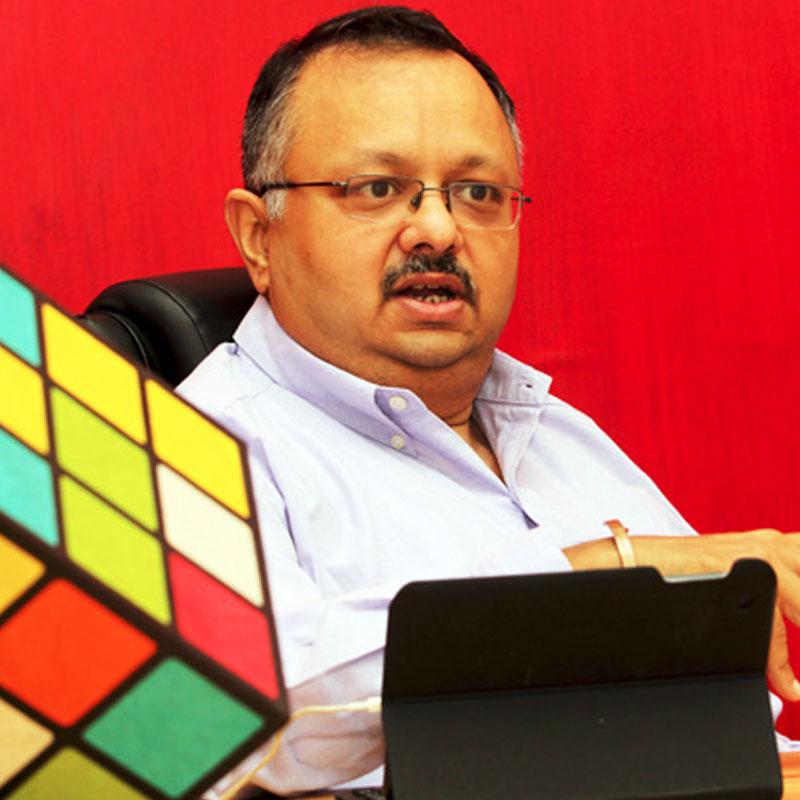
    BARC India CEO Partho Dasgupta said, “With BI 2018 we have been able to showcase the changing face of India. However, what hasn’t changed is the fact that TV remains the most effective platform for both content creators and advertisers to reach their audiences. This years’ survey is also special to us since we have been able to bring it in-house. We have been investing heavily on technology and talent and moving this almost entirely in-house is a proof of our capabilities.”

    Some interesting trends that have emerged with BI 2018 Survey are:

    ·   Number of TV viewing individuals grew by 7.2 per cent to 836 million from the previous 780 million. However, viewership increase in week 29 vs Previous 4 weeks is 12 per cent.

    ·   TV homes in urban and rural India grew by 4 per cent and 10 per cent respectively. Viewership uptake in urban India is 10 per cent, while that in rural India is 13 per cent. 

    ·   The average time spent (ATS) by TV viewing individuals too has seen a 3 per cent growth and currently stands at 3 hours 44 minutes. This is driven by urban which has seen an increase of 5 per cent in ATS (4 hours 06 min), ATS in rural India has grown by 2 per cent and stands at 3 hours 27 minutes.

    ·   Both HSM and South markets have seen a spike in viewership. HSM saw an increase of 12 per cent, while South grew by 10 per cent in week 29. 

    ·   The male-female split of TV owning individuals as per BI 2018 is: 429 million-407 million. Male viewers grew by 6.9 per cent, while female viewers saw a growth of 7.5 per cent over BI 2016. 

    ·   In terms of viewership, in week 29, male viewership has seen a 11 per cent growth, while female viewership has increased by 12 per cent.

    ·   Viewership contribution of the affluent class (NCCS AB) grew by 15 per cent.

    ·   The daily TV tune-ins in week 29 saw a healthy growth of 8 per cent and currently stands at 614 million viewers. The previous 4-week average was 569 million viewers. 

    “As for the trends, BARC India has maintained that India is a country which is driven by family viewing and this shows in the increase in the number of TV households. With a penetration of just 66 per cent, there is still a huge scope of growth in the space,” Dasgupta added. 

  • BARC India: TV homes up by 7.5%, total TV viewership up by 12%

    BARC India: TV homes up by 7.5%, total TV viewership up by 12%

    MUMBAI: The Broadcast Audience Research Council of India (BARC) has released the findings of its Broadcast India (BI) 2018 Survey, based on a sample study of 3 lakh homes in the country. As per the latest findings, TV homes in the country has seen a 7.5 per cent jump, outpacing the growth of homes in India which grew at 4.5 per cent.

    India currently boasts of 298 million homes, of which 197 million have a TV set, having an opportunity of almost 100 million more TV homes in the country. 

    Two big takeaways from BI 2018 survey is the rise of the middle class and the increase in the number of flat TV screens. As per the survey, with 123 million TV homes belonging to the middle class, NCCS B & C accounts for 63 per cent of TV homes in India.

    Together NCCS ABC or the affluent TV owning homes form 84 per cent of TV homes in the country. The fact that homes falling under the low-socio economic class (NCCS D/E) have seen a 13 per cent drop, highlights the improving disposable income of an Indian home and is in line with the rising economic growth and prosperity.

    BARC India CEO Partho Dasgupta said, “With BI 2018 we have been able to showcase the changing face of India. However, what hasn’t changed is the fact that TV remains the most effective platform for both content creators and advertisers to reach their audiences. This years’ survey is also special to us since we have been able to bring it in-house. We have been investing heavily on technology and talent and moving this almost entirely in-house is a proof of our capabilities.”

    Some interesting trends that have emerged with BI 2018 Survey are:

    ·   Number of TV viewing individuals grew by 7.2 per cent to 836 million from the previous 780 million. However, viewership increase in week 29 vs Previous 4 weeks is 12 per cent.

    ·   TV homes in urban and rural India grew by 4 per cent and 10 per cent respectively. Viewership uptake in urban India is 10 per cent, while that in rural India is 13 per cent. 

    ·   The average time spent (ATS) by TV viewing individuals too has seen a 3 per cent growth and currently stands at 3 hours 44 minutes. This is driven by urban which has seen an increase of 5 per cent in ATS (4 hours 06 min), ATS in rural India has grown by 2 per cent and stands at 3 hours 27 minutes.

    ·   Both HSM and South markets have seen a spike in viewership. HSM saw an increase of 12 per cent, while South grew by 10 per cent in week 29. 

    ·   The male-female split of TV owning individuals as per BI 2018 is: 429 million-407 million. Male viewers grew by 6.9 per cent, while female viewers saw a growth of 7.5 per cent over BI 2016. 

    ·   In terms of viewership, in week 29, male viewership has seen a 11 per cent growth, while female viewership has increased by 12 per cent.

    ·   Viewership contribution of the affluent class (NCCS AB) grew by 15 per cent.

    ·   The daily TV tune-ins in week 29 saw a healthy growth of 8 per cent and currently stands at 614 million viewers. The previous 4-week average was 569 million viewers. 

    “As for the trends, BARC India has maintained that India is a country which is driven by family viewing and this shows in the increase in the number of TV households. With a penetration of just 66 per cent, there is still a huge scope of growth in the space,” Dasgupta added. 

  • Chrome DM services help optimise viewership ratings: Pankaj Krishna

    Chrome DM services help optimise viewership ratings: Pankaj Krishna

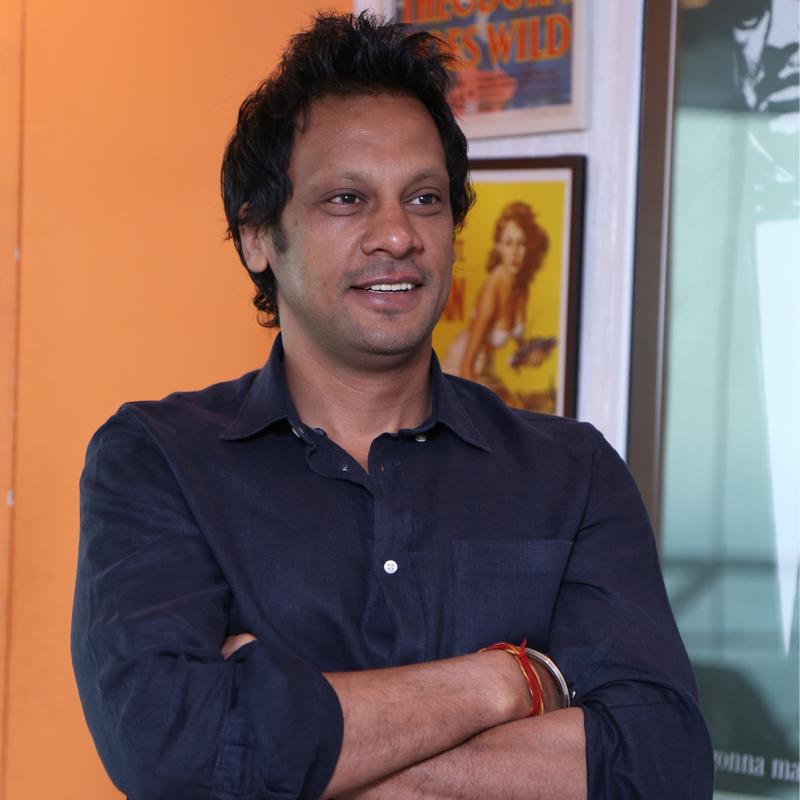
    As you walk into the Chrome Data Analytics & Media’s office on the outskirts of Delhi, you see the company chief executive Pankaj Krishna ‘talking to himself’ in the wide-glass paned conference room. Only after being ushered in, you realise, he’s actually holding a business conversation with his colleague in the Mumbai office whose live images also appear on the big TV screen placed in the room. “This connection is always ‘live’ so any issue can be discussed asap,” he informs languidly, pushing back the chair’s backrest to the maximum.

    For a technology-driven market research and advisory firm with a pan-India on-ground presence and a list of clients that include Indian and global companies, apart from a prominent political party, Krishna looks less like a chief executive and more like a person out on a beach holiday. His hair pulled back in a casual pony-tail, and clad in a stylishly crumpled linen shirt, cotton trousers and kohlapuri chappals, he seems out of place in an office that’s buzzing with activity and some serious data analytics. “Just returned to office some time back after being up the whole night in the office with the masons, plumbers, etc. trying to get the main washroom relocated and refurbished according to Vaastu (the Indian system of architecture),” the man offers an explanation apologetically. Huh!!?? Probably, that’s also an indication of the nature of the person that he likes to get involved in even the smallest details of business.

    As of late 2017, the organisation had a team of big team of field staff, 150+ managerial staff and 450 tele-callers speaking over 22 languages to gather data from over 3,000 towns. With a major presence in villages too, Chrome DM also has a fairly expansive reach into rural India. That’s what the company website states. Krishna adds that there could be some small changes in those numbers as the company forays into new verticals (human resources placements, for example) and targets new avenues to monetise the huge amount of data that’s collected on a daily basis. So, you can very well be India’s Cambridge Analytica, one asks him cheekily. Without batting an eyelid, Krishna guffaws and counters: “Yes certainly, but minus the data leaks. We are very particular about data protection.”

    Chrome DM’s office on the eight floor of a building overlooking the expressway connecting the industrial hub of Noida to Delhi offers a great view, especially from Krishna’s personal office adjacent to the conference room. The vastness of the view also compares with the vision with which the company had been set up to do research, offer advisory and indulge in data crunching for an expanding list of clients — many of them from India’s billion-dollar broadcast and cable sectors.

    Indiantelevision.com engages Krishna, a first-generation entrepreneur, on a variety of issues ranging from TV audience-related research, dual LCNs, piracy of TV signals, India’s ongoing digitisation of TV services and data analytics. Excerpts from the interview:

    How would you describe what Chrome DM does?

    Chrome DM is a tech driven primary research and data analytics advisory catering to over 450 clients (broadcasting, FMCG, policy, government organisations, etc.) with over 1,000 data collection executives (field and tele-calling) covering 3,300 towns and 315,000 villages in India.

    Chrome DM has two major verticals: broadcast and media solutions (B&MS), and consumer and brand analytics (CBA). B&MS operates in real-time distribution tracking and monitoring and content research. CBA offers quantitative and qualitative research to brands in the form of primary surveys, retail audits, focus groups and campaign assessments.

    Is the company also into TV audience and viewership measurement?

    The company acts as an advisory for its broadcasting clients to optimise viewership ratings through efficient distribution practices and qualitative content research through its proprietary tools.

    How is the company different from BARC India, which measures what India watches and its numbers are used as benchmarks?

    Chrome DM is not in the viewership ratings space, but in the advisory space to enhance the same. We provide actionable data into optimising distribution, content and FPC practices, which have a direct bearing on ratings. Additionally, there are fundamental differences in sampling methodologies from what BARC India follows. Chrome operates in real time tracking through its proprietary Chrome Boxes, installed at respondents’ homes, offered to broadcasting clients as Chrome Live. However, that does not mean we do not respect what BARC does.

    Are all the services paid-only services?

    Chrome DM’s products are a mix of subscription services and one-time cost offerings.

    What are the new services/initiatives being launched by the company?

    Chrome DM is launching Chrome Live, an unprecedented service that lets broadcasters watch what the audience is watching while they are watching it. The technology, developed in-house, uses proprietary ChromeBox (patent is pending registration) installed at the respondent end that enables access to the respondent’s TV screen. This live access to the screen is complimented by advanced data analytics to create a one-stop, fully automated broadcasting solutions. The same is used as part of the advisory B&M services, which help in optimising channel spends towards maximising ratings 

    How does live tracking work and in what way such data would benefit a TV channel or a subscriber of the service?

    Live tracking lets broadcasters know in real time the effect of their distribution practices, content planning and air presentation on audiences. It also helps TV channels to identify areas where piracy is being done and helps taking precautionary measures. It could also help government organisations in understanding how’s and when’s of piracy of TV signals and other maladies prevalent in the industry and help them in cracking the regulatory whip for the benefit of the industry at large.

    (A demo given during the interview showed how on a particular day around 12.45 pm, a popular Hindi GEC was being aired illegally to the subscribers of a cable network in a Bihar town. After the LCO had been switched off by the broadcaster owing to some differences, the LCO was downloading signals of the said TV channel from a DTH platform and illegally relaying it on his network for its subscribers. Even the logo of the DTH platform could be seen on the TV screen via the ChromeBox installed on consumer premises. The routine was repeated for another GEC and this time the piracy was happening in a small town of Uttar Pradesh.)   

    If the owners and managers of the two TV channels shown for your benefit here could get hold of such an information on real time basis, then it would help them a lot in identifying the trouble spots and take corrective measures immediately.

    Has live tracking service being formally commissioned and how many clients are there at present?

    Chrome Live has just been launched and already been subscribed by some of the major broadcasting companies across genres. We are also in the process of closing negotiations with the remaining existing clients. As a value proposition, Chrome Live is the future of distribution, content and on-air- presentation (OAP) monitoring.

    Are Chrome DM data services mobile app based or can be tracked/accessed by a client in a traditional way on his/her desktop?

    The service comes in the form of a comprehensive web dashboard as well as an Android and iOS technology, as we prefer to call them. The technology is just one of the interfaces our clients can access Chrome Live on. Incidentally, the tech itself is a global first, and a mix of proprietary software and hardware. Clients can log on to the web dashboard at chromelive.in and access the technology on Google Playstore too.

    Is the analysis of data done in-house or outsourced to a third-party vendor? How is data protection ensured considered Chrome would be sitting over huge amount of consumer data?

    The analytics division is 100 percent in-house with a 150+ strong data analytics team. All data collected is anonymous and securely encrypted. The data is also collected with the express consent of respondents so nobody can accuse of mining data illegally.

    How is generating and analysing TV-related data different from, say, data/analysis done for a political party?

    While the nature of projects remains very different, the guiding principle of reducing human error and turn-around time by introducing technology remains the same. Often, learning from one leads to procedural improvements in the other.

    What, according to you, are some of the ills affecting the distribution of TV services in India?

    A lack of transparency, even after the introduction of digitisation, remains the foremost concern. In analog feeds, we have seen under-declaration of subscribers. Piracy remains rampant. Multiple subscriber management systems in the digital MSO space, akin to keeping two books of records, is also witnessed. 

    Hasn’t ongoing digitisation of TV services brought about more transparency in the whole eco-system or is the system still as opaque as before?

    Yes, and no. Chrome Live registers some 34,000 fluctuations every week on the ground. These could be anything from LCN change to channels being switched off/on. But we also see majorly analog markets, like Tamil Nadu and parts of Andhra Pradesh, along with smaller pockets of other states, which have so far resisted the digitisation process.

    As many TV companies and even distribution platforms now have in-house anti-piracy units, do you think the practice of piracy has gone down?

    Curbing piracy will always be a function of effective monitoring of the feed at the audience end. Chrome DM monitors 3,300 unique feeds on a daily basis, and we see that piracy remains a consistent practice. In a recent week, we had 173 instances of piracy being caught by our data collection team.

    How rampant is the use of dual LCN?

    According to Chrome Live, there were some 1,433 instances of dual LCN across all genres across the country in our Week 28, for example. Of these, TV channels falling in the genre of tele-shopping, Hindi GEC, Hindi movie, Hindi news and kids were the top five genres where dual LCNs were employed.

    Did regulator TRAI’s ban on employing dual LCN impact the industry?

    As stated earlier, with 1,433 instances of dual LCN in a single week, the practice is obviously prevalent. The objective of dual LCN is to monetise the simplest law of probability on the ratings. Of the over 1,250 channels we monitor, the fight is for the 106 channels in analog or approximately 300 in digital realm. This difference in supply and demand is made worse by dual LCNs. The practice is mostly seen during blockbuster events like presentation of Union Budget (for business news genre) and during new launches as part of the channel’s marketing exercise. 

    As the data that the company generates relating to TV services are based on sample sizes, how many boxes are actually seeded in the market?

    Chrome operates on a census-based distribution monitoring service — there are over 3,400 unique cable feeds (parent + child) — and we monitor each and every one of them. Of the 183.7 million cable and satellite TV households (Urban+Rural, ChromeTrack 2.0, May 2018), Chrome DM covers 119.8 million households.  

    Are there plans to ramp up number of boxes as the total number of TV HHs have gone up?

    Absolutely. As I mentioned, this is a real time track of distribution, OAP and programming. We have a long way to go, and the seeding process will continue going strong in the foreseeable future.

    Are the Chrome Boxes made in India or imported from East Asian countries like most other such boxes?

    Majority of the boxes have been indigenously created, with small parts being sourced from markets like Taiwan and China.

    How much of the tech in the boxes proprietary?

    The software and hardware have been designed and developed in-house and third-party vendors have been commissioned for manufacturing of boxes for large-scale seeding.

    As the company expands, investments are needed. How are funds being raised and how much does the company plan to invest in the current FY on expansion, technology and manpower?

    The business itself is hugely profitable, so we have enough working capital being generated. Most of the major investments have been into R&D, technology, including setting up and expanding the in-house tech team, and shoring up infrastructure like the seeding of boxes. These investments have been promoter driven.

    Are there any plans to take the company public?

    At the moment, there are no conscious plans of doing it. But we are not averse to the idea of exploring the option at the right time.

    Are Chrome DM services available only in India or are they available in other countries too?

    Chrome DM services can be replicated in any market in a cost-effective manner owing to the wealth of experience the team brings in. We’re actively looking at several markets other than India to expand into. Apart from bagging our first international client in the Q3 of last year (Trivago, Germany, for our media planning tool Chrome Optimal), we’re looking for suitable markets in the Middle East, South East Asia and Australia/New Zealand. 
  • Sun Life enters Tamil market in BARC week 28

    Sun Life enters Tamil market in BARC week 28

    MUMBAI: Sun Life, the movie channel by Sun TV Network came as a new entrant this week after Broadcast Audience Research Council (BARC) released its ratings for week 28. ZEEL’s Bengali and Marathi channels Zee Bangla and Zee Marathi continue to rule their respective regions. Star is still ruling the south regions – Malayalam and Telugu through channels Asianet and Star Maa. There wasn’t much change in the hierarchy for Bhojpuri, Kannada and Tamil with Big Ganga, Colors Kannada and Sun TV retaining their top slots

    Bangla

    Zee Bangla continued to be placed in the numero uno spot in week 28 but saw a decrease in viewership from 290285 impressions (000s) as recorded last week to 276815 impressions (000s) this week. Star Jalsha too remained in the second slot with 269241 impressions (000s) followed by Jalsha Movies, Colors Bangla and Aakash Aath, who retained their third, fourth and fifth positions this week with 64568 impressions (000s), 55190 impressions (000s) and 47873 impressions (000s) respectively. This week, all channels in this market saw a decrease in the viewership as compared to last week.

    Bhojpuri

    This week Big Ganga managed to gain the highest number of viewership with 47476 impressions (000s), while Bhojpuri Cinema came second with 42089 impressions (000s). Bhojpuri Dhamaka Dishum and Mahuaa Plus retained their third and fifth slots with 5818 impressions (000s) and 1804 impressions (000s) respectively. News18 Bihar Jharkhand came back in the fourth position dethroning Oscar Movies Bhojpuri with 2391 impressions (000s).

    Kannada

    Kannada region remained unchanged this week as well. Colors Kannada retained its number one slot but underwent an increase in viewership from 389352 impressions (000s) as recorded last week to 414372 impressions (000s) impressions (000s) of this week. Zee Kannada and Star Suvarna retained their second and fifth positions with 331327 impressions (000s) and 156191 (000s) respectively. Udaya TV and Udaya Movies swapped their third and fourth positions this week with impressions 209998 impressions (000s) and 210375 impressions (000s) respectively.

    Malayalam

    Asianet, the Malayalam general entertainment channel of Star TV retained its first position this week as well with 299372 impressions (000s). Flowers TV moved to the second position with 87823 impressions (000s) pusing back Flowers TV to third position with 86495 impressions (000s). Mazhavil Manorama and Asianet Movies swapped their fourth and fifth positions this week with 77405 impressions (000s) and 85909 (000s) impressions respectively.

    Marathi

    This week, the Marathi market didn’t notice any change. Zee Marathi remained steadfast in the number one position with 276783 impressions (000s). Zee Talkies gained second position with 157497 impressions (000s) followed by Colors Marathi, Star Pravah and Zee Yuva in third, fourth and fifth positions with 136974 impressions (000s), 108315 impressions (000s) and 46851 impressions (000s) respectively. But this week most of the channels in this market saw a decrease in viewership.

    Tamil

    Star Vijay, Zee TV and KTV retained their second, third and fourth positions with 442056 impressions (000s), 431969 impressions (000s) and 294428 impressions (000s). Sun TV retained its top position and saw an increase in viewership from 890935 impressions (000s) as recorded last week to 984862 impressions (000s) as of this week. This week Adityha TV was dethroned from the fifth position and Sun Life, a film channel by Sun TV Network came as a new entrant with 70755 impressions (000s).

    Telugu

    Telugu region didn’t notice any change this week. Star Maa, Zee Telugu, ETV Telugu and Gemini TV retained their first, second, third and fourth positions with total viewership of 534453 impressions (000s), 473971 impressions (000s), 404724 impressions (000s) and 195384 impressions (000s) respectively. Gemini Movies also retained its fifth position with 195384 impressions (000s). But this week all the channels in this region saw an increase in their gross viewership.

  • Republic TV complains to TRAI, BARC on Times Now’s genre slotting

    Republic TV complains to TRAI, BARC on Times Now’s genre slotting

    MUMBAI: The ever-competitive business of TV news is set to witness another round of slugfest. Republic TV has complained to Telecom Regulatory Authority of India (TRAI) and Broadcast Audience Research Council (BARC) of India about English news channel Times Now getting the channel re-slotted under Hindi news genre on distribution platforms, which may impact viewership data.

    A letter written by Republic TV earlier this month, reviewed by Indiantelevision.com, accused Times Now of getting some of the distribution platforms to place the channel “among the Hindi news sub-genre” as some of the programmes broadcast had “substantial Hindi content” as claimed by Times.

    “This is a confusing development as BARC will report Times Now [viewership data] as part of the English news channel list,” the Republic complaint highlighted, adding, “if its proximity/neighbourhood is significantly among the Hindi news channels, it stands to distort viewership data.”

    Republic has also exhorted BARC India, which is set to release soon its fresh and updated television-related annual data, to take note of distribution changes relating to Times Now as not an English-language news channel but “preferably” a Hindi channel.

    However, changing of genres to boost sampling among viewers or resorting to dual or multiple LCNs are some issues not new to the Indian broadcast business. Nor is the animosity. that has prevailed between Times Now, former employer of Republic TV’s chief editor Arnab Goswami.

    When Republic TV debuted last year, a clutch of news channels, later backed by News Broadcasters Association (NBA), had alleged the new entrant was resorting to dual LCN or multiple feed tactic to boost viewership. BARC had also been petitioned to suspend publishing of Republic TV’s data.

    Times Now had also taken Goswami, promoter of Republic TV’s parent company, to the courts to desist him from using the phrase `nation wants to know’ claiming IPR over it as it was started when the flamboyant news anchor was with the Times group. Though Republic TV later became a member of NBA, Goswami had taken a swipe at Times Now calling it a cry baby.

    Since then both the TV news channels had been making news off-air, while slugging it out to corner viewers’ attention in a continuing see-saw battle.

    Asked about the issue of multiple feeds-strategy used by TV channels, TV market research company Chrome Data Analytics and Media CEO Pankaj Krishna told Indiantelevision.com that the unethical tactic was “still very much prevalent” despite a directive against it by regulator TRAI.

    “According to Chrome, there were some 1,433 instances of dual LCN across all genres across the country as of last week, Krishna explained, adding, “The practice is mostly seen during blockbuster events like presentation of Union Budget (for business news genre) and during new launches as part of a channel’s marketing exercise. But such tactics have limited time impact.”  

    TV Today Network managing editor Supriya Prasad was of the opinion if a TV channel was resorting to “unethical practices” to boost viewership, then it meant it didn’t have full faith in its own content. Aaj Tak is the leader of Hindi news genre as per BARC India Week 27 data.

    Another industry observer felt as HSM or Hindi-speaking market is a big one, getting slotted in that category in the EPG “opens up reach of a channel”. However, the observer was critical of such attempts to boost reach and viewership: “If an English TV channel is present in the Hindi news genre, simply informing TRAI and the operator to keep within the right side of the law as it was doing small amount of Hindi content is cheating the system. It gains importance if BARC too is not made aware of such a development.”

    It now remains to be seen how the regulator and BARC India will respond to the Republic TV complaint.

  • BARC India plans expansion of metre homes to 44,000 by this FY

    BARC India plans expansion of metre homes to 44,000 by this FY

    MUMBAI: Rural India is getting in the limelight. TV ratings body BroadcastAuidence Research Council (BARC) is expanding metre homes to 44,000 by this financial year.

    BARC India CEO Partho Dasgupta told to the Press Trust of India, ” When we first started measuring TV viewership habits, 30 per cent of our sample TV homes were in rural India. This went up to 33 per cent when we expanded our metres to 33,000. This will further go up to 38 per cent, when we expand the metre homes to 44,000 by end of this financial year. This is a 153 per cent growth in the rural sample.”

    In coming years it will have 55,000 TV homes. “With return path data (RPD), we plan to scale up this number to over 200,000,” he said adding that RPD will also help to curb panel home tampering.

    In 2015 BARC started to roll out the data, where it has seen that the TV viewership is highest among the youth (15-30 year) even in the digital age. It even tied up with Den Network and Airtel Digital TV for RPD and Dasgupta said it is in talks with all the other players.

    The daily tune-ins on TV currently stands at 557 million and the daily average time spent per viewer watching TV is 3 hour 44 minutes.

    The total TV viewership has gone up from 20.4 billion impressions to 28.3 billion impressions, up by 39 per cent.

    Key Hindi genres like Hindi GEC, Hindi movies and Hindi news have gone up by six per cent, 87 per cent and 13 per cent respectively since 2015.

    Viewership for English channels has also gone up from 115 million impressions to 122 million impressions, a growth of six per cent.

    HD viewership has seen a 5.5 times growth in the last three years. Sports, that in 2015 contributed to 1.8 per cent to total TV viewership, has grown to three per cent in 2018.

    In the sports genre, while cricket still remains the most popular on TV, viewership of local sport kabaddi has grown by 83 per cent.

    “Also, trends like increase in temperature leads to drop in primetime viewership and total TV viewership in South spikes during festival holidays have come up,” Dasgupta said.

    Meanwhile BARC has also started measuring out of the home television which aims is to measure all the screens being used to consume content says Dasgupta.

    It has recently started measuring OOH TV consumptions in Mumbai, Delhi and Bengaluru for restaurants, pubs and lounges.

    This year BARC India is mainly focused on moving from being a mere data company to an insights company.

    It is also preparing for its digital measurement service Ekam. “One reason it is taking longer than estimated to launch Ekam is that we are working to build that consensus to get all key stakeholders onboard and aligned to the building blocks of Ekam. This will ensure all-round acceptance of the data. We also underwent a similar journey before launching TV viewership measurement,” added Dasgupta.