Tag: Barb

  • Saying traditional TV is dying in India is premature

    Saying traditional TV is dying in India is premature

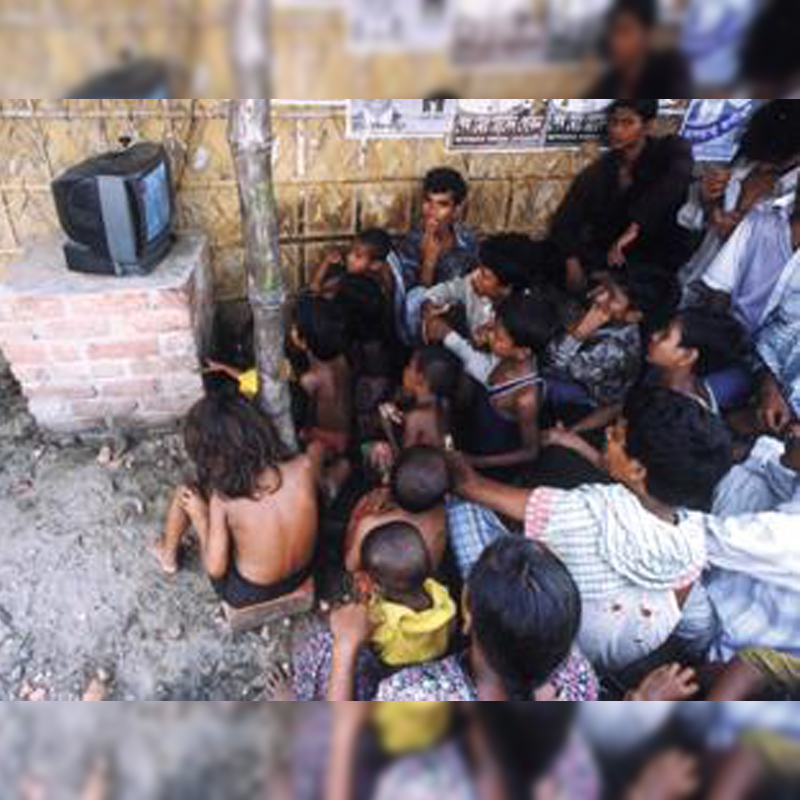
    On a recent road trip to Ladakh with friends we stopped at a nondescript roadside ‘dhaba’ (makeshift eatery) near the Himachal Pradesh and J&K border for tea and to stretch sore limbs. As tea was being boiled, stifled giggling from inside the hutment attracted me. While trying to see if my smart-phone was working so I could check-in on FB, I peeped inside. A group of local kids were enjoying a soap opera on television; courtesy DD FreeDish, a free-to-air DTH platform. My mobile phone, in the meanwhile, showed no signs of life with a No-Network message flashing.

    This, and many other such examples in India’s hinterland, highlight a fact loud and clear: India may be going digital, but Bharat (as non-urban hinterlands of India is referred to by some sociologists and marketers) still roots for the traditional. Such instances also tell us that in a country as diversified, complex and challenging as India, traditional habits, like TV watching, are there to stay despite technological disruptions like streaming video and smart-phones.

    Globally, death of traditional TV viewing has been predicted for past few years. But data and analytics from more mature and developed markets and even some East Asian nations – where digital is a big draw – show that TV as we know it is not going away anytime soon.

    A US Department of Labour Survey, released early 2016, states that watching TV was the leisure activity that “occupied the most time (2.8 hours per day), for those aged 15 and over.”

    BARB (UK equivalent of BARC India) data shows that average daily video viewing by all individuals is 4hrs 35mins and that TV accounts for 94 per cent of all video advertising time. Over the last decade, despite several “disruptive” technological developments, time spent watching TV has hardly dipped, as was being forecast. More importantly, TV continues to have largest reach of all media: it reaches 71per cent of population in a day, 93per cent in a week, and 98 per cent in a month.
    And, these are markets with near total saturation of TV homes, and a highly developed and widespread digital eco-system.

    What about India?

    Appetite for more TV content is only bound to grow given that only 153 million homes in India have TV out of a total of about 250 million (a penetration of about 60 per cent). Rise in disposable incomes, increasing fragmentation of families and continued challenges of Indian infrastructure are bound to push TV viewing higher.

    All-India BARC data for 47 weeks appear to validate that. Average daily TV viewing stands at 3 hours 16 minutes, showing headroom for growth, compared to more mature TV markets that have higher TV penetration rate of 97+ per cent.

    India has close to 900 licensed channels and while Ministry of Information and Broadcasting (MIB) agrees some of these licensees may not be on air, but scores of applicants are in queue too — another indicator of growth in appetite for TV.

    But, what about the perception that traditional TV viewership is losing out due to growth of digital platforms?

    Let’s look at BARC India data for a recent TV event, the Rio Olympics. TV viewership for Rio 2016 grew 2.65 times as compared to London 2012. While 16 million unique viewers watched the broadcast of London Games in India, the corresponding figure for Rio Games is 43 million (using the same viewership base – 1million+ towns). If one looks at the all-India (Urban+Rural) base, Rio 2016 set another high of 203.8 million unique viewers.

    This brings us to cricket, India’s fav sports (apart from politics). BARC data shows that a new viewership high was achieved during an India-Pakistan ICC T20 World Cup match in 2016, which generated a whopping 80.5 million impressions across Star Sports Network and DD National. And these numbers came on the back of not just a larger number of people watching TV, but also considerable higher time spent on TV.

    When asked about linear TV’s impending death in India owing to digital’s growth, Colors CEO and President of the Advertising Club (of India) Raj Nayak waved away the analysis asserting, “I am ready to stick out my neck on this. People who say that traditional television is dying don’t know what they are talking about. TV has been growing and there is still big headroom for its growth in India.”

    India may be adopting mobile phones faster than the US or other western countries, and a major percentage of them are smart-phones. Still, challenges for digital players are big and many ranging from costly data, indifferent bandwidth speed and getting the right content mix for a country that has 22 official languages and over 700 dialects.

    At Vidnet2016, an OTT conference organised by indiantelevision.com recently, Hotstar chief Ajit Mohan admitted that high cost of data is a major hurdle for expansion of streaming services like Hotstar and others like Voot, dittoTV, BoxTv, Arre, Savvn, Hooq, Viu, SonyLiv, etc.

    Data pointing to greater consumption of TV is one side of the picture. Globally, studies and data also indicate that TV remains a highly effective form of advertising.

    A study by the Institute of Practitioners of Advertising (UK’s equivalent of India’s AAAI) shows that TV continues to guarantee best commercial outcomes of campaigns for things such as sales, profit, market share, etc. Echoing similar sentiments, Colors’ Nayak added, “Digital advertising does not have the same impact that TV (advertising) has… Even Amazon, Google and other e-commerce companies have to use TV to make an impact.”

    US-based eMarketer (started in 1996 to study digital trends and considered one of the most widely cited research providers in the media) admits that despite a drop in TV watching time, in general, it hasn’t stopped marketers from pouring significant amounts of money into television advertising.

    Without discounting the strides being made by digital players in India (and they seem to be mushrooming all over like dotcoms during the dotcom boom of the late 1990s), traditional TV’s importance and reach still outstrips that of digital.

    Pointing out that digital does offer consumers choices of watching TV (government lingo for video consumption) at different time and in different formats, a senior government official, having worked at MIB, on condition of anonymity admitted that TV is not going away from India. Rather, the size of India will help it retain its pre-eminence as opposed to other media.

    GroupM too testifies to TV’s strong presence in India compared to other segments of media like print, OOH and digital. In projections made in January 2016, which are re-visited mid-year to do any course corrections if necessary, the company said television was estimated to grow by 17.6 per cent to touch Rs 27,074 crore (Rs. 2,7,0740 million) this year against Rs 23,022 crore (Rs. 23,02,20 million) last year as far as advertising spends go.

    Colors’ Nayak aptly sums up the issue: “There is no doubts that digital will see growth at a phenomenal pace especially with Reliance Jio addressing the bandwidth and speed issues, but digital must be seen as another platform for delivering content and that’s it. There will be lot of content consumption on digital platforms, but it will not be at the cost of (traditional) TV viewing.”

    Like Nayak, I too am ready to bet my bucks on linear or traditional TV in India. Digital has to travel many more miles in India before it can be a replacement for TV, which is still far off from near-saturation point or even plateauing off.

    (Author is Consulting Editor to indiantelevision.com)

  • Saying traditional TV is dying in India is premature

    Saying traditional TV is dying in India is premature

    On a recent road trip to Ladakh with friends we stopped at a nondescript roadside ‘dhaba’ (makeshift eatery) near the Himachal Pradesh and J&K border for tea and to stretch sore limbs. As tea was being boiled, stifled giggling from inside the hutment attracted me. While trying to see if my smart-phone was working so I could check-in on FB, I peeped inside. A group of local kids were enjoying a soap opera on television; courtesy DD FreeDish, a free-to-air DTH platform. My mobile phone, in the meanwhile, showed no signs of life with a No-Network message flashing.

    This, and many other such examples in India’s hinterland, highlight a fact loud and clear: India may be going digital, but Bharat (as non-urban hinterlands of India is referred to by some sociologists and marketers) still roots for the traditional. Such instances also tell us that in a country as diversified, complex and challenging as India, traditional habits, like TV watching, are there to stay despite technological disruptions like streaming video and smart-phones.

    Globally, death of traditional TV viewing has been predicted for past few years. But data and analytics from more mature and developed markets and even some East Asian nations – where digital is a big draw – show that TV as we know it is not going away anytime soon.

    A US Department of Labour Survey, released early 2016, states that watching TV was the leisure activity that “occupied the most time (2.8 hours per day), for those aged 15 and over.”

    BARB (UK equivalent of BARC India) data shows that average daily video viewing by all individuals is 4hrs 35mins and that TV accounts for 94 per cent of all video advertising time. Over the last decade, despite several “disruptive” technological developments, time spent watching TV has hardly dipped, as was being forecast. More importantly, TV continues to have largest reach of all media: it reaches 71per cent of population in a day, 93per cent in a week, and 98 per cent in a month.
    And, these are markets with near total saturation of TV homes, and a highly developed and widespread digital eco-system.

    What about India?

    Appetite for more TV content is only bound to grow given that only 153 million homes in India have TV out of a total of about 250 million (a penetration of about 60 per cent). Rise in disposable incomes, increasing fragmentation of families and continued challenges of Indian infrastructure are bound to push TV viewing higher.

    All-India BARC data for 47 weeks appear to validate that. Average daily TV viewing stands at 3 hours 16 minutes, showing headroom for growth, compared to more mature TV markets that have higher TV penetration rate of 97+ per cent.

    India has close to 900 licensed channels and while Ministry of Information and Broadcasting (MIB) agrees some of these licensees may not be on air, but scores of applicants are in queue too — another indicator of growth in appetite for TV.

    But, what about the perception that traditional TV viewership is losing out due to growth of digital platforms?

    Let’s look at BARC India data for a recent TV event, the Rio Olympics. TV viewership for Rio 2016 grew 2.65 times as compared to London 2012. While 16 million unique viewers watched the broadcast of London Games in India, the corresponding figure for Rio Games is 43 million (using the same viewership base – 1million+ towns). If one looks at the all-India (Urban+Rural) base, Rio 2016 set another high of 203.8 million unique viewers.

    This brings us to cricket, India’s fav sports (apart from politics). BARC data shows that a new viewership high was achieved during an India-Pakistan ICC T20 World Cup match in 2016, which generated a whopping 80.5 million impressions across Star Sports Network and DD National. And these numbers came on the back of not just a larger number of people watching TV, but also considerable higher time spent on TV.

    When asked about linear TV’s impending death in India owing to digital’s growth, Colors CEO and President of the Advertising Club (of India) Raj Nayak waved away the analysis asserting, “I am ready to stick out my neck on this. People who say that traditional television is dying don’t know what they are talking about. TV has been growing and there is still big headroom for its growth in India.”

    India may be adopting mobile phones faster than the US or other western countries, and a major percentage of them are smart-phones. Still, challenges for digital players are big and many ranging from costly data, indifferent bandwidth speed and getting the right content mix for a country that has 22 official languages and over 700 dialects.

    At Vidnet2016, an OTT conference organised by indiantelevision.com recently, Hotstar chief Ajit Mohan admitted that high cost of data is a major hurdle for expansion of streaming services like Hotstar and others like Voot, dittoTV, BoxTv, Arre, Savvn, Hooq, Viu, SonyLiv, etc.

    Data pointing to greater consumption of TV is one side of the picture. Globally, studies and data also indicate that TV remains a highly effective form of advertising.

    A study by the Institute of Practitioners of Advertising (UK’s equivalent of India’s AAAI) shows that TV continues to guarantee best commercial outcomes of campaigns for things such as sales, profit, market share, etc. Echoing similar sentiments, Colors’ Nayak added, “Digital advertising does not have the same impact that TV (advertising) has… Even Amazon, Google and other e-commerce companies have to use TV to make an impact.”

    US-based eMarketer (started in 1996 to study digital trends and considered one of the most widely cited research providers in the media) admits that despite a drop in TV watching time, in general, it hasn’t stopped marketers from pouring significant amounts of money into television advertising.

    Without discounting the strides being made by digital players in India (and they seem to be mushrooming all over like dotcoms during the dotcom boom of the late 1990s), traditional TV’s importance and reach still outstrips that of digital.

    Pointing out that digital does offer consumers choices of watching TV (government lingo for video consumption) at different time and in different formats, a senior government official, having worked at MIB, on condition of anonymity admitted that TV is not going away from India. Rather, the size of India will help it retain its pre-eminence as opposed to other media.

    GroupM too testifies to TV’s strong presence in India compared to other segments of media like print, OOH and digital. In projections made in January 2016, which are re-visited mid-year to do any course corrections if necessary, the company said television was estimated to grow by 17.6 per cent to touch Rs 27,074 crore (Rs. 2,7,0740 million) this year against Rs 23,022 crore (Rs. 23,02,20 million) last year as far as advertising spends go.

    Colors’ Nayak aptly sums up the issue: “There is no doubts that digital will see growth at a phenomenal pace especially with Reliance Jio addressing the bandwidth and speed issues, but digital must be seen as another platform for delivering content and that’s it. There will be lot of content consumption on digital platforms, but it will not be at the cost of (traditional) TV viewing.”

    Like Nayak, I too am ready to bet my bucks on linear or traditional TV in India. Digital has to travel many more miles in India before it can be a replacement for TV, which is still far off from near-saturation point or even plateauing off.

    (Author is Consulting Editor to indiantelevision.com)

  • Kantar Media to commence TV audience engagement on Twitter in UK

    Kantar Media to commence TV audience engagement on Twitter in UK

    NEW DELHI: Audience measurement specialist Kantar Media, which also has a stake in TAM in India, has unveiled Britain’s official Twitter metric for measuring Twitter TV audience engagement.


    Developed with Twitter as part of a global partnership announced last year, the new Kantar Twitter TV Ratings tools will be available from mid-October.


    The new tool, bringing together geo-filtered UK Twitter data with the audience research expertise of Kantar Media, enables broadcasters, media agencies and advertisers to track exactly how Twitter amplifies the power of television.


    Kantar Twitter TV Ratings will include new metrics that have never been available before in the UK including:


    • Unique authors (people Tweeting) and their affinity to brands, channels and programmes

    • Unique audience – using data only available to Kantar Media, the firm is able to measure the number of individuals who viewed Tweets related to individual programmes/shows

    • Impressions – the total number of times that a Tweet or Retweet has been seen about a particular programme


    This is in addition to existing metrics including:

    • number of Tweets and Retweets about a programme before, during and after transmission;

    • average Tweets per minute and the highest volume of Tweets per minute ascribed to the programme in question


    According to Kantar Media global CEO and chairman Andy Brown, the launch of the first official Twitter TV metrics in the UK gives the broadcast industry official insight for social TV engagement to complement the BARB gold-standard TV measurement currency. “Using the Kantar Twitter TV Ratings, broadcasters, planners and advertisers will be able to assess programmes and series, plan programme promotions more effectively and assist media buyers and sellers to integrate social data more comprehensively into the TV component of their media mix,” he advised.


    In addition to these new metrics, Kantar Media has also developed an intuitive dashboard, Instar Social, that broadcasters, media agencies and advertisers can use to view and analyse data alongside their existing TV analysis tools. Instar Social will include a live, real-time leaderboard, providing a snapshot of the top Tweeted programmes as they happen, with the ability to drill down and view actual content of the Tweets in real-time.


    Further enhancements scheduled for release include trending topics that are driven by a programme, integration of BARB gold-standard ratings data into the dashboard enabling data overlays, as well as API data feeds. 

  • UK TV industry sees revenue growth: Ofcom report

    UK TV industry sees revenue growth: Ofcom report

    MUMBAI: The Communication Market 2014 report of Ofcom, an independent regulator and competition authority for the UK communications industries, highlights that TV industry generated ?12.9 billion in revenue during 2013, an increase of ?426 million (3.4 per cent).


    The increase was driven by growth in subscription revenues and net advertising revenues. However, there was a small decline in publicly-funded television programming in 2013, following an eventful year in 2012, including the London Olympic and Paralympic Games.


    The report examines the key developments and trends seen in the UK television market during the past year. Some of them include:


    Pay-TV subscription revenue continues to drive the growth as subscription revenues increased by 6.7 per cent in 2013 to reach almost ?5.9 billion. Subscriptions now account for 46 per cent of all television industry revenues in the UK.


    As far as broadcast-based TV advertising income is concerned, it returned to growth in 2013, increasing by 4 per cent (or ?146 million) to reach almost ?3.7 billion, its highest level in the past five years. The largest proportional growth was in the commercial PSBs’ portfolio channels, where revenues increased by 14 per cent to reach a combined total of ?669 million.


    Online TV revenue saw an increase of 41 per cent in 2013 to reach ?364 million. The subscription model saw the steepest growth; revenue rose by 76 per cent to ?112 million, possibly indicating that online streaming services are gaining traction in the UK market.


    Spend on content by all UK TV channels rose by 3.7 per cent to reach ?5.8 billion. In a year  of English Premier League broadcast rights renewal, spend on sports programming grew by 19 per cent to reach ?1,808 million or 59.1 per cent of all programme spend on commercial non-Public service broadcasting (PSB) channels. Spend on BBC digital channels and the other PSBs’ portfolio channels also increased, rising by 6 per cent and 4 per cent, respectively. However, spend on first-run originated programming for the main five PSB channels declined by 5 per cent; from ?2,588 million in 2012 to ?2,451 million in 2013, partly due to there being no major sporting events that year.


    In Q1 2014, 12 per cent of TV households had a smart TV, an increase of five percentage points on the previous year. Among smart TV owners, use of the internet functionality is increasing. 82 per cent used the internet connection on their TV in 2014 compared to 77 per cent in 2013 and 65 per cent in 2012.


    Nonetheless, the TV viewing has remained resilient, although there was a decline in 2013 across all age groups. According to broadcaster audience research board (BARB), average viewing dropped from 241 minutes in 2012 to 232 in 2013 among all individuals, with all age groups experiencing declines. This may be due in part to changing media habits, but it might also have been influenced by the hotter summer in 2013 and a lack of ‘event’ viewing – in previous years viewing was boosted by major sports events such as the 2010 Football World Cup or the Olympic Games in 2012. However, among 16 to 24 year olds viewing has declined for three consecutive years: from 169 minutes in 2010 to 148 in 2013.


    Click here to read the finer details

  • NDTV is no 1 in the UK

    NDTV is no 1 in the UK

    MUMBAI: NDTV, UK’s longest running Indian news channel is the top choice for the Indian elections coverage. Backed by a huge marketing campaign on radio, television and online, NDTV 24×7 is witnessing record audience figures since it joined the audience measuring body, BARB. Data for week ending 27th April shows the channel is the most watched Indian news broadcaster. NDTV has sustained consistent viewership for the last four weeks.

    Today, 16 May NDTV will present non-stop programming from 7am when viewers will be able to watch Prannoy Roy, India’s election Guru on India Decides – The Final Countdown, starting from 7:00am (IST) on NDTV 24×7, presenting the first and most credible look at who India has voted for.

    The Broadcasters’ Audience Research Board (BARB) is the official source of television viewing figures in the UK. It commissions specialist research companies Ipsos MORI, Kantar Media and RSMB to collect data that represent the television viewing behavior of the UK. On a weekly basis, BARB publishes a weekly reach data of the channels who’ve subscribed to BARB. As per BARB official data NDTV 24×7 is no.1 / most viewed Indian news channel in UK. Following is the last 4 week published data.

    NDTV’s 10 most popular programmes are


  • TV sets preferred in UK as viewing medium

    TV sets preferred in UK as viewing medium

    MUMBAI: According to a recent research from Thinkbox, 98.5 per cent of television viewing in the UK in 2013 was through a TV set, with just 1.5 per cent on other devices.

    The average Briton tuned in to just under four hours of TV a day, with the bulk of that, 3 hours and 52 minutes, dedicated to linear television. The average viewing was down slightly in 2012, largely due to the lack of any major sporting events.

    Meanwhile, there was an average of 3 minutes and 30 seconds a day of viewing on tablets, smartphones and laptops, largely on-demand but also including some live streaming. Non-TV-set viewing is up slightly on the 1.2 per cent from 2012.

    Thinkbox – using data from BARB – also points out that the average person watched 2 hours and 33 minutes of commercial television a day, accounting for 68 per cent of linear viewing, up from 66 per cent in 2012. Among those aged 16 to 34, commercial TV accounted for 76 per cent of linear viewing.

  • Thinkbox: Portable devices account for 1.5% of TV viewing

    Thinkbox: Portable devices account for 1.5% of TV viewing

    MUMBAI: New TV viewing figures from Thinkbox reveal that 98.5 per cent of television viewing is still done on the traditional TV set in the UK, while 1.5 per cent is on other screens such as tablets and mobile devices.

    The average daily TV viewing in the UK (during January to June 2013) was four hours, one minute a day per person. This was comprised of three hours, 58 minutes a day of linear TV on a TV set – this is three minutes a day less than the same period last year – and three minutes, 30 seconds a day via devices such as tablets, smartphones and laptops. The majority of this is on-demand viewing, with some live streams.

    Viewing on non-TV devices via established services such as ITV Player, Sky Go, 4OD and BBC iPlayer, as well as new services like Dave on-demand, accounted for 1.5 per cent of overall TV viewing in the country during the first half of 2013. This is a slight increase from the full-year figure for 2012, when it accounted for 1.2 per cent.

    According to Broadcasters’ Audience Research Board (BARB), it’s estimated that 58 per cent of households own digital TV recorders, and in these homes 83.8 per cent of linear TV was watched live during the period, down from the 84.4 per cent in the same period a year ago. Also, 81 per cent of all time shifted viewing is watched within two days of recording, while 47 per cent is seen within 24 hours of it being recorded. BARB’s figures suggest that the growth in the number of TVs that is recorded and played back is slowing down.

  • Thinkbox: Portable devices account for 1.5% of TV viewing

    MUMBAI: New TV viewing figures from Thinkbox reveal that 98.5 per cent of television viewing is still done on the traditional TV set in the UK, while 1.5 per cent is on other screens such as tablets and mobile devices.

    The average daily TV viewing in the UK (during January to June 2013) was four hours, one minute a day per person. This was comprised of three hours, 58 minutes a day of linear TV on a TV set – this is three minutes a day less than the same period last year – and three minutes, 30 seconds a day via devices such as tablets, smartphones and laptops. The majority of this is on-demand viewing, with some live streams.

    Viewing on non-TV devices via established services such as ITV Player, Sky Go, 4OD and BBC iPlayer, as well as new services like Dave on-demand, accounted for 1.5 per cent of overall TV viewing in the country during the first half of 2013. This is a slight increase from the full-year figure for 2012, when it accounted for 1.2 per cent.

    According to Broadcasters‘ Audience Research Board (BARB), it‘s estimated that 58 per cent of households own digital TV recorders, and in these homes 83.8 per cent of linear TV was watched live during the period, down from the 84.4 per cent in the same period a year ago. Also, 81 per cent of all time shifted viewing is watched within two days of recording, while 47 per cent is seen within 24 hours of it being recorded. BARB‘s figures suggest that the growth in the number of TVs that is recorded and played back is slowing down.

     
  • Cloudy With A Chance Of Meatballs 2 (3d) slated for year-end release

    Cloudy With A Chance Of Meatballs 2 (3d) slated for year-end release

    NEW DELHI: Even as it is just picking pace in India, the sequel craze continues in Hollywood.

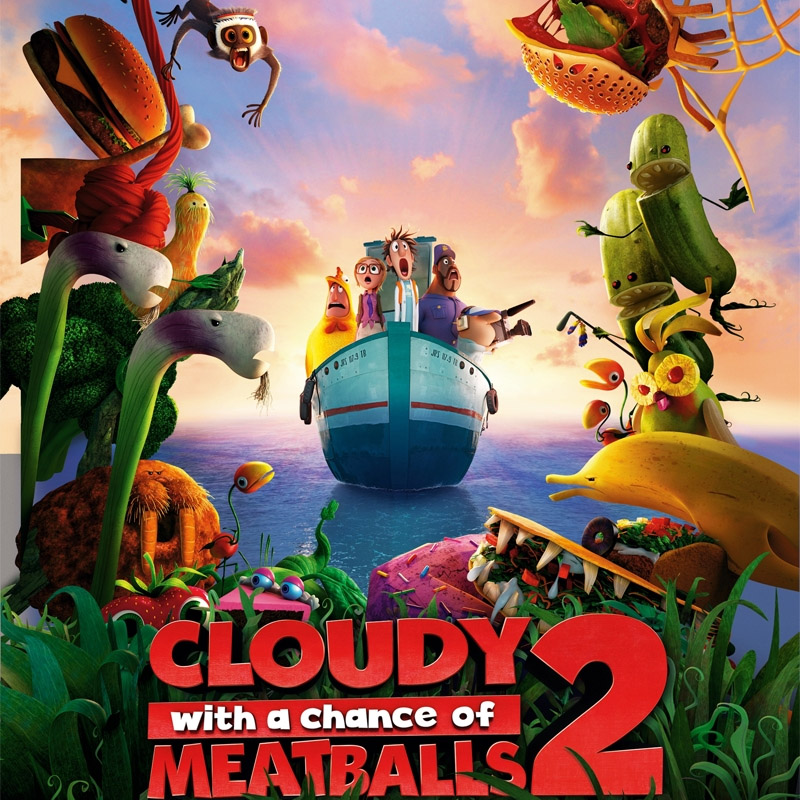
    Cloudy With A Chance Of Meatballs, a comedy from the Sony Pictures Animation banner, had proved a hit when it was released. And now, Cloudy With A Chance Of Meatballs 2 picks up the tale. Inventor Flint Lockwood‘s genius is finally being recognised as he is invited by his idol Chester V to join The Live Corp Company, where the best and brightest inventors in the world create technologies for the betterment of mankind.

    Chester‘s right-hand-gal – and one of his greatest inventions – is Barb (a highly evolved orangutan with a human brain, who is also devious, manipulative and likes to wear lipstick. It has always been Flint‘s dream to be recognised as a great inventor, but everything changes when he discovers that his most infamous machine (which turns water into food) is still operating and is now creating food-animal hybrids – “foodimals!” With the fate of humanity in his hands, Chester sends Flint and his friends on a dangerously delicious mission, battling hungry tacodiles, shrimpanzees, apple pie-thons, double bacon cheespiders and other food creatures to save the world again.

    Slated for release on 20 December, the animation film has been directed by Cody Cameron and Kris Pearn. It will have the voices of Bill Hader, Anna Faris, James Caan, Will Forte, Kristen Schaal, Terry Crews, Andy Samberg, Neil Patrick Harris and Benjamin Bratt.

  • TV viewing remained at record levels in 2011 in the UK

    TV viewing remained at record levels in 2011 in the UK

    MUMBAI: Thinkbox has announced that linear TV viewing figures in the UK for 2011 equaled the record high set in 2010. The average viewer watched 4 hours, 2 minutes of linear TV a day in 2011 (28 hours, 14 minutes a week), according to new figures from the Broadcasters’ Audience Research Board (BARB).

    This strong performance underlines viewers’ preference for watching TV as it is broadcast and on a TV set whenever possible. The many new ways to watch TV via other screens such as laptops, tablets and smartphones are growing, and a welcome solution to out of home viewing, but they are not included in Barb’s figures and are not impacting on linear viewing.

    Commercial TV channels (i.e. non-BBC channels) were responsible for maintaining the record viewing level, accounting for 64 per cent of all linear TV viewing, an increase of 1.3 per cent points on 2010. For the younger 16-34 audience this rises to 72 per cent.

    During 2011, the average person watched 18 hours, 11 minutes of commercial TV a week (2 hours, 36 minutes a day), an increase of 22 minutes a week on 2010. In the last ten years, commercial TV viewing has increased by over 3 hours, 30 minutes a week (31 minutes a day).

    Thinkbox predicts that total linear TV viewing levels will now stabilise after a sustained period of record growth. This growth has been caused by a number of factors, including:

    – Technology innovations (such as digital TV recorders, HD and 3D) that enhance the TV experience and magnetise viewers to TV sets;

    – Greater choice of TV to watch as more households switch to digital TV (97% of homes, according to the BARB Establishment Survey Q3 2011);

    – On-demand TV services which send people back to the broadcast schedules. 89% of people watch on-demand TV mainly to catch- or keep-up with missed broadcast TV (source: Decipher/Thinkbox);

    – Better measurement of TV viewing following the launch of an updated TV measurement system in January 2010, which more accurately captures viewing on second TV sets and on-demand TV viewed on TV sets in-home
    within 7 days of broadcast;

    – Excellent TV programming and a wide variety of channels which cater for all tastes

    – The economic recession encouraging people to stay in more.

    Additional, non-TV set viewing : The Barb figures do not include TV viewed on devices other than TV sets. Barb has been monitoring viewing on devices other than TV sets since 2005. Its data suggests that there is an additional 1.2 per cent of TV viewing via other devices, 2.9 per cent for 16-34 year olds.

    ‘Time-shifted’ viewing : According to Barb, 90.6 per cent of the TV watched in the UK during 2011 was watched live, as it was broadcast. Non-live, ‘time-shifted’ viewing accounted for 9.4 per cent of the UK’s TV consumption during 2011, up from 7.6 per cent in 2010 due to more households now owning a digital television recorder (DTR) such as Sky+ or Freeview+. 50 per cent of UK households now own a DTR.

    In households that own DTRs, 84.7 per cent was watched live and 15.3 per cent viewed time-shifted within seven days. This level of time-shifting has been stable since the first DTRs were released ten years ago.

    Commercial impacts: The increase in commercial viewing has also meant an increase in the number of TV ads viewed. Commercial impacts (the number of ads watched at normal speed) during 2011 were up by 2.6 per cent on 2010, and have grown by 19.6 per cent over the last five years to a new record high. The average viewer watched 47 ads a day during 2011.

    Thinkbox MD Lindsey Clay said, “These figures explain why so many tech companies want to join the TV industry. Many companies are flocking to launch new TV services or social media services that feed off people’s love affair with TV.

    “It is obvious that people want to watch TV programmes on the best screen in the home if they can and 2012 will bring more opportunities to do that with the sale of connected TVs and more catch-up TV services to the TV set. And alongside that there is now a wide variety of personal screens to watch TV on which make TV even more convenient; tablets are really delivering an excellent mobile TV experience.

    “TV continues to be the most effective form of advertising there is and the instant responses that second screens enable is making it even more so.”