Mumbai: Desai Foods Pvt. Ltd., the owner of Mother’s Recipe – India’s leading brand of pickles, condiment pastes, chutneys and papads, has handed its mainline creative mandate for its entire range of products to Bang In The Middle. The agency’s mandate spans across mainline advertising, BTL and retail. The agency will partner with Mother’s Recipe in expanding the share and footprint of the brand in India and across the globe. The agency has already started work on the brand.
Speaking about the appointment, Desai Foods executive director Sanjana Desai said, “We are on an ambitious journey in India and the globe. Mother’s Recipe is a strong brand and we are looking at building it aggressively. Our pickles range is unique and with more and more offerings being added to our portfolio across categories, consumers are discovering authentic regional and global flavours. We are looking at rapid market expansion. Bang in the Middle has been tasked with building our offerings in most persuasive way.”
Speaking about it, BITM chief operating officer Rajive Mathur said, “It’s more than a pleasure to be working with Mother’s Recipe. As India’s leading brand name in their category, and with their already prominent foray into Pickles, Pastes, Chutneys and Papads; we are more than thrilled to be with them on their culinary journey into the kitchens and dining tables of India. With the coming months bringing in festivity to India, we’d surely want to be part of the celebrations.”
Desai Foods owns Mother’s Recipe range of pickles, pastes, chutneys, sauces and papads. Bang in the Middle is an independent agency handling clients like Pearson, TATA AIA, AJIO, Orientbell, News18, Bath & Bodyworks, HCCB, Medanta amongst others.
Mumbai: As the writer of this story, I don’t know if the recent “#StopTheBeautyTest” campaign by Dove is just blown out of proportion or it isn’t. Dove, HUL’s soap brand, has been in India since the 1990s and one of HUL’s other products, Glow & Lovely (previously Fair & Glow) – a skin-lightening cream, has been around in the country since 1975. So, my question is, has the fair skin obsession been fiercely propagated in India by one of the largest FMCG giants, Hindustan Unilever (HUL), or “#StopTheBeautyTest”? Or is the existence of both the brands at varied timings in the country, just a point to be brushed aside? Time and again when this tug of war between beauty and calibre has occurred, it has only led me to ask more and deeper questions. This time, I spoke to industry veterans who have pondered on the points about the creative and strategy of this campaign which has been conceptualised and executed by Ogilvy.
He was the first person I called to review this campaign, simply because on my LinkedIn, apart from HUL CEO & managing director Sanjiv Mehta, he was the first person whose post dared to speak something which not many could lend an ear to. Bang In The Middle (BITM) co-founder and chief strategy officer, Naresh Gupta says, “I think it’s very dishonest on the part of HUL to do a campaign like this. That’s where the whole issue is. I understand that you have a brand to sell and nobody has the right to tell you to not sell the brand. But when they try to take this righteous approach – the whole righteousness is wrong, because, from the business perspective, this is not what they’re doing when they’re selling Axe and Glow & Lovely. They’re doing something different – they’re prying on all the insecurities a person has when they’re selling Glow & Lovely and Axe.”
He further continues to ask – who are these people who would move to buy Dove? “They are actually at one point of time buying Glow & Lovely or are on Axe. So, you made money off them at some stage of life, and now you are continuing to make money off them at another stage of life. The other problem is the way the whole campaign has been executed – it is not executed with a positive tone of voice, which is the deeper issue. My concern is that the campaign should have been executed with a much more positive tone of voice,” he explains.
Even though many root for HUL’s hypocrisy, on the other hand, FCB India executive creative director Sumitra Sengupta likes the brand’s (Dove’s) work in bits but still feels that it doesn’t strike that spark. “After speaking to the urban target group for so long, I think Dove decided to address the masses. Yes, it’s written beautifully, is fabulously shot, and imparts information emotionally, but doesn’t create magic.”
Some people recognise that Dove, over the years, has been a trailblazer, breaking beauty conventions and stereotypes and Dentsu Creative chief strategy officer Sumeer Mathur is one of them. This campaign is phase two of an earlier campaign that focused on how women are judged at the time of seeking a life partner. The communication seems to be taking the same position forward. “If anything, it’s more of the same and not entirely new or fresh,” he feels.
Business strategist and PepsiCo India, Motorola & HP Asia former marketing head Lloyd Mathias finds this campaign interesting and in line with Dove’s core proposition that beauty is not defined by shape, size or colour – it’s authentic and all about self-esteem and confidence.
“Dove’s current campaign “#StopTheBeautyTest” tries to counter the prevalent stereotypes about beauty that are reinforced early on from darker skin tones to body shaming. It is a hard-hitting campaign bringing to the fore the trauma many young girls go through in India,” he adds.
Elucidating on the hype and buzz that this ad has created on social media Lloyd explained that the debate is a clear indication that the campaign strikes a chord, which is good for the brand that plays a niche in the soap market. Besides the activism, it inspires and drives consideration which is hugely positive for the brand.
Talk about being regressive!
Along with MediaMonks chief content officer, an ex-Ogilvy, an ex-MullenLowe Lintas Azazul Haque many others strongly believe that “#StopTheBeautyTest” is a very elite way of looking at Indian society. It feels like a conversation that happens in high society about how suppressed and regressive our society is. Brands like Dove should inspire women to celebrate real beauty instead of questioning society for suppressing a certain gender.
A lot of people watching this ad feel that for a brand like Dove which has always stood for true beauty, and has done some commendable work in the past, Azazul thinks that “#StopTheBeautyTest” lacks a deep-rooted insight.
Naresh firmly stands his ground when he says that the current Indian president Droupadi Murmu doesn’t fit the beauty bill, the way any brand would want to fit the beauty bill – but she has climbed to the top position in the country and you can’t get a more inspirational woman to look up to than her. “So if you look at it that way, society is moving somewhere else, and the brand is stuck somewhere else. This is just dated thinking and execution. And we, advertising people, live in our echo chamber, thinking this is what happens and this is what doesn’t happen,” he asserts.
Several also feel that the campaign puts Indian society in a poor light by portraying it as regressive even now, which, to be true, isn’t the fact. “To a certain extent, it is true that in Indian society few parents still believe that looking beautiful is a parameter of success. But this ad makes it look like most Indians are stuck in this conservative, parochial mindset. Also, it makes the women, the mother, the family- the villain,” says Azazul.
Sumeer understands that we seem to live in a world where it’s good to have an opinion and even better to be outraged. “It’s great if a certain section of society feels that we have moved on from judging girls on the beauty parameter and this no longer holds relevance for them. However, it would be interesting to know what the masses think about this ad – right now the criticism seems to come from the progressive English-speaking digital urban classes,” he explains.
He has a different stance on this and goes on to add that he thinks many girls even in urban India would find this communication relevant, the fact that teenage girls face unfair scrutiny and feel overwhelming anxiety about their body and looks is a global phenomenon that is well documented by psychologists. Young men seem to be developing similar issues these days in many social pockets.
“Would husbands get the idea of beating their wives because they saw “Darlings”? Similarly, it would be regressive if it ended in ambiguity on what Dove believes in and that’s not the case, it’s not promoting beauty tests. Merely calling out a social evil does not mean you are propagating it. Could it have been executed with more positivity, would that have worked better at getting people to sit up and notice the issue? Usually, when a brand takes on social evil, its communication needs to hold a mirror to society. On a normal day most brand communication is sun-shiny,” he reveals.
Lloyd, too, doesn’t consider the campaign to be regressive at all, as it shows a mirror to deeply prevalent social mores, thus bringing them to the fore. “Highlighting social issues will always raise controversies and bring out polarising views but these are inescapable in these times where social media enables everyone to have a view and air it freely. Smart brands harness this to their advantage,” he explains.
Naresh has believed for a very long time that the advertising guys are out of touch with reality. The world has moved on and the progression has happened to a very large extent. But the advertising folk have gone back on their appeals – they haven’t moved forward.
“15-16 years ago the advertising appeals were much more progressive. Agencies have been doing far more progressive work – ‘Daag Acche Hai’ (the tagline and brand campaign line for HUL’s detergent brand – Surf Excel) comes from the same company – that is so much progress. But when you do this “#StopTheBeautyTest,” it is not progression, it’s regression. And this is what has happened in advertising for the last 10 years – we have only gone back in time, we have not moved forward,” debates Naresh.
For business and brand strategist and Harish Bijoor Inc founder Harish Bijoor, the “#StopTheBeautyTest” campaign is unnecessary today. “It is so yesterday! I do believe society has moved on. Reminding it of what it did in the past is an unnecessary stoking of the issue and the pot,” he says.
Compared to the fabulously progressive work Dove has done with its other social experiments, Sumitra does find this ad to be regressive. She added, “It sets up the problem beautifully, but doesn’t provide a solution. And I think ‘Dove says… stop the beauty test’ sounds a trifle arrogant.”
HUL’s hypocrisy or just plain marketing?
With HUL Dove’s “#StopTheBeautyTest” campaign on one end, and its Glow & Lovely and Axe products’ advertising on the other, is this HUL’s hypocrisy or just plain demands of the various products in their portfolio? Every single time, when ads for fairness creams are rolled out, and on the other hand much is spoken about calibre outshining outward beauty, one tends to think that how farce could all this conversation get. Well, ad people, Sumitra and Azazul feel that HUL is doing justice to all its brands.
“Various brands of HUL stand for various points of view. So one can stand for artificial, outer beauty while the other celebrates real beauty. I don’t see a clash there,” clarifies Azazul.
Additionally, Sumeer points out, “If you see their actions, across its portfolio Unilever is moving towards more inclusivity, they have dropped ‘normal’ from some 200 beauty products, all these brands (Axe, Glow and Lovely) have moved on to a more progressive, modern worldview. I feel brands and people must be encouraged to evolve, pillorying attempts to evolve serves no purpose, it works against the agenda of change and inclusivity.”
Naresh, on the contrary, discussing the print execution of this campaign feels that through this campaign, Dove is giving a sense that teachers evaluate students, giving them marks on the way they look, which is blatant cheating. “They are being provocative, that’s the correct thing to do. But it can’t be a mark sheet because, in reality, there is no mark sheet. If a teacher says something like this to a student and if the student complains, the teacher gets sacked,” he says.
He goes on to add that if HUL has done the research, they should have put the research out in the public domain, mentioning clearly that this is what they have heard from their research and this is why the campaign is happening – that also they are not doing. He is of the thought that the brand is just trying to be clever.
Lloyd, speaking from a business and brand point of view, elaborates, “Multi-brand and multi-category businesses will always face the criticism of seeming hypocritical as they have different positionings for their various offerings.”
He strongly believes that in this case the criticism is justified as while Dove walks the higher ground of inner-beauty, there’s little doubt that HUL’s Glow & Lovely, panders to skin lightening. This is a fundamental contradiction.
On a concluding note, Sumeer discusses that there isn’t a monolith India – different people are on a different scale in terms of attitudes and concerns, and there is always a trend and a pushback against every topic on social media, as it allows everyone to express and share their opinion. It’s hard to gauge where the critical mass of opinion is.
“Keep your brand audience in mind, if it matters to them it matters to the brand, that’s a good north star to have,” he signs off.
MUMBAI: Online multi-brand fashion website Jabong.com has unveiled a new promotional campaign with the tagline – “This is who I am. This is what I believe in.” Jabong took up the task of encouraging people to embrace their uniqueness, last year, with its 360 degree campaign – Be you.
This season however, it goes a step further and shows what ‘Be You’ means for different individuals. The three TVCs, which will be aired across various channels, have been creatively scripted and shot across length and breadth of India. They capture aspirations, dreams, thoughts and personal styles for people who have chosen to break free from the norm and followed their own style and passion.
The TVC, which will be aired across channels, has been innovatively shot featuring the life stories of young individuals from different walks of life. The TVC reiterates the idea of self-direction and freethinking, unescorted by the stringent norms of the society. It inspires lateral thinking and affirms fashion as a mode of unorthodox expression.
Jabong.com founder and managing director Praveen Sinha said, “Post tasting success with the launch of ‘Be You’ campaign last season, our team decided to take the winning streak forward and give a different dimension to it in the second season. Jabong.com is constantly innovating to churn out something new for its customers; we let out a spark of individualism last season and we plan to sustain it with this TVC in its second inning. The TVC is very simple in terms of the message it plans to send out, chase yourself, not the word.”
Created by Bang in the Middle, with different films, weaving different stories, this year’s plan is much grander and bolder. Instead of just telling people to follow their own star and break free, it shows the stories of people who dared to be themselves.
Bang in the Middle COO Prathap Suthan added, “Last year around when we launched the philosophy of ‘Be You’, we were pretty much convinced that it gave enough and more encouragement to young India to be proud of themselves and to go ahead and be what they wanted to be. Jabong being the one brand that would support and inspire them on their self-discovery and conviction with the widest range of fashion. Ready with ideas to help express themselves across the days and nights of their journeys. The campaign was a balanced act of liberation, and pushed people to go beyond the shallow definition of fashion, and gave them the freedom to stand up and be themselves: beLeaders instead of followers.”
“This time around, instead of a common philosophy, we are bringing to life stories of individuals, how they choose to live their lives and how they use their minds to create a niche for themselves. More importantly, these ads also surf the top of emerging social trends and try to present the changing faces of the country. Young India is a more confident, globally conscious, and empowered lot of people. And all you have to do is look around to find youngsters living life the way they want and successfully at that. Jabong is at the cusp of being the one positive pat on the back for these millions of dreamers and thinkers and doers who will do India prouder than ever,” added Suthan.
Bang in the Middle CSO Naresh Gupta said, “Today fashion is just not an external style statement, it is how you live, the choices you make, the statement you want to make. It is not about rebelling, or being different for sake of being different, it is about living by your own conviction. We started the journey with the previous campaign; we are making an even stronger statement with this seasons campaign. We have tried to capture the new ethos of the young trendy Indians to make the brand the real fashion choice for them.”
This campaign is a mouthpiece for the youth that has risen above the herd and retained its true identity. Jabong, with these new ads, exemplifies what ‘Be You’ means. The TVC includes a 30 second couplet narrating the tale of a young couple in a live-in relationship, defying the societal customs and avowing to stay true to their individual beliefs.
An additional 60-second film is shot for digital promotion encapsulating the dreams of young India and how they are pursuing their unique entities, away from the social orders. Two more commercials chronicling journeys of the protagonist follow as well this season.
The TVC is an ode to triumphant success Jabong has consolidated in a short span of time owing to a noteworthy response it has amassed since its inception.
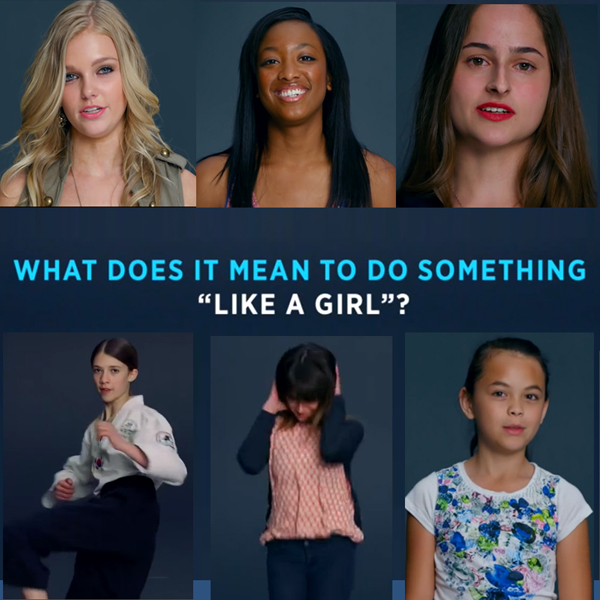
MUMBAI: ‘Like A Girl.’ When did those three words become an insult?
This thought provoking question has been floating on various social media platforms for a couple of weeks now. Thanks to Procter & Gamble’s (P&G) new campaign, this thought is being heard loud and clear across the globe.
The campaign which has different phases on digital is supported with a power packed video filmed by P&G’s ‘Always’, a leader in feminine hygiene products with a market valuation of $3.4 billion.
Though the film might appear to look just like many other feminist-themed videos, there is a lot that it brings across the table. As part of the campaign, ‘Always’ has partnered with award-winning documentary filmmaker Lauren Greenfield to conduct a social experiment to illustrate how people of all ages interpret the phrase ‘Like A Girl.’
Wondering why this campaign?
On the official YouTube channel of P&G Lauren Greenfield, filmmaker and director of the #LikeAGirl video explained, “In my work as a documentarian, I have witnessed the confidence crisis among girls and the negative impact of stereotypes first-hand. When the words ‘Like A Girl’ are used to mean something bad, it is profoundly disempowering. I am proud to partner with ‘Always’ to shed light on how this simple phrase can have a significant and long-lasting impact on girls and women. I am excited to be a part of the movement to redefine ‘Like A Girl’ into a positive affirmation.”
The video has already been viewed over 29 million times on YouTube, shared approximately 300,000 times on Facebook and tweeted around 40,000 times on Twitter. According to various media reports, P&G spends about $10 billion annually on marketing in the US. Of this, 25-35 per cent is spent on digital.
This percentage of digital spends will soon get somewhere near in an emerging market like India. Last year P&G’s Pantene released a digital video which was also championed by Facebook chief operating officer Sheryl Sandberg who showed how the same behaviour by men and women is viewed differently by the society.
With this campaign from ‘Always’, the company is taking a step further to strike social conversations and impressions for a good change.
We at Indiantelevision.com, asked Indian creative fraternity of the challenges of creating campaigns on the digital platform and how much did the ‘Always’ campaign touch their hearts.
“It is a brilliant effort“
According to Bang in the Middle managing partner and chief creative officer Prathap Suthan this particular campaign from P&G, shows how major advertisers in the world look at the criticality and importance of the digital space. And as usual, focus is in on universal insight.
“The fact that physical weakness is often attributed to ‘being a girl quality.’ It pries open a lot of areas. It opens up a conversation into giving girls more liberty, comfort, reality, and empowerment. It is a brilliant effort. It squashes down on the global habit of seeing a girl’s natural and general lack of brawn as deficiency. Instead, the campaign applauds the differences, caliber, mettle and a whole lot superior attributes that only women possess.”
According Suthan the campaign hits the right chord. “It’s a truth. Every girl, woman, daughter, mother, sister, aunt etc. will relate to it and so will all the men, especially fathers. I think it radiates a lot of optimism, positivity and reinforces confidence. #LikeAGirl is one of the most common insults and demeaning expressions that have been going around until now. It has been used to not just debase and abuse women, but also used as an expression that’s widely used to lash out at boys and men when they don’t physically and even mentally push the bar,” says Suthan.
With #LikeAGirl now trending across the world, and with every woman synching with the thought, hopefully this will initiate and propel a movement to help women across the world gain even more confidence, stature, self-esteem and happiness mentions Suthan. “We need that for a better, healthier and more peaceful world,” he says.
Origin Beanstalk co-Founder Upendra Singh Thakur thinks in India, discrimination against girls starts at birth. It is way beyond than just making fun of ‘being like a girl’. “However, keeping the affluent consumer in mind that the brand caters to and the notion of silly being associated with girls, to me the brand has definitely hit the right chord and really made us think that in many ways, jokingly, we do tend to discriminate even though we don’t realise it,” says Thakur.
“If you are not creative on digital then it is criminal”
Curry Nation founder Priti Nair believes in the above statement. She says, “It is not being creative that is a challenge on digital, but it is how much more creative can you be. That is the real challenge. It is not your typical 30 seconder shot on location or set. It is an audition and the audition is the advertisement.”
“In the #LikeAGirl campaign everything lies in the music and the casting. It takes you through an emotional graph. I think it is really insightful and I love the way it is connected to the product. Most of the times you have lofty philosophical stuff floating for causes that does not really have any connection to the brand. But to connect confidence ebb and fall with puberty is excellent and also true. It is good to know that someone is thinking harder,” opines Nair.
Infectious director Nisha Singhania has similar thoughts about the campaign. She believes, “#LikeAGirl taps into a fantastic insight on how without realising it, we create norms on how girls and boys are supposed to behave. Often I’ve heard boys being told to stop behaving ‘like a girl’ as if it was an insult.” Since most clients want the campaign to go ‘viral’ Singhania thinks they buy braver work for the digital medium.
“How I wish, this gets translated into different languages. Or it needs a global version with multi-cultural and multi-ethnic representation. There’s so much truth going waste otherwise,” concludes Suthan.
MUMBAI: Looks like news channels are not only focusing to revamp content but are also looking at revising their marketing strategies.
CNBC Awaaz is currently in the process of scouting for a digital partner. Industry sources have confirmed that the multi agency pitch is underway in Delhi. The size of the account could not be understood at the time of filing the report. According to sources, the news channel is looking at refreshing its social media presence. Currently, the channel has around 67,928 likes on Facebook and over 20,600 followers on Twitter. It can be noted that the popular shows of the channel have separate profiles on social media. The channel internally too has an active social media team.
In another development, Zee News has called for a creative pitch which is also underway in Delhi. The incumbent agency on Zee News’ account is Bang in the Middle. It is understood that the news channels want to bring on board boutique agencies because of tight budgets.
It will be interesting to see how both channels smartly revise their marketing strategies to grab the attention of viewers across multiple screens in the coming days.
MUMBAI: It was early this year that Congress started its Rs 600 crore blitz ad campaign. The campaign started with the slogan ‘Mein Nahi, Hum’ which caught itself amidst allegations from the Bharatiya Janta Party (BJP) which said that the slogan was first used by Narendra Modi at a rally.
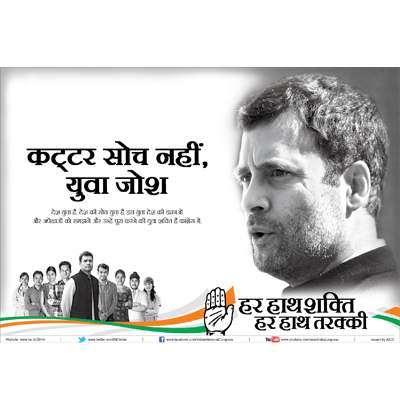
Then came ‘Har Haath Shakti, Har Haath Tarakki.’ The campaign conceptualised by Dentsu was meant to position Congress vice president Rahul Gandhi as a young and dynamic leader who could empower the common man.
BJP’s campaign, ‘Abki Baar, Modi Sarkar’, which went on floor a few months after Congress’ communication line, portrayed Modi as the saviour who could change the game of Indian politics.
Both the campaigns created a stir not only amongst the experts but also amongst the common man as everyone had something to say about them – good, bad or ugly.
The D-Day, 16 May, proved which ideology and promise voters believed in. BJP came out as a clear winner, while Congress’ performance was of sheer disappointment.
Since then, the Congress has been ‘introspecting’ to find what went wrong. However, its latest reason for the debacle is the campaign, itself. The party is now blaming the creative agency by saying that its campaign was weak.
When we contacted Dentsu India Group executive chairman Rohit Ohri, who is travelling abroad, sent an official statement of the agency through an email.
The statement reads, “Dentsu India was hired by the Congress party for their 2014 Lok Sabha campaign, for advertising services, after a publicly announced request for proposal by the Indian National Congress. Dentsu India bagged the mandate after a rigorous pitching process involving several iterations among top Indian agencies. While Dentsu India worked rigorously on an ad campaign as per the client’s brief with approvals at every stage, the other aspects of the campaign eco system such as PR, media relations and online strategy were not within the ambit of Dentsu’s scope of work as mandated by the client briefing. Throughout the campaign, Dentsu India enjoyed a good working relationship with the Congress party.”
“The agency maintains the highest standards of creativity and professionalism and adheres to global standards of ethics and compliance. The agency shares cordial relationship with all its clients, and shall endeavour to maintain the same.”
We at Indiantelevision.com, ask creative fraternity if it is right to blame the agency for the dismal performance of the political party?
Bang in the Middle managing partner and chief creative officer Prathap Suthan
This is a bit of a deja vu for me. Considering that some leaders in the BJP did exactly the same thing when India Shining didn’t work as a political multiplier in 2004. That aside, elections are purely won on the basis of performance. On a limited scale, one could overcome inefficiency by hyperbole and exaggerating the potential of the future.
But this was the national elections. On the back of a long winded story of scams, misgovernance, corruption, lack of leadership, slow economy and what have you. However the campaign, for all its advertising polish and gloss, did not address issues that people wanted answered. There were no admissions. No apologies. No responsibility for incompetence.
Instead what we saw was campaign that was divorced from the need of the hour. They pushed a campaign that presented a hollow and shallow picture of supposed happiness. More importantly, Rahul Gandhi hardly came through as an honest, well meaning, and effective leader. His own media exposure wasn’t very kind to him.
So when you have invested in a campaign that didn’t speak what was required, and projected a story that was far away from the truth, it is bound to fail, and has obviously failed. It is absurd to blame an agency. They only delivered what they were contracted for. I am sure they advised otherwise, but ultimately the client is always right.
It is ridiculous to imagine that the party didn’t agree to the communication. Everyone saw it and everyone approved it surely, if they didn’t agree they wouldn’t have run the campaign. The agency doesn’t and will not create and release an unapproved campaign. There are a lot of signatures that need to approve media releases. And if they have spent all that money behind a donkey in a horse race, you really can’t turn around and blame the jockey.
Lowe Lintas & Partners NCD Arun Iyer
One shouldn’t take too much credit if a campaign goes viral or flak if it flops. Of course, at the end of the day if a campaign doesn’t work then the agency is to be held responsible, but everyone is kept in the loop. It is a well kitted effort and everybody involved is responsible for the outcome. I don’t think what Congress is doing is right. It shouldn’t have done what they did, especially publically.
Infectious director Nisha Singhania
It is not fair to blame an agency if the end product fails to deliver what it promises to the consumers. The purpose of an advertising campaign is to popularise a product but if consumers’ don’t have good experience rejection is obvious. The same thought applies in this situation too.
Curry-Nation director Priti Nair
How can they blame anyone or anything for this except themselves? This goes for each and every product; if your product is bad even Santa Claus cannot help you. Agencies build a brand and make people choose so as to go and use it, so agencies help to choose. A product has to deliver on the use bit. Unfortunately here people had already experienced the product, and it had failed so miserably that no amount of brand building could resurrect it. In fact if you ask me the outdoor, the films (if that is what Dentsu did) were pretty good and looked and seemed even nicer than the BJP campaign, which looked more like the usual political campaign. Except that the BJP campaign thought was far more powerful and true. You can fool some people all the time or you can fool all people sometime but you can’t fool all the people all the time.
Origin Bean Stalk co-founder Upendra Thakur Singh
I personally feel that the agency can be blamed only if it, for any reason, goes totally off the brief. Not if the client and agency have been hand-in-glove while developing the communication and approving the same before release. Today’s consumer is more aware and smart and doesn’t often buy into a bad product even if the campaign is good.
Having said that, fingers are always pointed when the campaign doesn’t give you the desired response or when you lose. Owning to that fact that your product offering is bad is a good thing but blaming the agency for sticking to the brief and executing such a high-cost visible campaign is very unfortunate.
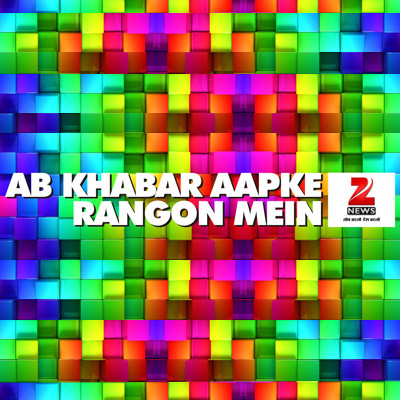
NEW DELHI: Weeks after it decided to get the youngsters of the country hooked on to its Hindi news channel, Zee News, Zee Media Corp (ZMCL) has launched a new television commercial unveiling the channels’ new look.
A set of vibrant colors are being used to promote their philosophy that ‘News is never black and white; there are many shades, many hues to news’. The new TVC that has been created by the agency Bang in the Middle at a cost of nearly Rs 20 – 30 lakh will run for a month across multiple platforms like GECs and multiplexes besides leveraging its own networks to target the masses.
In a press release, Zee News said it was committed to provide viewers with various aspect of news, which has been highlighted through the TVC.
Speaking on this occasion ZMCL marketing and distribution VP Rohit Kumar said, “Under the revamp, the focus is on the youth. As always, we have striven to stay focused and relevant. With this new campaign the objective is to influence youth and their conscience. Our attempt is to strike a chord with them, their thoughts and attitude through this campaign.”
The channel underwent a brand name change last year as Zee News changed to Zee Media Corp and saw a 15 per cent rise in viewership. For this new gamble they have taken, it will take three to six months for the effects to be seen.