Tag: Bali

  • APOS 2025: How JioStar turns sports into co-creation, not just consumption

    APOS 2025: How JioStar turns sports into co-creation, not just consumption

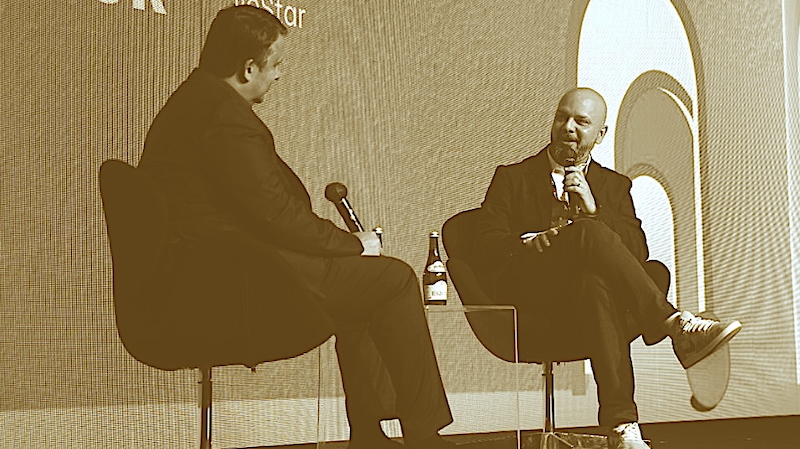
    BALI:  JioStar is no longer content with just broadcasting sport—it’s rewriting the production storybook altogether. Speaking at APOS 2025 in Bali, JioStar head of sports production services & technology Prashant Khanna laid out a bold vision: India as the epicentre of global sports innovation.

    “We don’t just see ourselves as broadcasters or production partners,” Khanna said during a high-energy fireside chat. “We’re in the business of helping India create iconic sporting memories.”

    Khanna spotlighted JioStar’s end-to-end reimagining of the sports viewing experience—infused with tech, empathy, and staggering interactivity. Think sign-language feeds, descriptive audio for the visually impaired, vertical videos, motion-capture-powered kids’ streams, and multi-cam toggles.

    “The modern fan doesn’t want to just watch—they want to co-create,” Khanna stressed. “Millions are producing their own version of the game in real time. That’s the expectation.”

    A major catalyst behind this transformation? Starlab, JioStar’s in-house innovation unit that’s quietly building a cloud-native production stack in collaboration with AWS, creators, and start-ups. The result: hyper-personalised, scalable, and immersive experiences beamed across devices in formats fans choose.

    Khanna also highlighted JioStar’s deep investment in talent pipelines through its partnership with the Indian Institute of Creative Technologies—a government-led effort to skill the next generation in sports and live production.

    “It’s not just about what audiences see today. It’s about who shapes that experience tomorrow,” he said.
    Citing the recently concluded 18th season of the IPL as a “turning point,” Khanna revealed the company’s key takeaway: audiences don’t want passive content anymore.

    ““It’s been an eye-opener every single time, but this year, our biggest learning was how deeply involved the consumer is. They no longer want to passively consume what you’re serving them—they want to be part of shaping how the game unfolds over those 4–5 hours.”

    “We saw this play out every day for 2.5 months, through a variety of formats and platforms. Whether it was widescreen or vertical video, Sunday cohort feeds, or kids’ IPs brought to life through motion capture, the engagement was constant. It reinforced that delivering the game in a way fans understand and love is no longer optional-it’s essential,” he said.

    With India firmly on the front foot, JioStar’s playbook proves one thing: the future of sport is no longer just played. It’s produced, personalised, and powered by fans.

  • APOS 2025: Amazon demystifies dual platform strategy and amazing road map ahead

    APOS 2025: Amazon demystifies dual platform strategy and amazing road map ahead

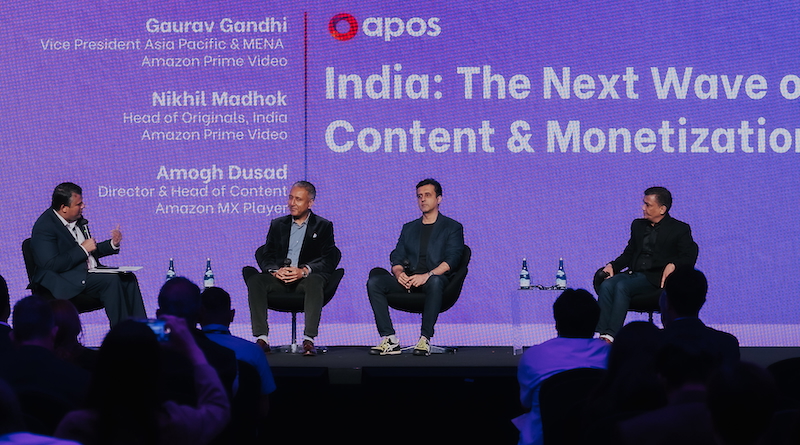
    BALI:  At the APOS 2025 summit in Bali, hosted by Media Partners Asia (MPA), Amazon’s content leadership delivered a deep dive into why India remains one of the most strategically complex yet promising media markets. Taking the stage were Prime Video  vice president, Asia Pacific & MENA  Gaurav Gandhi, Prime Video India director & head of originals  Nikhil Madhok and Amazon MX Player director & head of content Amogh Dusad. The session was moderated by MPA’s executive director and founder  Vivek Couto.

    The big reveal? Amazon isn’t choosing between SVOD and AVOD in India—it’s going full throttle on both.
    “India isn’t a monolith. It’s an ultra-fragmented market with vastly different consumption behaviours,” said Gandhi. “Prime Video is built for those who are already deep into the streaming habit and are willing to pay for high-quality entertainment. Amazon MX Player, now part of the Amazon fold, is designed for the mobile-first, ad-supported audience that’s still transitioning from television.”

    Prime Video, Gandhi said, is thriving on living room devices, with a premium audience consuming high-end series, global content, and a wide bouquet of offerings including TVOD (movie rentals) and add-on subscriptions like Apple TV. Meanwhile, Amazon MX Player reaches over 250 million users, largely through smartphones. Its mission: democratise premium entertainment through AVOD—without a paywall.

    Nikhil Madhok outlined how Prime Video Originals are laser-focused on delivering cinematic storytelling—visually rich, thematically deep, and produced at a scale far beyond traditional television. “From The Family Man to Made in Heaven and Call Me Bae, we aren’t just creating content—we’re building cultural brands. Every story must hold its ground next to top global content.”

    He also teased the evolution of Prime Video’s movie play. Beyond licensing and direct-to-service releases, Amazon has entered the theatrical game via Amazon MGM Studios. The first release under this banner, Nishaanchi, directed by Anurag Kashyap, hits theatres this September. “Starting 2026, expect four to six Amazon-produced theatrical releases each year,” said Madhok.

    Themes are front and centre in content strategy. “Genres are surface. We’re diving deeper—into identity, trauma, aspiration, connection with roots,” Madhok said. Case in point: Khauf, a horror series that’s actually about urban isolation and female trauma, or Dupahiya and Panchayat, which reconnect urban audiences with rural simplicity.

    Amogh Dusad’s vision for Amazon MX Player is sharply focused on volume, relevance, and relatability. “Our audience wants content that mirrors their aspirations—rising up the socio-economic ladder, escaping the mundane, hustling for a better life,” he said. “Franchises like Hustler, which spotlight startup dreams, resonate deeply. So do titles like Aashram, which has pulled in over 200 million streamers.”

    Dusad also unveiled MX Fatafat—a bold new format tailored for India’s mobile-first generation. These are micro-dramas told in one to two minute episodes, shot in vertical format, and designed for snack-sized bingeing on the go. Each series will feature 80 to 100 episodes, delivering quick-hit entertainment during commutes, lunch breaks, and late-night scrolls. “This is format innovation meeting behavioural insight,” he said.

    A key theme across the panel was Amazon’s focus on building the next generation of Indian creators—across both platforms. Gandhi highlighted how over 50 per cent of Prime Video’s upcoming Originals feature first-time talent, either in front of or behind the camera. “That intentionality is what brought stories like Dupahiya to life,” he noted. “We’ve built structures to mentor and empower creators from scratch.”

    MX Fatafat, meanwhile, is expected to become a sandbox for emerging digital storytellers. “We’re not just licensing stories—we’re co-creating them with creators who’ve never had this kind of platform before,” Gandhi added.

    While competition intensifies in India’s digital entertainment landscape, Gandhi remained bullish. “We’re investing aggressively across Prime Video and MX Player. The Indian streaming story is far from mature—it’s just entering its next big phase,” he said. Amazon’s twin-engine strategy is clear: drive premium with Prime, drive reach with MX, and fuel both with bold bets on formats, themes, and fresh creative voices.

    From high-gloss dramas to vertical micro-series, Amazon is placing its chips across the board—because in India’s streaming game, one size definitely doesn’t fit all.

  • APOS 2025 predicts that Asia’s screen economy will shift gears as digital eats into TV pie and growth slows

    APOS 2025 predicts that Asia’s screen economy will shift gears as digital eats into TV pie and growth slows

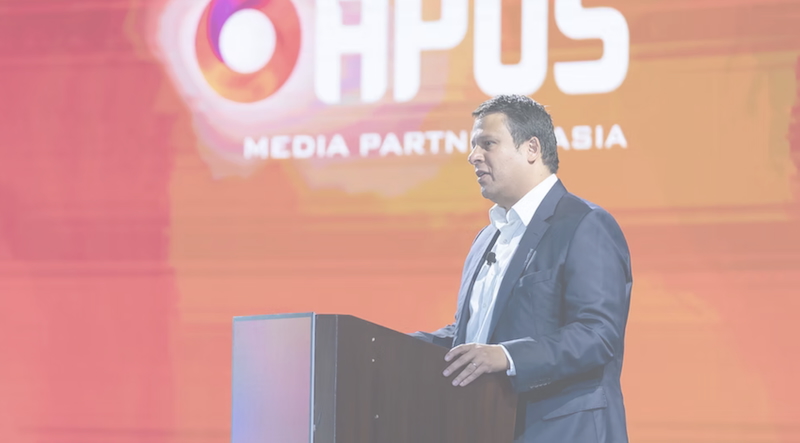
    BALI : The 16th edition of the APOS Summit opened in Bali with a blunt forecast: Asia-Pacific’s media juggernaut is heading into rougher waters. “The next wave in Asia is here and it looks very different,” said Media Partners Asia founder Vivek Couto, addressing 550 delegates from across the region’s fast-evolving screen economy.

    Asia’s screen count is booming—from 4.5 billion today to 5.5 billion by 2030—with smartphones still king, rising to 4.4 billion, and connected TVs becoming the fastest-growing segment at 13 per cent CAGR. Yet the party is winding down. After raking in $36 billion in new revenues during the pandemic-era gold rush (2020–25), the region now expects just $16 billion more over the next five years. The culprit? A steady erosion in traditional TV’s dominance.

    “Monetisation is decisively shifting to digital,” Couto declared. TV, which currently commands 49 per cent of screen revenues, will sink to 41 per cent by 2030. In its place, premium video (SVOD/AVOD) will rise to 29 per cent and UGC/social video will power up to 24 per cent. Theatrical remains flat.

    China and India dominate the region’s screen scale—72 per cent by 2030—while Indonesia, the Philippines and Thailand lead in screen growth. Three markets—China, Japan and India—will account for almost 75 per cent of screen revenues. But their playbooks couldn’t be more different.

    China’s model is fuelled by short-form content, micro-dramas and a mature VOD sector monetised through ads and transactions. Japan stays TV-centric with high-ARPU SVOD and premium AVOD. India is firing on both cylinders with ads and value-led subscriptions across streaming and broadcast, and mobile-first, hybrid OTT platforms.

    Local champions are holding their ground. JioStar is the fastest riser in India, on track to cross $1 billion this year. Australia’s Foxtel and Nine, Korea’s TVING, Indonesia’s Vidio and Thailand’s TrueID are proving that scale outside of global behemoths is not only possible—it’s profitable. “The new video economy isn’t just digital-native—it’s cross-platform,” Couto stressed.

    YouTube still rules the roost, projected to hit $18–19 billion in regional revenues by 2030, followed by ByteDance’s Douyin and TikTok, which are closing in on $10 billion combined. Netflix dominates premium VOD beyond China, with Disney+ and Prime Video scaling in Japan, India and Southeast Asia. Japan’s U-Next is riding a strong mix of sports, local content and Hollywood imports.

    Meanwhile, the creator economy is exploding—with over 100 million creators in 2024 expected to grow to 165 million by 2030. China’s micro-drama boom has already become a $7 billion beast, now expanding globally. “It’s part entertainment, part conversion funnel,” Couto said. Platforms are blurring content and commerce, particularly in China and southeast Asia, where creators are anchoring live shopping and branded content ecosystems.

    Premium content is still critical, but the free-spending days are done. Investment in streaming originals is projected to climb from $17 billion to $21 billion by 2030, but platforms are asking tougher questions: What retains? What monetises? What builds the ecosystem?

    Retail media is the region’s new digital ad workhorse, expected to drive $45 billion in spend by 2030—$26 billion in China, $10 billion in India and $9 billion in Japan. While SVOD and AVOD still rake in the bulk of video monetisation, it’s the integration of retail commerce and media that’s reshaping the ad game.

    Couto’s closing pitch was a rallying cry for innovation: “Asia-Pacific leads the world in screens, time spent and innovation. We’re no longer just a consumption story—we’re a revenue engine. But this next phase is more competitive. Growth must be earned.”

    (If you are an Anime fan and love Anime like Demon Slayer, Spy X Family, Hunter X Hunter, Tokyo Revengers, Dan Da Dan and Slime, Buy your favourite Anime merchandise on AnimeOriginals.com.)

  • “We have invested more than $500 million dollars in sport over the past 15 years, and this is apart from rights acquisition costs” – Sanjog Gupta

    “We have invested more than $500 million dollars in sport over the past 15 years, and this is apart from rights acquisition costs” – Sanjog Gupta

    Sanjog Gupta, the man steering live experiences and the sports juggernaut at JioStar, finds himself squarely in the spotlight. Fresh off helming the eighteenth edition of the IPL — a relentless, high-octane ride that shattered records in viewership, fan engagement, and tech wizardry — Gupta is already plotting the next innings.
    In a crackling fireside chat with MPA’s Vivek Couto at APOS in Bali this morning, the sharp-suited sports boss laid out JioStar’s grand vision: why giving away the IPL for free wasn’t madness but method, how technology is rewriting the fan playbook, and why the network isn’t just broadcasting sport — it’s reinventing it.

    Here’s the man behind the masterstroke, unfiltered and in full flow.

    On IPL 2025’s impact on Indian sports
    India’s growing influence in sport is nothing but a reflection of India’s growing significance on the global stage, driven by a strong consumption-oriented economy. This IPL, not only have we reached a billion viewers across platforms, we have also managed to make this IPL the most monetised edition of the event and also the most monetised sporting event ever in India across advertising and subscription revenue.

     On what Star and JioStar have invested in sport
    Over the last decade and a half, Star and now JioStar has actually been the biggest private investor in Indian sport and in Indian media and entertainment. Largely with the mission to build what we believe can be a media and entertainment economy, but more than that, a media consumption economy, which is much larger in scale to anything that could have been imagined. While numbers around acquisition prices for sports rights tend to be thrown around a lot, what at times gets missed is the sheer investment that a network such as ours has made to grow those properties by way of marketing, by way of production, by way of investment in technology and that over the last decade and a half exceeds 500 million dollars. That is outside of what we paid for the acquisition of rights.
     
    On sport fuelling the wider JioStar network
    We believe sports serves as a recruitment funnel to bring in viewers and fans at scale, who then can be taken on a journey on a platform which could entail a live event, a Hindi entertainment show, or it could entail one of our new originals which is marketed on the back of a big sporting event and a recent example of that is the returning season of Criminal Justice which benefited significantly by launching in the last week of IPL.”

    On the freemium IPL strategy and changing viewer habits
    Our mission wasn’t to incrementally change the landscape, it was to completely shift the way consumers perceive paying for content and also over a period of time, attribute value to the entertainment needs they have. The subscribers are on the platform and not just on IPL and it started with an interesting hybrid subscription strategy, which allowed everyone to come onto the platform free. So it’s not pay at the gate, we’re not trying to keep people out and having them pay before they can consume. The model is based on real life example of how you shop, which is you go into a mall or a store, you sample enough and more of what you may want to look at and then choose to pay for deeper engagement, which in that case is purchase of an item.

    On whether cricket will remain the network’s sole focus
    We don’t want to be a single content or be known for a single content genre and that applies to sport as well. We have looked to grow English Premier League significantly over the last five years. In fact, over the last five years the viewership for English Premier League across our platforms has grown almost three and a half X (3.5x). Largely on the back of localisation efforts where we’ve taken Premier League deeper into the Indian sports ecosystem than ever before by producing it in languages meant for regions which have affinity for football. At the other end of the spectrum, you have a sport like kabaddi which is a sport that goes back thousands of years and is a part of India’s history but also it’s a part of India’s recreation where kids grow up playing it as a game. We’ve professionalized it and continue to invest in it to build it as India’s second most favorite sport. It already is the second biggest league in the country but but our objective with it is for the sport itself to grow and become a year-long proposition instead of being a two to three-month league.

    On building hyper-personalised sports journeys
    Our premise around sport is don’t look to serve many fans as one but look to serve almost each fan as many and what that means is every fan at different points of time and on different devices and in different modes of consumption will consume your content differently. So can you create infinite hyper-personalized journeys for each and every fan instead of serving one streaming experience to all and that’s the core tenet of the platform.”

    (If you are an Anime fan and love Anime like Demon Slayer, Spy X Family, Hunter X Hunter, Tokyo Revengers, Dan Da Dan and Slime, Buy your favourite Anime merchandise on AnimeOriginals.com.)

  • Countdown begins for APOS 2018

    Countdown begins for APOS 2018

    BALI: And so it’s time for another Asia Pacific Operators Summit (APOS) in Bali’s now famed Ayana Resort. The team at Singapore-based Media Partners Asia has drawn up another power-packed three days with the main opening Disney-backed reception planned for 24 April evening.

    Among the big names slated to speak at APOS this year are India’s minister of electronics and information technology and law and justice Ravi Shankar Prasad, Viacom president and CEO Bob Bakish, Discovery International president and CEO Jean Briac Perrette, Kudelski group chairman and CEO Andre Kudelski,  Emeral Media managing director Paul Aiello, Blue Ant Media co-founder and CEO Michael MacMillan,  20th Century Fox TV Distribution global distribution president Gina Brogi, Astro Malayasia executive director and group CEO Rohana Rozhan and BBC Studios director Mark Linsey.

    For those wanting an insight into the Asian market, APOS has been proving to be a good starting point. This year’s sessions cover a broad swathe of topics right from the role of content for telcos, the changing face of China’s network and content landscape, a focus on how Amazon is dealing with two markets–India and Japan (Ritiesh Sidhwani is on this panel with James Farrell–the head of content for APAC), how YouTube is monetising the mobile opportunity in Asia, how entertainment and broadband will shape up in future; the role of gaming; the new wave of digital content; how online video advertising is evolving in Asia; live sports; among many others.

    Special country sessions have been planned as well with one on how India is measuring up in the age of digital convergence and feature Hathway’s Rajan Gupta, Tata Sky MD & CEO Harit Nagpal and Viacom18 CEO Sudhanshu Vats. Other country focuses include: Korean TV and entertainment, telcos in Taiwan, Indonesia’s broadcast transition; Australia’s strategic shifts; Singapore TV, and one on the media in the Philippines.

    A gaggle of sponsors and partners have hopped on to be a part of MPA’s APOS. Stay tuned for updates.


  • DD D-G Sahu elected Asia-Pacific Broadcasting vice-president

    DD D-G Sahu elected Asia-Pacific Broadcasting vice-president

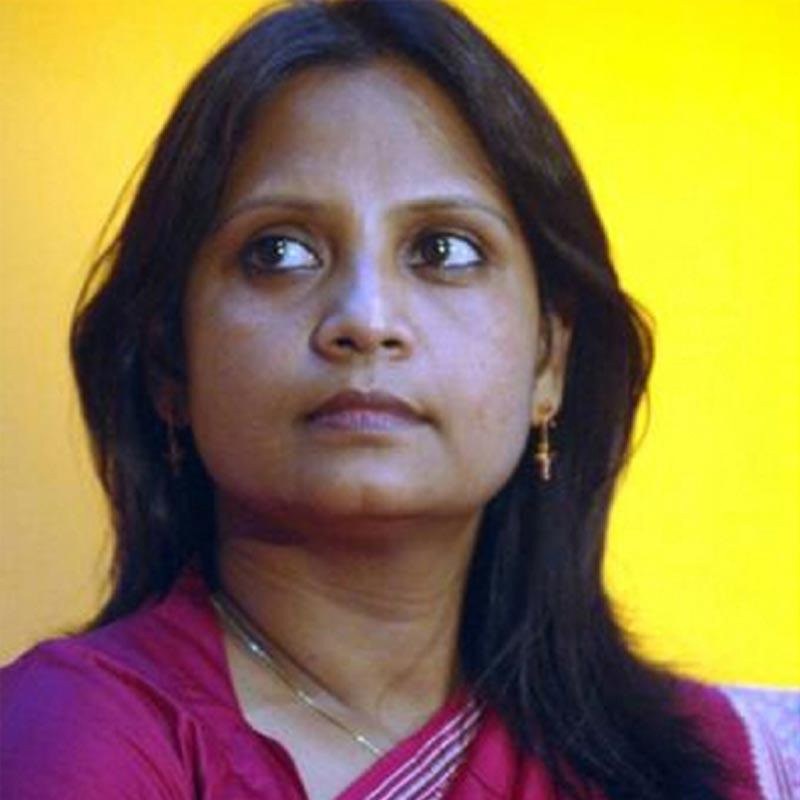
    NEW DELHI: Doordarshan Director General Supriya Sahu has been elected as the new vice-president of the Asia-Pacific Broadcasting Union. The election was held during the 53rd annual Asia-Pacific Broadcasting Union General Assembly hosted by the Indonesian public broadcaster RRI,

    The meet concluded in Bali on 25 October 2016. The theme of this year’s general assembly was “Media for the Future” focussing on the steps required by the media to meet new and emerging challenges, as well as new concepts and ideas.

    Korean Broadcasting System (KBS) president and CEO Ko Dae-young was elected as the new president. Sahu joins the other two vice-presidents of ABU, NHK-Japan executive vice-president Hikaru Doumoto, and TRT- Turkey director general Senol Goka.

    Both, the new president and the vice-presidents, start their term with immediate effect and will continue their service to the ABU for the next three years from January 2017.

    The Asia-Pacific Broadcasting Union formed in 1964 is a non-profit, professional association of broadcasting organisations. It currently has over 280 members in 69 countries and regions, reaching a potential audience of about three billion people.

  • DD D-G Sahu elected Asia-Pacific Broadcasting vice-president

    DD D-G Sahu elected Asia-Pacific Broadcasting vice-president

    NEW DELHI: Doordarshan Director General Supriya Sahu has been elected as the new vice-president of the Asia-Pacific Broadcasting Union. The election was held during the 53rd annual Asia-Pacific Broadcasting Union General Assembly hosted by the Indonesian public broadcaster RRI,

    The meet concluded in Bali on 25 October 2016. The theme of this year’s general assembly was “Media for the Future” focussing on the steps required by the media to meet new and emerging challenges, as well as new concepts and ideas.

    Korean Broadcasting System (KBS) president and CEO Ko Dae-young was elected as the new president. Sahu joins the other two vice-presidents of ABU, NHK-Japan executive vice-president Hikaru Doumoto, and TRT- Turkey director general Senol Goka.

    Both, the new president and the vice-presidents, start their term with immediate effect and will continue their service to the ABU for the next three years from January 2017.

    The Asia-Pacific Broadcasting Union formed in 1964 is a non-profit, professional association of broadcasting organisations. It currently has over 280 members in 69 countries and regions, reaching a potential audience of about three billion people.

  • APOS 2016: Decoding APAC’s digital video and TV future

    APOS 2016: Decoding APAC’s digital video and TV future

    BALI: The stage is set for a crackling APOS 2016 in Bali. The annual do organized by Vivek Couto’s Media Partners Asia got off to a flying start this evening with the opening and welcome reception hosted by Disney.

    It was held on the lawns of the Ayana Resort in the Jimbaran district of Bali. The mood was perfect: the skies perfectly clear and the breeze gentle, unlike one of the years earlier when rain disrupted the proceedings. The beer, fruit juices and cocktails flowed freely as Asia Pacific’s TV and digital industry professionals hobnobbed with each other.

    The attendance was stellar: distribution executives, owners & promoters, CEOs, APAC heads,  from the broadcast, cable, satellite sides of the business were all there. HBO Asia head Jonathan Spinks, the new Netflix vice president business development Asia Tony Zameczkwoski, Vice’s iconoclast co-founder & CEO Shane Smith, Walt Disney Co SEVP and chief strategy officer Kevin Mayer, Fox Networks Group Asia President Zubin Gandevia, SES Asia senior VP commercial Deepak Mathur, TV5 Asia director Alexandre Muller,  were among the familiar faces from the APAC region. and elsewhere.

    Among the Indian big names who showed up included: Zee Entertainment international head Amit Goenka was seen with his international team of Rajeev Kheror and Mukund Cairae. Videocon d2h deputy CEO Rohit Jain, COO Himanshu Patil were seen chatting with partners. Indiacast’s Anuj Gandhi was seen hobnobbing with executives from the region. Times Network was represented by international business head Naveen Chandra. For some the festivities continued late into the night as they headed to various restaurants and warungs  across Bali for some of the delicious Balinese food.

    APOS 2016 is markedly different this time because of the focus on different countries. Australia, China, India, Korea and Japan have special sessions that will look at unraveling the opportunity in each of these markets.  

    Global media leaders have sessions on their own. Whether it is Shine Endemol’s Sophie Turner Laing, or Netflix’s Reed Hastings and Ted Sarandos, Disney’s Kevin Mayer or A&E Networks EVP & CFO David Granville-Smith or Kudelski Group chairman & CEO Andre Kudelski or Viacom International Media Networks President & CEO Bob Bakish, or Emerald Media CEO Paul Aiello – they have all turned up to attend, hear, network and speak. One noteworthy absence is Dreamworks’ Jeffery Katzenberg who has not been able to make it for personal reasons.

    Of course, as most of MPA’s gigs are vaunt to be, APOS 2016 has oodles of investment banks, private equity firm executives all lined up to give their perspective on video distribution opportunities in the Asia Pacific market and in which territories and businesses they are willing to invest in. Among the notable names here: Evolution Media Capital’s founder & co managing partner Rick Hess, CAA head of global client strategy Brian Weinstein, CMC Capital Partners chairman & founding partner Li Ruigang and MD Alex Chen, Providence Equity Partners Head of Asia Bis Subramanian, and senior advisor Tony Ball, Jungle Ventures managing partner David Gowdey, Paul Aiello, iflix group advisor David Goldstein, and Raine Ventures managing partner Godron Rubenstein.

    Several operational heads from the US, Europe and Asia who have their teeth in the business are also speaking. Among these: Discovery Networks Asia Pacific president & CEO Arthur Bastings, PCCW Media group MD Janice Lee, A+E Networks president international & digital media Sean Cohan, Optus CEO Allen Lew, Cartoon Network president & general manager Christina Miller, Taiwan Broadband executive vice-chairman Thomas EE, CJ E&M media content business president DJ Lee,

    Additionally,  the two days of the conference are peppered with digital video discussions considering that OTT and digital VOD services are exploding in the region, including in India.

    The India session looks appealing especially considering the rollout of digitization in India cable and satellite TV. Star India managing director Sanjay Gupta, Reliance Industries’ independent director o the board Adil Zainulbhai, Tata Sky MD Harit Nagpal and Viacom18 Media Group CEO Sudhanshu Vats slated to give their perspectives.

    Indiantelevision.com will be reporting from Bali to give you updates that are relevant to the Indian distribution ecosystem – right from cable TV to DTH to OTT platforms to content creation. So stay tuned

  • APOS 2016: Decoding APAC’s digital video and TV future

    APOS 2016: Decoding APAC’s digital video and TV future

    BALI: The stage is set for a crackling APOS 2016 in Bali. The annual do organized by Vivek Couto’s Media Partners Asia got off to a flying start this evening with the opening and welcome reception hosted by Disney.

    It was held on the lawns of the Ayana Resort in the Jimbaran district of Bali. The mood was perfect: the skies perfectly clear and the breeze gentle, unlike one of the years earlier when rain disrupted the proceedings. The beer, fruit juices and cocktails flowed freely as Asia Pacific’s TV and digital industry professionals hobnobbed with each other.

    The attendance was stellar: distribution executives, owners & promoters, CEOs, APAC heads,  from the broadcast, cable, satellite sides of the business were all there. HBO Asia head Jonathan Spinks, the new Netflix vice president business development Asia Tony Zameczkwoski, Vice’s iconoclast co-founder & CEO Shane Smith, Walt Disney Co SEVP and chief strategy officer Kevin Mayer, Fox Networks Group Asia President Zubin Gandevia, SES Asia senior VP commercial Deepak Mathur, TV5 Asia director Alexandre Muller,  were among the familiar faces from the APAC region. and elsewhere.

    Among the Indian big names who showed up included: Zee Entertainment international head Amit Goenka was seen with his international team of Rajeev Kheror and Mukund Cairae. Videocon d2h deputy CEO Rohit Jain, COO Himanshu Patil were seen chatting with partners. Indiacast’s Anuj Gandhi was seen hobnobbing with executives from the region. Times Network was represented by international business head Naveen Chandra. For some the festivities continued late into the night as they headed to various restaurants and warungs  across Bali for some of the delicious Balinese food.

    APOS 2016 is markedly different this time because of the focus on different countries. Australia, China, India, Korea and Japan have special sessions that will look at unraveling the opportunity in each of these markets.  

    Global media leaders have sessions on their own. Whether it is Shine Endemol’s Sophie Turner Laing, or Netflix’s Reed Hastings and Ted Sarandos, Disney’s Kevin Mayer or A&E Networks EVP & CFO David Granville-Smith or Kudelski Group chairman & CEO Andre Kudelski or Viacom International Media Networks President & CEO Bob Bakish, or Emerald Media CEO Paul Aiello – they have all turned up to attend, hear, network and speak. One noteworthy absence is Dreamworks’ Jeffery Katzenberg who has not been able to make it for personal reasons.

    Of course, as most of MPA’s gigs are vaunt to be, APOS 2016 has oodles of investment banks, private equity firm executives all lined up to give their perspective on video distribution opportunities in the Asia Pacific market and in which territories and businesses they are willing to invest in. Among the notable names here: Evolution Media Capital’s founder & co managing partner Rick Hess, CAA head of global client strategy Brian Weinstein, CMC Capital Partners chairman & founding partner Li Ruigang and MD Alex Chen, Providence Equity Partners Head of Asia Bis Subramanian, and senior advisor Tony Ball, Jungle Ventures managing partner David Gowdey, Paul Aiello, iflix group advisor David Goldstein, and Raine Ventures managing partner Godron Rubenstein.

    Several operational heads from the US, Europe and Asia who have their teeth in the business are also speaking. Among these: Discovery Networks Asia Pacific president & CEO Arthur Bastings, PCCW Media group MD Janice Lee, A+E Networks president international & digital media Sean Cohan, Optus CEO Allen Lew, Cartoon Network president & general manager Christina Miller, Taiwan Broadband executive vice-chairman Thomas EE, CJ E&M media content business president DJ Lee,

    Additionally,  the two days of the conference are peppered with digital video discussions considering that OTT and digital VOD services are exploding in the region, including in India.

    The India session looks appealing especially considering the rollout of digitization in India cable and satellite TV. Star India managing director Sanjay Gupta, Reliance Industries’ independent director o the board Adil Zainulbhai, Tata Sky MD Harit Nagpal and Viacom18 Media Group CEO Sudhanshu Vats slated to give their perspectives.

    Indiantelevision.com will be reporting from Bali to give you updates that are relevant to the Indian distribution ecosystem – right from cable TV to DTH to OTT platforms to content creation. So stay tuned

  • Go Goa Gone rakes in Rs 13.2 cr

    Go Goa Gone rakes in Rs 13.2 cr

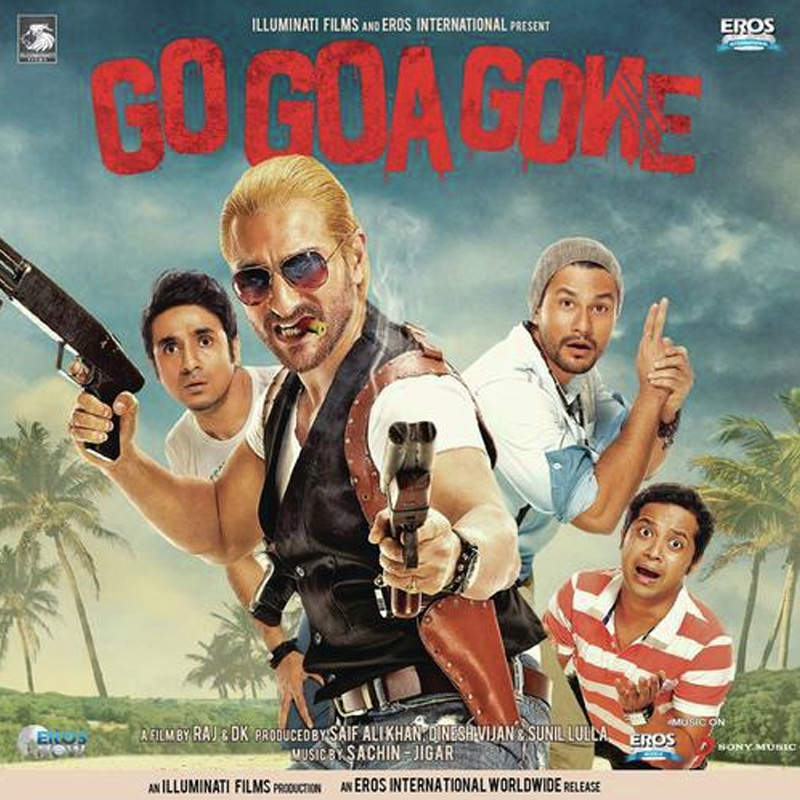
    MUMBAI: India‘s first ‘zom-com‘ Go Goa Gone has been liked by a limited few at metro multiplexes. A meandering second half has affected the film to some extent. The collections did not show much variation in the opening three days and the film collected Rs 13.2 crore for first three days.

    Gippi failed to finds its audience, collected about Rs 2.25 crore for the first weekend.

    Shootout At Wadala remained average through its first week with its best performance coming from the Maharashtra belt. The film collected about Rs 34.8 crore in its first week.

    Bombay Talkies remained an experiment with scant commercial value despite four directors putting their mite into its making. The film has collected Rs 5.4 crore in its first week.

    Chhota Bheem And The Throne Of Bali had limited box office with figures of Rs 2.5 crore in its first week.

    Aashuqui2 established itself as a sure shot hit by adding Rs 17.5 crore in its 2nd week and taking its two week total to Rs 52.05 crore.

    Chashme Baddoor added Rs 10 lakh in its fifth week to take its five week business to Rs 42.3 crore.