Tag: Balaji Telefilms

  • Boney’s ex-wife Mona Kapoor dies of cancer

    Boney’s ex-wife Mona Kapoor dies of cancer

    MUMBAI: Mona Kapoor, ex-wife of Bollywood filmmaker Boney Kapoor and CEO of Future Studio, died on Sunday at the age of 48.

    Mona was battling multiple organ cancer for five months and was admitted to the Hinduja Hospital in Mumbai two weeks ago.

    She leaves behind son Arjun and daughter Anshula. Arjun will soon be making his Bollywood debut with Yash Raj Films‘ ‘Ishaqzaade‘.

    Future Studio, an indoor shooting studio in Mumbai, is a brand equity in itself. Located in Mumbai at Goregaon, minutes away from Mumbai‘s Film City, the studio boasts of a clientele ranging from Balaji Telefilms, UTV, Cinevista, Tips Films and Sohail Khan productions, among others.

    Mona separated from Boney after being together for a long time and the producer married actress Sridevi in 1996.

  • Prime Focus Q3 net up 50% to Rs 262.9 mn

    Prime Focus Q3 net up 50% to Rs 262.9 mn

    MUMBAI: Prime Focus Limited has posted a consolidated net profit of Rs 262.9 million for tthe fiscal-third quarter ended December 2011, which is 50.4 per cent higher compared to the Rs 174.8 million the company posted in the same quarter in the previous fiscal.

    The company’s consolidated income also rose 67.6 per cent to Rs 2.13 billion for the third quarter compared to the Rs 1.27 billion that the company posted in financial year 2010 for the same quarter. Net income jumped to Rs 612.7 million for the current quarter as opposed to Rs 370.6 million in the previous fiscal for the same period.

    Prime Focus MD & CEO Ramki Sankaranarayanan said, “I am pleased to report a good set of results based on the continued strong performance of our 2D-3D conversion business, which is growing rapidly on the back of superior technology platform, View-DTM and service delivery to Hollywood studios. Five of the 10 Oscar nominations in the visual effects category this year are projects we are proud to have contributed our services to, clearly reflecting our global penetration in this space.

    “Our subsidiary Prime Focus Technologies (PFT) is in the forefront of cloud computing driven execution of digital processes in the media industry. As broadcasters and content owners embrace HD TV, file-based workflows and multi-platform delivery, new age standard operating procedures and engagement models are emerging in managing unified content operations. CLEARTM, our hybrid cloud platform, on the back of the successes in India with Star TV, Eros, Unilever, Balaji Telefilms and JWT, now have global wins as well reflecting its potential for the future."

    PFL is a global visual entertainment services group that provides creative and technical services to the film, broadcast, and advertising market.

  • Ekta Kapoor emerges as ‘Entertainment Industry Icon’ in Ormax’s survey

    Ekta Kapoor emerges as ‘Entertainment Industry Icon’ in Ormax’s survey

    MUMBAI: Balaji Telefilms’ joint managing director and soap queen Ekta Kapoor has been voted as the Entertainment Industry Icon of 2011, in a Decision Makers Survey conducted by Ormax Media, as a part of their year-end report Front Page 2011.

    The survey was conducted amongst decision makers and influencers in the media business – senior advertisers, media planners and media journalists.

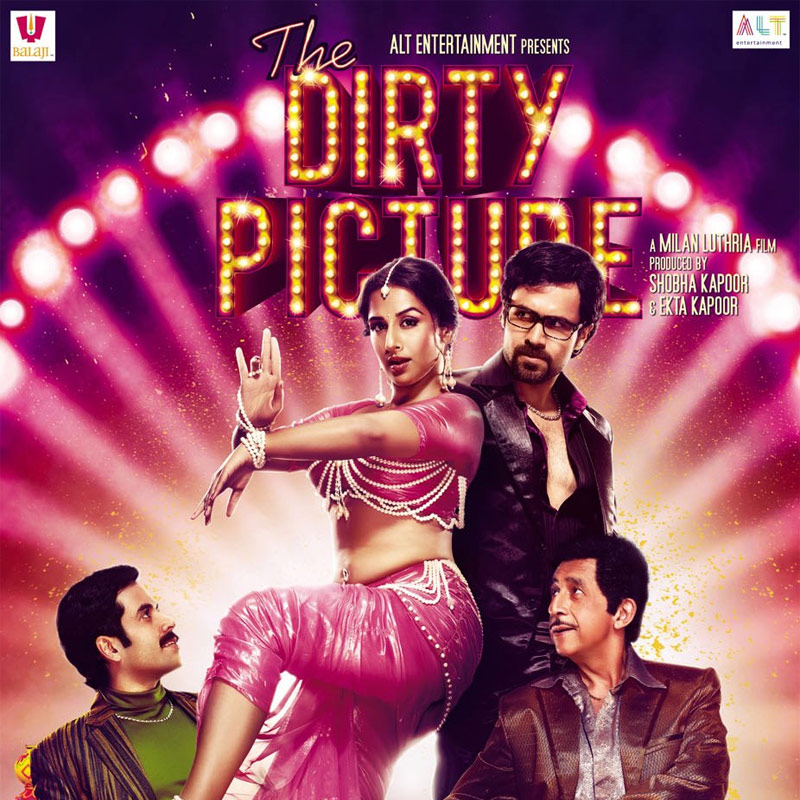
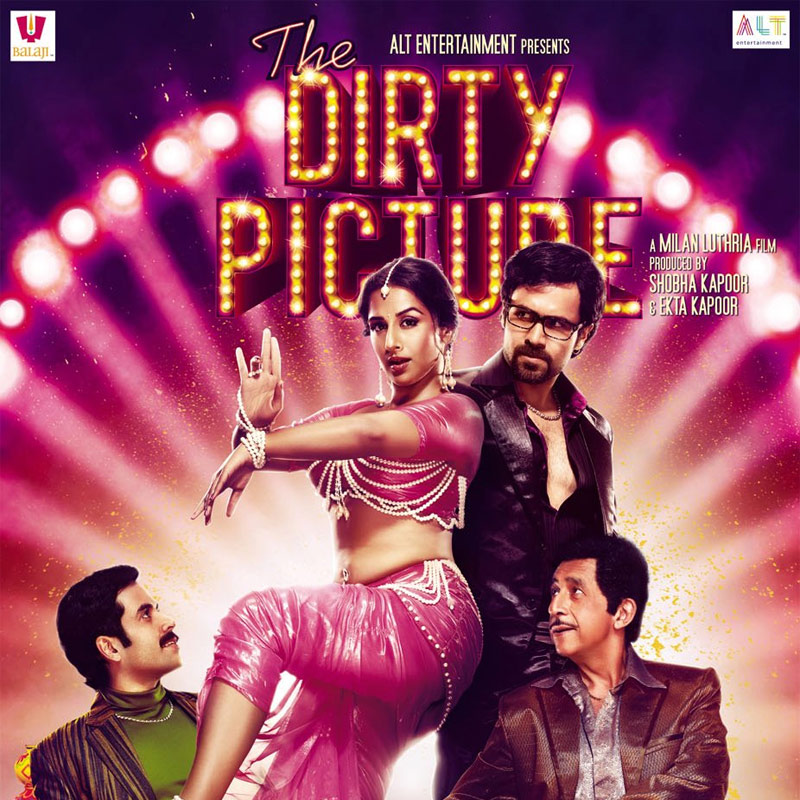
    The respondents were asked to choose one person from the entertainment industry who, according to them, made the maximum impact in 2011. A staggering 46 per cent of them voted for Kapoor. She was chosen for experimenting with unconventional genres in films like The Dirty Picture, Shor In The City and Ragini MMS, and also for providing Sony a much-awaited fiction hit in Bade Achhe Lagte Hain.

    Balaji Telefilms’ winning streak continues with her film The Dirty Picture also emerging as the clear leader in The Most Trendsetting Film of 2011 in the survey. The film dominated this category with a 45 per cent share. It was followed by Delhi Belly and No One Killed Jessica on the second and third positions, with 28 per cent and 12 per cent share respectively.

    The Dirty Picture was chosen as the most trendsetting film for its bold portrayal of a sexually explicit theme, including the lead actress breaking the norms set for conventional Bollywood heroines.

    Speaking about the survey, Ormax Media CEO Shailesh Kapoor said: “The Decision Makers Survey was done to understand the views of senior industry experts on the best of 2011. Balaji Telefilms had a remarkable year in 2011, and it is not surprising that they take the top position in two categories.”

    Detailed results of the Decision Makers Survey will be available in the Front Page 2011 report, which be released in the first week of February 2012.

  • The Dirty Picture nets Rs 324 mn on BO

    The Dirty Picture nets Rs 324 mn on BO

    MUMBAI: The Dirty Picture meets with unanimous appreciation all over and consolidates its position with each passing day, holding strong even today. And with Tuesday‘s bank holiday promising to be an extra booster, the film which is already a hit, is on its way to become a superhit.

    The Dirty Picture collected Rs 324 million over the first weekend. According to Balaji Telefilms‘s Girish Johar, the film has already made it to top 10 weekend grossers with these figures.

    The other release, I Am Singh‘s collections remained poor.

    Among the last week‘s releases, box office collections of Dam 999 remained below Rs 10 million mark after its first week.

    Desi Boyz joins the list of recent debacles adding just Rs 76 million in next four days to its weekend collections of Rs 262 million, taking its total to Rs 338 million.

    Rockstar collected Rs 31 million in its third week thereby taking its three week total to Rs 586 million.

  • Andhra HC dismisses writ petition on The Dirty Picture

    Andhra HC dismisses writ petition on The Dirty Picture

    MUMBAI: Relieving the makers of The Dirty Picture and the distributors of the film in Andhra Pradesh, the state High Court dismissed a writ petition by the brother of the late South-based actress Silk Smitha.

    In his petition, Smitha‘s brother V Naga Varaprasad Rao had sought a ban on the film.

    He had objected to the way his late sister was portrayed in the film. He also claimed that the filmmakers never took the family‘s consent for making the film on Silk Smitha. Justice Vilas V Afzalpurkar dismissed the petition.

    The Central Board of Film Certification (CBFC) also conveyed to the court that there was no scope for the Court to review the decision of the Censor Board as the filmmakers themselves had denied that the film was based on the late actress‘s life.

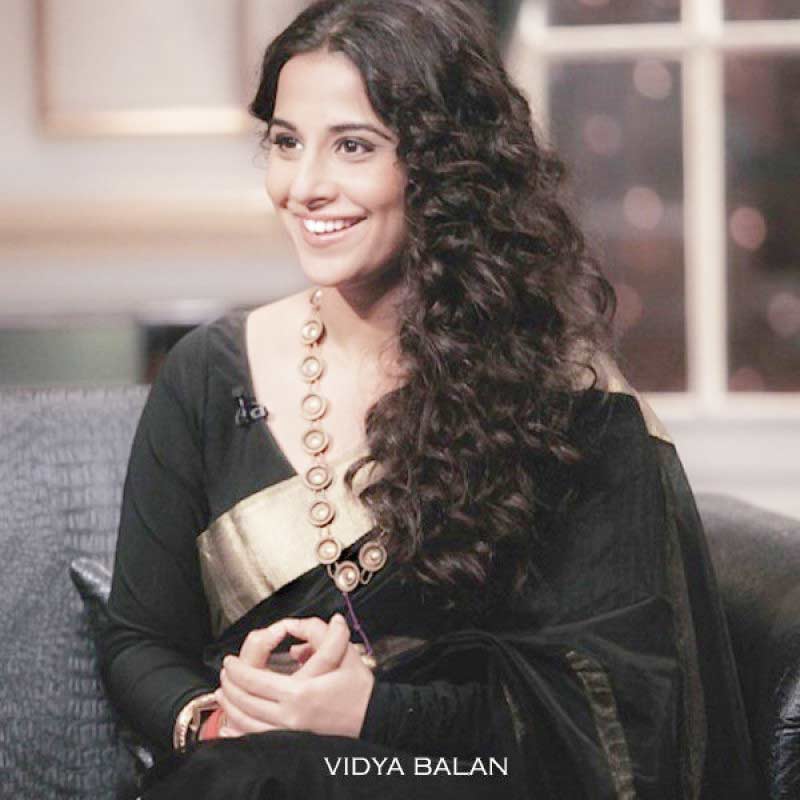
    Starring Vidya Balan and produced by Balaji Telefilms, The Dirty Picture directed by Milan Luthria also stars Naseeruddin Shah, Emraan Hashmi and Tusshar Kapoor. 

  • Vidya Balan accepts second Malayalam film

    Vidya Balan accepts second Malayalam film

    MUMBAI: Even as Balaji Telefilms, the makers of The Dirty Picture are promoting the film in whichever way they can, Vidya Balan, who made a brief appearance in the Malayalam film Urumi has given her consent to play a role in Malayalam film director Amal Neerad‘s next Arival Chuttika Nakshathram.

    The film being produced under the banner of August Cinema is said to be a period drama set in the pre-Independence era between the 1930s and 40s when the Communist movement started in Kerala.

    The film that marks the coming together of Mammootty and Prithviraj after Pokkiri Raja will have the former playing the hero and Prithviraj essaying the role of the villain.

  • ET Now ropes in Shyam Chhabria as head of branded content

    ET Now ropes in Shyam Chhabria as head of branded content

    MUMBAI: ET Now, the 24-hour English business news channel, has appointed Shyam Chhabria as head of branded content.

    Based out of Mumbai, he will focus on creating stronger relationship with prospective clients by designing properties that address client needs. He will report to Times Television Network chief sales officer Hemant Arora. 
       
    Arora said, “I am delighted to welcome Chhabria to his new role as head of branded content. With his experience in creating business units and content supported by advertisers he will be able to add tremendous value to the branded solutions offered by ET Now.”
    Chhabria comes with over 14 years of experience in sales and marketing and has spent nearly seven years in the media & entertainment sector. He has worked with NDTV Media, Balaji Telefilms and Seventy EMG.

    Chhabria commented, “I am excited to be a part of such a dynamic and motivated environment of ET Now. Driving brand solutions for television both in terms of content and sales are something I am very passionate about and ET Now is a perfect platform to connect brands to evolved Indian audiences.” 

  • Balaji Tele’s movie arm acquires in-film rights of Tamil track

    Balaji Tele’s movie arm acquires in-film rights of Tamil track

    MUMBAI: Balaji Telefilms‘ movie division Alt Entertainment has acquired the in-film rights of a chart-busting Tamil track for incorporation in their soon-to-release film, The Dirty Picture.

    The Emraan Hashmi-Vidya Balan starrer has incorporated Naaka Mukka from the film Kadhalil Vizunthen.

    Remarked director Milan Luthria, "The track is rhythmic and sensual, and needless to add, extremely successful. I heard the track while shooting in Hyderabad and liked the way my production unit reacted to it."

    The track will feature at various points in The Dirty Picture while its original form has been retained.

    Incidentally, Naaka Mukka played at the opening ceremony of the Cricket World Cup 2011 held at Mirpur in Bangladesh and later at the inaugural ceremony of the IPL 2011 held in Chennai.

  • Quadrant wins creative duties of Balaji’s ICE

    Quadrant wins creative duties of Balaji’s ICE

    MUMBAI: Quadrant Communications has bagged the advertising and communication duties of Balaji Telefilms‘ Institute of Creative Excellence (ICE).

    Balaji Telefilms CEO-New Media Punyashlok Bhakta said, “There were five agencies that had pitched for the account. Of these, we felt that Quadrant had the right mix of excitement towards and understanding of the various businesses, passion for and pride in their work, and the willingness to go the extra mile. We were looking at a single agency to work across all our businesses within the Media & Education space. Hence, the pitch was to understand, assess and fix on an agency that can partner with us across businesses.”
     
    Quadrant Communications President and chief executive Rajan Narayan said, “Quadrant won the account after a multi agency pitch in which the Agency presented a brand campaign for ICE based on a sound insight and out of the box creative thinking.”

    ICE provides courses in all major specializations like acting, cinematography, direction, editing, production, scriptwriting and sound.


  • ‘Regional language content has a huge scope in volume biz’ : UTV Television COO Santosh Nair

    ‘Regional language content has a huge scope in volume biz’ : UTV Television COO Santosh Nair

    UTV Television, one of the foremost television production studios in India, has seen many ups and down in the past. At one stage it was one of the premier TV production houses in the country. Then a clutch of upstarts – Balaji Telefilms, BAG Films, Big Synergy, Sphere Origin, Director‘s Kut, Shakuntalam, and Endemol – came and swept business from under its feet.


    But over the past couple of years, the division of UTV – promoted by Ronnie Screwvala – has been piecing together its story show by show. It began by venturing into the production of Marathi and southern Indian language shows. Then it focused on putting together a slate of Hindi non-fiction shows. The fact that the quantum of fiction shows on its genre sheet all but disappeared did not perturb the pioneer of TV in this country.


    The man helming the division is Santosh Nair, who was earlier in UTV‘s air time sales division. Nair spoke to Indiantelevision.com‘s Gaurav Laghate about the developments so far and the roadmap ahead.


    Excerpts:


    What are the changes you introduced in UTV‘s television content business after taking over as head a year back?
    I joined UTV in May 2005 but was taking care of the airtime sales division down south. Since last year, I have taken over the overall television business.


    We have really worked towards putting together the best creative team. We got back Indrajit Ray as chief creative officer. And we have put the right people at the right place.


    Now we are concentrating on developing show formats. Two major and much talked about formats that our team has developed are – Dance India Dance (season one) and Emotional Atyaachaar.


    Apart from this, I can say a lot of thought has gone into setting the roadmap for the future.


    Was there a need to change the team structure?
    We have different teams looking after fiction and non-fiction content. Both the verticals have their development teams also, which develop home grown ideas. Dance India Dance was part of that, and recently Emotional Atyaachaar was internally homegrown.


    All these separate teams are driven by different individuals.
     
     
    We are seeing a greater focus on non-fiction shows rather than fiction. Why?
    Yes, in the last couple of years, our strategy had been to focus on an area, which was very wide open, that is non-fiction. And now we are the only content company that produces shows in Hindi, Marathi, Tamil, Kannada, Malayalam and Telugu.


    But why was the focus greater on non-fiction shows?
    We wanted to fill the vacuum that was sitting over there in terms of a content delivery vehicle for non-fiction content. I think we have been fairly successful in doing that because in that span of two years, we did only non-fiction.


    We had non-fiction shows like Chhota Packet Bada Dhamaka, Dance India Dance first season (on Zee TV), Ek Haseena Ek Khiladi (Colors) and Cash Cab (Bindass).


    Apart from one long running saga Bhabhi (on Star Plus), we didn‘t have any other fiction to look at.


    But don‘t you think the fiction quotient, what generally is termed as the staple diet, has come down?
    These shows clearly established us as a non-fiction brand. But yes, having said so, people started looking at us as a pure non-fiction content provider. They forgot that we started as a company which delivered great fiction content.


     ‘People started looking at us as a pure non-fiction content provider. They forgot that we started as a company which delivered great fiction content‘


    So how are you positioning yourself now?
    We are focused on growth. 2009-10 has been to cement this entire platform in terms of being looked as both a fiction as well as a non-fiction provider.


    Talking about projects, how many new shows do you have in the pipeline ?
    The second quarter is when we will go all guns blazing. We have many shows in the pipeline; we are starting with a primetime show on ETV Marathi.


    We also have four fiction shows for Hindi GECs including one (Rakt Sambandh, a remake of a Telugu show) for Imagine TV. For the other three shows, I can‘t share the details as we are in the process of signing the LoI. But I can tell you that we are working with the top channels.


    There are also two non-fiction shows, out of which one is the mother of all reality shows. But again I cannot give details right now.


    Are these standalone initiatives or are they being done in partnership with others?
    We have a partnership with UTV Tele Talkies Ltd (UTTL), wherein we have on board Prashant Jadhav, the man behind Kasauti Zindagi… We are working on a fiction show for Imagine TV. It will be on air by end of this quarter.


    We have also been producing Sonu Sweety with Rajesh Berry Entertainment Ltd for Sab.


    And about your recent entry in the regional space…
    In Marathi yes, but for Southern languages our association with Sun has been since the time of the network‘s inception.


    But you were not producing shows for the Sun Network. You were primarily doing airtime sales…
    In the last couple of years, we have moved from being purely an airtime sales outfit to a more of a mix and match of own productions and marketing the same.


    How do you see the growth in regional markets like Marathi?
    In the last couple of years, regional markets have been systematically growing. And if you look at pan-India or Hindi GEC, you will see shows catering to the Marathi audience, like Pavitra Rishta.


    There is huge scope, but only if you do volume business as margins are very less. But yes, it is a growing market and we are looking at it in a serious manner. The Bengal market is also where we are looking to expand, but only after establishing ourself in the Marathi space.


    Coming to your content, you are producing Emotional Atyachaar, which is a bit edgy in nature. How is the response for the show? You are planning a second season also?
    Emotional Atyachaar has really cut the ice with audiences as far as Bindass is concerned. The audiences actually liked it. It has got the channel to a GRP level where it had never reached before. It had also beaten cult shows on competitive channels.


    And talking about Bindass, it is a youth channel, so it is okay to have edgy content. Anyway there is a very thin line. And yes, the second season of Emotional Atyachaar is coming in very soon.


    So you see a change in viewership trends?
    Viewership patterns are definitely changing. People are ready to experiment; they are looking at some kind of differentiation of content and that‘s where you see successes like Sach Ka Saamna and Emotional Atyachaar.


    For example, in the midst of a huge crowd of Hindi GECs, Colors came in. Everyone thought what is this? But they took their punt and it worked. See it is the small differentiator, which will drive the content. Otherwise it is going to be one mundane thing where daily sagas are coming in. So for the daily soaps also that we are working on, we are trying to do something different. The story might remain the same, but it is all about the treatment, how you take it forward. 

     
    You said DID was your format, but the IPR remains with Zee?

    With Hindi broadcasters, what happens is that the IPR remains with the channel. And historically it has been happening this way. But we took a bold stand when we decided to retain the IPR of Shararat.


    But that was a long time back, now all the IP is vested with the broadcaster. It is as simple as that. Emotional Atyaachaar‘s IPR is with Bindass, although it‘s a group company. 

     
    So if you don‘t have IPR, how are you intending to grow? If you see international production houses like Endemol and Frementle, they all retains their IPRs.
    We have already started working on some projects where we can retain IPR as it is going to be the future. We are working on certain finite series, where we will retain the IPR. We will produce it first, before even going to the channel and pitching it.

     
    And how do you intend to fund it?
    We will opt for internal funding. And we will de-risk it by producing four episodes and sampling it to broadcasters.


    In case we have a very solid finite – 13 or 22 – episodic series, then we can think of producing it in full. 

     
    Internationally, we see the syndication model in the television business. It allows producers to take on the risk of production and getting the reward by selling it to various outlets globally. Why can‘t we have such a model here?
    See, in India since we don‘t retain IPRs we cannot have the syndication model. And channels that run repeat content, are mostly low cost in operations.


    And even if some demand comes from international markets, the broadcaster, with the IPR, makes most of the money. 

     
    But with shows on Sun Network you can guard the IP.
    The benefit any company that works with Sun has, is that they can retain their IPR. The model there is completely different – you produce, you market, you pay slot fees. That‘s the benefit with Sun. So you have shows which are running there, which you can remake in other languages. We have a long standing relationship with Sun Network.


    And at the same time you can not produce content for competitors. That‘s the condition Sun has?

    Well, in terms of revenue and feasibility it makes sense to work with Sun as it is the biggest network down south. 


     So apart from the IPR issue, what other challenges are there for a production house?

    We have already seen one big challenge when recession happened. Channels were looking at cutting down expenses including production costs. They want the same product at a lesser cost. So that was the biggest challenge and learning that we got in the last so many years.


    We really had to sit back and think on how to strategise and minimise the cost. Not only in terms of our business but on a macro level also.