Tag: Balaji Telefilms

  • 20 years of Balaji Telefilms’ dominance

    20 years of Balaji Telefilms’ dominance

    MUMBAI: “My company works on two principles. One, nothing is bigger than the programme, not even the company. Two, if you believe in me and really want to share my goal and vision, please join me; else don’t show me your face. I have never told this to anybody before, but seriously, the company needs an attitude. No company which does not have an attitude can ever be successful,” are the words of the woman who turned the small screen into big!


    India’s largest fiction TV producer Balaji Telefilms which  redefined  Indian television and made Ekta Kapoor a household name can be credited for the satellite boom in the country as well. 


    Like many of her counterparts, she too started her career very young. From being just yesteryear’s superstar Jeetendra’s daughter, today Ekta Kapoor is the woman who rules the hearts and the minds of many. She started off at 17 and since then, has loved, eaten and slept only television. Always thinking about concepts, casting, styling, selecting technicians, shooting and scheduling, marketing and acquiring the new skills required to succeed.


    Set up in 1994, the powerhouse has completed 20 years of entertainment. It all started with a comedy show on Zee TV, ‘Hum Paanch’, in 1995 and today it has an array of shows to its name.


    Satellite television began in the early nineties with the launch of Zee TV, followed by Sony Entertainment Television later in the decade and finally Star Plus as the millenium ended. It wouldn’t be unreasonable to say her TV shows have played a pivotal role in each one of their successes at some time or the other. Even the latest major entrant Colors – from Viacom18 – is relying on her new show Meri Aashiqui Tum Se Hi to give it an injection of TRPs. One after the other, the production house has created blockbusters on the small screen. ‘Kyunki Saas Bhi Kabhi Bahu Thi’ and ‘Kahaani Ghar Ghar Ki’ made everyone switch on to Star Plus every night from 10pm to 11 pm; people cried and laughed with the characters. So much so that the death of the character Mihir Virani on ‘Kyunki Saas Bhi Kabhi Bahu Thi’ lead to fan protest marches to bring back him back. The shows also garnered unheard of TRPs for eight long years.


    Then, came another slew of superhit drama series  like ‘Kabhi Souten Kabhie Saheli’ (Star Plus), ‘Kutumb’ (Sony), ‘Kuch Jhuki Palkein’ (Sony) and ‘Kohi Apna Sa’ (Zee), ‘Kahin To Hoga’ (Star Plus), ‘Kasautii Zindagi Kay’ (Star Plus), ‘Kkusum’ (Sony) which took the company miles ahead from its competitors.


    Some of the company’s on-going popular shows like ‘Jodha Akbar’ (Zee TV) ‘Bade Acche Lagte Hai’ (Sony), ‘Pavitra Rishta’ (Zee TV), ‘Ye Hain Mohobbatein’ (Star Plus), and ‘Kumkum Bhagya’ (Zee TV) hold strong in their time band.


    Balaji, which possesses 23 modern sets and 37 editing suites in India, also helped enhance the primetime slot on GECs.


    The company has produced more than 15,000 hours of television content since its inception, including content in Hindi, Tamil, Telegu, Kannada and Malayalam.


    Filmy business


    If television dominance wasn’t enough, the company soon entered the Indian motion picture business in 2002.  


    Till 2009, the company through its wholly-owned subsidiary, Balaji Motion Pictures, had produced and/or acquired 12 films, including hits like Bhool Bhulaiyaa and Sarkar Raj.


    It set trends here as well when it co-produced and distributed India’s premiere digital film Love, Sex aur Dhokha, released in March 2010 under its ALT Entertainment banner. The film emerged as a sleeper hit receiving critical and commercial acclaim from audiences, worldwide.


    The company continued the LSD success story with its second production, Once Upon A Time In Mumbaai, which broke ground at the worldwide box office. Other films to its credit are Kuku Mathur Ki Jhand Ho Gayi, Main Tera Hero, Ragini MMS 2, Shaadi Ke Side Effects, Once Upon A Time In Mumbai Dobaara, Kya SuperKool Hai Hum, Dirty Picture and Shootout at Lokhandwala.


    With an impressive slate like that, she has earned Balaji a position amongst the major film studios in India.


    Other ventures


    But that hasn’t stopped her or the company from venturing into other spaces.


    Over the years, from a television content provider, Balaji Telefilms has evolved into a media conglomerate with organisational divisions responsible for television, motion pictures, internet and mobile.


    Being the largest player in the industry and after having creating larger-than-life characters, it understands the skill sets required to be successful.


    Balaji Telefilms took an initiative to bridge the gap between demand and supply of professionals/actors, by launching its ICE Institute of Creative Excellence. The institute trains tomorrows’ players by teaching them the various skills needed to make a career in the Media and Entertainment industry.


    What next for Ekta and Balaji? She is going back to her roots: television. For the past three to four years she has been absolutely focused on making Balaji a force in the film industry, leaving the running of the television productions to mother Shobha Kapoor, Tanusri Dasgupta, Ketan Gupta, among many other professionals. But just last month she was quite clear when she said: “I am a TV producer who works 24 *7. It’s just that I am focusing more on television as I am getting a chance to explore myself.”

    As one philosopher said: “Life is a journey, not a destination.”  And for Balaji and Ekta, it seems like a never ending dream journey.


  • Colors set to launch ‘Meri Aashiqui Tum Se Hi’

    Colors set to launch ‘Meri Aashiqui Tum Se Hi’

    MUMBAI: TV czarina Ekta Kapoor who has been ruling the television industry for more than two decades is riding high on success. Colors together with Balaji Telefilms is all set to present one-sided love story, narrated from the male protagonist’s point of view. Nothing hurts more than love not reciprocated, and this is what exactly Kapoor’s next show deals with.

    Christened Meri Aashiqui Tum Se Hi, the show is set in present-day Mumbai and narrates the story of two close friends Ranveer and Ishaani. The series will also highlight the thin line of difference between true friendship, loyalty and unending love.

    Come 24 June, the new series will showcase the value of a big fat Gujarati family every Monday-Friday at 10pm. The show will replace Uttaran, which had a successful seven years stint in the industry.

    Colors weekday programming head Prashant Bhatt said, “With Meri Aashiqui Tum Se Hi, we are looking forward to extending the love story offerings on Colors that will take the audiences on a whirlwind journey of every emotion associated with friendship and unrequited love. We are happy to collaborate with Ekta Kapoor yet again to put forth a refreshing and unexplored love story. We hope our viewers will revel in this avant-garde story presented to them from the male protagonist’s point of view.”

    Emphasising the thought, “Even love unreturned has its rainbow” the show vividly traces the journey of Ranveer (Shakti Arora) whose amorous friendship with Ishaani (Radhika Madan) becomes a painful point in his life, as he finds himself unable to confess his undying love for her.

    Speaking about show Kapoor opined, “The USP of the show is the emotional journey that the audiences will trace with Ranveer, as his feelings for Ishaani pull at their heartstrings and resonate the empathy that comes with a love that can never be his. Every actor in the show has been carefully chosen for the character they will be portraying, making them the perfect fit as they play crucial roles in taking the storyline forward. Our characters are relatable and if viewers are able to feel the pain that Ranveer feels every time his heart breaks a little more, it will be an ultimate win for us.”

    Shakti Arora aka Ranveer said, “For Ranveer, his life revolves around Ishaani. He has been in love with her for as long as he can remember, but he is also conscious of the fact that his feelings will never be reciprocated. Getting into the skin of Ranveer’s character was extremely difficult for me because expression of emotion is very important to me. I hope audiences do enjoy my portrayal of a silent lover whose single aim in life is to ensure that Ishaani is happy.”

    Speaking about her television debut, Radhika Madan aka Ishaani said, “I always aspired to be a choreographer…acting was never on the cards. However, now that I am making my television debut with Meri Aashiqui Tum Se Hi under the expert guidance of Ekta Kapoor and the Colors creative team, I feel elated yet anxious at the same time! Ishaani is the perfect Indian girl who believes in love and all the good things in life and I am working really hard to get into the mould of her character. The experience shooting for the show has been incredible so far and I hope that audiences support me as I venture into this new and unknown world of acting.”

    Supporting the lead pair of Shakti and Radhika will be a powerful star studded cast which includes veteran actor Sarita Joshi as Ishaani’s tyrant grandmother together with Gauri Pradhan-Tejwani who is making a comeback on television after a gap of five and a half years with this show as Falguni.

    Gauri Pradhan-Tejwani will be seen in a brand new avatar as Ishaani’s mother. Completing the picture-perfect family portrait will be popular theatre actor Prithvi Sankala as Ishaani’s father along with talented actor-writer Shahab Khan as Ranveer’s father, amongst others.

  • Other income cushions Balaji Telefims FY-2014 loss; board recommends dividend of Rs 0.4 per equity share

    Other income cushions Balaji Telefims FY-2014 loss; board recommends dividend of Rs 0.4 per equity share

    BENGALURU: Balaji Telefilms Limited (Balaji) reported consolidated loss of Rs (-17.2124) crore in FY-2014, a loss that was lowered by other income to the extent of Rs17.984 crore.  The company had reported PAT of Rs14.58 crore in FY-2013. Other income includes proceeds of Rs 6.73 crore from a Keyman Insurance Policy taken by the company in earlier years. Other Income in FY-2013 at Rs 18.38 crore was 2.17 per cent more than the current year.


    Three major segments contribute to Balaji’s revenue – Commissioned Programs, Sponsored Programs and Films according to the results the company has submitted to the bourses. The board of directors of Balaji have recommended a dividend of Rs 0.40 per (20 per cent) equity share of face value of Rs 2- each for FY-2014 as compared to a dividend of Rs 0.20 (10 per cent) in FY-2013.


    The company reported Rs133.48 crore as the revenue from Commissioned Programs in FY-2014, (-1.63) per cent lower as compared to the Rs 135.69 crore in FY-2013. Commissioned programs reported an operating profit of Rs 21.21 crore in FY-2014 as compared to a profit of Rs19.32 crore in FY-2013.


    Revenue from Sponsored Programs in FY-2014 was nil as compared to the Rs 4 crore in FY-2013. This segment result in FY-2014 was nil as compared to a loss of Rs (-2.04) crore in FY-2013.


    Balaji’s Films reported consolidated revenue of Rs 273.43 crore in FY-2014 more than six times as compared to revenue of Rs 44.63 crore in FY-2013. This segment reported an operating loss of Rs (-27.72) crore in FY-2014 as compared to an operating profit of Rs 2 crore in FY-2013.


    Let us look at the other numbers reported by the company.


    Balaji Telefilms reported consolidated revenue of Rs 407.46 crore in FY-2014, more than double (2.19 times) the Rs185.97 crore in FY-2013.


    The company’s total expense in FY-2014 at Rs 435.97 crore was 2.34 times more than the Rs185.96 crore in FY-2013.


    Higher marketing and distribution expense, decrease in stock in trade are some of the major reasons for the increase in total expenditure.


    Balaji spent 6.125 times more money towards marketing and distribution expense at Rs 76.18 crore in FY-2014 as compared to the Rs 12.38 crore is FY-2013. The company showed a reduction in stock-in-trade of Rs 80.60 crore in FY-2014 which showed an increase in total expenditure as compared to an increase in stock-in-trade of Rs107.59 crore  which resulted in a reduction in total expenditure in FY-2013.


    The company has paid higher finance costs at Rs13.731 crore in FY-2014 as compared to the Rs 8.52 crore in FY-2013.


    Let us look at Balaji’s subsidiary companies


    Three companies – Balaji Telefilms (BTL), Balaji Motion Pictures Limited (BMPL) and Bolt Media Limited (Bolt) are a part of Balaji. Cost of Production / Acquisition and Telecast Fees is the highest expense head for all the three companies.


    BTL’s income from operations in FY-2014 was Rs131.54 crore, and the company reported a profit of Rs 10.02 crore in FY-2014. BTL paid Rs 100.60 crore in FY-2014 towards Cost of Production / Acquisition and Telecast Fees.


    BMPL had income from operation of Rs 271.69 crore in FY-2014 and the company reported a loss of Rs (-26.27) crore during the period. Cost of Production / Acquisition and Telecast Fees for BMPL was Rs 281.13 crore.

    .


    Bolt reported Operating revenue of Rs 4.75 crore in FY-2014 and an operating loss of Rs 0.93 crore. Cost of Production / Acquisition and Telecast for Bolt was Rs 3.76 crore.


    Balaji says that its revenue per commissioned hour for BTL in Q4-2014 was Rs 21.66 lakh as compared to Rs 21.18 lakh in Q3-2014 and Rs 22.30 lakh in Q4-2013. Excluding regional segment, event business and incentives, the company commissioned 173 hours in Q4-2014 which was same as the number of hours commissioned in Q3-2014 and 28.1 per cent more as compared to the 135 hours in Q4-2013.


    Balaji also says that two movies were released in Q4-2014 and six movies in FY-2014. It adds that Production cost comprises old films inventory amortisation and marketing and distribution expenses of films releasing in FY-2015.

  • Television heartthrob makes his debut at Cannes

    Television heartthrob makes his debut at Cannes

    NEW DELHI: Marking his excellence on the small screen, actor Gautam Gulati of Diya Aur Baati Hum fame gears up to make his debut at Cannes Film Festival with screening of his release Coward (Darpok) by Rakesh Mehta.

    Gulati said “Yes, I am starring in (Darpok) and going to France to attend the screening of the movie. I feel honoured to be a part of this film, this is a perfect inception for me to invade in movies”

    He started off his journey as an actor with the experience of mastering in theater from Mandi House for a year. Leaving no stone unturned he also trained himself in dance from celebrated choreographer Shiamak Davar.


    Speckled by Balaji Production House, he was spotted by soup opera queen, Ekta Kapoor. Exploring his credentials, Gulati worked under the banner for three years where he became contempt and experienced every aspect of acting. Sighting the dedication and zeal he seizes he was chosen as for the role of Vikram in Diya aur Baati Hum as he aptly suited the character. Going by his vast fan following he absolutely justified the character. He went on to become a household name and gathered fame and recognition from the India soup opera.


    Talking about his journey, he said “I belong to a simple family back ground where we don’t have any association with Bollywood, but it was my passion for this art which made me pursue acting. As I never had a mentor or a God father to guide me through.”


    After working and attaining recognition for six years, perhaps he made up his mind to work within the industry and learn this way through. To be given an opportunity like Darpok, Gulati feels elated. Becoming the epitome of talent, the skilled actor perceives this international break as his golden chance to prove his masters in the field of acting.


  • MTV India gets a programming head in Vikas Gupta

    MTV India gets a programming head in Vikas Gupta

    MUMBAI: MTV India is all set to strengthen its programming team. After almost a decade, the channel will have a programming head in Vikas Gupta. The channel confirmed the development with indiantelevision.com. An official from the channel informed that Gupta will take up the new role from 3 February, 2014 and will report to MTV India EVP and business head Aditya Swamy.


    Confirming the news Gupta ecstatically remarked, “Yes, I am going to join in as the programming head for MTV India.”


    “MTV is always known for the brand it is. The fact that it has an amazing youth appeal will always be at the back of our mind while making the shows. Making aspirational and youth-centric shows will always be the mantra for the channel,” adds Gupta.


    He started his career as a trainee with Balaji Telefilms and then moved on to DJ’s Creative Unit as an associate creative head where he worked for four months. He went back to Balaji Telefilms for a successful stint as an associate creative director and was associated with shows like Kis Desh Main Hai Meraa Dil and Kitni Mohabbat Hai.


    Interestingly, the TV fraternity also recognises him as the youngest creative director of the industry. He entered the industry at a young age of 19. After getting enough experience as a creative, he turned to production and started his own banner – A Lost Boy Productions – almost three years ago. In the last three years, the production house has come up with entertaining and critically acclaimed shows like Channel [V]’s Gumrah and The Serial (co-produced with Balaji Telefilms); and Bindass’ Yeh Hai Aashiqui.


    Earlier, he has also worked with Max New York Life Insurance for almost a year.

  • Hindi GECs: A battle for eyeballs

    Hindi GECs: A battle for eyeballs

    With the ongoing season of reality shows ending and viewers’ choice highly unpredictable, the past couple of months have seen Hindi General Entertainment Channels (GECs) and production houses scrambling to introduce newer, more creative fiction shows with never-seen-before content.

    Indeed, the tearing hurry to replace empty slots and shows with poor TRPs has seen broadcasters deploy a fair bit of research and experimentation to serve up even more interesting fare to their audiences. So much so, it may well be a battle for eyeballs between these newly-launched serials in the coming months; at least till the new season of reality shows kicks in.

    Indiantelevision.com did a round-up of the contenders, trying to understand the thought process behind them.

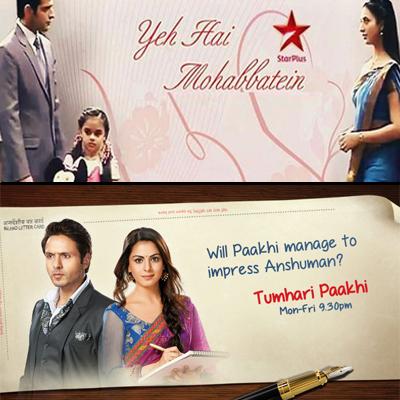
    To begin with: Ye Hai Mohabbatein, Star Plus’ drama series based on Manju Kapur’s novel, Custody. The Balaji Telefilms show premiered on 3 December and airs five days a week, occupying the 11pm slot. It stars popular TV actors Divyanka Tripathi and Karan Patel as Ishita and Raman, who are connected by their love for Raman’s daughter Ruhi. With themes like divorce, infertility, remarriage and societal issues, the show deals with the bigger question of what makes a woman a mother.

    Says Star Plus general manager Gaurav Banerjee: “The story is urban and contemporary. This love story begins after a marriage gets over. It explores the theme of a second chance in love. With well-etched characters and a strong urban narrative, the show deals with day-to-day issues faced by modern couples. We are positive that our metro audiences will see a connect with Ishita and Raman, and follow their story.”

    Balaji and Star Plus believe viewers have accepted Ishita and Raman into their families, much like the iconic characters the team has created in the past. Indeed, the show garnered 3,291 TVTs in week 52 of TAM TV ratings. India Gate Basmati Rice is its title sponsor.

    Doli Armaanon Ki and Aur Pyaar Ho Gaya: Zee TV’s two new shows that premiered on 2 December, 2013 and 6 January, 2014, respectively. Both the shows air five days a week and occupy the 10pm and 10.30pm slot, respectively.

    The channel has roped in Sofy Side Walls as its title sponsor for Doli Armaanon Ki. Set in Jhansi, Doli Armaanon Ki is the story of Urmi and Samrat, played by Neha Marda and Mohit Malik, respectively. Urmi walks into a marriage with Samrat, all eager and wide-eyed, only to realise that married life isn’t always what one dreamed about.

    Asked how the show is different, Spellbound Productions producer Pearl Grey replies: “It is just about conviction. I feel you can stand out from the rest if the concept is different. I feel we are saying something which no one has said earlier. Like how we did for Mann Kee Awaaz Pratigya, we spoke about issues which were not spoken on television earlier. The other thing about standing apart is getting in a character which is different. In my show, the USP is Samrat’s character. The relationship we are showing is very different. We are highlighting the nuisances.”

    For Grey, having a 10.30pm slot is an advantage as there is liberty of saying and doing things that cannot be shown at early prime time. Even Zeel content head Ajay Bhalwankar is confident that the new series will crack slot leaders very soon. “The battle is not tough. The slot is very warm. And with our strong storyline and concept, this show can reach one crore plus viewership. Plus, our TG is the whole family. At the end of the day, if men don’t see, they won’t understand the cause through our concept,” he says.

    Zee TV pulled out all stops in promoting the new show. Promos were played on the network’s news, kids’ and movie channels as well as on Zee Cinema and Zee Marathi. For DTH audiences in particular, live streaming and default landing channel were taken, promo roadblock on primetime and special behind the scenes content was created to promote the show. #doli was created on Twitter, which trended all India for more than 8 hours on the day of the launch. Zee even asked viewers to send them region-wise shaadi rituals under this hash tag.

    The other Zee newbie, Aur Pyaar Hogaya, is the love story of Avni, a young spirited girl from a traditional family in Jaipur, played by Kaanchi Singh and a simple boy Raj, with a diametrically opposite personality and family background, reprised by Mishkat Varma. No sponsor has been roped in yet for the series.

    About the 10pm slot, Director’s Kut Production’s Rajan Shahi answers: “I have never asked channels for particular slots. For me, it’s my work, whether you put me in the 2 pm or 6 pm slot, I have to work. Over the years, I am not so blinded by it, but TVTs do play an important role. I know that we are judged by TVTs, but I don’t let this affect my day-to-day life.” Like Doli Armaanon Ki, Aur Pyaar Hogaya too was heavily promoted on social media by creating individual official pages.

    Next up, Tumhari Paakhi, Life OK’s new show produced by Shashi-Sumeet Mittal Productions, premiered on 11 November, and airs five days a week, occupying the 9.30 slot. Tagged a differentiated love story, it is based on legendary Bengali author Sarat Chandra Chattopadhyay’s novel Navvidhan.

    As to the criteria for choosing a particular slot, Life OK general manager Ajit Thakur says: “On the slot, there are a number of criteria like firstly, the viewership. Obviously, early prime-time, the viewership is more from small markets and late prime-time it is from larger markets and metros. The other thing is who are the people viewing it. As we go to later prime-time, families and more men come to it. Earlier prime-time, there are more kids. Thirdly, for the channel itself, which is the slot they want to replace. Some slots are doing well and some slots are not doing that well.”

    Thakur goes on to explain that the earlier show Junoon wasn’t doing too well, which is why they were on the lookout for another show and eventually, Tumhari Paakhi, a mature love story, turned out to be the perfect replacement for late prime-time. He dismisses it being a risk choice saying: “That does not matter beyond a point. We are already at number four and getting close to the top three. For us, every slot we have to compete. It does not matter to us anymore. There are leaders as such and now we are competing in all slots. We decide basis our priority now.”

    To market the new show, Life OK ran promos on all its network channels and put up umpteen hoardings across cities. On the day of the launch, print ads were released and railway announcements too were made. Besides, on Twitter, the channel constantly keeps updating #TumhariPaakhi hashtag with news, polls and promo links.

    Beintehaa and Rangrasiya: Colors’ two new shows premiered on 30 December last year and will continue to air Monday to Friday at 9pm and 9.30pm, respectively.

    While Beintehaa is a show with a pan-Muslim milieu which revolves round two very similar, headstrong individuals, Aaliya and Zain, who are in a volatile relationship; Rangrasiya is an edgy, explosive tale of Paro and Rudra, two individuals who start off by hating each other intensely.

    Both the shows were promoted extensively across mediums, including in-theatre integrations during Dhoom 3 in HSMs, OOH in 60 cities and towns, and a media mix with over 40 channels plus radio stations covering more than 40 cities.

    With the launch leading into the new year, special calendars were brought out with select publications to enable audiences bring the characters home. An all-round social media strategy was developed to ensure the duo continue to be the topic of dinner table conversations across homes.

    Asked whether it didn’t bother them that rival channels have some of their most popular shows at 9 and 9.30pm, Colors’ programming head Prashant Bhatt says that planning for the 9 pm slot begins much before the channel’s biggest reality show, Bigg Boss, kicks off. “We know that as soon as the show ends, we have to come up with news shows with strong content and we work on it accordingly. This time too, when we heard the stories of the two shows – Rangrasiya and Beintehaa – we knew that we have to take them to the prime time slot because of the newness,” he says.

    Says Saurabh Tewari, MD of Nautanki Films which has produced Rangrasiya: “We were happy to have got the prime time slot for our show. We are aware of the competition that exists in the slot and even otherwise, but there’s always space for something new.” Tewari believes the presentation and the manner of storytelling, not to mention the extensive shooting in Rajasthan will work in the channel’s favour.

    Coming to Beintehaa, Farhan Sallaruddin of Fortune Productions, producer of the show, says the story’s concept is its USP. “The Muslim community hasn’t been explored much and in this show, we have anyway brought the love story of two very strong characters. It will be loved by youngsters and older people alike,” he says.

    Last but not the least, Main Na Bhoolungi and Ekk Nayi Pehchaan, Sony Entertainment Television’s newest additions to its kitty, more so in a bid to get viewers to tune in to its soaps instead of the crime shows and thrillers it has become synonymous with. Both the shows premiered on 23 December last year at 8.00pm and 8.30pm, respectively.

    Main Na Bhoolungi traces the life of Shikha, a well educated and confident girl, played by Aishwarya Sakhuja, who has an arranged marriage with the seemingly perfect Sameer, played by Vikas Manaktala. However, Shikha falls off from a cliff, cutting short the happy alliance. Is it the end of the fairytale or just a bad dream? The story is based on a 1996 Gujarati play Sharda, penned by Varsha Adalja, which elaborates on the concept of ‘women in their 40s’.

    “The focus is not on the rest. The focus is on yourself. That is the only way you can stand out. There is only one way to success, not necessarily that assures success, but do your best,” says producer Yash Patnaik. ”We as producers, as makers, go to the channel with the concept. Then it is up to the channel which slot to air. They decide what will work there, what kind of target audience, the strengths they have. As makers in television, we purely go by their conviction and strategy.”

    About Ekk Nayi Pehchaan, Jay Mehta Productions producer Kinnari Mehta feels content is the king that will get viewers to watch a particular show. “We haven’t seen a show till now wherein they have shown a positive bond between mother in law and daughter in law. We are trying to come out from that mould where saas and bahus just fight. And we have a beautiful cast, both of them are such faces that will stand out across all the GECs and the concept. Since our show deals with adult literacy, a lot of women want to educate themselves,” she elaborates.

    Sony is confident the two new shows will be a big turnaround for them. Says Sony senior VP, head marketing Gaurav Seth: “The two new shows are a big turnaround for the channel. The 7 – 11pm slot is where there will be competition in any channel, but good content always stands out. We have got good numbers for both the shows.”

    While viewers are going to be spoilt for choice with the sheer number of new shows across the Hindi GECs, only time will tell who will emerge the winners in this race…

  • Balaji quintuples y-o-y PAT for Q2-2014; EBIDTA more than doubles

    Balaji quintuples y-o-y PAT for Q2-2014; EBIDTA more than doubles

    BENGALURU: Balaji Telefilms Limited (BTL), the blue-eyed entity of the Indian media and entertainment industry, reported consolidated PAT of Rs 12.33 crore for Q2-2014, more than quintuple (506 per cent) the Rs 2.43 crore reported for Q2-2013 and  more than triple (342 per cent) of the Rs 3.61 crore for Q1-2014.


    The improved performance was driven essentially by its motion picture operations. BTL reported EBIDTA for Q2-2014 at Rs 10.95 crore, more than double the Rs 4.63 crore for Q2-2013. BTL’s EBIDTA for Q1-2014 was negative at Rs (-5.02) crore


    The company’s consolidated revenue from operations for Q2-2014 at Rs 194.16 crore was more than triple (329 per cent) of the Rs 58.96 crore for Q2-2013 and more than double the Rs 84.04 crore for Q1-2014.


    Let us look at the other figures reported by BTL for Q2-2014


    BTL has reported revenue from three streams: Balaji Telefilms (Television content production-Balaji); Motion Pictues – Balaji Moption Pictures Limited (BMPL) and BOLT Media Limited (BOLT).


    Its television content production stream reported revenue of Rs 30.33 crore for Q2-2014, which was 33 per cent higher than the Rs 22.80 crore for Q1-2014. Rs 32.32 crore were spent in Q2-2014 towards cost of production, acquisition and cost of telecast fees, staff cost, depreciation and other expense resulting in loss from operations of Rs (-1.99) crore. Other Income brought in Rs 3.02 crore and hence a PAT of 0.804 crore.


    BMPL with revenue of Rs 164.05 crore for Q2-2014, which was more than double (2.66 times) the Rs 61.67 crore for Q1-2014. Expense totaling Rs 152.23 crore resulted in a PAT of Rs 11.81 crore.


    BOLT had revenue of 0.27 crore and total expense of 0.59 crore resulting in a net loss of Rs (-0.32) crore.

  • Balaji Telefilms’ financials: an improving picture in Q4 2013

    Balaji Telefilms’ financials: an improving picture in Q4 2013

    MUMBAI: Television production powerhouse Balaji Telefilms, which has recently made successful forays into the movie business, has posted an impressive 235 per cent jump in net profit to Rs 5.17 crore in the latest quarter ended 31 March 2013 as against Rs 1.5 crore in Q4-2012. It has done well even when one compares its performance against the previous preceding quarter ended 31 December 2012 when it recorded a net profit of Rs 4.94 crore. However, what looks disappointing is the 28 per cent dip in its net profit in FY 2013 to Rs 14.58 crore as against Rs 20.44 crore in FY 2012.

    The company recently ran into accounting troubles with the I-T Department, resulting in a dip of around 20 percent in its share price and it hit an all-time low of Rs 35.25 on 27 May.

    However, it has been moving northward since this morning’s announcement of its financials and it closed at Rs 37.80.

    Let us look at the Q4-2013 financials as against Q4- 2012

    Q4-2013 financials report a healthy growth in its net profits at Rs 5.17 crore as against Rs 1.54 crore in the corresponding last year’s Q4-2012. The massive surge is attributed to reduction in expenses especially if one looks at the staff costs which have halved in Q4-2013 at Rs 1.57 crore as against Rs 3.44 crore (Q4-2012).

    Expenses fell 13.5 per cent in Q4-2013 at Rs 34.72 crore as compared to Rs 40.16 crore in Q4-2012. The investments of the company have paid off well in the quarter with a reported Rs 7.05 crore pouring in as other income. (Through its other non-core operations considering its non current investments for the year FY-2013 have nearly doubled at Rs 31.72 crore (Rs 17.60 crore in FY-2012)).

    While net sales revenue has increased to Rs 31.77 crore in Q4-2013 as against Rs 27.88 crore in Q4-2012, the total revenue for the quarter has shrunk by 8 per cent to Rs 34.09 crore in Q4-2013 as against Rs 36.92 crore. Its major revenue source continues to be from commissioned programs amounting to Rs 32.7 crore, a rise from last corresponding quarter’s Rs 25.88 crore.

    Let us look at the Q4-2013 financials as against Q3-2013

    When it reported Q4-2013 revenues of Rs 34.09 crore as against Rs 33.32 crore in Q3-2013, it was the first time in three quarters that it registered a positive uptick in revenues. Its Q4-2013 net profit at Rs 5.17 crore is an improvement over Q3-2013’s Rs 4.94 crore.

    Let us now look at the consolidated year ending results of FY-2013

    Even after a euphoric performance maintained during Q4 and Q3 quarters, the financials for FY-2013 fail to show an impressive growth YoY. The consolidated revenues for FY-2013 at Rs 204.36 crore report a decrease as compared to Rs 221.66 crore in FY-2012, which also included Rs 6.62 crore from its discontinuing operations.

    Better and efficient production in FY-2013 saw its expenses fall to Rs 186.05 crore as against Rs 202.13 crore in FY-2012.

    PAT for the year ending 31 March 2013 stood at Rs 14.58 crore, as against Rs 20.44 crore in FY-2012, a disappointing 28.6 per cent drop YoY.

    In spite of the drop in profits, the Board has recommended a dividend of Rs 0.40 per equity share, considering a healthy growth momentum sustained in its last couple of quarters.

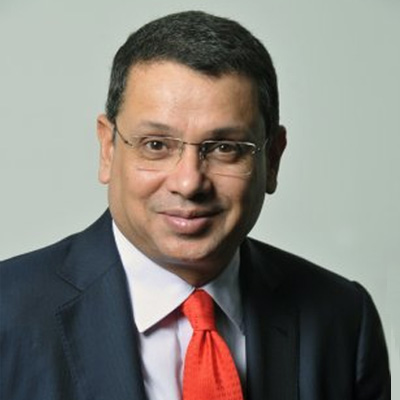
  • ‘Star to invest in India’s growth market and not be greedy about profits’ : Star India CEO Uday Shankar

    ‘Star to invest in India’s growth market and not be greedy about profits’ : Star India CEO Uday Shankar

    Uday Shankar had to wrestle with a thorny problem as soon as he took over as Star India CEO: How to be more successful than his predecessors Peter Mukerjea and Sameer Nair?

    Grown up as a journalist and in TV news for long, Shankar did not take long to take tough business calls in the television entertainment broadcasting business. He parachuted out of the Balaji Telefilms’ joint venture agreement as the popular long-running ‘K’ soaps were running out of steam and were turning out to be “expensively” priced. He brought in a bunch of young producers to connect with the changing India at a time when new players like Viacom18 (Colors), 9X (Mukerjea’s venture after quitting Star) and NDTV Imagine (headed by Nair) were making their entry.

    Shankar also quickly realised that Star’s creative, marketing and distribution strategies were not in sync to capture the new markets that had come into the C&S homes. He designed Star’s new strategy and laid out a clear road map for the Rupert Murdoch company’s growth in India which at that stage was heavily dependent on the flagship Hindi general entertainment channel (GEC) Star Plus.

    Asianet was acquired to get a footprint in the lucrative South Indian media market and Bengali and Marathi GECs were launched. He next launched the second entertainment channels in Hindi to house them under the ‘OK’ brand.

    Shankar knows well that India is a growth market and has, thus, decided to reinvest in the business aggressively to build a Star network that would grow and thrive in the future as well. “While we will always try to keep a very sharp eye on the profits, we will not be greedy about profit margins,” he says.

    In the third and concluding part of the interview with Indiantelevision.com’s Sibabrata Das, Shankar talks about how Star India is ring-fenced today to stay as a strong leader in the TV entertainment business and is ready to grow in a digitised environment.

    Excerpts:

     
    Q. How challenging was it for somebody who came from a news background to conquer the entertainment broadcast business as CEO of Star India? Or was the transition easier because TV news in India had imbibed entertainment content in its culture?
    Listen, the news that I was part of is very different from the news of today. I launched Aaj Tak which was a financially very healthy company. It did high quality news, it had a large number of viewers and it was profitable. Hence, it could invest in content. Today, the scenario is very different.

    I think too much is made out of this whole thing of news versus entertainment. At the end of the day, the viewer is the same. In a way, news allows you to engage with the consumer in a very dynamic environment and it gives you those insights. Those insights helped me.

    The other thing that helped me is that as a news editor or journalist you get to develop some understandings and insights about the Indian society which in all humility I think the entertainment guys lack completely. Their reference to India is a few films, a few shows and little stories that they pick up in newspapers. Sometimes I see what is portrayed in our films and stories and dramas about India is completely unrealistic. And that is what my advantage was in this aspect. Because I had done so many years of journalism, I understood India very well. My general understanding of this country, both as a journalist and as a student of social sciences, was fairly evolved. I think that helped.

    Q. When you inherited the chair, Star India had slipped into some sort of a management mess. What were the ills that you had to correct?
    No ills. Star was a great company even then and it had a solid leadership. It had an amazing brand; I don’t think there is or there ever will be a media brand in this country that would be as big as Star. The problem is that it was the victim of its own success. There was a sense of complacency that had set in.

    The other thing that had happened is that there was a disconnect that had developed between the channel and its viewers. The cable and satellite (C&S) TV universe had penetrated deeper into the countryside. And our creative, marketing and distribution strategies were not in sync to capture the new markets that had come into the C&S homes. I think that was the biggest challenge which I had to tackle. And that is what we have done slowly – by going regional, by creating stories which are more diversified and realistic. We got content which echoed the new sentiments, the new aspirations and the new women. We brought that into Star Plus by way of ‘Rishta Vohi Soch Nayi’.

    I also think that we changed the talent mix inside the channel and also the mix of the producers outside the channel. We brought in a bunch of young producers who were producing their first shows at that time. They brought in a fresh pair of eyes and a certain amount of freshness of creativity – and I would like to think that they were better connected. So that’s what helped.

    Q. Was there a need to bring about changes in Star Plus in phases? Are we seeing the Aamir Khan show as part of that content evolution?
    I don’t see those as different phases. I see them as a journey of evolution for a company, a channel, an entertainment network and for me as a professional.

    We were doing a certain kind of stories, we were reaching out to a certain kind of audiences and were addressing a certain kind of market. Slowly, we wanted to expand and diversify in all these three areas. First we started doing different kinds of dramas and then a different kind of non-fiction shows which finally evolved into ‘Satyamev Jayate’ (the Aamir Khan show launched in May 2012 and aired on Sunday mornings). However, it would be a mistake to say that ‘Satyame Jayate’ was the first such step that we took. As early as four years ago, we did a show with Kiran Bedi called ‘Aap ki kacheri…Kiran ke saath’ and in 2009 had ‘Sacch ka Samna’. In drama, we launched Kaali – Ek Agnipariksha.

    I go back to the philiosophy that I carry from my journalism background – we must constantly try out new things and must constantly innovate. Because the biggest story of yesterday becomes stale today. And that is something which is deeply ingrained in me.

    Q. When you earlier spoke about sports broadcast, you mentioned about drama becoming a bit of a commodity. What made you say that?
    Anybody who has the money and an idea can go and create a drama – lease the producer, the writer and the studio. But even if you have the money and the idea, you can’t go and create a sporting property because it is locked in IP. You have to have the teams and the sporting board has to back you up. In that sense, the access to drama is commoditised. But that is not the case with sporting content. If you want to create a cricket tournament, you can’t do it unless the BCCI is supporting it. And BCCI won’t go and support any cricket tournament.


    ‘My bosses and I are very clear about one thing: reinvesting in the business far more aggressively than taking out profits because India is a growth market and we are building a network that would grow and thrive in the future as well. This is the most critical phase of building the network. If we don’t continue to invest aggressively and ahead of the curve in a market that is so dynamic and evolving and segmenting, then the market forces might overtake us. While we will always try to keep a very sharp eye on the profits, we will not be greedy about profit margins‘


    Q. Is entertainment content limited by the fact that India is primarily a single TV household country? That is a bit of a concern. There is mature adult explicit content that you can’t do in a single TV household. Even otherwise, you can’t do that in multiple TV households because not everybody in his or her bedroom wants to watch adult content; the content consumption habits are heavily determined by our cultural systems. I am not sure whether Star as a network would want to do such kind of content even in multiple TV households.

    But what is bad is that the government, the regulator and a bunch of self-styled policemen want to act on behalf of the audiences. They act as guardians thinking that the audience is a mass of retarded, dumb, unintelligent people who do not know what is good for them. You go and show them one kiss and it is as if the whole culture of India will collapse. It doesn’t work like that. And these are the people who either have a vested interest and say this because they want to control media or their mindset is so corrupt and regressive that they think that because they have a dirty mind, the whole world has a dirty mind.

    Q. But isn’t the growth of niche content limited by single TV households in India?
    Surely, because niche content means content that is of interest to a very small set of people. It is difficult to have a business model for niche channels in an analogue cable environment where there is bandwidth constraint. A channel on health, education, classical music and serious political drama will not interest a large number of people and youngsters. Older audiences are not generally interested in science fiction; nor are women in crime or thriller-based shows. In a single TV household you will have to do content which appeals to a large common denominator.

    In Star Plus, for instance, we don’t want to put content that won’t deliver reach; it simply doesn’t work for us. But digitisation will change this whole content game. We can then create a channel only for youth or for older men or for teenagers. And audiences having digital cable can choose individual channels; in an analogue system they have to take the whole bunch of channels and pay for it. Why will a family having no youngster in the house want a youth channel? And if there is no old parent living with me, I wouldn’t want a channel meant for old people.

    Q. Star Plus made an effort in creating a Sunday morning band and we have seen other channels follow that. Is it possible to drive in audiences regularly in these time slots?
    I hope so. I do think that on Sundays there is an appetite that we as content providers are not able to satisfy. Sunday content is generally not satisfying except for a movie that gets shown once in a while.

    The quality and quantity of Sunday content is not adequate. Broadcasters should step in to fill that gap with all kinds of programming. What matters is the emotions that your content triggers, the stories that you tell and the connect that you build.

    Q. Haven’t all Hindi entertainment networks evacuated the afternoon band?
    This is kind of sad but reflects our economic compulsions. The advertising market is tough, rates are under pressure, subscription incomes aren’t going up much and the programming costs are up. That is why broadcasters have to do all kinds of things. But it is not good in the long run. There are a large number of people who tune in to watch TV in the afternoons. It is an audience that all of us had built over a period of time. I guess broadcasters have all had to take short sighted and tactical steps.

    I also think that there is another challenge. The creative capacity, particularly in Mumbai, is not developed enough. Or not broad enough to cater to the prime time, afternoon and the weekend needs of such a large number of Hindi entertainment channels. So somewhere the capacity construct is also influencing. You are not getting high quality content. At least that is what our experience has been.

    Q. Hindi GECs are almost entirely depending on prime time for ad revenues. As we are in the midst of an economic slowdown, is this the wrong time to make that shift and cultivate other time bands?
    There are challenges in opening other time bands. But there is never a right time and there is always a right time. The last few months have not been great for advertising. That has pulled back broadcasters from experimenting with the afternoon slots. But I see this as a short term tactical withdrawal.

    Q. Since Star is as you say an amazing brand, why did you create the OK brand for your second channels in the Hindi general entertainment and movie space?
    Though we have a big portfolio, each market in India is segmenting and new competition is coming. We were getting restricted because in Hindi we had only one channel and Star One was not doing well. When we were looking at fixing Star One, we thought why should we limit the company to just one brand. Though Star is an awesome brand property, we decided to create one more brand. That is how the OK brand was born.

    Q. Is Star being identified as premium and the OK brand with a more general appeal?
    I don’t see the positioning of Star Plus or Zee TV or Sony as any different but pretty much similar. If at all, we see Star Plus to be the channel that’s identified more closely with people who are more aspirational and OK with those who are satisfied with life. That is the only distinction we think we can make.

    Q. Is this more in tune with a flanking strategy?
    I don’t believe in flanking strategies at all. It is a very boring and owner-driven mindset. Viewers do not understand anything of that; they want to go to a channel and a programme that they like. Everything competes with everything in this market. It is a very dynamic and fluid market where one remote changes everything. Flanking is perhaps a product conceived by somebody who has been influenced by a military mindset and didn’t understand media much.


    ‘The C&S TV universe had penetrated deeper into the countryside. And our creative, marketing and distribution strategies were not in sync to capture the new markets that had come into the C&S homes. I think that was the biggest challenge which I had to tackle. And that is what we have done slowly – by going regional, by creating stories which are more diversified and realistic‘

     
    Q. Do you see the need of a second channel, particularly in a digital environment which will lead to further audience fragmentation?
    It will always help in segmenting the market. But there is no question of a second GEC. Who knows? The viewer doesn’t. That is why we have decided to keep Life OK totally separate from Star Plus. A large number of viewers may not be even aware that the two channels are owned by the same company.

    In a market where there is Star Plus, Life OK, Zee TV, Colors, Sony, Sab and Sahara, everyone competes with everyone. At an ownership level, you might have two channels. But in the marketplace, the two channels are relevant only when they are the only two channels.

    But yes, second channels help in aggregating audiences. And it is becoming increasingly difficult to address the entire Hindi heartland through one channel. Demographic segmentation is also taking place.

    Q. Was Movies OK conceived because Star had a vast movie library and a new channel gave it more ad inventory to sell?
    India is a very movie crazy market. TV attracts more audiences than cinema theatres for movies. We beefed up Star Gold. We thought we should go deeper into that market and so launched a second movie channel. In any case, we had invested in a big enough movie library.

    Movies OK gives more fizz to the OK brand. And opens up ad inventory.

    Q. Will we see more launches in the OK brand?
    It is always an option. In Hindi entertainment content, we have already got Life OK and Movies OK. Unless there is some clarity on the digitisation front, I am not sure we are going to launch more channels in the near future. We have a huge challenge on the sports front and need to build it after the deal (buyout of Disney’s stake in ESPN Star Sports) finds the necessary regulatory approvals. We also need to consolidate Life OK and Movies OK.

    Q. What led Channel [V] to shed its Bollywood music content to become a youth GEC from 1 July?
    In the ‘90s, Channel [V] and MTV connected to the youth through music offerings. But now music has become a commodity; it is accessible across many devices including FM radio, mobile and online sites. So we needed a different proposition to get to the youth segment. We came up with the idea of capturing their aspirations through regular TV viewing formats and dramas; we thought this way we would integrate more deeply with youth and address them more effectively.

    The other route some music broadcasters have taken is some kind of non-fiction content which reduces youth to being sex-starved and having non-thinking minds. Reality shows like Roadies (MTV) have painted the youth as a group that is sensually-driven. We have not gone through that path. We believe the youth is interested in society, career and education.

    Q. How is Zeel’s Ebitda margins from non sports business (Q1 Fy’13 at 34%) higher than Star’s which market estimates say is around 25-27per cent?
    First of all, I am not commenting on Ebitda margins because Star doesn’t discuss its financials. But my bosses and I are very clear about one thing: reinvesting in the business far more aggressively than taking out profits because India is a growth market and we are building a network that would grow and thrive in the future as well. This is the most critical phase of building the network. If we don’t continue to invest aggressively and ahead of the curve in a market that is so dynamic and evolving and segmenting, then the market forces might overtake us. While we will always try to keep a very sharp eye on the profits, we will not be greedy about profit margins.

    Q. Will digitisation increase content costs with many more channels being launched?
    Yes, but your earnings should also go up. If you have more channels, you will have more inventory to sell and your subscription income should be more if you succeed.

    Q. Will Star launch new channels or enter into new regional markets?
    No, I don’t see any immediate plans. In regional markets, the carriage capacity is even more constrained. Even if digitisation happens with contracts, its impact will not be felt for at least 2-3 years after the implementation.

    We might do small channels here and there. We just launched a movie channel in Kerala (in July) to take our bouquet of Malayalam channels to three – Asianet, Asianet Plus and Asianet Movies. In Tamil Nadu, we have Vijay TV which is a very successful Tamil GEC but is still not the leader. There is an opportunity to make it grow bigger. In Kannada, we have Suvarna which is doing very well now and is the No. 1 channel in prime time. But it is still not the unqualified leader in the Karnataka market. So there are certain unfinished agendas that we have to first complete before we launch something new.

    Q. Sun TV network is seeing some sort of market share erosion due to cable TV distribution being challenged by state-owned Arasu Cable. It is also losing control over movie studios in the state. Will Star be aggressive in Tamil Nadu to capitalise on this opportunity?
    Everybody has been talking about it (market share erosion) but it has not happened yet. And I don’t see that happening in a hurry, if at all. Don’t forget that despite everything, Sun has built a very loyal viewership profile. It also has many channels and is, thus, able to segment the market very well.

    The shift in viewership you are talking about is marginal, not gigantic. There would always be a bit of an opening in that market but it would be a mistake to swing to the other extreme. Sun has some very strong content and some very successful channels. And those are not easy to take away.

    I won’t launch anything where we don’t have clarity on breaking even and making the business profitable. Otherwise, it doesn’t make business sense. And right now there is no business model.

    Q. When Star expanded into regional-language markets why did it look at Bengali and Marathi GECs?
    Though the states of Bengal and Maharashtra form part of the Hindi TV viewing population, they are also distinct linguistic markets with strongly driven local creative communities. While Gujarat and Punjab are also attractive markets, the creative class does not work in the local language. Mumbai is more attractive for them and they find it lucrative churning out Hindi content. We, thus, decided to launch Bengali and Marathi GECs first.

    Q. Why are broadcasters pressing for a new television ratings system under the aegis of BARC?
    Television advertising is cheaply priced today. TAM (the sole TV audience ratings agency in India) does not map the entire C&S universe and only a part of India is measured. We want the ratings coverage to spread out into more areas and socio-economic demographics.

    The ratings system should primarily be for a broadcast market. BARC will reflect this need of the broadcasters and allow them to monetise the eyeballs that they deliver more effectively.

    Also read:

    ‘BCCI rights great opportunity to build Star‘s sports biz‘

    ‘Cross-media regulation has only discouraged clean, legitimate players in DTH & cable‘

  • Ekta Kapoor sets up Delhi campus of ICE

    Ekta Kapoor sets up Delhi campus of ICE

    MUMBAI: Ekta Kapoor has launched the campus of her media school Institute of Creative Excellence (ICE) at South Extension Delhi today. The school is headquartered in Mumbai.

    Setting up an institute in the national capital stems from the belief of Kapoor for creating a benchmark in the field of education and to bequeath power to the dreams of young aspirants whilst imparting the right kind of knowledge.

    Nestled in the heart of Delhi, the Institute promises to give to its student’s world-class education accumulated with wisdom to shine as the future stars of the industry. The ICE Delhi facility initially will conduct training of acting, modeling, animation and VFX, dance and young filmmaker program for Kids in the South Extension area.

    In addition, the Delhi unit of ICE, which happens to be the Regional office of the media school for North Zone, will continue to market and send shortlisted students for other major specialisations such as cinematography, direction, editing, production, scriptwriting, sound recording etc to Mumbai. Students of ICE will have the flexibility of learning as per their convenience as various courses would be available in two modes (full time and part time).

    Talking about expanding in Delhi, joint managing director of Balaji Telefilms and Member of ICE Academic Council Kapoor said: “There is plenty of talent in our country today and it just needs to handpicked and channelised correctly. I want to reach out to masses from all over our country and provide them with the right kind of expertise that will help them go a long way. Looking at the kind and amount of talent that comes from Delhi, we felt it was best we set up an institute in their home city. All doors are open at ICE Delhi for those with the right kind of grit, eagerness and enthusiasm.”

    ICE CEO Anurag Gupta averred, “Setting up a campus in Delhi is just the beginning and have many more in the offing in the national arena. To cater to the industry’s growing demands for trained actors; ICE will ensure that they take those extra measures to make certain that they churn out the most superior quality talent in the country.”

    After having trained over 700 students in Mumbai, ICE is finally set to kick start its power-packed curriculum for its Delhi Audience.

    Earlier this month, an ICE wing was set up in Bangalore on 9 June.