Tag: Balaji

  • Parle rules the roost as Britannia bags snack crown in Brand Footprint 2025

    Parle rules the roost as Britannia bags snack crown in Brand Footprint 2025

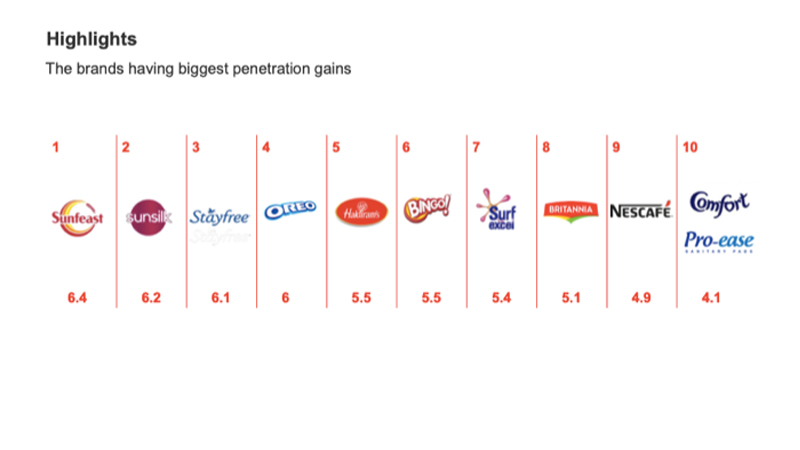
    MUMBAI: Looks like Parle still has India eating out of its hand. The biscuit-to-snack giant has once again topped the charts as the most chosen in-home FMCG brand, retaining its #1 spot for the 13th year running with a whopping 8,605 million Consumer Reach Points (CRPs), according to Worldpanel by Numerator’s Brand Footprint India 2025. Right on its heels was Britannia at 8,241m CRPs, while dairy heavyweight Amul secured third place with 6,517m CRPs. Clinic Plus held steady at #4, but the real climber was Surf Excel, which finally scrubbed its way into the Top 5 in-home brands with 3,438m CRPs, rising from #8 in 2023 to #5 this year.

    Haldiram’s pulled off a masala move, breaking into the Top 10 in-home list for the first time, climbing from #19 in 2023 to #10 this year with 2,513m CRPs. Other standout performers included Balaji, which expanded its rural snack pack reach adding 10 million shoppers ( plus 22 per cent CRP growth), and Godrej Expert Crème, which boosted its shopper base by 15 million (plus 37 per cent CRP growth).

    When it comes to out-of-home (OOH) snacking, Britannia kept its crown with 655m CRPs, but it was Balaji that made the biggest crunch, jumping to #2 with 510m CRPs, followed by Haldiram’s (460m), Cadbury (458m), and Parle (299m). Amul also rose to #6, riding a creamy plus 19 per cent CRP growth.

    While FMCG brand choices in India grew in 2024, the pace was slower, dragged by a food and beverage sector slowdown. Yet, India continues to outpace global averages: 60:40 odds of growth here, compared to 50:50 worldwide. Interestingly, smaller brands are punching above their weight, showing higher CRP growth, while big players slow down.

    “Growth comes from expanding the shopper base, whether through innovation, new formats or deeper rural reach. India remains a vibrant market with challenger brands steadily gaining ground,” said Worldpanel by Numerator MD for South Asia K. Ramakrishnan.

    With 414 brands across foods, home care, beauty, beverages and dairy in the study, the 2025 report confirms what Indians have always known whether at home or out, their brand loyalties are built bite by bite.

  • Understanding ALTBalaji’s ‘under 35 viewers’ with Divya Dixit

    Understanding ALTBalaji’s ‘under 35 viewers’ with Divya Dixit

    As ALTBalaji senior vice-president – marketing and revenue, Divya Dixit has played a pivotal role in driving the company’s vision in the fast-growing and dynamic OTT sector. She carries over two decades of experience in business, marketing and brand building across the digital, OTT, broadcast, telecom, music, and retail industries. Before joining ALTBalaji in 2018, she was with ZEE5 where she conceptualised and developed the brand ‘ZEE5 ‘and ‘ZEE5 Originals’, as well as launched the platform and multiple original shows.

    At ALTBalaji, Dixit looks after marketing budgets and recovery via direct subscription revenue. She is also responsible for the overall growth of the platform, program scheduling, and analytics as well. Under her leadership, ALTBalaji has been one of the top three grossing OTT apps, having doubled its direct revenue YOY in the years 2018-19 and 2019-2020.

    On Tuesday, Balaji Telefilms announced its financial results for AMJ 2021, as per which ALTBalaji sold a total of 1.8m subs, up 35 per cent QoQ. Its direct subscription revenues stood at Rs 17cr. Boasting a current active subscriber base of 2.4m (excluding subscribers on partner apps), AltBalaji continues to drive growth for the Company.

    Interestingly the platform is also turning younger everyday with 80 per cent of the current viewers being less than 35 years of age. The brand has registered a 100 per cent YoY growth with respect to the same, especially in the hinterland markets. According to Counterpoint Research’s Survey, AltBalaji’s 25-35 audience accounted for 59 per cent of its users in 2019. The development is significant because ultimately it is this age group which drives the OTT market.

    Indiantelevision.com’s Ashee Sharma got into a freewheeling conversation with ALTBalaji, senior VP – marketing and revenue, Divya Dixit to understand this under-35 viewer base and more.

    Edited Excerpts

    On ALTBalaji’s young viewer base and the value it holds for the brand

    Youth programming continues to be our focus at ALTBalaji. We are striving constantly to keep the stories as young, inclusive, and as vibrant as possible in the hope of making a difference to the future of society. Some of our top viewed shows in this category have been Broken But Beautiful Season 3, Puncch Beat, Dev DD, Crashh, Dark7white, and LSD.

    We are here to make disruptive content that breaks stereotypes and is relatable to New India, and this development is significant for us because it implies that our brand has been able to crack the code for the youth and those young at heart. It has made ALTBalaji the benchmark for other OTT platforms. We expect a steady surge in viewership, especially among the 18-35 year olds who are leading the binge-watching trend today.

    On the difference between this audience and the rest in terms of consumer behaviour

    Most of OTT consumption happens with viewers under the age of 35 years who are far more tech-savvy, however also most often the busiest. Shorter attention spans seem to be a universal thing with this demographic unless their interest is piqued. So it becomes necessary for us to create content that catches the viewers’ attention right from the get-go. Nowadays, content is all over the internet, and with the intense competition, cracking the code to a viewer’s interest is most important. We believe we have been successful in this regard. Our engagement metrics have gone up from 48 minutes a day in FY18-19 to 83 minutes currently and the audience comprises 21.29 per cent women, with men dominating at 78.71 per cent. 

    On the content and marketing strategy for the <35 yrs TG

    At ALTBalaji, digital marketing is an important element of the marketing mix. Associating with like-minded brands, engagement across short format apps, using actors’ social media reach, and activities with youth influencers for content promotion, have been our primary approaches.  We have a robust analytics platform with a live dashboard that provides us information on views and engagement, as well as the demographic details of our subscribers. This helps us in understanding behavioural consumption patterns, and drives our content and marketing strategies.

    The youth has most definitely made a shift towards OTT platforms over traditional means of entertainment. However, the debate over their preference for movies or shows is still on. ALTBalaji has noticed the people under 35 lean in favour of shows that break stereotypes and have unique narratives, and so we continue to launch shows across genres such as thriller, crime, romance, and drama, all the while maintaining our focus on out-of-the-box story ideas.

    Moreover, our content is tailor-made to attract larger audiences. Currently, in India, the most widely spoken language among approximately 70 per cent of the population is Hindi which has been the priority for ALTBalaji. 95 per cent of our content is Hindi originals, although various other shows have been dubbed to ensure that the content is not limited to the Hindi-speaking populace. . Our recent shows like Broken But Beautiful, Mai Hero Boll Raha Hu, His Storyy, and The Married Woman have given us a massive surge in viewership. 

    On the thought process behind targeting this age-group 

    This age group is the one that sparks maximum creativity among writers and content creators, and that’s because they have a voracious appetite for unique narratives. Also, it made sense to cater to an audience that is well-versed with technology, willing to experiment and pay upfront for content. The phenomenon of Binge-watching actually started them, and so, it was only reasonable for us to work with the low hanging fruit first. We saw a huge increase in subscriptions, with growth percentages doubling in multiple cities including Lucknow, Rohtak, Ludhiana, Srinagar, Guwahati, Shimla, and Ranchi, to name a few.

    On the impact on advertising revenue, and if attracted similar brands to the platform – brands that catered to younger audiences.

    In 2020 alone, ALTBalaji has partnered with almost 25-30 brands for various shows. Our marketing strategy includes brand collaborations as it helps us to reach out to a larger audience. The partnerships have also kept our existing users incredibly engaged with all the collaborated offers they receive. 

    Young brands including Imagicaa, Pipo Popcorn, My Imagine Store, Growfitter, Ferns N Petals, and Ixigo have recently partnered with us for our youth drama Puncch Beat 2. These associations include value-added services to our existing customers. For instance, Ferns and Petals, our official gifting partners for Puncch Beat 2, provided a 20 per cent discount coupon to our viewers on their next billing. Ixigo is associated with us as the travel partner allowing 20 per cent off exclusively for ALTBalaji subscribers. The offering is based on the insight that the youth love discovering the world. Growfitter, the fitness partner for our recent shows, provided free one-month Growfitter Premium Subscription to the ‘fitness-conscious’ contest winners. In addition, brands like Imagicaa, Pipo Popcorn, and My Imagine store have been roped in as entertainment, snack, and gadget partners, respectively, thus encouraging the new audience to get on board.

    On the evolution of the business and subscription models of ALTBalaji

    Brands are increasingly starting to be aware of the growing popularity of OTT. Associating with the right brands would be a win-win for both partners by gaining visibility among the right target audience through in-show integrations and surround marketing. In 2020 alone, revenue from mobile internet advertising in India was Rs 7331 Cr and is predicted to rise to Rs 22,350 Cr in the next five years, increasing at a 25.4 per cent CAGR as per PwC’s Global Entertainment & Media Outlook 2021-2025. Utilising this fast-paced growth to the maximum potential will prove highly lucrative to businesses. However, the revenue model is still evolving. Constant innovation and timing are both the key and the challenge in this sphere. Getting it right could prove extremely fruitful for both players in the partnership.

    Talking of subscription models, there is a consumer out there for every content choice. AVOD/SVOD/TVOD are business models and the only choice the consumer has to make is if he/she wants an ad free experience or is comfortable with ads interrupting the viewing experience. As far as TVOD goes, it’s yet to see some traction in India as OTT platforms are still priced very economically. However, in developed countries where SVOD is largely the order of the day, TVOD as sampling for a particular piece of content works very well.   

    I believe in the long term SVOD is a more sustainable model, and the good news is that more and more audiences are willing to pay for content which has moved the SVOD needle up from 5 per cent, three years ago to almost 25 per cent currently. Our subscription model is priced at INR 300 annually while our quarterly plan costs 100, and half-yearly is set at 180. This is not just for youth but for democratisation of content in the country.

  • Balaji may formalise RIL stake purchase at 16 Aug EGM

    MUMBAI: Balaji Telefilms, in a communique to the BSE and the National Stock  Exchange, intimated about its extraordinary general meeting to be held on 16 August at “The Club”, 197, Juhu Versova Link Road, Opp.  D. N. Nagar  Police Station, Andheri (W), Mumbai- 400 053, Maharashtra.  The  cut-off   date   for   determining  the  shareholders  eligible   for   e-voting  is 9 August, 2017..

    The meeting proposes to conduct special business. Increase in authorised share capital: To consider and,  if thought fit, to pass, with or without modification, the following resolution as Ordinary Resolution: “Resolved that, in accordance with Sections 4, 13 and  61 and  other applicable provisions, if any, of the Companies Act, 2013 and  rules made thereunder, and  applicable provisions of the Articles of Association of the Company and  any other applicable law or laws,  rules  and  regulations (including  any  amendments thereto or re-enactment thereof  for the  time being in force),  the authorised share capital  of the Company be and  is hereby increased from Rs. 260 million divided  into 100 million equity  shares of Rs.  2  each and  30 million Preference Shares of Rs. 2 each to Rs. 360 million  divided into 150 million Equity Shares of Rs. 2 each and  Rs. 60 million divided  into 30 million Preference Shares of Rs. 2 each.

    Issue of 25.2 million equity shares on a preferential allotment / private placement basis: To consider and  if thought fit, to pass, with or without modification, the resolution as a Special Resolution: Balaji is seeking consent of the  members of the  company to create, issue, offer and  allot 2,52,00,000 equity  shares of the  Company of the  face  value  of Rs. 2/- each (“Equity Shares”) at a price  of Rs. 164/- which includes a premium of Rs. 162/- per Equity Share aggregating to Rs. 4.13 billion to Reliance Industries Limited in accordance with ICDR Regulations.

    ALSO READ :

    Reliance Industries buys Balaji Telefilms stake for Rs 4.13 bn

    ALTBalaji is essentially everything that Balaji on TV is not: Sameer Nair


  • Balaji CEO Sameer Nair’s role changes from exec to advisory capacity

    MUMBAI: Balaji Telefilms Group CEO Sameer Nair is stepping down from an executive capacity on the successful completion of his three-year term, He would relinquish his executive role w.e.f. 15 July, 2017, and return to an advisory capacity. Nair was formerly in an advisory role with the company.

    Said Sameer Nair: “It’s been an amazing experience working with Ekta, Shobhaji and all my other wonderful colleagues at Balaji. The company is in great shape – the TV business is doing well; we’ll soon add the DD shows to the mix in which the company retains IP. We now have in place a very measured approach to the movie business; and most recently we had a very successful launch of our global digital business with ALTBalaji. The management teams are in place and the company is well poised for its next phase of growth. On ALTBalaji, the shows have only just begun – the best of Ekta’s creative genius is yet to come. I remain a mentor and guide to the company and a close friend of the family.”

    Said Shobha Kapoor “Sameer is more like family to us; we have a relationship dating back to 2000 when we first worked together on Star Plus. In the past three years the company has made many significant strides most notably in the digital domain and the launch of ALTBalaji. The leadership ranks of Ketan Gupta (COO – TV), Sanjay Dwivedi (Group CFO) and Nachiket Pantvaidya (CEO – ALTBalaji) and their teams continue to do a great job of driving topline growth and bottomline profitability. We wish Sameer the very best in his future endeavours and are happy to have his continued support as an advisor and a friend.”

  • Balaji’s ‘Half Girlfriend’ high on brand associations

    MUMBAI: Chetan Bhagat’s novel cinematic adaptation of ‘Half Girlfriend’, directed by Mohit Suri, is all set to hit the big screens this Friday.

    The film has attracted some of the biggest brands to associate with them from all around the world. Each brand has found a connect with the film, something they can associate with, and in turn brought their own uniqueness to the table adding further value to the film and the brand itself. Right from the juncture of pre-production, the marketing force of Balaji Motion Pictures have very well identified the potential brands that carry forward the theme of the film that have lead to these associations.

    One of their integral brand associations also include the National Basketball Association (NBA), which is the major professional basketball league in North America, and is widely considered to be the premier men’s professional basketball league in the world. Special coaches were flown down from US to train the actors in their basketball skills. Some other brand associations include Close Up, HeroCorp, Make My Trip, Facebook, UC News, Uber and PVR to name a few.

    “‘Half Girlfriend’ follows the journey of the protagonists from Delhi to India’s heartland and finally culminates in New York. There are different brand stories that unfold organically and each one co-exists beautifully. The film manages to cut across demographics seamlessly which is why the associations are a balance between ‘the aspirational’ and ‘the relatable’. For some key brands this is their first cinematic outing and we’re thrilled that they chose to integrate with Half Girlfriend”, says Ruchika Kapoor, Executive Vice President, Balaji Motion Pictures Ltd.

    The brands have either been woven into the film’s script, or facilitated the shoot or are currently carrying campaigns on-air and on-ground to promote the film.

    Produced by Balaji Motion Pictures, Mohit Suri and Chetan Bhagat, ‘Half Girlfriend’ is a cinematic adaptation of Chetan Bhagat’s novel of the same name. Directed by Mohit Suri, the film is slated to release on 19 May, 2017.

  • Balaji seeks shareholder nod for consolidation of prod biz

    BENGALURU: In September last year, the Balaji Telefilms Limited (BTL) board had approved the demerger of the film production business of Balaji Motion Pictures Limited (BMPL) and merger of Bolt Media Limited (Bolt) with the company. Both the companies are wholly owned subsidiaries of BTL.

    With these moves, the company seeks to combine similar business interests, improve capital allocation, enhance operational efficiencies, optimise cash flows, consolidate business operations and streamline the group structure.

    BMPL is engaged in the business of production and distribution of motion pictures and films while Bolt is in the business of production of non-fiction, fiction, factual television shows, event management, etc. After the demerger, BMPL will focus on film distribution business, while Bolt is in the same line of business as BTL and its amalgamation with BTL will help in focussed and effective utilisation of production activities.

    The company has called for a court convened meeting of equity shareholders of the companies on 24 May 2017 at The Club, 197, D N Nagar, Andheri West, Mumbai. Voting by equity shareholders can be done physically at the court convened meeting at the venue, or by postal ballot or by e-voting.

    Shareholders who have opted for the latter two methods of voting can attend the court convened meeting, but they shall not be allowed to vote at the court convened meeting.

    Also Read :

    Balaji Telefilms to restructure its motion picture business

  • Balaji to PayU VoD subscription

    MUMBAI: PayU India has partnered with ALTBalaji, the digital platform of Balaji Telefilms Limited for opening an additional method of payment for the OTT platform’s subscription services. Payment options provided through PayU Biz are Credit Card, Debit Card, Net Banking, Itz Cash, Yes Pay, Ypay, PayU Money wallet and UPI. The global OTT entertainment platform – ALTBalaji will offer 250 hours of original content and subscribers in India and abroad will have the option to pay through PayU.

    ALT Digital Media CEO Nachiket Pantvaidya said, “Our vision of providing a seamless experience to our subscribers is fulfilled by the ease with which PayU enables payments in India and abroad. By enabling UPI based payments we hope to pioneer digitally payments for entertainment a reality on our platform and reiterate our commitment towards Digital India. We hope to leverage the wide variety of payment options that PayU brings to ALTBalaji.”

    PayU India head SMB business Pradeep Shekhawat said, “The association will move us forward in our endeavor to double our digital transactions by year end, which currently stands at around INR 6,000 crore per month. Using our secured payment gateway, consumers pay through Credit Card, Debit Card, Net Banking, Itz Cash, Yes Pay, Ypay, PayU Money wallet, UPI & USD and enjoy ALTBalaji’s subscribership.”

    PayU has presence in 16 high growth markets in Asia, Central and Eastern Europe, Latin America, the Middle East and Africa with an active user base of 30 million and processing 150 million transactions in 2016 worth a combined $4.2 billion.

    Created to provide an alternative to mainstream Indian entertainment & TV content, ALTBalaji will bring fresh and interesting stories to audiences in varied genres. The platform will offer original content of 250 hours in the first year of its launch.

    ALTBalaji app launched on 16 April 2017 with five new shows and will release new shows every fortnight for its viewers to binge watch. The content is created by some of the best talent of the Indian entertainment industry, including critically acclaimed directors and actors. The long illustrious list of artists comprises of Nagesh Kukunoor, Juhi Chawla, Nimrat Kaur, Rajkumar Rao, Hansal Mehta, Sakshi Tanwar, Ram Kapoor, Atul Kulkarni, Sameer Soni, Yudhishtar Urs, Dipannita Sharma Atwal, and more.

  • Disney India confirms ending Hindi film production

    Disney India confirms ending Hindi film production

    MUMBAI: Reams and reams of newsprint and countless words have been written over the past week, about the exit of Disney India from the motion picture business and the departure of its managing director Siddharth Roy Kapur. The company refrained from reacting to any of the news reports.

    But it has now decided to issue an official statement confirming that it is indeed bringing down the curtains on its bold Hindi production initiative which it once considered as a crown jewel when it acquired UTV from Ronnie Screwvala four years ago.

    “We periodically review and realign our business priorities in response to evolving market dynamics. Given the challenges with the current economic model for investing in the local film industry, we intend to shift the focus of our film strategy to driving our Hollywood movie slate in India. These movies have enjoyed considerable success, including The Jungle Book, which is the highest-grossing Hollywood movie of all time in India. We remain optimistic about the incredible potential of the Indian market and will continue to invest in growing the Disney brand in India with our movies, television networks, consumer and interactive products, and live experiences,” reads the official statement from the company, which is to be attributed to ‘Disney spokesperson.’

    While Disney India has reserved all comments about Sid hanging up his boots, there is clear indication that he is quitting as a headhunt has commenced to find a replacement for him. .

    To many industry observers the decision to bring up the closing scene to its Hindi film production story, is not a sudden move but is a very calculated step that seeks to have it focusing on nurturing the revenue generating businesses rather than doing the balancing act at the local box office.

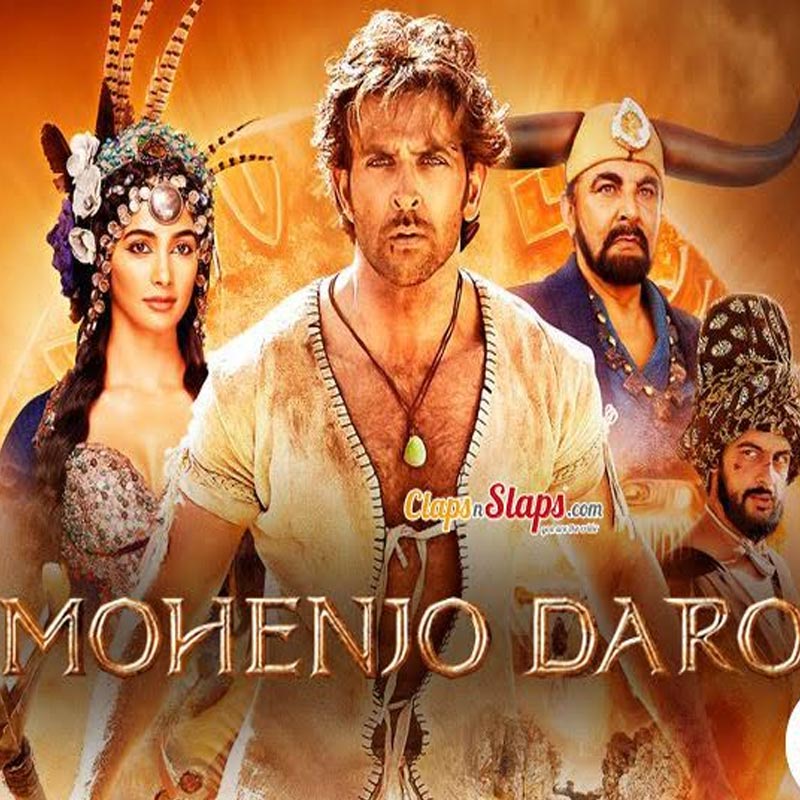
    While some may point that it is the dud performance of Mohenjo Daro at the box office that served as the catalyst behind this decision, it is the overall market dynamics that doesn’t favour profitability in the movie making business, is Disney India’s belief.

    The Hindi box office has been declining in the last few years whereas Hollywood has grown by almost 50 per cent this year. Out of the 250 plus Hindi movies that release every year and within the top 20, less than half the films make profits for the investing studio. Considering the cost of each film, it is very hard to get that money back and make moolah with the limited screens that the country has, shared a veteran in the movie distribution business. Even if a movie does make money, a lion’s share of that profit goes to the stars.

    Since Walt Disney is in the business of making money, staying in the Hindi film market doesn’t make sense for it.

    “Few of the projects that they have greenlit didn’t make practical sense honestly. Filmmakers and studios need to draw realistic budgets if they are to stay in business. A movie like Mohenjo Daro that required a heavy budget due to its historic storyline didn’t seem like a sensible investment from a business standpoint. Not to mention instead of a solo release, it hit the screens with another project and therefore the number of screens it was exposed to were less,” opined Mumbai-based film distributor Rajesh Thadani.

    To be fair to Disney India, Thadani shared that several other studios including Balaji and 20th Century Fox have had their fair share of mistakes and calls this development at Disney India a cue for the film industry to do a reality check for a more realistic approach to making films. “It won’t impact the film making in the industry but it definitely has given the corporate world food for thought,” he shared.

    While the studio will not sign any new production deals in the Indian film market, it will release the promised magnum opuses with due diligence — Dangal in December 2016 and Jagga Jasoos in April 2017.

  • Disney India confirms ending Hindi film production

    Disney India confirms ending Hindi film production

    MUMBAI: Reams and reams of newsprint and countless words have been written over the past week, about the exit of Disney India from the motion picture business and the departure of its managing director Siddharth Roy Kapur. The company refrained from reacting to any of the news reports.

    But it has now decided to issue an official statement confirming that it is indeed bringing down the curtains on its bold Hindi production initiative which it once considered as a crown jewel when it acquired UTV from Ronnie Screwvala four years ago.

    “We periodically review and realign our business priorities in response to evolving market dynamics. Given the challenges with the current economic model for investing in the local film industry, we intend to shift the focus of our film strategy to driving our Hollywood movie slate in India. These movies have enjoyed considerable success, including The Jungle Book, which is the highest-grossing Hollywood movie of all time in India. We remain optimistic about the incredible potential of the Indian market and will continue to invest in growing the Disney brand in India with our movies, television networks, consumer and interactive products, and live experiences,” reads the official statement from the company, which is to be attributed to ‘Disney spokesperson.’

    While Disney India has reserved all comments about Sid hanging up his boots, there is clear indication that he is quitting as a headhunt has commenced to find a replacement for him. .

    To many industry observers the decision to bring up the closing scene to its Hindi film production story, is not a sudden move but is a very calculated step that seeks to have it focusing on nurturing the revenue generating businesses rather than doing the balancing act at the local box office.

    While some may point that it is the dud performance of Mohenjo Daro at the box office that served as the catalyst behind this decision, it is the overall market dynamics that doesn’t favour profitability in the movie making business, is Disney India’s belief.

    The Hindi box office has been declining in the last few years whereas Hollywood has grown by almost 50 per cent this year. Out of the 250 plus Hindi movies that release every year and within the top 20, less than half the films make profits for the investing studio. Considering the cost of each film, it is very hard to get that money back and make moolah with the limited screens that the country has, shared a veteran in the movie distribution business. Even if a movie does make money, a lion’s share of that profit goes to the stars.

    Since Walt Disney is in the business of making money, staying in the Hindi film market doesn’t make sense for it.

    “Few of the projects that they have greenlit didn’t make practical sense honestly. Filmmakers and studios need to draw realistic budgets if they are to stay in business. A movie like Mohenjo Daro that required a heavy budget due to its historic storyline didn’t seem like a sensible investment from a business standpoint. Not to mention instead of a solo release, it hit the screens with another project and therefore the number of screens it was exposed to were less,” opined Mumbai-based film distributor Rajesh Thadani.

    To be fair to Disney India, Thadani shared that several other studios including Balaji and 20th Century Fox have had their fair share of mistakes and calls this development at Disney India a cue for the film industry to do a reality check for a more realistic approach to making films. “It won’t impact the film making in the industry but it definitely has given the corporate world food for thought,” he shared.

    While the studio will not sign any new production deals in the Indian film market, it will release the promised magnum opuses with due diligence — Dangal in December 2016 and Jagga Jasoos in April 2017.

  • Challenges faced by the OTT players in India; the way ahead

    Challenges faced by the OTT players in India; the way ahead

    MUMBAI: With the majority of the OTT players operating on a freemium model, subscriptions are enjoying a new prominence as a revenue model for digital content and apps. While India saw Ditto TV working on the subscription revenue model, Balaji is all set enter the digital space with its digital platform Alt Digital Media.  

    The panel discussion on ‘Cracking the money code- Challenges and solutions for Digital Subscription models’ at FICCI FRAMES 2016 discussed the revenue models and the profit generation formula for this sector. Industry stalwarts included VUClip CEO Nickhil Jakatdar, Nazara Technologies CEO Manish Agarwal, ALT Entertainment chief strategy officer Eklavya Bhattacharya, Eros Digital COO Karan Bedi and Spuul India CEO Rajiv Vaidya. The session was moderated by BBC World News presenter Ros Atkins.

    After throwing light on the revenue models that each of the platforms followed, the panellists broadly discussed the revenue models that are followed in India with their positives and negatives and the various challenges that OTT was facing due to certain issues like infrastructure, piracy, etc.

    Initiating the discussion with how the ‘freemium’ model helped the OTT platforms, VUClip’s Jakatdar said, “The thing with such an emerging market is that if you don’t give content for free to the viewers, they will switch to some other place where they are getting it. You need to have content beyond the subscription pay wall. For example, in Malaysia, we found that Korean content works well there and is extremely popular. We got the simulcast content rights for Korea which they had to pay for, but the library content was for free.”

    He further added that, “We believe in micro payments which means that viewers can pay per content they view.  This means that they can buy data for a single day and don’t have to pay a monthly subscription. This is working well for us.”

    “Even as we use the freemium model, the free content for is important. If we look at the free content on the platforms as an ad-revenue driver, then we may find it difficult to sustain in this space ,” he further added.

    Differing with Jakatdar, ALT Entertainment’s Bhattacharya opined, “I don’t agree that the consumers will move to a different platform if you charge them. That’s going happen if you provide the same content on different platforms. It is definitely a challenge to provide exclusive quality. People don’t want to watch free content. They want to watch good content. The key for such platforms is to target the most loyal audiences and to provide them good quality and exclusive content which they can’t resist to buy. If you are creating content and hoping that you can break-even on advertising, it’s not going to work out. If you are confident about your content, people will definitely pay for it irrespective of the cost. If you create content that the consumers can’t get anywhere, they will come to you.”