Tag: Baikonur Cosmodrome

  • Eutelsat 9B satellite soars into space

    Eutelsat 9B satellite soars into space

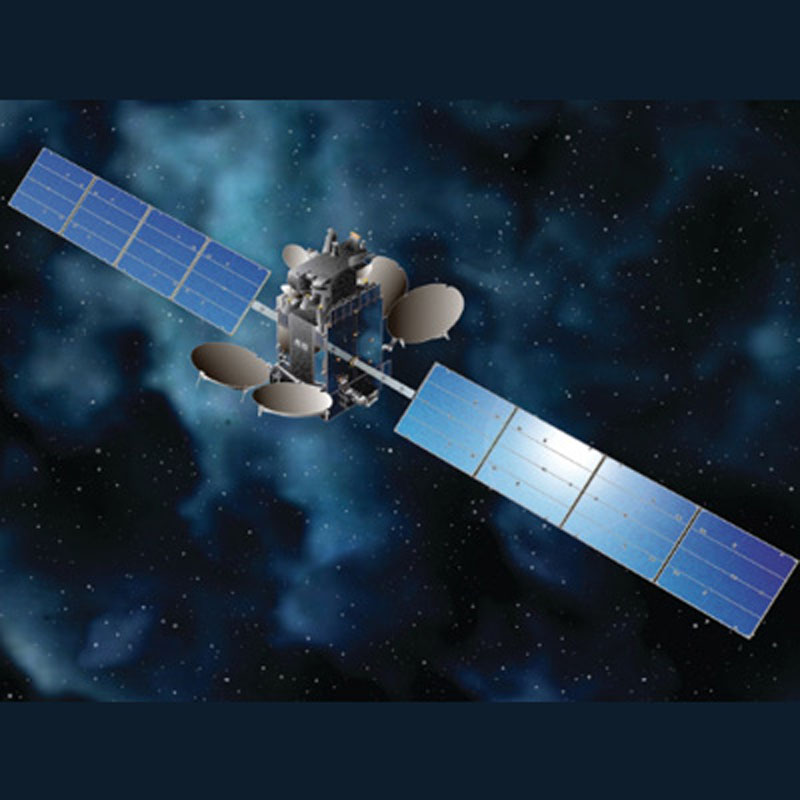
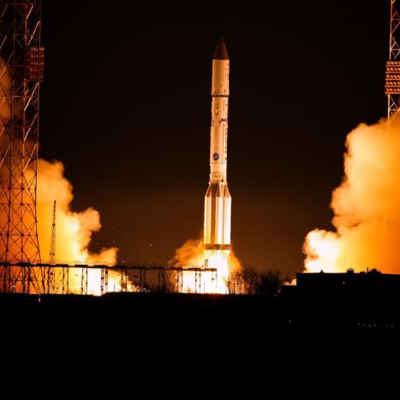
    MUMBAI: Eutelsat Communications’ Eutelsat 9B satellite was successfully launched into geosynchronous transfer orbit by ILS using a Proton rocket that lift off from the Baikonur Cosmodrome.


    Separation of Eutelsat’s new satellite occurred after a 9 hour 12 minute Proton flight. Partial deployment of the satellite’s solar panels, that represents the first critical post-launch operation, took place two hours later. Following further manoeuvres and in-orbit tests, Eutelsat 9B will be positioned at 9 degrees East in March to assume broadcasting of over 350 TV channels currently served at this position by Eutelsat 9A and provide expansion capacity for new services.


    Eutelsat 9B also marks an industry first as the host satellite for the inaugural data relay payload for the European Data Relay System (EDRS) being implemented through a Public Private Partnership (PPP) between ESA and Airbus Defence and Space.


    Commenting on the launch, Eutelsat chairman and CEO Michel de Rosen said, “Our congratulations to ILS and Krunichev for a flawless launch that sees a new Eutelsat satellite propelled on its way to geostationary orbit. This sophisticated satellite programme reflects outstanding collaboration between Eutelsat, ESA, Airbus Defence and Space, ILS and Krunichev. We look forward to putting Eutelsat 9B to work for the benefit of our broadcaster clients and to the inauguration of the ground-breaking European Data Relay System that is a powerful illustration of the complementarity of geostationary and low earth satellites for fast transmission of data flows back to earth.”

  • Eutelsat 9B satellite soars into space

    Eutelsat 9B satellite soars into space

    MUMBAI: Eutelsat Communications’ Eutelsat 9B satellite was successfully launched into geosynchronous transfer orbit by ILS using a Proton rocket that lift off from the Baikonur Cosmodrome.


    Separation of Eutelsat’s new satellite occurred after a 9 hour 12 minute Proton flight. Partial deployment of the satellite’s solar panels, that represents the first critical post-launch operation, took place two hours later. Following further manoeuvres and in-orbit tests, Eutelsat 9B will be positioned at 9 degrees East in March to assume broadcasting of over 350 TV channels currently served at this position by Eutelsat 9A and provide expansion capacity for new services.


    Eutelsat 9B also marks an industry first as the host satellite for the inaugural data relay payload for the European Data Relay System (EDRS) being implemented through a Public Private Partnership (PPP) between ESA and Airbus Defence and Space.


    Commenting on the launch, Eutelsat chairman and CEO Michel de Rosen said, “Our congratulations to ILS and Krunichev for a flawless launch that sees a new Eutelsat satellite propelled on its way to geostationary orbit. This sophisticated satellite programme reflects outstanding collaboration between Eutelsat, ESA, Airbus Defence and Space, ILS and Krunichev. We look forward to putting Eutelsat 9B to work for the benefit of our broadcaster clients and to the inauguration of the ground-breaking European Data Relay System that is a powerful illustration of the complementarity of geostationary and low earth satellites for fast transmission of data flows back to earth.”

  • AsiaSat 7 replaces the ageing AsiaSat 3S today

    AsiaSat 7 replaces the ageing AsiaSat 3S today

    MUMBAI: In early October 2010, Asian satellite service provider, AsiaSat, and International Launch Services (ILS) had announced a contract for the launch of the AsiaSat 7 satellite on an ILS Proton.

    AsiaSat 7 was configured as a replacement satellite for AsiaSat 3S, one of AsiaSat‘s flagship satellites, operating at the orbital location of 105.5°E. AsiaSat 7 will carry 28 C-band and 17 Ku-band transponders, and a Ka-band payload. Its region-wide high power C-band beam covers Asia, the Middle East, Australasia and Central Asia, with Ku-band beams serving East Asia, South Asia and a steerable Ku beam.

    According to plan, the AsiaSat 7 satellite was successfully launched in Hong Kong on November 26, 2011, on an ILS Proton Breeze M launch vehicle from the Baikonur Cosmodrome in Kazakhstan. Nine hours and 13 minutes after lift-off, AsiaSat 7 successfully separated from the launch vehicle. Over the next few days, the satellite will arrive at the geostationary orbit, some 36,000 km above the Equator.sia

    “With AsiaSat 7 successfully launched well ahead of the planned date for AsiaSat 3S‘s replacement, we can assure continuity of service to customers, while at the same time, adding to our on-orbit capacity to service new business,” said AsiaSat president, CEO William Wade, in a press statement earlier. “With this launch opportunity on the ILS Proton, we are continuing our replacement strategy to provide continuity of services to our current and potential new customers across Asia, Middle East, CIS and Australasia. We know that we can count on the professionalism of ILS and Khrunichev for a successful launch for AsiaSat 7.”

    While AsiaSat 3S was launched on March 21, 1999, as a replacement for the ageing AsiaSat 1 in May of that year, AsiaSat 7 marked the launch of the fourth AsiaSat satellite on ILS Proton, the 20th Space Systems/Loral Satellite launched on ILS Proton, and the 69th ILS Proton launch overall.

    AsiaSat 7 is similar to AsiaSat 3S, and has been designed with a 15-year design life and will offer enhanced power and coverage at orbital location 105.5°E.

    As for AsiaSat 3S, it currently beams some of the popular channels in India which include: Zee TV, Star Plus, Star Utsav, Sahara One, Sahara Filmy, Sahara Firangi, Sahara Samay, 9X Media, 9X Jalwa, Big RTL Thrill, Big Magic, Big CBS Spark, B4U Movies, B4U Music and ETC Bollywood, among others.

    AsiaSat’s business continues to be affected by The Finance Act passed in India in May 2012. The Act taxes revenue generated from the provision of satellite transponder capacity to Indian customers and any non-Indian customers considered to have earned income from any business or source in India.

    The Indian government approved in its budget an increase of the royalty withholding tax rate from 10 per cent to 25 per cent, effective from 1 April 2013. Nevertheless, as stated in previous reports, the amount of AsiaSat’s revenue considered to be Indian sourced, and thus taxable in India, is still under discussion as of the date of this report. The increase in the tax rate will have a negative impact on its future business, and to remain competitive in the market, AsiaSat may make pricing adjustments which could negatively impact its margins in the coming financial year.

    In other major announcements by AsiaSat, the company indicated in its operational highlights for the financial year 2014-15 that two of its other satellites, AsiaSat 6 and AsiaSat 8, are on schedule and will launch in mid-2014 to provide new C and Ku-band capacity for business growth. Also, the commencement of the preliminary design phase for AsiaSat 9, the replacement for AsiaSat 4 in 2017, will provide new coverage and services at 122?E.

    AsiaSat chairman Sherwood P. Dodge said in a company statement: “Acquiring new business in 2014 will remain a top priority. Our expanding satellite fleet and reputation for providing quality and reliable satellite capacity, together with our commitment to our customers puts us in an excellent position to develop new business opportunities. The market remains highly competitive, but I believe our able management team and our high-quality services will enable us to move the business forward in 2014.”

  • Measat-3 satellite successfully launched

    Measat-3 satellite successfully launched

    MUMBAI: A Proton Breeze M launch vehicle, launched from the Baikonur Cosmodrome, Kazakhstan, successfully placed the Measat-3 satellite into orbit earlier today.

    After separation, the satellite will be manoeuvred into its orbital location and will undergo in-orbit testing. This is expected to be completed by 1 February, 2008.

    The project cost of the Measat-3 satellite is $ 280 million.

    Providing 300 per cent more capacity at the key 91.5E orbital location, Measat-3 is one of the region’s most technologically advanced satellites.

    Measat-3 has 24 Ku-band transponders and has been designed to provide capability for data services and Direct-to-Home (DTH) applications in Malaysia, Indonesia and the Indian Subcontinent. The satellite has been designed with a C-Band payload capable of reaching over 100 countries, representing 70 per cent of the world’s population, and the most powerful Ku-band DTH coverage for over 160 million TV households in the countries under its footprint.

    Measat-3’s launch opens up the options available to Indian operators looking to enter the DTH arena. Kalanithi Maran’s southern broadcast network Sun Group’s Sun Direct DTH service is ready to launch and is only waiting a satellite to beam off. Anil Ambani’s ADAG also has plans for a DTH service under the brand name Bluemagic, which is headed by the former CEO of Zee Group’s Dish TV, Sunil Khanna.

    It may be recalled that the unfortunate failure in July of the GSLV-F02 launch rocket carrying the Insat-4C communication satellite had wrecked the timetables for the launch of Sun Direct.

    Sun had booked seven high-power Ku-band transponders, six for DTH and one for DSNG (digital satellite news gathering), of the total 12 carried by the Indian Space Research Organisation’s Insat-4C.

    Said Measat’s COO, Paul Brown-Kenyon: “The launch of Measat-3 will enhance our ability to support Malaysian and international customers. It will not only augment capacity but also enhance redundancy capabilities for customers using the Measat-1 satellite. Planning is already underway for the launch of Measat- 1R, scheduled for end 2007 / early 2008, which is being developed to support and sustain future growth requirements for existing and prospective customers.”

    Currently operating a two satellite network, Measat provides video distribution services across East and South East Asia, Indochina, South Asia and Australia. The launch of Measat-3, and Measat-1R end 2007 / early 2008 will extend the reach of the Measat fleet, providing customers with a satellite able to reach Pay-TV operators in over 100 countries, representing more than 70 per cent of the world’s population. Leveraging facilities at the Measat Teleport and Broadcast Centre, and working with a select group of world-class media partners including Astro, Pacific Century Matrix and STT, Measat provides a complete range of broadcast services including video playout, up-linking, and video turnaround to and from the key European and North American markets.

  • If transponder space unavailable on Insat-4B, Sun might opt for Measat3

    If transponder space unavailable on Insat-4B, Sun might opt for Measat3

    MUMBAI: A day after the unfortunate failure of the GSLV-F02 launch rocket carrying the Insat-4C communication satellite, it is not just India’s space establishment that has been forced to relook its plans.

    For Kalanithi Maran’s southern broadcast network Sun Group, the mishap could well mean that the launch of its direct-to-home (DTH) service sees a change of satellite operator. Sun TV had booked seven high-power Ku-band transponders, six for DTH and one for DSNG (digital satellite news gathering), of the total 12 carried by the Indian Space Research Organisation’s Insat-4C.

    The big question now is this: If Isro is not able to provide Ku-band transponder space for his DTH venture Sun Direct, will Maran opt for an alternative satellite like Malaysia’s soon-to-be-launched Measat-3?

    Maran already has a running relationship with Measat’s parent company Astro, having stitched a deal last year for a $25 million joint venture to originate, aggregate and distribute television programming and channels for a global audience. Measat Broadcast Network Systems is a subsidiary of Astro company which has a 20-year exclusive licence for DTH transmission in Malaysia.

    Measat has scheduled a September launch for the Measat-3 satellite. The satellite will be shot into space atop a Proton rocket from the Baikonur Cosmodrome in Kazakhstan. Measat-3 will have 24 Ku-band transponders and has been designed to provide capability for data services and DTH applications in Malaysia, Indonesia, India and China.

    Maran, however, says he has got intimation from Isro that he will be provided with Ku-band transponders at the earliest. “Isro has assured us of providing alternate transponders to meet our DTH requirements. We have not made any request to Isro for taking space on Measat-3. We were, in any case, looking at a time frame between October-November,” the Sun Group promoter tells Indiantelevision.com.

    Has Maran been told which satellite will provide him the Ku-band transponders? “We will know from Isro in three to four days,” he says.

    For DTH providers who want to operate from foreign satellites, Isro will have to provide the approval and lease it out for them. Dish TV, for instance, is on NSS-6 with Isro’s backing as required by regulatory norms.

    For Isro’s commercial arm Antrix Corporation, hiring of foreign transponder space for a short time could be a possibility. There is a precedence of this having happened in the past.

    According to a report in Hindu Businessline, when Insat-2D failed, Isro bought transponder space on an Arabsat satellite. Isro has also provided temporary leases on Thaicom, GE-Americom, and even now on NSS, Businessline reported.

    At the moment though, Isro has not received any fresh proposal from Maran’s DTH company, Sun Direct TV, to lease out a satellite for them. Says Isro contract management and legal services director SB Iyer, “Sun has not asked us for a foreign satellite yet. The failure of Insat-4C is a brief setback which has put us behind 4-6 months. But we are recasting our programme by which we can accelerate the Ku-band capacity growth. We may be putting up larger satellites to boost the capacity.”

    So will Sun get space on Insat-4B, which is meant for Doordarshan’s DTH service like DD Direct Plus? “We haven’t taken any decision yet. DD, which is on NSS-6, has a low requirement,” says Iyer. Sun has asked up to eight transponders for its DTH service.

    Even if Sun gets Insat-4B, the launch of the satellite is expected to take place early next year. The commercial operations can, thus, commence only by the first quarter of next fiscal. “We have the flexibility to accommodate Sun. It is too early to comment on the steps we are going to take,” says Iyer.

  • Eutelsat’s Hot Bird 8 satellite set for August launch from Baikonur

    Eutelsat’s Hot Bird 8 satellite set for August launch from Baikonur

    MUMBAI: The Hot Bird 8 broadcasting satellite built by EADS Astrium for Eutelsat Communications has arrived at the Baikonur Cosmodrome for launch on a Proton M Breeze M vehicle provided by ILS. The launch is scheduled in the early hours of 5 August.

    Weighing in on the launchpad at 4.9 tonnes and equipped with 64 Ku-band transponders, Hot Bird 8 will be the largest satellite yet orbited by Eutelsat, states an official release.

    Designed for television and radio broadcasting it will be positioned at 13 degrees East, Eutelsat’s prime video neighbourhood, which delivers 950 television channels and 600 radio stations to 110 million cable and satellite homes in Europe, North Africa and the Middle East.

    The satellite’s mission is to replace the 20 transponders on the Hot Bird 3 satellite, which will continue service at a new location. In conjunction with Hot Bird 7A, which was launched in February 2006, it will also contribute to raising in-orbit redundancy at Eutelsat’s Hot Bird neighbourhood, the release adds.

    Eutelsat Communications is a leading satellite operator with capacity commercialised on 23 satellites providing coverage over the entire European continent, as well as the Middle East, Africa, India and significant parts of Asia and the Americas. The Group is one of the world’s three leading satellite operators in terms of revenues. Its satellites are used for broadcasting nearly 1,800 TV and 900 radio stations to more than 120 million cable and satellite homes.

  • Another Intersputnik satellite gets into orbit

    Another Intersputnik satellite gets into orbit

    Intersputnik’s Express-6A satellite was launched successfully on 12 March (Moscow Time). The satelllite to be located at 80 degrees East, is positioned as a bird that will significantly improve communications capacity across Russia and was lifted off Kazakhstan’s Baikonur Cosmodrome aboard a Proton launch vehicle. Under an agreement with the Russian Satellite Communications Company (RSCC), Intersputnik will utilize the major part of Express-6A’s 17 transponder strong C- and Ku-band relay capacity.

    Express-6A will replace the aging Express-6 spacecraft currently in orbit and allows Intersputnik’s customers to use earth stations without tracking systems, and providing a higher quality of services.

    “The successful launch of Express-6A is the next step in modernizing Intersputnik’s communications system,” Gennady Kudryavtsev, Intersputnik’s Director General, said. “The new Express-A series of spacecraft provides a longer service life, more capacity and higher radiated power. Express-6A will carry all of the television channels currently handled via Express-6, and also will be used for new digital communications and broadcasting channels including relay in Ku-band.”

    In addition to traditional services such as analog broadcasting and public switched telephone networks, Express-6A also will provide such services as digital television and radio broadcasting, Internet access and dedicated corporate VSAT-based Ku-band networks. Users of the Express-6A include such Russian television channels as TV-6, TV-Centre, AST; large telecommunications network operators (Rustel); dedicated networks operators (Insat, Sirena), and telephone companies from Intersputnik’s member nations.

    The second satellite in the new Express-A series is Express-3A, which is to be launched in June and positioned at 11 degrees West. This spacecraft will replace the aging Statsionar-11 (Gorizont-26) satellite. Express-3A will allow Intersputnik to offer more satellite channels to telecommunications companies interested in transAtlantic traffic.

    Russia’s Krasnoyarsk-based NPO PM is prime contractor for the Express-A-series satellites. The satellite bus is developed by NPO PM, while Alcatel Espace of France supplies the payload.