Tag: Bahrain

  • Reel luxe: Mukta A2 rolls out Opulence format in Vadodara

    Reel luxe: Mukta A2 rolls out Opulence format in Vadodara

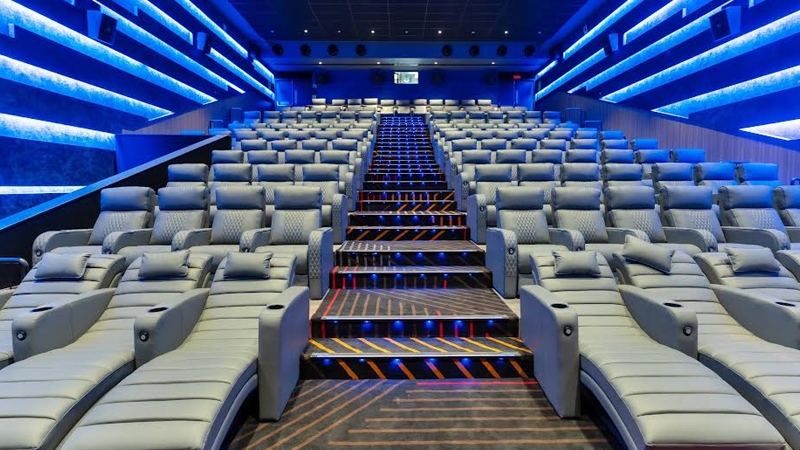
    MUMBAI: Forget first-class, Vadodara’s movie buffs can now go full throttle with ‘Opulence’. Mukta A2 Cinemas has just unveiled its most premium offering yet with the launch of ‘Opulence’, a swanky four-screen multiplex housed inside The Emperor Mall, Vadodara. With 528 plush seats, Dolby Atmos sound, 2K laser projection, all-silver screens, and immersive 3D, it’s not just a trip to the movies, it’s a full-blown affair of the senses.

    From recliners and loungers to couple’s beds and leather sofas, comfort here doesn’t come in small measures. Add to that gourmet snacks, ambient lighting and a thoughtfully designed lobby, and you’ve got yourself a cinematic spa day.

    As a cherry on top, the launch syncs with the release of ‘Housefull 5’, giving audiences a blockbuster to match the opulence.

    “This isn’t just a format, it’s a reimagined moviegoing experience,” said Mukta A2 Cinemas managing director Rahul Puri. “We wanted to launch where the love for cinema runs deep, and Vadodara was the perfect fit.”

    Located beside VCA Ground on Vasna-Bhayli Road, the venue features a gourmet F&B counter with wraps, pizzas, desserts, and a range of beverages all served up in style.

    Satwik Lele, COO, added, “With Opulence, we’ve married comfort, technology, and hospitality into one seamless space. It’s cinema, but elevated.”

    With this launch, Mukta A2 Cinemas which operates nearly 100 screens across India and overseas including Bahrain reaffirms its ambition to lead with innovation. And if the seats at Opulence are anything to go by, they’re not just raising the bar they’re reclining in it.

  • IHCL checks in with 100 new hotels, portfolio bulges to 380

    IHCL checks in with 100 new hotels, portfolio bulges to 380

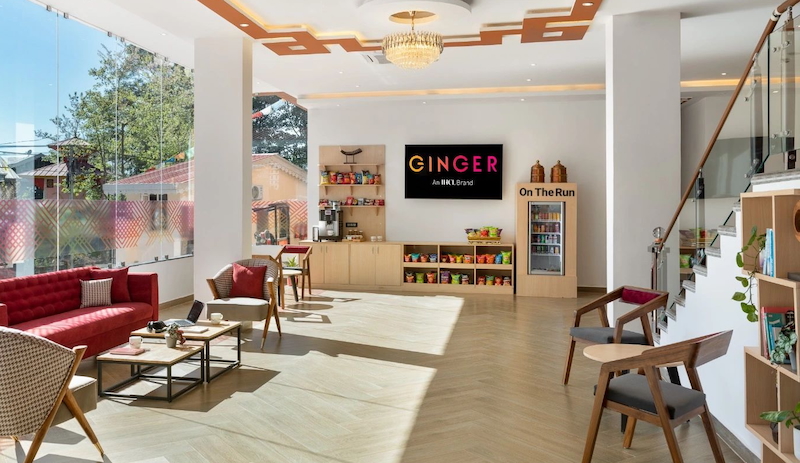
    MUMBAI: India’s hospitality heavyweight IHCL has flexed its muscles with a staggering 100 new properties in the last fiscal year, comprising 74 signings and 26 openings. The Tata Group behemoth, which operates the iconic Taj brand, now boasts a portfolio bulging at 380 hotels.

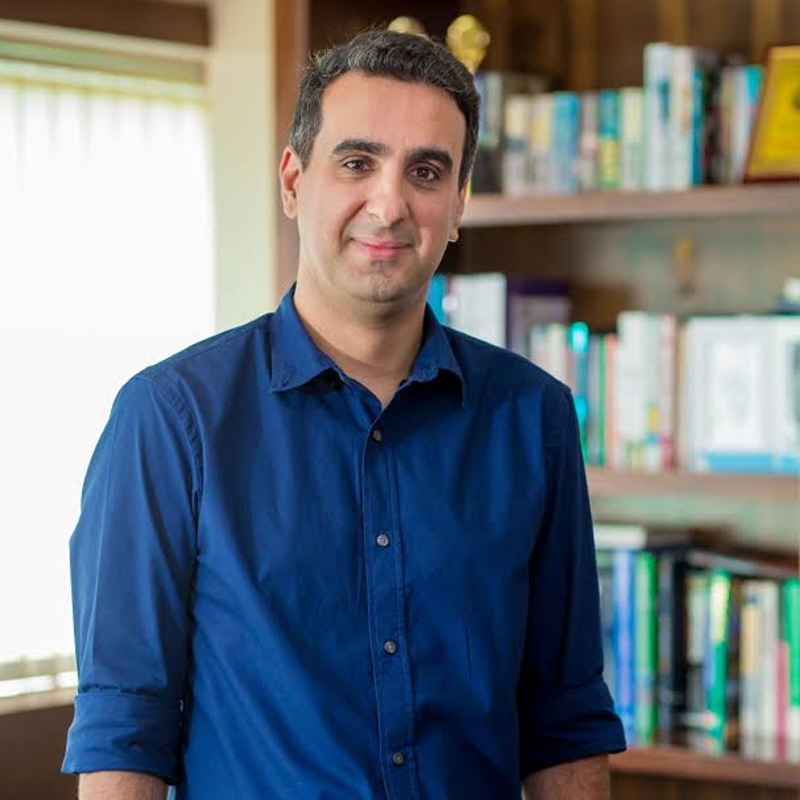
    Executive vice president for real estate and development Suma Venkatesh highlighted the company’s “industry leading pipeline” of 137 hotels, crediting IHCL’s “strong brand presence” and “sustained demand buoyancy” for the achievement. The firm’s ambitious “Accelerate 2030” roadmap appears to be motoring along nicely, with upscale and midscale segments—Gateway and Ginger brands—garnering the lion’s share of signings.

    “Ginger crossed a 100-hotel portfolio and Vivanta reached the 50+ hotel mark,” Venkatesh noted, clearly delighted with the milestone.

    Suma venkatesh deepika rao

    The company hasn’t confined its expansion to domestic shores. It has ventured into fresh middle eastern territory with properties in Bahrain and Ras Al Khaimah, adding over 800 keys to its international collection.

    Executive vice president for hotel openings and new businesses Deepika Rao highlighted Ginger’s particularly prolific year, with nine new establishments springing up across commercial hubs, industrial townships, leisure destinations and state capitals.

    Not content with conventional locations, IHCL has also played pioneer in virgin tourism territory. “Building on its legacy, IHCL pioneered new tourism destinations with SeleQtions and Gateway hotels in Diu and expanded its presence in spiritual destinations with a Taj resort in Puri,” Rao explained.

    The hiring spree accompanying this expansion has been equally impressive, with over 2,500 new jobs created across the 26 new properties.

    IHCL, which was founded when Jamsetji Tata opened The Taj Mahal Palace in Mumbai in 1903, is now hurtling toward its “Accelerate 2030” goal of a 700-hotel portfolio. For a company recently crowned with the “World’s Strongest Hotel Brand 2024” title by Brand Finance, the sky—or perhaps the penthouse suite—appears to be the limit.

  • OTT, cinema will exist in a symbiotic ecosystem: Mukta Arts MD Rahul Puri

    OTT, cinema will exist in a symbiotic ecosystem: Mukta Arts MD Rahul Puri

    MUMBAI: Mukta A2 Cinemas, from the house of Mukta Arts Ltd, now has 72 screens across the country after including the JV that it had with Asian Cinemas (11 properties). It also owns 22 properties and one in Bahrain. It is looking at properties at a place where it can fulfil a niche. The southern part of India is relatively under-screened terms of multiplexes, so that’s a destination Mukta Arts Ltd finds interesting.  “The important thing is that we are looking at screens that add value, that are profitable and the screens that we believe that are going to make sense for our stakeholders,” says Mukta Arts Ltd managing director Rahul Puri, in a freewheeling conversation with Indiantelevision.com. He dwells at length on the impact of COVID-19 in the cinema industry, industry trends, expansion plans, etc.

    He feels that there is still great potential for the industry. For an industry like this, he says, 8000 screens for 120 crore people is nothing. So there is great potential. But, according to him, it can’t be done by the private sector alone, because the government holds the largest land bank in the country; everyone can talk about recession, but this is a sector that is resistant to recession. Though this is an interesting time for the OTT platforms considering the lockdown, he believes, OTT cannot supplant a theatre experience. As far as India is concerned, cinemas are part of household habits. The treat of a cinema visit, he says, cannot be replaced for many families across the country. He feels that the OTTs and cinemas will exist in a symbiotic ecosystem, both having their own USPs.

    Excerpts from the interview:

    How has the COVID-19 outbreak impacted the cinema industry in India? What kind of impact – short- and long-term – will it have on the sector?

    The COVID-19 has impacted the sector and all businesses hugely. Projects are delayed, theatres are closed and business, in general, is at a standstill. This is hurting theatres most as they are businesses with high fixed costs which need to be running in order to make ends meet. In the short term, there will be a lot of issues for smaller players just being able to stay afloat at this point and in the long run as things return to normal you will see a bunching together of delayed projects which will continue to put pressure on distribution and exhibition infrastructure. The industry is in for a tough 2020.

    What are the technological advancements and experiences Mukta A2 Cinemas offer?

    Technological updation is imperative for any cinema chain to keep up with the progressing times. Mukta A2 Cinemas constantly updates itself with the latest technological trends to provide a high level of consumer satisfaction. With Dolby speakers and advanced projections, Mukta A2 Cinemas provides its patrons with pocket-friendly pricing, best quality technology and services, comfortable seating and varied options in food and beverages.

    Please talk about the current footprint across India. What are the growth strategies and expansion plans of Mukta A2 Cinemas in India?

    We are now at 72 screens across the country after including the JV that we have with Asian Cinemas in the Southern part of India. We are now at 34 properties across the country – with Asian Cinemas we have 11 properties. We own 22 properties and one property in Bahrain. The important thing is that we are looking at screens that add value, that are profitable and the screens that we believe that are going to make sense for our stakeholders.

    Having said that, we have plans to expand in the next two years.  Our model has been two – three screens and we have some single screens. But mainly our advantage is that these screens were never particularly large with 250 – 300 seats. Therefore, our occupancy remains relatively high. And our catchment area does not have to be significantly large. However, now we are looking at much larger properties – some greenfield properties. In Bangalore, we are looking to build a 10-12 screen project in Yehlanka. In Bahrain, we have a six-screen theatre, which is also our largest by far. So, the model has shifted over the years.

    Now the idea is to look at a much more big format where one can afford to dedicate certain screens to certain target groups – kids screen, screens for the bigger films, and particularly in the South that helps – they have Tamil, Telugu, Kannada, Hindi, English, Malayalam, so that helps. So those have a wide range of content. You can then fill up eight to 10 screens reasonably well.

    What are your efforts in the preservation and restoration of various old theatres across India to preserve their heritage value?

    It depends on where these heritage properties are. If they are in the heart of the city, then they are a value add. In Mumbai, we did Excelsior (at Fort), which was a renovation. I think it’s important to understand that we have to go where we believe there is a strong value proposition for us. That ultimately helps in pulling the TG to that screen, particularly if that is a two- to three-screen theatre. And I think that has been our model for success – you pick your content to bring TG, you get them loyal and then you surprise them with the content on screens.

    Please talk about your expansion into tier I, II, III cities.

    They are spread across the country – Kharagpur, Pune, a couple of properties in Bangalore and Ahmedabad. The south is a market of interest. We are looking at properties at a place where you can fulfil a niche. The southern part of India is relatively under-screened (not in terms of single screens, but in terms of multiplexes), so that’s a destination we find interesting. We are looking at doing a good mix between these bigger format screens, which probably will be the bulk of it, and less of traditional screens that we have done in the past – single screen renovations.

    How has the industry evolved over the years? How do you evaluate the current and future trends in the field?

    Well, the cinema business has been growing from level to level. If I must analyze the past few years, I could attribute the growth to two major factors. Primarily, the focus of cinema chain brands on updating technology and their endeavour to deliver a premium service to their consumers. Secondly, there is a major shift in the kind of content in films today. Last year, for example, was a landmark year. We had the superstars of the industry delivering underwhelming box office numbers while the “content-driven” films seemed to have masses flocking to the cinemas instead. Of course, this also has to do with the shifting mentalities of the audience; however, the shift comes from the producers first. In totality, for a cinema chain, this is all music to my ears. To have small films do two-three week runs at the box office.

    The struggle, however, is more macro in that sense. For an industry like ours, to be honest, 8000 screens for 120 crore people, is nothing. So we should be looking for a way to try to push five to seven years to get up to 12,000- 14,000 screens but for that government as well as the policies are important. It can’t be done by the private sector alone, because the government holds the largest land bank in the country and everyone can talk about recession, but this is a sector – would not say is recession-proof but resistant to recession.

    Do cinemas face an existential threat from the OTTs? How are cinema houses coping up with the change?

    This is an interesting time for the OTT platforms considering the lockdown. People have no other option but to watch shows and films online. But to talk about the trend in general, the streaming industry has certainly found their niche; however, the cinema-going experience cannot be compared. Hindi cinema has always been evolving and coming with interesting technologies that are making the movie-going experience all the more exhilarating. However, there are films that need a cinematic platform. As far as India is concerned, cinemas are part of household habits. The treat of a cinema visit, I suspect, cannot be replaced for many families across the country. To answer your question objectively, I think the OTTs and cinemas will exist in a symbiotic ecosystem, both having their own USPs.

  • Pepsi IPL 2014 announces global broadcast partners

    Pepsi IPL 2014 announces global broadcast partners

    MUMBAI: As the Indian Premier League explores new avenues this season by making a debut in the UAE, the coverage of the tournament will be bigger and wider than ever before. The Pepsi IPL 2014 will reach a worldwide audience over television, internet and mobile devices through some of the best broadcasters of the respective regions.

    Looking at the television broadcast space; Pepsi IPL 2014 will be available on IMG in the Caribbean, PCCW in Hong Kong, OSN Network in the Middle East, StarHub in Singapore, SuperSport in Sub-Saharan Africa, Set Max and Sony Six in India, Geo Super in Pakistan, Maasaranga TV in Bangladesh, Carlton Sports Network in Sri Lanka, ITV Networks in UK, Sportsnet in Canada Rogers, Willow TV international in US, Sky NZ in New Zealand, Measat (Astro) in Malaysia and EMTV in Papua New Guinea.

    With the Pepsi IPL 2014 also reaching out to the world on the internet, the list of operators who will be partnering with IPL for the same are: GoCricket.com & Starsports.com in India; willow.tv in US; Rogers in Canada; OSN for Afghanistan, Algeria, Bahrain, Egypt, Gaza Strip, Iran, Iraq, Jordan, Kuwait, Lebanon, Libya, Morocco, Oman, Palestine, Qatar, Saudi Arabia, Syria, Tunisia, United Arab Emirates, West Bank, Yemen; TBC in Pakistan; for rest of the world GoCricket.com and www.youtube.com/gocricket.


    As for mobile streaming, in India StarSports.com & nexGTV/GoCricket (apps) will be providing all the action from the field. And for outside India youtube.com/gocricket and GoCricket apps will be the destination to catch the live action.

  • The SME Revolution starts in Dubai and GCC

    The Western economies realised decades ago that small and medium enterprises are really the main drivers of the economy. While big businesses are necessary to preserve and maintain structure within the economy, surely they have considerable problems of their own. Mega corporations of the earlier era have increasingly lost their edge to smaller, nimbler organisations, which have spouted all over the Western landscape. The Middle East is now a new turning point for SME’s to begin a grassroots revolution.

    Four Driving Forces –

    The Critical Mass

    Middle East and particularly the super-charged Gulf-Cooperative Council known as a GCC region, the current GCC members are Saudi Arabia, Bahrain, UAE, Qatar and Oman. This also ripples into bigger Middle East and Middle East and North Africa known as Mena regions.


    GCC nations are in a major transition, something so dramatic and so powerful that when it comes to new business formation front then all this is pointing to a mass incubation of new enterprises all over this region. Dubai is now such a dynamic place and unmatched by any other region on this planet; the examples set by Dubai provides the fuel to this expansion, and brings a brand new high level of confidence.


    The speed and operational level is dramatically high, and it may continuously re-charge in a way that was similar to the 1990 American e-commerce boom, which erupted in a chain reaction of one success leading into several others, simultaneously. Though, at times, we refer to this American boom period as ‘irrational exuberance’, but still the dotcom boom followed by a long bust was still only a small hiccup towards the long haul of the e-commerce revolution. There is a similar pattern emerging, this massive growth may get a bump here and there but it is gathering momentum and amassing its own critical mass with signs of longevity.

    The Integration

    The shades and colours of extreme diversity combined with variety of loose floating ideas can become an awesome force, sometimes only the crude differences and wild ideas germinate great original concepts. This region is like an extraordinary bazaar of strange concepts, traditions, styles, personalities, and nationalities, parked in various geographies. Isn’t the same reason why the open diversity of America in the later parts of the last century made it a hot spot for innovation and the introduction of hundreds of new concepts to the world? This is what is in the making. Here the diversification and cultural integration is becoming the nurturing ground and technology is offering the tools to produce such concepts in a world-class manner. The SME sectors all over the GCC countries are poised for big gains.


    The Image and Branding

    Today, and all throughout history, no matter what, everyone is being branded, either for their origins, ideologies, presentations and interactions, plus hundreds of many other reasons. Everyone is branded. From mega personalities to little individuals, from Governmental institutions and big organisations to small businesses, nothing is left untouched.


    Though nothing wrong with this, but the most important part is to acquire tactical and highly-trained skills to develop a deeper understanding of this external branding force so as to combat all the undesired images with a professionally executed counter-action plan, aimed to continuously achieve a sharper and a desired image along the way. The smart ones know this very well and this smartness is now slowly creeping throughout the region rapidly. This image building is going to create some new standards to be adopted by the rest of the globe. The culture is becoming image-savvy along the way, just like the West was all along.

    The Nationalization

    The GCC countries are facing population and foreign workforce imbalances and therefore want to create and train their own nationals to be in the forefront of all sectors and also to become the driving force behind the business and corporate sectors in their own countries.


    The issues of nationalisation are being discussed at all levels; this also is creating a positive interaction among nationals to take direct, active roles rather than passive ones. Nationalisation is fueling education and active engagement. This, when blended with a foreign workforce creates a new kind of energy of its own, and this energy is what the new business climate needs, a blend of integrated highly efficient working environments. Nationalisation is a very good thing, and sooner the localisation picks up steam it will be better for all sides.


    Opportunities for the World

    Today Dubai and GCC opens golden opportunities to the global business communities of the world. The business activities in the region are increasing at record pace by the day, Dubai now sets the standard, and every other city in the region wants to catch up fast. Right now, Dubai International Exhibition Centre, the largest centre in Middle East, has 365 days of bookings for major fairs, exhibitions and conferences, millions of people are coming in to interact, exchange ideas to form alliances and sellers form all over the globe in search of business from this super-rich region.


    “We are the gateway to the world now, and we can show it in technicolour. Just come and see what we have done here in last 10 years,” says Sateesh Khanna, an Indian born expatriate in Dubai since last the last 30 years, and now General Manger at Al Fajer Information and Services, the largest exhibition company in the region and also the organizer of the SME Expo in Jan 2007, www.gogcc.com www.semeexpo.com. Sateesh further adds, “Easy access to ownership of your own business, property and no taxes have made this the top location now, and SME’s are coming in huge numbers.”


    Some 15,000 members of the SME community will visit this SME Expo from this region and the world. There will be some 300 SME related businesses showcasing their strengths and innovative ideas. In the Golden Opportunity for SME in GCC Conference, there will some 1000 delegates who will hear the top 20 speakers in this field. The theme is to offer a platform to create new alliances and to team-up for greater exportable opportunities throughout the Middle East and Mena. “Finally, we are ready to tackle this new frontier and we invite businesses from all over the world to come and explore the golden opportunities this region has to offer to SME,” says SME Expo Event Manger Winnie Lugon.


    The tourism and general traffic to Dubai is at a frantic pace, and people from all over the globe are exploring this to make a major branch operation or Asian head quarters, and this alone has brought a boom to the real-estate markets and foreign investments. There is a certainly a brand new SME business revolution starting in Dubai and spreading all over the GCC countries. Right now, everybody is talking about being Dubai-bound or going GCC. Al aboard.

  • Worldspace inks cricket rights deal with Espn Star Sports

    Worldspace inks cricket rights deal with Espn Star Sports

    MUMBAI: Worldspace Satellite Radio has signed an exclusive broadcast license agreement with Espn Star Sports to provide subscribers with live audio coverage of cricket, further enhancing its content offering and providing consumers with a truly unique listening experience.

    Under terms of the agreement, Play, the Worldspace -branded all sports channel for South Asia and the Middle East, will have exclusive broadcasting rights throughout South Asia for 12 tours and over 200 days of cricket comprising both test matches and one-day internationals.

    Three of the 12 tours include India — Worldspace Satellite Radio’s primary market in the Asia region. Coverage begins 19 November, 2006 with India’s tour of South Africa, and runs through February 2008, with conclusion of the India-Sri Lanka-Australia Triangular Series in Australia, informs an official release.

    “The exclusive acquisition of these premier cricket internationals is another demonstration of Worldspace’s continued commitment to providing the best in audio entertainment for our listeners,” said Alexander Brown, co-chief operating officer, Worldspace.

    Subscribers will have “ball-by-ball,” real-time coverage of all matches as well as a host of ancillary programming surrounding each match. The coverage will feature matches with the national teams from India, Australia, England, New Zealand, South Africa, Zimbabwe, Sri Lanka, and the West Indies, and will also include the biennial Australia-England test series, “The Ashes.” Broadcasts can be received in countries covered by the Worldspace AsiaStar satellite’s West Beam and include: Bangladesh, Bhutan, India, Maldives, Nepal, Pakistan, Sri Lanka, Bahrain, Qatar, and UAE.