|
BAG Films and Media founder-promoter Anurradha Prasad has put up a mighty fight. Not many would have dared take her seat a year back as she had to fend for her two newly-launched channels amid an epic global economic downturn.
News24 was fighting for space in a crowded Hindi news TV market. The top tier – Aaj Tak, India TV, Star News and Zee TV – had settled. Just down below were IBN7 and NDTV India, both big brands and threatening to pace up.
Prasad promised hard news, a gap that wasn‘t being serviced too well. But down the road she realised that news consumption was changing. Riding the cyclic wave was important. So she changed gears without compromising the basic ethics of journalism. “We have to bring in the interesting element. India is a youth population. We have to show news that appeals to them,” she says.
News24‘s market share improved, inching close to seven per cent. E24, the Bollywood news channel, was also gaining currency. While the slowdown allowed her to trim costs, revenues also started looking up. The net result: bringing down the broadcasting business‘ operating loss to Rs 122.36 million during the first nine months of FY‘10.
The struggle, though, is far from over. The broadcasting business is still bleeding while the TV content production, which used to rake in revenues of around Rs 600 million, is almost blank.
In an interview with Indiantelevision.com‘s Sibabrata Das & Gaurav Laghate, Prasad says the broadcasting business will operationally break even this fiscal and the focus will be to revive the content production business.
Excerpts:
We have raised Rs 804.5 million ($17.4 million) through a GDR issue to fund our existing broadcasting business. The board had taken an approval to raise $30 million over two years. We will need new capital when we decide to launch two more channels.
Yes, we are still posting losses, but they are much less than the earlier fiscal. The two channels will be operationally breaking even this fiscal. We will be raising our ad rates by at least 20 per cent while we have brought down the costs.
For News24, the cash burn is around Rs 600 million, while our revenue at this level is Rs 400-450 million. We are starting with a hike in ad rates in the first quarter of the fiscal, but expect to post more growth during the course of the year. We will also be tapping more clients. As for E24, we are already very close to being in a break even state.
We had raised Rs 2.4 billion from India Bulls promoter Sameer Gehlaut, High Growth Distributors and Fidelity. Add to this the Rs 804.5 million we have just raised. There is still a shortfall but the original plan included the launch of four channels. We have put the launch of two channels on hold.
We deferred the launch of our two channels. Our revenue projections also went for a toss. But the slowdown actually acted as a blessing in disguise. We could rationalise our costs very early into our expansion into the TV broadcasting space. We transferred our E24 operations from Mumbai to Delhi. This was a bold step as we had to take the risk of running a Bollywood news channel from Delhi, but we succeeded. We also initiated multitasking at the junior level.
Did this also mean trimming manpower? Our peak staff strength came down from 900 to 650 people. But I did not make any compromise on the editorial and we did not ask anyone to leave. By restructuring operations, we brought down our costs by 30 per cent on a monthly basis. And now with the market improving, we see ourselves ready for growth.
We have had to change along with the tastes of our viewers. So we brought in the “interesting” factor in news without compromising on our journalistic ethics. For example, we aired a story on prostitutes dancing on a cremation ground in Varanasi. We wouldn‘t have shown this two years back. Visually, it was a great story. We must remember that India has a dominant youth population and they consume news so differently. And why blame them? It is a twitter age. So is news getting redefined? Let‘s face it. A generational shift is happening in the TV news space. And there are cyclic waves of viewing preferences. After the Mumbai terror attack, all channels started ‘Pakistan bashing‘ while the ‘bhoot-pret‘ (ghosts and demons) element came down. And audiences loved that.
Indians love experimentation in every aspect. I also believe that though English has become the link language, Indians typically think in Hindi. Which is why some of the English news channels are also changing. In such a cluttered Hindi TV news market, how will News24 wing its way up? Our focus this year will be on distribution. We feel we have a strong chance of going up the ratings ladder among the second tier of Hindi news channels once this is taken care of. I firmly believe that chaos leads to creation.
We see a high growth and revenue potential for News24 as there are still over 200 advertisers to tap. And the effective rate of advertising is still the lowest in the broadcasting sector. We believe the market will expand to accommodate more players.
Also, the sporting events like Commonwealth Games, T20 World Cup and ODI World Cup will generate a lot of excitement, which will help the news channels. Do you have plans to launch your channels in international markets? We have international expansion plans for our broadcasting business. We plan to launch both the channels in the Middle East by the first quarter of this fiscal.
We already give the feed of E24 to DirecTV in USA for two hours daily.
Since our broadcasting business is under control, we will bring back our focus on the TV content business. We understand that side of the business very well. We will make soaps as they are the staple diet of all Hindi general entertainment channels. Non-fiction content is expensive and the RoI (return on investments) is not good; broadcasters are realising this.
We have 10 operational radio stations at this stage. We will take a call on bidding for more stations once there is clarity on regulation. There are still question marks on royalty and permission of news on radio. Since we are already in TV news, we believe permission of news on radio will give us a definite push and advantage.
We will wait for further price corrections. Recent movies like LSD (Love, Sex aur Dhoka) are good business models. |
Tag: BAG Films
-
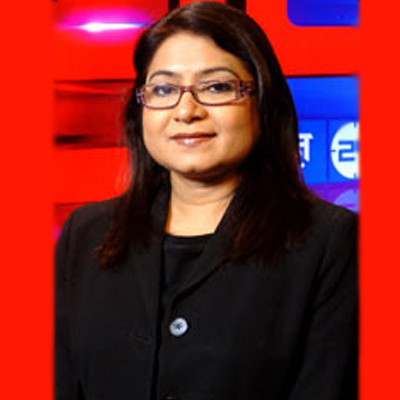
‘A generational shift is happening in the TV news space’ : BAG Films and Media CMD Anurradha Prasad
-

BAG Films plans to take News24, E24 to Middle East in early FY’11
NEW DELHI: BAG Films and Media, which has diverse interests across broadcasting, television production and radio businesses, is planning to take its two channels to the Middle East by early next fiscal.
News24 (Hindi news) and E24 (Bollywood news channel) are slowly gaining market share in their respective segments.
“We have international expansion plans for our broadcasting business. We plan to launch both the channels in the Middle East by the first quarter of the next fiscal,” BAG Films and Media CMD Anurradha Prasad tells Indiantelevision.com.
The company already gives the feed of E24 to DirecTV in USA for two hours daily. “We have a content tie-up with DirectTV and two hours of E24 feed beams in the USA,” Prasad says.
The focus this year will be to achieve operational break even for the two channels, she adds.
-
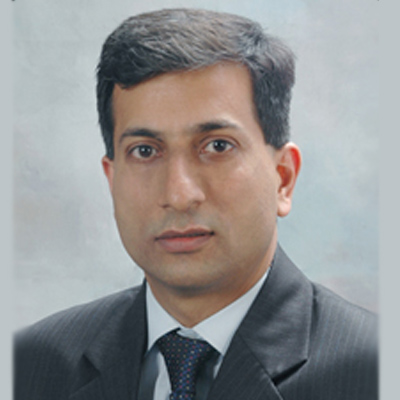
‘Indian promoters have build a scale where they can attract foreign media companies’ : Ravi Sardana – ICICI Securities Limited Vice President
Foreign media companies like Walt Disney and Turner have entered into equity deals with Indian firms to grow their business in India.
The last two years has seen a spate of equity deals, changing the media landscape in India. Indian promoters have raised money to build scale and also brought in corporate structures.
In an interview with Sibabrata Das, ICICI Securities vice president Ravi Sardana talks about the immense potential that the media sector offers to investors and the consolidation that is waiting to happen.
Excerpts:
Multinational media companies like Walt Disney and Turner had come to India on their own. Why are they now entering into JVs with local partners?
When the foreign players entered the market, there was no Indian media company of size to attract a buyout. Besides, the market has become too crowded today. It is better for them to build on whatever is available. Managing the government and distribution on cable networks is also difficult.Why are the Indian media companies becoming attractive to financial and private equity investors as well?
Indian promoters have taken their companies to a scale where even Walt Disney and Time Warner have gone ahead to do equity deals with them. The business has become scalable with the opening of multiple platforms. There are also lots of markets in India which are still under penetrated. Media companies can expand their business by entering into new geographies.Which are the segments in the media sector that are proving lucrative?
In the broadcasting space, every big player wants to build a full boutique. Even smaller TV production companies like Miditech and BAG Films are getting into broadcasting. All of this will require funding.Distribution is also becoming a big value driver and a new segment that investors have started looking into as the revenue leakages are getting plugged with digitalisation. The regional space is another interesting segment and will see higher growth compared to Hindi and English media. Regional TV has not build scale like print has, but there is a serious interest. Growth is faster in tier-II and tier-III towns.
But aren’t DTH companies saddled with losses?
In the short run, they may not be attractive for investors. But DTH service providers are mopping up subscribers. That will add value and open up the space for investors.Aren’t investors shying away from cable companies as digitalisation is slow?
Cas (conditional access system) has been introduced in pockets of Delhi, Mumbai and Kolkata. Consolidation is also happening at the multi-system operator (MSO) level in analogue cable. The process is underway to convert this to digital. We are already getting feelers from investors who are exploring options to put money behind cable networks.‘Since the size and scale of the movie business has shot up, there is a need for capital. While good financing sources for debt are being made available, there is a requirement of providing risk capital for this business‘Only one media company raised money through an initial public offering in 2007. Why are IPOs drying up in the media sector?
The first wave of IPOs happened when companies like Mukta Arts and Creative Eye tapped the market. It was a pre-matured phase. Now Indian media companies have set up corporate systems from being just promoter-led. But there are not many large media companies that are privately held.The economy is slowing down and interest rates are hardening. Do you see media organisations being cash strapped to fund their growth?
Companies have chalked out aggressive growth plans. They believe the wider pull of channels they have, the easier it will be to sort out distribution issues. But to expand their presence in all genres of broadcasting, they need capital. Fund raising for some companies has definitely slowed down. But they can tap alternate sources of funding like debt, private equity and convertible instruments.Is the broadcasting space heading for consolidation?
In every genre, the top 3-5 channels will make money. There will be a huge competition to reach those levels. We will see some consolidation and there will be pressure to differentiate content.Are news channels getting bogged down by a steep rise in operational costs?
More than operational expense, it is distribution costs that are inflating and going to hurt.Is the news channel space getting too cluttered with companies from all sectors wanting to rush into it?
Historically, the journalist-led channels have done well. Already there is a clutter and there are a large number of strongly entrenched players. New entrants will have a challenging task; they will have to create a new niche space.Will there be room for so many regional news channels?
If they are able to get market share, then in 2-3 years they will break even. The big players can also amortise their costs with the main channels.Do you see the other revenue streams growing for news broadcasters?
The other revenue streams in India are still very small. News channels should focus on kicking in subscription revenues.How are the movie companies shaping up in India and what are the challenges they face?
In the movie business, there are already the four tigers – UTV, Adlabs, Eros and Studio18. Multiplex operator PVR is also into movie production. For a pure film exhibition company, profitability could be range bound. So there is need to enter into other streams like film production and distribution.What are the new financing options available for companies?
For the film business, Indian companies have tapped the Alternative Investment Market (AIM) of the London Stock Exchange. Since the size and scale of the business has shot up, there is a need for capital. While good financing sources for debt are being made available, there is a requirement of providing risk capital for this business. -

Kolkata firm picks up 12.5% stake in BAG Films
MUMBAI: B.A.G Films is diluting 12.55 per cent on an expanded equity to Kolkata-based High Growth Distributors (P) Ltd. for Rs 261 million.
The production house will be making a preferential allotment of 13.07 million shares at a price of Rs 20 per share. “We have expansion plans and the funds will be utilised for this,” says B.A.G Films managing director Anuradha Prasad.
Earlier India Bulls promoter Sameer Gehlaut acquired 25 per cent stake in B.A.G Films for Rs 262 million. On the expanded equity, Gehlaut’s holding will drop to 19 per cent.The promoters will have 38.39 per cent after the dilution, Prasad adds. Gehlaut’s open offer at Rs 13 per share for a further 20 per cent stake (as per regulatory requirement) would find no taker as the share price of B.A.G Films has jumped to Rs 23.
Meanwhile, the company has decided to increase its authorised share capital from 100 million t0 125 million equity shares of Rs 2 each. The board has also given an in-principle approval to change the name of the company to B.A.G. Media Ltd or any variant thereof, subject to approvals.
In the FM radio business run through subsidiary company B.A.G Infotainment, IDBI Bank has picked up a 10 per cent stake. The deal with Bank of Baroda for a similar stake did not conclude, says Prasad.
-

India Bulls promoter Sameer Gehlaut to buy 25 per cent in B.A.G Films
MUMBAI: India Bulls promoter Sameer Gehlaut is showing interest in the media business. The Delhi-based entrepreneur is buying around 25 per cent stake in TV content company B.A.G Films for Rs 262 million.
The acquisition is through a preferential allotment of up to 20,250,000 equity shares of Rs 2 each at a price of Rs 13 per share. Gehlaut will have to make an open offer for a further 20 per cent stake which if subscribed totally, would make him the largest shareholder in the company.
The promoters of B.A.G Films will hold around 37.5 per cent on the expanded equity. But their stake will go up after conversion as they are being issued preferential allotment of up to 10,000,000 warrants. The conversion price is fixed at Rs 13 per warrant. Gehlaut’s shareholding will also see change after the conversion.
“Gehlaut has come in as a pure financial investor. We will be using the funds to meet our expansion plans,” says B.A.G Films managing director Anuradha Prasad.
B.A.G Films will be investing Rs 160 million in new media and the animation business. “Besides, we will be retiring a part of our debt to Yes Bank,” says Prasad.
B.A.G Films’ radio venture, run through a subsidiary company B.A.G Infotainment, has an investment outlay of Rs 480 million including the licence fee paid for 10 stations. B.A.G Infotainment rcently roped in IDBI Bank and Bank of Baroda for picking up 10 per cent each.
B.A.G Films will also be issuing stock options of up to 10,000,000 equity shares to its permanent employees at Rs13 per equity share.
The scrip touched a high of Rs 15.68 on Monday after opening at Rs 13.40. “The price of the scrip will stay firm and may see one more surge before steadying,” says an analyst in a broking firm.
-
International Emmys judging: BAG Films’ ‘Siddhant’ through to Finals
MUMBAI: The Indian entertainment industry is looking at a brighter tomorrow as BAG Films’ Siddhant has qualified in the drama category for the final of the International Academy of Television Arts and Sciences’ 34th International Emmy Awards.
The semi final round was conducted in Mumbai today and saw a 19-member jury scan entries in four categories – comedy, non-scripted entertainment, drama series and children and young people (the latter two being new additions from last year’s judging).
India is among a select few countries like Germany, New Zealand, Australia, Qatar and Greece to host the semi final rounds of this event. The jury comprised different representatives from the television fraternity in India including Abhimanyu Singh, Archana Puran Singh, Ashwini Yardi, Asit Modi, Ketki Dave, Mandira Bedi, Monisha Singh, Nachiket Pantvaidya, R D Tailang, Ravi Kiran, Ram Kapoor, Ravina Raj Kohli, Ritu Goel, Sanjeev Sharma, Shristi Arya, Siddharth Kak, Smriti Irani, Supriya Pathak and Suresh Bala.
In essence there seemed to be a consensus among jury members that there was a dearth of Indian content due to sheer lack of awareness among producers and TV channels alike.
International Emmy Awards Semi-Finals host Anil Wanvari with International Academy of Television Arts and Sciences director, Emmy judging, Sandy Clark.
Speaking to Indiantelevison.com, Walt Disney Television International (India) executive director production and programming Nachiket Pantvaidya said, “Asian content was quite good as there seems to be a trend in programming particularly around the theme of magic and fantasy. However, Indian content was highly under represented.”Having been on the jury last year as well, Contiloe Films Pvt Ltd CEO Abhimanyu Singh was of the opinion, “Indian entries are at par with the rest. However, there is a greater need to drive the Emmy’s forward through better marketing of the brand, to encourage greater participation.”
In response to the jury’s plea for greater awareness in terms of the procedure to enter the competition, the International Academy of Television Arts and Sciences director, Emmy judging, Sandy Clark told this website, “There is a misconception that the Emmy’s is only open to US programming. However, there are no restrictions and thus broadcasters, directors, distributors and producers can all enter. We spread awareness through our website, via email and through events like Mipcom and MipTV to encourage entries from across the globe.”
Hopefully this year’s win, combined with word-of-mouth will provide an impetus to more Indian producers and TV channels to make a bigger entry next year. Speaking about B.A.G. Films’ achievement, Indiantelevision.com CEO and International Emmy Semi Final host Anil Wanvari said, “Siddhant making it to the final speaks volumes for Indian content and this will hopefully facilitate greater participation next year.”
The entries in the remaining categories shortlisted for the final round are as follows:
Comedy – War of the In Laws, TV Broadcasters Ltd, Hong Kong, China
Non-Scripted Entertainment – 1. Wisholang (My Wish) – Papawad (Forgiveness), GM Networks, Philippines
2. Viking Family Special, Fuji Network Corp, JapanChildren and Young People – 1. My Perfect Partner, Media Corp, Singapore
2. Advengers, TV Asahi Corp, Japan
Drama – 1. Home Affairs, Penguin Films, South Africa
2. Siddhant B.A.G Films, India -
India TV expands editorial team
MUMBAI: The Rajat Sharma — promoted India TV has announced three new appointments within the editorial team in the Hindi news and current affair channel.
The news channel has roped in Aaj Tak’s senior special correspondent Kumar Rajesh as the executive editor. Rajesh, in the past had been associated with Rajat Sharma through the news property Aaj ki Baat as an anchor as well as the associate editor. Earlier, he had worked with Sahara news channel.
Channel7 senior editor news gathering Prashant Tandon has been brought in to take reponsibility in a similar position. Tandon had earlier worked with Star News, Sahara UP news channel and also for a news based show Rozana produced by BAG Films for DD.
Nepal 1 executive producer Kishore Kumar Malviya has been appointed as senior editor. Malviya had been associated with Zee News and Navbharat Times.
In an official statement issued, India TV editor in chief Rajat Sharma says, “We are delighted to welcome Kumar, Prashant and Kishore. I have no doubt that Kumar’s 14 years in television journalism will be a huge asset in India TV’s next phase of growth.
“Prashant has rich experience in strategic planning and content management and you will be seeing his impact in India TV’s news gathering operations almost immediately. Kishore brings in all-round skill sets across the news gathering and output functions besides having been out there in sensitive field assignments.”
-
FM radio: PMO forwards grievances to I&B
NEW DELHI: The Prime Minister’s Office (PMO) has forwarded the grievances of private FM radio operators in India to the information and broadcasting (I&B) ministry for “appropriate action.”
Pointing out that it is a “positive step,” the Association of Radio Operators of India (AROI) convenor and CEO of BAG Films radio division Rajiv Misra said, “We have received a communication from the PMO, which has not struck down our demands.”
Misra added that the PMO has forwarded the demands of the nascent FM radio industry to the nodal ministry for suitable and appropriate action on the matter.
The demands of AROI included permission for news and current affairs programming on private FM radio stations and rationalization of music royalty fee, which has been termed by the radio industry as “too high” and “arbitrary.”
A FM radio operator termed the development as a “step forward”, adding that the I&B ministry is likely to be more receptive to the idea of news on private radio stations once it has heard from the PMO.
The government and the Union Cabinet have been divided over the issue of news on private radio stations with one section saying that if this is allowed, it could compromise national security as monitoring of all FM radio stations all the time could be a Herculean task.
However, a government panel under the chairmanship of Ficci secretary-general Amit Mitra had recommended giving the green signal to news on private FM radio stations as it would bring about variety in programming and is a standard global norm.
Meanwhile, AROI is continuing to negotiate with music industry bodies to rationalize music royalty fee.
The I&B ministry, however, has washed its hands off the music fee issue, saying the matter relates to IPR, which is in the domain of the human resources development (HRD) ministry.
The HRD ministry, these days pre-occupied with reservation-for-backward-classes-in-educational-institutions issue, hasn’t reacted too warmly to AROI’s presentation on high music royalty.
-
Media stocks plunge as Sensex sheds 452 points
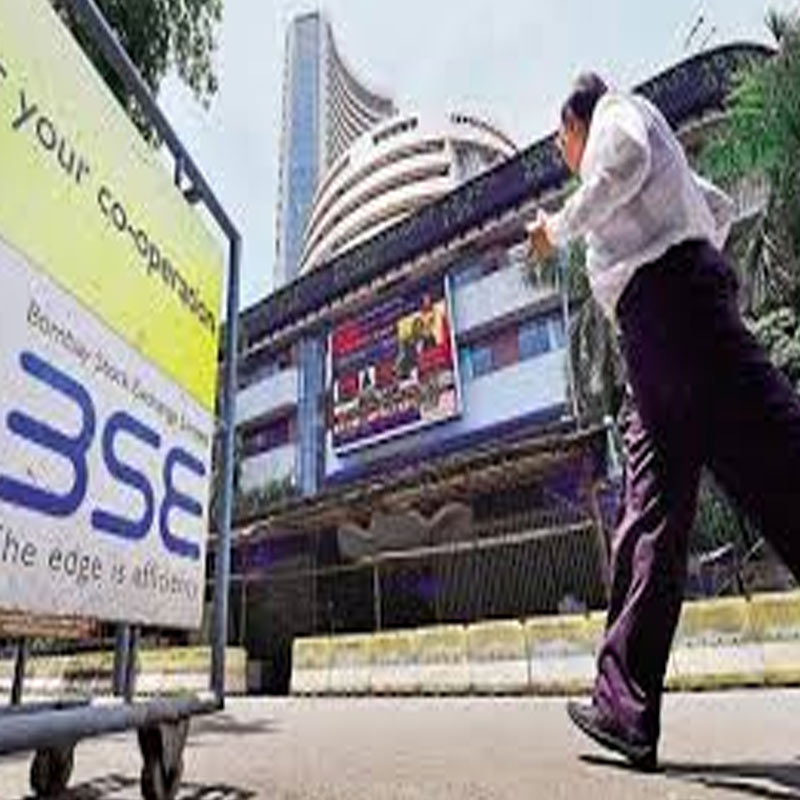
MUMBAI: Media stocks crashed along with the benchmark Sensex Index which shed 452.80 points to close the day at 10,938. Pulled down by brokers who sold heavily to cover margin requirements and foreign funds to reduce their exposure in the derivatives market, the negative sentiment was also visible in the Nifty Index which ended at 3279, down 109 to previous close.
The major media scrips which recorded a two figure drop include HTMT, Adlabs, Zee Telefilms, Sun TV Ltd, NDTV, Saregama, TV18, Galaxy Entertainment, Gemini Communications and Navneet Publications.
HTMT took the deepest plunge, going down by Rs 48.30 to close at Rs Rs.701.75 at the Bombay Stock Exchange (BSE). Sun TV also stood weaker, recording a fall of Rs 38.25 to close at Rs.1192.35. Adlabs went down by Rs 26 to close at Rs 271.45 while NDTV ended the week at Rs 220.00, falling by Rs 21.10. Gemini Communications recorded a drop of Rs 22.8 to touch Rs Rs.433.30.
TV 18 went down by Rs 19 .35 to close at Rs 636.15, while the Zee TV stock dropped by Rs 15 to end the week at Rs 229.60. Navneet Publications recorded a fall of Rs 15, to close the week at Rs 304.30. The Saregama scrip shed Rs 11.35 to touch Rs 250. Galaxy Entertainment went down by Rs 13.55 to end the week at Rs 268.
Other important media scrips which saw the red at the week’s close included UTV, BAG Films, Mid Day Multimedia, K Sera Sera, Pritish Nandy Communications and ETC Networks.
Stock analysts feel the Sensex is undergoing an overall valuation adjustment. “The correction in the valuation of media stocks is in line with the stock market crash which fell around 11 per cent in the week. There is no unusual reason to worry about the media stocks,” says ING Vysya fund manager Manish Bhandari.
So will the fall continue? “The sensex has already lost heavily. It may further dip by about 3 per cent. But a heavy fall like this is definitely ruled out,” says Bhandari.
The media scrips which bucked the trend are TV Today Ltd and Balaji Telefilms. Both recorded minimal gains of Rs 1.35 and Rs 0.75 respectively. “Balaji’s strong fourth quarter result has protected the scrip’s fall,” adds Bhandari.