Tag: Bade Achhe Lagte Hain

  • Old Hindi TV shows make a comeback to light up primetime again

    Old Hindi TV shows make a comeback to light up primetime again

    MUMBAI: Ready for a trip down Tele‑vision Lane? Indian TV networks are reaching for the rewind button, dusting off iconic serials from the 90s and 2000s and re-hashing them with a modern twist. From crime procedurals to kitchen politics, old favourites are back to reclaim viewer loyalty, and early signs suggest it’s working. From Kyunki Saas Bhi Kabhi Bahu Thi and CID to Bade Achhe Lagte Hain, broadcasters are betting big on nostalgia to revive TRPs. These revamped shows began dropping between December 2024 and July 2025 CID 2 returned last December, Bade Achhe Lagte Hain 4 launched in June, and Kyunki 2 is all set to make  its grand comeback come 29 July. 

     Why the flashback fix? For starters, the 25–45 age group grew up with these shows, making them more than just content, they’re memories. Channels are cashing in on this emotional bond to draw back viewers amid the OTT onslaught. Legacy titles offer not just a TRP rescue but a cost-efficient revival strategy complete with ready sets, familiar faces, and low marketing spends. As a source at Star India put it, it’s a smart way to “mitigate screen fragmentation.” Plus, the pandemic proved nostalgia’s power when Ramayan and Mahabharat re-aired, they smashed viewership ratings records, outpacing even fresh content.  

    CID

    Ormax Media head of business development for streaming, TV & brands Keerat Grewal said:  “Over the past three to four years, shows with strong protagonists such as Anupamaa, Yeh Rishta Kya Kehlata Hai, Ghum Hai Kisi Ke Pyaar Mein, and Kumkum Bhagya, have managed to sustain high viewership even across multiple leaps. This has been largely driven by the strong emotional equity their lead characters hold. The shows have skillfully introduced a new generation of characters who inherit familiar personality traits while addressing more contemporary issues, allowing the audience to feel a sense of continuity and evolution. 

    “The growing preference for shows with known characters and familiar storylines is not just a trend – it’s deeply rooted in how the human brain works. Neuroscience research shows that nostalgia and familiarity activate the brain’s reward centers, triggering comfort, trust, and emotional safety. Audiences are neurologically wired to return to content that evokes positive memories or past emotional resonance. That’s precisely what the return of a show like Kyunki Saas Bhi Kabhi Bahu Thi will tap into.”

     Kyunki Saas Bhi Kabhi Bahu Thi

    Based on Ormax’s extensive tracking in the HGEC category, we know that the Kyunki brand still holds strong equity among viewers today. This is reflected in the exceptional performance of the show’s new promo on our proprietary awareness tracker Ormax Showbuzz. Within just two days of the promo’s release, the show has recorded unaided awareness levels typically seen only after three to four weeks of sustained marketing in this genre. The data underscores the power of nostalgia, combined with trusted storytelling and iconic characters, to drive early interest and engagement. 

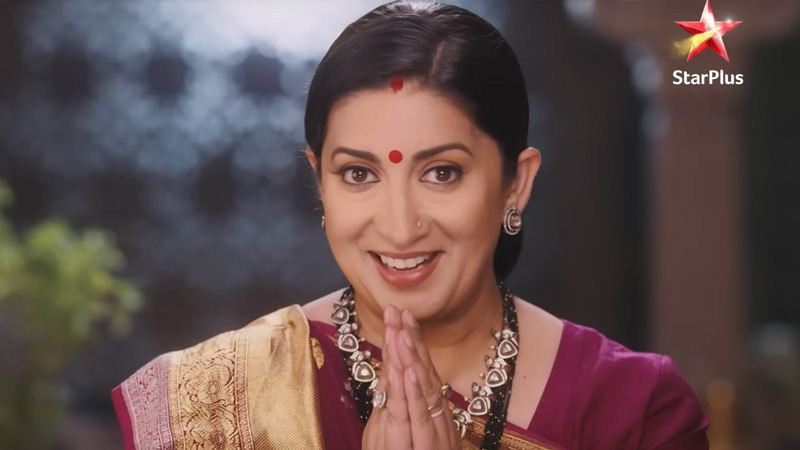
    Kyunki Saas Bhi Kabhi Bahu Thi (2000–2008) is set to return with Smriti Irani reprising her iconic role of Tulsi on Star Plus. CID (1998–2018) made its way back in December 2024 with most of the original cast. Bade Achhe Lagte Hain 4 debuted in June 2025, introducing a next-gen romance against a familiar emotional backdrop. Also making a play for comeback glory: Shaktimaan, slated for an audio reboot and a blockbuster film starring Allu Arjun; Aahat, the spooky staple now re-airing nightly; and evergreen titles like KhichdiOffice OfficeShrimaan Shrimati and Ramayan, all back on air or rumoured to be. 

    Bade Achhe Lagte Hain

    A JioStar spokesperson said, “Bringing back a show like Kyunki Saas Bhi Kabhi Bahu Thi is not just hinged on nostalgia, it is a strategic storytelling move designed for today’s viewers. At Star Plus, we see legacy IPs as powerful cultural assets that can be reimagined to reflect today’s evolving values. By blending familiarity with freshness, we aim to bring together households, unite generations, spark new conversations and reaffirm the enduring relevance of stories rooted in family, identity, and resilience.” 

    A source at Balaji Telefilms revealed that the decision to bring back Kyunki wasn’t an easy one. The creator Ekta Kapoor initially resisted, reportedly saying, “You can’t compete with nostalgia. Why shake it up?” 

    One of the reasons she said yes, sources close to her say, is the creative challenge to make it connect with today’s evolved audience and make an impact by tackling issues which don’t find their way into the current roster of shows on air. (On a lighter note, it will give Balaji Telefilms an opportunity to take the show past a record-breaking 2,000 episodes; remember, it was taken abruptly off-air in its 1,833rd episode). 

    The clincher for the channel and OTT was  not just ratings, it was legacy. Internal research commissioned had once shown that Kyunki helped amplify women’s voices in Indian homes. It tackled domestic abuse, ageism, and marital consent long before these were TV buzzwords. 

    The reboot, sources said, is less about chasing numbers and more about “reclaiming the power to reach millions and change mindsets.” 

    Sources familiar with the strategy at Star noted that Kyunki’s return serves both sentiment and business. “Broadcast reach is still far greater than OTT,” one executive explained. “Advertisers too have bought into the show because of its familiarity, going by the  sponsors who have been tied up: Procter & Gamble (a classic soap advertiser), Colgate and Fortune Oil.” 

    They added that older viewers with their own families who first watched  shows such as Kyunki as youngsters or young adults or are now settled, have disposable income, and more free time.  “This group is now reachable again especially  in slots like 10:30 pm,” said she. 

    With KyunkiCID and Bade Achhe Lagte Hain leading the charge, the revival roster is far from done. Insiders suggest shows like NaaginFIR, and Shrimaan Shrimati could be next in line. Meanwhile, connected TVs and Fast (free ad-supported streaming TV) channels are helping extend the reach of these classics into smaller towns and rural households, where smart TVs and budget broadband are becoming the norm. 

    Indian TV isn’t stuck in a time loop, it’s cleverly remixing the past. This wave of strategic nostalgia blends cultural memory with broadcast savvy, reminding us that some stories never really go out of style. In fact, they just get retold with better twists, lighting, cast and production values.

  • Sony’s India reboot: fresh faces, big bucks and a bold digital bet

    Sony’s India reboot: fresh faces, big bucks and a bold digital bet

    MUMBAI: Sony Pictures Entertainment (SPE) is doubling down on India, rebooting its strategy under new leadership and betting big on digital, cricket and content to reclaim lost ground in the subcontinent’s fast-evolving media landscape.

    Speaking at SPE’s annual presentation, chief executive Ravi Ahuja described India as a “tremendous opportunity” amid the country’s strong economic and population growth. The rejig came more than a year after the collapse of Sony’s much-hyped merger with Zee Entertainment.

    At the heart of the reshuffle is Gaurav Banerjee, former Star India top content boss, now managing director and chief executive of Sony Pictures Networks India (SPNI)— Culver Max Entertainment.

    Banerjee’s mandate: fix the fiction, fire up streaming, and sharpen Sony’s distribution game.

    SPNI, which runs 27 TV channels and the SonyLiv platform, reported Rs 839 crore in profit on Rs 6,510 crore revenue in FY24. The company is now funnelling fresh investments into digital, particularly SonyLiv, as part of a broader growth revival.

    “We are rebuilding and reorienting our growth strategy, including investment in digital and our Sony LIV streaming platform,” said Ahuja. “We recently secured exclusive media rights for all Asian Cricket Council (ACC) tournaments from 2024 to 2031, which we anticipate will boost viewership and enhance Sony LIV.”

    The sticker price:  $170 million. It also shelled out $200–250 million for the England and Wales Cricket Board rights, sub-licensing the digital India tour rights to JioHotstar but retaining TV control. But there’s a wrinkle: the upcoming Asia Cup in September may be under threat due to rising India–Pakistan tensions post the Pahalgam terror strike.

    Meanwhile, Sony Entertainment Television (SET) is in revamp mode. The channel, battling ratings pressure in fiction, is reloading its primetime slate with a rebooted Bade Achhe Lagte Hain, mythologicals like Prithviraj Chauhan and Shirdi Wale Sai Baba, and the upcoming thriller Aami Dakini. Tentpoles like Kaun Banega Crorepati, Shark Tank India and Indian Idol continue to anchor the lineup. SET also remains a YouTube juggernaut, with 184 million subscribers—ranking fourth globally.

    Globally, SPE posted sales of $9.9 billion and operating income of $774 million despite the Hollywood strike denting series output and SPNI dragging on profits.

    Sony may have dropped its  Zee alliance, but with a rejigged team, fresh IP, and digital firepower, its India innings appears to be just getting into super scoring mode. With both Ahuja and Banerjee  fresh at the crease and gradually getting their shots right, SET might well hit it out of the park this time.

  • The making of ‘Junior’ stars

    The making of ‘Junior’ stars

    It was a countdown that began in the year 2004. Armed with a huge promotional blitz, Sony Entertainment Television (SET) launched its ‘big one’: an ambitious project that threatened to challenge the viewing habits of the telly loyals.

    Be it a lack of hit since Bade Achhe Lagte Hain, or the obvious threat posed by the ‘youth or women oriented’ focus of several other general entertainment channels (GECs), SET has a huge stake with the desi version of FremantleMedia’s Pop Idol.

    The mega budget Indian Idol is SET’s bid to fortify its youth viewer base. Multi Screen Media (MSM) calls this talent hunt a power brand created by Sony in the past 15 years, which stands above a few other powerful brands created by the channel including CID, Aahat, Boogie Woogie among others.

    Indian Idol so far has produced six successful seasons. Worried of the show reaching a fatigue level, the channel introduced a sub-franchise targeting kids with Indian Idol Junior in 2013. On the back of a successful first season, Sony has come back with the second edition this year.

    Indian Idol Junior2 currently showcasing the audition round, will see the ‘juniors’ paying tribute to the maestros of Indian music at the season’s grand launch. What’s more, the talent quotient has gone a notch higher with the inclusion of actor Sonakshi Sinha as one of the judges.

    A look at the journey

    While all looks glamorous when one watches the show on TV, producing half an hour to one hour of reality show is no child’s play.

    At any given time, more than 100-200 people work to make a reality show. The production team and the crew are as important as the talent and really make the show happen. When a fiction show is penned, one has to simply write all the relevant beats to that week’s tale, but with reality programmes, things are a bit different.

    Let’s take a look at all the madness that goes backstage while making a show like Indian Idol Junior2.

    For FremantleMedia India managing director Anupama Mandloi the blueprint of these formats is simple, uncomplicated, clean and universally adaptable. A reality show like Indian Idol while is relevant to any culture across the globe, it also has the ability to absorb the local DNA, thus becoming a true representation of the region they are produced in.

    “The audience enjoys the predictability of the journey, the range of talent, as well as the fresh and exclusive energy each season brings. Characters and storytelling define any good show. These shows are all about creating strong, memorable, aspirational and yet relatable characters whose journey and endgame is contained within a finite number of weeks,” she explains.

    Considering the basic blueprint remains the same, making any new edition look fresh is the biggest challenge. “We look at various elements: right from the talent to choosing areas for getting fresh, new voices to the panel of judges depicting their camaraderie and journey through the show. We also look at scheduling, how to differentiate various phases of the show as well as the larger story that we want to convey through the programme. These shows are all representative of current times and there is a definite change in narrative that comes through the contestants on the show,” Mandloi explains.

    She believes that when they first started the journey of reality shows, it gave audiences a sense of opportunity, scale and transformation. Over the years, it has reflected the pathos of underprivileged lives, their acceptance of destiny and the rooted middle class values.

    But, the narrative now is of achievers, children wanting the best and working towards it as well as a growing sense of community through technology. “It is about expecting the best and taking destiny into their hands. These shows are fascinating in what they throw up as you gather stories from across India,” she adds.

    Content Creation

    For starters, broader and thematic links for hosts is written before hand after a lot of internal discussions. A large part of the script is written on the ground based on situations as they unfold. As per Mandloi, this year the show witnessed the turnout of an unprecedented number of twins.

    She further goes on to say that the writers do not write scripts for judges because that never works. “The judges are articulate and capable of phrasing their thoughts. Scripting for the judges or the kids would make the show fake and we have a fairly purist approach to this aspect of the show. The viewers can tell if a show is over produced,” she asserts.

    There is only one writer who works closely with the creative director, associate creative director and the anchor director. It is all about the brief and how the writer links it with existing social norms and then how he wants the show to resonate. “The idea is to give the show consistency and a sense of purpose. Be it celebration, search, revelation, wish fulfillment,” she explains.

    There was no extensive research for this season, says Mandloi.  But, with a successful first edition, the makers were keen to establish the junior brand with the second season.

    “This season is a celebration of talent rather than a discovery and that is probably what is showing up through all interactions. There was a reflection on elements that worked and those that could have been better and we moved forward with those learnings in place. The top 13 is a true reflection of India from north, south, east and west. The top 13 is a wide range of voices as well as personalities and the talent is fresh and memorable,” she reasons.

    Reality shows are exhausting & relentless

    According to Mandloi, Indian Idol Junior took almost nine intense months of work and the crew usually faces a vacuum once the show gets over. “These shows are exhausting as they are relentless and require dedicated commitment from the team. At FremantleMedia, we are very careful to work with the best in the industry. They take pride in their work and that is always reflected in the quality of the show.”

    For IIJ, the makers had a one year window to find the talent and according to Mandloi that is clearly coming across in the show.

    It was a three months journey for the talent hunt to finally complete the auditions. While a number of children are called through an established network of music schools, institutions and gharaanas, there is also an open audition for which people register and audition.

    Since the show deals with kids, the makers ensure that children come with guardians. Food and water is provided and while the wait can be long, it does not allow entries after 5 pm. Moreover, the crew has contestant managers and their teams as well as a large ground team that helps address any issues that may crop up.

    “We are very careful with children. As far as possible we do try and ensure that the children are treated gently and with care. The entire team is briefed and prepped before the unit hits the road,” she says.

    How do the makers ensure a good turnout for auditions? Says Mandloi, “We can’t really control this beyond a point. In some cities the turnout is fabulous and in some it is sometimes underwhelming but for us the focus is not on the volume as much as it is on the talent. We make sure that a fair opportunity is provided to all those who are present.”

    According to Mandloi, she has been very fortunate with her channel interactions. “There is great faith in the team as well as belief in the format. There is a lot of creative freedom for this reason and the show is eventually a collaboration of creative ideas and execution.”

    Live, Camera & Action

    The show began the actual shoot approximately three months before going on-air.

    The audition phase is an accumulation of shoot footage of over two months which is then sifted through and assembled into episodes. “It is a tough process though now we have very good teams that have understood the process and are very skilled at connecting the dots,” she opines.

    The theatre phase is shot over three days. The concert episodes are shot every Sunday with a live result episode.

    One single episode takes anywhere from three weeks to five hours depending on the nature of the episode. The audition episodes take the longest as there is hours and hours of footage that needs to be culled, assembled and structured into a narrative. The live result takes approximately five hours and the concert episodes take close to three days.

    For all these, the production house has a large set-up with multiple machines and large post teams. A very tight core team drives the show. It hires the technical, creative as well as production teams on project basis. For a show of this size it is usually around 200 people on ground.

    To manage the crowd and ensure enough eyeballs in the studio, a large part of the crowd is sourced through audience co-coordinators. Moreover, there is a floor manager and his team that takes care of audience management as well as all the ground show flow.

    Every season needs to focus on bringing together fresh, exquisite talent that people align themselves with. This alignment dictates how they feel about the judge panel and the judges’ personal graphs within the show.

    For IIJ season2, judges like Vishal Dadlani, Shalmali Kholgade and Salim Merchant were selected for their credibility, their ease with children, ability to connect with viewers, personality and a very strong sense of who they are as opposed to who they are trying to project.

    Host Hussain Kuwajerwala and co-host Asha Negi were selected for their ability to be spontaneous, charming as well as the ability to connect with kids and viewers.

    This season the makers have conceived a set that is unlike any so far in its true 360 degree design. It’s intimate, glamorous and yet very fresh. A wireless cam does a 360 degree revolution around the centre stage. The families, contestants, audience and judges are all seated around the circular stage so that the contestant feels connected to all.

    The contestant performs in a central arena surrounded by graphics and the live band fills the set with its magic. IIJ 2 is being shot with 15 cameras.

    Reality shows costs a bomb

    One cannot deny the fact that reality shows are expensive. The production house is allocated with a budget and it has to work under those tight budgets.

    A media planner believes that though they are high budget shows, it is not in the cost of content. “The focus is to make sets bigger and shiny with more lights.  But, that is not what attracts the audience anyways.”

    According to a planner, it is the celebrity quotient that increases the cost of production.  “If you are working on a budget, you usually have to figure out what level of celebrity you can afford and that decides the costing. While the scale of the show is controllable, it is the demand for a particular celebrity which takes the cost high,” adds the planner.

    The production cost per episode of IIJ season 2 is somewhere between Rs 30-35 lakh.

    Sony, which currently is at the sixth position at the television ratings chart, has high hopes from this season of Indian Idol Junior. While the stage is set for the star performers, whether it will open up the stars for the channel is yet to be seen.   

  • Indian content to ‘Glow’ in South Africa

    Indian content to ‘Glow’ in South Africa

    MUMBAI: If you were ever in doubt about the cross-border reach of Indian television content, here’s some solid proof.

    A recently launched South African TV channel – Glow TV, in the business of syndicating and displaying content from across the globe, will give SA audiences a taste of our home-grown television shows such as Bade Achhe Lagte Hain, Kya Huaa Tera Vaada and Sanjeev Kapoor’s Kitchen (Sony), No Big Deal (NDTV) and Koffee with Karan (Star India).

    An FTA channel, Glow TV, will also telecast UK-based Indian shows like The Kumars at No 42 and Life Isn’t All Ha Ha Hee Hee.

    The first television channel from Kagiso Media, Glow TV, is a partnership between Kagiso Media and Nolava Television, and calls itself ‘Eastern inspired’. This is its first television offering as it has a significant holding in the radio business.

    With the Census 2011 pegging the Indian population in South Africa at 1.3 million, a majority of which lives in and around the city of Durban, Glow TV will mainly cater to this segment.

    Yusuf Nabee says that the channel will give what people have been asking for- universal story lines and great production quality

    “We believe that there is no channel which caters to this market in the free-to-air arena. Whilst our primary target market is the South African Indian audience between the ages of 20 – 45 years, we do believe that our content has great crossover appeal and will attract audiences across the South African market,” says Glow TV head Yusuf Nabee.

    Apart from India, content is also being sourced from various distributors in countries like Brazil and the US. As of now, Glow TV has no original content but that will be part of phase two and will be produced by its subsidiary, Urban Brew Studios. “We will look at content in all languages – our main criteria are compelling entertainment and high production values,” says Nabee.

    People today are looking at great content, high production values and universal story lines, all of which Glow TV can provide, according to Nabee. “Glow is a cleverly tailored offering that brings comedy, drama, movies, reality, food and game shows, in one easy-to-access, free-to-air offering,” he exults.

    Currently, Glow TV is only looking at adding English sub-titles though there are plans to dub shows in future.

     
    Nilesh Kriplani says that this deal will give their shows great value

    But why would Indian television channels like Sony, NDTV and Star India want to be a part of this new channel?

    For Sony, it is about supporting an upcoming channel of a parent they have known for the last two to three years. “Although our channel is already known in Africa, this deal adds value to our library content and also increases awareness,” says Sony Entertainment Network Exec VP Syndication Nitesh Kriplani.

    For Star India, it is about expanding into Africa with its linear channels as well as syndication. “Kagiso was looking for top-quality Indian content to populate Glow TV programming and Star being the biggest content creator of India, was a natural destination for Kagiso. So, we found great synergies in working together to further our expansion plans in Africa,” says Star India senior VP commercial Ashutosh Mordekar, adding, “For now, just the first two seasons of Koffee with Karan are being shared, but more shows are in discussion.”

    Star India is expanding its reach to Africa says Ashutosh Mordekar

    With Glow TV yet to pick up in the market, all deals are only for a period of two to three years. Also, with all syndicated shows, the channel is presently relying on advertisers for revenue. A package called ‘Glow Watt Bundles’ has been designed for Indian advertisers with a presence in South Africa. Kagiso Media has entitled its ad sales rights exclusively to H2O Media for all advertisers based in India. H2O is a media marketing company that markets Indian content that caters to the NRI community to Indian advertisers.

    Currently, Glow TV is only available on the Open View HD satellite bouquet along with 14 other channels. An initial amount of ZAR 1600 has to be paid for acquiring the set top box, satellite dish and for installation that is paid to Open View HD whose USP is ‘pay once-enjoy forever’.

    However, plans are afoot to bring in more channels under the Glow TV umbrella in future when South Africa shifts from analogue to digital TV. With the way things are shaping, more Indian shows are set to be aired on Glow TV as well.

  • Indian content to Glow in South Africa

    Indian content to Glow in South Africa

    MUMBAI: If you were ever in doubt about the cross-border reach of Indian television content, here’s some solid proof.

    A recently launched South African TV channel – Glow TV, in the business of syndicating and displaying content from across the globe, will give SA audiences a taste of our home-grown television shows such as Bade Achhe Lagte Hain, Kya Huaa Tera Vaada and Sanjeev Kapoor’s Kitchen (Sony), No Big Deal (NDTV) and Koffee with Karan (Star India).

    An FTA channel, Glow TV, will also telecast UK-based Indian shows like The Kumars at No 42 and Life Isn’t All Ha Ha Hee Hee.

    The first television channel from Kagiso Media, Glow TV, is a partnership between Kagiso Media and Nolava Television, and calls itself ‘Eastern inspired’. This is its first television offering as it has a significant holding in the radio business.

    With the Census 2011 pegging the Indian population in South Africa at 1.3 million, a majority of which lives in and around the city of Durban, Glow TV will mainly cater to this segment.

    “We believe that there is no channel which caters to this market in the free-to-air arena. Whilst our primary target market is the South African Indian audience between the ages of 20 – 45 years, we do believe that our content has great crossover appeal and will attract audiences across the South African market,” says Glow TV head Yusuf Nabee.

    Yusuf Nabee says that the channel will give what people have been asking for- universal story lines and great production quality

    Apart from India, content is also being sourced from various distributors in countries like Brazil and the US. As of now, Glow TV has no original content but that will be part of phase two and will be produced by its subsidiary, Urban Brew Studios. “We will look at content in all languages – our main criteria are compelling entertainment and high production values,” says Nabee.

    People today are looking at great content, high production values and universal story lines, all of which Glow TV can provide, according to Nabee. “Glow is a cleverly tailored offering that brings comedy, drama, movies, reality, food and game shows, in one easy-to-access, free-to-air offering,” he exults.

    Currently, Glow TV is only looking at adding English sub-titles though there are plans to dub shows in future.

    But why would Indian television channels like Sony, NDTV and Star India want to be a part of this new channel?


    Nilesh Kriplani says that this deal will give their shows great value


    For Sony, it is about supporting an upcoming channel of a parent they have known for the last two to three years. “Although our channel is already known in Africa, this deal adds value to our library content and also increases awareness,” says Sony Entertainment Network Exec VP Syndication Nitesh Kriplani.


    For Star India, it is about expanding into Africa with its linear channels as well as syndication. “Kagiso was looking for top-quality Indian content to populate Glow TV programming and Star being the biggest content creator of India, was a natural destination for Kagiso. So, we found great synergies in working together to further our expansion plans in Africa,” says Star India senior VP commercial Ashutosh Mordekar, adding, “For now, just the first two seasons of Koffee with Karan are being shared, but more shows are in discussion.”

    Star India is expanding its reach to Africa says Ashutosh Mordekar

    With Glow TV yet to pick up in the market, all deals are only for a period of two to three years. Also, with all syndicated shows, the channel is presently relying on advertisers for revenue. A package called ‘Glow Watt Bundles’ has been designed for Indian advertisers with a presence in South Africa. Kagiso Media has entitled its ad sales rights exclusively to H2O Media for all advertisers based in India. H2O is a media marketing company that markets Indian content that caters to the NRI community to Indian advertisers.

    Currently, Glow TV is only available on the Open View HD satellite bouquet along with 14 other channels. An initial amount of ZAR 1600 has to be paid for acquiring the set top box, satellite dish and for installation that is paid to Open View HD whose USP is ‘pay once-enjoy forever’.

    However, plans are afoot to bring in more channels under the Glow TV umbrella in future when South Africa shifts from analogue to digital TV. With the way things are shaping, more Indian shows are set to be aired on Glow TV as well.

  • Ram Kapoor continuous to be most loved character on Hindi GECs

    Mumbai: Ram Kapoor, who is playing the lead role in Sony Entertainment Television‘s Bade Achhe Lagte Hain, continues to be the No. 1 favourite character among Hindi GEC viewers, according to the 11th edition of Characters India Loves (CIL) study.

    CIL is the quarterly study, conducted by Ormax Media, the media research and consulting firm.

    Bade Achhe Lagte Hain had launched last year in May and Kapoor entered the CIL charts its July-August 2011 track (edition eight) at rank No 5. Sakshi Tanwar (his co-star) entered at the No 10 rank. Kapoor is in the first position since CIL nine, while Tanwar ranks No 4 in this track.

    The favourite non-fiction show characters are Kapil Sharma (Comedy Circus), Raghu and Rannvijay (MTV Roadies) at rank No. 1, 2 and 3 respectively.

    The track was conducted among 3000+ respondents of 15-44 years age group in six cities – Mumbai, Delhi, Ahmedabad, Lucknow, Indore and Jalandhar.