Tag: B4U Movies

  • Samsung TV Plus adds B4U’s blockbuster channels to its Fast lineup

    Samsung TV Plus adds B4U’s blockbuster channels to its Fast lineup

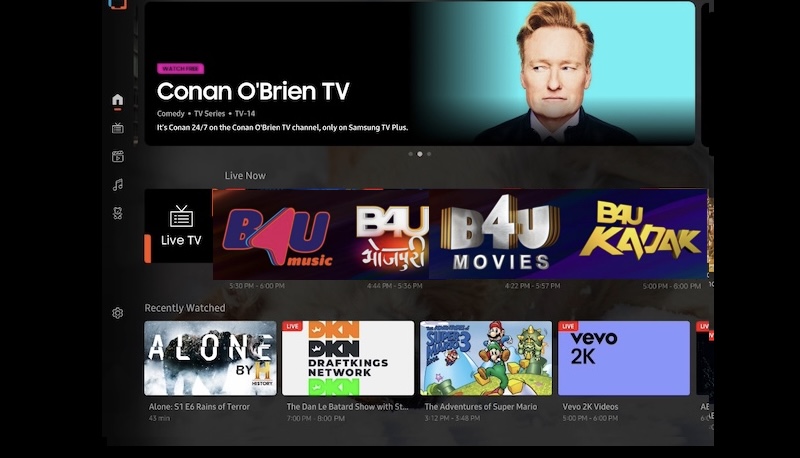
    MUMBAI: Samsung TV Plus, India’s top free ad-supported streaming television (Fast) service, has amped up its entertainment play by onboarding four of B4U Network’s most popular channels — B4U Movies, B4U Music, B4U Kadak and B4U Bhojpuri.

    The tie-up boosts Samsung TV Plus’s tally to over 125 Fast channels, adding heft to its bid to dominate the connected TV (CTV) landscape. The platform continues to court the country’s digital-first viewers with a curated smorgasbord of films, music, and regional hits — all at zero cost.
     
    “Our mission is to deliver unmatched access and exceptional value to both our audiences and advertisers on the Samsung TV Plus platform. By introducing new Fast Channels from the house of B4U, we aim to enhance access to the latest from the world of entertainment. This collaboration with B4U underscores our dedication to this vision,” said Samsung TV Plus India head of partnerships Kunal Mehta.

    B4U, a stalwart in Indian broadcasting with reach across more than 100 countries, brings to the table a rich trove of Hindi cinema, chart-topping music and vibrant regional fare.

    “Connected TV (CTV) has emerged as a significant force in the Indian media landscape, revolutionizing how audiences consume content,” said B4U chief revenue officer Johnson Jain.“In line with this, our approach has pivoted on reaching a broader and more diverse audience base. We are delighted to announce our collaboration with Samsung TV Plus, bringing our curated set of channels to their platform. Through this partnership, we aim to engage viewers with high-quality entertainment — featuring top-tier movies and the best in music — delivered seamlessly on a premium CTV experience.”

    As the race to capture eyeballs in India’s connected homes intensifies, the Samsung-B4U alliance serves up a potent mix of nostalgia, pop culture and mass appeal — positioning the Fast service as a go-to destination for free, high-quality entertainment.

  • BHOJPURI STARS CELEBRATE HOLI WITH B4U BHOJPURI AT VARANASI GHAT

    BHOJPURI STARS CELEBRATE HOLI WITH B4U BHOJPURI AT VARANASI GHAT

    Mumbai: B4U is one of Bharat’s oldest & leading entertainment networks with bouquet of 5 popular channels across 3 genres (B4U Music, B4U Movies, B4U Kadak, Dhamaka Movies & B4U Bhojpuri). Spanning across 3 Decades the network is dedicated to deliver quality & entertaining content to its viewers.

    The network recently organized a mega Holi event at the pious & famous Assi ghat of Varanasi, which saw the presence of almost all popular Bhojpuri stars. Eminent personalities like Hon’ble MP Shri Manoj Tiwari, Hon’ble MP Shri Dinesh Lal Yadav, Shri Khesari graced the event with their presence. The event was one of its kind wherein a beautiful set was created on the theme of Bhojpuri Holi at the ghats of revered river Ganga.

    All Bhojpuri stars performed and created magic through their singing & dancing performances. The event also saw some Impromptu singing performances by stalwart of Bhojpuri industry Shri Manoj Tiwari ji, which he is famous for.  

    On this occasion, Pawan Kumar Sharma (Business Head-B4U Network) said “B4U brand has always believed in providing quality & entertaining content to its audience. We strongly believe that as content provider, we owe a great responsibility towards our viewers and society at large and that’s visible through the type of content we’ve been producing for our leading channel-B4U Bhojpuri. We won’t shy away to admit that we’ve been the initiator & flag bearer of producing family content for Bhojpuri Market, which has worked really well and we are happy to see other players also adding great value by contributing to this trend. We carry a vison of not only setting new benchmarks for our product (B4U Bhojpuri), but contributing to the lives of each and every member of Bhojpuri cinema industry too.” He further added, “talking of about this mega event, I can proudly say that this event will definitely reverberate as one of the biggest ever Holi event done on Bhojpuri Landscape. We intentionally chose Varanasi as a Venue, being a strong Bhojpuri stronghold (being epicenter of Purvanchal) and most importantly the cultural and spiritual relevance attached with the place too.

    Sandeep Singh (Head Programming; B4U Bhojpuri) said that “ We at  B4U Bhojpuri are always eager to explore new possibilities in Bhojpuri genre. We ventured into home Production of Movies  and the same has done phenomenally well, breaking all records. Movies such as Badki didi, Saas Anadi Bahu Khiladi, Bahu Rani Saas Maharani, are ruling the TRP Charts. We followed the same excellence while designing Holi event also, which saw participation from all mega stars of Bhojpuri Industry and certainly a unique event in this genre. Look forward to create more magic

    Johnson Jain (CR0-B4U) said that our Holi extravaganza in Varanasi serves as a testament to our commitment to connecting with our audience at the grassroots level, while simultaneously diversifying revenue streams. Through this initiative, we leverage our expertise not only for our own benefit but also to offer innovative solutions to our partners in pursuit of growth

    We want to thank our partners @ITC @Coca Cola @P&G and @Adani for being part of this celebrations and showing trust in the brand. We stand committed together to cater to our consumers and provide best quality products.

    The said event will be telecasted on the day of Holi on 24th March 2024 at 6Pm and on 25th March 2024 at 10am on leading Bhojpuri channel-B4U Bhojpuri. 

  • Manoj Tiwari inaugurates B4U’s new North office

    Manoj Tiwari inaugurates B4U’s new North office

    Mumbai: B4U Network comprises of popular Channels B4U Music B4U Movies B4U Kadak B4U Bhojpuri & recently launched Dhamaka Movies. The channels are entertaining millions of viewers on FTA platforms and are one of the eminent players on the said platform.

    B4U is an iconic brand and has been a significant player in Movies, Music and Regional genres. As a Mass Specialty Entertainment Network, the network has been entertaining viewers for over two decades with diverse high-quality content.

    Growing significantly the network has acquired a swanky new Office at Windsor Grande a prominent & upscaled commercial address in Noida.

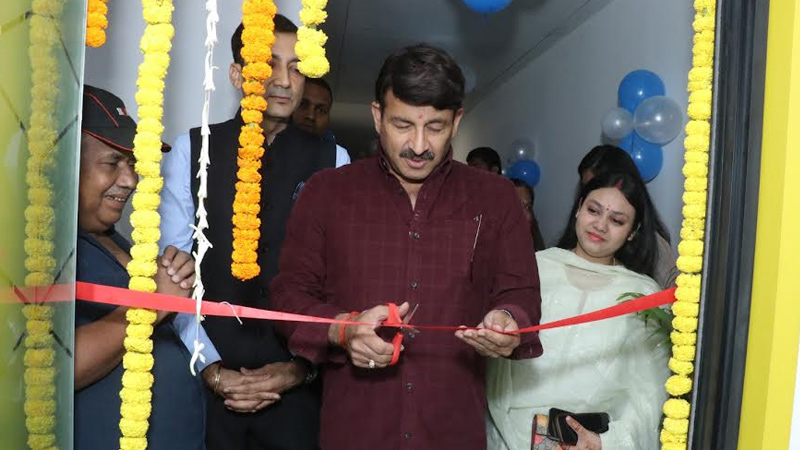
    The office was inaugurated by the eminent personality Shri Manoj Tiwari.  BJP MP from Delhi who is also a renowned actor and singer. He was gracious enough to spend time with the team and made the inauguration a very special event.

    On this occasion, Pawan Kumar Sharma (CRO-B4U) commented that Manoj Tiwari ji apart from being an eminent political leader, is also a stalwart in Bhojpuri Cinema, his immense experience & insights will be extremely valuable for not only B4U Bhojpuri, but Industry as whole. We are extremely grateful to him for sharing his creative wisdom with us.

    B4U Bhojpuri launched in 2019 has seen robust growth and is currently amongst the top channels in the Bhojpuri Regional movie space.

  • “We are targeting the 1.5 m Indians in mainland Europe” – bubbles Media CEO Arnold C. Kulbatzki

    Launched in August 2016, the satellite-to-OTT platform TV services of bobbles.tv is aimed at expats of Asian, Latin American and African origins based in Europe. Supported by MX1, Bobbles can also be enjoyed via OTT for online viewing, via connected TV or mobile devices. bobbles.tv is a product of Hamburg-based privately held bubbles Media GmbH, a new pay TV provider specialising in TV offerings for international target groups.

    With diverse experience in the media and telecom sectors spread over 20 years, Arnold C. Kulbatzki is the founding partner and CEO of bubbles Media GmbH. Prior to establishing bubbles media GmbH in January 2016, he was the CEO of a2b media (2004-2015), a management consulting firm with extensive expertise in customer experience management, digital transformation, paid content and OTT audio-video services. In an interaction with Indiantelevision.com, Kulbatzki spells out his company’s plans and explains why the services offered are unique. Excerpts from the interview:

    Can you please tell us about Bobbles TV?

    Bobbles delivers multiple packages of TV channels from around the globe. We aim to reach the 15 million people originating from Asia, Latin America and Africa, but currently living and working in Europe. The service can be received throughout Europe via satellite and online. Bobbles went live in August 2016 initially with programming offers for Chinese, Indonesian, Indian and Korean communities. Our most recent launch was our new package of India’s best and most popular TV channels.

    Why did you  launch a service for expats in Europe?

    I’ve travelled a lot during my career and I’m familiar with the feeling of being abroad, but wanting to know what’s going on at home. Moreover, my personal circle of friends includes many expats who’ve chosen to relocate to Europe. They’ve come from India, Korea, China and elsewhere. One thing they have in common is their desire to retain links with home, even to watch their favourite TV channels from their native countries.

    My Bobbles media partners and I imagined there must be a way to create a business built around delivering multiple packages of programming to the many people from all around the world who have chosen to call Europe home. When our research revealed there are over 15 million people originally from Asia, Latin America and Africa but living in Europe, we knew that these volumes meant such a service would truly delight a huge number of people. We also knew we had a great business opportunity.

    Can you please tell us about your new Indian package?

    We launched our bobbles.tv India package in early 2017 with 15 channels of entertainment in Hindi and English, including Bollywood blockbuster-packed B4U Movies, B4U Music, StarGOLD, Sony MAX and ZOOM. Viewers can also watch India’s most popular news services like NDTV 24×7, Times Now and Aaj Tak. Viacom18’s Colors, StarPlus, NDTV Good Times, NDTV Spice, Sony Entertainment Television (SET), Sony SAB, Life OK and  Rishtey Europe show general entertainment, comedy, drama, lifestyle, reality TV and made-for-TV movies.

    With 13 channels, Bobbles is Europe’s largest and lowest-priced satellite TV package. It‘s avaialble via ASTRA satellite for pan-European viewing. Additionally, 14 popular channels in Hindi and English can be received via OTT, available live and via seven-day catch-up with more channels on the way. No other broadcaster awywhere offers DTH and OTT services this way. Also, for many of our broadcaster patners, this is their first foray in Europe. So we know we are offering something truly unique to viewers.

    What’s the pricing for the packages?

    Subscribing is easy and affordable – this really sets us apart from competitors. It’s simply a flat monthly fee of €23.95 (1 USD= 0.90 Euro) on satellite and €12.95 online. What’s more, our viewers do not need a contract. With a potential audience of 1.5 million Indian expats living in mainland Europe, we are excited to deliver this pioneering and low-priced new service to this community.

    How many subscribers are you aiming to attract in year one?

    We haven’t set any specific subscriber or revenue targets. This is because we are launching the package of services in a roadmap of well-planned launches. It will take a certain amount of time. Only after a critical mass is reached for active and live services, we will be able to assess the overall figures for the business. Additionally, we don‘t critically need to set year-one targets, thanks to our operational efficiency and, in particular, the efficiency of our satellite-and-OTT distribution strategy.

    Are you well-funded? Who’s investing in the venture?

    We are privately-funded.

    What is your revenue model? Will it be purely subscription-based or are you also looking at advertising revenue?

    In addition to subscription revenue from consumers, there are additional monetisation opportunities going forward, including video-on-demand and B2B offerings for businesses for the worldwide hospitality sector, for example. As soon as our subscriber base reaches a critical mass, we can offer a great and a unique business opportunity for advertisers.

  • 137 GEC and news pay channels violated ad cap rule in second quarter

    137 GEC and news pay channels violated ad cap rule in second quarter

    NEW DELHI: Even as the ad cap case drags on with the government failing to take a firm stand either way, a total of 137 pay channels including 25 news and current affairs channels continued to violate the regulations for telecasting a maximum of 12 minutes of commercials per hour in the second quarter of the year.

    The report released today by the Telecom Regulatory Authority of India for the period from 28 March to 2 June 2016 shows that the number of violators has remained almost the same as in the first quarter when the total was 133 between 28 December and 27 March.

    While there has been a very miniscule fall in the violators among news channels from 30 to 25, there is an increase in non-news channels from 103 as on 27 March to 112 as on 26 June.

    The average duration per hour of advertisements (commercial and self promotional) during peak hours (7pm‐10 PM) in pay news channels for the period 28 March to 26 June shows that the highest of these was by 21.95 minutes by ETV Rajasthan and the lowest was 12.01 minutes by Zee Telugu. Interestingly, the highest in the first quarter was also by ETV Rajasthan with 24.83 minutes. Times Now which had been at the bottom with 12.15 minutes in the first quarter does not even figure in the list of violators in the second quarter.

    Among pay non-news channels (general entertainment channels) for the same period, the highest was 24.54 minutes by B4U Movies (which had topped the list in the first quarter with 23.41 minutes and was also at the top in December last year) and the lowest was 12.03 minutes by Raj Digital Plus. Odisha TV’s Tarang which had been at the bottom in the first quarter increased its ad time to 12.22 minutes.

    There are at least 16 news and 30 non-news channels clocking more than 15 minutes per hour. While the number of news channels was the same in the first quarter, the number of GECs has risen from 24.

    TRAI has made it clear that “the information is based on the data submitted by the broadcasters and TRAI bears no responsibility for correctness. As per information available with TRAI, the rest of the pay news and non-news channels are carrying less than 12 minutes of average duration per hour of advertisements (commercial & self promotional) during peak hours (7PM – 10 pm).”

    Asking TRAI not to take any coercive action against any channel pending hearing of the case in the first hearing over two years earlier, the Delhi High Court had asked all channels and TRAI to keep a record of the advertising time consumed including commercials.

    The petition had been filed by the News Broadcasters Association and some channels challenging the TRAI decision to implement the directive of 12 minutes contained in the Cable Television Networks (Regulation) Act 1995. The Information and Broadcasting Ministry and TRAI are the respondents in the petition.

    After the Information and Broadcasting Ministry told the Court on 27 November 2015 that it was discussing the issue with broadcasters, the matter was put off several times. In the 11 February hearing, Discovery Communications moved for intervention while Home Cable sought early hearing.

    In its intervention, MSO Home Cable Network (P) Ltd said it wanted to intervene as it was directly affected by the outcome of the present petition. It wanted the NBA petition to be dismissed and added: “The Pay channel broadcasters are profiteering at the expense of subscribers and the DPOs. There is no justification for changing monthly subscription when commercial advertisements are inserted. The Standards of Quality of Service (Digital Addressable Cable TV Systems) Regulations 2012 (with Amendments thereafter) is justified to the extent they are applicable to pay channels. The pay channel broadcasters cannot charge the subscription fee while inserting commercials into the content or in the alternative, the subscribers have to be compensated for the revenue earned on the basis of their being subscribers of the channels.”

    In the petition, the news channels made the plea that most of them are free to air and therefore do not get any subscription fee from the viewers as the GEC channels do.

  • 137 GEC and news pay channels violated ad cap rule in second quarter

    137 GEC and news pay channels violated ad cap rule in second quarter

    NEW DELHI: Even as the ad cap case drags on with the government failing to take a firm stand either way, a total of 137 pay channels including 25 news and current affairs channels continued to violate the regulations for telecasting a maximum of 12 minutes of commercials per hour in the second quarter of the year.

    The report released today by the Telecom Regulatory Authority of India for the period from 28 March to 2 June 2016 shows that the number of violators has remained almost the same as in the first quarter when the total was 133 between 28 December and 27 March.

    While there has been a very miniscule fall in the violators among news channels from 30 to 25, there is an increase in non-news channels from 103 as on 27 March to 112 as on 26 June.

    The average duration per hour of advertisements (commercial and self promotional) during peak hours (7pm‐10 PM) in pay news channels for the period 28 March to 26 June shows that the highest of these was by 21.95 minutes by ETV Rajasthan and the lowest was 12.01 minutes by Zee Telugu. Interestingly, the highest in the first quarter was also by ETV Rajasthan with 24.83 minutes. Times Now which had been at the bottom with 12.15 minutes in the first quarter does not even figure in the list of violators in the second quarter.

    Among pay non-news channels (general entertainment channels) for the same period, the highest was 24.54 minutes by B4U Movies (which had topped the list in the first quarter with 23.41 minutes and was also at the top in December last year) and the lowest was 12.03 minutes by Raj Digital Plus. Odisha TV’s Tarang which had been at the bottom in the first quarter increased its ad time to 12.22 minutes.

    There are at least 16 news and 30 non-news channels clocking more than 15 minutes per hour. While the number of news channels was the same in the first quarter, the number of GECs has risen from 24.

    TRAI has made it clear that “the information is based on the data submitted by the broadcasters and TRAI bears no responsibility for correctness. As per information available with TRAI, the rest of the pay news and non-news channels are carrying less than 12 minutes of average duration per hour of advertisements (commercial & self promotional) during peak hours (7PM – 10 pm).”

    Asking TRAI not to take any coercive action against any channel pending hearing of the case in the first hearing over two years earlier, the Delhi High Court had asked all channels and TRAI to keep a record of the advertising time consumed including commercials.

    The petition had been filed by the News Broadcasters Association and some channels challenging the TRAI decision to implement the directive of 12 minutes contained in the Cable Television Networks (Regulation) Act 1995. The Information and Broadcasting Ministry and TRAI are the respondents in the petition.

    After the Information and Broadcasting Ministry told the Court on 27 November 2015 that it was discussing the issue with broadcasters, the matter was put off several times. In the 11 February hearing, Discovery Communications moved for intervention while Home Cable sought early hearing.

    In its intervention, MSO Home Cable Network (P) Ltd said it wanted to intervene as it was directly affected by the outcome of the present petition. It wanted the NBA petition to be dismissed and added: “The Pay channel broadcasters are profiteering at the expense of subscribers and the DPOs. There is no justification for changing monthly subscription when commercial advertisements are inserted. The Standards of Quality of Service (Digital Addressable Cable TV Systems) Regulations 2012 (with Amendments thereafter) is justified to the extent they are applicable to pay channels. The pay channel broadcasters cannot charge the subscription fee while inserting commercials into the content or in the alternative, the subscribers have to be compensated for the revenue earned on the basis of their being subscribers of the channels.”

    In the petition, the news channels made the plea that most of them are free to air and therefore do not get any subscription fee from the viewers as the GEC channels do.

  • 133 news and non-news pay channels violated adcap rule in 1st quarter

    133 news and non-news pay channels violated adcap rule in 1st quarter

    NEW DELHI: While the adcap case continues to drag with no sign of an early hearing, a study shows that a total of 133 pay channels including 30 news and current affairs channels continue to violate the regulations for telecasting a maximum of twelve minutes of advertisements and commercials per hour.

    The report released today by the Telecom Regulatory Authority of India for the period from 28 December to 27 March shows that the number of violators has come down marginally from 149 during the three months ending 27 December.

    While there has been a very miniscule increase in the violators among news channels from 28 top 30, there is a sharp fall in non-news channels from 121 to 103 as on 27 March.

    Average duration per hour of Advertisements (commercial and self promotional) during peak hours (7pm ‐ 10 PM) in Pay News Channels for the period 28 December to 27 March shows that the highest of these was 24.83 minutes by ETV Rajasthan and the lowest was 12.15 minutes by Times Now.

    Among pay non-news channels for the same period, the highest was 23.41 minutes by B4U Movies (which had topped the list in December last year as well) and the lowest was 12.04 by Odiosha TV’s Tarang.

    There are at least sixteen news and 24 non-news channels clocking more than fifteen minutes per hour.

    TRAI has made it clear that ‘the information is based on the data submitted by the broadcasters and TRAI bears no responsibility for correctness of same. As per information available with TRAI, the rest of the Pay News and non-news channels are carrying less than 12 minutes of average duration per hour of advertisements (Commercial & Self promotional) during peak hours (7PM – 10 pm)’.

    While asking TRAI not to take any coercive action against any channel pending hearing of the case in the first hearing almost two years earlier, the Delhi High Court had asked all channels and TRAI to keep a record of the advertising time consumed including commercials.

    The petition had been filed by the News Broadcasters Association and some channels challenging the TRAI decision to implement the directive of 12 minutes contained in the Cable Television Networks (Regulation) Act 1995. The Information and Broadcasting Ministry and TRAI are the respondents in the petition.

    After the Information and Broadcasting Ministry told the Court on 27 November that it was discussing the issue with broadcasters, the matter was put off to 11 February and then to 29 March. In the 11 February hearing, Discovery Communications moved for intervention while Home Cable sought early hearing.

    In its intervention MSO Home Cable Network (P) Ltd said it wanted to intervene as it was directly affected by the outcome of the present petition. It wanted the NBA petition to be dismissed and added: “The Pay channel broadcasters are profiteering at the expense of subscribers and the DPO’s. There is no justification for changing monthly subscription when commercial advertisements are inserted. The Standards of Quality of Service (Digital Addressable Cable TV Systems) Regulations 2012 (with Amendments thereafter) is justified to the extent they are applicable to Pay Channels. The pay channel broadcasters cannot charge the subscription fee while inserting commercials into the content or in the alternative, the subscribers have to be compensated for the revenue earned on the basis of their being subscribers of the channels.”

    Interestingly, I and B Minister Arun Jaitley had in January last year said that he was in favour of any ad cap in the print or electronic media.

    In the petition, the news channels have taken the plea that most of them are free to air and therefore do not get any subscription fee from the viewers as the GEC channels do.

  • 133 news and non-news pay channels violated adcap rule in 1st quarter

    133 news and non-news pay channels violated adcap rule in 1st quarter

    NEW DELHI: While the adcap case continues to drag with no sign of an early hearing, a study shows that a total of 133 pay channels including 30 news and current affairs channels continue to violate the regulations for telecasting a maximum of twelve minutes of advertisements and commercials per hour.

    The report released today by the Telecom Regulatory Authority of India for the period from 28 December to 27 March shows that the number of violators has come down marginally from 149 during the three months ending 27 December.

    While there has been a very miniscule increase in the violators among news channels from 28 top 30, there is a sharp fall in non-news channels from 121 to 103 as on 27 March.

    Average duration per hour of Advertisements (commercial and self promotional) during peak hours (7pm ‐ 10 PM) in Pay News Channels for the period 28 December to 27 March shows that the highest of these was 24.83 minutes by ETV Rajasthan and the lowest was 12.15 minutes by Times Now.

    Among pay non-news channels for the same period, the highest was 23.41 minutes by B4U Movies (which had topped the list in December last year as well) and the lowest was 12.04 by Odiosha TV’s Tarang.

    There are at least sixteen news and 24 non-news channels clocking more than fifteen minutes per hour.

    TRAI has made it clear that ‘the information is based on the data submitted by the broadcasters and TRAI bears no responsibility for correctness of same. As per information available with TRAI, the rest of the Pay News and non-news channels are carrying less than 12 minutes of average duration per hour of advertisements (Commercial & Self promotional) during peak hours (7PM – 10 pm)’.

    While asking TRAI not to take any coercive action against any channel pending hearing of the case in the first hearing almost two years earlier, the Delhi High Court had asked all channels and TRAI to keep a record of the advertising time consumed including commercials.

    The petition had been filed by the News Broadcasters Association and some channels challenging the TRAI decision to implement the directive of 12 minutes contained in the Cable Television Networks (Regulation) Act 1995. The Information and Broadcasting Ministry and TRAI are the respondents in the petition.

    After the Information and Broadcasting Ministry told the Court on 27 November that it was discussing the issue with broadcasters, the matter was put off to 11 February and then to 29 March. In the 11 February hearing, Discovery Communications moved for intervention while Home Cable sought early hearing.

    In its intervention MSO Home Cable Network (P) Ltd said it wanted to intervene as it was directly affected by the outcome of the present petition. It wanted the NBA petition to be dismissed and added: “The Pay channel broadcasters are profiteering at the expense of subscribers and the DPO’s. There is no justification for changing monthly subscription when commercial advertisements are inserted. The Standards of Quality of Service (Digital Addressable Cable TV Systems) Regulations 2012 (with Amendments thereafter) is justified to the extent they are applicable to Pay Channels. The pay channel broadcasters cannot charge the subscription fee while inserting commercials into the content or in the alternative, the subscribers have to be compensated for the revenue earned on the basis of their being subscribers of the channels.”

    Interestingly, I and B Minister Arun Jaitley had in January last year said that he was in favour of any ad cap in the print or electronic media.

    In the petition, the news channels have taken the plea that most of them are free to air and therefore do not get any subscription fee from the viewers as the GEC channels do.

  • Total of 149 news and non-news pay channels violated adcap shows study

    Total of 149 news and non-news pay channels violated adcap shows study

    NEW DELHI: Even as the adcap case continues to drag with hearing slated for later this month, a study shows that a total of 149 pay channels including 28 news and current affairs continue to violate the regulations for telecasting a maximum of twelve minutes of advertisements and commercials.

    The report released by the Telecom Regulatory Authority of India shows that the number of violators among news channels has come down but that non-news channels has risen sharply as on 27 December 2015.

    Average duration per hour of Advertisements (Commercial & Self promotional) during peak hours (7pm ?10 PM) in Pay News Channels for the period 28 September to 27 December shows that the highest of these is 22.66 minutes by NDTV 24X7 and the lowest is 12.42 minutes by CNBC TV 18 Prime HD..

    Among pay non-news channels for the same period, the highest is 23.99 minutes by B4U Movies and the lowest is 12.13 by Sun TV Network’s Adhitya.

    There are at least twelve news and 37 non-news channels clocking more than fifteen minutes per hour.

    TRAI has made it clear that “the information is based on the data submitted by the broadcasters and TRAI bears no responsibility for correctness of same. As per information available with TRAI, rest of the Pay News and non-news channels are carrying less than 12 minutes of average duration per hour of advertisements (Commercial & Self promotional) during peak hours (7PM – 10 pm)”.

    While asking the Telecom Regulatory Authority of India not to take any coercive action against any channel pending hearing of the case, the Delhi High Court had asked all channels and TRAI to keep a record of the advertising time consumed including commercials.

    The petition had been filed by the News Broadcasters Association and some channels challenging the TRAI decision to implement the directive of 12 minutes contained in the Cable Television Networks (Regulation) Act 1995. The Information and Broadcasting Ministry and TRAI are the respondents in the petition.

    After the Information and Broadcasting Ministry told the Court on 27 November that it was discussing the issue with broadcasters, the matter was put off to 11 February and then to 29 March. In the 11 February hearing, Discovery Communications moved for intervention while Home Cable sought early hearing.

    In its intervention MSO Home Cable Network (P) Ltd said it wanted to intervene as it was directly affected by the outcome of the present petition. It wanted the NBA petition to be dismissed and added: “The Pay channel broadcasters are profiteering at the expense of subscribers and the DPO’s. There is no justification for changing monthly subscription when commercial advertisements are inserted. The Standards of Quality of Service (Digital Addressable Cable TV Systems) Regulations 2012 (with Amendments thereafter) is justified to the extent they are applicable to Pay Channels. The pay channel broadcasters cannot charge the subscription fee while inserting commercials into the content or in the alternative, the subscribers have to be compensated for the revenue earned on the basis of their being subscribers of the channels.”

    Interestingly, I and B Minister Arun Jaitley had in January last year said that he was in favour of any ad cap in the print or electronic media.

    In the petition, the news channels have taken the plea that most of them are free to air and therefore do not get any subscription fee from the viewers as the GEC channels do.

  • Total of 149 news and non-news pay channels violated adcap shows study

    Total of 149 news and non-news pay channels violated adcap shows study

    NEW DELHI: Even as the adcap case continues to drag with hearing slated for later this month, a study shows that a total of 149 pay channels including 28 news and current affairs continue to violate the regulations for telecasting a maximum of twelve minutes of advertisements and commercials.

    The report released by the Telecom Regulatory Authority of India shows that the number of violators among news channels has come down but that non-news channels has risen sharply as on 27 December 2015.

    Average duration per hour of Advertisements (Commercial & Self promotional) during peak hours (7pm ?10 PM) in Pay News Channels for the period 28 September to 27 December shows that the highest of these is 22.66 minutes by NDTV 24X7 and the lowest is 12.42 minutes by CNBC TV 18 Prime HD..

    Among pay non-news channels for the same period, the highest is 23.99 minutes by B4U Movies and the lowest is 12.13 by Sun TV Network’s Adhitya.

    There are at least twelve news and 37 non-news channels clocking more than fifteen minutes per hour.

    TRAI has made it clear that “the information is based on the data submitted by the broadcasters and TRAI bears no responsibility for correctness of same. As per information available with TRAI, rest of the Pay News and non-news channels are carrying less than 12 minutes of average duration per hour of advertisements (Commercial & Self promotional) during peak hours (7PM – 10 pm)”.

    While asking the Telecom Regulatory Authority of India not to take any coercive action against any channel pending hearing of the case, the Delhi High Court had asked all channels and TRAI to keep a record of the advertising time consumed including commercials.

    The petition had been filed by the News Broadcasters Association and some channels challenging the TRAI decision to implement the directive of 12 minutes contained in the Cable Television Networks (Regulation) Act 1995. The Information and Broadcasting Ministry and TRAI are the respondents in the petition.

    After the Information and Broadcasting Ministry told the Court on 27 November that it was discussing the issue with broadcasters, the matter was put off to 11 February and then to 29 March. In the 11 February hearing, Discovery Communications moved for intervention while Home Cable sought early hearing.

    In its intervention MSO Home Cable Network (P) Ltd said it wanted to intervene as it was directly affected by the outcome of the present petition. It wanted the NBA petition to be dismissed and added: “The Pay channel broadcasters are profiteering at the expense of subscribers and the DPO’s. There is no justification for changing monthly subscription when commercial advertisements are inserted. The Standards of Quality of Service (Digital Addressable Cable TV Systems) Regulations 2012 (with Amendments thereafter) is justified to the extent they are applicable to Pay Channels. The pay channel broadcasters cannot charge the subscription fee while inserting commercials into the content or in the alternative, the subscribers have to be compensated for the revenue earned on the basis of their being subscribers of the channels.”

    Interestingly, I and B Minister Arun Jaitley had in January last year said that he was in favour of any ad cap in the print or electronic media.

    In the petition, the news channels have taken the plea that most of them are free to air and therefore do not get any subscription fee from the viewers as the GEC channels do.