Tag: Azhar Iqubal

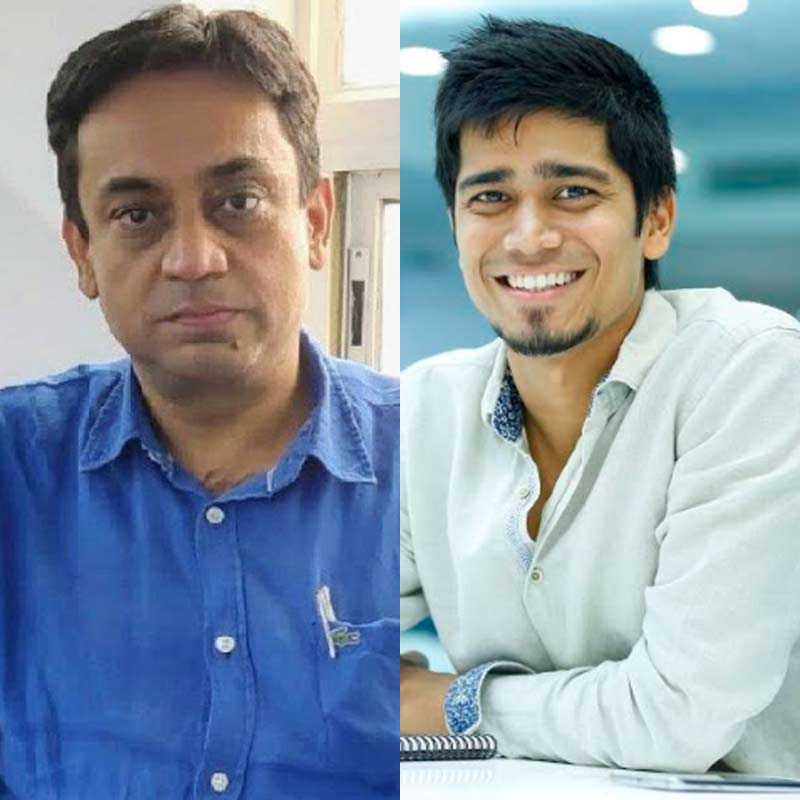
  • Inshorts co-founder & CEO Azhar Iqubal joins Shark Tank India 3

    Inshorts co-founder & CEO Azhar Iqubal joins Shark Tank India 3

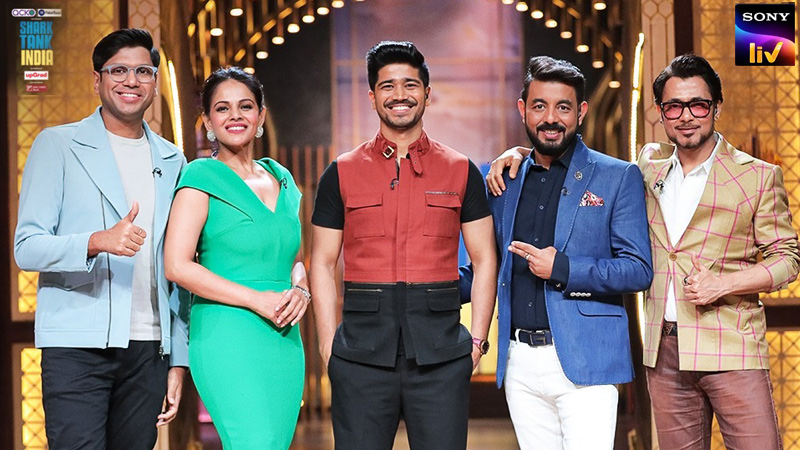
    Mumbai: Building on the tremendous success of the past two seasons, Sony LIV is thrilled to announce the return of India’s beloved entrepreneurial reality show, Shark Tank India, for its highly anticipated third season. Adding to the roster of esteemed Sharks, after entrepreneurs like OYO Rooms founder and CEO Ritesh Agarwal and Zomato founder and CEO Deepinder Goyal is the remarkable Azhar Iqubal, co-founder and CEO of the groundbreaking news app, Inshorts.

    In addition to these new sharks, the panel will feature sharks from the previous seasons – Aman Gupta (co-founder and CMO of boAt), Amit Jain (CEO and co-founder of CarDekho Group, InsuranceDekho.com), Anupam Mittal (founder and CEO of Shaadi.com – People Group), Namita Thapar (executive director of Emcure Pharmaceuticals), Vineeta Singh (co-founder and CEO of SUGAR Cosmetics) and Peyush Bansal (founder and CEO of Lenskart.com).

    With the unparalleled expertise of these Sharks and the charismatic host Rahul Dua guiding the way, Shark Tank India 3 is poised to reach new heights. As budding entrepreneurs from across India prepare to dive into the Tank of dreams, once again, brace yourselves to witness the power of innovation, entrepreneurship, and unparalleled determination like never before.

    Stay tuned for more updates on Shark Tank India 3, streaming soon exclusively on Sony LIV.

  • Restrained spends by Indians this Diwali; most won’t burst crackers: Inshorts-Ipsos Diwali Survey Festival Offers will be key motivation for shopping

    Restrained spends by Indians this Diwali; most won’t burst crackers: Inshorts-Ipsos Diwali Survey Festival Offers will be key motivation for shopping

    MUMBAI: Inshorts-Ipsos Diwali Poll shows that unlike the norm and the trend, Indians will not go ballistic with spends this Diwali and will be discretionary: 33% of those polled,plan to have a budget and will spend in moderation; 20 per cent will curtail spends and plan to hold back from spending completely, unless necessary; 32% are undecided; and only 15% will loosen their purse strings and have a no-holds-barred spending, this Diwali.

    Notably, things are not as bad as they seem. 52% Indians say they will shop to snag great deals – for festival offers and discounts; 23% will splurge in keeping with the festive spirit; 7% will be on the look-out for new brand launches; 6% will buy for gifting; 12% on the other hand said that they were in the undecided frame of mind. 

    Azhar Iqubal, Co-Founder and CEO, Inshorts said, “Inshorts conducted this survey in partnership with Ipsos to map the mood of the masses around Deepawali. This survey was highly rigorous as over 1 lac Inshorts users participated in the survey and was complementary in drawing up strengths of Inshorts and Ipsos to provide a robust output.”

    Krishnendu Dutta, Lead Delhi & Chennai Cluster, Ipsos India said, “Inshorts has a premium user base and the platform per se perfectly captures the views of a large, educated and connected audience.”

    So, will it be a noiseless Diwali this time for the upmarket elite?

    Interestingly, 59% respondents said that they (individuals or their family) would not be bursting firecrackers this Diwali; 23% would be going all out in bursting crackers; 12% would be opting for green crackers and 6% said that they were undecided. 

    The survey further shows that majority of respondents polled (68%) support the Supreme Court’s decision, 26% declinedand 6% were undecided.   
    “Clearly, two key themes seem to be emerging in the survey: cautiousness about spending and opportunistically looking forward to schemes and offers; and holding back on firecrackers with unanimous support for SC’s decision, on the same,”said Krishnendu Dutta, Delhi & Chennai Cluster Lead, Ipsos India.

    Net-net – a somewhat subdued Diwali, both from a spend and sound perspective,” added Dutta. 

    “The undecided, are the ones sitting on the fence and will need a nudge with great offers, to shop,” commented Iqubal.

  • Is digital taking over print?

    Is digital taking over print?

    MUMBAI: With the growing number of avenues available for news consumption in India, viewers are often puzzled about which source to trust. The explosion of digital, television and print media has changed the way of news consumption.

    And discussing how news had moved avenues with changing time were Indian Express whole time director Anant Goenka, BBC World News television presenter Ros Atkins, Extentia Information Technology CEO Umeed Kothavala, Inshorts founder Azhar Iqubal, The Wire founding editor Siddharth Varadarajan, Zee Media Group CEO Bhaskar Das and CNN International chief New Delhi bureau Ravi Agarwal. Moderating the session was MxM India editor-in-chief Pradyuman Maheshwari.

    Over the years, we have seen news moving from print to magazines to TV and now to digital platforms. Shedding some light, Zee Media’s Das said, “That the market is supposed to move, is a basic axiom. The problem that the majority of the houses are facing is that they are stuck to one business model. With digital, there are multiple ways of making money. Monetisation moves from format to format. In the end, it’s not about the medium. You can’t compare a conventional way of system with a realistic model. There are four monsters like Google, Facebook, Apple and Amazon. They make money. There will be monopolistic tendencies.”

    Indian Express’s Anant added, “Digital has arrived. Our revenues have increased over four years and I see print is going to be there for a long time. I can say that Indian Express can survive digitally with the same reportage and structure. But I think in digital you can’t just stick to advertising. That will not be much. You will have to get audiences to pay for content.

    “Every story is different, and depending on the story, we file digital first or print first. The best investigative story we like to give to print first; exclusivity is a one minute word. At the moment we find it is exclusive on the web only for a minute. Also if it is time critical to break the story, then we do break it on web”, he explained further.

    Das said, “The audiences that consume newspapers today they were born before 1970 and are not post 1990 born. At the same time, most of the stars want to see their names in newspapers.

    The Wire’s Varadarajan added, “With digital the ability to tell stories has enhanced due to the enhanced interactivity. The viewers can consume content according to their convenience on digital platforms. Every TV channel and newspaper today recognises digital as the future. But the old adage of dollars for print, dimes for digital and pennies for mobile still holds true for most organisations.”

    Inshorts Azhar Iqbal when asked about how his news application was working and what was its future replied, “We are not making any money as of now. I don’t know how are we going to perform in the future. We are focused on ‘time is money’. As long as we can attract eyeballs, we will be able to monetize”.

    Adding, Extentia Information Technology’s Umeed Kothavala said, “Digital and technology have changed the context of consumption. Along with monetization, organisations also need to keep track of the growing power of social media, citizen journalism and also the fact that there are many more options for people to get their news from”.

    Anant took on Inshorts Azhar Iqubal, making his displeasure known at the latter copying news from Indian Express without the media group’s consent and rehashing it into a 60 word article for Inshorts’ usage.

    On the entertainment front, Varadarajan commented how a majority of entertainment news in the print sector was paid for by artistes and hence they would always prefer their exclusive interviews to be printed in the print medium rather than digital.

    CNN’s Agrawal said, ““Digital news is the present, not just the future. It is the present and is very important for us. CNN International looks at providing content globally. We don’t have a print medium. The news that we cover is from a global perspective and the information can be accessed by all the people irrespective of the geography. We as an organisation think of being the first to put out the news. We then decide on how news can be distributed across the various delivery platforms.”

    BBC’s Atkins pointed out that if BBC didn’t provide relevant news to the audience, they would not come to it. “On my show BBC Outsource, if there is a credible story, say from CNN, I will show it to my audience. Given that social media is expanding and that news can be accessed through it, we have to provide credible content to the audience.”

    The panellists also discussed the importance of maintaining the same level of credibility and gate-keeping standards on a digital platform as on traditional print or television platforms.

    Voicing his opinion, Varadarajan said, “There are two things which are important – credibility and reliability. One should always try to achieve both these elements. If you can’t pick on one, than you should always give preference to credibility”.

    “We get higher fee from most of our advertisers because the news that we are providing is credible and they know this”, added Das.

    When television came in, the pundits said that it was the end of print. When roll out of the internet, they said that print and television would not be able to compete. All the mediums have so far been able to co-exist, and even grow. With so many upcoming digital avenues, what will be interesting to see is how print will retain for itself its space in the ecosystem and how digital will be a game changer that it is already has become.

  • Is digital taking over print?

    Is digital taking over print?

    MUMBAI: With the growing number of avenues available for news consumption in India, viewers are often puzzled about which source to trust. The explosion of digital, television and print media has changed the way of news consumption.

    And discussing how news had moved avenues with changing time were Indian Express whole time director Anant Goenka, BBC World News television presenter Ros Atkins, Extentia Information Technology CEO Umeed Kothavala, Inshorts founder Azhar Iqubal, The Wire founding editor Siddharth Varadarajan, Zee Media Group CEO Bhaskar Das and CNN International chief New Delhi bureau Ravi Agarwal. Moderating the session was MxM India editor-in-chief Pradyuman Maheshwari.

    Over the years, we have seen news moving from print to magazines to TV and now to digital platforms. Shedding some light, Zee Media’s Das said, “That the market is supposed to move, is a basic axiom. The problem that the majority of the houses are facing is that they are stuck to one business model. With digital, there are multiple ways of making money. Monetisation moves from format to format. In the end, it’s not about the medium. You can’t compare a conventional way of system with a realistic model. There are four monsters like Google, Facebook, Apple and Amazon. They make money. There will be monopolistic tendencies.”

    Indian Express’s Anant added, “Digital has arrived. Our revenues have increased over four years and I see print is going to be there for a long time. I can say that Indian Express can survive digitally with the same reportage and structure. But I think in digital you can’t just stick to advertising. That will not be much. You will have to get audiences to pay for content.

    “Every story is different, and depending on the story, we file digital first or print first. The best investigative story we like to give to print first; exclusivity is a one minute word. At the moment we find it is exclusive on the web only for a minute. Also if it is time critical to break the story, then we do break it on web”, he explained further.

    Das said, “The audiences that consume newspapers today they were born before 1970 and are not post 1990 born. At the same time, most of the stars want to see their names in newspapers.

    The Wire’s Varadarajan added, “With digital the ability to tell stories has enhanced due to the enhanced interactivity. The viewers can consume content according to their convenience on digital platforms. Every TV channel and newspaper today recognises digital as the future. But the old adage of dollars for print, dimes for digital and pennies for mobile still holds true for most organisations.”

    Inshorts Azhar Iqbal when asked about how his news application was working and what was its future replied, “We are not making any money as of now. I don’t know how are we going to perform in the future. We are focused on ‘time is money’. As long as we can attract eyeballs, we will be able to monetize”.

    Adding, Extentia Information Technology’s Umeed Kothavala said, “Digital and technology have changed the context of consumption. Along with monetization, organisations also need to keep track of the growing power of social media, citizen journalism and also the fact that there are many more options for people to get their news from”.

    Anant took on Inshorts Azhar Iqubal, making his displeasure known at the latter copying news from Indian Express without the media group’s consent and rehashing it into a 60 word article for Inshorts’ usage.

    On the entertainment front, Varadarajan commented how a majority of entertainment news in the print sector was paid for by artistes and hence they would always prefer their exclusive interviews to be printed in the print medium rather than digital.

    CNN’s Agrawal said, ““Digital news is the present, not just the future. It is the present and is very important for us. CNN International looks at providing content globally. We don’t have a print medium. The news that we cover is from a global perspective and the information can be accessed by all the people irrespective of the geography. We as an organisation think of being the first to put out the news. We then decide on how news can be distributed across the various delivery platforms.”

    BBC’s Atkins pointed out that if BBC didn’t provide relevant news to the audience, they would not come to it. “On my show BBC Outsource, if there is a credible story, say from CNN, I will show it to my audience. Given that social media is expanding and that news can be accessed through it, we have to provide credible content to the audience.”

    The panellists also discussed the importance of maintaining the same level of credibility and gate-keeping standards on a digital platform as on traditional print or television platforms.

    Voicing his opinion, Varadarajan said, “There are two things which are important – credibility and reliability. One should always try to achieve both these elements. If you can’t pick on one, than you should always give preference to credibility”.

    “We get higher fee from most of our advertisers because the news that we are providing is credible and they know this”, added Das.

    When television came in, the pundits said that it was the end of print. When roll out of the internet, they said that print and television would not be able to compete. All the mediums have so far been able to co-exist, and even grow. With so many upcoming digital avenues, what will be interesting to see is how print will retain for itself its space in the ecosystem and how digital will be a game changer that it is already has become.

  • News In Short raises Rs 127 crore in Series B funding

    News In Short raises Rs 127 crore in Series B funding


    MUMBAI: News In Shorts, a startup that launched the India based mobile news app has raised Rs 127 crore from its existing venture capital investor Tiger Global in Series B funding. With this, the company, according to the Economic Times, is now valued at about Rs 570-Rs 635 crore.  


    Founded by IIT dropouts Azhar Iqubal, Deepit Purkayastha and Anunay Arunav, News In Shorts is a news publishing app that curates the top 60 news story of the day and crunches them into 60 word shorts for the readers. Its launch was actively backed by funding from Times Internet, mentors Ankush Nijhawan, Gaurav Bhatnagar and Manish Dhingra.


    The app had crossed over 100,000 downloads for iOS and Android by February. “It is these increases, which directly led to this new funding round from Tiger Global,” News In Shorts co-founder Purkayastha informed techcrunch.com.


    The co-founder further stated that this round of Series B capital will be primarily used to enhance their Android app, since the Google-owned platform accounts for around 80 per cent of mobile devices in India.


    The report also highlights the editorial team’s plans on working on a number of new additions, including a personalization engine that predicts user’s interests, and a feature to allow users to express and share opinions on news via the service.


    “The only focus that we have right now is to make sure that the app runs smoothly on lower-end smartphones as well,” News In Shorts co-founder and CEO Azhar Iqubal told The Economic Times.


    The startup hit the headlines earlier this year after it received Series A funding of Rs 25 crore from Tiger Global, with participation from Japan’s Rebright Partners and Flipkart’s Bansals.