Tag: Azad Maidan

  • Bombay HC asks board to reconsider certification of Bhansalis film

    Bombay HC asks board to reconsider certification of Bhansalis film

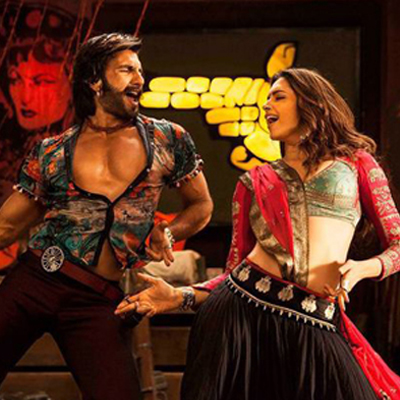
    MUMBAI: The Bombay High Court on Wednesday directed the appellate tribunal of the Central Board for Film Certification (CBFC) to reconsider the U/A certification given to Sanjay Leela Bhansali’s recently released film, Goliyon Ki Rasleela – Ramleela.


    An observation was made by the Division Bench of Justices V M Kanade and M S Sonak that the CBFC did not apply its mind while granting certification to the film. The court was acting on a petition filed by Sandeep Shukla, a member of the Congress and vice-president of Shree Maharashtra Ramleela Mandal. The mandal organises Ramleela every year during Navratri at Azad Maidan. Shukla claimed that the film’s title is misleading and the contents have hurt the religious sentiments of followers of Hindu deity Ram and Hanuman.


    The court asked the CBFC to consider whether the guidelines of the Cinematograph Act were followed before granting certification to the movie. “Utmost care has to be taken by the board in such cases and ensure that the guidelines are followed and that there are no violations,” said the court.


    Although the board tried to convey to the court that the guidelines were followed in their view, the judges were not satisfied and said that there has been non-application of mind. The judges said that the


    board did not apply its mind while granting certification to Bhansali’s movie. They also noted that the CBFC has to be careful in the future while issuing certification to movies.


    The petition was filed against director and producer of the movie Sanjay Leela Bhansali, the Production Company, Eros International Media Limited and the CBFC, which granted the film a U/A certificate on 1 November. The court also directed the CBFC to see if any content of the movie or its title has violated any fundamental rights of citizens as alleged by the petitioner and disposed of the petition.


    According to the petition, the term ‘Ramleela’ has been historically associated with the plays depicting the life of Ram. Since the movie is based on a love story and not on the conventional meaning attributed to ‘Ramleela’, the petitioners claimed that the producers are “deliberately and intentionally” using the term for commercial success.
    “The commercial exploitation of the word ‘Ramleela’ amounts to infringement. The defendants cannot be allowed to misuse the same for their commercial venture,” the petition stated.
  • Unique Tent theatre gives feel of early silent cinema halls

    Unique Tent theatre gives feel of early silent cinema halls

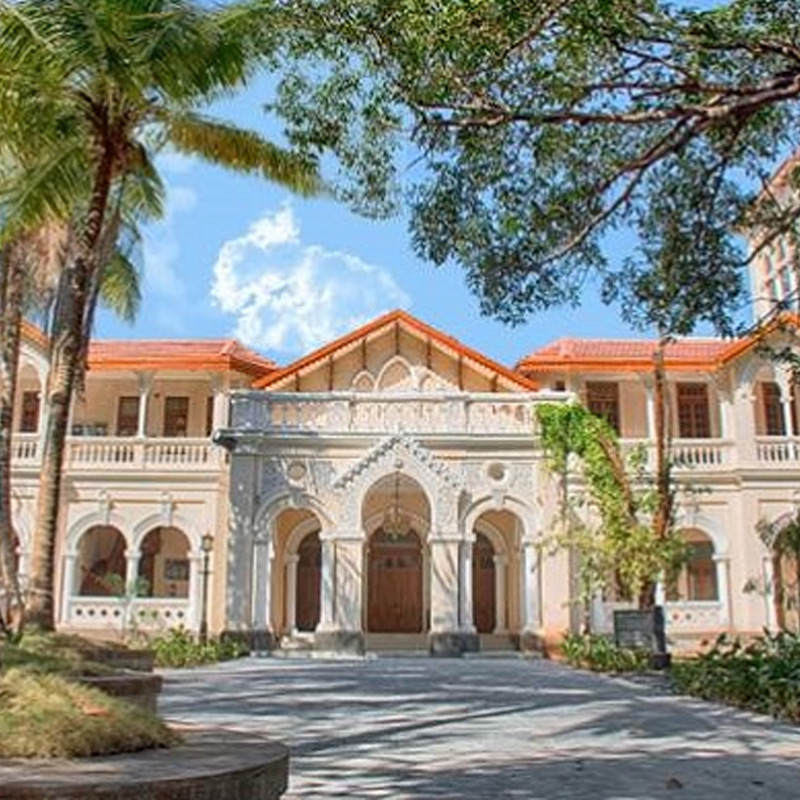
    NEW DELHI: A unique aspect of the Centenary of Indian cinema held in the capital was a make-shift mini-theatre named ‘Thambu Cinema‘ and housed in a tent-shaped Gulshan Mahal in the lobby of the Siri Fort Auditorium. The Thambu Cinema saw houseful screenings everyday even though the films screened were all from the silent era. Gulshan Mahal is the name of the building in Mumbai in which the Museum of Cinematic Arts is coming up.

    Film Division Zone‘s Picture Palace called Gulshan Mahal had a seating capacity of twenty five (on durries and benches) in a specially erected tent within the ambiance of the larger exhibition evoking an experience of the silent cinema. When the first moving pictures arrived, the world was not ready with cinema houses to show them, so tents were erected in open areas for the public at large. The tents were grandly called Picture Palaces, according to film historian Amrit Gangar who curated this section.
     
    Jamshetji Framji Madan, a Parsi entrepreneur was fascinated by the new invention and he ordered projectors from Pathe. With the projectors he set up regular ‘bioscope‘ shows in tents at key points in Calcutta, including the Maidan. In Bombay‘s Azad Maidan also such tents were set up. While tents, cinemas in the cities were becoming fairly common, small towns and villages where most of Indian population lived, were untouched by the ‘new wonder‘. But soon tents reached there with travelling theatre companies. And so did the moving picture, the cinema.

    One of the earliest itinerant showmen was Abdulally Essoofally, who in 1901, travelled from one Asian country to another. His travelling outfit included a projector, some cans of films, a folding screen and a tent. Sometime his tent was large enough to accommodate1000 people. Between 1908 and 1914, Abdulally‘s touring cinemas had covered most parts of India.

    Some of the films shown were Shri Krishna Janma (1918), Lanka Dahan (1917), Kaliya Mardan; and Raja Harishchandra by the father of Indian cinema, D G Phalke; Gulami nu Patan (Fall of Slavery) (1931) by Shyam Sundar Agarwal; Banga Darshan, Diler Jigar (Gallant Hearts) (1931) by G P Pawar; The Light of Asia (1925) by Franz Osten; and two quickies Watan ki Abru and Hum Ek Hain.

  • Mumbai Press Club announces annual awards for print media

    Mumbai Press Club announces annual awards for print media

    MUMBAI: The Press Club, Mumbai, has called for entries for its annual awards for excellence in writing and photo journalism, expanding the number of awards it gives for the written works.

    The Club, which announced two categories for the first time for written works last year, has also instituted a Lifetime Achievement Award for Outstanding lifetime Contribution to Journalism.

    The awards endeavour to promote best practices among journalists and encourage quality writing, fair play and high ethical standards. The Club has been awarding the best performers among photo-journalists in Mumbai for the last 10 years and introduced two categories for writers last year: the K N Prabhu Awards for Excellence in cricket writing, and the Pradeep Shinde Awards for the Excellence in Crime Reporting.

    Entries can be in any language but those in Indian languages must carry an English translation. The last date for receipt of entries is 5 April.

    Each of the categories of awards has a total cash component of Rs 100,000: the winning article/story will be awarded Rs.75,000 and a citation, while the runners-up will get Rs 25,000 and a citation.

    Apart from the Lifetime Achievement Award, the categories of awards for 2012 are:
    1. The K N Prabhu Award for Excellence in Cricket Writing instituted by the Press Club and Podar Enterprise.
    2. The Pradeep Shinde Award for Excellence in Crime Reporting for the Best Crime story or investigation in 2012.
    3. Award for the Best Political Story of the Year for the most outstanding news report / commentary/ investigation related to political events and leaders in the country.
    4. Award for the Best Business Story of the Year for the most outstanding news report/ commentary/ analysis in respect of corporate bodies or finance and banking or economic policy-making.
    5. Entertainment Writer of the Year Award for the best news Story/report/ analysis of events related to entertainment and celebrities featuring filmed entertainment, television or other mediums.
    6. Award for the Best Story on Health / Environment for the most outstanding contributions to bringing the spotlight on a burning or relevant issue concerning health or the environment.

    Indian journalists residing anywhere in the country are eligible to apply for the awards. The Lifetime Achievement Award will be selected by a special jury from among a short-list drawn up by the Managing Committee of the Press Club.

    Editors or editorial heads can also nominate stories/articles of journalists working in their charge.

    Entries are invited of articles that have been published on an established media platform (newspapers, magazines or websites) and that have been published in calendar year 2011. However, each applicant will be allowed a maximum of 3 entries across all categories.

    Entries are required to be recommended/ supported by the Editor or Department Head of media platform.

    Entries must be sent as a soft copy to manager@pressclubmumbai.com. This should be followed by a hard copy accompanied by a short CV and address of the journalist author delivered to the Press Club office or posted to: The Manager, The Press Club, Mumbai, Glass House, Azad Maidan, Mahapalika Marg, Mumbai – 400 001. The envelope/cover with the article must be marked ‘Journalist Award’.

    The Awards Ceremony will be held in Mumbai sometime in May 2012. Those winners who are not from Mumbai will be provided air fare to and fro and hotel accommodation.

    A distinguished panel of judges in all categories appointed by the Press Club will decide on the winning entries. The decision of the panel will be final.

  • SaharaOne unveils two properties; plans big marketing push

    SaharaOne unveils two properties; plans big marketing push

    MUMBAI: As part of their aggressive plans to ramp the programming on the network, SaharaOne has unveiled two more properties in connection with their sixth property roll out. These include the weeklies Zaara Pyaar Ki Saugat, which is slated to kick off on 4 December at 8 pm and Ghar Ek Sapna, which is targeting an 18 December launch.

    Following the launch of the two shows Solhah Singaarr and Kuch Apne Kuch Paraye, the channel is looking to make a big noise around the launch of Zaara Pyaar Ki Saugat with live outdoor screenings of the first episode in certain pockets of Mumbai including Mahim Causeway, Mohammad Ali Road and Azad Maidan.

    Expectedly, the channel will roll out marketing initiatives via print, outdoor and radio. But in addition to this the channel is also looking to heavily utilize the internet with contests, games and blog sites like the hugely visited community website Orkut, says SaharaOne marketing head Rajeev Chakraborthy.

    The marketing plans for Ghar Ek Sapna are yet to be cemented, which Chakraborthy was apprehensive to disclose.

    Commenting on the relevance of the themes for both shows, SaharaOne programming head Kalyan Sundaram says that research from smaller towns and cities have shown that this ‘women dominated’ audience prefers to identify with the non-progressive home bound Indian female as opposed to women achievers such as journalists and lawyers. This explains the move back towards narrating the story of the traditional homemaker.

    The channel has recently been boasting of the two new shows generating good numbers and CEO Shantonu Aditya seems confident that the latest additions will garner the same. In line with their programming fight plan, two more non-fiction properties will be unveiled, following which two big properties will emerge in January and February next year. These will tread the reality path much like what competition is doing, only this will be in the form of a game show.

    In another attempt to up their ratings and beat Sony to the third spot in the general entertainment genre, Aditya added that the channel has also lined up a bank of movies from their own stable including Khosla Ka Ghosla and Dor.

    Aditya adds, “In keeping with our mission to continually provide quality entertainment to our viewers and fulfilling our promise of newer shows, we are pleased to present Zaara Pyaar Ki Saugat and Ghar… Ek Sapna. With the launch of these two shows we have not only revamped the primetime band but have also expanded viewing time. The channel has been at an upswing over the last few weeks and our numbers are only getting better. I am certain that the new shows that will be launched over the next couple of months will take us to greater heights.”