Tag: AYUSH

  • ASCI welcomes health ministry’s move to update healthcare ad regulations

    ASCI welcomes health ministry’s move to update healthcare ad regulations

    MUMBAI: Quacks, fake doctors and illegal mobile dispensaries had better watch out. The Indian ministry of health & family welfare (MHFW) is taking steps to take you out of business.

    Under the draft Drugs and Magic Remedies (Objectionable Advertisements) (DMR) (Amendment) Bill, 2020, it is seeking to levy fines of Rs 5 lakh and  imprisonment of two years on violators for the first offence, going up to as much as five years in gaol and a fine of Rs 50 lakh for subsequent violations. The various disorders and illnesses have also been clearly defined, while what constitutes an ad in modern times has also been spelt out. The MHFW is seeking the public’s feedback on the DMR Amendment Bill 2020.

    The effort by the ministry to update the older act has met with the approval of the advertising industry’s watchman the Advertising Standards Council of India (Asci). Its secretary Shweta Purandare got into a tele-conversation with indiantelevision.com and said that the amendment will help it police the healthcare sector better.  "The proposed DMR bill 2020 is an important development and would lend strong support to ASCI's efforts of suo motu monitoring of misleading advertisements in the healthcare sector,” she said. “Consequences of advertisements in violation of DMR regulations are serious and this would result in better compliance from advertisers as well as media concerned, be it an advertisement of allopathic products or Ayush products.”

    The draft bill has listed the diseases and conditions which will come under its  umbrella. These include: AIDS, blindness, blood poisoning, bronchial asthma, cancer benign tumour, cataract, change in colour of hair and growth of new hair, change of foetal sex by drugs, congenital malformations, deafness, diabetes, diseases and disorders of the uterus, obesity, fairness of the skin, form and structure of the breast, genetic disorders, improvement in size and shape of the sexual organ and in duration of sexual performance, improvement in height of children or adults, mental retardation, sub normalities, and growth.

    Purandare further stated, “Apart from print and TV, it will be interesting to see the impact of advertisements on social media as well as on the advertisers' websites. We would expect this effect to trickle to advertisements by Ayush doctors and clinics propagating ‘guaranteed cure’ as the Central Council of Indian Medicine has taken cognizance of DMR violations in the past and had issued an advisory to state councils for their action."

  • ASCI part of AYUSH committee to control misleading ads

    ASCI part of AYUSH committee to control misleading ads

    MUMBAI: In a pre-emptive step, the Ayurveda, yoga and naturopathy, Unani, siddha and homoeopathy (AYUSH) ministry has constituted a committee to control misleading advertisements and exaggerated claims of AYUSH drugs. 

    The Advertising Standards Council of India (ASCI) is the only non-government member in the empowered committee of seven members comprising the AYUSH ministry, health and family welfare and the department of consumer affairs representatives. 

    The constituted committee will be empowered to review and monitor the implementation of the provisions of The Drugs and Magic Remedies (Objectionable Advertisement) Act, 1954 and rules thereunder for curbing misleading advertisements of AYUSH drugs. 

    The committee will be authorised to make recommendations for regulatory action against misleading advertisements and advise the central government for issuing any specific direction or advisory and for taking the necessary steps. The committee will also be responsible for reviewing the actions taken by the states and the pharmaceutical vigilance centres for surveillance and control of misleading advertisements of AYUH drugs.

    ASCI chairman Abanti Sankaranarayanan said, “ASCI has been closely working with the ministry to ensure that Indian consumers are not exposed to false information and have access to safe drugs. We are confident that the new committee will act as a catalyst to the process of self-regulation in advertising, thus safeguarding consumers from deceptive advertisements that can negatively impact them.”

    The meeting of the constituted committee will be convened every six months or as and when required to review progress and make recommendations to accomplish its objective of controlling misleading advertisements.

    Established in 1985, ASCI seeks to ensure that advertisements conform to its code for self-regulation, which requires advertisements to be legal, decent, honest and truthful and not hazardous or harmful while observing fairness in competition. The council looks into complaints across all media, including print, TV, radio and hoardings.

  • AYUSH-ASCI to regulate advertisements

    AYUSH-ASCI to regulate advertisements

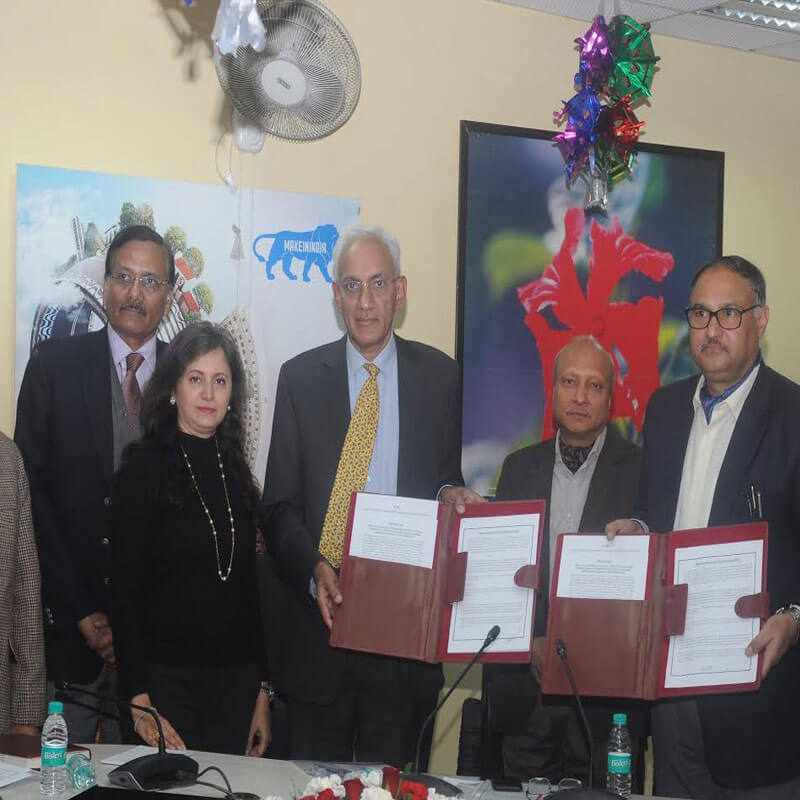
    MUMBAI: Progressing with the impetus towards supporting co-regulation in advertising, the Ministry of Ayurveda, Yoga and Naturopathy, Unani, Siddha and Homoeopathy (AYUSH) has signed an MoU partnering with the Advertising Standards Council of India (ASCI).

    Addressing the cases of misleading advertisements with respect to Ayurveda, Yoga and Naturopathy, Unani, Siddha and Homoeopathy Medicines, treatment and related services, ASCI will comprehensively monitor these advertisements across print and electronic media. ASCI has been given a self-monitoring mandate by the Ministry of AYUSH to identify potentially misleading advertisement in the AYUSH sector and process complaints through its Consumer Complaints Council (CCC). The Ministry of AYUSH will also redirect complaints against misleading advertisements they receive to ASCI, which will be reviewed using ASCI’s code and guidelines. The MoU also requires ASCI to report to the Ministry of AYUSH, advertisements in potential violation of the Drugs and Magic Remedies (Objectionable Advertisements) Act, 1954 and Rules thereunder as well as non-compliance of ASCI’s CCC recommendations for the Ministry of AYUSH to take further action.

    This partnership will put in place, a much needed formal mechanism to monitor & curtail misleading advertisements in the AYUSH sector and will lead to effective implementation though strong support locally from the State Licencing Authorities as well as Centrally through the Ministry of AYUSH.

    Ministry of AYUSH secretary Ajit M. Sharan said, “The arrangement would also ensure that any advertisement making claims for diseases and disorders, in violation of the notification issued by our ministry for indications that have been prohibited from claiming, are immediately brought to our attention. We have entered into an MoU with ASCI to effectively weed out such advertisements so that consumers are protected from unscrupulous manufacturers selling products making false claims. This is vital for the propagation of AYUSH system of medicine within India and beyond.”

    ASCI chairman S.K. Swamy added, “At ASCI, we have been relentlessly working to encourage self-regulation in advertising content and ensuring the protection of the interests of the consumers. AYUSH is among top three sectors where we find a high incidence of misleading advertisements and some of the advertisements in the AYUSH sector claiming treatment of certain diseases in violation of the Drugs and Magic Remedies Regulations have been a cause of concern. ASCI’s partnership with the Ministry of AYUSH will provide the necessary support to our efforts in effectively curtailing misleading advertisements in this sector.”

  • AYUSH-ASCI to regulate advertisements

    AYUSH-ASCI to regulate advertisements

    MUMBAI: Progressing with the impetus towards supporting co-regulation in advertising, the Ministry of Ayurveda, Yoga and Naturopathy, Unani, Siddha and Homoeopathy (AYUSH) has signed an MoU partnering with the Advertising Standards Council of India (ASCI).

    Addressing the cases of misleading advertisements with respect to Ayurveda, Yoga and Naturopathy, Unani, Siddha and Homoeopathy Medicines, treatment and related services, ASCI will comprehensively monitor these advertisements across print and electronic media. ASCI has been given a self-monitoring mandate by the Ministry of AYUSH to identify potentially misleading advertisement in the AYUSH sector and process complaints through its Consumer Complaints Council (CCC). The Ministry of AYUSH will also redirect complaints against misleading advertisements they receive to ASCI, which will be reviewed using ASCI’s code and guidelines. The MoU also requires ASCI to report to the Ministry of AYUSH, advertisements in potential violation of the Drugs and Magic Remedies (Objectionable Advertisements) Act, 1954 and Rules thereunder as well as non-compliance of ASCI’s CCC recommendations for the Ministry of AYUSH to take further action.

    This partnership will put in place, a much needed formal mechanism to monitor & curtail misleading advertisements in the AYUSH sector and will lead to effective implementation though strong support locally from the State Licencing Authorities as well as Centrally through the Ministry of AYUSH.

    Ministry of AYUSH secretary Ajit M. Sharan said, “The arrangement would also ensure that any advertisement making claims for diseases and disorders, in violation of the notification issued by our ministry for indications that have been prohibited from claiming, are immediately brought to our attention. We have entered into an MoU with ASCI to effectively weed out such advertisements so that consumers are protected from unscrupulous manufacturers selling products making false claims. This is vital for the propagation of AYUSH system of medicine within India and beyond.”

    ASCI chairman S.K. Swamy added, “At ASCI, we have been relentlessly working to encourage self-regulation in advertising content and ensuring the protection of the interests of the consumers. AYUSH is among top three sectors where we find a high incidence of misleading advertisements and some of the advertisements in the AYUSH sector claiming treatment of certain diseases in violation of the Drugs and Magic Remedies Regulations have been a cause of concern. ASCI’s partnership with the Ministry of AYUSH will provide the necessary support to our efforts in effectively curtailing misleading advertisements in this sector.”

  • Broadcasters urged to publicize International Yoga Day on 21 June

    Broadcasters urged to publicize International Yoga Day on 21 June

    NEW DELHI: With the United Nations’ endorsement of observing 21 June as International Yoga Day for the first time, representatives of the Information and Broadcasting and AYUSH Ministries today met broadcasters to seek their proactive participation.


    I&B secretary Bimal Julka and AYUSH secretary Nilanjan Sanyal interacted with the representatives of News Broadcasters Association, Indian Broadcasting Foundation, CRFI, FCSR and representatives from Digital Cinema to ensure enhanced coverage, content and reach across news, GECs, digital, CRS and radio platforms.


    Both emphasized that the collaborative effort would also reinforce the vision of the Prime Minister Narendra Modi and this would also enable the event having an international impact with the focus on Yoga being a people’s movement.


    Representatives from the industry bodies promised to proactively participate in promoting the event while at the same time providing and broadcasting content free of cost.


    They mentioned that content would be sourced in the form of spots featuring popular TV artists on GEC platforms, and messages endorsing the relevance of Yoga. These spots would run across the broadcaster’s network on both news and GEC segments.


    Industry representatives also agreed to take forward content created by the AYUSH Ministry on their platforms pro bono.


    They agreed to popularize the Yoga initiative on news platform on the news segment through Special programmes, discussions and studio-based events. It was also agreed that the events associated with International Yoga day would be covered appropriately.


    Representatives of the industry from radio, digital cinema and community radio stream also offered to take the advocacy efforts forward through their network and distribution platforms.