Tag: AVOD

  • Content choice drives Indians’ subscription to multiple OTT platforms

    Content choice drives Indians’ subscription to multiple OTT platforms

    MUMBAI: OTT subscription fatigue is a myth in India for now. While subscribing to multiple OTT services, Indian subscribers rely on content as the driving force. There are three primary reasons for this – demand for more content options (42 per cent), satisfying the content needs for an entire family (42 per cent) and all content not being available on one single OTT service (42 per cent).

    “Our research findings suggest that the online TV consumer in India sees the value in TV content whether they are paying with greater focus and attention, or with their money,” says Brightcove India sales director Janvi Morzaria.

    The study run by Brightcove polled 9,000 participants across nine countries in Asia, including 1,000 consumers in India. It also revealed that 79 per cent of respondents welcomed the hybrid model of OTT. The report said that 35 per cent of respondents are open to a reduced monthly subscription package that serves ads depending on the price, whereas 44 per cent said they would definitely sign up.

    25 per cent of Indian respondents wants to pay nothing and watch ads as a trade-off to consuming content while 25 per cent elected to pay a lower fee with limited ads. Just 14 per cent agreed to pay a higher fee to be free from ads and 14 per cent would like an option where they can customise their price and ad packages. 37 per cent of respondents wanted to pay less than $1 per month, 27 per cent would pay $1-$4 per month, and 16 per cent would pay $5-$9 per month.

    “Indian consumers do not mind seeing ads as part of their shows, especially if they are getting a deal. 79 per cent of Indian respondents stated that they are open to a hybrid plan of ad-funded SVOD that comes with a reduced price,” she added.

    It also emerged that offline downloads, access on mobile, and using less data on mobile were the top three OTT service features most wanted by Indian consumers. 22 per cent of Indian respondents found two ads as an acceptable advertising load per ad break and 13 per cent were open to three ads per break. In addition to that, 67 per cent of respondents were receptive to the idea of shoppable TV.

    “OTT service providers should take advantage of this preference and make the advertising experience engaging while limiting ad loads per break. Consumers are now willing to watch ads if they have the option to subscribe to a reduced price plan,” she commented.

  • Global OTT revenue to reach $129 bn by 2023 says study

    Global OTT revenue to reach $129 bn by 2023 says study

    MUMBAI: OTT business across the world is now in a high growth period. In the next five years, revenue from online TV episode and films will reach $129 billion, which is more than double of same recorded in last year. Back in 2017, it stood at $53 billion and in 2018 alone $16 billion will be added. Global OTT TV & Video Forecasts has found the data after surveying 18 countries.

    The research has also found the top five markets will command 69 per cent of worldwide revenues by 2023, down from 73 per cent in 2017. While online video viewing was a typical trend of some particular developed countries a few years back also, it is clear that emerging markets are rapidly growing, boosting the overall ecosystem. The report predicts that OTT revenues will exceed $1 billion in 17 countries by 2023.

    Among all the business models in OTT market, SVOD has highest upward growth in total revenue share. In 2016, it became the largest OTT revenue source by overtaking AVoD. The share of the total will increase from 47 per cent in 2017 to 53 per cent in 2023. However, AVOD is still very relevant in the game being left with enough opportunities. AVOD revenues are projected to increase by $27 billion between 2017 and 2023.

    “No prizes for guessing that the US will remain the dominant territory by some distance,” Digital TV Research principal analyst Simon Murray commented. “However, its share of global revenues will fall from 43 per cent in 2017 to 37 per cent by 2023. We forecast that revenues in the US will more than double between 2017 and 2023 – adding nearly $25 billion to reach $48 billion."

    China, another growing player, will add $17 billion over this same period to nearly triple its revenues to $26 billion. Its market share will increase to 20 per cent in 2023 from 17 per cent in 2017.

  • Viacom18’s Sudhanshu Vats: Indian media’s growth will be similar to China

    Viacom18’s Sudhanshu Vats: Indian media’s growth will be similar to China

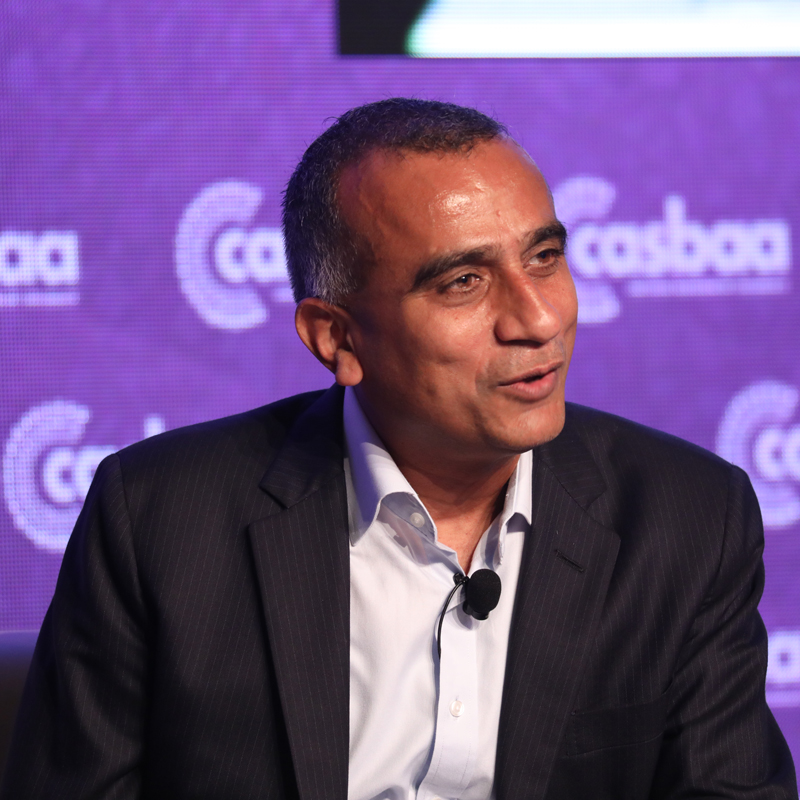
    MACAU: Even as he said that the growth trajectory of the Indian media space will be similar to that of China, Mumbai-headquartered Viacom 18 Media group CEO Sudhanshu Vats made it clear that both television and digital spaces were complementary to each other having a great future in India.

    “Indian media market’s evolution will be very similar to that of China. Where we (India) are today in 2017 is where China was in 2011,” Vats said on Wednesday during the opening keynote on the third and last day of the CASBAA Convention 2017 here in a conversation with media industry veteran Marcel Fenez of Fenez Media.

    “In India, the future of television is television and also digital. If you are a content provider or a story teller, you have an advantage,” Vats said, adding that he expected a significant growth surge on the AVoD and SVoD sides of the media business.

    Vats went on to highlight the reasons for pushing the company’s digital venture VOOT, stating that not only has the app downloads run into double digit millions, but that about 15-18 per cent of the content on the platform was exclusive even as the Viacom18 team learns from the digital evolutionary processes in the US and China markets. Launched in early 2016, VOOT engages kids as well as adults with 17,000 hours of network content.

    “We do a lot of content around digital, which is called VOOT exclusive. India has a big appetite for reality shows and there is a huge amount of curiosity about what happens behind the scenes,” Vats explained. Viacom18 hosts some of India’s biggest reality shows – ‘Fear Factor’ and `Bigg Boss’. He also thinks that India will skip credit cards to e-payment, which can help aim for VOOT SVoD with a paywall.

    According to Vats, a Unilever India veteran marketer-turned-media professional (he jokingly mentioned that in his previous company he was famously referred to as the `Laundry Man’ for driving Unilever’s home washing products in India), “Essentially we are storytellers. The big business we are in is content and we need a robust pipeline of content and creative talent. But the challenge is getting talent, and retaining them.”

    In this context, he explained later, Viacom18 has started a start-up initiative, encouraging young talent to express themselves in a creative manner as new disruptive ideas in Indian media will not come from within an organisation, but from outside.

    (Another reality show running on MTV India is Dropout, a nationwide hunt to find hidden creative talent in ‘dropouts’ to be groomed by industry leaders into entrepreneurs, to solve real-world business problems in a short span of time.)

    Terming Viacom18’s 10-year eventful existence as “fantastic” when it had grown 40x, Vats, whose many passions include running marathons world over, said the company’s journey had “now just begun” in India’s media landscape that has been changing dramatically over the years pushed by content, delivery mechanism and technological evolutions. (Incidentally, he completed his daily quota of an hour’s running before getting ready for the morning keynote.)

    As part of innovations being undertaken by Viacom18, Vats pointed out that the company plans to set up an engineering hub in India’s Silicon Valley, Bangalore, to help various in-house products.

    “The big media companies are consolidating and coming together with telecom companies,” Vats said highlighting the disruptions and convergence happening in the Indian media landscape, “If you had asked me before, I wouldn’t have thought that would happen.”

    Batting on the front foot for a digital India, Vats said the country was an “exciting” market. “It’s at the cusp…ready to take off. If you have a five-year horizon, it (India) is where you should be,” he aptly summed.

    ALSO READ:


  • Asian OTTs use global, local content, AVoD and SVoD mix to consolidate position, says report

    Asian OTTs use global, local content, AVoD and SVoD mix to consolidate position, says report

    MUMBAI: Over-the-Top services are steadily gaining traction in APAC, but succeeding in a highly diverse and price-sensitive market will entail a thorough understanding of consumer preferences and intent.

    OTT players in the region are already partnering with mobile operators to drive subscribership. Examples include Viu’s various partnerships with Telekom Malaysia, Maxis and U Mobile in Malaysia, Indosat in Indonesia, CSL in Hong Kong and Idea cellular in India among others.

    A new report, “OTT Video in Asia-Pacific: Localised content and business models are key while mobile will offer opportunity for future video growth” has been added to the repository of Market Research Hub (MRH).

    Strategies of the four key OTT video service providers have been discussed in the report in the form of four case studies. The key OTT video service providers profiled in the case studies include Netflix, iflix, Viu, and Hotstar.

    The success of OTT services in any market depends upon a host of factors, with viewer awareness and receptiveness among the key factors. Smartphone ownership, cellular and broadband penetration levels, and pay-TV subscription are the other key factors that influence the scope of OTT video services in a market.

    The APAC region remains diverse, with a significant variation in internet and broadband penetration levels. Further, owing to lax piracy laws, a significant section of the consumer base is habitual of downloading pirated copies from the internet. In view of these factors, many OTT video service providers are using a mix of AVoD and SVoD to consolidate their position.

    According to the report, content remains an integral part of overall viewer experience in APAC. OTT video service providers have realised the importance of high-quality content, as a result of which, content production has gained prominence. Further, increase in smartphone ownership and launch of 4G services in several APAC countries are leading to collaboration between telecom service providers and OTT video service providers.

    According to the report, OTT service providers in countries that have low OTT readiness can commence with AVoD services to raise awareness and interest among viewers. The report comments that this strategy has helped Hotstar and Viu in gaining a significant foothold in the APAC OTT video services market.

    However, AVoD as a business model is likely to face a lot of challenges, on account of high cost of content acquisition. Further, relying on one particular form of content may not work, and OTT service providers may have to rely on a mix of local and international content to appeal to a wider target audience.

  • Synergy between quality content & branding workable in digital space, feel industry experts

    MUMBAI: Providing young ‘jobbers’ in India with new, engaging and emotionally-connecting original OTT content that may be closer to their life, family or work situations with or without subtle brand integration would eventually lead to a pay-model (SVoD). And, that seemed to the underlying theme of ‘Expanding the content creator value chain’ session at the recent Vidnet 2017 organised by Indiantelevision.com in Mumbai.

    Moderator Sidharth Jain opened the discussion with four interesting models of the evolving OTT content some of which, as claimed, got 100 million views. One was the self-funded yet reasonably successful model of a Bollywood struggler, Navjyot Gulati’s short film ‘Best Girlfriend’. The second was Jyoti Kapur-Das’ Royal Stag branded ‘The Chutney’. The third experiment was YouTube-discovered Tamil director, who used his film proceeds to part-fund an original episodic series on Hotstar, and the fourth was the recent Amazon Prime-commissioned ‘Inside Edge’ model, which is loosely based on IPL and its evolution.

    Given this context, especially in the last two years, where did the panelists think the opportunities for content creators were? How could one use these learning to draw up strategies? Who is creating value and opportunities for creators? These were some of the posers by Jain to panelists, which included Reliance Broadcast Network Limited CEO Tarun Katial, Still and Still Media Collective founder Amritpal Singh Bindra, Monozygotic’s Raghu Ram, Viacom18 Digital Ventures head of content Monika Shergill and Perform Group director, content sales, India, Subhayu Roy.

    “Independent content creators getting some 100 million views underlines my impression that platforms (films, television or digital) dictate the kind of entertainment that will be produced let alone what will work and what won’t,” said Ram, adding that he believed television was for group viewing and mobile for individual viewing, which made all the difference.

    Monozygotic’s ‘Aisha My Virtual Girlfriend’ pocketed several international awards. “A lot of unconventional people who have been struggling in films and television,” Ram felt, “will find their voice on digital.”

    However, the nascent OTT industry is still experimenting, it seems. “Honestly, I feel, we have just begun. And, those who claim they know it all or have figured it out, are talking through their hat,” said Voot’s Monika Shergill. Though, she added that digital was an exciting and formula-breaking medium where people were “judging you all the time.”

    Referring to `It’s Not That Simple’ (Swara Bhaskar’s six-episode web series launched in October 2016), Shergill said that nobody was programming for women at that point in time and most shows were being made for “young, urban boys”. But, Voot chose to a show a disruptive subject for a mature female audience. “It was narrated and depicted tastefully and thought provokingly done,” she explained, highlighting serious subjects too could work brilliantly on a digital platform.

    Dwelling on demographics and experimenting with originals going forward, Shergill said Voot’s core TG was 18-30 years. “There is a misconception that we (OTT players) are catering to a very young or college-going audience,” she said, “But, in fact, we are targeting around 10 million first-jobbers who may have moved away from television and actively looking for stories that talk to them.”

    Rejecting a recently-coined phrase that OTT viewers and content lie “between Narcos and Naagin” as a headline-catching phrase, Shergill was of the opinion a large part of the Indian audience, however, was looking for good stories (and) not necessarily emotionally connecting with those (international) characters. “They (the audience) are looking for answers — life’s answers, which are closer to family and work situations,” she justified her stand on audience’s need.

    However, not everybody seems to have a definite handle on the kind of content that really worked. “Whether it is 10, 12 or 25-minute-series, nobody can guarantee the viewer’s attention as analytics may have found out,” Amritpal Singh said, admitting that a good story couldn’t be “supplemented, complemented or replaced” for sure. Singh has worked on all three formats of films, television and digital.

    While admitting that people learnt new tricks everyday in the digital space RBNL’s Katial felt like the cinema audience changed from single screen theatres to that of a multiplex with everybody becoming a multiplex audience eventually, the digital audience also is changing evolving. “Crucial changes took place (in the audience profile) after the arrival of Reliance Jio…the profile of the video viewer changed completely,” he asserted, explaining that digital has opened up a new class of viewers.

    “Although, on the digital platform one gets the time and space to do newer stuff and feel satisfied, I don’t think anybody is going to make path-breaking shows such as `Narcos’ for sometime (in India) until the audience evolves and stabilizes,” Katial said, adding, however, the journey would be “enriching” — there would be actually opportunities to do many different things.

    Does one needs to look at segmentation such as regional content, low cost or premium content, regional or pan-India market? It could work sometime. Katial highlighted the case of a Hispanic series with English sub titles, a take-off on Narcos, which did well on Netflix, connecting with the audience.

    “This average underdog story with greed, love and lust has reached somewhere, but it may not seem to do well on traditional television in India. But, we have an audience which is willing to experiment,” Katial remarked, adding that though in India there is also a segment of audience that is more confortable with content in their regional language.
    But speaking on segmentation, Katial also said there existed a section of ‘free audience’ on OTT such as FTA in the television space. “The SVoD audience is different from the AVoD audience. The former loves quality content, “he added.

    However, OTT or digital space is not about just fiction — of good quality or otherwise. Sports globally not only are a big attraction, but also revenue earners. And, India too is following that trend, albeit slowly.

    UK-based Perform Group’s Subhayu Roy said it was important to offer content that resonates with the audience. In the west, sports broadcasters did a magazine-kind programming before or after a game giving audiences options such as highlights, best shots at the goal, for example and analysis.

    “One could experiment with that magazine programming thought process in India. With that, one could manage to have a fresh set of audience and break the formula to content creation,” Roy argued.

    Talking about the fiction versus non-fiction, Ram said that they were yet to come up with something that was native to digital, while Shergill felt “non-fiction originals” on OTT had a limited shelf life —like a bursting of a big cracker. But, both of them agreed engagement with the audience was important. `MTV Roadies`’ consumption numbers (on digital) paralleled television and `Big Boss’ too had similar numbers, it was claimed.

    Do digital audiences seek free content or support from brands is critical? While agreeing that brand integration was important, Shergill said, “One needs a revenue model with brand support for the kind of stories that you want to tell. But we have not limited ourselves to that. We have gone ahead and invested in quality content. We did several shows last year and invested in originals pipeline. Now, we are ready with our next slate of shows. If a brand comes on board, it will be good, but quality hasn’t been compromised on.”

    The audience is more open to the idea of subliminal kind of branding as compared to the ‘Paas Paas’’ in-the-face branding, Bindra felt.

    Panelists also agreed that Indians generally struggle with the concept of paying for good — especially original and quality content. “Indians have traditionally struggled with the idea of paying for content. It does not come to them naturally. But, it will eventually happen. One needs to create the kind of content that justifies the kind of subscription they pay,” Bindra explained.

  • Brightcove OTT Flow to democratize OTT services

    Brightcove OTT Flow to democratize OTT services

    MUMBAI – Brightcove Inc.  has launched Brightcove OTT Flow, a turnkey OTT solution for media companies and content owners everywhere to rapidly deploy high-quality, direct-to-consumer, live and on-demand video services across platforms. Developed in partnership with Accedo, OTT Flow offers an end-to-end technology solution via a simple, cost effective commercial model. With OTT Flow, Brightcove and Accedo dramatically lower the barrier to entry to starting a multi-platform OTT service, allowing organizations to take their content over-the-top in weeks rather than months.

    OTT solutions to date have often required multiple vendors and bespoke solution development for each platform, resulting in high upfront development costs, time-consuming implementations, and challenges maintaining and upgrading applications and platforms.

    “There is seemingly insatiable demand around the world for new video programming choices and the industry is rushing to meet that demand with new service launches. IHS is actively tracking well over 2,000 different OTT video and multi-screen deployments in 70-plus countries. With new players entering the market on almost a weekly basis, the timing has never been better for solutions that accelerate these service introductions,” said IHS Technology Consumer, Media, Telecoms & Displays, chief analyst and VP, Ben Keen.

    At its core, OTT Flow   will allow video content delivery with a consistent UX across multiple platforms, including desktop, iOS (smartphone & tablet), Android (smartphone & tablet) and Google Cast.  It will also provide support for ad-supported (AVOD) and subscription (SVOD) video on demand models with ecommerce, CRM, and billing engine interfaces.  Subtitle and caption support would be other added advantages. When it comes to pricing, companies setting up an ad-supported OTT video service can get started with OTT Flow at $0,000 per month. Organizations seeking to launch a subscription-based OTT service can begin at $15,000 per month.

    “Brightcove OTT Flow dramatically changes the dynamics of launching new OTT services, making OTT accessible to nearly any content owner. Combining Accedo’s multi-platform application expertise with our video platform and solutions capabilities, we are bringing to market  a turnkey solution that eliminates technical barriers  and simplifies the OTT cost structure for anyone seeking to take their content over-the-top. As media companies around the world seek to engage their audiences  and drive revenue, they can take advantage of OTT Flow as an easy and affordable path to quickly launch beautiful OTT services,” Brightcove medoia SVP and GM Anil Jain said.

    Brightcove Video Cloud integrated with Accedo App Grid® and VIA® GO with a  subscription management and payment processing for SVOD. It comes with   pre-integrated ad-serving support from Google DFP.

    “Consumer demand for great content available across multiple devices has been increasing dramatically over recent years. With that demand set to rise even further, media companies are looking for solutions to launch new OTT services easily and effectively while providing an attractive user experience. This joint solution enables them to meet that consumer demand and launch compelling services in a much shorter timeframe than ever before,” Accedo CEO Michael Lantz had commented.

    OTT Flow is priced to make setting up and operating OTT services an economic proposition that any serious content owner can embrace. By eliminating the need to invest significant capital in upfront development and platform costs, OTT Flow’s pricing model is designed to fit a customer’s operating model.

  • Brightcove OTT Flow to democratize OTT services

    Brightcove OTT Flow to democratize OTT services

    MUMBAI – Brightcove Inc.  has launched Brightcove OTT Flow, a turnkey OTT solution for media companies and content owners everywhere to rapidly deploy high-quality, direct-to-consumer, live and on-demand video services across platforms. Developed in partnership with Accedo, OTT Flow offers an end-to-end technology solution via a simple, cost effective commercial model. With OTT Flow, Brightcove and Accedo dramatically lower the barrier to entry to starting a multi-platform OTT service, allowing organizations to take their content over-the-top in weeks rather than months.

    OTT solutions to date have often required multiple vendors and bespoke solution development for each platform, resulting in high upfront development costs, time-consuming implementations, and challenges maintaining and upgrading applications and platforms.

    “There is seemingly insatiable demand around the world for new video programming choices and the industry is rushing to meet that demand with new service launches. IHS is actively tracking well over 2,000 different OTT video and multi-screen deployments in 70-plus countries. With new players entering the market on almost a weekly basis, the timing has never been better for solutions that accelerate these service introductions,” said IHS Technology Consumer, Media, Telecoms & Displays, chief analyst and VP, Ben Keen.

    At its core, OTT Flow   will allow video content delivery with a consistent UX across multiple platforms, including desktop, iOS (smartphone & tablet), Android (smartphone & tablet) and Google Cast.  It will also provide support for ad-supported (AVOD) and subscription (SVOD) video on demand models with ecommerce, CRM, and billing engine interfaces.  Subtitle and caption support would be other added advantages. When it comes to pricing, companies setting up an ad-supported OTT video service can get started with OTT Flow at $0,000 per month. Organizations seeking to launch a subscription-based OTT service can begin at $15,000 per month.

    “Brightcove OTT Flow dramatically changes the dynamics of launching new OTT services, making OTT accessible to nearly any content owner. Combining Accedo’s multi-platform application expertise with our video platform and solutions capabilities, we are bringing to market  a turnkey solution that eliminates technical barriers  and simplifies the OTT cost structure for anyone seeking to take their content over-the-top. As media companies around the world seek to engage their audiences  and drive revenue, they can take advantage of OTT Flow as an easy and affordable path to quickly launch beautiful OTT services,” Brightcove medoia SVP and GM Anil Jain said.

    Brightcove Video Cloud integrated with Accedo App Grid® and VIA® GO with a  subscription management and payment processing for SVOD. It comes with   pre-integrated ad-serving support from Google DFP.

    “Consumer demand for great content available across multiple devices has been increasing dramatically over recent years. With that demand set to rise even further, media companies are looking for solutions to launch new OTT services easily and effectively while providing an attractive user experience. This joint solution enables them to meet that consumer demand and launch compelling services in a much shorter timeframe than ever before,” Accedo CEO Michael Lantz had commented.

    OTT Flow is priced to make setting up and operating OTT services an economic proposition that any serious content owner can embrace. By eliminating the need to invest significant capital in upfront development and platform costs, OTT Flow’s pricing model is designed to fit a customer’s operating model.

  • Zee Digital launches AVOD platform OZEE

    Zee Digital launches AVOD platform OZEE

    MUMBAI: Zee Digital Convergence Limited (ZDCL), the digital arm of media & entertainment conglomerate Zee Entertainment Enterprises Limited (ZEEL) has launched a new video on demand platform called OZEE. 

    The platform will follow the AVOD (advertiser based video on demand) model. Pertinent to note here is that Zee already has an over the top (OTT) platform in DittoTV.

    The new platform OZEE will celebrate life at the consumers’ own pace and will offer entertainment in a manner that resonates with the vision of ZEEL’s corporate philosophy – Vasudhaiva Kutumbakam – The World is My Family.

    The app highlights enhanced user experience, tempting first time exploration followed by loyal viewing on personal gadget. An official statement said, “The name hence inspired by the ‘O’ symbolising the circle that encompasses our universe and the entertainment we seek in it – the world of Zee.”

    Zee Entertainment Enterprises Limited MD and CEO Puneet Goenka said, “In India, entertainment is life. The fact that today people are finding it easy to cut away from appointment viewing and are able to watch their chosen entertainment anytime and anywhere, has only driven consumer expectations higher. The video on demand platform has become the need of the hour and we are excited to bring to our viewers this whole new level of entertainment. OZEE will offer a user friendly platform and the comfort of watching your favourite ZEE show/movie at your convenience. Living in the ‘instant’ era, OZEE will make content available within minutes of its television telecast. With this offering, we hope to conquer the hearts of our viewers as much as we have been doing with our other products.”

    Zee Digital Convergence Limited CEO Debashish Ghosh added, “We believe that OZEE will define the future consumption benchmarks of Entertainment Content from ZEEL and deliver an effortless and pleasurable experience to all viewers of On Demand content on OZEE – irrespective of location, age group, SEC and comfort with technology platforms. While OZEE will deliver the best entertainment content from ZEE – which viewers have loved over decades – it is also designed to make the viewing experience truly unique and trouble free. We hope the world will love what OZEE has to offer”. 

    OZEE will launch with the following shows across each channel:

    The platform will also showcase exclusive content, be it award shows, movie premieres or concerts; anything and everything to do with entertainment.

  • Zee Digital launches AVOD platform OZEE

    Zee Digital launches AVOD platform OZEE

    MUMBAI: Zee Digital Convergence Limited (ZDCL), the digital arm of media & entertainment conglomerate Zee Entertainment Enterprises Limited (ZEEL) has launched a new video on demand platform called OZEE. 

    The platform will follow the AVOD (advertiser based video on demand) model. Pertinent to note here is that Zee already has an over the top (OTT) platform in DittoTV.

    The new platform OZEE will celebrate life at the consumers’ own pace and will offer entertainment in a manner that resonates with the vision of ZEEL’s corporate philosophy – Vasudhaiva Kutumbakam – The World is My Family.

    The app highlights enhanced user experience, tempting first time exploration followed by loyal viewing on personal gadget. An official statement said, “The name hence inspired by the ‘O’ symbolising the circle that encompasses our universe and the entertainment we seek in it – the world of Zee.”

    Zee Entertainment Enterprises Limited MD and CEO Puneet Goenka said, “In India, entertainment is life. The fact that today people are finding it easy to cut away from appointment viewing and are able to watch their chosen entertainment anytime and anywhere, has only driven consumer expectations higher. The video on demand platform has become the need of the hour and we are excited to bring to our viewers this whole new level of entertainment. OZEE will offer a user friendly platform and the comfort of watching your favourite ZEE show/movie at your convenience. Living in the ‘instant’ era, OZEE will make content available within minutes of its television telecast. With this offering, we hope to conquer the hearts of our viewers as much as we have been doing with our other products.”

    Zee Digital Convergence Limited CEO Debashish Ghosh added, “We believe that OZEE will define the future consumption benchmarks of Entertainment Content from ZEEL and deliver an effortless and pleasurable experience to all viewers of On Demand content on OZEE – irrespective of location, age group, SEC and comfort with technology platforms. While OZEE will deliver the best entertainment content from ZEE – which viewers have loved over decades – it is also designed to make the viewing experience truly unique and trouble free. We hope the world will love what OZEE has to offer”. 

    OZEE will launch with the following shows across each channel:

    The platform will also showcase exclusive content, be it award shows, movie premieres or concerts; anything and everything to do with entertainment.

  • India’s OTT paid video subscribers pegged at 1.3 million: Frost and Sullivan

    India’s OTT paid video subscribers pegged at 1.3 million: Frost and Sullivan

    MUMBAI: OTT (over-the-top) was the buzzword in the Indian media and entertainment sector in 2015 with multiple players firming up their game plan to tap into the lucrative and booming digital space. With the emergence of numerous OTT service providers in the past two years coupled with the entry of Netflix in India, the space is poised to grow at a fast pace in the years ahead.

    According to Frost and Sullivan’s market insight on the OTT video market in India, there are about 66 million unique connected video viewers in India every month, and about 1.3 million OTT paid video subscribers. Growth in the space can be attributed to increase in smart-phones penetration as well as the improvement in Internet speed in India.

    Despite facing several challenges today, the OTT market growth will be fuelled by various disruptive innovations in technology and business models over the next five years, as per Frost and Sullivan. 

    “With an increase in the use of smart devices in India, content owners and aggregators are using non-TV platforms to improve reach and generate revenues through subscription and advertisement. However, it’s hard to woo the Indian consumer. Success in OTT video distribution will depend on the ability to offer variety of content, new content, at a reasonable price and impeccable user experience,” said Frost and Sullivan research director Vidya Subramanian Nath. 

    While today a few broadcasters such as the Star TV Network and Zee Entertainment are driving services as well as viewership for OTT video with Hotstar and DittoTV respectively, over the next five years, there will be more broadcasters as well as cable and DTH operators expanding their OTT services. However, inadequate bandwidth speeds and the incumbency of YouTube in the market have challenged market participants.

    “India may have over 225 million Internet users, but for consuming video, one needs high-speed broadband access and only about 35 per cent of these users have access to it, informed Nath. “OTT video subscription numbers fluctuate dramatically every month. We find that advertising video on demand (AVOD) is the most preferred mode of OTT video delivery in India currently,” she said.

    Among content types, there is an increasing demand for short duration video content. This is primarily attributable to the average low Internet speeds and changing preferences of many Indian viewers. It is common to find online viewership peak during major sports events like the IPL, elections, or breaking news.

    Platforms such as YouTube offer opportunities for independent content creators who can publish their videos online without the hassles of negotiation with large networks. Now, with the entry of Netflix in India, independent professional content production will continue to grow. Broadcasters who have their own content or video platforms with a variety of publishers are driving the market. While Viacom18 is all set to launch its service called VOOT next month, Ekta Kapoor’s Balaji Telefilms is also burning the midnight oil to launch its OTT platform – ALT Digital by June this year. Balaji Telefilms CEO Sameer Nair has huge expectations from the platform and expects ALT Digital to have a whopping four million paid subscribers globally by 2020. 

    With substantial investment being pumped in by companies like by Star India (Hotstar), Sony Pictures Networks India (Sony Liv), Zee Enterprises (dittoTV), Eros International (ErosNow) and Singtel, Sony & Warner (HOOQ) amongst others, the competition in the OTT space is set to intensify with the key differentiators being user experience and variety of content offering.