Tag: AVGC

  • Another one bites the VFX dust: Jellyfish Pictures ceases operations

    Another one bites the VFX dust: Jellyfish Pictures ceases operations

    MUMBAI: In a shocking turn of events, UK-based VFX and animation powerhouse, Jellyfish Pictures, has suspended its global operations temporarily. This news comes close on the heels of the recent downfall of Technicolor group, casting uncertainty on the future of the AVGC sector at large.

    Speaking exclusively to Animation Xpress, a senior source from Jellyfish Pictures India confirmed that the company has been grappling with investor-related issues in the UK. As a result, the management has decided to halt operations temporarily rather than risk leaving employees in the dark about the company’s uncertain future. The studio has assured staff that salaries for March will be paid, with the workforce being notified promptly about the situation.   Click here to read the full news item on ours sister publication AnimationXpress.com

  • Steep Climbs, Little Foothold: The Challenges of Indian Indie Game Developers

    Steep Climbs, Little Foothold: The Challenges of Indian Indie Game Developers

    In his Independence Day speech this year, PM Modi hoped that Indian game developers can make a mark on the global scene. This was not without reason. Indian gaming offers a unique landscape. From media choices to playing durations, from game formats to variations, this uniqueness offers a ripe Make in India opportunity. Be it playing rummy on a popular rummy app or shuffling their favourite cricket players in a fantasy league game, there is Indianness to gaming here.

    But has the average indie game developer managed to capitalise on this opportunity? Global gaming giants like Xbox are keen to harness the potential of these indie developers. Its India Lead for global expansion, Arjun Varma, has even hinted at including more Indian games in their Xbox Game Pass.

    However, the road to recognition for the Indian indie game developer is not without challenges.

    High on Skill, Low on Resource

    Independent businesses in any industry have to operate within their limited resources. This is a major challenge in a vocation like game development. Games developed with cutting-edge technology and high-quality sound and graphics have a better chance of success. However, it requires a budget that only big gaming studios can afford.

    Developing a game can cost you anything between ₹50 lakhs to ₹3 crores. Games remain in the development stage for one to three years. High cost and high gestation period are paid off when the game is selected by a streaming platform like Sony or Steam. If the game makes it, it can command a subscription fee of ₹500 to ₹1500. If not, the struggle continues as the game relies on effective marketing.

    Crowded with Competition

    In India, Hyderabad has a growing indie game scene, with around 20 to 30 firms engaged in the development of independent games. Across the country, there are more than 1,500 developers and more than 300 companies, many of whom are into indie games. Making a breakthrough product can be a challenge amidst the competition. Making things difficult is the sweeping popularity of the global AAA gaming titles.

    If an indie game doesn’t end up on a streaming platform, its struggles will continue for a longer spell. An indie game developer may not have access to the marketing resources and teams that big studios have. They rely on gaming forums, social media and online venues and events to reach out to the gamers and gather a fan following.

    Indie game developers must note that getting into a streaming platform is not the end of challenges either. It is a crowded marketplace with thousands of players vying for gamer’s attention. For instance, on Steam, there are over 13,000 gaming titles, out of which nearly 99% are indie games. They share the spoils out of the 48% of the revenue generated in the platform. AA and AAA games, on the other hand, command 52% revenue despite representing a little over 1% of the games present on the platform.

    Balancing Skill and Timeline

    While India is home to hundreds of skilled game developers, developing a game requires a fine balance. High skill can lead to good quality, but adhering to the timeline is just as important. While big studios can afford a delay in the game development, it can lead to dire financial consequences for indie developers.

    With finances as a looming backdrop, indie game developers in India decide on feasible game mechanics, the size of the development team, and the extent of trial and error they can afford. And then conclude the initial debugging and optimisation within the project timeline. All of these call for a meticulously planned game development lifecycle.

    Indie Infrastructure and Efforts in India

    The skill development and infrastructural initiatives undertaken by the Indian government stand to benefit the Indian gaming industry as well. Initiatives like the AVGC (Animation, Visual Effects, Gaming, and Comics) policies are expected to empower aspiring Indian AAA game developers as well as indie developers.

    Regional initiatives like the “IMAGE”, a centre of entrepreneurship for gaming, animation, VFX, computer vision, and AI startups, have also helped indie gamers. IMAGE has confirmed that it has more than 40 indie game startups operating under the centre. Besides, initiatives like the Krafton India Gaming Incubator have shown that impressive Indian indie games like Spice Secrets and Sojourn Past can be given a platform to excel.

    Going back to the uniqueness of the Indian gaming market, the success of certain real money games is an indication of the scope available to indie developers. The preference of Indian gamers for games like rummy has led to the success of apps like RummyCulture and many other real money gaming platforms.

    Continued Optimism

    Industry watchers maintain their optimism when it comes to the potential of Indian indie game developers and studios. Success stories like Asura and Raji, the rise of crowdfunding in gaming and the cultural relevance of indie games can push Indian indie games to higher ground.   
     

  • Prasar Bharti collaborates with IIT Kanpur for direct-to-mobile broadcasting project

    Prasar Bharti collaborates with IIT Kanpur for direct-to-mobile broadcasting project

    Mumbai: Today, there is a shift in viewing habits from linear television to OTT and from theatres to OTT. The rise in content creation is leading to more and more jobs for people. With the arrival of 5G, there is the possibility of direct-to-mobile broadcasting. In a collaboration, Prasar Bharti and IIT Kanpur have come up with a proof of concept whereby, with a small attachment, there can be a direct-to-mobile broadcast. So, without purchasing data, there can be 100-200 channels streamed direct to mobile.

    Speaking at Ficci Frames Fasttrack 2022, I&B secretary Apurva Chandra said, “Without data and high-quality internet, users will be able to see high-resolution movies and listen to digital radio on their mobile phones. This change is coming. It will happen.”

    He also announced that a report on the creation of an AVGC task force will be submitted soon. He noted that there were reports on skills, gaming, education, incentives, and other policy aspects within the task force. They are all being combined and will be submitted to the authorities. He added that the report will be adopted during the course of the year.

    “AVGC is the future of this country. The best Hollywood films are being created in Bangalore and other places. AVGC will be the next great revolution like IT was 30 years ago,” he stated. Furthermore, he mentioned changing the cinematography act to include anti-piracy provisions. Also, there will be an age classification within the U/A category. The aim is to bring in amendments to the Act and put it before Parliament during the winter session.

    He further added that the AVGC centre of excellence, which has not seen the light of day over the past six years, aims to do this only in collaboration with the private sector. An in-principle decision has been taken in this regard. A total of 26 per cent of the task force will be owned by the Confederation of Indian Industry (CII), 48 per cent by the ministry of information and broadcasting (I&B), and 26 per cent by the Federation of Indian Chambers of Commerce & Industry (Ficci).

    He also said that the media and entertainment industries should target a combined size of $100 billion by 2030. He noted that during National Cinema Day, theatres were full even in the morning. That, he said, shows that you can get people to view movies in theatres as long as the ticket pricing is right. National Film Development Corporation of India (NFDC) will be the cinematic arm of the I&B ministry. The four film units will be merged into one. The film facilitation office will be revamped, he concluded.

  • AVGC fastest-growing sector in South Indian M&E industry; TV leads by share: CII

    AVGC fastest-growing sector in South Indian M&E industry; TV leads by share: CII

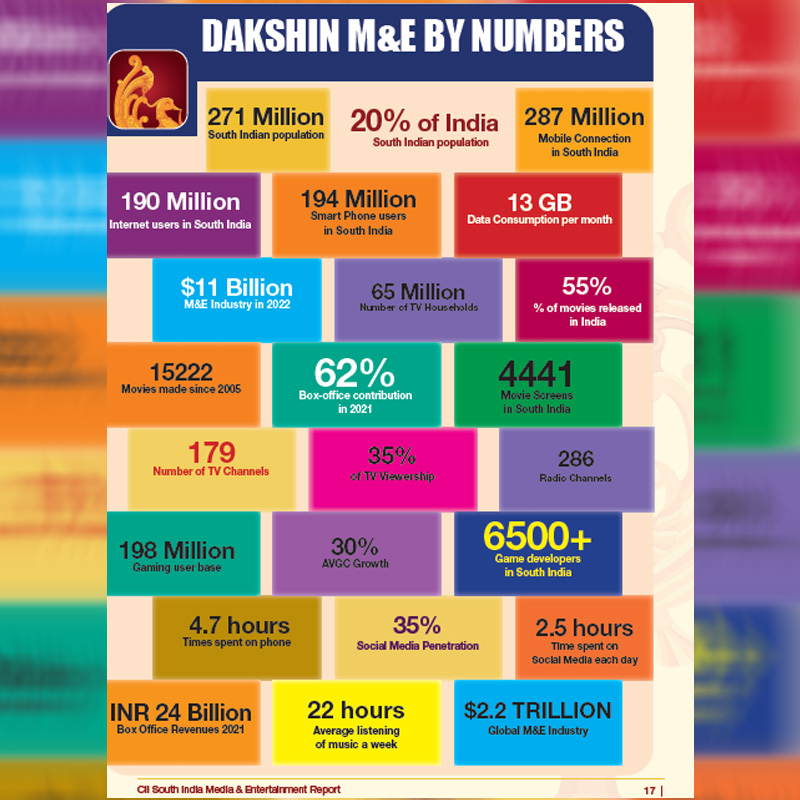
    Mumbai: The South Indian media and entertainment (M&E) sector, with a market value of around Rs 70,000 crore and a share of 40 per cent, will play a critical role in assisting India to follow a sustainable path to becoming the world’s largest credible marketplace, with M&E contributing two to three per cent to the country’s GDP. The findings were revealed in the CII Southern Region’s report titled ‘Regional is the New National – Way Forward for the South Indian Media & Entertainment Industry.’

    Television continues to occupy a major 45 per cent of the South India M&E market share. By the end of 2022, it is expected to be worth Rs 33,100 crore, with a 10 per cent compound annual growth rate. The south Indian TV sector had a market size of Rs 36,000 crore in 2019, which dropped to Rs 29,000 crore in 2020 because of the Covid-19 epidemic, but recovered to Rs 30,100 crore in 2021. It is expected to grow even more in the coming years, reaching Ra 33,100 crore in 2022 and surpassing 2019 by 2024.

    Subscriptions continue to be the most lucrative source of revenue for television, followed by advertising and programming. According to industry estimates, TV stations in South India earned Rs 25,200 crore in subscriptions, Rs 9,360 crore in advertising, and Rs 1,440 crore in programming in 2019. Due to the pandemic’s impact, these figures fell in 2020 to Rs 20,300 crore for subscriptions, Rs 7,540 crore for advertising, and Rs 1,160 crore for content-based revenue.

    AVGC is the fastest growing sector in the South Indian M&E industry, with a CAGR of 30 per cent. It is expected to account for up to 10 per cent of the overall M&E sector by 2030. The budget allocation for VFX in high-budget films is expected to rise to 30-35 per cent by 2023, up from 25-30 per cent currently.

    Establishment of a state-of-the-art 30,000 Sq ft Centre of Excellence in Whitefield, Bengaluru, and the construction of Image Towers in Hyderabad, which is a 600,000 square feet dedicated space for the AVGC-XR sector, has contributed to this growth.

    More than half of the films released in the last year were in one of the four south Indian languages. The South Indian film industry has also produced some of the most successful box office hits in recent years. It is expected to be worth Rs 6050 crore by the end of 2022, with a compound annual growth rate of 13 per cent.

    Southern films have performed exceptionally well on OTT platforms, and they are among the most watched films in Indian cinema. With a compound annual growth rate of 25 per cent, the South Indian streaming and digital media market is expected to be worth Rs 16,200 crore by the end of 2022, nearly two-and-a-half times the film revenues. Disney Hotstar, Amazon Prime, Zee5, Netflix, and SonyLiv are aggressively establishing themselves in the southern states.

    The South Indian print industry market is expected to be worth Rs 9,900 crore by the end of 2022, with radio, digital, OTT, and music following close behind. Further, South India’s five states account for 286 of India’s total 1369 radio channels, accounting for a 21 per cent share of the total radio pie in India.

    “South India has continued to play an important role in the evolution of the M&E industry, owing to the popularity of vernacular content, rapid digitisation and connectivity, an evolving ecosystem, global viewership, and personalisation,” the report stated. “Tamil Nadu, Kerala, Andhra Pradesh, Telangana, and Karnataka, the five southern states, have been at the forefront of leading the transformation of India’s M&E sector.”

    “The growth story of the South Indian M&E sector, like that of the rest of India, continues to be unique and multimodal, with digital and traditional media co-existing and growing with very different underlying trends,” it added.

  • Budget 2022: 5G & rural broadband BharatNet to boost overall internet connectivity

    Budget 2022: 5G & rural broadband BharatNet to boost overall internet connectivity

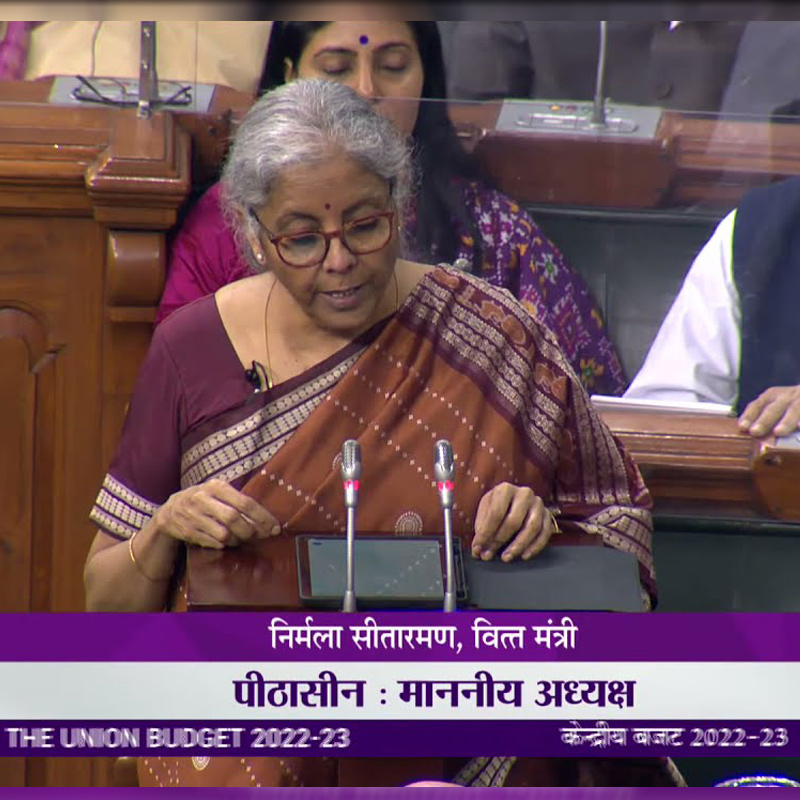
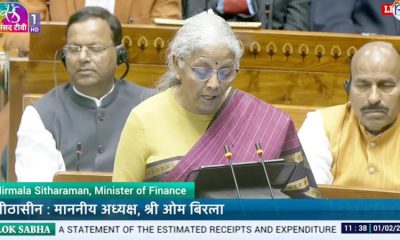
    Mumbai: Giving a boost to the country’s Digital India ambitions, finance minister Nirmala Sitharaman while announcing the union budget 2022 on 1 February said that 5G telecom services will be introduced in India in FY2022-23. Spectrum auctions are likely to be held soon to facilitate the roll-out of 5G by private telecom companies. Design-led initiatives for 5G and other technologies will henceforth be included in the production linked incentive (PLI) scheme, added Sitharaman.

    Among other big announcements impacting telecom/internet connectivity, BharatNet broadband is expected to be ready by 2025. Contracts for laying optical fibres in all villages will be awarded under the project through public-private partnerships in 2022, 2023. “Our vision is that all villages and their residents should have the same access to e-services as urban areas,” stated Sitharaman while adding that five per cent of the annual collections Universal Service Obligation Fund will be allocated to enable affordable broadband and mobile penetration in rural and remote areas.

    The government’s flagship rural broadband connectivity program, BharatNet aims to bring broadband to 361,000 villages across 16 states, including 1.37 lakh gram panchayats. by acting as a middle-mile network allowing Internet service providers (ISPs), local cable operators, MSOs and other agencies to use its bandwidth and incremental fibre.

    According to the economic survey released on 31 January 2022, as on September 2021, 5.46 lakh km Optical Fiber Cable has been laid, a total of 1.73 lakh Gram Panchayats (GP) have been connected by Optical Fiber Cable (OFC) and 1.59 lakh Gram Panchayats are service ready on OFC under the BharatNet project. In addition, 4173 GPs have been connected over satellite media. Wi-Fi hotspots have been installed at 1.04 lakh Gram Panchayats of which services are being provided at 0.64 lakh, catering to more than 16.17 lakh subscribers with a data usage to the tune of 5670.42 TB per month

    The survey further revealed that internet penetration in the country is growing steadily with internet subscribers increasing from 302.33 million in March 2015 to 833.71 million in June 2021. While 67.2 percent of internet subscribers had narrowband connections and 32.8 percent had broadband connections in 2015, the composition had reversed by June 2021 with only 4 percent of subscribers having narrowband and 96 percent with broadband connections. As of September 2021, around 161 villages out of 354 villages have been covered with mobile service.

    Here is what the industry experts had to say:

    Elara Capital’s Karan Taurani noted, “Push towards affordable and high speed fixed broadband internet will boost digital content consumption and smart TV penetration into rural and smaller towns. It will also lead to shifting of eyeballs from TV to digital at a much rapid pace in smaller towns too, just like it has happened in metros.”  This will help enable strong user and consumption growth for the B2C-led internet and new-age companies, which in turn will lead to a rapid shift from traditional to digital. According to him, this could have a positive impact on overall advertising, as internet companies now account for a sizable share of ad spends in India.

    However, Taurani rued the absence of initiatives to protect the interests of traditional media despite the negative impact of Covid. “There was no relaxation on the license fees or royalty for radio industry, no financial grant or tax benefit for the traditional media which has seen a sharp decline over last two years and still struggles to get back to pre Covid levels, and no reduction in GST for cinema ticket prices, despite cinema being one of the most impacted medium during the pandemic,” he said.

    Welcoming the push for internet connectivity, Logicserve Digital founder and CEO Prasad Shejale said, 5G spectrum auctions will finally make the dream of a tech-savvy India a reality, further boosting the country’s digital infrastructure. Additionally, the launch of a design-led manufacturing scheme for the 5G ecosystem as part of the PLI scheme will ensure affordable broadband and mobile communication even in far-flung areas. The availability of high-speed internet connectivity in urban as well as rural areas will encourage marketers to experiment with blockchain, AR, VR. The overall budget is future tech-enabled and balanced.”

    “Media consumption is in for a disruption like never before. 5G is going to change the way digital functions and is going to just accelerate the metaverse and Web3 adoption,” added White Rivers Media CEO and co-founder Shrenik Gandhi.

    Specialised task force for AVGC

    The M&E industry will also benefit from setting up a specialised task force for the promotion of Animation, visual effects, gaming and comics (AVGC) industry, as well as the expansion of the ‘One class, one TV channel’ program of PM eVIDYA from 12 to 200 TV channels proposed under the budget.

    Zeel MD and CEO Punit Goenka said, “The holistic focus on broad-based economic recovery in the Union Budget, with a huge emphasis on job creation and digital ecosystem of the country, is positive for India Inc. at large. The steps announced to build domestic capacity for the Animation, Visual-Effects, Gaming, and Comics segment will certainly help enhance capabilities, enabling the Country to compete more effectively at a global stage. An extension in the credit line guarantee scheme is also a welcome move, which will provide some much-needed relief to the relevant sectors which were impacted due to the pandemic.”

    According to vernacular audio platform Khabri’s co-founder and CEO Pulkit Sharma, regional languages will be empowered through the program, which enables all states to provide supplementary education in regional languages for classes 1 to 12. “These digital initiatives will provide for a more conducive environment for the adoption of tech-based learning and which will directly route to empowering youth from real Bharat,” he said.

  • Indian M&E industry can reach $100 billion by 2030: K Madhavan

    Indian M&E industry can reach $100 billion by 2030: K Madhavan

    Mumbai: The Indian media and entertainment industry touched $19 billion in 2020 down from an expected $22 billion, but it’s poised to grow up to $100 billion by 2030, said The Walt Disney Company India and Star India, president, K Madhavan. This goal is ambitious and challenging but not impossible, he added.

    Madhavan was speaking at the Confederation of Indian Industry (CII) SummitFX – Global AVGC and Immersive Media Summit, which began virtually on Tuesday. “The pandemic forced the M&E industry to adapt, but it is still growing and that is an encouraging sign. There have been changes in the habits of audiences, in the way content is produced and new and evolved methods of distribution”, said Madhavan, who is also the chairman of the CII National Committee on media and entertainment.

    Over 55-60 million Indians subscribed to video-on-demand services, more than doubling from the 23 million in 2019.The paid subscribers are likely to grow to 89 million by the end of 2021, and reach 150 to 160 million by the end of the decade, contended Madhavan.

    “The rise of digital subscription did not lead to a fall in TV viewing audience” he noted, adding that there are 300 million households out of which only 200 million are connected to TV. There are 120 million pay TV households.

    In a developed country, the media and entertainment industry generally contributes three per cent to the country’s GDP. In India, however, the contribution is one per cent. Also, customers in developed countries spend $7-10 for entertainment whereas in India it is less than $1. The pricing in India is very customer friendly, he noted.

    Speaking about the animation, visual effects, gaming and comics (AVGC) industry, he said, “The global market for AVGC industry is close to $260 billion and India’s share of that is less than one per cent i.e., $2.1 billion. The AVGC industry in India has the highest potential to grow and we should aim for a five per cent share of the global market with annualised growth at 25-30 per cent.”

    Similarly, the global gaming market is pegged at $160 billion worth more than music and movies combined. Online gaming in India has grown by leaps and bounds and last year there were 360 million gaming audiences and 17 million viewership of esports in India. “The gaming and esports industry are still in infancy and need freedom to grow without conflicting regulation. The Indian AVGC industry can be a global success story for India, the same as the IT revolution,” said Madhavan. “The emerging esports landscape is projected to grow at 36 per cent CAGR over the next few years.”

    The Star India president also charted a roadmap for India to capture five per cent of the global AVGC market. Currently, 65 per cent of India’s AVGC revenues come from exports. Madhavan emphasised that we need to create B2B opportunities in the country. Policymakers, regulators and industry must work together for ease of doing business. There should be convergence initiatives between technology and the creative sector.

    “There’s a huge demand for VFX and animation, globally and in India but we are not in a position to deliver” he said. To make this happen, job creation in this sector must increase by three to four times in the next four to five years. “We have 400,000 engineers graduating every year, but they need to be trained properly and brought into the content pipeline. There must be regional content creation and distribution hubs in Tier II and III cities.”

    “I’m sure this industry will thrive with innovation,” he summed up.

  • Film Visa & FFO make India filming destination: Rathore

    NEW DELHI: The minister of state for information and broadcasting Rajyavardhan Rathore has said the new category of visa to foreign film makers is a step towards easing issues related to their entry into the country.

    Both the Film Visa and the Film Facilitation Office (FFO) aim at promoting India as an attractive filming destination to the world.

    Rathore said this during a meeting with the Russian Delegation led by the vice minister of telecom and mass communication of the Russian Federation Alexey Volin here.

    During the discussions, Rathore apprised the delegation about the National Centre of Excellence for Animation, Visual Effects, Gaming and Comics (AVGC) to be set up in Mumbai by the Ministry. Both the Ministers agreed to explore the possible collaboration between the two countries in the field of animation, graphics and visual content.

    Cooperation between the field of content generation and content delivery mechanisms for different target audiences, specially children and young people was also discussed.

    The Ministers while discussing the role of films as medium of cultural exchange between the countries emphasized on exhibiting films in each other’s country through the medium of Film Festivals.

    A possible collaboration between the National Film Development Corporation and its counterpart from the Russian Federation in the Film Bazaar was also discussed.

    AlsO Read :

    Rs 125 million incurred on Film Heritage Mission this year

    Online film certification starts, 33% rise in ‘shoot’ permission

    Film piracy: Govt has no ‘losses’ figure, industry estimates Rs 180 bn a yr


  • ABAI looks to promote animation with its new programme

    ABAI looks to promote animation with its new programme

    MUMBAI: One of the largest non-profit association in the country, ABAI is introducing a first-of-its-kind educational initiative in Bengaluru city christened as ‘Train the Trainers’ (TTT) and is actively supported by Department of IT, BT, S&T – Government of Karnataka. The program is slated to start on 21 April 2014.


    The Government of Karnataka through its KAVGC policy 1.0 is aimed at improving the educational infrastructure of the AVGC (Animation, Visual Effects, Gaming and Comics) industry. In order to improve the quality of the trainers in the AVGC industry, and thereby improving the overall quality of education imparted, TTT program aspires to bring together national and international trainers to facilitate the training in different modules of various stages of production.


    TTT program, chaired by Bhasinsoft CEO and ABAI secretary Ankur Bhasin is envisaged to provide an academically challenging educational experience through effective teaching, research and service, enabling candidates to acquire understanding, knowledge and skills necessary for establishing successful career in teaching and becoming responsible trainers within the animation industry.


    “The TTT is an innovation on jump-starting the quality of educational initiative on the digital arts environment. It assesses the pain point of who will impart new media arts learning. It will help plug a major gap in growing a talent that needs tens of thousands of employees over the next three to five years,” said ABAI president & Technicolor India country head Biren Ghose in a press statement.


    The candidates who enroll for this program stand to gain not only six months of high-quality training but also a chance to work on live projects in a professional studio environment. This will enable the candidates to learn teaching techniques such as creative teaching methodology, class-room management, and all other aspects of AVGC.


    “TTT program, in its initial offering, starts with a concentrated batch of 12 candidates per batch to ensure that there is no dilution in the quality of imparted training. A separate Executive TTT course is also offered for working faculties who prefer weekend classes,” said Bhasin.


    He added; “In my studio, Bhasinsoft, and across the industry it is seen that a large amount of good talent comes from tier 2 and tier 3. Hence, TTT is also planned in a way to reward trainers in the program with cash incentive for training in tier 2 and tier 3 cities.”


    Institutes stand to benefit that the candidates will be able to bring the exposure and knowledge to impart quality training to students. The teaching methodology, which is a combination of a learner-centred interactive methodology and a project-based teaching, will help bridge the gap between Institute and Industry. A better education quality is bound to improve the students’ placement record, which will further enhance the reputation of Institute.


     “Indian AVGC industry is growing at a rapid pace – not only because of larger quantity of Hollywood content being worked on in India but also because of a growing domestic market. The animation, VFX and post production market has grown from Rs 35.3 billion in 2012 to Rs 39.7 billion in 2013 and is expected to add over 40,000 jobs in the coming three to four years. For the growth to sustain and further enhance, it is imperative that the quality of students being trained improves which in turn is a result of the quality of trainers imparting the training. Hence, TTT directly addresses the need of the hour,” emphasised Bhasin.

  • ABAI: KAVGC Summit kicks off in Bengaluru

    ABAI: KAVGC Summit kicks off in Bengaluru

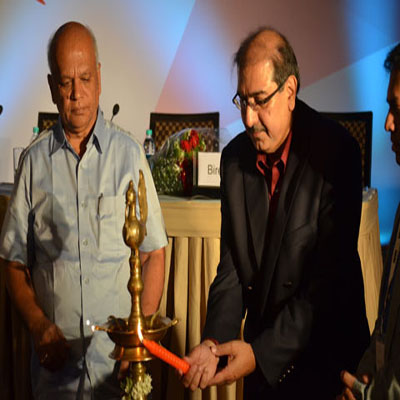
    BENGALURU: The Karnataka Animation, Visual Effects, Gaming and Comics (KAVGC) Summit organised by the Association of Bangalore Animation Industry (ABAI, in collaboration with the government of Karnataka kicked off in Bengaluru last evening. Indian as well as international stakeholders from the animation, visual effects, gaming and comics (AVGC) industry saw Karnataka’s minister for IT, BT and S&T S R Patil inaugurate the two day event at the Hotel Chancery Pavilion.


    Amongst those present during the inaugural ceremony was the Karnataka government’s principal secretary, IT, BT and S&T I S N Prasad.


    During his inaugural speech, Patil said that Karnataka state government’s thrust was on capacity building for the KAVGC industry and wanted to make Karnataka and Bangalore the preferred KAVGC destination.  He informed that this year, globally the estimated $153 billion KAVGC had a CAGR of 10 per cent, while in India it was growing much faster at about 22 per cent CAGR and was expected to reach five billion dollars this year. He said that a state funded post production and processing facility similar to the ones in Mumbai and Chennai would soon be inaugurated in Karnataka.


    He further said the state government was willing to work with bodies such as Ficci that had made some progress in setting up the curriculum for education courses.


    While echoing Patil, Prasad said that the state government was willing to listen to the KAVGC industry and act accordingly. “Karnataka will continue to lead the AVGC growth in India. We have partnered with a cross section of the digital content industries through ABAI,” said Prasad.


    Earlier, during his introductory remarks, ABAI president Biren Ghose set the tone for the summit when he said that the government and the ministry had been extremely strategic and extremely proactive in taking up a call from the industry.


    Speaking about the 2013 edition of KAVGC Summit, Ghose said, “The summit is meant to provide new direction to professionals and companies, highlighting growth and opportunity areas. It showcases our engagement with the academia, the government and industry and highlight the policy execution we have enabled as the roadmap for the next year.”


    The second ‘ABAI Leadership Excellence Award’ was conferred to Rajiv Chikalapudi, the creative and business force behind India’s animated phenomenon ‘Chhota Bheem’.


    Chikalapudi, during his keynote address detailed the long journey by his company Green Gold Animation to create and sustain a genuine IP success story including successes in merchandising and licensing. Chikalapudi said that a number of companies had great IP ready, but were afraid to pitching them. He exhorted these companies to go out and showcase their products, citing his own example – Chotta Bheem had been rejected twice before it was accepted by Pogo channel.


    The second keynote speaker Dreamwroks Country head Damian Froberville described the progress of the Indian Unit of Dreamworks and also gave some insights into the Asian scenario for global services. Froberville also said that the convergence between films and gaming was very much on the cards, but had not yet reached there. He said that this mattered to the players in the industry because of increased reliance on service providers with more content and shorter timelines of a product; and a lot more flexibility with VFX players doing a larger portion of game work.


    Among the other notable speakers and panelists included Greg Childs editorial director, The Children’s Media Conference; Jai Natarajan, Ceo, Xentrix Studios;  Owen Hurley, Creative head, Technicolor; Charles Gauthier Vice -consul and senior trade commissioner for India, Quebec office in Mumbai; Vsihal Dhupar, MD South Asia, NVDIA; Akhauri Sinha, MD, MPC, Bengaluru; Wil Braithwaite, Senior Applied Engineer-Digital Film, NVDIA; Ankur Bhasin; Ceo Bhasinsoft India Ltd; Vamsi Ayyagari, Management media professiona; AshishKulkarni, Ceo Reliance Animation.


    Notable additions to this year’s edition of KAVGC are the four Specialised Clinics – the IP Clinic; Technology Clinic; Co-production and Outsourcing Clinic; and the Pitching Clinic.


    The KAVGC Summit held annually for the last three years with the support of the government of Karnataka, continues to increase its focus on the business and industry of AVGC, aiming to provide a forum for knowledge sharing and improved connectivity among decision makers and stakeholders in the sector.