Tag: Average revenue per user

  • Jio Platforms rides the 5G wave: revenues, profits, and ambitions soar in FY’25

    Jio Platforms rides the 5G wave: revenues, profits, and ambitions soar in FY’25

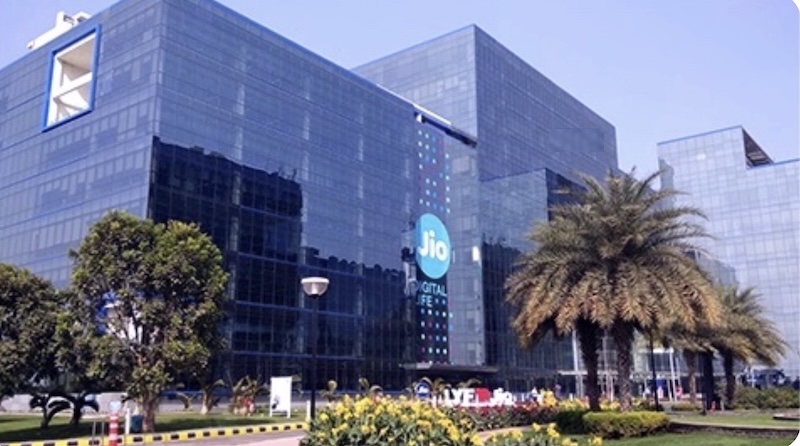
    MUMBAI: Reliance’s digital juggernaut, Jio Platforms Limited (JPL), wrapped up FY25 in style, clocking quarterly revenues of Rs 39,853 crore, up 17.8 per cent year-on-year, and an EBITDA surge of 18.5 per cent to Rs 17,016 crore. The subscriber base swelled to 488 million, with over 191 million True 5G users, as India’s data appetite drove traffic to an eye-watering 185 exabytes – a 24 per cent jump.

    Average revenue per user (ARPU) climbed to Rs 206.2, thanks to tariff hikes and a posher customer mix. Net profit rose a muscular 25.8 per cent to Rs 7,023 crore for the quarter ended March 2025, fuelled by strong EBITDA flow-through and despite a modest uptick in depreciation and finance costs.

    Jio’s operating revenue (net of GST) grew on the back of mobility tariff hikes and a surge in home broadband and digital services. EBITDA margins stayed a steady 50.1 per cent, while churn was the industry’s lowest at 1.8 per cent. Data consumption hit a per capita monthly average of 33.6 GB, with total data traffic rising nearly 20 per cent year-on-year.

    Jio signed an agreement with SpaceX to retail Starlink broadband in India, pending regulatory green lights. It also rolled out a cricket season blitz – free JioHotstar and JioFiber/AirFiber deals to woo mobile and home users alike.

    The telco flexed its tech muscle at the Mahakumbh mela, handling 400 million data service requests and 20 million voice calls on peak days without breaking a sweat. In parallel, partnerships with AMD, Cisco, Nokia, and Ericsson are fuelling its next big play: an Open Telecom AI Platform designed to slash operational costs and turbocharge network efficiency using cutting-edge agentic AI.

    Jio’s IP prowess didn’t go unnoticed either, with wins at the National Intellectual Property Awards and the World Intellectual Property Organization (WIPO) Trophy, further burnishing its credentials as India’s poster child for homegrown innovation.

    Reliance Jio Infocomm chairman Akash M Ambani summed it up, saying: “Jio continues to drive consistent outperformance with best-in-the-world network technologies and a wide bouquet of digital services. Our work at the Mahakumbh and plans to enable large-scale AI infrastructure reaffirm our commitment to serving India’s digital future.”

  • Airtel DTH revenue up 19% on higher subscriber additions & ARPU

    Airtel DTH revenue up 19% on higher subscriber additions & ARPU

    BENGALURU: The 31 December, 2015 deadline for Digital Addressable System (DAS) Phase III has been a boost for the carriage industry in subscriber additions, revenues, and operating profits. Buoyed by the government’s decision to stick to deadlines for digitisation, the direct-to-home (DTH) industry in India is continuing its bloom run, if one were to go by the results reported by Bharti Airtel for its Digital TV services (Airtel DTH) for the quarter ended 31 December, 2015 (Q3-2016, current quarter).


    Revenue in Q3-2016 increased 19 per cent to Rs 742.2 crore, up 19 per cent YoY as compared to Rs 623.4 crore. EBIDTA for Q3-2016 grew 45 per cent to Rs 247.4 crore (33.3 per cent margin) as compared to Rs 170.7 crore (27.4 per cent margin).


    Note: 100,00,000 = 100 lakh = 10 million = 1 crore


    The segment’s subscriber base grew 13.2 per cent YoY to 111.06 lakh in the current quarter as compared to 98.10 lakh and grew five per cent as compared to 105.76 lakh in the immediate preceding quarter. Though in US dollar terms, average revenue per user (ARPU) was constant YoY and QoQ at $3.5, in Indian rupees it has increased seven per cent YoY to Rs 229 from Rs 214 and increased two per cent QoQ from Rs 224. Given that the deadline for DAS phase III was 31 December, 2015, Airtel DTH segment reported 5.30 lakh net subscriber additions in the current quarter, which was almost double (1.96 times) the 2.70 lakh subscriber additions in Q3-2015 and more than triple (3.2 times) the 1.64 lakh subscribers added in Q2-2016.


    Subscriber churn in Q3-2016 was lower at 0.7 per cent as compared to one per cent in Q3-2015 and 1.3 per cent in the immediate trailing quarter.


    Airtel’s CAPEX for its DTH segment more than doubled (by 2.1 times) to Rs 342.2 crore as compared to Rs 163 crore in Q3-2015. Airtel’s cumulative investments in its DTH segment increased 17 per cent YoY to Rs 6177 crore as compared to Rs 5494.8 crore.

  • Airtel DTH revenue up 19% on higher subscriber additions & ARPU

    Airtel DTH revenue up 19% on higher subscriber additions & ARPU

    BENGALURU: The 31 December, 2015 deadline for Digital Addressable System (DAS) Phase III has been a boost for the carriage industry in subscriber additions, revenues, and operating profits. Buoyed by the government’s decision to stick to deadlines for digitisation, the direct-to-home (DTH) industry in India is continuing its bloom run, if one were to go by the results reported by Bharti Airtel for its Digital TV services (Airtel DTH) for the quarter ended 31 December, 2015 (Q3-2016, current quarter).


    Revenue in Q3-2016 increased 19 per cent to Rs 742.2 crore, up 19 per cent YoY as compared to Rs 623.4 crore. EBIDTA for Q3-2016 grew 45 per cent to Rs 247.4 crore (33.3 per cent margin) as compared to Rs 170.7 crore (27.4 per cent margin).


    Note: 100,00,000 = 100 lakh = 10 million = 1 crore


    The segment’s subscriber base grew 13.2 per cent YoY to 111.06 lakh in the current quarter as compared to 98.10 lakh and grew five per cent as compared to 105.76 lakh in the immediate preceding quarter. Though in US dollar terms, average revenue per user (ARPU) was constant YoY and QoQ at $3.5, in Indian rupees it has increased seven per cent YoY to Rs 229 from Rs 214 and increased two per cent QoQ from Rs 224. Given that the deadline for DAS phase III was 31 December, 2015, Airtel DTH segment reported 5.30 lakh net subscriber additions in the current quarter, which was almost double (1.96 times) the 2.70 lakh subscriber additions in Q3-2015 and more than triple (3.2 times) the 1.64 lakh subscribers added in Q2-2016.


    Subscriber churn in Q3-2016 was lower at 0.7 per cent as compared to one per cent in Q3-2015 and 1.3 per cent in the immediate trailing quarter.


    Airtel’s CAPEX for its DTH segment more than doubled (by 2.1 times) to Rs 342.2 crore as compared to Rs 163 crore in Q3-2015. Airtel’s cumulative investments in its DTH segment increased 17 per cent YoY to Rs 6177 crore as compared to Rs 5494.8 crore.

  • Q3-2016: Videocon d2h YoY revenue up 22% on subscriber additions, higher ARPU

    Q3-2016: Videocon d2h YoY revenue up 22% on subscriber additions, higher ARPU

    BENGALURU: Videocon d2h Limited reported 14.8 per cent YoY increase in net subscriber additions and 8.2 per cent YoY growth in ARPU for the quarter ended 31 December, 2015 (Q3-2016, current quarter). The company’s revenue from operations (TIO) increased 21.6 per cent YoY to Rs 731.49 crore in Q3-2016 as compared to Rs 601.53 crore. Subscriber addition brings in higher activation revenue.


    The company achieved strong subscription and activation YoY revenue growth of 26 per cent at Rs 665 crore as compared to Rs 527.9 crore in the corresponding year ago quarter.


    Videocon d2h added 6.7 lakh gross subscribers and 4.3 lakh net subscribers during the quarter. Gross subscribers totalled 149.5 lakh and net subscribers totalled 112.7 lakh as of 31 December, 2015. The company says that monthly churn came in at 0.73 per cent for the quarter and 0.80 per cent for the nine months ending 31 December, 2015, which was marginally ahead of the company guidance.


    Note: 100,00,000 = 100 lakh = 10 million = 1 crore.


    Average revenue per user (ARPU) in Q3-2016 increased 8.2 per cent to Rs 211 as compared to Rs 195 in Q3-2015 and increased 2.9 per cent as compared to Rs 205 in Q2-2016.


    Videocon d2h reported 42.2 per cent YoY growth in adjusted EBITDA at Rs 201 crore for Q3- 2016 compared to Rs 141 crore in the corresponding year ago quarter. Net loss for the quarter declined to Rs 22.05 crore as compared to the net loss of Rs 79.8 crore in Q3-2015.


    Videocon d2h executive chairman Saurabh Dhoot said, “I am delighted the company reported EBITDA growth of over 42 per cent in the quarter compared to last year. This is a result of strong subscriber and ARPU growth and our continued focus on margin improvement, in line with our expectations. We believe we are amongst the fastest growing media companies in the world delivering exceptional performance quarter after quarter. During the quarter, we continued to strengthen our content offering and added new channels on our platform. We recently added two transponders ahead of schedule. This further strengthens our content offering, which is one of our key competitive advantages. With this additional bandwidth we will continue to add more regional and HD channels to our platform in times to come.”


    Speaking on the Phase III digitisation implementation, Videocon d2h CEO Anil Khera said, “Phase III digitisation has begun. The Ministry of Information & Broadcasting maintained their deadline and instructed broadcasters to switch off analogue signals in Phase III digitisation areas. In the first few days of January 2016, we saw strong pick up in subscriber additions in cities that come under Phase III digitisation. Recently, a few state high courts issued a stay order on implementation of Phase III digitisation for one – three months. This was in line with our expectations of the digitisation being a staggered process.”


    “We estimate around 50 million television homes come under Phase III digitisation, of which 24-25 million television homes are already on the digital platform. Thus, the target market under Phase III digitisation is the remaining 25-26 million television homes that are currently on analog cable,” he added.

  • Q3-2016: Videocon d2h YoY revenue up 22% on subscriber additions, higher ARPU

    Q3-2016: Videocon d2h YoY revenue up 22% on subscriber additions, higher ARPU

    BENGALURU: Videocon d2h Limited reported 14.8 per cent YoY increase in net subscriber additions and 8.2 per cent YoY growth in ARPU for the quarter ended 31 December, 2015 (Q3-2016, current quarter). The company’s revenue from operations (TIO) increased 21.6 per cent YoY to Rs 731.49 crore in Q3-2016 as compared to Rs 601.53 crore. Subscriber addition brings in higher activation revenue.


    The company achieved strong subscription and activation YoY revenue growth of 26 per cent at Rs 665 crore as compared to Rs 527.9 crore in the corresponding year ago quarter.


    Videocon d2h added 6.7 lakh gross subscribers and 4.3 lakh net subscribers during the quarter. Gross subscribers totalled 149.5 lakh and net subscribers totalled 112.7 lakh as of 31 December, 2015. The company says that monthly churn came in at 0.73 per cent for the quarter and 0.80 per cent for the nine months ending 31 December, 2015, which was marginally ahead of the company guidance.


    Note: 100,00,000 = 100 lakh = 10 million = 1 crore.


    Average revenue per user (ARPU) in Q3-2016 increased 8.2 per cent to Rs 211 as compared to Rs 195 in Q3-2015 and increased 2.9 per cent as compared to Rs 205 in Q2-2016.


    Videocon d2h reported 42.2 per cent YoY growth in adjusted EBITDA at Rs 201 crore for Q3- 2016 compared to Rs 141 crore in the corresponding year ago quarter. Net loss for the quarter declined to Rs 22.05 crore as compared to the net loss of Rs 79.8 crore in Q3-2015.


    Videocon d2h executive chairman Saurabh Dhoot said, “I am delighted the company reported EBITDA growth of over 42 per cent in the quarter compared to last year. This is a result of strong subscriber and ARPU growth and our continued focus on margin improvement, in line with our expectations. We believe we are amongst the fastest growing media companies in the world delivering exceptional performance quarter after quarter. During the quarter, we continued to strengthen our content offering and added new channels on our platform. We recently added two transponders ahead of schedule. This further strengthens our content offering, which is one of our key competitive advantages. With this additional bandwidth we will continue to add more regional and HD channels to our platform in times to come.”


    Speaking on the Phase III digitisation implementation, Videocon d2h CEO Anil Khera said, “Phase III digitisation has begun. The Ministry of Information & Broadcasting maintained their deadline and instructed broadcasters to switch off analogue signals in Phase III digitisation areas. In the first few days of January 2016, we saw strong pick up in subscriber additions in cities that come under Phase III digitisation. Recently, a few state high courts issued a stay order on implementation of Phase III digitisation for one – three months. This was in line with our expectations of the digitisation being a staggered process.”


    “We estimate around 50 million television homes come under Phase III digitisation, of which 24-25 million television homes are already on the digital platform. Thus, the target market under Phase III digitisation is the remaining 25-26 million television homes that are currently on analog cable,” he added.

  • Ortel reports respectable maiden numbers for FY-2015 & Q4-2015

    Ortel reports respectable maiden numbers for FY-2015 & Q4-2015

    BENGALURU: At the time of its IPO earlier in March 2015, Ortel Communications had to withdraw a part of the promoter’s quota to prevent undersubscription. In its maiden financial numbers, Ortel reported fairly respectable numbers for FY-2015 as well as Q4-2015 and hence justified the faith that investors put in it. The company was listed on 19 March, 2015.


    For FY-2015, Ortel reported total income from operations (TIO) of Rs 154.79 crore for FY-2015, 20.5 per cent more than the Rs 128.50 crore in the preceding financial year. The company reported a profit after tax (PAT) of Rs 5.65 crore in FY-2015 as compared to a loss of Rs 11.28 crore in FY-2014.


    Notes: 100,00,000 = 100 lakh = 10 million = 1 crore

    The numbers mentioned in this report are standalone.


    Cable subscription fees in FY-2015 grew four per cent to Rs 79 crore from Rs 75.7 crore in FY-2014, while internet subscription fees grew five per cent to Rs 27 crore from Rs 25.8 crore in FY-2014.


    In Q4-2015, the company’s TIO at Rs 44.91 crore was a healthy 34.4 per cent more than the Rs 33.41 crore in the corresponding quarter of last year and 13.9 per cent more than the Rs 39.44 crore in Q3-2015. The company reported a PAT of Rs 5.65 crore in Q4-2015, as compared to a loss of Rs 1.23 crore in Q4-2014 and more than 20 times (20.64 times) the PAT for Q3-2014 which was reported as Rs 0.27 crore.


    Revenue generating units (RGU)


    Two main segments add to the company’s numbers – Cable TV and Broadband, with a big chunk of numbers also being added by unallocated segments.


    Ortel reported total RGUs of 530,111 in FY-2015 as compared to 515,835 in FY-2014 and 486,255 in FY-2013. Of these, total cable RGUs in FY-2015 were 471,592, in FY-2014 they were 461,408, and in FY-2013 they were 435,628.


    Correspondingly, Broadband RGUs were 58,519 in FY-2015, 54,427 in FY-2014 and 50,627 in FY-2013.


    Cable TV segment


    In FY-2015, Cable TV segment reported 11.5 per cent growth in revenue from Rs 97.35 crores in the previous year to Rs 108.52 crore in FY-2015. Cable TV segment reported 12.1 per cent growth in operating profit to Rs 49.32 crore in FY-2015 from Rs 43.98 crore in FY-2014.


    Within this segment, besides subscription fees, cable connection fees grew 161 per cent to Rs 3.1 crore in FY-2015 from Rs 1.2 crore in FY-2014. Channel carriage fees grew 29 per cent in FY-2015 to Rs 26.4 crore from Rs 20.5 crore from FY-2014.


    Cable TV reported 9.7 per cent y-o-y growth in revenue to Rs 27.87 crore from Rs 25.41 crore in Q4-2014 and 2.2 per cent growth from Rs 27.27 crore in Q3-2015. The segment reported more than triple the operating profits in Q4-2015 at Rs 11.21 crore as compared to the Rs 3.61 crore in the corresponding quarter of last year and 8.3 per cent more than the Rs 10.36 crore in Q3-2015.


    Broadband segment


    Broadband segment revenue grew 5.2 per cent during the corresponding period to Rs 28.89 crore in FY-2015 from Rs 27.47 crore in FY-2014. Operating profit from Broadband segment grew a healthy 43.3 per cent to Rs 20.89 crore from Rs 14.57 crore in FY-2014. Within this segment, internet connection fees grew 12 per cent in the current year to Rs 1.9 crore from Rs 1.7 crore in FY-2014.


    Broadband segment reported revenue of Rs 7.44 crore in Q4-2015, which was 5.9 per cent more than the Rs 7.02 crore in Q4-2014 and 4.5 per cent more than the Rs 7.12 crore in Q3-2015. The segment reported almost eight times (7.61 times) operating result of Rs 7.95 crore in Q4-2015 as compared to the Rs 1.04 crore in Q4-2014 and 68.9 per cent more than the Rs4.71 crore in the immediate trailing quarter.


    Unallocated


    Revenue from unallocated segment grew almost four fold (3.73 times) to Rs 17.38 crore in the current year from Rs 3.67 crore in FY-2014. Operating profit credited to unallocated segment grew 3.7 per cent from Rs 3.07 crore in FY-2014 to Rs 3.19 crore in FY-2015.


    In Q4-2015, revenue from unallocated revenue grew almost tenfold (9.79 times) to Rs 9.61 crore from Rs 0.98 crore in Q4-2014 and 90.1 per cent more than the Rs 5.06 crore in Q3-2015. Unallocated operating profit grew 4.2 per cent in Q5-2015 to Rs 0.81 crore from Rs 0.78 crore in Q4-2014 and grew 2.8 per cent from Rs 0.79 crore in Q3-2015.


    Average revenue per user (ARPU)


    The company has reported a slight reduction in average revenue per user (ARPU) in all cases when compared to the previous year, except for digital cable. Analog TV ARPU in FY-2014 was 145 per month as compared to Rs 147 in FY-2014 and Rs 136 in FY-2013.


    Digital TV ARPU in FY-2015 was Rs 186 as compared to Rs 177 in FY-2014 and Rs 157 in FY-2013.


    Retail broadband ARPU stood at Rs 356 in FY-2015 as compared to Rs 373 in both FY-2014 and FY-2013. Corporate broadband ARPU had the highest fall. In FY-2015, corporate broadband ARPU was Rs 2851 as compared to Rs 3487 in FY-2014 and Rs 3998 in FY-2013. Data usage per month has gone up relatively, hence indicating lowering of charges for data – in FY-2015, it was 3143 MB, in FY-2014 it was 3126 MB and in FY-2013 it was 2666 MB.


    Ortel President and CEO Bibhu Prasad Rath said, “I am pleased to report that the company delivered healthy performance during the quarter and full year on the back of growth in Revenue Generating Units (RGUs) in Cable and Broadband businesses and robust contribution from Infrastructure Leasing segment. Our EBITDA margins stood strong at 37 per cent in FY-2015 as compared to 31 per cent in FY-2014. We anticipate further improvement in margins going forward as a result of deeper penetration in the Cable business along with our continued focus on the high-margin Broadband segment. Ortel Communications’ Direct-to-Consumer offering with full control over the ‘last mile’ network has enabled us to emerge as a dominant regional player in the cable TV and broadband business. With increasing penetration in our core and emerging markets along with the inorganic LCO (Local Cable Operator) buy out strategy, we believe we are well-positioned to achieve our immediate target of ~1 million RGUs by the end of FY-2017. I am also proud to share that we successfully concluded the Initial Public Offering (IPO) of the company by raising Rs 108.6 crore during the quarter. The capital infusion will also enable us to accelerate growth and deliver much stronger financial and operational performance in the coming years.”


    Click here to read the investor presentation

  • Siti Cable commercially rolls out its DOCSIS 3 broadband service in Delhi NCR

    Siti Cable commercially rolls out its DOCSIS 3 broadband service in Delhi NCR

    GOA: Delayed digitisation is the hottest topic of discussion in the cable TV corridors.


    With digitisation comes the hope of increased Average Revenue Per User (ARPU) and also the realisation that it is broadband that will help the multi system operators (MSOs) to increase their ARPUs.


    Siti Cable is doing just that. The MSO, which for the last two months had been piloting and testing its DOCSIS 3 technology in the Delhi, NCR region, has now officially launched it in the region. Confirms Siti Cable CEO and executive director VD Wadhwa, “Yes, we have commercially launched the service in these areas.” 


    The MSO though has started with Delhi-NCR; it will soon take the service to every city where it has a subscriber base of more than 50,000.


    It is estimated that the MSO is investing anywhere close to Rs 35 lakh to Rs 40 lakh in markets with 50,000 subscribers. According to Wadhwa, as a thumb rule, of every 100 cable TV households, close to 10-15 per cent convert to broadband households. “We are taking the figure at 15 per cent,” he says.


    “Upgradation of homes passed cost close to Rs 500 per subscriber. So if, of the 100 households, 15 per cent opt for broadband, then we are looking at an investment of close to Rs 5000 per subscriber,” he informs.


    The speed for DOCSIS 2 will go up to 40 mbps, while for DOCSIS 3 will go up to 100 mbps. As for the pricing, Wadhwa says, “Our pricing will be highly competitive. We are just in the phase of finalising the tariff plan. We will have different packs for different subscribers.”