Tag: automotive

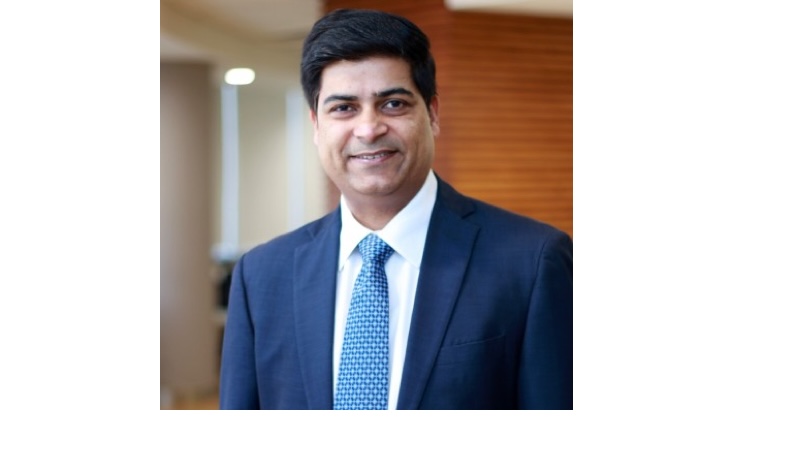
  • Rajeev Singh appointed leader for transportation & mobility at Publicis Sapient

    Rajeev Singh appointed leader for transportation & mobility at Publicis Sapient

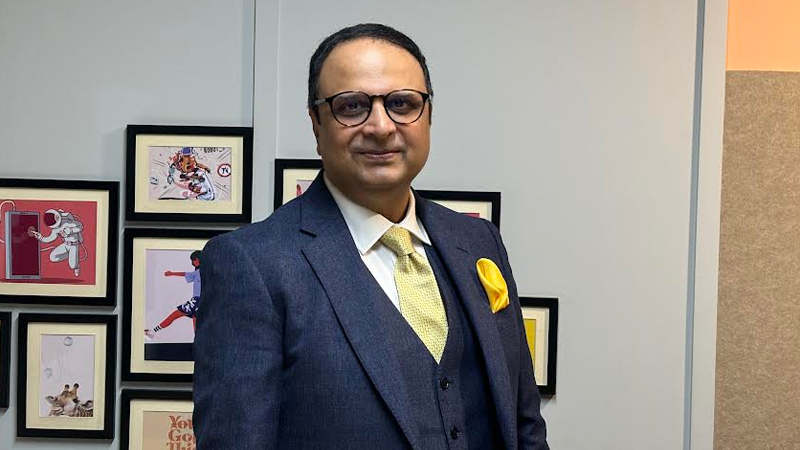
    MUMBAI: Rajeev Singh has announced his new role as leader for the transportation & mobility industry across EMEA and APAC at Publicis Sapient. In this position, he will focus on developing strategic visions and driving profitable growth within a rapidly transforming sector. 

    His leadership will focus on leveraging Publicis Sapient’s Speed capabilities—strategy, product, experience, engineering, and data & AI – to support clients’ digital transformation journeys.

    Rajeev brings extensive experience, having previously served as consumer industry leader at Deloitte Asia Pacific. With a strong background in automotive and consumer sectors, he is well-equipped to facilitate large-scale digital transformations and explore new business opportunities.

    He holds an MBA in operations management from SP Jain Institute of Management & Research and a bachelor’s degree in mechanical engineering from the College of Engineering, Pune.

    Excited about his new journey, Rajeev expressed gratitude for the support received during his transition and looks forward to leading innovation in tech-driven transportation solutions.

  • CS Tech AI: The right way to rebrand a technology solutions provider

    CS Tech AI: The right way to rebrand a technology solutions provider

    MUMBAI: You are a technology solutions provider. Your company and the solutions  you provide are well known to those involved in the automotive, architecture/engineering, transportation, telecom, water management, energy and geospatial engineering spaces.  And to top it all your company name is Ceinsys Tech. And most people find the name strange and difficult to pronounce. Especially in the domestic sector; internationally, things are good as the name looks fancy enough for a tech firm.

    So what you do?

    Do you run a campaign telling customers the right way to pronounce the company’s name?  Or do you  totally change your moniker? Or  do you take the tack that  Rs 250 crore plus turnover Ceinsys Tech India operations managing director  Kaushik Khona did?

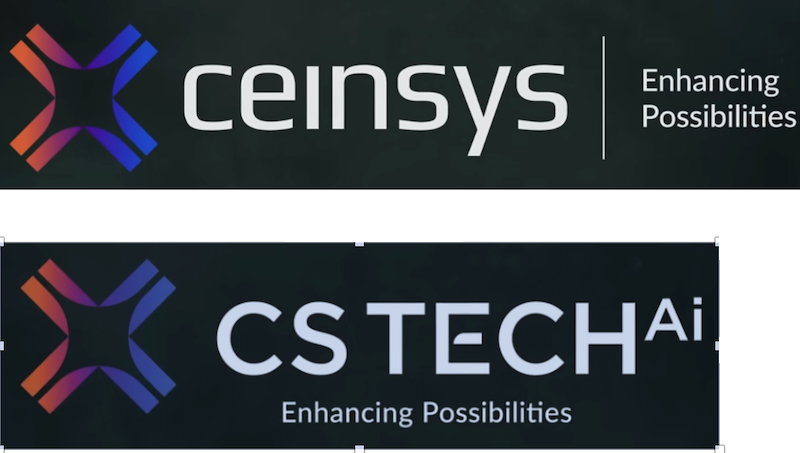
    What Kaushik and team did is they took the C and the S from the name and removed the redundant “einsy.”  So they were left with CS Tech. Well, to everyone that looked like a great change , but they also wanted to make the  brand look edgy and very design-driven  like many a tech company  takes the effort to look (remember Apple and its classy designer look in everything it does).

    In line with its  strategy to grow globally and be seen as a cutting edge global technology company which is adding dollops of artificial intelligence into its solutions and processes, a decision was taken to add the words AI next to the logo as a suffix.  This change, for the company,  marked a strategic shift to underscore its  focus on artificial intelligence (AI) and its role in driving technological innovation.

    “The move comes as Ceinsys positions itself for a future shaped by AI-driven solutions. The addition of “.ai” to the new rebranding reflects the company’s roadmap to integrate newer technologies including AI into the geospatial and technology solutions that enable smart infrastructure and utility development,” said the company.

    Hence the name of the company was changed to CS Tech AI.  

    Said Khona: “The rebranding of Ceinsys into CS Tech with inclusion of suffix ‘.ai’ is more than just a rebranding exercise—it represents our focus on the adoption of advanced technology into providing of solutions to our esteemed clients. AI is becoming the backbone of smart solutions, and this rebranding reinforces our commitment to innovation and relevance in a rapidly evolving landscape. It also allows us to communicate our vision more clearly and differentiate ourselves in the market.”

    A decision was taken to maintain the icon next to the logo as well as the tagline “Enhancing possibilities” as both only reinforced the high-tech look for the branding.  

    The corporate name Ceinsys Tech Ltd was maintained with  only the URL being changed to www. cstech.ai from www.ceinsys.com

  • JSW MG Motor India to enter car segment with MG Select

    JSW MG Motor India to enter car segment with MG Select

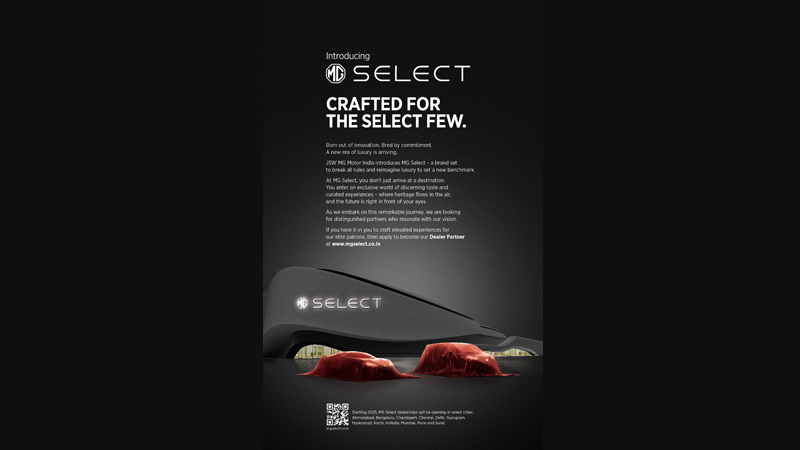
    Mumbai: JSW MG Motor India announced the launch of MG Select, a new channel brand targeting the growing ‘accessible luxury’ segment in India. This segment is characterised by consumers seeking exclusivity with premium products and elevated experiences. With MG Select, the company will focus on providing unparalleled customer experience for the segment buyers.

    This move reflects the company’s strategic response to opportunities in the premium automotive market, particularly the rising demand for luxury products that are more inclusive, sustainable, and personalised. This focus on a curated experience aims to differentiate MG Select in a competitive market. MG Select will establish exclusive, new-age luxury, experience centres in 12 key cities across India in Phase 1.  The brand will offer a range of vehicles primarily NEVs, including plug-ins, hybrids, EVs, and more.

    JSW MG Motor India chief growth officer Gaurav Gupta said, “The traditional concept of ‘purchasing’ is evolving, with Indian consumers increasingly shifting towards accessible luxury. MG Select aims to position itself as a key player in this segment by offering an elevated brand experience to new-age customers, who aspire for premium brands. Infused with personalisation and driven by innovation, the MG Select experience centres will offer a curated experience to customers, blending culture, hospitality, sustainability, innovation and craftsmanship, and reimagining luxury.”

    These cars will embody MG Select’s commitment to the pillars of innovation and sustainability. MG Select will offer a range of high-end vehicles, and, over the next two years, will expand its portfolio to include four premium products, with its maiden product planned for Q1 of 2025.

    JSW MG Motor invites dealer partners who can resonate with the vision of MG Select and help make it a reality.

  • Going hyperlocal: The next big thing for India’s automotive industry

    Going hyperlocal: The next big thing for India’s automotive industry

    Learning from modern consumer behaviour and market dynamics, India’s automotive industry has evolved by adopting hyperlocal marketing techniques to reveal a compelling strategy. Hyperlocal marketing, which focuses on targeting consumers within specific geographic areas and aligning promotions with their immediate needs and preferences, has shown the automotive industry a way to a significant opportunity that awaits us. It has opened the doors for the Indian automotive sector to enhance customer engagement and drive sales.

    One of the most prominent advantages that hyperlocal marketing offers is making the delivery of highly localised advertising and promotions a possibility. By customising of online and offline advertisements based on local preferences, automotive companies have now effectively managed to reach potential customers within specific regions.

    Such a localised approach has ensured that marketing efforts resonate with the cultural and economic conditions of the target area, thereby improving the effectiveness of promotional campaigns. For instance, understanding that consumers prefer to purchase tyres locally due to convenience can guide manufacturers to tailor their marketing strategies accordingly.

    The benefits of hyperlocal strategies extend beyond marketing to operational efficiencies. By leveraging digital tools and methods, the automotive industry can streamline its manufacturing processes, reduce labour costs, and reshape traditional business approaches. This digital transformation allows for more efficient resource allocation, enabling manufacturers to focus on high-demand regions and fine-tune their return on investment. Additionally, by aligning inventory stocking and restocking with regional consumer demand, companies can significantly enhance their supply chain management.

    Hyperlocal technology also facilitates a seamless last-mile digital transformation for retail locations, ultimately boosting lead-to-sales conversions. By automating listing administration, catalogue management, online reputation management, and tailoring landing pages, automotive businesses can deliver a personalised and engaging customer experience. This hyperlocal tech stack helps build a sustainable digital strategy that strengthens the brand’s product and service offerings.

    Adoption of hyperlocal techniques further enables the building of tailored landing pages with contextual content, hence enhancing engagement and lead-to-sales conversion capability. Available technologies guarantee that consumers get correct and relevant information by allowing the cleaning, updating, and publishing of location data across main platforms including Google, Meta, Bing, Apple Safari, and Maps. Quick update product information, images, inventory, prices, promotions, and local discounts across all physical shops better’s consumer shopping experience and increases the likelihood of purchase.

    In addition, AI-powered online reputation management tools provide an added layer of customer interaction, enabling businesses to respond promptly to inquiries and feedback, thus fostering positive relationships with potential customers. Also, hyperlocal technology helps create organic first-party data, which comes in handy while targeting suitable customers at a lower cost compared to traditional advertising methods.

    By moving to a hyperlocal platform, automotive brands find it simpler to distribute contextual content, manage their online reputation in real time, and maintain updated product information. This multi-pronged approach not only supports the creation of a product-as-a-service brand vision but also enhances the overall consumer experience by providing timely and relevant information.

    Therefore, as the Indian automotive industry continues to evolve, the adoption of hyperlocal marketing strategies is poised to be the next big thing. By leveraging the power of localised advertising, digital transformation, and advanced technological tools, automotive companies can achieve greater customer engagement, optimised resource allocation, and improved lead-to-sales conversions. The shift towards hyperlocal marketing represents a strategic move that aligns with contemporary consumer behaviour and market trends, positioning the automotive industry for sustained growth and success in the digital age.

    The article has been authored by Sekel Tech founder and CEO Rakesh Raghuvanshi.

  • OLX Autos onboards Siddharth Agrawal as country head – marketing

    OLX Autos onboards Siddharth Agrawal as country head – marketing

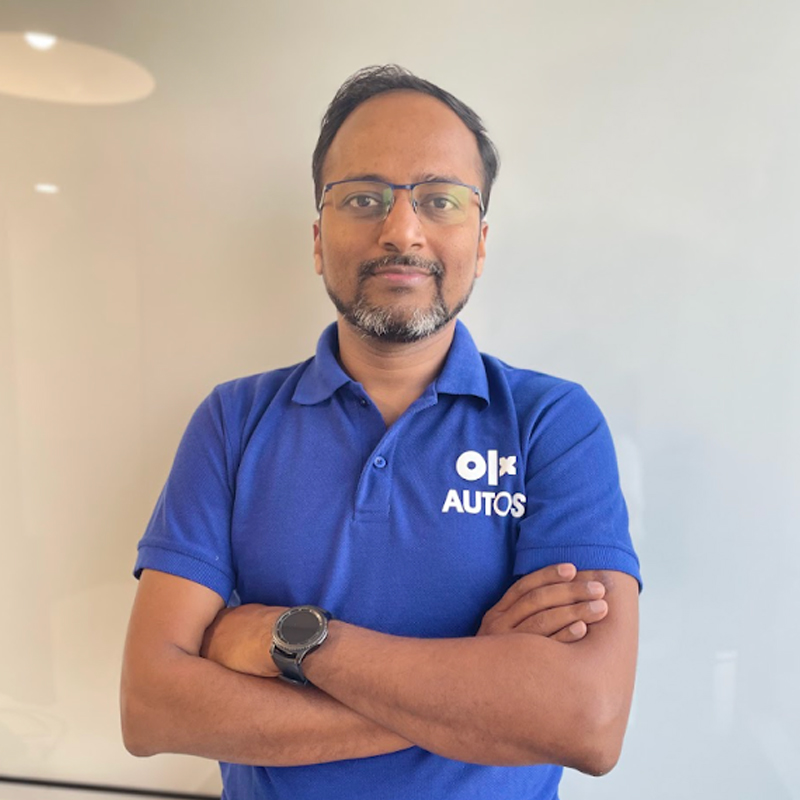
    Mumbai: OLX Autos has brought Siddharth Agrawal on board as its new country head – marketing. He will be reporting to the company’s CEO, Amit Kumar.    

    In his new role, Agrawal will lead OLX Autos’ marketing initiatives as the brand enters the next phase of growth across India’s rapidly expanding pre-owned automobile space, said the statement.

    An alumnus of NMIMS, Agrawal comes with experience spread across marketing, sales and operations in multiple leadership roles in FMCG and mobility sector, with organisations such as Unilever and Ola.

    Formerly, Agrawal served as senior director at Ola – spearheading its ‘First-Mile Last-Mile’ categories (Ola Autos and Ola Bikes). He was instrumental behind the successful launch and scale-up of Ola autos and bike categories in India, and led Ola’s global category development efforts.

    Prior to Ola, he served as global marketing director at Hindustan Unilever Ltd for over a decade across various sales and marketing roles. He was actively leading the marketing efforts for the launch of Pureit range of water purifiers in India, and its global expansion into SouthEast Asia and Africa. He was a key member behind the Pureit ‘Rs one crore safety challenge’ campaign which was based on the insight that consumers think that all purifiers are the same.

    On joining OLX Autos, Siddharth Agrawal said, “Having spent more than two decades in various leadership roles across industries from India to South-East Asia and Africa, I have witnessed how marketing initiatives are crucial in building new categories, and developing a differentiated brand identity to unlock growth. I am excited to embark on this journey along with an enthusiastic team that will support OLX Autos’s strategic vision.”

    OLX Autos India CEO Amit Kumar commented, “More Indian consumers are shifting their preferences to pre-owned vehicles and the trend has accelerated over the last few years especially in the wake of the pandemic. An evolving & competitive market brings new opportunities for us to communicate our brand proposition in a new avatar in line with changing consumer preferences. Siddharth’s extensive experience of scaling businesses across diverse portfolios in the auto sector is of immense value to us.”

  • Indian companies not exploiting full potential of social media: BMI report

    Indian companies not exploiting full potential of social media: BMI report

    BENGALURU: A study by blueocean market intelligence (BMI) has found that Indian companies have a long way to go with respect to maximizing the benefits of social media.

    blueocean market intelligence recently unveiled the results of its ‘2013 Social Effectiveness Index (SEI) 20’, a nationwide study accessing the Social Media Effectiveness of 20 of India’s Most Admired Companies (Fortune India-The Hay group survey). The study incorporated sectors that included IT, ITES, BPO, Oil & Gas, Automotive, Apparel, FMCG, Metals & Mining, Infrastructure, and Auto Components.

    BMI contends that the key challenge for Indian companies is to understand exactly how social media interacts with consumers, enables product and brand recognition, and drives customer acquisition, retention and loyalty. With social media in its nascent stages, there is an undeniable opportunity for companies to create a well-established, customer-centric image.

    BMI says that the SEI 20 ranking methodology is designed to measure business impact by integrating analytics, measurement, and monitoring. It captures conversations across the breadth of social networks and online communities, and correlates their impact with key business metrics such as revenue and brand value. It also directly measures business to consumer interactions in social media, including how Facebook and Twitter drive site visitors and purchase behaviour.

    BMI claims that it employed a comprehensive ranking methodology covering five key parameters that correlate to business metrics such as revenue and brand value. The brand’s share of volume of online conversations, customer engagement rate, depth of customer engagement, number of influencers and advocates on social channels, and net sentiment were measured by capturing conversations across the breadth of all social networks and online communities.

    The 2013 SEI 20 rankings revealed the following as top five performers –
    1. Tata Steel
    2. Tata Motors
    3. Dell India
    4. Tata Consultancy Services
    5. Bosch

  • Sports emerging as preferred marketing tool for brands: SportzConsult

    MUMBAI: Sports emerged as the most preferred marketing tool over celebrities, events and product placements in movies, music or art, according to a survey conducted by SportzConsult, a Mumbai-based sports management company.

    The survey spoke to over a hundred senior marketing professionals across sectors such as FMCG, Automotive, Telecom and BFSI. Of this group, 83 per cent have already used sports in their marketing campaigns and 72 per cent have seen positive results.

    Of the brands that have not yet used sports as a marketing tool, 77 per cent have affirmed it as a course of action in the near future, as per the survey.

    The survey was designed to demonstrate the trends and perceptions in the use of sports as a marketing tool among brands in India, including the primary reasons to engage sports for brand marketing, the channels of engagement, key audiences and evaluation of sport based marketing campaigns.

    Commenting on the results of the survey, SportzConsult Co-Founder and CEO Jitendra Joshi said, “Sports has the power to mobilise and motivate. In the coming years, brand managers have the huge opportunity to leverage the positive attributes of sports and earn better ROI on marketing spends. The growing adoption of sports for marketing among corporate India will be a win-win for both brands and consumers.”

    Passion drives brands to sports

    Passion, youthfulness and the association with active lifestyle came up as the top attributes for choosing sport over other options. Nearly 75 per cent of the respondents favoured one of these attributes as the key driver for a sports engagement.

    Only one quarter of the respondents cited iconic nature of the sportsmen as the key reason for associating with sport. Given the fact that over 50 per cent of the population are under the age of 26 years, marketers believe that sports is the most attractive platform to engage their target audience.

    While popular sports like cricket and football are still the top choices for marketers, it emerged in the survey that these choices may not always provide the real bang for buck, especially if you want to concentrate on a niche audience.

    According to many brands ( more than 40 per cent of the respondents), an exclusive sport like golf or traditional sports like Kho-Kho & Kabaddi are a much better way to engage the relevant target group.

    Moreover, the heightened need for a healthy and active lifestyle among working professionals is making marathons increasingly popular among marketers, as 24 per cent of the respondents cite a marathon as an ideal marketing opportunity.

    Sports is a strategic and long term commitment among Indian marketers

    More than half the respondents looked at their association with sports for brand-building as strategic and long term, indicating the growing relevance of sports in the marketing mix. Of this group, 67 per cent of the respondents considered using sports as a strategic long term decision rather than a tactical approach.

    While over 70 per cent of respondents count TV advertising spots as the main component of their engagement with sports, almost 95 per cent cited professional event sponsorships as the best option for brands looking at stepping up their reach among the TA. While over 85 per cent of the brands used existing sports properties, 45 per cent of them had also created their own properties around sports as part of their marketing campaign. However, the survey also revealed the perception that creation of sports properties is risky, as against investments in popular properties.

    The number of participants and spectators emerged as the most important criteria that brands cite in evaluating a sports program. The next two important factors while evaluating a sports program were the opportunities to leverage brand with the event and media promotion and impressions.

    Spend on sports sponsorships to go up

    Over 65 per cent of the brands responding to the survey have spent over Rs 10 million on sports-led marketing campaigns, while 35 per cent of the group has spent over Rs 50 million. Not surprisingly, IPL attracts the big chunk of sports sponsorships spends. 60 per cent of the total respondents have confirmed an increase in their investments in sports in the coming years. However, despite this buoyant interest in sports as a marketing tool, around 30 per cent of the respondents still spend less than 10 per cent of their marketing budget on sports, citing the nebulous nature of sports sponsorships in India.

    Effectiveness of sports-led marketing campaigns tied to sales and customer perceptions

    As much as 82 per cent of the respondents measure perception changes owing to the sports-led campaigns, while 62 per cent of the group preferred tangible results such as direct impact on sales as the top criteria for evaluating the success of a sport-led marketing campaign. Yet, over 50 per cent of the group believe that the need of the hour is a more effective evaluation toolkit to measure the impact of sports-led campaigns.

    Leveraging sports sponsorships

    The survey revealed that while sports sponsorships are popular, Indian marketers, have not mastered the art of leveraging sponsorship programs for continued and long-term marketing success. While sponsorships help brands attain reach and visibility among TA, leveraging the sponsorship is generally more crucial to meeting one’s marketing and organisational goals. In India, only 7.2 per cent of the brands have invested 100 per cent equivalent of the sports sponsorship investments (a norm in markets such as the US and Europe) in leverage programmes, while nearly 38 per cent of the brands invested an equivalent of less than 25 per cent of the sponsorship spend on these programmes.

  • Sify launches online magazine store

    Sify launches online magazine store

    MUMBAI: www.sifymall.com, the online store on portal Sify has launched magazine subscription service online.

    The store has magazines from both Indian and foreign publications across categories like advertising, audio/video, automotive, aviation, beauty and fashion, business, films, music, travel and leisure and women to suit users interests.

    Sify senior VP, interactive services, Surya Mantha says, “Our aim is to ensure that the best offers are always available on SifyMall for users to experience real value for money. Be it the popular Deal of the Day, occasion based online gifting, or shopping online, we work to ensure customer delight in a number of ways. Our online magazine store extends this philosophy with subscriptions that offer real value to users with a wide range of magazines to suit their interests. We’ve also redesigned SifyMall to enhance the shopping experience for our users”.

    All a user needs to do is to go online on www.sifymall.com to the Magazine Store, and choose the title of his/her choice from an array of 130 magazines, with more to be added in future. The magazines are arranged conveniently by topic, publishers as well as alphabetically for users to locate the magazines of their choice easily and quickly.