Tag: Automobile

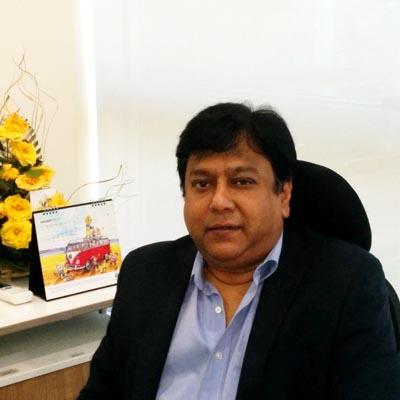
  • Hindustan Motor’s Ajay Kumar Bansal quits as CEO

    Hindustan Motor’s Ajay Kumar Bansal quits as CEO

    MUMBAI: Automobile manufacturer Hindustan Motors, which is part of the Birla Technical Services industrial group, has announced  that the company’s CEO Ajay Kumar Bansal has resigned from his position as of May 13. “Ajay Kumar Bansal ceased to be Chief Executive Officer of the Company with effect from the close of business hours on May 13, 2016,” an official statement from the company informed BSE.

    It maybe noted that the company went through a similar major reorganization when  the former CEO Moloy Chowdhury quit last year in June 2015, post which Bansal was appointed as the company’s CEO in November 2015.

  • Hindustan Motor’s Ajay Kumar Bansal quits as CEO

    Hindustan Motor’s Ajay Kumar Bansal quits as CEO

    MUMBAI: Automobile manufacturer Hindustan Motors, which is part of the Birla Technical Services industrial group, has announced  that the company’s CEO Ajay Kumar Bansal has resigned from his position as of May 13. “Ajay Kumar Bansal ceased to be Chief Executive Officer of the Company with effect from the close of business hours on May 13, 2016,” an official statement from the company informed BSE.

    It maybe noted that the company went through a similar major reorganization when  the former CEO Moloy Chowdhury quit last year in June 2015, post which Bansal was appointed as the company’s CEO in November 2015.

  • Hatchbacks most favoured by customers; Maruti & Hyundai lead auto category: CarDekho

    Hatchbacks most favoured by customers; Maruti & Hyundai lead auto category: CarDekho

    MUMBAI: The Indian consumer is now more discerning than ever before. Even when bombarded with options galore, consumers today know exactly what they want. And this can well be seen in the findings of a recent report released by Indian online automobile marketplace CarDekho.


    The report on online search patterns of the Indian consumers compared to actual in-market sales of cars during the festive season showed that when it comes to cars, hatchbacks were the most preferred customer choice, figuring in consideration sets for nearly 47 per cent consumer with their actual demand clocking in 48 per cent of the overall figure. The sedan category also saw consideration (26 per cent) and demand (25 per cent) nearly at par with one another.


    On the other hand, Maruti and Hyundai occupied the top slots in the hatchback as well as the sedan segment, with Honda also marking prominent presence in the latter category.


    The report, which is based on CarDekho’s platform traffic as well as Society of Indian Automobile Manufacturers (SIAM) data, focused on various car categories such as hatchback, MUV, Sedan, SUV and Compact SUV/MUV to present a comprehensive statistical picture of the user consideration versus actual demand.


    Compact SUV/MUV section saw a high consideration per centage (17 per cent) due to the buzz effect surrounding the new category launch. However, the actual demand for the segment was only 10 per cent, which could be attributed to the relative unfamiliarity of the Indian public with the category. MUVs, on the other hand, resulted in a much higher actual demand (12 per cent) than consideration, which stood at a mere two per cent.


    GirnarSoft CMO LK Gupta said, “The October-November festive season is a time when Indian consumers wield their financial clout to buy things that they have shortlisted over the year. As such, this report provides a valuable insight into the shopping trends during this busy period. These insights will help car manufacturers to better understand the dynamics of consideration sets that buyers go into the market with, and how they change through the purchase process. The report also helps us as an auto portal to improve upon our existing services and shape our product offerings to be more in sync with the consumer preferences.”


    CarDekho’s report also highlighted the importance of price and value-for-money proposition for the Indian consumers. Amongst hatchbacks, Hyundai’s Elite i20 saw nearly 17 per cent user consideration; however, the actual conversion stood only at nine per cent. In comparison, its Grand i10 model, priced nearly Rs 2 lakh lower, managed to record 11 per cent demand despite a measly four per cent consideration. The Alto also recorded 18 per cent actual demand as compared to eight per cent consideration owing to its lower price and Maruti’s brand value. Similarly for the Sedan category, Dzire’s actual demand (37 per cent) far eclipsed its consideration (16 per cent), while the case was reversed for Honda City, which saw 20 per cent consideration, but only 11 per cent actual demand.


    However, while price was an important factor that drove transactions, performance and features were also given due consideration. In the Compact SUV/MUV category, both the consideration (14 per cent) and actual conversion (12 per cent) for Maruti’s S-Cross was much lower comparatively to Hyundai’s Creta (32 per cent consideration and 28 per cent actual) despite a lower price. This was attributed to more attractive features offered by Creta as compared to S-Cross.

  • Gamification, localization and monetisation way forward for #fame

    Gamification, localization and monetisation way forward for #fame

    MUMBAI:  Fame Digital Private Limited (FDPF) is fundamentally focusing on three objectives for its online entertainment app, #fame – gamification, localisation and monetisation.


    When it comes to gamification, #fame talent league (FTL) is the first step in that direction. FTL is a path breaking initiative that will encourage and enable content creators to test their popularity with audiences in real time. FTL will start on December 5, 2015. As may be recalled, #fame launched the country’s live video app in May this year and in a short span of time this has emerged as the largest live video platform. 


    Localisation -#fame is also planning to launch more of regional and local versions on the app to differentiate the sections over the next couple of quarters. The company is also looking at launching south Indian version of the app, as well as planning to launch in Indonesia and Thailand


    Speaking with Indiantelevision.com about the three fundamental plans, #fame CEO Saket Saurabh said, “There are three plans for #fame, one is that we have launched #fame talent league, also over the next couple of quarters we are planning to launch more of a regional and local versions to differentiate the sections of our app. Apart from this, we will be looking for monetisation also. Therefore gamification, localization and monetisation are the core components in building the name of #fame.”


    Commenting monetisation potential of video, Saurabh said, “Within digital, video is the fastest growing section. We believe that access with 4G is coming and the hardware is becoming cheaper; video is becoming the new language of the consumer internet. Revenue will follow consumption. In two years we have brought on board 20 to 25 top brands in India across categories like FMCG, automobile, durables and telecom. We are planning to bring more traction now. In the next six months, we are planning to reach out to 60 to 65 brands. Therefore, we feel that video has tremendous monetisation potential and great monetisation flexibility. Video monetisation is moving beyond pure play inventory.”


    Saurabh added, “We had launched the first live video app in the country in May. We have seen more than 30,000 people going live using our ap. That gave us the confidence that there is clearly an opportunity to discover the digital talent and that is why we started building a tech feature in our app, which in a sense is an innovation, because it has the kind of real time global audience looking at the live app.”


    Since May, #fame has seen 20 lakh downloads, with more than 30,000 performers going live and over 30,000 watch hours of content. 


    Earlier, #fame had launched its first digital singing competition Web Singer with Pritam in November, 2014. “The experience with Web Singer has been great. This is why we call ourselves as #fame, because there is an opportunity for a talent to really emerge and connect directly with the audiences. All our initiatives are designed to allow talent to come forward whether it’s our live video app or the launch of #fame talent league which is on the top of the app,” he added.


    India has 35 crore internet users and in couple of years India will have half of its people using internet and we are already a one of the largest market in the world. 


    India’s inherent advantage is that it is already a mobile ready country.  “There are three fundamental trends that are making it big; one is that hardware access is getting cheaper as you get mobile phones now in Rs 6000-7000 price range, which makes video access easier. Another factor is the Indian population and the demographics which play an important role as we have a whole generation of youngsters who have grown up not with television as their first screen, but with mobile phones. The third factor is that digital will be seen as the support medium by content creators and networks over time. The rise of OTT in couple of years is a great reflection that brands have realized that digital requires original content.  In the next couple of years we will see a tremendous growth in digital medium,” Saurabh predicted.


    #fame is spending about 30 to 40 per cent of its investments in user acquisition and user engagement. Speaking about the competition Saurabh informed, “I think there is space for everybody, in the case of live video, we are the pioneers in India and we are trying to build that category. In digital, there are all kinds of players. We have OTT, content creators, YouTube and Facebook, hence it’s a fairly a vibrant place. Also, live video space and digital space are all in their early stages. I don’t see competition is really an issue right now.  Here we need to have more innovations.”


    4G is creating a lot of buzz in the country. Saurabh said, “I think 4G will take another 6-8 months as it is not in the mainstream in India and is only available in some major cities.  The entry of more players and alliances will make an impact and there will be more, in combination with cheaper hardware manufacture. There will be a lot of cooperative marketing which will help mainstream 4G.”


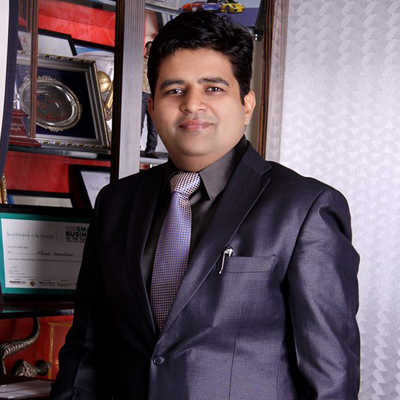
  • Kamal Basu appointed marketing head at Volkswagen

    Kamal Basu appointed marketing head at Volkswagen

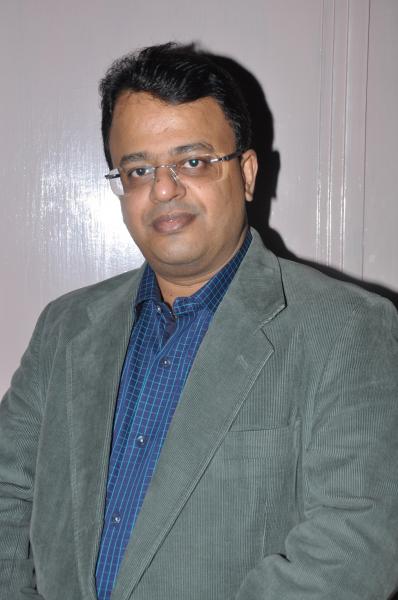
    MUMBAI: Volkswagen Group Sales India has appointed Kamal Basu as marketing and PR head for Volkswagen Passenger Cars.

    Basu, who joined Skoda Auto India as marketing head in 2012, oversaw product marketing, lead management, communication and media, and also worked closely with sales, after-sales and dealer network teams. In addition to his work in automobile marketing, Basu has a very strong background in advertising, having spent close to two decades working with top-level agencies like RK Swamy BBDO, Rediffusion Y&R and with Saatchi & Saatchi as CEO.

     “I’m happy to have contributed to Skoda’s performance in India over the last three years, and am happy to take up the new challenge of bringing fresh thought and new ideas to Volkswagen India’s marketing effort. Volkswagen is an iconic automotive brand with great history and a strong legacy, and I hope to make a contribution towards the growth of this brand in the Indian car market,” said Basu.

    Commenting on the appointment, Volkswagen Passenger Cars director Michael Mayer said, “We are pleased to welcome Kamal on board here at Volkswagen India. Kamal is a seasoned marketing professional and I’m sure he will be a strong and valuable addition to our team. Kamal will play a key role in further developing the strengths of the Volkswagen brand in India.”

    Basu’s appointment is effective from 1 January 2015.


  • ASCI upholds complaints against 79 out of 100 ads in September

    ASCI upholds complaints against 79 out of 100 ads in September

    MUMBAI: In September 2014, Advertising Standards Council of India’s (ASCI) Consumer Complaints Council (CCC) upheld complaints against 79 out of 100 advertisements.


    Out of the 79 advertisements against which complaints were upheld, 49 belonged to personal and healthcare category, followed by the education category with 18 advertisements.


    In the personal and healthcare category, the CCC found the claims in advertisements of 48 advertisers to be either misleading or false or not adequately/scientifically substantiated and hence, violating ASCI’s code. Some of the health care products or services advertisements also contravened provisions of the Drug & Magic Remedies Act and Chapter 1.1 and III.4 of the ASCI code.


    Complaints were upheld against advertisers like Vini Cosmetics’ advertisement of White Tone Face Powder that shows instant fairness of the skin on using the product which is misleading by exaggeration. The advertisement of Perfect Clinic claims to give hope for childless couples, helps to get sex life back and enjoy married life.


    Agro Tech Foods’ advertisement of Sundrop Heart claims that research conducted on consumers proves the product has worked in 100 per cent of the people tested on. The duration of the supers in the advertisement does not stay for 6 seconds and contravened ASCI’s guidelines for supers.


    The advertisement of Richfeel Trichology Centre claims to provide the Best Hair Transplant at Rs 55,000. It further claims to have “Full time Aliesbury Certified Surgeons and staff perform the procedure”.


    In the education category, complaints were upheld against 18 advertisements. For instance, the advertisement claims that RKDF College of Engineering is the best engineering college in Central India. Sri Venkateswara Institute Of Technology claims that it provides guaranteed placement or else refund of fees.


    In the other categories, Hindustan Unilever Ltd advertisement claims that “various powders were tested, and in machines, Surf Excel Matic provided the most effective cleanliness”, qualified with a disclaimer “based on lab test on select fabrics versus ordinary powders” is misleading as the comparison is made versus ordinary powders not meant for machine wash. The subject matter of comparison was not considered as a like to like comparison.


    Star India’s TVC promo of Gumraah season 3 presents criminality and directly or indirectly encourages people – particularly minors- to emulate it or conveys the modus operandi of any crime.


    In the Food & Beverages category, Red Bull India advertisement without justifiable reason shows dangerous practices and manifests a disregard for safety. Similarly, Bacardi India is promoting its liquor product – Bacardi Breezer through the radio advertisement. The advertiser had violated the brand extension advertising code. The radio spot contravened Chapter III.6 (a) (b) of the ASCI Code and the guidelines for brand extension products or services. 


    Click here for full report

  • DTH, an innovative platform for advertisers: Matrix Publicities & Media

    DTH, an innovative platform for advertisers: Matrix Publicities & Media

    MUMBAI: It has been a stupendous growth story. Contrary to popular trade perception the DTH advertising growth story has only ended up surprising all.


    With approximately 65 to 68 million households across India and about 55 per cent of the C&S base in the country, this is one of the primary reason why a lot of advertisers are looking to engage customers on the medium. 


    What began with a low scale, low noise start with barely two to three advertisers three years ago, has grown more than 10 times in a very short span, says Matrix Publicities & Media India, a WPP company, which has been at the forefront of this revolutionary advertising blitzkrieg. 


    There are in all six DTH operators, who operate out of the paid DTH subscriber sphere, whilst planning, the agencies need to keep in mind the fact that DTH as a medium is a frequency builder and should necessarily be used to ensure incremental reach.  Like television, DTH reaches out to all SEC and demographic profiles, unlike otherwise perceived.  There are various options within the medium, however, to delivery impact too and on a case to case basis the medium allows innovations, albeit at a very competitive outlay.


    As a media sales aggregator for all the DTH operators to GroupM & non-GroupM clients and agencies, Matrix has been able to bridge the gap between the science, art and commerce for sales on this new age media platform. 


    The agency feels that the platform acts as a gatekeeper to the TV viewing audience and they are exposed to the DTH visuals prior to the TV channels.  Additionally, TV also faces a lot of clutter with regard to the various genres available for viewing.  With the 10+2 ad cap in place, in principle, with most channels, getting inventories across is also an issue.  All the factors put together have ensured that this medium has turned into a ‘pull’ medium from the erstwhile ‘push’ medium. 


    Hence, the company has not stopped at just mere vanilla sales as this is a philosophy that does not appeal to its business head Sparsh Ganguli, who has been at the forefront of this business since its inception three years ago.


    With this idea in mind, the advertisers have been divided into broad categories and an in-depth analysis has revealed a lot about the spending patterns of all advertisers on this medium.  Needless to say the research not only takes into consideration the brand spent from the GroupM set of clients but even some part of the non-Group M clients to help present a more clear and fair picture.  The efficacy of the study can be gauged from the fact that the entire categories can be bifurcated month wise and the spend patterns can be highlighted for future strategic pitches.


    The broad categories that have been the top spenders across this medium are: automobiles (two and four wheelers), FMCG, F&B, BFSI, e-commerce, watches and jewellery.


    A FMCG media planner says, “The DTH platform has been influential in targeting the housewives through sustained awareness campaigns during afternoon hours and worked phenomenally well for our client’s brands.  That’s the very reason why they look to optimise spends on these platforms.” 


    The ad rates are in sync with the growth of the medium.  The rates range from Rs 40,000 to Rs 1,00,000 depending on the options that are availed, highlights the agency.


    Ganguli, however, feels that there is still a lot of ground to be covered from the advertiser’s front.  He feels that technologically the platform is evolving in a positive manner that is both beneficial to the viewer as well as for the advertiser.  According to him, “The next revolutionary way of reaching out to the viewing household is on the spliced beam format which allows the advertiser to geo-target their consumers.  This has in turn made it possible for the brands to reach out and give a customised pre-buying experience, thus resulting into more reach and effective frequency for the brand campaign.” 


    He adds, “DTH has shown tremendous growth but I still feel clients can do a lot more, as of now we have been able to break new grounds by providing upgraded technology and this helps the clients and new clients to optimise the medium for every campaign as innovation is the way ahead.” 


  • Outdoor industry shows promising growth curve in 2014

    Outdoor industry shows promising growth curve in 2014

    MUMBAI:  One of India’s premier outdoor advertising agency – Global Advertisers – revealed that it has witnessed promising growth in the outdoor advertising sector in 2013 due to several factors likes Lok-Sabha elections, new launches in telecomm, FMCG, Automobile etc. Global Advertisers MD Sanjeev Gupta said: “We believe that the future of out-of-home lies in 3Is-innovation, infrastructure and investment”. 


    According to the report by The Pitch Madison Media Advertising Outlook 2014, OOH is expected to bring in total ad spends of about Rs 2,138 crore and transit media continues to be the preferred option. “We at Global Advertisers have already anticipated the current market conditions and increased our inventory by 25 per cent in 2013,” Gupta added. India’s discerning customer has greater exposure in terms of brands, services and price knowledge. Customers are always looking for value for money products serving their need or luxury. This means, an Indian consumer is well-connected with the out of home world.


    It’s important to note that outdoor medium has evolved in malls and multiplexes, which holds out a good deal of hope and potential. Brands want to engage with the consumers more than ever before. There are several opportunities that this medium can tap into and Transit Media, Hoardings, Street Furniture, Neon have empowered the medium enabling it to grow and sustain itself in the highly competitive advertisement sphere.

  • DC Design unveils two new cars at Auto Expo 2014

    DC Design unveils two new cars at Auto Expo 2014

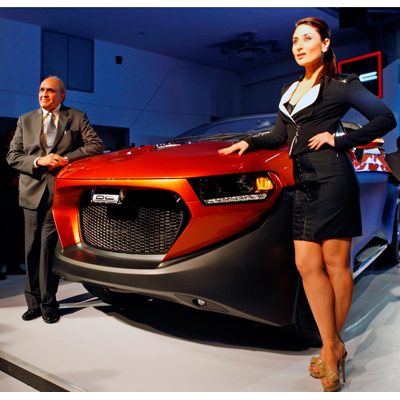
    NEW DELHI: India’s premier automotive design and specialist car manufacturer DC Design is ready with two exciting new concepts to delight automobile enthusiasts at the 2014 Auto Expo. Keeping in line with the firm’s philosophy and also its previous track record for delivering drop dead gorgeously styled vehicles, the two new concept cars are production bound in 2016.


    The DC Eleron and the DC Tia represent DC Design’s ability to conceive an idea for various niche segments and then design and develop a vehicle with unique attributes that go beyond mere style. While the Eleron is an open Targa-topped SUV with radical lines, the Tia is a nifty two-seater runabout for town use with outrageously crafted lines yet packing in a proven small driveline.


    Both the cars were unveiled today by the award winning actress and style icon Kareena Kapoor Khan and Mr. Dilip Chhabria, Founder, DC Design. Speaking at the launch, Mr. Chhabria said, “I want the most desirable car in the world to bear a ‘Made in India’ tag. For Avanti which we launched two years ago we are looking at manufacturing 2000 units per annum starting third quarter of this year. For Eleron and Tia we are looking at 500 units and 1000 units per annum respectively by 2016. We have currently invested in the excess of INR 85 crores for the production of Avanti and INR 50 crores each for the production of Eleron and Tia so far and are looking at further investments in the coming future. We aren’t a global player; we will not build millions of cars a year, but I promise you, the few thousand that we will put out every year will be the sexiest cars on Indian roads.”


    Making heads turn at the launch Kareena Kapoor Khan also added, “It gives me immense pleasure to be a part of such a remarkable launch. DC Design is clearly the most prominent and promising name in the Indian automotive design industry. Both Eleron and Tia are spectacular looking cars and are sure to create a buzz amongst Indian auto enthusiasts. I wish the team the very best for these car launches.”


    The Eleron is DC Design’s high-end take for a top line SUV with a difference! The name has been phonetically conceived from the aeronautic term ‘aileron’ given that the nature of the car’s design takes in a supposedly duo-layered approach as regards its bodywork, the upper half seemingly floating on the lower base whichever way you tend to look at it.


    From the deliciously overwhelming Eleron SUV, DC Design moves fast-forward to the mega-mini segment with its all-new two-seater runabout the DC Tia! It isn’t difficult to understand why such a car given its small footprint but with radical turnout given that the Indian car market’s fortune lies at the base of the pyramid and this is where an added premium positioning is ripe for the times. DC Tia again treads the space frame chassis route with carbon composite bodywork – a sure shot recipe for strength and structural integrity while keeping weight down to a bare minimum.

  • Top Gear returns with a new season on AXN

    Top Gear returns with a new season on AXN

    MUMBAI: One of the best automobile show on television – Top Gear – is back to storm the auto world. The new Season 21 premieres in India on 7 February, and will be telecast every Friday at 9:00 pm, exclusively on AXN. The trio of Jeremy Clarkson, Richard Hammond and James May will be back in action, and the Indian viewers will get a chance to watch their favorite show even before its US premiere.


    Commenting on the premier of the new season, AXN India business head Sunil Punjabi said, “At AXN, our efforts have been focused to provide our viewers with the latest international content on the channel. As one of the pioneers in the English entertainment genre in India, we understand the pulse of our viewers and are always striving to provide thrilling and trend setting quality entertainment. Top Gear is the world’s biggest auto show and we are really excited to be able to bring it to the Indian fans before the US. We believe that with this show we will strengthen our relationship with our viewers.”

    The new season promises more excitement, more thrills and more speed along with a lot more tear, break and crush. The show in its latest season features some of the swiftest cars on the planet, some more street-legal than others. In the all-new series, hosts Jeremy Clarkson, Richard Hammond and James May will take the viewers on an array of new adventures, challenges and stunts which will keep all the car fanatics glued.