Tag: Automobile

  • Virat Kohli continues association with Audi India

    Mumbai: Indian cricket team captain Virat Kohli will continue his association with Audi India, the German luxury automobiles manufacturer announced on Saturday. Kohli has been associated with Audi India since 2015 and has been an integral part of the brand’s marketing and social campaigns.

    “Whether it’s behind the steering wheel or on the pitch with a bat in the hand, performance, consistency, and technique are what define perfection. I have been an Audi fan even before I was formally associated with the brand. Audi cars reflect elegance and sportiness, which resonate perfectly with my personality. I am extremely delighted to continue my association with Audi India and be a part of the brand family. It is safe to say that my relationship with Audi India is more of a test match than just a T20”, said Kohli.

    The Indian skipper has featured extensively in campaigns like #TogetherWithAudi, #MovingForward, and a few product launch campaigns. His continued alliance with the Audi brand includes advertisement campaigns, social media engagement, and event collaborations, said the company.

    “Kohli perfectly embodies the progressive premium image of the brand Audi,” said Audi India head, Balbir Singh Dhillon. “He has been a part of the Audi India family for more than half a decade and is clearly a great fit, as both exemplify brilliant innovation in their performance. We look forward to an even more exciting journey going forward.”

  • Rajiv Gupta moves on from Honda Cars, joins Tricolite as CEO

    Rajiv Gupta moves on from Honda Cars, joins Tricolite as CEO

    New Delhi: Rajiv Gupta has quit as vice-president, sales & marketing of Honda Cars India. He will now lead Tricolite Electrical Industries as chief executive officer.

    The Delhi based company is involved in manufacturing of custom-built electrical panels and switchboards.

    Gupta has spent over five years at Honda Cars, an organisation he joined in April, 2016 as national head, sales planning, brand management and marketing communications. Prior to this, he was associated with Banyan Capital Advisors Pvt Ltd for investing, mentoring and scaling start-ups. He has also spent eight years as vice-president and head – retail channel management at Reliance Industries Ltd.

    A graduate from Harvard Business School, Gupta’s first stint with Honda Cars began in 1996 as manager of marketing.

  • Ford India elevates Kapil Sharma as GM – consumer marketing

    Ford India elevates Kapil Sharma as GM – consumer marketing

    MUMBAI: Ford India head of communications Kapil Sharma has been handed over the additional mandate of general manager – consumer marketing, said the company on Thursday.

    In this new role, Sharma will also be responsible for steering the Ford brand and business forward with integrated marketing and communications efforts. He takes over his new role on 1 June. 

    Sharma joined the American multinational carmaker in September 2013 as manager, corporate communications. He moved on from BMW India where he was manager – press and corporate affairs.

    In a career spanning over 15 years, he has worked at Genesis Burson Marsteller, and Mileage Communications.

  • Suzuki Motorcycle India appoints Satoshi Uchida as company Head

    Suzuki Motorcycle India appoints Satoshi Uchida as company Head

    New Delhi: Suzuki Motorcycle India Pvt Ltd (SMIPL) appointed Satoshi Uchida as its new company head as part of a global revamp by the parent Suzuki Motor Corporation (SMC).

    Uchida has succeeded Koichiro Hirao with effect from 1 May. He carries three decades of experience across various global markets. In his last role, he was assigned to the US and returned to India, where he had worked previously in the company as well as served as deputy executive general manager- Motorcycle Operations (India/Middle-East/Africa) at SMC, Japan in the past.

    In his new role, Uchida will be responsible for exploring new avenues for growth and further strengthen Suzuki Motorcycle India’s position in the Indian market, the company said in a statement.

    “I am delighted to join Suzuki Motorcycle India again after a gap of just two years of my earlier assignment here in India. This company has always been very close to my heart. For us at Suzuki, it offers immense growth opportunities and it will be my endeavour once again to further consolidate our base here in India,” said Uchida, highlighting that India is one of the largest manufacturers of two-wheelers in the world and the company would strengthen its commitment to the Make in India program.

  • Former Maruti MD Jagdish Khattar no more

    Former Maruti MD Jagdish Khattar no more

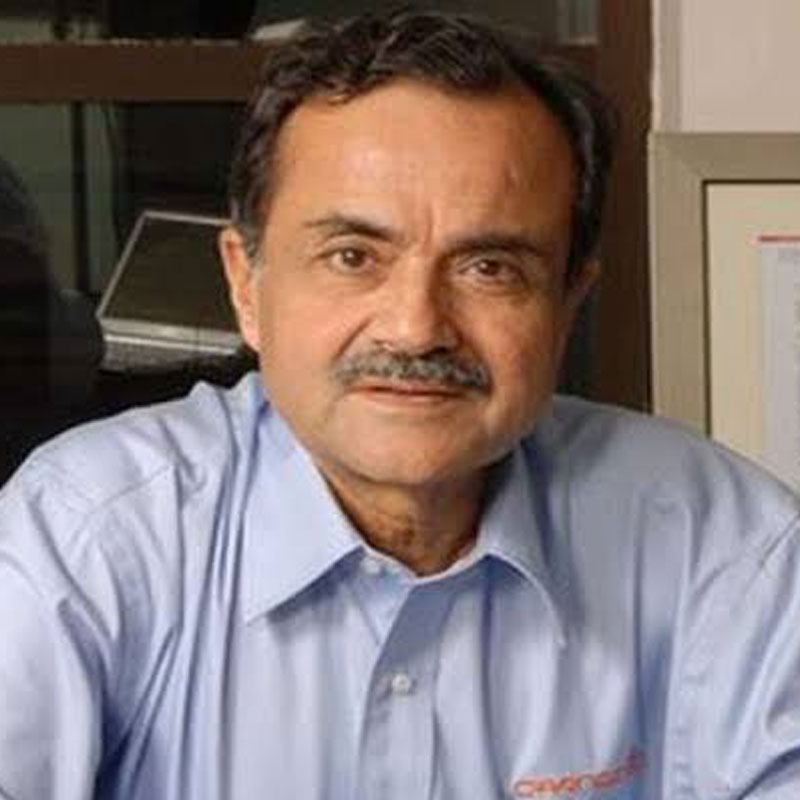
    New Delhi : Former managing director of Maruti Suzuki India, and veteran of the Indian automobile industry, Jagdish Khattar passed away on Monday due to cardiac arrest. He was 78.

    Khattar had joined the company as director (marketing) in July 1993 and went on to become the managing director in 1999. He was first appointed as a government nominee, and then in May 2002 as Suzuki Motor Corporation (SMC) nominee.

    He had served Maruti Udyog for 14 years and steered the company towards remarkable growth. His last day at Maruti as MD, at age 65, was on 18 December 2007.

    Prior to this he had worked as joint secretary in the ministry of steel, government of India, for about five years and held several administrative positions in the Uttar Pradesh government before that.

    In 2008, Khattar launched his next venture – Carnation Auto to develop a multi-brand automobile sales and service network.

  • Mahindra hikes prices of personal & commercial vehicles

    Mahindra hikes prices of personal & commercial vehicles

    MUMBAI: Mahindra & Mahindra (M&M), part of the Mahindra Group, has increased the prices of its personal and commercial range of vehicles by around 1.9 per cent, resulting in an increase of Rs 4,500 to Rs 40,000, depending on the model and variant.

    The new prices will be effective 8 January 2021.

    For instance, in the case of All New Thar, the current price increase will be effective for all bookings done between 1 December 2020 and 7 January 2021. All fresh bookings for All New Thar, effective 8 January 2021, will have prices as applicable on the date of delivery.

    M&M CEO – automotive division Veejay Nakra said the price hike was necessitated due to unprecedented increase in commodity prices and various other input costs over the past many months. “We have made all efforts to reduce our costs and deferred price increase for a significant duration, but due to the quantum of input cost increase, consequently we are taking this price increase effective 8 January 2021,” he added.

    Mahindra is the latest automaker to raise prices to offset input costs. Last month, Tata Motors announced an increase in retail price across its commercial vehicle range, effective 1 January 2021. Maruti Suzuki, Ford India, Honda Motors have also raised their prices with the onset of the new year. 

  • Maruti Suzuki sales up 20% in December 2020

    Maruti Suzuki sales up 20% in December 2020

    NEW DELHI: Maruti Suzuki India Ltd posted total sales of 160,226 units in December 2020.

    This is a growth of 20.2 per cent over December 2019, when sales stood at 122,784 units. Total sales include domestic sales of 146,480 units and 3,808 units for other OEMs. In addition, the company exported 9,938 units in December 2020.

    With total sales of 495,897 units in Q3 (FY 2020-21) the company registered a growth of 13.4 per cent over the same period previous year.

    The carmaker remains committed to the health, safety and well-being of all members across the value chain, it said in a release. All manufacturing, sales and service operations continue to take place fully consistent with all safety requirements for employees and customers. 

    The sales figures for December 2020 are given below:

  • Yamaha announces a unique “Test Ride My Yamaha” campaign for its customers

    Yamaha announces a unique “Test Ride My Yamaha” campaign for its customers

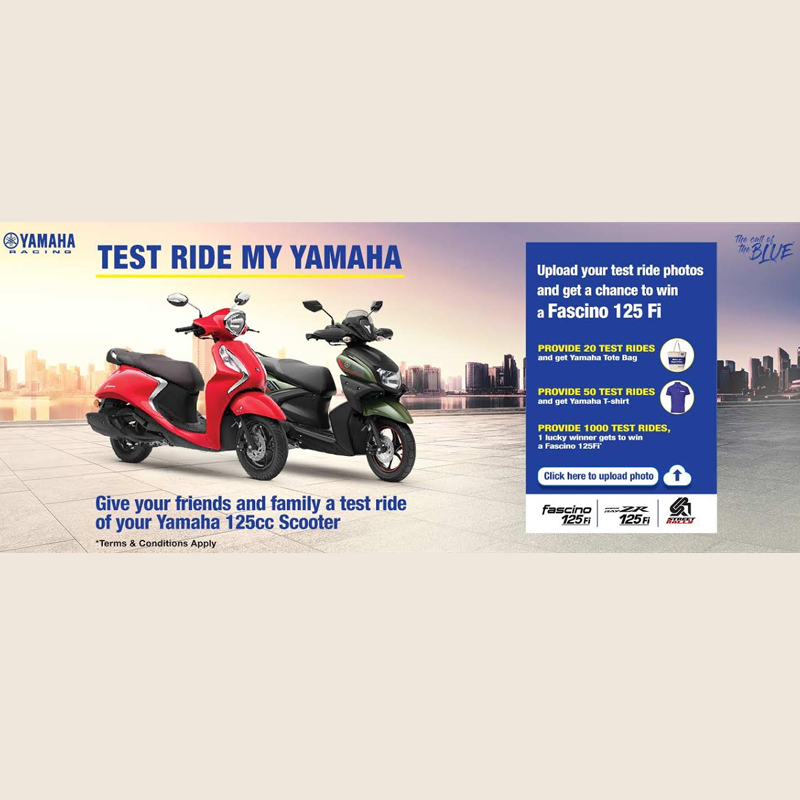
    KOLKATA: Yamaha Motor India group of companies kicked off of its unique and an exciting test ride campaign “Test Ride My Yamaha” for its customers across the country. The overall aim of this special campaign is to establish a deeper connect with the existing customers and encourage them to further create awareness on the advanced safety features and technologies of the company’s 125 cc scooter models – Fascino 125 FI, Ray ZR 125 FI and Street Rally 125 FI among their family and friends.

    Through this campaign, the company’s effort is to provide touch and feel as well as a personalized riding experience to more and more customers who aspire to own a Yamaha product and are curious to know about the new technologies and the safety features installed in Yamaha scooters like “Stop & start system”, “Smart motor generator (SMG)” and the “Side stand engine cut-off switch”. The existing Yamaha customer who participates and supports the campaign by motivating their family and friends to test ride the Yamaha 125 scooters stand a chance to win exciting Yamaha merchandise.

    The new 125 cc Yamaha scooters have received a tremendous response from the customers across India in the year 2020 and the company is confident that this special and unique campaign will help in reaching out to its target customers who are looking for a product which is stylish and sporty and at the same time more powerful, fuel efficient, equipped with safety technologies and value for money. The potential customers willing to participate in the campaign can reach out to their nearest Yamaha authorized dealerships in their respective cities to test ride the Yamaha products.

  • India on course to becoming a used car market: Droom’s Krishna Veer Singh

    India on course to becoming a used car market: Droom’s Krishna Veer Singh

    NEW DELHI: The Covid2019 pandemic sank the automobile industry in India to abysmal depths this year. With the enforcement of lockdown, people retreated indoors, businesses and offices shut down, the streets were deserted; and auto sales plunged to zero in the month of April.

    While the automobile market is desperately trying to rally and recover pre-Covid numbers, one category that has shown resilience in these troubled times is that of pre-owned vehicles. Growing at 6.2 per cent during FY16-20, it too was buffeted by the headwinds of the pandemic, but since then has witnessed a steady uptick in demand. Leading this segment are digital platforms that buy and sell second-hand cars and two-wheelers, which have logged manifold increase in online engagement and annual sales over the past several months.

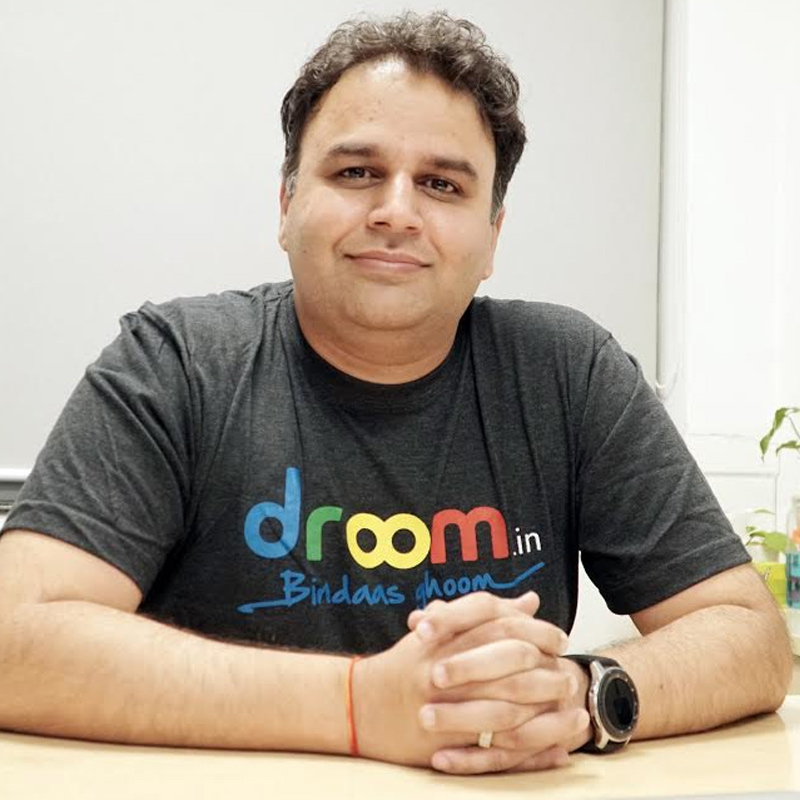
    One such company is Droom, a digital motorplace that claims to have captured 80 per cent market share of the automobile transactions happening online in India. The portal has clocked a massive 260 per cent surge in sales in the aftermath of Covid, along with a 175 per cent jump in traffic for new and pre-owned automobiles. Indiantelevision.com spoke to Krishna Veer Singh, president – marketplace, Droom to decode the recent upheaval in the used car business, how the platform is faring and what the road ahead looks like.

    Singh started off by clarifying that while Droom is seeing unprecedented numbers now, it hasn’t all been smooth sailing.

    “When Covid happened, we witnessed 90 per cent drop in orders within two months of lockdown. In June, we started seeing recovery even though we were far away from full recovery. Around August 2020, indicators like growth in traffic, leads and listings went up with huge numbers and we again achieved pre-Covid number of orders driven by two-wheeler demand. Also, we have achieved around 75 per cent of pre-Covid GMV by November 20,” he detailed.

    As Singh pointed out, the resurgence of the automobile sector is led by two-wheelers and pre-owned cars. This is mainly due to a massive shift in consumer mindset: in the aftermath of the highly-contagious Coronavirus, public transport and ridesharing are no longer considered safe. However, the upswing in the desire for personal mobility has been compounded by the problem of limited means.

    “With economic activity slowing down, people are more inclined towards lower-priced or smaller vehicles in personal mobility space which in turn has boosted sales of used vehicles. As a result, there is an increase in the demand for budget-friendly options like Swift, WagonR, Dzire, Honda City, i10, Scorpio and Santro, among others and two-wheelers,” he said, adding that these make up 70 per cent of total orders.

    FY21 auto sales are estimated to be decadal lows, and the industry has yet to recover to monthly sales levels of new vehicles seen before the pandemic. But it’s a fact that the automobile sector had undergone considerable slowdown over the last 12-18 months, labouring as it was under the GST regime change, stiff competition from ride-hailing apps, general liquidity issues, and several other factors.

    By contrast, the used car market is 1.3 times of the new car market, with the organised segment expected to register a CAGR of 22.79 per cent during 2020-25. Majority of the OEMs such as Maruti Suzuki, Mahindra, Hyundai and Toyota, and luxury car manufacturers like BMW, Audi, and JLR, have their own used car network. Online used car sellers have also reported good sales over the last few years. Government policies, for instance the reduction of GST rate on used cars from 28 per cent to 12-18 per cent, are also favourable – a key growth driver for the sector. Does all this portend that India is on the road to becoming a second-hand car market? Singh appeared to think so.

    “Demand for used cars has increased manifold in the last few years. The economic slowdown caused by the pandemic has resulted in financial restraints which leads to an increase in demand for budget-friendly options of Rs 2-5 lakh and middle budget of Rs 5-10 lakh. Overall, 25,000 cars were sold this year,” he highlighted.

    Post pandemic, the surge in sales has been powered, in main, by the top five to six metros in the country – Delhi, Mumbai, Bangalore, Hyderabad and Ahmedabad – and prospective customers are most interested in vehicles, germ shield and auto services, shared Singh. The site has clocked a 550 per cent jump in leads and an average MAU of six million over the last few months. An impressive feat, considering that 60 per cent of the traffic on Droom is organic.

    The reason may be that apart from catering to vehicles, the platform has branched out into several complimentary ventures in the wake of Covid. These new endeavours were initiated after careful consideration of consumer needs and the rising hygiene consciousness among people. Droom now offers Contactless Commerce, an end-to-end contactless experience including online vehicle research, doorstep test drive and delivery, online documentation, and digital payments. The Jumpstart service was introduced in May to provide vehicle service at your doorstep.

    Another big revenue driver this fiscal has proved to be Droom’s Germ Shield business. Not just limited to vehicles, the service has been extended to cover residences, offices and commercial spaces.

    “Germ Shield is a separate P&L and currently driven by our proprietary tool, ECO, and its network. The technology is relevant to all kinds of surfaces and expanding to other categories like homes, schools, and commercial gave us an opportunity to bring more business, along with more awareness and adoption of the product utilising the same network of ECO services and without any additional capex,” said Singh.

    All this doesn’t discount the fact that the used car market is a competitive space, with several players jostling for buyers’ attention. Curiously, despite commanding 80 per cent of the market share, Droom doesn’t really stand out. Its rivals, on the other hand, have greater brand recall on the back of their ATL campaigns. When asked about this dichotomy, Singh asserted that the brand doesn't believe in burning huge budgets on marketing. Instead, it has invested in building better solutions using technology and data science.

    “We are trying to bring transparency, convenience, and trust by building the whole ecosystem around automobile buying and selling by building and enhancing proprietary tools such as OBV, ECO, History, Quick Sell, etc. Also, Droom is the only pure-play internet company while others offer offline services. We work simultaneously with dealers and sellers instead of holding inventory. Droom has built an entire ecosystem around used automobiles for the digital economy,” he elaborated.

    The consumer uptake has been significant, particularly during the Dussehra-Diwali period this year. As families and friends met after a long time, and people thronged malls and markets for festive shopping, Droom registered a fivefold increase in bookings for germ shield sanitation services which offers antimicrobial surface protection service.

    “This festive season, we have witnessed over 60 per cent peak in sales. In new vehicles, sales of cars have witnessed 60 per cent surge and premium cars accounted for 100 per cent growth. Two-wheelers also witnessed growth over 240 per cent and 25 per cent jump in GMV,” added Singh.

    While the used car market, valued at $24.24 billion in 2019, is on an upward trajectory, it’s not without its own share of problems and shortcomings. Unorganised and semi-organised players take up most of the market share, leading to a highly supply-constrained market. Consumer-to-consumer deals still make up 32 per cent of the segment – not a good sign in terms of regulation and accountability. Financing and other value-added services aren't readily available in the used car business, which acts as a roadblock in customer engagement. However, recent growth through organised modes has been somewhat driven by cannibalisation of the consumer-to-consumer and unorganised channels – a trend that should bode well for companies like Droom.

    “The biggest challenge is to maintain the organic traffic and eventually make growth sustainable. Going forward we will keep practicing our customer-centric approach and build the latest technological solutions to make the buying and selling experience of automobiles better and better,” he concluded.

  • Ford encourages people to ‘go further’

    Ford encourages people to ‘go further’

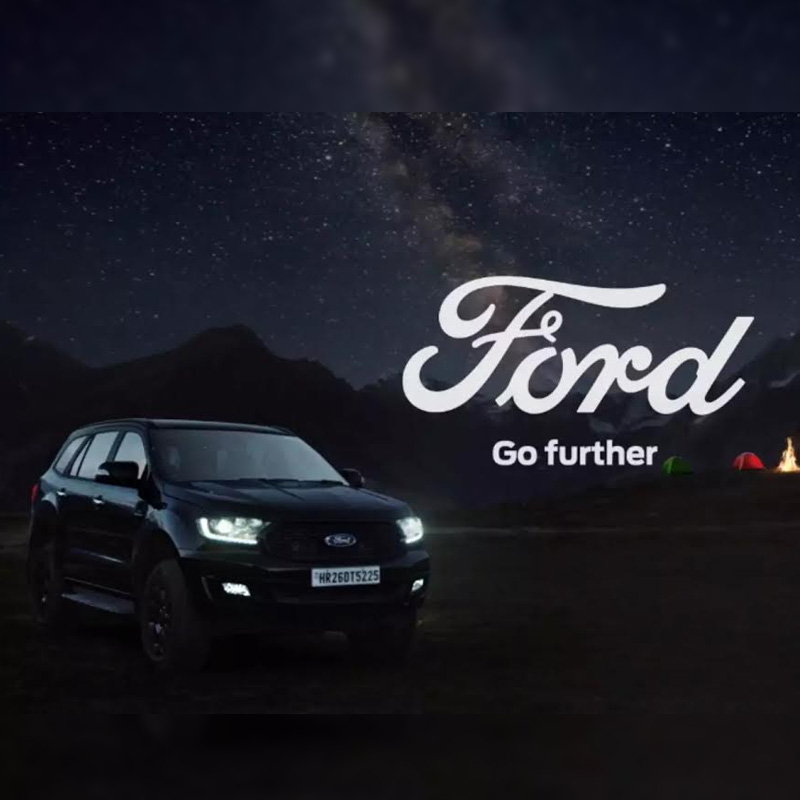
    MUMBAI: Automobile brand Ford has launched their new film for the Ford Endeavour Sport, which espouses the philosophy to ‘go further’. The film builds on the thought that there are multiple sides to any person, there are aspects that are known to the world, whether it’s being the perfect professional or partner or parent, but then there’s a side that fuels all of this.

    Through this film, Ford seeks to encourage everyone to explore that other side, spend a little time with it, indulge in it. Depicting vistas of unexplored nature, treacherous landscapes, and rugged roads, this digital film created and produced by BBDO India nudges people to venture out and live for themselves.

    Ford India general manager consumer marketing Kaushik Prasad said, “The Ford Endeavour Sport inspires its owners to strike a balance between their routine lives and the more adventurous side of their personality, which they rarely explore. #MeetTheOtherSideOfYou, encourages customers to embark on the extraordinary journey they always wish for with proven off-roading capabilities of the Ford Endeavour firmly by their side.”

    BBDO India chief growth officer Nikhil Mahajan said, “For us, the vision for the campaign was clear; this other side has to be real! The challenge was that this exciting part could not be brought to life in the most real way given the pandemic. Most of the parts of the country were either shut for shoots or nature was playing spoilsport with landslides due to the rains. But our vision was undeterred and we decided that we wouldn’t compromise.”