Tag: automobile sector

  • National Geographic India to feature Dr. Pawan Munjal  on its show ‘Mega Icons’

    National Geographic India to feature Dr. Pawan Munjal on its show ‘Mega Icons’

    Mumbai: The extraordinary journey of Hero MotoCorp CEO Dr. Pawan Munjal will be featured in National Geographic India’s award-winning series Mega Icons.

    The documentary “Mega Icons: Dr. Pawan Munjal,” which has its world premiere on 6 October at 8.30 p.m. on National Geographic Channel, delves into the history of Dr. Munjal’s Hero MotoCorp, one of the companies that helped revolutionise the mobility industry. It also explains the brand’s many achievements over the years and how it still leads the industry.

    The 22-minute documentary follows Dr. Munjal as he grows from a small hamlet in Punjab to one of India’s most renowned businesspeople and offers an inside look at the success of the largest motorcycle and scooter manufacturer in the world.

    A National Geographic spokesperson said, “With Mega Icons, it has been our endeavour to bring forth inspiring and insightful stories of successful personalities, motivating and guiding our audiences to follow their path of success. With this special edition, we extracted the exciting and impactful moments from the life journey of Dr. Munjal and combined them with our rich storytelling of National Geographic with the aim of empowering and enlightening our viewers while also celebrating the journey of Hero MotoCorp.”

    The company’s ambitions to introduce a number of electric and future-ready vehicles will also be made clear, including how it intends to reduce its dependency on fossil fuels and explore alternatives like hydrogen, solar power, and wind power.

    From dominating the bicycle industry to becoming the biggest maker of motorbikes and scooters in the world, Hero has carved out its own niche in the cutthroat automotive industry. This process of embracing emerging technologies and achieving new milestones is highlighted in the movie. The movie depicts Hero MotoCorp’s strategy for creating an electric, collaborative, and modular future.

  • Rural, tier 2 & 3 cities to drive the next leg of growth: Ashish Bhasin, DAN

    Rural, tier 2 & 3 cities to drive the next leg of growth: Ashish Bhasin, DAN

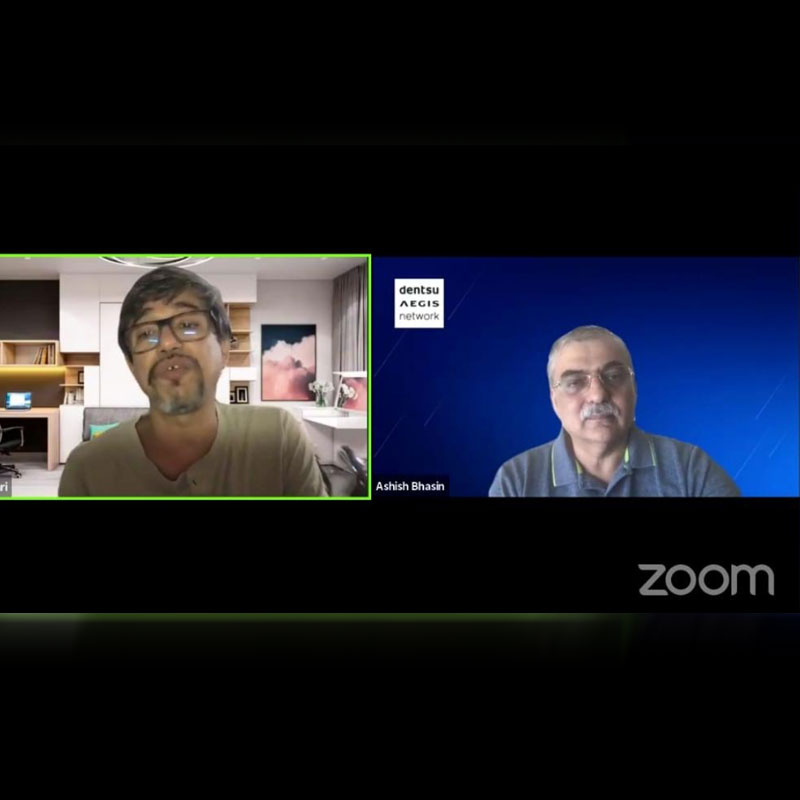
    NEW DELHI: After the sluggish growth in the previous few quarters, which is now further worsened by the Covid2019 pandemic, DAN CEO APAC and chairman India Ashish Bhasin is now bullish about the economic possibilities of the country. He feels that the worst has already happened and from here on it is going to be a month-on-month recovery path for the industry, he shared with Indiantelevision.com during a virtual fireside chat with founder CEO and editor-in-chief Anil Wanvari. 

    Bhasin noted that he doesn’t see a V-shape recovery happening but there are certain markets, which have already started signs of growth and will continue to do so, including automobile and FMCG.

    “FMCG was doing well during the lockdown too as it came under the essential services category and then also a function of sales-and-demand, managed pretty well. Another sector that has started showing signs of recovery is the automobile industry. I feel that post-pandemic more people will be preferring own transport and I see a rise in sales of motorbikes happening. Tractor sales did pretty well too, over the past few months and that will continue to do so,” he insisted. 

    He is also pinning his hopes for growth in rural and tier 2, tier 3 areas. “The harvest has been good this time and also the sowing season was pretty positive. Though the agriculture sector just contributes to the 15-16 per cent of the GDP, it will play a significant role in pulling the numbers up in the coming quarters. Also, more dispensible income in the hands of people will create a good supply-demand cycle. I see rural areas and tier 2, tier 3 cities driving the next leg of our growth.”

    Bhasin pointed out that in the rest of the industries, demand might not be a big problem but the struggles will be on the part of restoring the supply side logistics that have been badly hurt because of the pandemic. He sees sectors like cinema, real estate, and non-digital education entities taking quite some time to revive from here. 

    “It’s not like a switch that goes off during the lockdown and is suddenly up as the restrictions are lifted. One, it will take its own time for the labourers to come back, the production to start, and then supplies picking up. Even then, it is not going to be a straight way, there will be hiccups with cases spiking up or maybe demand going down,” he elaborated. 

    He stated that the pandemic has pushed the country behind by 2-2.5 years and it will take time till 2022 for the economy, as a function of various markets cumulatively, to reach 2019 level.