Tag: Automobile

  • Volkswagen drives into a new PR lane with Ruder Finn India

    Volkswagen drives into a new PR lane with Ruder Finn India

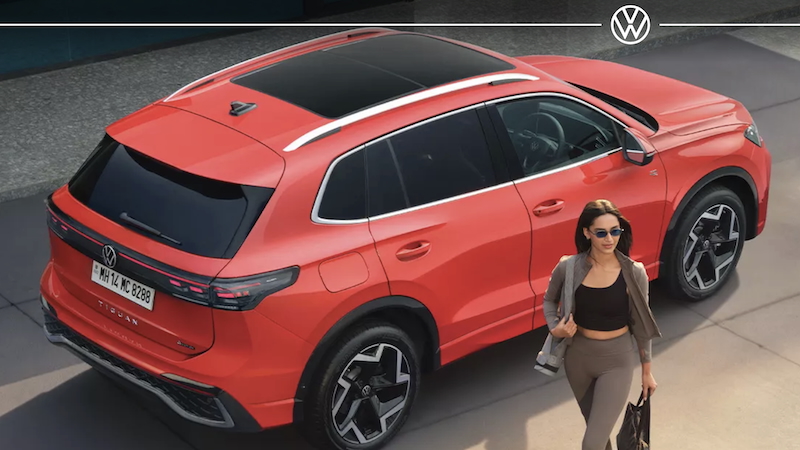
    MUMBAI:   Volkswagen India is switching gears on the communications front, awarding its press communication mandate to Ruder Finn India, one of the world’s heavyweight integrated communications and creative agencies.

    Effective 1 May, Ruder Finn will roll out a full-throttle strategy covering corporate storytelling, media relations, strategic counsel, and brand campaigns — all aimed at turbocharging Volkswagen’s innovation narrative and sharpening its profile in the fiercely competitive Indian market.

    Volkswagen India lead – marketing communications and press Gagan Mangal said the company is revving up its brand positioning for a fast-evolving automotive and media landscape. “We are excited to onboard Ruder Finn as our communications partner. Their strategic thinking, integrated approach, and deep brand storytelling expertise made them the right fit for the road ahead,” he said.

    Ruder Finn India CEO and head, Middle East Atul Sharma added: “Winning this mandate reflects our growing strength in integrated communications and corporate positioning. Volkswagen is an iconic brand that has defined the global and Indian automobile industry — we are thrilled to partner with them at such a pivotal moment. Our goal is to create compelling storytelling that mirrors Volkswagen’s legacy and future ambitions.”

    As part of the mandate, Ruder Finn will embed itself closely with Volkswagen’s internal communications team, ensuring consistent, insight-led messaging across earned and owned channels.

  • How Japan’s Honda, Nissan & Mitsubishi are thinking big – really BIG!

    How Japan’s Honda, Nissan & Mitsubishi are thinking big – really BIG!

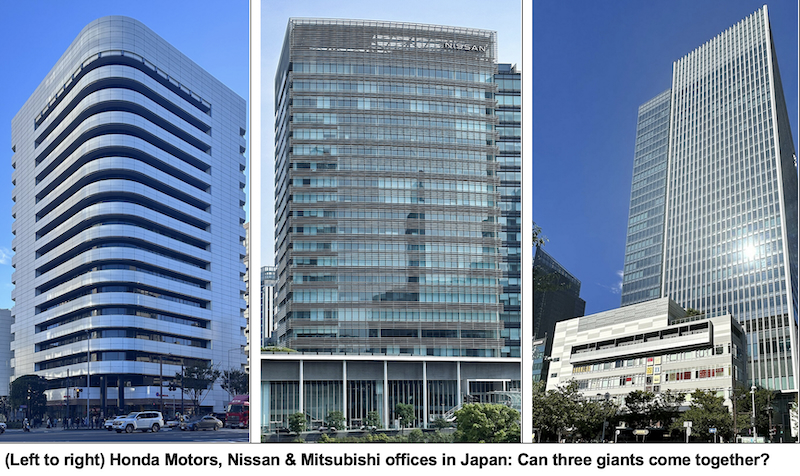
    MUMBAI: Can three major Japanese brands -otherwise tough competitors – integrate their business operations and operate under a single joint holding company? 

    That’s a possibility that auto makers Honda, Nissan and Mitsubishi Motors are considering.

    On 23 December Honda and Nissan announced that they were expanding their memorandum of understanding (MoU) they had signed in March  2024 and then in August 2024 into one which involved a deeper relationship. And they announced that Mitsubishi had decided to throw its hat into the ring and consider being part of the alliance. 
    .
    The 15 March MoU between Honda and Nissan related to a  strategic partnership for the era of vehicle intelligence and electrification. The 1 August agreement, was extended to include joint research in fundamental technologies in the area of platforms for next-generation software-defined vehicles (SDVs), particularly in the areas crucial for intelligence and electrification, to advance focused discussions toward more concrete collaboration. 

    The MoU between Nissan and Honda announced on 23 December  is about the two of them integrating their business operations and coming under a joint holding company aimed to serve as an option to maintain global competitiveness and for the two of them to continue to deliver more attractive products and services to customers worldwide.If the business integration can be realised, the two can aim to integrate their respective management resources such as knowledge, human resources, and technologies; create deeper synergies; enhance the ability to respond to market changes; and expect to improve mid- to long-term corporate value, said a press release.

    Japanese ccaars

    Additionally, Nissan and Honda can aim to further contribute to the development of Japan’s industrial base as a “leading global mobility company” by integrating Nissan and Honda’s four-wheel-vehicle and Honda’s motorcycle and power products businesses, enabling the brands of both companies to become more attractive and to deliver more attractive and innovative products and services to customers worldwide

    The two companies also announced that they had  signed another MoU with Mitsubishi to explore the possibility of its participation, involvement, and synergy sharing in the joint holding company. The  three companies have agreed to explore the possibility of achieving synergies at an increased level through Mitsubishi’s participation or involvement in the business integration. Mitsubishi Motors aims to reach a decision on its inclusion in the arrangement by the end of January 2025. 

    In the interim, Nissan and Honda said that they would be establishing an integration preparatory committee to facilitate a smooth integration and will conduct focused discussions. Based on the committee’s discussions, as well as the results of due diligence, the companies will examine and analyse more specific synergies. By promptly realising the synergies from the integration, Nissan and Honda can aim to become a world-class mobility company with sales revenue exceeding 30 trillion yen and operating profit of more than 3 trillion yen, said the press release. 

    The synergies they are expecting to benefit from include:

    * scale advantages by standardising vehicle platforms, 
    * enhancement of development capabilities and cost synergies through the integration of R&D functions, 
    * Optimizing manufacturing systems and facilities, 
    * Strengthening competitive advantages across the supply chain through the integration of purchasing functions,  
    * realizing cost synergies through operational efficiency improvements, 
    * Acquisition of scale advantages through integration in sales finance functions, 
    * Establishment of a talent foundation for intelligence and electrification
     

    Nissan director, president, CEO & representative executive officer Makoto Uchida said: “Honda and Nissan have begun considering a business integration, and will study the creation of significant synergies between the two companies in a wide range of fields.  It marks a pivotal moment as we begin discussions on business integration that has the potential to shape our future. If realised, I believe that by uniting the strengths of both companies, we can deliver unparalleled value to customers worldwide who appreciate our respective brands. Together, we can create a unique way for them to enjoy cars that neither company could achieve alone It is significant that Nissan’s partner, Mitsubishi Motors, is also involved in these discussions. We anticipate that if this integration comes to fruition, we will be able to deliver even greater value to a wider customer base.“
     

    Honda director & representative executive officer Toshihiro Mibe said: “Creation of new mobility value by bringing together the resources including knowledge, talents, and technologies that Honda and Nissan have been developing over the long years is essential to overcome challenging environmental shifts that the auto industry is facing. Honda and Nissan are two companies with distinctive strengths. We are still at the stage of starting our review, and we have not decided on a business integration yet, but in order to find a direction for the possibility of business integration by the end of January 2025, we strive to be the one and only leading company that creates new mobility value through chemical reaction that can only be driven through synthesis of the two teams At this time of change in the automobile industry, which is said to occur once every 100 years, we hope that Mitsubishi Motors’ participation in the business integration discussions of Nissan and Honda will lead to further social change, and that we will be able to become a leading company in creating new value in mobility through business integration. Nissan and Honda will start the discussion from today onwards with an aim to clarify the possibility of business integration by around the end of January in line with the consideration of Mitsubishi Motors.”

    Mitsubishi Motors director, representative executive officer & president and CEO Takao Kato said: “In an era of change in the automotive industry, the study between Nissan and Honda about a business integration will accelerate synergy maximization effects, bringing high value also to the collaborative businesses with Mitsubishi Motors. In order to realize synergies and to make the best use of each company’s strengths, we will also study the best form of cooperation.”

    Even if Mitsubishi decides to opt out of the mega plan, Nissan and Honda, said that they  intend  to establish, through a joint share transfer, a joint holding company that will be the parent company of both companies. This will be subject to approval at each company’s general meeting of shareholders and obtaining necessary approvals from relevant authorities for this business integration, based on the premise that Nissan’s turnaround actions are steadily executed. Both Nissan and Honda will be fully owned subsidiaries of the joint holding company.  Additionally, the companies plan to continue coexisting and developing the brands held by Honda and Nissan equally.

    schedule for biz integration

    This is broadly what the MoU between Nissan and Honda entails:
    * Shares of the newly established joint holding company under consideration are planned to be newly listed (technical listing) on the prime market of the Tokyo stock exchange (“TSE”). The listing is scheduled for August 2026.
    * With the listing of the joint holding company, both Nissan and Honda will become wholly owned subsidiaries of the joint holding company and will be scheduled to be delisted from the TSE. However, shareholders of both companies will continue to be able to trade shares of the joint holding company issued during this share transfer on the TSE.
    * The listing date of the joint holding company and the delisting date of both Nissan and Honda will be determined in accordance with the regulations of the TSE.
    * Regarding the organisational structure of the joint holding company, and both companies which will become wholly-owned subsidiaries of the joint holding company after the business integration, the optimal structure for realising synergies, including the integration of R&D functions, purchasing functions, and manufacturing functions, will be discussed and considered within the integration preparatory committee, with the aim of establishing an organisational structure that enables efficient and highly competitive business operations after the business integration.

  • Mitsubishi Electric India welcomes Atsushi Takase as new MD

    Mitsubishi Electric India welcomes Atsushi Takase as new MD

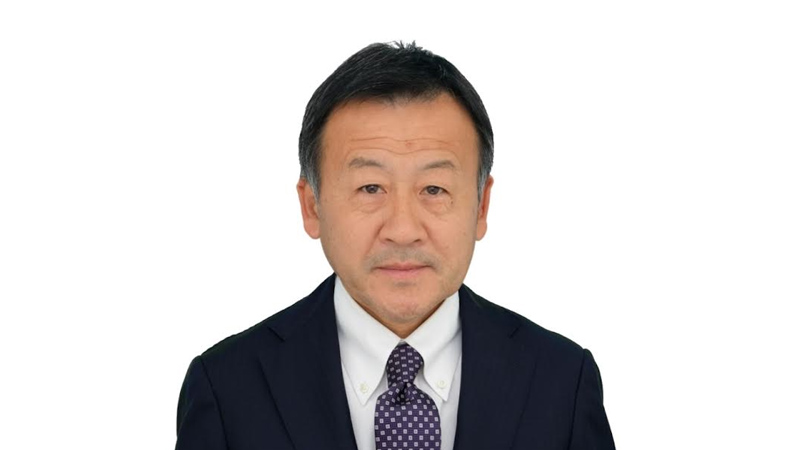
    Mumbai: Mitsubishi Electric India (MEI) has appointed Atsushi Takase as managing director, effective 1 October 2024. With over 36 years at Mitsubishi Electric, Takase has held notable roles, including deputy managing director at MEI and vice president of the transportation systems division in the USA, where he led major projects such as for the New York City Subway. His expertise spans transportation systems and global strategic planning.

    In his new role, Takase aims to enhance MEI’s operational efficiency, promote sustainable growth, and address social issues through business initiatives aligned with the ‘Make in India’ program. Drawing on his market knowledge, he will work to foster innovation and create value for stakeholders.

    “I am excited to join Mitsubishi Electric India at a time when the company is poised for significant growth,” said Takase. “I look forward to working with our talented team to further strengthen our market presence and continue our mission of ‘Changes for the Better’ through technology while prioritizing sustainability.”

    Since its inception in 2010, Mitsubishi Electric India has been a leader in delivering products and solutions for factory automation, elevators, air conditioning, and semiconductors, tailored to local market needs.

    As the company expands in India, Atsushi Takase’s leadership will be crucial in advancing its mission of ‘Changes for the Better,’ ensuring MEI stays at the forefront of technology while addressing societal needs.

  • Flipkart to host first-ever live commerce event for two-wheelers

    Flipkart to host first-ever live commerce event for two-wheelers

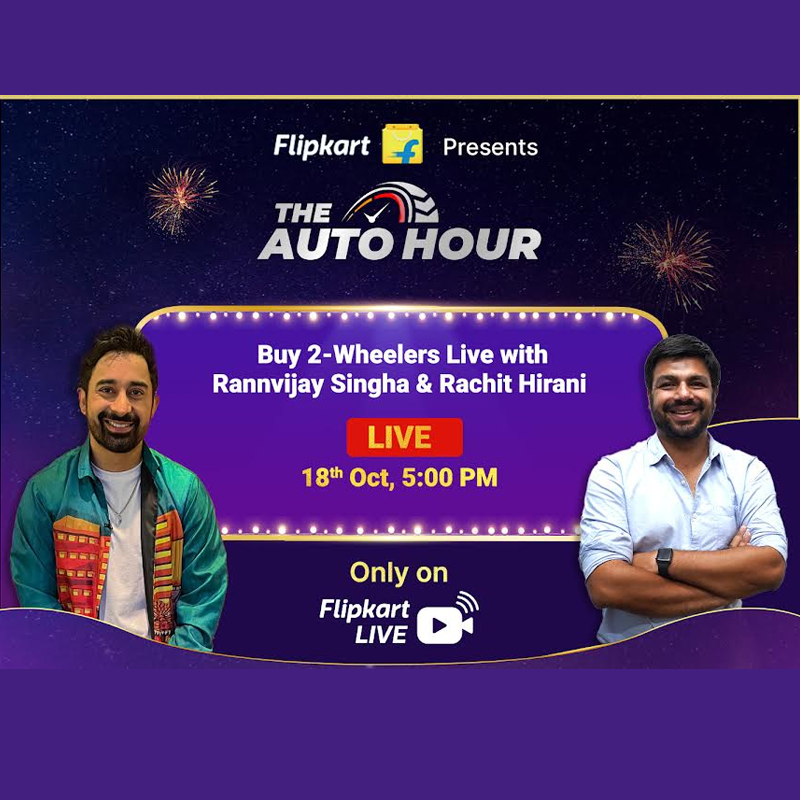
    Mumbai: Flipkart has announced its first-ever live commerce event for two-wheelers to be held on 18 October at 5 p.m. on the Flipkart mobile app. The one-of-its-kind industry event in the country will be hosted by Rannvijay Singha of MTV Roadies fame and auto influencer Rachit Hirani and will showcase a range of electric and petrol two-wheelers from top brands to millions of consumers across the country and enable them to make a purchase in real time.

    Customers can go to the Flipkart app and select bikes and cars from the category segment to join ‘The Auto Hour Live’ event. As part of the live commerce event, Flipkart will make available a range of two-wheelers from brands including Ampere, Bounce, BGauss, and Hero, where the hosts will showcase their features and talk about the evolving two-wheeler space. The event will also mark the launch of the Hero XTreme 160R Stealth 2.0, in one of the first virtual launches of a two-wheeler in the country.

    The live commerce event is significant as customers prepare to celebrate Dhanteras and Diwali, and is an auspicious time to make new purchases, particularly vehicles.

    Speaking of this unique initiative, Flipkart senior director of two-wheelers, automobiles & electronics Rakesh Krishnan Flipkart said, “The Indian two-wheeler industry is at the cusp of a revolution with e-commerce offering new avenues to millions of customers to own a two-wheeler in a seamless and affordable manner. Through our Live Commerce event, a one-of-its-kind activity, we aim to showcase the best of petrol and electric vehicles to our customers and allow them to book their favourite vehicles in real time. Customers will also be able to make use of our industry-best affordability constructs to make their purchase affordable across top cities.”

  • 3SS at IBC 2022: Operators get the opportunity to find their perfect match

    3SS at IBC 2022: Operators get the opportunity to find their perfect match

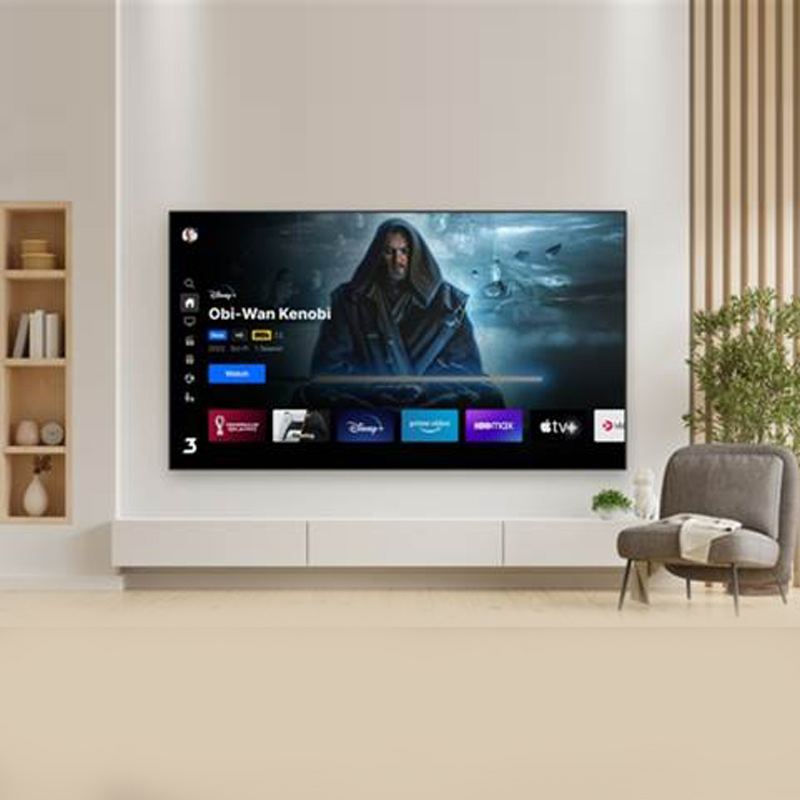
    Mumbai: 3Screen Solutions (3SS) will have its biggest-ever show presence at IBC 2022. Following a three-year hiatus from face-to-face events, the renowned user experience pioneer will present an unprecedented array of customer deployments and empowering technology partnership integrations. All of this is part of the multiple award winning 3Ready Entertainment Ecosystem.

    3SS CPO & CMO Pierre Donath said, “It’s truly wonderful to be back at IBC, and have the chance to see our industry colleagues from around the world, and to explore how together we can make entertainment more simple and personal for everyone,” he commented.

    He further added, “This is a milestone year for 3SS: we’re super excited to showcase our latest deployments and enabling technologies that help operators provide their customers with experiences that they really love, and to celebrate our collaborations with over 100 ecosystem partners, on our bigger-than-ever IBC exhibit.”

    “Our theme this year is ‘It’s A Match!’ and we really look forward to welcoming IBC visitors to our stands and helping operators discover the products and solutions that perfectly match their business needs for powering their next-generation entertainment platforms,” he added.

    The ever-expanding 3Ready product platform was created to assist operators in accelerating time-to-market, delivering a unified experience across all devices, launching revenues, and rapidly innovating while avoiding technology vendor lock-in.

    3Ready is now enabling next-generation video experiences for over 20 major operators around the world, with a combined reach of more than 35 million households. The 3Ready Entertainment Ecosystem enables service providers to fully exploit 3Ready’s flexibility, which is enabled by its underlying architecture. 3Ready works seamlessly with the backend, revenue protection, recommendation engine, STB, and other system elements of the operator’s choice thanks to its extensive pre-integration options. Uncertainties in technology are eliminated, allowing providers to focus on providing excellent service.

    3SS reimagines in-car entertainment at IBC

    For the first time, 3SS will present the future of in-car digital entertainment at IBC. The company has brought a “Polestar 2” car to Amsterdam and parked it outside the exhibit area, inviting visitors to take a seat and experience its 3Ready-powered automotive experience, which is based on the Android Automotive Operating System (AAOS).

    In-vehicle displays, in addition to all of the familiar screens, are the next touchpoints for enjoying video entertainment on the go. 3Ready enables operators and automobile manufacturers to add entertainment to any in-car infotainment system. UX can be adjusted and targeted dynamically, with the ability to curate all content, including third-party apps. The end result is superior entertainment and enjoyment for all occupants of the vehicle. To date, 3SS has two projects with automobile manufacturers.

    All-new 3Ready Control Centre takes centre stage

    3Ready Control Center 3.0 is a new SaaS experience management solution from 3SS. With this centralised, one-stop solution that is highly visual and intuitive, anyone can curate a highly personalised and unified experience across all screens. 3Ready Control Center allows more members of an operator’s content curation and marketing teams to easily target, manage, and visually optimise UX to increase customer retention. Operators benefit from real-time management of all service and device apps’ content, features, and branding from a single unified location.

    A/B testing is the most direct and powerful method of gauging viewer preferences, and it can be done with high automation, individually or by customer segment. Experiments with new features can be carried out quickly and with confidence, as can adaptations.

    The dashboards of the 3Ready Control Centre have simple functions and navigation that do not require technical knowledge. This reduces reliance on technical specialists. Editors can make necessary UI/UX changes visually, and all of the operator’s apps will automatically retrieve and apply them without requiring any code changes. Consistent, stable, and scalable cross-device user experiences result, with significant time and effort savings.

    3Ready Control Centre integrates seamlessly with any backend, recommendation, metadata, analytics, and advertising solution that an operator selects.

    The benefits of holistic content discovery and recommendation benefit both super-aggregators and their customers. The 3Ready Control Centre allows you to curate content from any source, including third-party providers. The end result is a unified and personalised user experience across all screens. Operators gain greater utility and flexibility than ever before by managing all client apps, including connected TV brands, STBs, tablets, smartphones, in-car displays, and so on, in a streamlined, highly efficient manner.

    Demos of the latest integrations for transformational UX

    The 3SS booth (5.A83) will feature an unprecedented demonstration array of enabling technical integrations with world technology leaders. These include, among others:

    Targeted advertisements: 3SS will demonstrate a solution integrated into the 3Ready platform that enables operators to quickly deploy linear ad insertion on OTT and hybrid STBs while providing their customers with a seamless ad experience (Live to Ad). It is independent of any ad solution or ad network and provides cross-device control over the advertising experience to enable ad-supported business models.

    KAON, 3SS, and Green Streams: KAON, 3SS, and Green Streams have collaborated to develop a new pre-integrated end-to-end technology platform that will enable Tier 2 and medium-sized providers to quickly and affordably deliver super-aggregated video services based on Android TV. Green Streams’ TVaaS backend platform, powerful yet reasonably priced KAON Netflix Certified STB, and the advanced 3Ready UX comprise the new turnkey solution. Tier 2 and mid-sized providers can thus accelerate service launches and revenue growth.

    Allente implements 3Ready Control Center 3.0 in collaboration with ContentWise: Nordic pay-TV behemoth Allente has become the first operator to deploy 3Ready Control Center 3.0. This project is a critical enabler of Allente’s next-generation super-aggregated TV services for Sweden, Denmark, Norway, and Finland. Allente and its customers will also benefit from 3Ready Control Center 3.0’s seamless integration with ContentWise’s UX Engine (stand 5.C65). This technological combination boosts customer engagement by personalising user experiences in real time.

    Tele2 AB’s new TV Hub Mini: A high-spec 4K dongle for OTT (over-the-top) TV, was developed in collaboration with 3SS and SEI Robotics Inc. (stand 5.F64). Subscribers enjoy a custom 3SS-engineered user experience powered by 3Ready in 3SS’ first major operator dongle deployment, which is based on Android TV OS. The SEI Robotics 4K dongle provides Netflix, as well as a variety of other streaming apps and TV channels.

    ThinkAnalytics with 3SS : ThinkAnalytics and 3SS will debut their new pre-integrated solution that transforms UX testing and optimisation, assisting operators in increasing engagement and reducing churn. 3Ready Control Centre is now pre-integrated with Think360, ThinkAnalytics’ content discovery and analytics platform, enabling operators to deploy user experiences that maximise monetisation opportunities by leveraging data-driven continuous improvement. Editors, marketers, and curators do not require technical expertise, which reduces costs and accelerates time-to-market. Actionable insights enable operators to provide their customers with the entertainment UX they truly desire.

  • LML partners with former Harley Davidson manufacturing facility in India

    LML partners with former Harley Davidson manufacturing facility in India

    MUMBAI : Laying the groundwork for a long-term future in the EV business in India, LML Electric on Thursday announced a strategic partnership with Saera Electric Auto, which formerly handled manufacturing for global major – Harley Davidson.

    The company will use Saera’s facility located in the auto hub of Bawal in Haryana to produce its disruptive range of upcoming electric vehicles. “The highly advanced and innovative infrastructure of Saera, backed by its historical competence in manufacturing will now be leveraged to develop the much talked about and anticipated EV range of products from the LML electric stable,” the company said in a statement.

    LML highlighted that it intends to build a future-ready manufacturing facility using Saera’s technology and processes. It termed the partnership as one of the first of many steps for LML to transition into a 100 per cent ‘Make in India’ company by end of 2025.

    “The manufacturing plant, which spans 2,17,800 square feet and has a capacity of 18,000 units per month, is equipped with state-of-the-art infrastructure. It’s prior excellence in manufacturing for global behemoths would offer a distinct edge in streamlining, scaling up, and providing world-class quality assurance to LML, making this a very promising collaboration,” it said in the statement

    LML CEO Yogesh Bhatia said Saera was the company’s first choice because it holds unparalleled expertise and reputation with some of the world’s premier auto brands. “With this alliance as we aspire to create a brand that is 100 per cent localised and has an impeccable quality assurance that is world-class. We foresee an immediate need for automakers to reduce their dependence on imports and build an infrastructure that is designed and capable to address the rapidly growing demand in India and the world over. We are confident that this partnership will be a stepping stone in our vision to redefine and reimagine the future of EV manufacturing in India to bring the country at par with global manufacturing standards.”

  • We want to grow our user base two-fold & daily rides by 3X in 2022: Rapido’s Amit Verma

    We want to grow our user base two-fold & daily rides by 3X in 2022: Rapido’s Amit Verma

    For those of us who have spent precious stretches of time stuck in traffic jams during rush hour, the thought of getting on a bike and zipping through the traffic has definitely looked appealing. It is this everyday challenge that Rapido, a bike taxi service seeks to help overcome. The company which was among the first to introduce the concept of bike taxis in India in 2015, has over one million ‘Captains’ (bike taxi drivers) today, out of this, nearly 15 per cent are women.

    Over the years, Rapido has emerged as a key player in India’s ride-hailing industry by focusing its operations on the two-wheeler taxi segment. The Bengaluru-based startup has expanded its presence to 100 cities across the country that include tier 1 to tier 3 cities. But faced challenges post-2020, as the pandemic forced most commuters to work from home. Things began to look up in 2021, as cases subsided, only to return to the same routine with a new wave of infections.

    As we roll into 2022, IndianTelevision’s Anupama Sajeet caught up with Rapido head of marketing and growth Amit Verma to talk about the seven-year-old startup’s advertising and marketing for the year amid the pandemic. An avid marketer with a decade-plus experience in performance & growth marketing, Verma was previously with self-drive car rental company Zoomcar, and took over the role of marketing head at Rapido right at the outset of the pandemic. In an extensive conversation, he shared the learnings of the past year and his insights on the trends that might dominate the commute and ride-sharing industry in the new year, including the two latest campaigns featuring actor Ranveer Singh and Allu Arjun.

    Edited excerpts:

    On Looking Back at 2021 as a year of disruption or opportunity for Rapido

    Looking back, last year was a blessing in disguise as we got plenty of time to introspect. Since we were not able to run our bike taxi business, because of the pandemic, we focused on launching new verticals like auto and C2C (Consumer-to-consumer) hyperlocal delivery services. On both fronts, we are doing really well and we have a presence in auto & C2C in more than fifty cities today, and it contributes to 30 per cent of our overall business. So that was really helpful to sustain operations amid the disruption in demand for bike taxis.

    From a business numbers point of view, we succeeded in resetting the 1 ½ years of the pandemic. But, today we stand at the same position where we were about two years back when the pandemic hit (in 2020) and our operations went for a toss. So, to be honest, 2021 was about trying to regain our pre-pandemic numbers, of which we have recovered 100 per cent. If you talk of daily levels, we are doing about four lakh rides every day. So apart from the three to four months of lockdown, 2021 has been a good year overall for us. We spent more than 150 cr in the past year on performance marketing, branding et al, which will again go up by 200 per cent this year. We now have close to a 25 million user base, which we plan to grow two-fold this year. 

    On the brand messaging or marketing strategy in 2021

    The two major campaigns we launched in March and November in 2021 were with the aim to sharpen our messaging of  ‘affordable, convenient, and time-saving commute’ options. Even in our previous brand campaigns, we have tried to highlight these three value propositions, and this time too, with our first celebrity campaign, ‘Smart ho, toh Rapido’ campaign featuring Ranveer Singh and Allu Arjun, we aimed to position Rapido as a customer-centric brand and highlight its key USPs, while doing the relative comparison with the different mode of commute, like bus and auto.

    On the response to the ‘Smart ho, toh Rapido’ campaign

    We got a pretty good response on both these campaigns. When we did the first campaign in March we got an approx. 50 per cent jump in upper funnel numbers, and it helped us to garner new users at a faster rate. But unfortunately, then Corona came into the picture and we were not able to fully reap the benefits of the ads. Again, in November we got tremendous results for the Ranveer-Allu Arjun ad campaigns.

    Although Rapido has a pan-India presence, within India one has to accept the fact there are different regions that talk in different languages and with different celeb-affinities. To encash that affinity, and increase the reach of our campaign so as to get good ROI out of it, we chose these two celebrities for the HSM (Hindi speaking market) & the non-HSM markets. Additionally, they also went well with our brand image of ‘young, vibrant and smart’ as they have a similar kind of value proposition as the brand.

    We have also taken up big properties like the recent T20 World Cup that happened in November which has been partially instrumental to bring really good ROIs. We have seen more than 100 per cent uplift on upper-funnel numbers, even the week-on-week growth which we witnessed during this campaign was more than 20-25 per cent.

    On the brand’s ad spend allocation across media: TV, digital, print, OOH

    We are a digital-first brand. Our 100 per cent revenue comes from online bookings, as we don’t do offline bookings. So digital is our first priority. But, we rely heavily on TV for branding. In terms of ad-spends on the campaign we launched to create awareness about the brand, then we spent 65-70 per cent on TV, 15 per cent on OOH, and the rest on Digital. Previously, we have explored Print too, but we did not get a good ROI out of it essentially because we are a non-seasonal brand, and for us, as a commuter category brand that never comes out with a seasonal or festive sale, it did not make sense. So apart from Print, we are using every other media.

    On tapping into influencer marketing

    Although we have not used influencers for the brand campaigns, from our overall marketing expenditure, nearly 5-10 per cent spend goes into micro-influencers and micro-bloggers. With the advent of short video platforms, a new set of micro-influencers have come up, and they have a pretty good reach. As a brand we are in the process of fully exploring influencer marketing, having seen that it not only increases brand awareness, but one can get a really good ROI from these influencer marketing campaigns.

    On the brand’s target audience and consumer demographic

    From a demographic point of view, we have bifurcated the category into two different sections – T1 and T2. In T1 we are mainly talking to those users who fall into the age group of 18-28 years, which is our primary TG and 80 per cent of our business comes from there. These are guys who don’t fall into the high-income bracket. In T2, 60 per cent of business comes from state capital cities- of which we have pretty good coverage. And then we have a long tail of tier 3 cities. We have witnessed really good growth from tier 2, tier 3 cities during the last two campaigns, so certainly we see a reasonable potential over there. Right now we are not looking at expansion into newer regions so much, as we are trying to capitalise on our presence in each and every city and garner good numbers from the growth point of view.

    On plans to cater to the female demographic in the near future

    We have female captains in multiple metropolitan cities like Hyderabad, Delhi, Bangalore etc, only their percentage might be lesser for the simple reason that you do not get female riders very easily. But we are focusing on increasing their numbers going ahead. Unfortunately, when you talk about travel or commute as a category, you’ll get 80-85 per cent of users who are predominantly male. Just because of that, whenever one is drafting one’s brand communication you have to focus more on your TG which is male-centric, due to which regrettably, there has not been much female-centric communication from our end. But in the near future, you will certainly see some communication go out from our brand which will cater to the female consumer also.

    On Looking Ahead at 2022 and goals for the brand

    We don’t have a major expansion plan with regards to new cities. But, we want to increase our user base by 2X and our overall daily rides by 3X, which means we will spend a lot of money on user acquisition and on the repeat users so that we can get more users to take rides, and increase their ride frequency. Also, with what we have witnessed over the last two years, the influencers and micro-influencers have started creating a lot of impact on the user base. So, we plan to leverage that by increasing spend there. So approx. 6-12 per cent spend might go on a regular basis on influencer marketing this year.

    On the key trends that you think might dominate in the industry this year

    I think the next big thing we are betting on is the EV ride, because of the environment-friendly and cost-cutting factors. Everyone in the industry, I think, is trying to enhance their EV capability and general EV mobility in the commute segment. We will also be focussing more on EVs, and on how we can increase the adoption of EVs in the overall commute and bike taxis. As of now, we do have some electric vehicles and we have also done a couple of partnership rides. Recently, we entered a tie-up, where we are providing EVs to our delivery boys that are being used to fulfill deliveries of Swiggy and Zomato.

    On any personal learnings, you would be taking into the new year

    If the last two years have taught us anything it is that- be it an organisation or individual- one should be quick, adaptive, and volatile. With the odds changing constantly, that’s the only way one can survive. That’s the lesson I have learnt and certainly going forward too, we will try to replicate all these qualities so that we can grow further and at a really good pace.

  • Nearly 40 % readers discontinued newspapers during pandemic, shows Havas Media report

    Nearly 40 % readers discontinued newspapers during pandemic, shows Havas Media report

    Mumbai: Covid-19 proved to be a game-changer for Print as a medium in India. The multiple waves of the pandemic and the subsequent lockdowns disrupted the production and distribution of newspapers and magazines across the country. Yet, despite the lack of readership data and interrupted circulations, Print emerged as one of the most credible sources of information for most consumers, brands, and marketers, during these volatile times, found Havas Media Group in its latest research.

    The Group released its latest whitepaper bolstering its focus on investing in – Meaningful Media – “Media That Matters”. The report attempts to decode the effectiveness of print as a medium and the shifts in readership behaviour during the pandemic.

    According to the report, close to 40 per cent of the readers discontinued newspaper subscriptions during the pandemic, mainly due to factors such as the risk of infection and change in media consumption patterns. However, the time spent reading newspapers increased significantly, especially in the age group of 41-50 years.

    Approximately, 15 per cent of the readers shifted to regional or vernacular publications, on the heels of trust and tenability, giving way to some interesting trends. For instance, in the South, nearly 60 per cent of readers sought Print as a medium to gain more knowledge, while in the West, around 33 per cent of consumers read newspapers to find local news, according to the report.  

    The report also reveals that there was a huge uptake of news apps. Around 57 per cent of the respondents of this study use news apps. Apart from being a daily habit, some of the top reasons for reading newspapers continues to be gaining more knowledge, staying updated about current affairs and improving language skills. Content related to science & technology, global affairs, and health remained some of the preferred and most-read sections following general news.

    While Television and Social Media were found to be the most credible source of news, print followed closely at the third position.

    The research involved Stratified Random Sampling from YouGov’s proprietary panel which consists of over 2,00,000 active panelists in India, aged between 21-50 years, male and female with a current subscription to at least one daily newspaper spread across 14 key cities in India.

    Print drives highest efficacy for automobile industry

    “A category-wise deep dive on the effectiveness of the medium for advertisers and marketers revealed that Print plays a key role in influencing brand perception, from Quality to Price to Trust, especially within the Automobile category,” says the report.

    Some of the findings specific to the auto category revealed that Print has the highest effectiveness in driving brand awareness, of nearly 55 per cent for first car intenders. For repeat intenders, Print helps drive brand preference across the funnel. Car advertisements were the second most recalled after mobile phones (higher amongst repeat intenders).

    Maruti, Hyundai and Tata Motors ranked highest among the most recalled auto brands. Consumers paid higher attention to advertisements in newspapers, and only 10 per cent skipped them.

    Apart from the auto industry, Print continues to be the preferred source of medium to drive efficacy for other categories like smartphones, finance, and education as well. And even though the print medium saw a dip in readership, owing to the pandemic, the consumer expectation continues to grow stronger in newspapers in terms of content and not just news.

    “This is the resurgence story of Print in India,” said Havas Media Group, head of strategy, Sanchita Roy said, “With the onset of the pandemic in 2020, the Print sector suffered a huge loss especially on the back of the cancellation of subscriptions and other reasons. Hence, it became pertinent to understand not only the consumer shifts that was happening in the media ecosystem but also understand if Print continued to be as effective as before in impacting business outcomes. Despite the short-term de-growth, Print is back with a bang. It continues to be one of the most trusted and credible mediums that helps influence brand perception.”

  • CredR raise $ 6.5 million in latest round led by Yamaha Motors & Astarc Ventures

    New Delhi: Bangalore-based CredR (Incredible Technologies Pvt Ltd) has raised $ 6.5 million, in its latest round led by Yamaha Motors to leverage the fast-growing market for used two-wheelers.

    The latest round of funding also witnessed participation from existing investors Omidyar Network India and Eight Roads Ventures, as well as automotive-focused Astarc Ventures.The six years old two-wheeler consumer brand created an omnichannel buying experience, through a chain of flagship showrooms across Maharashtra, Karnataka, Delhi, NCR, and Rajasthan. The funding will be used towards consolidating its market position, strengthening its technology platform, and expanding customer offerings, it said on Wednesday.

    CredR has been focused on formalising the unorganised and fragmented used two-wheeler market, with over one thousand dealers across India. Even though India’s used two-wheeler market accounts for over 30 million annualised units, challenges around standardisation of pricing, strong quality inspection and customer experience, and most notably post-sales support, persist. “Our mission is to solve for the existing trust deficit in the category through their full-stack vertically-integrated business model empowered with technology,” said the company.

    Speaking about the company’s goal for the future, CredR co-founder Sasidhar Nandigam said, “Our partnership with Yamaha Motors validates our shared vision to provide customers the best option to buy/sell used two-wheelers. They are a name to be reckoned with in the global mobility sphere. The funds raised in this round would help us to go deeper into existing markets and provide a world-class customer experience empowered with technology. Yamaha Motors’ comprehensive understanding and experience in the two-wheeler mobility segment aligns with our first-to-market business model.”

    Commenting on this investment, Yamaha Motors, senior general manager New Venture Business Development & R&D Strategy Section, Technical Research & Development Center, Hajime Aota said, “India is one of the biggest mobility markets in the world and the personal freedom that motorcycles and scooters bring, is a huge and lasting benefit for this country’s people, regardless of whether they are new or used. CredR’s clear vision behind its thriving used two-wheeler business resonated with us, and we decided to invest in the company to help their business scale bigger, which will subsequently lead to a higher quality of life for India’s people.”

    Omidyar Network India, principal, Aditya Misra said the company is doubling down its investment because it believes that two-wheelers are the choice of transportation as much in the top 30 cities in India as the rest of the country. “We find CredR’s customer-centric technology-first mindset applied to their O2O (online to offline) model to be a massive advantage that can go a long way in enhancing trust for consumers,” he added.

  • Tata Motors elevates Girish Wagh as ED; Guenter Butschek to step down

    Mumbai: Tata Motors has announced changes in its Board of Directors. The automaker has elevated Girish Wagh as executive director, with effect from 1 July. He currently serves as the president of commercial vehicles.

    The company also announced that Guenter Butschek will step down from his role as CEO and MD from 30 June. He would relocate to Germany at the end of the contract for personal reasons. “Butschek will continue as a consultant till the end of this fiscal year,” it said in a statement.

    President- passenger vehicles, Shailesh Chandra, CEO – Jaguar Land Rover, Thierry Bollore, and Wagh will continue to work closely with the chairman, N Chandrasekaran to lead Tata Motors, the company stated.

    Speaking on the latest announcement, Tata Motors’ chairman, N Chandrasekaran said, “I would like to thank Guenter for leading Tata Motors successfully over the last five years and creating a strong foundation for the future. I look forward to his continued inputs as a consultant to the company.”