Tag: automation

  • GoaFest 2025: Future Tense Rishad Tobaccowla urges leaders to rewrite the rules before AI does  

    GoaFest 2025: Future Tense Rishad Tobaccowla urges leaders to rewrite the rules before AI does  

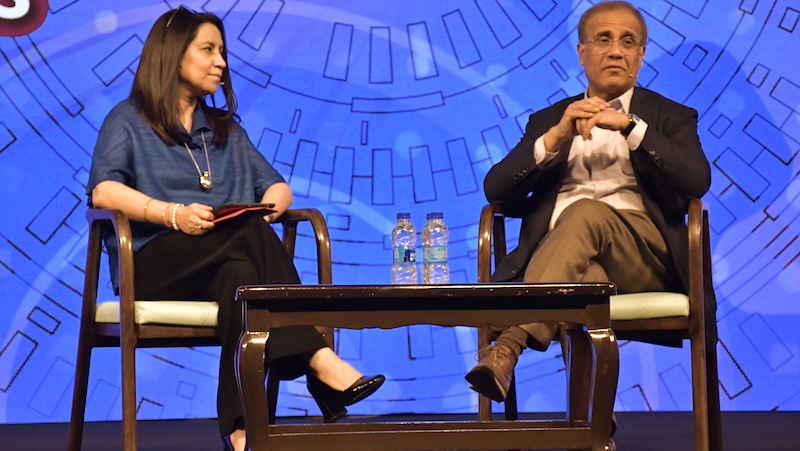
    GOA: Change sucks, but irrelevance sucks harder. With that disarming one-liner, author and Publicis Groupe senior advisor Rishad Tobaccowala had the GoaFest 2025 crowd hooked. In a sharp and soul-searching fireside chat with Publicis Groupe CEO of  South Asia Anupriya Acharya Tobaccowala offered a crash course in survival and soul in an era increasingly dominated by algorithms, automation and AI anxieties.

    Tobaccowala’s core thesis was clear: AI won’t replace you, someone using AI better will. But the real danger isn’t the technology, it’s complacency. “Too many companies are trying to use AI to make their broken models slightly more efficient,” he warned. “You don’t just want faster printing presses you want a new way to communicate entirely.”

    To prove the point, he spotlighted the New York Times, a legacy media brand that reinvented itself from a print-first paper to a digital-first platform with 12 online subscribers for every print one. Today, 35 per cent of its revenue comes not from news, but from games, recipes, and other lifestyle content. “They don’t call themselves a newspaper anymore, they’re an entertainment brand with a news vertical,” he quipped.

    Referencing Andy Grove’s classic Only the Paranoid Survive, Tobaccowala argued that the age of paranoia has passed. In its place? Dual thinking. “Successful companies must run two business models at once, one for today, and one for tomorrow,” he said.

    His advice: Spend five to 10 per cent of your money and 20–25 per cent of your best talent building the future. “Don’t assign tomorrow’s strategy to the person you don’t know what to do with,” he warned. “That’s like watering your grandfather’s grave instead of feeding your kids.”

    “I worked 37 years in one company, lived 45 years in the same city, and met my wife 53 years ago,” he said. “So when I say I hate change, I mean it. But irrelevance? That’s worse.”

    He dismantled the sugar-coated corporate approach to transformation. “Telling people change is good is a lie. It’s painful. It makes you look stupid. It scrapes your knees like learning to ride a bike.” What works instead? A three-part formula: incentives, training, and personal relevance. “Tell employees what’s in it for them, not just what’s in it for the company,” he urged.

    Tobaccowala didn’t mince words about leadership either. “We’ve entered the age of de-bossi-fication. Nobody wants a boss. They want a leader.”

    Monitoring, allocating, and measuring won’t cut it anymore. Today’s leaders must inspire, create, and mentor. If you’re not spending at least 50 per cent of your time leading instead of managing, he warned, “you’ll be retired by machines or Gen Z sooner than you think.”

    Tobaccowala also had sharp advice for younger professionals: “You’re in a 50-year career. Stop thinking in 6-month cycles.” He urged them to chase growth over glam, pick the right boss, and resist jumping ship just because the grass looks greener. “The grass is greener because it’s fertilised with… well, you know what,” he joked.

    Despite all the AI hype, Tobaccowala believes the machines may help us rediscover what makes us human. In 2023, the most popular AI tools weren’t just about productivity, they were about relationships, purpose, and self-growth.

    “AI will amplify your creativity, but it can’t replace your conviction,” he said. “It’s not about resisting AI. It’s about partnering with it without outsourcing your soul.”

    As he signed off, Tobaccowala reminded the audience of something many forget. “India is not the future. It is the present. Publicis gets 65 per cent of its workforce and a growing chunk of its global revenue from India, China, and the US,” he noted. “You’re not a footnote. You’re a headline.”

    He ended with a final, cheeky mic-drop about his book’s global release: “My publisher didn’t want to launch in India first. Said it wouldn’t sell. Now India is the only place it’s sold out twice.”

  • AI, automation & beyond: Navigating digital advertising’s new frontier

    AI, automation & beyond: Navigating digital advertising’s new frontier

    Minor changes in the quickly changing advertising scene of today are as significant and upending as those resulting from automation and artificial intelligence (AI). Digital advertising has been transformed by these technologies, which have opened up new creative possibilities, efficiency levels, and precision levels. But as we enter this ‘new frontier,’ it’s critical to look beyond the technical aspects of automation and artificial intelligence and comprehend their wider effects on consumer trust, brand authenticity, and the strategic human touch that cannot be replaced. Here, I want to discuss the many opportunities and difficulties that modern advertisements face.

    AI-powered customisation versus real connection

    The irony of AI-driven personalisation is that, although technology enables brands to customise experiences like never before, there is a chance that the real human connection that serves as the foundation for customer trust may be lost. Ads are now targeted not just by demographics but also by micro-segments, behavioral data, and even real-time mood analysis thanks to AI’s ability to evaluate enormous data sets. As the chief revenue officer, however, I see an increasing need to strike a balance between this effective targeting and a genuine voice. Customers are astute; they prefer to feel understood by firms rather than taken advantage of. Instead of treating insights as a script, brands should think about how automation might help with authentic storytelling.

    Automation’s contribution to innovation beyond efficiency

    Automation is frequently boiled down to an efficiency tool that eliminates manual labor, saves money, and saves time. The true potential, however, is in how automation allows innovative and smart brains to push the envelope. Automating tedious processes frees up time for invention, testing out novel ideas, and trying out forms that weren’t previously practical. For example, advertisers may now run innumerable ad versions using dynamic creative optimisation (DCO), which reacts in real time to audience preferences. Beyond efficiency, this flexibility allows for genuine creativity in messaging, audience interaction, and campaign improvement.

    Transparency and ethics: AI’s hidden aspect

    Ethics is an important but frequently disregarded aspect of AI and automation in advertising, especially when it comes to data protection, transparency, and equity. It is our duty to make sure AI algorithms that determine which advertisements are shown don’t perpetuate prejudice or lead to unintentional exclusion. We must promote openness as stewards of a brand’s message, explaining to audiences how data is used and pledging to follow policies that protect their online privacy. Customers are becoming more conscious of their data rights, and businesses that can openly communicate the ways in which automation is used will gain a sustained competitive edge in terms of customer loyalty and brand trust.

    How to draw the line between automation and the human aspect

    Workflows can be made more efficient by automation, but not every part of digital advertising should be automated. Machines cannot replace the human empathy and insight needed to craft a message, especially during the strategic formulation stage of a campaign. Automation should complement, not replace, the human aspect in execution. In order to empower human teams to make better decisions, the emphasis should be on integrating tools that give them greater insights. Instead than replacing human creativity, consider automation as enhancing it.

    AI’s place in future-proofing techniques

    Future success depends on your ability to adjust to the rapid changes in digital advertising. Brands can remain ahead of the curve by using AI’s predictive skills to foresee shifts in consumer behavior before they happen. For instance, AI may assist in predicting future trends by evaluating past campaign data, enabling firms to make proactive strategy adjustments. Advertisers that can anticipate and adjust to changes in consumer demand will always be relevant, while those who only use historical data run the risk of lagging behind. This agility will define competitive advantage in the future.

    Creating cross-functional, agile teams with an AI mentality

    Companies need teams who can think across silos and work with a digital-first, AI-savvy mindset if they want to fully utilise AI. This is more than just employing machine learning or data science experts. Marketers who comprehend the potential and constraints of data, creatives who can generate ideas in dynamic, data-driven settings, and strategists who know when to rely on the machine and when to consult a human viewpoint are all necessary for the successful integration of AI and automation in advertising. Agile, cross-functional teams that view AI as a cooperative tool rather than a single, all-encompassing force are essential.

    The importance of continuous learning in the AI-driven landscape

    This digital frontier requires continuous upskilling and adaptability. Technologies in AI and automation evolve, and companies must nurture a culture of learning to stay relevant. As AI begins to shape our approaches to both media planning and creative ideation, the question shifts from how we use AI to how well we use it. Training in understanding data insights, interpreting AI-driven analytics, and maintaining ethical practices will become essential skills for teams navigating this space. For leaders, investing in this education will prove invaluable for staying competitive.

    Unquestionably, automation and artificial intelligence are revolutionising digital advertising. However, as leaders in this field, we need to carefully guide this change. We should make use of these technologies to create trustworthy, nimble, and morally sound brands. The goal of our work is always to interact with people in a meaningful and responsible way, even though this new advertising frontier is full of opportunities.

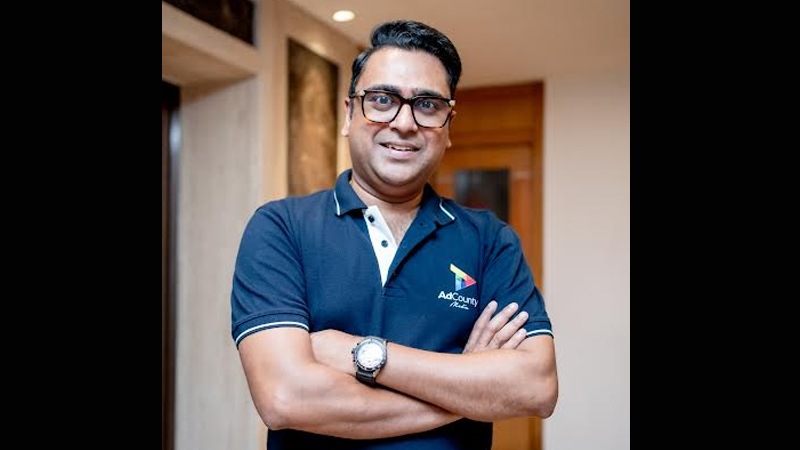
    The article has been authored by AdCounty Media co-founder and chief revenue officer Delphin Varghese.

  • Yellow.ai and Infobip partner to elevate experience with Gen AI-powered customer support automation

    Yellow.ai and Infobip partner to elevate experience with Gen AI-powered customer support automation

    Mumbai: Yellow.ai, a global generative AI-powered customer service automation announced its strategic partnership with global cloud communications platform Infobip to enable enterprises with AI-powered customer support and deliver elevated customer experiences. The collaboration aims to establish a strong global synergy by leveraging combined capabilities in voice automation, CPaaS, and generative AI solutions, intending to expand market presence across North America, Europe, India, the Middle East, and Asia-Pacific markets.

    By integrating proficiencies, Yellow.ai and Infobip will engage in building an end-to-end voice solution to address the increasing demand for humanized and personalized voice conversations. As part of the partnership, Yellow.ai will power its CPaaS solutions across channels such as WhatsApp, SMS, and email through Infobip’s platform to create seamless conversational experiences. Additionally, the focus will revolve around harnessing Yellow.ai’s advanced generative AI capabilities, which have already demonstrated success by deploying over 100 gen AI-powered bots within just three months for customers such as Pelago by Singapore Airlines, Oona Insurance, leading Indian NBFC companies, and the largest US housekeeping brand .

    Yellow.ai CPO & co-founder Rashid Khan said, “At Yellow.ai, we’ve consistently aimed to leverage our partner ecosystem’s synergies to drive business outcomes for our customers. Our collaboration with Infobip will strengthen our presence in existing markets and aid in devising robust go-to-market strategies for new regions such as Europe. Infobip’s expertise in creating connected experiences, coupled with our generative AI-powered customer service automation solutions, will undoubtedly empower enterprises to offer more intuitive, and personalized experiences, creating memorable conversations with their customers.”

    Infobip VP GM Asia Harsha Solanki, said, “We are committed to empowering businesses by providing them with innovative solutions to facilitate end-to-end conversational customer journeys. This strategic partnership with Yellow.ai further aims to create value for brands. Together, we will enable them to establish reliable, secure, and swift connections with their existing and new customers across geographies over their preferred communication channels. Leveraging our combined Omni channel capabilities and Gen AI-powered technologies, we will not only enhance customer journeys but also boost conversion rates, drive sales, and improve customer loyalty.”

    The partnership will target industries including retail and consumer electronics, BFSI, telecommunications, utilities, and healthcare. By jointly coordinating go-to-market strategies and customer success initiatives, Yellow.ai and Infobip are dedicated to driving ROI impact at scale for their customers globally. While the partnership initially emphasizes expanding business through existing product suites, both companies plan to collaborate on product ideation and development in the long term.

  • Never underestimate the significance of creativity – Gaurav Kaushik

    Never underestimate the significance of creativity – Gaurav Kaushik

    Mumbai: Currently, consumer-driven marketing campaigns take further escalation by different paths of automation and creativity. No more exceptions are using only organic strategy to build a brand successfully. Possibly the peculiar campaigning is the epitome of the right blend of marketing mix. Marketing and Technology become two vital sides of the same coin, brands dynamics have changed after Covid 19, and Brands trying to be more focused and accessible to target audiences with MarTech agencies. These agencies have become key solutions to address KPIs in recent years.

    Gaurav Kaushik is an entrepreneur and visionary serving as the founder and CEO of Technians, a marketing and technology Agency. With a career spanning nearly a decade, Gaurav has consistently demonstrated his expertise in guiding businesses toward digital success with positive perceptions of brand building. He is a passionate marketer, a tech enthusiast, a go-getter, a wildlife enthusiast, and a dedicated mentor, exhibiting a unique blend of qualities that sets him apart in the corporate landscape.

    Under Gaurav’s adept leadership, Technians has flourished into a hub of creativity and performance, dedicated to helping brands such as HPE, Hitachi, Philips, OYORooms, Housing, TataMetaliks, JindalRealty, Faces Canada, Marvel Tea, Ananda, Campus, Vivo, Limeroad, Shein, Tresmode, Maruti Suzuki, Apollo, Max Healthcare, Canara HSBC OBC life, ICICI Bank, Carrier, tell their stories through innovative digital marketing and technology solutions.

    As a marketer, he has received numerous accolades over the last many years including Martech Conclave & Awards’23 by Transformance, Excellence in MarTech Strategy: Firmenich, Best Sales Enablement Strategy: Jindal Realty, Outstanding Use of Marketing Automation: Tresmode, MarTech Leader of the Year: Technicians, MarTech CEO Award: Gaurav Kaushik. He has achieved recognition for his leadership throughout his career. Here Indiantelevision.com exclusively interacted with Gaurav Kaushik about his vision and entrepreneurial journey. Gaurav Kaushik is a seasoned professional with a proven track record of guiding businesses towards digital success.

    Here are excerpts

    On Journey of Technians

    Technians, a leading MarTech agency, emerged with a vision to redefine the landscape of digital marketing and technology solutions. Fuelled by a passion for innovation, the agency excels in brand innovation, leveraging market research, proven strategies, and cutting-edge design to transform businesses. With over 800 B2B clients, including Tata and Hitachi, and 1200+ B2C clients like OYO and Max Healthcare, Technians has earned recognition through numerous awards, showcasing its commitment to delivering impactful digital solutions.

    At the core of Technians’ success is its dedication to user experience and storytelling. The agency crafts seamless digital experiences, ensuring every interaction is memorable. Through its comprehensive range of services, including integrated marketing and digital solutions, Technians stands as a trusted partner in the dynamic digital landscape, consistently achieving excellence and setting brands apart in the crowded online marketplace.

    On differentiated USP of the Technians

    Establishing meaningful connections within the field, seeking mentorship, and engaging in communities can provide invaluable knowledge and open doors to opportunities. Furthermore, never underestimate the significance of creativity. In marketing, the ability to generate fresh ideas and think innovatively is paramount. Nurturing your creative instincts can be the key to standing out in this dynamic field, where originality often leads to success.

    On Segmentation of the services

    Within a MarTech agency, segmenting services into agencies, studios, and technology provides a strategic benefit. Agencies are responsible for client strategy and coordination, while studios are responsible for creative execution and technology is responsible for designing and implementing cutting-edge solutions. This division improves the MarTech agency’s capacity to meet a wide range of client requirements by assuring specialised experience in each subject and offering comprehensive, creative marketing technology solutions.

    On Content Management System and client’s expectations on the pitching campaign

    Although a content management system (CMS) is extensive in handling many content issues, some clients may believe that it is only designed for brand campaigns. It’s important to note, however, that a CMS isn’t only for brand campaigns; it’s a versatile tool for managing content kinds across blogs, websites, e-commerce, internal systems, and more. Client education on the CMS’s enormous potential helps to erase any stigma and demonstrates its applicability beyond marketing campaigns.

    On transformational campaigning of FMCG and luxury brands

    Marketing for FMCG (Fast-Moving Consumer Goods) and premium firms during times of upheaval requires a sophisticated strategy. FMCG places a premium on accessibility, value, and convenience, frequently leveraging social media, influencers, and personalized content. Luxury brands, on the other hand, emphasis exclusivity, narrative, and emotional connections via high-quality images, experiential marketing, and crafted brand experiences. Understanding the unique consumer behaviours and ambitions in each industry is critical for developing bespoke marketing plans that engage with their intended audiences in the midst of these dramatic transformations.

    On ethical campaigning and regulations

    Yes, a volunteer regulator may play an important role in guaranteeing ethical advertising and marketing campaigns. While legislative frameworks exist, a volunteer regulator offers an extra degree of monitoring, promoting industry adherence to ethical norms. This authority may set norms, monitor adherence to ethical practices, provide direction to businesses, and create a venue for resolving ethical problems, creating better responsibility and confidence in the advertising sector.

    On target audience

    Because we serve a diverse clientele, our goal for the next few years is centered on technical innovation and diversity. We want to employ new technology to build solutions that are accessible, user-friendly, and suited to specific requirements. Our vision includes a dedication to continual improvement, flexibility to changing trends, and a focus on improving user experiences.

    On demographics and ROI of the Campaign

    Setting defined KPIs that are linked with goals, using data analytics to monitor success against those targets, and modifying tactics based on real-time insights are all necessary for growing campaigns across varied populations.

    On existing cut-throat competition in creative agencies

    The artistic and creative digital services business is extremely competitive, with constant innovation and shifting trends. Due to the quick rate of technology improvements, changing customer preferences, and the continual need to offer innovative and entertaining content, cutthroat competition is common. To distinguish out in this intensely competitive world, staying ahead needs ongoing creativity, agility, and tireless pursuit of delivering outstanding value to clients.

    On upcoming plans for Technians

    Technians is extending its services and technological capabilities. To properly position our agency, we prioritise breakthrough technology solutions, client-centricity, thought leadership, brand uniqueness, and deliberate market development.

  • GUEST COLUMN: Streamlining performance marketing via automation is must in post-pandemic era

    GUEST COLUMN: Streamlining performance marketing via automation is must in post-pandemic era

    Mumbai: The Covid-19 pandemic altered how we live and work in ways that will redefine our behavior even after its effects subside. As of today, businesses are still continuing to rapidly deploy digital and automation technologies which in turn are putting trends (previously progressing at a slower pace) on a fast-track mode. The marketing automation software market poised to grow at 8.55 per cent is slated to unlock a market capitalisation of $6.4 billion by 2024 (Source- Marketing Automation Market by Component-Software, Services). While over 51 per cent of businesses are already using marketing automation, over 58 per cent of companies have plans of adopting it (Source- Emailmonday).

    Across advanced economies, the dynamics of these changes, whether in business models, operations or consumer behavior will continue this year but not with the same intensity as witnessed in 2020 or 2021. Against such a scenario, a lot of businesses are stretched for margins. Therefore, the best utilisation of resources for them is to focus on growing their businesses by having their employees focus on tasks that are oriented towards value-creation. Using automation to replace all the man-hours put into repetitive manual processes will be their arsenal!

    This year marketers in India are channeling their energies towards generating distinct, value-added user experiences and making user engagement even more connected for consumers who are always online. Digital marketers in India should look to leverage automation in five important ways to make their performance marketing strategies more efficient and scalable.

    Offer testing

    Nobody wants to send traffic to an inactive offer or to spend money on users that are not going to yield any return. Offer testing can save both time and cost for advertisers and publishers. By identifying broken links, corrective measures can be taken in a timely manner to make the most of the efforts. This saves hours and hours of advertising operations along with manual back and forth communication to solve an issue, which can be identified by an automated tool within seconds. Some of the leading performance marketing management platforms offer testing as an inbuilt part, where all the actions from creating a new offer to promoting them to your partners can be validated by the system upon the user’s choice.

    Data-driven campaign optimisation

    The next key lever typically in the hands of marketers to pull when it comes to optimizing their digital marketing campaigns is audience targeting. They should focus on effectively targeting their audience based on geolocation, device, traffic type, carriers, interests, and other custom data. Performance marketing solutions with automated audience targeting can reduce the amount of manual work and cost based on rules set by the marketers. Additionally, they can set rules that determine which ads are distributed to the publisher partners to best match the audiences targeted using advanced machine learning algorithms. This means that companies can use granular targeting options manually and also use a platform’s recommendation tool, powered by machine learning, to suggest the right advert for the right user, thereby increasing the ROI for the advertiser and profitability for businesses.

    Automated insights

    While the first-generation campaign management tools only provide limited data insights and still require substantial manual work processes, the next-generation solutions are integrating more sophisticated data science tools. Digital marketers can partner with performance marketing management platforms which can lend them greater accessibility to performance metrics. This in turn will allow marketers and partners to see tracking and revenue numbers in real-time. Further, today’s data science tools can automatically discover patterns, trends, and business opportunities in the given data sets, so that marketers can further optimize their performance marketing efforts. Business users can query billions of real-time events in seconds with just drag and drop actions and marketers can identify patterns in traffic across a business with just a few clicks. Many global martech platforms are offering these directly with zero setup and no third-party fees and integration pains.

    Automatic offer approval

    Affiliate or partner marketing is unique from other digital advertising channels (like search or social media) in the way that the marketer must distribute and accept offers with the partner for referring potential customers. It’s a process that is until today manual and archaic in the digital marketing age. Fortunately, automation now enables importing, creating, and accepting offers from a vast number of integrated partners based on predefined rules, thereby saving tons of time and resources. When it comes to taking any action with automation, marketers should look at partnering with those martech platforms which allow them to configure the rule to their needs. Flexibility is a key ingredient for automation to succeed and their martech platforms should empower them to set up their processes with dos and don’ts and let the platform handle the rest while they can focus on other value-adding tasks.

    Automated client notifications

    Another big part of the partner marketing domain is keeping all partners informed of all the changes that might be happening on an offer. Communicating this information to the partner in real-time can be a bit of a challenge. With automation, all of this can be handled with a click of a button. An industry-wide innovation like ‘Smart Triggers’ helps identify your partners and the contacts, write an appropriate text for the update, and all marketers need to do is schedule it.

    Performance marketing is made even more effective by automation. To really hit business goals, it’s important to build campaigns strategically—choose the right platforms, advertising formats, and optimisation goals, focus on the right audience, and, of course, create campaigns that will resonate with the target audience. Automation is the key to scaling and achieving these goals.

    (About Author: Yogeeta Chainani co-founded Swaarm, in September 2020. As the CEO of Swaarm, Yogeeta drives product innovation and human resources along with spearheading business development in India and other global geographies for her company.)

  • Benchmark Broadcast System is Now Adobe Certified Solution Partner

    Benchmark Broadcast System is Now Adobe Certified Solution Partner

    Mumbai: In September 2020, Adobe introduced the Adobe Certified Service Partners for Video and Audio program. The idea was to help system integrators gain high-level knowledge and confidence needed to deliver their services in three strategic areas: support, workflow, and system design, and in software integration. Systems integrators that meet proficiency requirements in all three areas become Adobe Certified Service Partners for Video and Audio.

    Ahead of the CXO Connect event, Adobe, senior manager and head of ACeSP Program, Michael Gamboeck and Benchmark COO, Eswaran MP got into a freewheeling conversation with Indiantelevision.com to discuss what this programme is all about, and how does this partnership helps in providing better services to their clients.

    Edited Excerpts:

    On the importance of this partnership and how it benefits one to become an Adobe certified partner

    Michael Gamboeck: Adobe delivers the best experiences for creatives and the best UX to our broad user base. With a partner like Benchmark we are completing the offering to our clients. Benchmark will consult, support and integrate Adobe technology for clients.

    Eswaran MP: Benchmark has been serving in the Broadcast Media industry for more than 20 years and has been successful in earning trust and confidence through the work delivered. Each customer is unique in the way they handle their process and use different sets of applications. Now, as an Adobe Certified Video Products Service Provider, Benchmark can serve the uniqueness of customers better in terms of integrating their workflow with Adobe suite of video products and related third party video applications. Benchmark sees a great potential in its handling these interactive customer requirements by creating extension panels, customising according to requirement and giving focused support to the customers, which would bring in more efficiency and ease of operation.

    On the services Benchmark plans to bring to the table as ACeSP and how it will help the video customers

    Michael Gamboeck: Video is still the most complex part of content creation today. Projects were complex always, but with the use of new technology, we have seen some big transformation in the video industry. First is a shift of the business models. For example, preference for VOD like Netflix. Second we do see a general transformation of technology toward standard IT. A vision mix is replaced with software and IP based solutions. The same is true for video editing, which is no longer a single editing suite. Now everyone in an organisation should be able to tell a story with the video. And last but not least, clouds. Remote workflows are the new standard. All of that are big challenges for our client, and this program aims to help our clients. Thanks to partners like Benchmark they will be able to focus on their strength and be agile when they are planning systems and solutions.

    Eswaran MP: Benchmark as Adobe Certified Service Provider (ACeSP) offers enhanced workflows. Customers would enjoy full advantage of the product features and seamless integration of Adobe products with their own creative production ecosystem. Benchmark offers automated workflows by streamlining content creation processes, removing repetitive drudgery and enabling professionals to focus only on the required creative process.

    On the global and India perspective:

    Michael Gamboeck: Globally, we are adding more and more partners to the program. We will support them with deep technical training and help them build solutions for our clients. That is needed for India as the rest of the world.

    On the certification and how it is going to enhance the overall business scope and potential

    Eswaran MP: With adobe certification, Benchmark team has been trained to produce Adobe extension panels to integrate with Newsroom system, MAM, editing system, etc., integrating scripts to customise the workflow and user interface according to the requirements, automating workflows to help customers focus on creative process and provide collaborative remote project management features.

    On what customers can expect out of this program

    Eswaran MP: Customers can expect to improve their efficiency by focusing on their core strength and take the full advantage of the product without the need to put extensive man hours into learning each tool and tricks. Benchmark as the trained service provider will work to provide those benefits and work with customers for their workflow. This program aims to expand on the importance of an automated and collaborative environment of production and introducing service partners such as Benchmark and its capability of providing such solutions to enhance overall customer experience of the Adobe suite of video products.

  • Dentsu’s content creation engine now leverages the power of GPT-3 model

    Dentsu’s content creation engine now leverages the power of GPT-3 model

    MUMBAI: Dentsu Asia Pacific’s Data Sciences division has unveiled a GPT-3 powered content generation engine. The engine is designed to produce several iterations of creative copy tied to historic and predictive performances of content and is embedded in dentsu Marketing Cloud (DMC) – the media-marketing giant’s proprietary consumer insight and intelligence platform for creative and performance marketers.

    Generative Pre-trained Transformer version 3 (GPT-3 or GPT 3) by OpenAI is, by far, the most powerful language model in history. By linking GPT-3 with performance data, this content generation engine puts the power of artificial intelligence-led copy-creation in the hands of every creative across dentsu.

    Dentsu Webchutney & dentsumcgarrybowen India chairman Sidharth Rao said, “While compelling storytelling is paramount to connecting brands with their audiences, data enables one to move beyond a single limiting thought to unlock the full potential of an idea. As a digital-first creative network, products such as the GPT-3 powered content engine will enable our teams to mitigate the pressure that content creation requires through the intelligent use of technology to drive efficient creative product and deliver better customer experiences.”

    Available in 15 languages and applicable globally, the product is extremely easy to use. The GPT-3 powered Creative Engine will be merged with dentsu international’s marquee data-driven marketing engine – the dentsu Marketing Cloud. Users simply feed the engine with a seed social media caption, theme or topic and the engine generates several iterations of the best predicted performing caption(s) or post copy within a few seconds. The underlying intelligence of the tool can apply quantitative analysis to both pre and post-live-testing cycles and uses AI & ML (machine learning) to predict how audiences will engage and react to any creative message in real-time.

    “AI & ML allow for the intelligent processing of information to deliver better efficiencies. With neuro-linguistic programming and deep learning coming to the forefront of data-driven creative messaging, enabled by GPT-3 and its applications, the link between effective creative messaging and content generation at scale is entering its golden era. The use of this new technology within our creative product is testament to intelligence augmentation at the driving seat of creative innovation and yielding better outcomes for clients and marketing practitioners the world over,” added dentsu Programmatic CEO & dentsu Asia Pacific chief data officer Gautam Mehra.

  • Flexi-timing, job hopping, social media feedback are key HR issues for media companies

    Flexi-timing, job hopping, social media feedback are key HR issues for media companies

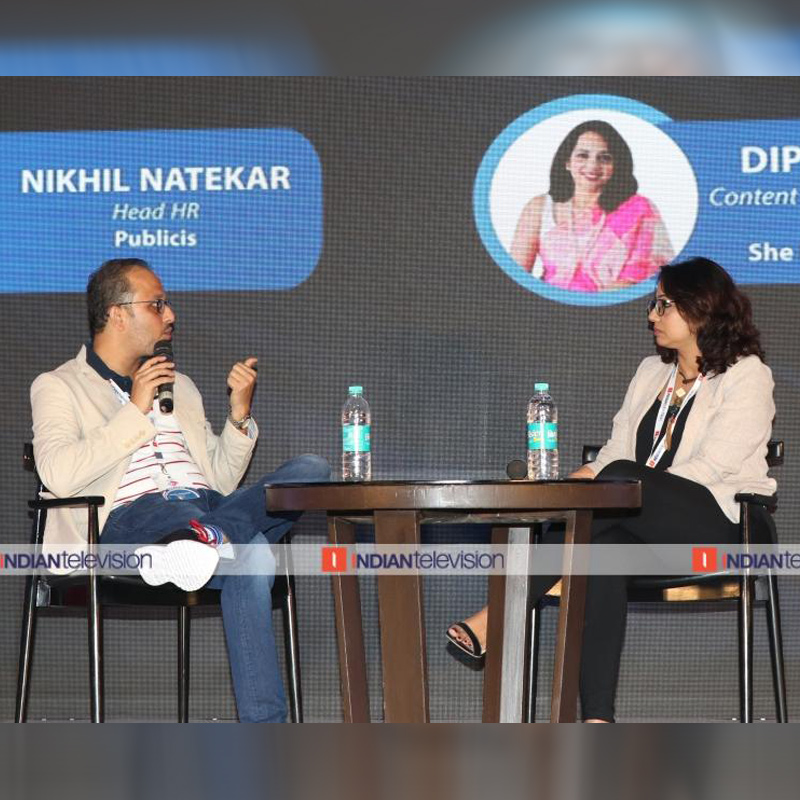
    MUMBAI: The challenges of human resources (HR) are constantly changing in any industry thanks to the emerging role of automation and social media along with a higher rate of attrition and scarcity of talent. Decoding the new age issues in the HR space, Publics head HR Nikhil Natekar spoke on a wide range of issues a freewheeling chat with She Means Business content creator and workshop facilitator Dipika Singh at the Indiantelevision.com Media HR Summit 2019.

    The first issue (and the most talked about one today) addressed the need for flexible timing. “It’s not only the responsibility of the HR to look into it. It depends on business to business; there are lots of challenges in terms of flexi-time. It should not impact your core business hours. You need to look at core business hours aligned with your organisation. Flexi-time cannot work in the hospitality sector but can work in the IT sector where the employees are playing an individual contributor’s role. So, you need to define where you want to apply flexi-time,” Natekar commented.

    With the power of social media in hand, employees and job aspirants can easily write good or bad feedback for companies and Natekar says that this is a reality that needs to be accepted and tackled. Companies need to perceive platforms like LinkedIn and Glassdoor as a mirror and start taking feedback positively.

    According to Natekar, accepting the flaws and responding to feedback is very important. Usually, organisations respond to consumer feedback on social media but not to employees. This is because they look at them as employees who are working for them but not as their internal customer who is generating revenue. Natekar voiced the need for a change in the thought process.

    “There are two ways to look at it. First, see your current stage and then map out where the organisation wants to be in three years. Identifying that gap is very important. That’s where HR plays an important role. You have to do your own streamlining. You have to align your business leader. If you want to move from this stage to version two, what are the required skill sets for that level and who in the current team have those skill sets and what skill sets do you need to hire. It is more of an understanding between your leadership and HR,” he commented on how business helps HR in pre-empting the requirement of future.

    He outlined that automation gives insights, data, and knowledge that was previously unknown but HR’s core responsibility ultimately lies in developing a relationship with an individual. Automation will give HR the background data but it will not be able to throw light on the feelings an employee has developed. Data can help understand focus areas but humans are needed to conduct personal level conversations.

    Job hopping has become a tendency among employees and Natekar’s approach would be to directly ask employees for the reasons. But he asks organisations to understand that in today’s age people don’t want to work at the same place for 10-15 years. The tenure has dropped drastically to three years.

    The HR’s focus should be on reducing attrition, not of average employees but for key performers who can aid the company’s goal for the next five years.

  • Dassault Systmes Acquires SFE, a Technology Leader in Design Optimization and Automation

    Dassault Systmes Acquires SFE, a Technology Leader in Design Optimization and Automation

    New Delhi — July 29, 2013 — Dassault Syst?mes, the 3DEXPERIENCE Company, world leader in 3D design software, 3D + Mock Up and Product Lifecycle Management (PLM) solutions, today announced the acquisition of SFE GmbH, a leader in body conceptual engineering and performance evaluation and optimization. The addition of SFE’s technology to the 3DEXPERIENCE platform enhances Dassault Syst?mes’ transportation & mobility industry solution experiences, such as “Target Zero Defect”. This acquisition expands its CATIA and SIMULIA applications, bringing to the market an innovative technology for seamless transitions, from early conceptual engineering and performance optimization to detailed body design. The amount of the transaction was not disclosed.

    “The combined SFE and Dassault Syst?mes 3DEXPERIENCE platform capabilities will lead to complete coverage of the entire value chain for the transportation & mobility industry. From quick modeling to post processing analysis, to product performance simulation and shape optimization, the full design process is integrated. I see numerous places where this capability can bring value to other industries, not just transportation & mobility,” said Bernard Charl?s, President & CEO, Dassault Syst?mes. “It reinforces Dassault Syst?mes’ already strong position in the Body-in-White domain, as well as the automotive market, in general. It will bring immediate benefits to SFE’s long list of customers, including General Motors, Porsche, Fiat, Chrysler, Daimler, FORD, BMW, Volkswagen and others.”
    “Today’s acquisition of SFE, one of BMW’s partners, by Dassault Syst?mes, another major BMW partner, is good news. I can see the value it will bring,” said Detlef Helm, BMW Group. “The SFE CONCEPT solution has been used for many years at BMW within the full vehicle development field for functional assessment, validation and the generation of models for pre-concept development.”
    Today’s announcement of an integrated conceptual engineering solution is unique in the industry. The concept phase is very critical and difficult as it requires the combination of multiple disciplines and skills. Customers are facing challenges to shorten their innovation cycle time and their product development lead time. Conceptual engineering, such as 3DEXPERIENCE and SFE bring, addresses these critical challenges.
    “This is an exciting development for SFE and its customers and partners. We have worked closely with Dassault Syst?mes over the past few years and we have seen firsthand its passion for its customers, as well as its vision for harmonizing products and how they are experienced in the real world,” said Hans Zimmer, CEO and founder, SFE GmbH. “SFE’s customers will receive significant value through Dassault Syst?mes’ global support organization and well-recognized commitment to research and development.”
    The transaction includes the purchase of SFE GmbH, its various products, SFE CONCEPT, as well as its acoustic and NVH simulation offerings, SFE AKUSMOD, SFE AKUSRAIL, and SFE MECOSA. The acquisition was completed early July, 2013.