
Tag: Australia

  • ‘Our top three international markets are the UK, Australia and India’ : Dixie Carter – TNA Entertainment president

    ‘Our top three international markets are the UK, Australia and India’ : Dixie Carter – TNA Entertainment president

    In 2002, TNA Entertainment found a gap in the marketplace to compete with WWE. TNA Wrestling was born and is now seen in 120 countries globally.

    TNA has carved out a separate positioning for itself. While WWE is entertainment, TNA is professional wrestling.

    Spending the first five years of its existence on establishing the brand in the US, the focus has been to expand TNA‘s global reach. And India is TNA‘s one of the top three markets outside the US.

    In order to complement its roster of events, ESPN Star Sports (ESS) signed a deal with TNA Wrestling a few years back to broadcast their programming. The sports broadcaster renewed its deal for TNA content last year.

    In an interview with Indiantelevision.com‘s Ashwin Pinto, TNA Entertainment president Dixie Carter elaborates on the company‘s plans to up its game in India.

    Excerpts:

    When TNA Wrestling started out in 2002, what were the key goals?
    In the late 1990s, World Championship Wrestling (WCW) and World Wrestling Federation (WWF) combined for approximate gross revenues of $800-$900 million per year. By the time TNA started in 2002, WWF had the only major international professional wrestling company in the world.

    So there was not only room, but a need for competition in the marketplace. Thus, our goal was to establish TNA as a premiere professional wrestling company worldwide.

    To what extent have these goals been accomplished?
    TNA just celebrated its seventh anniversary and we are now seen in more than 120 countries globally. For the last four years, we have had a tremendous relationship with our US cable TV partner Spike TV and we just signed a new three-year deal with them.

    During the second quarter of this year, more than 1.8 million viewers on an average tuned in to TNA: iMPACT! on Spike TV each week. Overall, TNA: iMPACT! saw a 31 per cent overall growth with double digit increases in the key demographics of M18-49 (+33 per cent) and P18-49 (+40 per cent). TNA now routinely exceeds those ratings of WWE‘s ECW brand and we are closing the gap with their Smackdown brand.

    Additionally, we have grown our international business exponentially in the last two years. By developing relationships with broadcasters in the UK, Australia and with ESPN Star Sports (ESS), TNA has become a global entity.

    We have also assembled a talent roster that can compete with any promotion out there. As far as challenges are concerned, I think that adequate capitalisation is the biggest challenge for any start up. We have had to be smart with our resources and prioritise them. The other main challenge was to convince people that we were going to be around for the long-term, and I think we‘ve done that.

    At the time of launch on one hand you had the success of the WWE. On the other hand, you had the failure of Turner‘s WCW. What were the learnings from this?
    We learned that the fan base will support two professional wrestling companies. Obviously, it is a sobering lesson when a company that generated the revenue and had the success that WCW had, could and would go out of business just a couple of years later. You have to learn from those mistakes made.

    How is TNA positioned vis-a-vis the WWE?
    A couple of years ago, I read a transcript of a Vince McMahon (WWE chairman) interview where he said that WWE is entertainment and TNA is professional wrestling, and I couldn‘t agree more. We want to emphasise our athletes and their athletic ability, and we don‘t run from what we are.

    Could you talk about the strategy TNA is following to grow its reach globally?
    TNA spent the first five years of its existence focussing on establishing the brand in the US. Once we felt that that we were on firm footing, we began to expand our reach. I think that the United Kingdom is a good case study for what we are trying to accomplish globally.

    First, we established a successful relationship with a top TV partner, and then built the brand through promotional appearances and then eventually live events and consumer products.
    ‘TNA needs to provide ESS with more content such as TNA Epics and regularly scheduled promotional appearances with TNA superstars in India‘

    How much of a challenge is it to grow fan loyalty for the brand given the competition from the WWE and an increasingly fragmented media environment?
    In four years, we have doubled our average audience on Spike TV in the US and are beating our competitors programming in key countries worldwide. By that alone, we are the fastest growing wrestling company in the world.

    WWE is the gold standard in the professional wrestling business, but a lot of people have stopped watching wrestling. And as the upstart company, we have the opportunity to offer something different.

    In how many homes is TNA seen globally and what new television deals were signed recently?
    TNA is seen in over 120 countries around the world with many millions of viewers tuning in each week. We recently signed new deals with Foxtel in Australia, Canal 9 in Denmark and W9 in France.

    Where does India fit in the scheme of things for TNA?
    India offers a tremendous opportunity for TNA. From a consumer index standpoint, if India continues its recent financial growth it will become the fifth largest consumer economy by 2025 and we want to be a part of that.

    Aside from television licensing revenues, we have to activate our strategy for live events and other commercial opportunities.

    What are the different shows that TNA offers and has this been increased over the past year?
    TNA‘s flagship show is the weekly two hour series TNA iMPACT! In addition, we produce 12 monthly three hour pay-per-views per year. TNA Xplosion is a one-hour edited version of iMPACT! airing outside the United States with some exclusive content added. We also recently launched a one-hour show in a ‘best of‘ format called TNA Epics. This show highlights the best matches, moments and superstars in TNA history.

    In the ratings sweepstakes TNA is behind the WWE in India. What is the game plan to close this gap?
    TNA needs to provide ESS with more content such as TNA Epics and regularly scheduled promotional appearances with TNA superstars in India. We currently are on a one week delay in terms of the content broadcasted in India versus the United States.

    We hope to close that gap and have our programmes airing within the same week. And obviously, planning live events in India is a major piece of our strategy.

    We are planning a promotional tour in India in conjunction with ESS. TNA superstars haven‘t visited since 2005, so we are long overdue to return. We are also creating customised station IDs and bumper breaks.

    In terms of revenues what growth do you see this year? How much of it comes from outside the US?
    We are looking for a 10 per cent growth this year. This year, approximately 15 per cent of our revenue will come from international markets. Our top three markets are the UK, Australia and India.

    Is new media playing a more important role in TNA‘s brand building strategy?
    TNA was an early adopter of YouTube, and subsequently we are now one of their most all-time viewed channels with close to 200 million views. We continue to strive to stay on the cutting edge of new media and social networking technologies such as Twitter, Facebook, MySpace and whatever forms of communication can best help TNA reach out to its fans.

    We also reward our die-hard fans with opportunities available exclusively online and not to the general public. For instance, if you follow TNA on Twitter, at live events we hide a backstage pass in the venue and then reveal its location exclusively on our Twitter account. The fan who finds it gets to go backstage during the show.

    What plans does TNA have in the licensing and merchandising space?
    We have learned to be patient and selective in choosing our licensing partners. Aligning with great companies is what will create successful licensing programmes, create great products for our fans and bring TNA the most revenue.

    Jakks Pacific is our new worldwide master toy licensee and we will launch our first action figures and play sets together starting in summer 2010. We are very excited about adding this to our licensing and merchandising mix. TNA has been out of the toy category for two years and our fans have been asking for these products. For this reason, we expect great success when we launch our toys next year.

    We released our first video game in September 2008 with Midway Games which to-date has sold close to 1.5 million units. We are currently evaluating our options for our next video game partner due to the Warner acquisition of Midway and expect to make an announcement soon.

    For our trading cards and sports memorabilia our partner is Tristar. In particular our trading cards have been a great success. We‘ve just launched our third series to retail this month.

    Internally, we create our own merchandise across several categories and sell it directly to our fans at live events and via shoptna.com. We specifically focus on designing and creating our own apparel. We also handle the creation of our replica belts, and specialty collectible merchandise like the Sting bats, Superstar programs and collectible TNA books.
    TNA has stars like Kevin Nash, Jeff Jarett who have wrestled for years in other organisations. Does this familiarity make it easier for fans to connect with the TNA brand?
    TNA tries to strike a balance between recognisable names from other companies and our own homegrown talent. We‘ve found that the combination of both seasoned veterans and the next great superstars of tomorrow elevates our entire brand.
     

    Have fans‘ attitudes towards sports entertainment changed over this decade as per research?
    There is an old saying — “for those who believe, no explanation is necessary; and for those who don‘t believe, no explanation is possible.” The mission for TNA in 2009 and beyond is to attract more people who believe that professional wrestling is a great form of entertainment, and that TNA is their preferred brand of professional wrestling.

    When WCW closed down, there was worry that wrestlers and fans would not have an alternative apart from the WWE. To what extent has TNA managed to emerge as a healthy option?
    After seven years we have emerged as the only healthy option for both talent and fans alike. Since TNA started, several people have tried and failed to develop an alternative or competition to WWE and TNA.

    One challenge is to cultivate new talent. What is TNA‘s strategy in this regard?
    Since we don‘t currently have a developmental territory, we have to keep a close eye on the best unsigned talent around the world.

    Recently, we signed Ayako Hamada from Japan and Sarah Stock from Mexico, both female talents who are going to do great things for our Knockouts division. We are actively looking for Indian talent as well.


    Hamada from Japan and Sarah Stock from Mexico, both female talents who are going to do great things for our Knockouts division. We are actively looking for Indian talent as well.

    When WCW closed down, there was worry that wrestlers and fans would not have an alternative apart from the WWE. To what extent has TNA managed to emerge as a healthy option?
    After seven years we have emerged as the only healthy option for both talent and fans alike. Since TNA started, several people have tried and failed to develop an alternative or competition to WWE and TNA.

    One challenge is to cultivate new talent. What is TNA‘s strategy in this regard?
    Since we don‘t currently have a developmental territory, we have to keep a close eye on the best unsigned talent around the world.

    Recently, we signed Ayako Hamada from Japan and Sarah Stock from Mexico, both female talents who are going to do great things for our Knockouts division. We are actively looking for Indian talent as well.
  • ‘India is fast becoming one of WWE’s most important international markets’ : Andrew Whitaker- WWE president, International

    ‘India is fast becoming one of WWE’s most important international markets’ : Andrew Whitaker- WWE president, International

    World Wrestling Entertainment (WWE) has emerged as one of the strongest TV brands in India, providing sports broadcaster Ten Sports a daily diet of popular content.


    While US stays as its main revenue earner, WWE’s international revenues make up 26 per cent, or $135 million, of its total pie. UK, Australia and France are its top three markets in terms of size, but the fan base in India is growing. So is WWE’s efforts to market the property as it recently brought down one of its Superstars Kane for a promotional visit to Mumbai and Delhi.


    Despite the enormous proliferation of content in the market, WWE is a significant force within the entertainment and pop culture.


    In an interview with Indiantelevision.com’s Ashwin Pinto, WWE president, International Andrew Whitaker unveils the company’s growth plans in global markets.


    Excerpts:

    Why do you think WWE is so effective in connecting with audiences globally?
    One of WWE’s greatest strengths is that it offers quintessential American content that translates well across cultural boundaries. Developed over the last 25 years, our broad portfolio of specialised business units ranges from live and televised entertainment through to consumer products, digital media and our studios division. These business units, all marketed and distributed under the WWE brand, have made WWE into the recognised global leader in sports entertainment. The content is easy for audiences to relate to. So regardless of our fans’ culture or language, they can become enthralled in the drama, storylines and characters.

    In terms of revenue and business generated, how much comes from outside the US?
    In 2008, international revenues represented 26 per cent of total annual revenue for the WWE, equating to around $135 million. The top three markets in terms of size are currently the UK, Australia and France.

    Where does India fit in?
    Given how quickly the WWE’s fan base continues to grow in size, loyalty and passion, India is fast becoming one of WWE’s most important international markets.

    Ten Sports recently started airing WWE content in the same week as the US. Is this practice followed by most broadcasters globally?
    Yes, we aim to deliver WWE content to our international fans as soon as we can.

    Do you have a special relationship with Ten Sports?
    Ten Sports has been WWE’s television affiliate for over seven years. During this time, it has invested in successfully growing WWE’s profile across India. They are one of our most proactive and supportive television partners internationally.

    Our most important revenue generators are live and televised entertainment and consumer products. Our aim is to continue to grow in these areas, as well as in the digital and studios divisions

    The last time the WWE had a full tour here was back in 2002. How come there has not been more activity in this regard?
    WWE is broadcast in 145 countries globally. We are continuously assessing the right time to hold a live event tour in every market.


    Outside of the US, we deliver around 80 live events per year. While we do not have any confirmed tour dates for India at the moment, we hope to return in the near future.

    Has the number of tours in Asia gone up over the last couple of years?
    Yes, in line with WWE’s growth within Asia, we are also increasing our live events in the region.

    Which of your four divisions has grown the most over the past year?
    Our most important revenue generators are live and televised entertainment and consumer products. Our aim is to continue to grow in these areas, as well as in the digital and studios divisions.

    What increase has there been in revenues derived from television licensing fees over the last five years?
    Internationally, revenues generated from TV licensing fees have grown by well over 30 per cent in the last five years.

    Are you looking at other areas like licensing and merchandising to grow the WWE brand in India?
    Yes. The WWE has appointed an agency to solicit licensing opportunities on our behalf in India, allied to Mattel’s launch of WWE’s new toy line in 2010. The WWE is also exploring the opportunity to develop stand alone official merchandise stores in Mumbai and Delhi.

    WWE reported a drop in the first quarter revenues. By when do you expect to see a turn around?
    During the first quarter, WWE’s core businesses performed relatively well. It is important to note that WWE’s annual WrestleMania event (WrestleMania XXV) occurred on 5 April, 2009 and consequently will be included in our second fiscal quarter financial results.


    By comparison, WrestleMania XXIV in 2008 occurred on 31 March and was included as part of our first quarter results that same year, contributing approximately $31.3 million in revenues and 7.1 million in profit from across our various business lines.


    All in all, despite a challenging economy, WWE stock actually outperformed other entertainment companies on both stock price performance and total return basis for the first quarter of 2009. WWE was actually up 4.2 per cent on a stock price basis versus the likes of CBS, Dream Works and Walt Disney Company, who were all down.

    With the economic slowdown, how is WWE looking to manage costs more efficiently?
    Although WWE is performing relatively well in the current economic environment, as a company we are working to significantly reduce operating expenses. The changes we have made will allow us to deliver even stronger financial performance in a challenging economic climate.

    Could you shed light on how the WWE is using new media?
    WWE’s online presence is continuously growing and developing. We have more than 14 million unique visitors worldwide every month to our primary website, WWE.com, viewing approximately 22 million video streams.


    This makes us a larger site than those of professional sports leagues, such as the NFL and Major League Baseball, and in 2008 WWE was the second most searched term on Yahoo! after Britney Spears.


    We have also launched localised websites in a number of international markets including Spain, Italy, Portugal and, of course, India. In India, WWE has partnered with Sify to deliver a local Indian website. WWE content is also available to fans via on and off portal mobile platforms across the globe.

    In terms of getting in fans at on ground events and driving pay-per-view buys, who are your top three performers at the moment?
    The great thing about WWE Superstars and Divas is that they each hold a different appeal for different fans. While one fan will follow Rey Mysterio or John Cena, another will be a Jeff Hardy supporter. WWE offers something for everyone and that diversity comes to life at live events just by observing the amount of different WWE Superstar signs that are being held and merchandise worn by the fans.
    What have the learnings been from making movies through WWE Studios?
    The success proves that there is an immense appetite from our fans to see their favourite WWE Superstars undertaking movie roles for their enjoyment, either in cinemas or on DVD. It has also highlighted some exceptional talent among several WWE Superstars for applying their acting skills to the big screen.

    How do you view competition like TNA which airs on another sports channel?
    All forms of entertainment are competition for WWE as we compete for the public’s attention and entertainment dollar. For any sports or entertainment company, whether you are Manchester United, U2 or WWE, the biggest concern is the enormous proliferation of content in the market.


    However, WWE is a significant force within entertainment and pop culture. Within our specific entertainment genre, we clearly are the industry leader. While TNA is pro-wrestling, WWE is entertainment.

  • BBC World News, tourism ministry tie up for travel series

    BBC World News, tourism ministry tie up for travel series

    MUMBAI: BBC World News and Ministry of Tourism (MoT) have entered into a year-long partnership to promote Indian tourism in the global market.

    As part of the partnership, BBC World News will produce a six-part travel series Travel India, one corporate film and five ad films on India’s tourist spots.

    Hosted by cricket commentator Harsha Bhogle, Travel India will include journeys to spiritual spots, places of scenic beauty, and urban centers for business in conjunction with underdeveloped rural centers. For a wider reach of the global audience, the show is available across Europe, Asia-Pacific, South Asia, Middle East, Australia and UK. Besides it will also be available as in-flight ads in BBC World News programs on United Airlines and US Airways.

    The five-minute corporate film will be based on Ayurveda and Wellness.

    The five 30-sec ads called ‘Colours’ is based on the different colurs depicting various facets of Indian soil and culture.

    MOT joint secretary Leena Nandan said, “We are extremely pleased that the multi-hued dimensions of India will be seen on BBC World News, a medium that has the credibility and reach to influence travellers across the world. I am confident that a series like Travel India will successfully showcase not just the glorious past and the dynamic present that all Indians take great pride in, but the varied facets of India than can be can we explored, enjoyed and experienced .”

    BBC Worldwide ad sales regional director South Asia Seema Mahapatra said, “Our relationship with MOT goes long way back. We have produced similar shows for the ministry even in the past like documentary on medical tourism, ayurveda etc.”

    “Internationally BBC World News has similar tie-ups with Suzlon. For them we produce Eco-diary, which gives a list of conference and seminars happening all over the world,” Mahapatra added.

  • Stella Creasey is BBC Worldwide VP research for global TV sales

    Stella Creasey is BBC Worldwide VP research for global TV sales

    MUMBAI: UK pubcaster BBC’s commercial arm BBC Worldwide has appointed Stella Creasey to the newly-created role of VP of research for global TV sales. Creasey will join BBC Worldwide in London at the end of March.

    Creasey will lead a new research team to provide BBC Worldwide’s global TV sales division with new levels of insight into the performance of its catalogue. The move is part of the division’s strategy to become more customer focused.

    BBC Worldwide global TV sales MD Steve Macallister said, “I am delighted that Stella Creasey has agreed to join our global TV sales team. Stella has a fantastic pedigree working at a senior level in audience insight in both Europe and Australia, and more recently in BBC marketing, communications and audiences.

    “We are on a major drive to deepen our insight into market trends and consumer viewing habits. Stella’s experience in telecoms, digital and traditional media will be invaluable to the global TV sales business, as the market evolves and competition for viewers intensifies.”

    Creasey says, “This is a very exciting opportunity for me, and I am looking forward to leading a new team and contributing to the rapidly growing success of the global TV sales team.”

    Creasey has worked as a marketing and research professional for over 14 years in the UK, Australia and Europe, and is currently development executive for creativity and audiences at the BBC.

    She has also been employed as head of television research and new nedia audience research at the BBC.

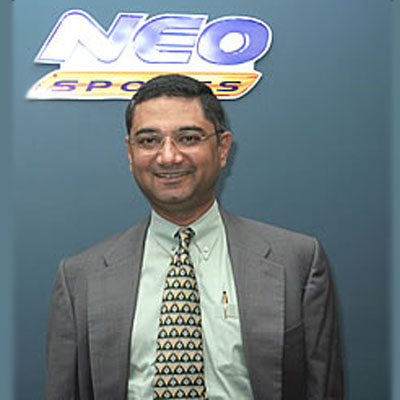
  • ‘Language feeds can get us 30 per cent more viewership’ : Shashi Kalathil – Neo Sports CEO

    ‘Language feeds can get us 30 per cent more viewership’ : Shashi Kalathil – Neo Sports CEO

    Neo Sports has had a testing time. The distribution deal with Star did not work out and the two channels – Neo Sports and Neo Sports Plus – did not find space on cable networks. This, in turn, impacted ad revenues.

    Now with Australia and Pakistan touring India, Neo is ramping up the distribution of its two channels. And it is hoping that strong content will drive in viewership and revenue.

    In an interview with Indiantelevision.com's Ashwin Pinto, Neo Sports CEO Shashi Kalathil reveals the gameplan for the company.

    Excerpts:

    Has Neo Sports gone through a rough weather ever since its launch almost a year back?
    The going has been tough. There was uncertainty on the regulation front. We had mandated Star to handle our distribution, but our channels had serious problems of being carried on cable networks. Cricket also went through its ups and downs, with the World Cup being the lowest point for the sport. There was a lot of media hype which made a not – so – good situation worse.

    What were the factors that made you terminate the distribution contract with Star and decide to do it on your own?
    We had an arrangement with Star. While I do not want to get into details as the matter is under arbitration, I will admit that we got almost zero delivery. We found that we would not be able to survive as a channel if we did not reach anyone. Besides, the payments that were contractually due to us were delayed – or never arrived.

    Did it also badly impact your ad revenue?
    Our ad revenue was hurt as a result of the Star deal. We got away with it to some extent in the Sri Lanka series by keeping ad rates high and through strategisation where some matches aired on Doordarshan. However, we could not fully exploit the Bangladesh Test series. That would have been worth at least Rs 70-90 million. We could not realise even one fifth of that.

    How have you worked out on your distribution strategy?
    We have covered one third of the cable networks. We went to the smaller towns first as there the declaration is much better. A lot of viewership comes from rural areas. We signed with direct-to-home (DTH) service provider Tata Sky. We expect to sign with Dish TV soon. We are also stitching deals with the south-based cable networks.We are now approaching the big multi-system operators (MSOs) like Incablenet, Hathway Cable & Datacom and Siticable. By the time the Australia series starts we will be in three fourths of cable & satellite (C&S) homes.

    Since the matches have to be shared with Doordarshan, doesn't it affect the kind of deals that Neo is able to strike with the cable operators?
    No! The sharing of feed has been going for a long time. The 2003 World Cup was shared. There are guidelines. Last year for a while, the Supreme Court had taken a view on this kind of activity. India-South Africa was a rare example where DD did not air the matches.

    We have a situation where the pubcaster does not bid for cricket but takes feed when it wants to do so. Besides, there is the issue of encryption.

    What was the write off that Neo Sports got from BCCI due to the non-encryption of DD's signals?
    DD's footprint extends from China to the Middle East. We had a protection clause in case of circumstances that dilute the value of our BCCI rights. If DD sends an unencrypted signal, then how can you sell the rights in those markets?

    Right now there are a lot of cricket rights coming up for grabs. Is Neo Sports going after any of these or are you first trying to justify the BCCI investment?
    It isn't a sequential process. If there are rights that are of value, we will bid for them. Right now what we are seeing is that the price appreciation for these boards has not been as high as what it was for the ICC and BCCI rights.

    If someone gets the BCCI rights which are huge, you will see polarisation happening around the ICC rights. These two rights are the definitive ones in the cricket world; nothing else comes close. About 70 per cent of cricket that India plays in the next 13 months will be on Neo. That is an awesome depth to have.

    For the Australia and Pakistan tours, in terms of coverage what are the kind of innovations being looked at?
    We are keen on language feeds. You can get 30 per cent viewer addition doing this. Traditionally, the South has been neglected in terms of the regionalised feed. Neo Sports Plus will be broadcasting the matches in Hindi, Tamil and Telugu while Neo Sports will have English language transmission.

    We are looking at virtual advertising and programming innovations. We are also looking at interactivity on DTH.

    How challenging is it to push up ad rates to match rising acquisition costs?
    The cricket market is well set up. There are certain clients who advertise heavily in it. The economy is opening up which will allow you to have better inventory utilisation. There are ways to exploit cricket like having multiple language feeds.

    There is also a proliferation of general entertainment and movies channels which is resulting in further fragmentation. This will make the monolithic viewership of cricket more cost effective for brands and more valuable. Break viewership is becoming a serious issue for advertisers. On movie channels, often the break might be too long and people surf. Cricket's format is built to counter this.

    You will eventually be able to do multiple visual feeds for advertising. Now, though, it is still expensive and messy. With addressable delivery platforms like DTH coming in, the dependence on advertising will gradually fall.

    'If someone gets the BCCI rights which are huge, you will see polarisation happening around the ICC rights. These two rights are the definitive ones in the cricket world'

    How would you describe the perception of cricket at the moment among viewers and advertisers?
    I don't think that it is changing. Yes, there is noise made in the media on perceptions of how India is faring. It has to do with the quality of the opposition, how they are perceived. However, I do not think that cricket viewership or ad revenues are as sensitive as what the media says it is. When India did not do well in South Africa last year, people said that the sport was in trouble. Then we did well at home against Sri Lanka and the same media said that this was the best team for the World Cup.

    There is huge interest in the Australia series as it takes place during the festive season. Cricket in media parlance offers viewership that other programming cannot match. This will not change.

    Which are the clients with whom Neo Sports has signed long term deals?
    Perfetti and Hero Honda are our anchor sponsors. The concept is to have someone who wants a long term relationship with cricket on board. We have predictability to our calendar. So a client knows that Australia, Pakistan England, South Africa or Sri Lanka will be visiting us. So if a client does media activity, he knows that a footprint is available.

    How many anchor sponsors do you want to have?
    Initially, we had thought of having four anchor sponsors. However, the media space is getting so competitive that we held back a little bit as we did not want to preclude a large media buyer. There are emerging segments like retail and financial services that will become large. We are waiting for the media environment to settle down before we make more long term deals. There is a risk and also a de-risk in long term deals. You might end up paying more. You might end up paying less. Management is about dealing with it.

    During the World Cup there was a lot of grumbling about the deluge of ads. Steve Waugh went public about it in a column. What is Neo Sports' gameplan to ensure that commercial considerations do not interfere with viewer enjoyment?
    Cricket has a certain format which allows you space for ads – between overs, when a wicket falls, and also during the lunch interval. I think that the World Cup was a situation where matches were going beyond midnight. So perhaps the broadcaster was trying to get in as many ads as possible in the first half as viewership would certainly drop precipitously during the second half.

    In terms of domestic cricket with the push that has been given to it by Neo Sports, has there been any increase in viewership?
    We have had a good experience with domestic cricket. Now that our distribution issues have been settled, we will do innovations around domestic cricket.

    We don't air every domestic match. Cricket is tiered at various levels. We broadcast the best part of it. I have heard arguments about having less matches and fewer teams which I will leave for the administrators to settle. But at the end of the day, a Ranji Trophy final has value. It is the question of packaging it. There is also an awareness issue. People have not gotten used to watching domestic cricket. However when they find that the coverage quality is as good as what you get for an international match, there is stickiness. Last year's data shows that domestic cricket has potential. It is for us to develop that.

    However, the ad fraternity does not seem to be getting on board domestic cricket. Is there a perception problem in the market?
    The product needs to be developed and defined. Once you do that and take it to the advertiser, it will draw interest. But it will not happen overnight. There is still work to be done.

    What is the status regarding your second channel Neo Sports Plus?
    One part of its identity is to be an adjunct to Neo Sports. So Neo Sports Plus airs cricket in local languages. We were clear at the beginning that we wanted to adopt a regional multi language feed for it.

    Neo Sports Plus also airs other sports like German soccer, Italian league. We have badminton, cycling, motorsports. We have also found that rugby got a strong niche viewership among males.

    Can we flesh out the definition of Neo Sports Plus to go beyond cricket? That is something we are working on. Other sports have a growing niche. In the long term, you can grow it to a mass level like what EPL has done. Activities were done that led to the product definition being unique. However, no other sport can substitute cricket. The assumption that if India does poorly, a cricket fan will watch another sport is wrong. Our research tells us that a lot of ODI watchers in India do not watch any other sport.

    Could you shed light on the investments made in technology?
    We are set to go live with broadcast management system ForeTV from MSA Focus. This follows the solution's recent implementation at Neo's Mumbai headquarters for $4 million. The Fore TV Broadcast management system allows Neo Sports the ability to efficiently manage the proliferation of new revenue streams that these rights will inevitably generate.

    Unlike traditional systems which treat each stream separately, ForeTV offers a consolidated solution for total revenue management, encompassing income from Internet Protocol Television (IPTV), advertising, sponsorship, pay-per-view (PPV), interactive (iTV) and video on demand (Vod). This system will be fully integrated into workflow of the channel, automation, editing and financial software allowing seamless process from acquisition, production and post production, transmission and billing at the end of the process.

    On the production front, we have installed Vizrt Virtual studio, a virtual studio for sport production. This allows Neo to create a number of different sets for each sport and change it at the flick of a button. There is no need for storing and changing physical sets. The advantages of using Vizrt virtual studio are flexibility in different backdrops, virtual monitors in the set and incorporation of sport results directly to the set. Vizrt Graphics are template based, allowing for rapid changes and are especially suited for the ever changing sport environment.

  • Ben Hall is BBC Worldwide’s content and production business creative head

    MUMBAI: BBC Worldwide’s content and production business has appointed Ben Hall to the newly created role of head of creative.

    Working alongside BBC Worldwide executive producer, international formats Gareth Williams, Hall will lead a newly recruited creative team charged with generating original format ideas for international exploitation and roll-out through the business’ increasing network of global production bases. He begins his new role with immediate effect. Hall’s appointment completes BBC Worldwide’s revamped formats team in London.

    The team’s aim is to raise revenues generated from BBC Worldwide’s format business by tapping into local demand and developing more original productions around the world. The team is already undertaking this through new partnerships between BBC Worldwide and independent producers in the UK, as well as partnerships and production bases internationally, such as the recently-announced Freehand partnership in Australia.

    BBC director of formats Colin Jarvis said, “With this expanded and talented formats team, we are now better placed than ever to develop new formats that will find audiences globally. As one of the UK’s leading creatives in the formats business, Ben brings a wealth of creative experience as to what works for audiences around the world, as well as a very good insight into how ideas turn into commercial hits.”

    Hall said, “BBC Worldwide’s formats business is rapidly lining up to become a major global player so this is a very exciting time to take the creative helm. We have recruited a great team who love generating new ideas and we are looking forward to creating a new generation of hit formats that will work for audiences around the world.”

  • SET Network to telecast all the Matches during ICC Cricket World Cup 2007

    This World Cup, don’t miss any of the matches: catch the Group stage matches on MAX, SAB & PIX. All Super Eight matches, Semis & Finals to be simulcast on MAX and SAB, in English and Hindi respectively.

    MUMBAI: This summer, viewers can get set for a grand cricketing feast from the 13th March to 28th April 07 as the SET Network announces the schedule for the telecast of the biggest event of the cricketing calendar in the last 4 years – The ICC Cricket World Cup 2007. Viewers will get to enjoy all 51 matches, as the SET Network will bring a world class feed of the ICC Cricket World Cup 2007 Live across its 3 channels – MAX, SAB and PIX.


    MAX will continue to blend the excitement of cricket with its inimitable dose of entertainment – “extraaa innings”. All the matches of the ICC Cricket World Cup 2007 will be telecast live. The coverage starts with “extraaa innings” from 5pm onwards on all match days on MAX and SAB.


    Kunal Dasgupta, CEO, SET India Private Limited said, “MAX has always garnered an unprecedented television viewership during Cricket tournaments. For the ICC Cricket World Cup 2007 we have made every effort to provide the viewers with unique access to live world class coverage and also ensuring that not a single match will be missed.”


    Rohit Gupta, Executive Vice President, Ad Sales & Revenue Management, SET India Private Limited said, “ICC Cricket World Cup is the biggest Television Event which happens once every 4 years and reaches out to nearly 80% of the C&S audience. And to make it even bigger this time around we will show almost all the matches on SAB in Hindi as well. Thus the platform for the ICC Cricket World Cup 2007 matches will be far bigger as we cater to a much larger and varied audience. It’s a huge value add for the advertisers since previously we only had 12 matches on SAB and now we will be airing all the matches. We are sure of a far greater reach with a bigger platform for ratings and viewership.”


    The upcoming cricket tournament in 2007 will feature 16 teams allocated into four groups of four. Within each group, the teams will play each other in a round-robin format and the top two teams will advance to the “Super Eight” round. The telecast schedule includes all group stage matches to air on MAX, SAB & PIX while the Super Eight Series matches and will be aired on MAX and simulcast in Hindi on SAB.


    Reliance & Nokia are the co-presenters for the broadcast of ICC Cricket World Cup 2007. Hero Honda, Maruti, ITC Foods, Pepsi, Videocon, LG and Aditya Birla Group are the associate sponsors.


    Schedule for the ICC Cricket World Cup 2007


    Date Max Sab Pix
    13th March West Indies v Pakistan    
    14th March Australia v Scotland Kenya v Canada  
    15th March Sri Lanka v Bermuda Zimbabwe v Ireland  
    16th March England v New Zealand South Africa v The Netherlands  
    17th March India v Bangladesh India v Bangladesh Pakistan v Ireland
    18th March Australia v The Netherlands England v Canada  
    19th March India v Bermuda India v Bermuda West Indies v Zimbabwe
    20th March New Zealand v Kenya South Africa v Scotland  
    21st March Sri Lanka v Bangladesh Zimbabwe v Pakistan  
    22nd March New Zealand v Canada Scotland v The Netherlands  
    23rd March India v Sri Lanka India v Sri Lanka West Indies v Ireland
    24th March Australia v South Africa England v Kenya  
    25th March Bermuda v Bangladesh    

    SECOND STAGE – SUPER EIGHT SERIES. Matches to be simulcast on Max and Sab.

    Date Match
    27th March D2 v A1 (West Indies v Australia)
    28th March A2 v B1 (South Africa v Sri Lanka)
    29th March D2 v C1 (West Indies v New Zealand)
    30th March D1 v C2 (Pakistan v England)
    31st March A1 v B2 (Australia v India)
    1st April D2 v B1 (West Indies v Sri Lanka)
    2nd April B2 v C1 (India v New Zealand)
    3rd April D1 v A2 (Pakistan v South Africa)
    4th April C2 v B1 (England v Sri Lanka)
    7th April B2 v A2 (India v South Africa)
    8th April A1 v C2 (Australia v England)
    9th April D1 v C1 (Pakistan v New Zealand)
    10th April D2 v A2 (West Indies v South Africa)
    11th April C2 v B2 (England v India)
    12th April B1 v C1 (Sri Lanka v New Zealand)
    13th April A1 v D1 (Australia v Pakistan)
    14th April A2 v C1 (South Africa v New Zealand)
    15th April B2 v D1 (India v Pakistan)
    16th April A1 v B1 (Australia v Sri Lanka)
    17th April A2 v C2 (South Africa v England)
    18th April D1 v B1 (Pakistan v Sri Lanka)
    19th April D2 v B2 (West Indies v India)
    20th April A1 v C1 (Australia v New Zealand)
    21st April D2 v C2 (West Indies v England)
    24th April Semi Final 1: 2 v 3
    25th April Semi Final 2: 1 v 4
    28th April Final
  • IPTV subscribers in Asia Pacific expected to reach 27.4 million by 2013: Frost and Sullivan report

    IPTV subscribers in Asia Pacific expected to reach 27.4 million by 2013: Frost and Sullivan report

    MUMBAI: The Frost and Sullivan research service titled Asia Pacific IPTV Market provides an in-depth analysis of IPTV scenario in 12 markets across Asia Pacific.

    The research service identifies the market demand, competitive landscape, key drivers and restraints for the IPTV market.

    Further, the study presents detailed forecast patterns for revenues and ARPU trends for various countries in Asia Pacific. In this research service, Frost and Sullivan’s expert analysts thoroughly examine the markets of Australia, China, Hong Kong, India, Indonesia, Malaysia, New Zealand, the Philippines, Singapore, South Korea, Taiwan, and Thailand.

    Growth of Broadband Spurs IPTV Deployments

    Internet Protocol Television (IPTV) is fast making headway across the entire Asia Pacific region. The deployment of IPTV in the region has been further hastened by the explosion of broadband in various high growth markets across Asia Pacific, even as service providers across the region have invested heavily in the network infrastructure required for offering these services.

    IPTV has generated a new revenue stream, amidst dwindling fixed line revenues, and rapid advancements in compression, transmission, and watermarking technologies have enabled more and more service providers to jump onto the IPTV bandwagon. In line with these trends, the Asia Pacific IPTV market is set for considerable growth over the forecast period, with the number of IPTV subscribers expected to increase from the existing 1,47,000 to 27.4 million by 2013.

    However, poor broadband infrastructure in key growth markets such as China, India, and the Philippines coupled with lack of quality content have restrained the growth of IPTV in the region. Furthermore, access to quality content has been a common challenge for service providers.

    The analyst of this research service said, “While partnerships with content providers and broadcasting companies go a long way in securing access rights, the cable TV providers or the IPTV market leaders already have exclusive access to this content. This arrangement makes it difficult for other service providers to scale their service to meet the users’ requirements.”

    China and India expected to be high growth ,arkets

    With respect to individual regional markets, Hong Kong is already a mature market for IPTV services, and is expected to be heading toward saturation by 2009. China and India are perceived as high growth markets for IPTV by 2009. By 2013, China along with Hong Kong is expected to contribute nearly 60 per cent of the total Asia Pacific IPTV revenues. With 47.8 million subscribers, China has the largest broadband subscriber base in Asia Pacific in 2006, out of which nearly 70 per cent are residential subscribers.

    In Australia, IPTV is entering a crucial stage in its development, moving away from a technology under trial, into full commercial deployment. While it could take another three years for IPTV to enter the growth stage, service providers’ early adoption of IPTV services and aggressive pricing strategies are expected to contribute to the success of the technology in Australia.

    Presently, IPTV is deployed in China, Hong Kong, Malaysia, Singapore, South Korea, Taiwan, and Thailand. The service is expected to be introduced in India and the Philippines in 2007, and despite the lack of bandwidth in most markets, the demand for interactive entertainment has lured service providers to offer IPTV-based content in the form of video-on-demand (VoD) and channel-based offerings.

    Analyst further added, “As the service providers take the first few tentative steps, response from IPTV users has been positive in most markets. Service providers need to look beyond immediate revenue opportunities to understand the long-term importance of IPTV as a carrier distribution platform, over which many consumer communication and entertainment services can be offered simultaneously.”

  • MTV Intl is showcaing Jay-Z in series of specials

    MTV Intl is showcaing Jay-Z in series of specials

    MUMBAI: MTV’s music channels across the globe are presenting a special series of programming featuring hip-hop mogul Jay-Z in support of his highly anticipated new album Kingdom Come, which was recently released worldwide on Universal Music.

    MTV Live: Jay-Z and Diary Of Jay-Z is airing across MTV’s channels globally. The raft of programming gives MTV viewers access to the hip-hop exponent to celebrate his return to the stage.

    To promote the launch of Kingdom Come, MTV is featuring music videos and long form programming dedicated to Jay-Z including an exclusive 30minute or 60minute MTV Live performance from Milan featuring hit tracks Encore and 99 Problems.

    Additionally, a Diary of Jay-Z shot by MTV International on the artist’s African, European and Asian tour dates featuring the hip-hop icon on safari and meeting Nelson Mandela in South Africa and being dressed up by local tribes in Tanzania and Lagos. The diary also features footage of Jay-Z’s Royal Albert Hall performance in London; the first by a hip-hop artist at the venue.

    A documentary special, Jay-Z: Water For Life, filmed by MTV US in which Jay-Z partners with MTV and the United Nations to visit several regions around the globe that have been most devastatingly hit by the world water crisis will also air across selected MTV channels globally.

    MTV International senior VP talent and music, Jamie Caring says, “It’s a rare privilege to see a hip hop legend like Jay-Z doing such a big tour outside the US. Creating a host of must-see live music and diary specials to document Jay-Z’s travels and phenomenal live shows is a great example of the highly collaborative partnerships we do with A list artists these days. It’ll allow our TV and online audiences to connect with him like never before across multiple music brands and platforms’

    The programming complements the recent Jay-Z tour partnerships of MTV channels in France, Germany, Poland and Eastern Europe, Holland, UK, Australia, Africa, Korea, Thailand and Taiwan as well as dedicated broadband content and ticket competitions enabling fans to experience the ultimate thrill of Jay-Z’s recent comeback tour via their TV, PC or up close and personal.

    MTV.com in the US recently unveiled a Jay-Z fan site at jay-z.mtv.com. This Jay-Z ‘Video Vault Experience’ offers users a comprehensive timeline of his career through footage from MTV’s archives including all of Jay-Z’s music videos, dozens of live performances, every MTV interview, including never-before-seen interviews, and more.

    In addition, US fans can enter the The Jay-Z Platinum Experience contest at www.mtvjay-zplatinumexperience.com for a chance to live like a hip-hop superstar including a private helicopter trip to NYC, a private tour of the Island Def Jam offices, a personalised JAY-Z platinum album and NJ Nets tickets. The contest closes on 9 December, 2006.

  • BBC Worldwide takes first format to China

    BBC Worldwide takes first format to China

    MUMBAI: UK pubcaster the BBC’s commercial arm BBC Worldwide has licensed the singing talent show format, Just the Two of Us, to Chinese terrestrial broadcaster, Hunan Television. The deal was initiated and brokered by BBC Worldwide’s Hong Kong office and marks the first time a BBC Worldwide format will appear on Chinese television.

    Announcing the deal, BBC Worldwide Director of Content and Production, Wayne Garvie, said, “This is very exciting news for BBC Worldwide and for British production generally. Hunan Television is currently the home of China’s most popular television talent series and enjoys a viewership of hundreds of millions. To secure a place for a BBC format here is a great window for British television talent and an opportunity to build on our strong and positive relationships with Chinese broadcasters.”

    Just the Two of Us will launch on Hunan Television this month and will broadcast weekly. The series follows on from the successful talent series, Super Girl, which last year generated almost 400 million viewers for its final.

    BBC Worldwide has also licensed Just The Two of Us in Australia, Russia, Ukraine and Belgium, with more territories in development.