Tag: Augmented Reality

  • ZEE unveils metaverse induction program in Bengaluru

    ZEE unveils metaverse induction program in Bengaluru

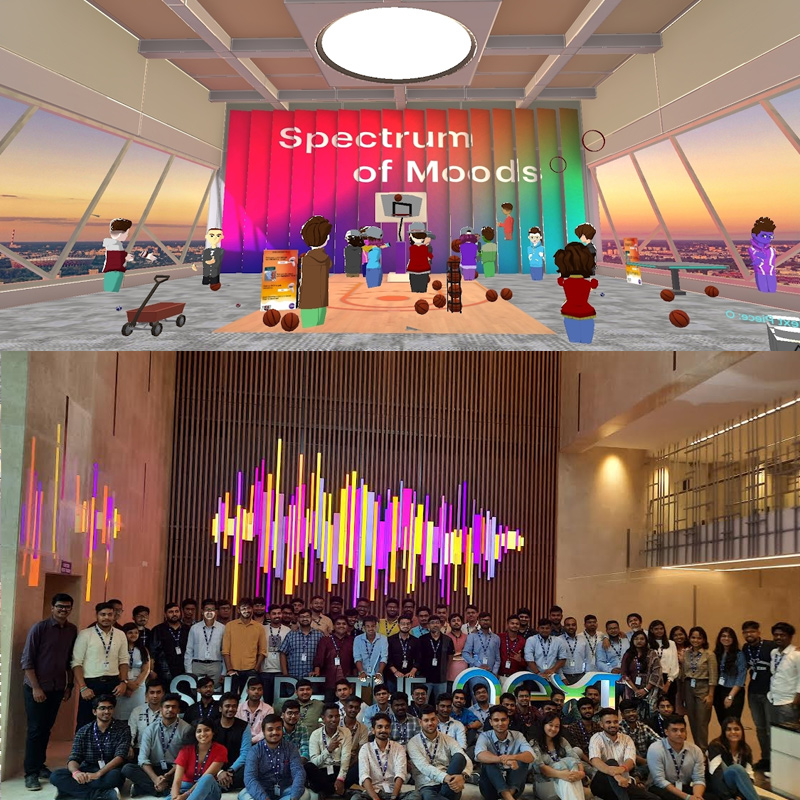
    Mumbai: Media & entertainment powerhouse Zee Entertainment Enterprises on Wednesday conducted its first-ever induction in a metaverse environment by welcoming 100+ campus graduates from top tech institutes across the nation; at its Technology and Innovation Centre in Bengaluru. The company’s Technology & Innovation Centre is focused on building the metaverse platform by leveraging augmented reality (AR), virtual reality (VR), non-fungible tokens (NFTs) and relevant data models for its digital platforms.

    The initiative was led by ZEE president – digital businesses and platforms Amit Goenka and ZEE president – technology & data Nitin Mittal, addressing the fresh batch of recruits. The metaverse induction was conducted by leveraging the Technology and Innovation Centre’s state of the art infrastructure and cutting-edge technology solutions: thereby offering an immersive mixed reality experience to the fresh recruits.

    Speaking about the initiative, Goenka said, “At ZEE’s Technology and Innovation Centre, we are imbibing a sharp strategic focus on enhancing our tech capabilities through a confluence of technology, data and talent. As we break new grounds and redefine entertainment by providing robust experiences across platforms, we are delighted to converge ZEE’s collaborative and entrepreneurial culture in the physical and digital realms through an immersive environment such as the metaverse. We aim to provide intuitive experiences across all aspects of an individual’s consumption, creation and transactional journey, and the first-ever metaverse induction program at ZEE, will not only help enhance our employee experience by boosting innovation and productivity, but also our consumer experience by several notches.”  

    Mittal added, “For over three decades, we have been a pioneer in breaking the norms of the industry and creating path-breaking content for more than 1.3 billion viewers across the globe. Our focus now remains on building capability for ZEE by leveraging technology to provide our consumers with extraordinary entertainment experiences. Our quest is to shape the next chapter of India’s media & entertainment Industry and the Metaverse Induction Program is yet another major step in that direction. Inducting, nurturing and retaining the right talent is key to any organisation’s success and we are committed to giving a world class experience to our tech enthusiasts right from day one.”  

    Commenting on the induction program, ZEE president – HR and transformation Animesh Kumar said, “As digital transformation continues to accelerate globally, the Technology and Innovation Centre at ZEE will play the lead role in driving the next era of innovation in content consumption. ZEEverse, is another major stride in a string of initiatives launched by the company in recent times towards our internal digital transformation that will enable the organisation to become future-ready and win in the emerging digitalised economy. Our focus is on building a collaborative, high-capability driven environment for our tech enthusiasts, who are the innovators of tomorrow. As we reimagine the future of our workplace, we are also elevating our employee experience by adopting a new induction module that will deliver an immersive and unique on-boarding experience to our fresh batch of recruits.”  

    ZEE is focused on offering a holistic environment to its talent workforce through the adoption of innovative and path-breaking technology. The company aims to enhance and widen its digital footprint, as it continues to cater to the global community and redefine the future of entertainment by leveraging a technology and innovation led strategy.

  • GUEST COLUMN: Marketing in the metaverse – A giant leap for the advertising world

    GUEST COLUMN: Marketing in the metaverse – A giant leap for the advertising world

    Mumbai: The pandemic made digital engagement very mainstream. Nowadays, people are up for exploring the variety of tech innovations available in the virtual space. During the pandemic, they switched from offline engagement to online engagement, whether in the field of shopping, eating, gaming, lifestyle, etc. This switch resulted in wide online social traffic, especially in the immersive gaming experiences through the use of augmented reality (AR) and virtual reality (VR).

    With 4.8 billion active internet users worldwide, the online social sphere is growing to accommodate new kinds of communication, engagement, and entertainment for a tech-savvy generation. A recent concept that has come alive in the online social sphere is metaverse. It is backed by a fully working virtual economy, much based on cryptocurrencies and digital items and assets such as nonfungible tokens (NFTs).

    Metaverse, the internet’s evolution, is emerging as a potential tech innovation in the spheres of marketing and social connection. It encapsulates a set of immersive virtual experiences where people can exist and engage with each other on virtual platforms. It builds rich user engaging virtual spaces using augmented reality (AR), virtual reality (VR), blockchain, and digital media principles. Merging the virtual, physical and augmented reality in real-time, metaverse allows interaction in a virtual 3D environment through avatars.

    The worldwide metaverse market is worth $63.83 billion in 2021 and is expected to be worth $1,527.55 billion by 2029. It implies growth at a CAGR (compound annual growth rate) of 47.6 per cent between 2022-2029. Prodigious companies are eagerly investing in the metaverse market. Therefore the marketing and advertising companies have found their newly developed fondness for the metaverse. And true enough, the newly developed concept projects ample opportunities for tech-savvy entrepreneurs and brands to advertise themselves through it.

    Metaverse creating value in advertisement wold

    Marketing space has continuously evolved in time from radio to television to the internet and now metaverse. The early days of social media saw a rise of social marketing agencies likewise for metaverse, these agencies will have to, urgently, explore virtual and metaverse practices lest new metaverse dedicated companies prop up to better engage customers.

    Marketers constantly seek out customers, whether in person or online, therefore, the expansion of metaverse will undoubtedly be one of the primary future playgrounds for the digital advertising sector. Experiments through influencer marketing are also being undertaken in the metaverse for engaging customers in metacommunities. Virtual reality will revolutionise business and marketing attitudes by serving as a medium for invention, discovery, identification, expression, connection, and socialisation.

    Some companies have already taken a lead. Big brands like Google, Facebook, Microsoft, Puma, Gucci, Nike, etc are making their way into the metaverse. For e.g Nike’s Nikeland, a virtual universe that offers sports venues, digital showrooms where people can dress their avatars, etc. Or M.A.C cosmetics that provide virtual make-up facilities or Fortnite, which introduced in-game concerts for its players. These moves will strengthen their digital foundation more.

    Some apparent benefits make it clear why the companies must explore the metaverse to create value in the advertisement world. Metaverse is believed to have a high engagement rate. Tech-savvy gen-z and millennials who engage in it are the future customers. They spend their significant time on the internet. Companies and brands must step into the world of metaverse to advertise and capture this expansive lot of audience. Furthermore, because it is a novel concept in the market, it is less expensive than standard advertising modes. Therefore, the first-mover advantage will have a cost-benefit for the businesses.

    The data-driven interaction is another benefit. The data collected in the virtual 3D environment will come from real people that are operating as avatars. This data can be analysed and used to forecast or make business scaling strategies both for the online and offline market. Not only tech companies and business industries, but even government entities are keen on investing in the multiverse. Several innovative advertising methods have been explored so far. Use of non-fungible tokens, collectibles, cryptocurrencies, in-game activities, and virtual billboards are some to name.

    Direct to avatar sales values at $54 billion and innovative entrepreneurs are already envisaging the ways for new income streams. From real estate purchases to online AR / VR-based offices to gaming, all is happening in the metaverse. Silicon Valley sees it as the next generation of the internet. Facebook has made a significant investment in its growth. Snapchat has incorporated augmented reality components into its services. Thus, it is bound to become a parallel reality because technological innovation is here to stay.

    Data privacy, security and copyright issues are challenges that will prevail for now, but that must not prevent companies from exploring. Smart advertisers will succeed in any reality if they focus on matching their needs with the needs of their customers to produce useful experiences.

    The author is Wing Communications CEO and founder Shiva Bhavani

  • IPL 2022: Star Sports, Quidich Innovation Labs partner to showcase augmented reality; enthrals viewers

    IPL 2022: Star Sports, Quidich Innovation Labs partner to showcase augmented reality; enthrals viewers

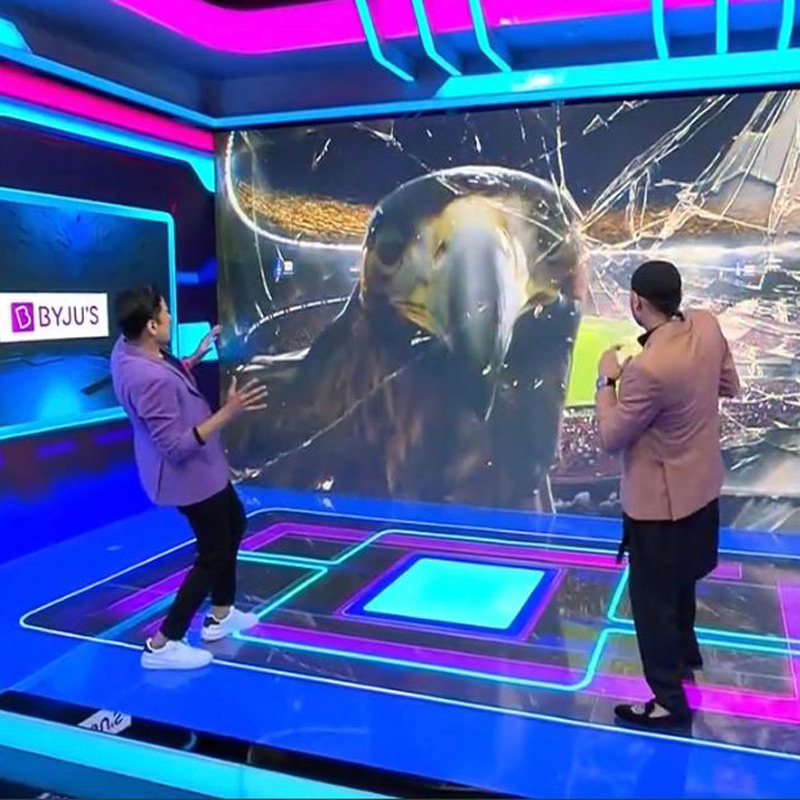
    Mumbai: Star Sports and Quidich Innovation Labs partnered to produce an augmented reality (AR) event during the Tata IPL 2022 final match between Gujarat Titans and Rajasthan Royals.

    During the innings break, TV viewers were presented with an augmented reality show featuring a majestic eagle that swooped into the stadium.

    Star Sports and Quidich Innovation Labs created this AR showcase using an Unreal Engine, a powerful real-time 3D game engine, coupled with Quidich’s proprietary real-time drone tracking system, Spatio.

    The final match witnessed a record attendance attracting a crowd of 1,04,859. The AR showcase transformed the sky above Narendra Modi stadium where the match was held.


    “The use of augmented-reality on the IPL final marks a new beginning for the use of AR in cricket for creating new and immersive fan experiences and advertising opportunities like never before,” said the statement. “The Star Sports Labs along with Quidich will be using this technology to wow fans and create memorable moments.”


  • GUEST COLUMN: Is AI a threat to digital marketing industry in terms of employment?

    GUEST COLUMN: Is AI a threat to digital marketing industry in terms of employment?

    Mumbai: Artificial Intelligence (AI) has been one of the celebrated buzzwords of all time across various industries. It has been answering a lot of questions and taking humankind to new places, quite literally, with customer service like chatbots and autopilot driving machines.

    With people adopting the digital way of living, brands aggressively engage with digital technologies and innovation to propel their marketing efforts. AI is disrupting nearly every digital experience and has altered the way consumers interact with services.

    The deployability of AI-led technologies and the difference it has brought in achieving customer satisfaction is now posing a serious threat to digital marketers. With AI’s agility, it is normal for marketers to be a little insecure. However, the day when AI takes over digital marketing jobs is still years away. On the contrary, automation creates more opportunities than it is killing, with vacancies for AI coders and AI software handlers.

    Seven in 10 marketers claim to have a comprehensive AI strategy. Undoubtedly, organisations have found various machine learning applications that can benefit marketing endeavours.

    Customer service chatbots are one of the everyday uses of AI. It allows brands and businesses to offer 24/7 service to their customers and address basic queries. AI gives advertisers an edge by offering a tailormade digital advertising experience. and allows advertisers to acquire factual information for customer profiling such as age, gender, geographies and behaviours. This data further will enable marketers to create effective ads.

    AI technologies such as Augmented and Virtual Reality are also stealing the limelight by the way they are revamping the online shopping experience.

    Marketing professionals are also aligning Artificial Intelligence towards marketing content creation. With stacks of data accumulated by AI, marketers can easily decide on the content that will drive engagement. AI has been efficient in predictive analysis, allowing marketers to identify potential customers and strategies that will yield better results.

    Despite the significant advancement witnessed by AI, there are still some aspects that consistently need human intervention and expertise.

    Creative quotient: No matter how advanced, machines are still lagging in keeping pace with the human brain. Creative problem solving, music creation, painting landscapes, photo and video editing remain a few aspects where AI fails to perform. On the other hand, AI has been bringing a revolution in cutting down repetitive tasks such as creating customer profiles, sending personalised messages and scheduling.

    Decision-making: AI is adept at assisting humans but can’t have the final say. It requires a considerate amount of critical thinking and analysis to govern any marketing action. AI is crucial for acquiring data but cannot strategise or develop a plan on its own.

    The human touch: AI has proven effective at answering all the questions hurled at it by customers, but AI cannot build customer relationships due to the lack of emotional connection. The responses provided by AI-powered chatbots are restricted to their programming, whereas humans share similar experiences with other people, which forms a sense of relatability and understanding.

    AI is dependent on humans: AI is a technology developed by humans and cannot function independently. Therefore, it is dependent on humans to be programmed and be successful at performing a task. In addition, AI machines need to be upgraded as per the market’s changing landscape, which again requires human expertise.

    AI may still not be powerful enough to take up creative jobs, but it definitely eliminates a lot of human intervention from monotonous and routine jobs. As a result, businesses have been quick to deploy automation to boost productivity and mitigate the costs of resources.

    (About Author – Sahil Chopra is iCubesWire founder and CEO)

  • AR, VR fantastic tools for brands to communicate their story

    AR, VR fantastic tools for brands to communicate their story

    MUMBAI: The outbreak of Covid2019 has changed life and business more than anybody could have imagined. To survive this pandemic, businesses around the globe are embracing digitisation faster than ever before. Two kinds of technology, augmented reality and virtual reality, are once again in the spotlight due to the pandemic. These two technologies have been underestimated and underutilised in the past. A virtual conference held by The Advertising Club  Bangalore on the topic ‘Bringing brands to life through AR & VR technologies’ saw panellists AliveNow CEO Adhvith Dhuddu, AutoVRse co-founder Ashwin Jaishanker, and FlippAR CEO Vivek Jain. The session was moderated by VRNAculars and Tripvana CEO Aneesh Koorapaty and Pink Lemonade founder and CEO Tina Mansukhani Garg.

    Koorapaty raised a question before the panellists about why it is more immersive now as compared to other media segments like print, radio etc.

    Dhuddu said that if you see the history of media and advertisement, especially on the web and on the mobile phone, it has always been about swiping up and down, left and right, clicking and other dimensions. AR and webAR are now able to interact through a person's eyes, lips, hands and facial gestures. It is now an immersive experience for people, they can use their front and back camera to bring life to a product and understand their placing in the real environment. He notes that the possibility of using augmented reality is endless. Because of the experiences created on augmented reality it feels immersive and realistic.

    “AR is in the business for a very long time, but it is in the past two to three years that brands and agencies are able to look at AR differently. The credit goes to social media platforms like Snapchat and now Instagram who have allowed tech companies and developers to build AR experiences into their app. So, the brand that already has its audience on their page can expose them to AR experiences.”

    Stories are the most powerful means for brands to inspire and influence. Products attached with stories have higher value as compared to products with just description notes Jain. Immersive tools like AR and VR are fantastic tools for brands to communicate their story.

    Ashwin Jaishanker thinks that brands recognised the potential of virtual reality very recently. With time, audiences started seeing a very complex narrative of AR. “The metrics that you create with AR on your customers is on a different level. This technology invites your user to experience the world designed in your product and it helps them explore the product by themselves,” he further added.

    Aneesh highlighted that for brands, AR and VR are great ways to create emotional connection.

  • Milestone Brandcom creates first AR experience for Tanishq at Bangalore & Delhi airports

    Milestone Brandcom creates first AR experience for Tanishq at Bangalore & Delhi airports

    MUMBAI: Dentsu Aegis Network’s Milestone Brandcom, the AOR agency for Titan Company Ltd, has created a unique engagement opportunity targeting frequent women travellers at the Bangalore and Delhi airports through a unique interactive kiosk showcasing their range of products through interactive augment realty.

    With this technological advancement, customers have the option of ‘Try and Buy’ – trying out the jewellery virtually looking at the AR screen. Also, consumers have the option of browsing through multiple jewellery pieces virtually with just one click. The activity has received a lot of attention and has already begun to gather a lot of traction on social media.

    Sharing her thoughts on the launch of AR experience, Titan Company Ltd associate vice president—marketing, jewellery division Deepika Tewari said, “Tanishq has always aimed at providing the best for our customers and this fascinating initiative of AR experience is one such approach to achieving that objective. Consumers have the option of browsing through multiple jewellery pieces virtually with just one click, try, and buy. This is placed real-time on the customer at the screen and is a definitive way to strengthen the retail connection between the brand and its customers; a transformative step to how India will shop and purchase jewellery in the near future.”

  • ZEE takes one more giant pioneering step – builds a technology platform to satisfy 5 senses of the viewers to offer immersive customer experience!

    ZEE takes one more giant pioneering step – builds a technology platform to satisfy 5 senses of the viewers to offer immersive customer experience!

    Mumbai: ZEE Entertainment Enterprises Ltd. (“ZEE”), a global media and entertainment powerhouse, has taken a yet another pioneering giant leap by securing a United States (US) Patent on a technology platform developed in the Silicon Valley at its very own – ZEE Media Lab. This unique platform stems from the Vedic culture of offering an immersive experience to the viewers, satisfying all the 5 senses.

    Built on robust and state of the art technologies like 3D Audio, Augmented Reality (AR), Virtual Reality (VR), Digital Scent, Holograms and touch, this platform aims to transform the viewers’ home environment by providing exceptional immersive experience. Apart from offering a unique viewing experience in delivering extraordinary entertainment and information-based content, the platform will also enable the viewers to touch, feel, smell and experience products, with a seamless transaction (e-commerce) ecosystem.

    Be it immersive entertainment content, or informative education-based solutions, or gaming, or e-commerce; this comprehensive technology platform is built to cater to every single need of the viewer.

    • Immersive Entertainment – The platform is empowered with 3D Audio, AR, VR, Digital scent, holograms and touch, to transform the viewers’ living rooms into an immersive mode, be it a serene beach or an action-packed fight scene.
    • Immersive Education – The platform is capable to not just educate the viewers about a given topic, say an internal combustion engine, but is also equipped to offer an immersive journey for the viewer right into the cylinders of the combustion engine, taking the learning experience to an altogether different level.
    • Gaming – The platform will not just offer a 3D gaming experience but will also give the players a unique experience to feel the heat of an ongoing combat with the opponent, and even experience the smell of the battle field.
    • Entertainment Commerce – The platform will enable the viewers to order any product which they witness being consumed or used by the lead protagonist on the screen, at the touch of a button. Viewers will be able to smell the perfume worn by their favorite actor / actress on screen and purchase the same within seconds. If the viewer owns a 3D printer, the platform is also capable of even printing the food which one watches on the screen!
    • Home Environment Control – The platform will also be equipped to control the viewers’ home environment, right from the lights, security solutions, to heating, ventilation & air conditioning equipment, ensuring that the viewers’ immersive experience while consuming content is not interrupted at any stage. 

    Speaking on this revolutionary step, ZEE’s Chairman, Subhash Chandra said, “At ZEE, we envisioned 4-5 years back, that the overall media landscape is poised to evolve at an extremely rapid pace, with content companies blending into technology companies. Hence, we started investing our time and energy in building a technology for the future, which enhances the content viewing experience by many folds. ZEE’s lab in the Silicon Valley was set up in 2016 to create this robust platform, and I’m very glad that the US Patent is secured. It is a concrete step in realizing our vision of transforming ourselves from a media & entertainment powerhouse to a technology Company, offering immersive experiences”.

    Adding to this statement, Amit Goenka, CEO, Z5 Global said, “We are extremely excited to offer this unique immersive experience to our viewers. Under the guidance of our visionary Chairman, we are building this unique platform which is futuristic in nature. The US Patent is a major milestone achieved in this process giving us the required level of confidence and reassurance. This is just the beginning of an extraordinary journey of transforming the viewers content viewing experience”.

    While the five senses have not yet been deployed on a commercial scale, with the grant of the US Patent, ZEE can now make the platform available to millions of users across the world. The commercially viable prototype will be ready in the next 12 months. This emboldens ZEE’s plan to target mainstream global viewers across US, Europe, Asia, China and Latin America.

    ZEE Media Lab will continue to innovate in the Silicon Valley to work towards integrating technologies with a sheer focus on enhancing the overall viewer experience.

  • Vernacular content consumers to be 2.5 times English by 2021: Deloitte

    Vernacular content consumers to be 2.5 times English by 2021: Deloitte

    MUMBAI: Deloitte India has launched the eighth edition of its report on technology, media and telecommunications which predicts major advances in machine learning, voice over LTE (VoLTE) technology services and over-the-top (OTT) platforms, apart from other trends.

    According to the report, VoLTE is expected to be the most prevalent voice technology in the future. It is also estimated that more than 90 per cent of all mobile subscribers will comprise of broadband subscribers by 2023. OTT platforms are witnessing an explosion in original content due to increase in consumption and viewership, the report says, adding that they will gradually become a preferred medium over television, with the consumers of vernacular content likely to be over 2.5 times that of English language content by 2021.

    The publication highlights the fact that machine learning will intensify among medium and large-sized enterprises. Compared to 2017, the number of implementations and pilot projects using machine learning technology is likely to double in 2018 and then double again in 2020.

    As enterprises in India embrace technology to bring transparency and efficiency in business operations, data assumes centre stage in decision-making, setting the stage for tools such as advanced analytics and machine learning to usher value-chain efficiencies, a Deloitte India spokesperson said. Organisations will take steps to realise the potential of the internet of things (IoT) for their businesses, predictive analytics and intelligent data mining technologies are set to become mainstream in India.

    Deloitte India Partner PN Sudarshan, said, “India is one of the fastest growing technology markets in APAC, with the ongoing digital transformation of public sector and private sector enterprises enabled by changing market dynamics and policy interventions. Enterprises across industries are increasingly adopting technology driven solutions to improve customer experience, optimise business operations, and compete effectively in the market. Catalysed by the availability of cost effective computing infrastructure and flexible business models through cloud computing, and the adoption of exponential technologies such as AI, ML, AR, IoT etc., technology sector in India is truly at an inflection point.”

    He further added, “Trends such as IoT will catalyse the emergence of analytics at the edge. Digital revolution, also known as ‘The Internet Economy’ is creating a new market for digital-first services, which has the potential to optimise value chains, bring transparency, and improve overall productivity in the economy.”

    Newer technologies like LTE, LTE-A, LTE-A pro and 5G will make wireless internet commercially more viable for home internet users. The smartphone riding on new innovation will consolidate its position as the primary access to digital services and content, and live streaming and OTT video content are likely to gain popularity.

    IoT-driven point solutions will be adopted to solve a specific business issue. IoT-driven enterprise solutions would help organisations redefine their business models and provide innovative services for their customers; investments will not only be assessed on KPIs, but also will involve new product launches, new supply chains and a new operating model that enables organisations to monetise their services across value chains, leveraging IoT.

    Analytics will finally travel beyond the back office as enterprises will combine external perspectives, social inputs (surveys, social media comments, response to a feedback questionnaire) to the internal data sources to improve customer service. Device data will be integrated faster and on-demand to answer immediate field needs; information dissemination for decision-making will be faster and simpler using digital delivery; paying for results and provisioning on demand is the new normal (on cloud).

    Deloitte also predicts that more than 60 per cent of all broadband subscribers would be utilising VoLTE technology for voice services by 2023 surpassing five billion subscribers globally. IoT appliances can be enhanced with VoLTE improving the productivity and efficiency of applications and especially effectiveness in emergency situations. One example is a smartwatch with a feature to automatically dial an emergency contact in case of abnormal heart rate. Wi-Fi would be an essential part of service provider network strategy to enhance access and extend coverage. With VoLTE supporting VoWi-Fi (Wi-Fi calling), it would be an opportunity to monetise hot-spots especially relevant in the Asia-Pacific region which would constitute 45 per cent of global hotspots.

    Sports media in India is set to unlock new horizons as Indian sports business will continue to attract global investments. With broadcasters paying as much attention to rural segment, these geographies will continue to lead the way for sports sector in India, especially with tier II leagues beginning to receive widespread attention. Data analytics will increasingly play a significant role in managing all aspects of sports, especially on initiatives such as fan engagement and viewership on digital platforms. Governance-related matters will continue to be in focus in Indian sports ecosystem, and topics such as legalising betting will be discussed more than before.

    Wireless home internet is bigger than imagined but due to challenges in deployment of fixed broadband networks, current rural internet penetration stands at a negative 17 per cent. In future, demand for fixed broadband would be limited to consumers with higher bandwidth/QoS requirements, with majority of home internet requirements catered through wireless network.

    Augmented reality (AR) is on the cusp of reality as the Indian market is witnessing the emergence of AR service providers helping enterprises embrace it as part of their digital experience strategy. India’s $150 billion technology services industry has the potential to play a key role in increasing the adoption of AR for global businesses by building a robust supply of talent, business models, and frameworks to accelerate deployments. The public sector also has the opportunity to leverage the product and talent ecosystem in the country and adopt AR for improving the quality of experience in areas such as education and healthcare.

    Also Read :

    Media and marketing professionals most vacation deprived: Expedia Report 2017

    55% marketers make better decisions with machine learning: iProspect report

    India ad spend to grow by 12.5% in 2018: DAN report

    M&E industry to hit Rs8 trillion revenue by 2022: report


  • Vodafone brings back the Pug in AR

    Vodafone brings back the Pug in AR

    MUMBAI: Television viewers and spectators at Sunday’s grand finale of the Vodafone Premiere Badminton League broke into impromptu smiles when they realised they had unexpected company.

    Lending an entirely unique experience to complement the nail biting match, were the adorable Vodafone Pugs in ‘augmented’ avatar. This was the first time that augmented reality was seen on live TV in India.

    The idea was to seamlessly integrate the new data strong network campaign, being championed by the most loved brand icon, Cheeka – the Pug, with Vodafone Premier Badminton League.

    Vodafone India executive vice president of marketing Siddharth Banerjee says, “The finale of the Vodafone Premier Badminton League presented an opportunity for Vodafone India to highlight the newly launched 360 degree Data Strong Network campaign message to our audiences. We wanted to make our campaign ideas bigger and better, by extending this larger than life experience to television viewers – perhaps a first for any Indian brand. The iconic Vodafone Pug, now back with a pack of pugs, brings alive our proposition that the Vodafone network is getting stronger every hour to deliver a ‘Data Strong Network’.”

    Consistent with its commitment of keeping over 211 million customers in India confidently connected 24×7, Vodafone showcased its promise of a more robust, data strong network in an evocative yet simple manner. A specially created augmented enclosure drew the attention of match viewers and television audiences alike, with an army of Pugs coming on the court and interacting with the commentators.

  • Times Network makes a 180-degree and 3D 360-degree virtual reality move

    Times Network makes a 180-degree and 3D 360-degree virtual reality move

    MUMBAI: We all thought virtual and augmented reality (VR/AR) are something in the future, right? Well, no, not really. It is here, right here, right now.

    Take a look at the way in which Indian news television channels are beginning to sprint towards the two innovative ways of delivering content and immersing viewers in news stories.

    The first mover was NDTV which quietly started putting out flat VR videos online. Republic TV made a big bang announcement a few months ago with its plans to launch a VR production studio and to produce some clips and shows. Zee Media’s English language channel WION has also been uploading and hosting some sourced world news VR clips online.

    And, even as other TV news channels have been pawing at the VR starting line, Times Network has already begun to take rapid strides in that direction. The news network is going the full Monty – 3D 360 degree video-based VR and Google’s new 180 degree VR formats.

    “It’s a natural attempt. Ultimately, video experiences are changing because of technology,” says Times Network CEO MK Anand. “So, we are creating a lab internally. Our camera and content people are currently being put through the paces and training to produce videos and pilots in 3D 360 degree video and 180 degree VR.”

    Dubai-based Real Vision founder and VR expert Clyde DeSouza has been roped in to train a handful of Times journos and cameramen to understand the nuances of VR/AR and also what kind of content and stories are suitable for VR and immersive journalism.

    Says Clyde: “Times Now’s use of the new VR180 format compatible with Google’s Daydream headsets will be a first for immersive journalism globally as it allows the videos to be viewed as regular flat clips on any device. But, these videos become immersive and 3D once they are inserted into a Google Cardboard or a DayDream headset. Google is working with a few select partners on this at the moment. The Times Network has made some initial investments in VR hardware and is now investing in gaining skillsets.”

    Clyde reveals the first VR step is to pick up the VR gear, good gear. “Most companies are going for Chinese cameras which are cheaper at around $3,500 to $33,000 but don’t have full capabilities as the cameras are not in sync with each other or they exhibit only 3D VR artifacts,” he explains.

    “Flat 360 video does not show scale of the various subjects being presented, and hence is not a true immersive experience. To get good quality videos with all the concomitant, full blown VR 180-degree or 3D 360-degree capabilities, the investments are much higher or there are cheaper solutions available like renting the Google Jump system which includes the camera and the cloud stitching.”

    He points out to the VR efforts being put in by the US-based broadsheet New York Times and the UK pubcaster, the BBC, as real standouts. “The Beeb’s videos on the refugee induction programme in the UK for instance have transcended video-based VR and are exploring hybrid VR storytelling and experiential news journalism.”

    Clyde is quite excited about the potential of VR in Indian TV news because of the plethora of news channels operating nationally and he sees himself as a bit of an evangelist for the new format. “I am excited about VR/AR news videos in the Indian ecosystem,” says he, with a gleam in his eye. “I am sure more and more editors and news CEOs will follow.”