Tag: Augmented Reality

  • AutoVRse launches AI-powered VR training platform VRseBuilder

    AutoVRse launches AI-powered VR training platform VRseBuilder

    Mumbai: AutoVRse has introduced ‘VRseBuilder,’ an AI-powered platform designed to transform VR training creation, deployment, and scaling for enterprises worldwide. Serving over 100 clients with 250 large-scale deployments and 300,000 trained employees, VRseBuilder tackles the high costs, time demands, and engagement issues of traditional training methods.

    In today’s corporate landscape, scaling effective training globally is challenging. Traditional methods are often costly, time-intensive, and lack engagement, resulting in inconsistent outcomes and lost productivity. Recognizing this need, AutoVRse developed VRseBuilder to simplify the process by reducing development time by up to 93 per cent, enabling businesses to deploy immersive training programs easily. This innovation helps companies train employees faster, improve performance, and prepare for future challenges, all while managing costs and complexity effectively.

    AutoVRse business development lead Vishal Ahankari stated, “VRseBuilder is revolutionising how enterprises approach training. Our AI-powered creation studio has reduced development time by up to 93 per cent, turning months of work into days while maintaining the highest quality standards.”

    VRseBuilder’s innovative modular design approach enables organizations to build once and reuse infinitely. This Lego-like system allows training managers to mix, match, and customize modules, creating unlimited scenarios while maintaining consistency across the organization.

    VRseBuilder features are as follows:

    1    Convert SOP Pdfs, Jpegs & spreadsheets into VR prototypes: Hand-tracking-based simulations simplify the process of converting static documents into immersive VR training experiences.

    2    Meaningful measurement: A web-based dashboard provides quantifiable metrics to assess the effectiveness of VR training, ensuring an ROI-focused approach through a VR-native LMS.

    3    Customisable VR templates: VRseBuilder’s Creation Studio offers customisable templates that can be adapted in real time to maximise training efficacy.

    With eight years in the VR industry, AutoVRse is a trusted partner to major global enterprises. Its team of experts collaborates with organizations to create tailored VR modules, allowing internal teams to modify and expand training content as needed. This approach enables businesses to independently scale their VR training programs.

    Organisations implementing VRseBuilder have reported:

    1    80 per cent reduction in training time

    2    60 per cent improvement in performance metrics

    3    Significant cost savings through rapid development and deployment

    4    Enhanced employee engagement and knowledge retention

    This launch aligns with the vision of Industry 4.0, advancing automation, real-time data, and intelligent systems to transform India’s industrial landscape. As Digital India 2.0 drives digital adoption, platforms like VRseBuilder help equip the workforce with future-ready skills, bridge the digital gap, and boost economic growth through increased productivity and innovation.

    “We don’t just provide software – we become an extension of our clients’ L&D teams,” added Vishal. “Our frontier team of subject matter experts works closely with organizations to develop initial modules, transfer knowledge, and empower them to scale their VR training programs independently.”

    For organisations looking to transform their corporate learning programs, VRseBuilder offers a comprehensive solution that combines cutting-edge technology with proven methodologies and expert support.

  • How AR & VR are revolutionising the advertising landscape

    How AR & VR are revolutionising the advertising landscape

    In the digital age customers are continuously bombarded with ads. This has led to customers purposely ignoring them reducing their efficacy. How can marketers then connect with their target audience? The answer is simple, to not just display ads to the customers but make them a part of it. Augmented reality (AR) and virtual reality (VR) are a couple of ways to do so. Digital assets are either superimposed on top of the real world as in augmented reality or create a completely exclusive virtual world as in VR.

    These engaging and immersive experiences not only deliver the brand message but build a strong positive bond with their target audience. They have become mainstream and have numerous benefits to leveraging them in advertising.

    1. Deeper engagement with customers – as the attention span of people is on the decline, brands are forced to think of creative ways to advertise. AR/VR campaigns immerse the customer into the brand’s world increasing the time spent by the customer with the brand.

    2. More convincing – While traditional ads are considered intrusive and are being ignored, AR/VR are considered as storytelling mediums and have higher convincing power. Making it ideal for e-commerce brands to sell their products online since studies suggest that AR experiences boost impulse buys and online shopping in general.

    3. Better data driven insights – Since the customers will be spending more time experiencing the AR/VR campaigns it will be easier for brands to not just collect customer data but gain insights into their target audience’s preferences. They can study their behaviour and customise their campaigns based on those insights for optimal results. These insights help brands build better personalised experiences.

    4. AR/VR powered by AI – while AR/VR themselves are powerful advertising tools, their implementation with AI has led to improved performance of ads and data analysis. Computer vision and machine learning has enabled marketers to automate email marketing, social media campaigns, and content creation but also study facial expressions, emotional response, sentiment analysis and attention of the customer to brand products. Computer vision and machine learning can enable gesture-based control and feedback. Leading to the creation of personalised and adaptive AR/VR experiences. AI based plugins such as ConvAI adds human-like conversational capabilities to characters in the virtual worlds. There are attempts made to incorporate edge AI to AR/VR experiences to reduce latency and improve real-time performance.

    While there are several advantages to AR and VR experiences within the advertising space a few drawbacks might impede their adoption.

    1. Cost – developing AR/VR experiences can be cost-intensive especially for smaller businesses. Limiting the access to these technologies to brands with deeper pockets.

    2.  Error in perception – While digital assets within the AR/VR experience might help customers become acquainted with the products they will not be exactly the same as the real product and may lead to errors in perception. For example a real estate property in VR might feel very different in real life when the customer is in the actual space.

    3. Difficulty in integrating AI into AR/VR experiences – VR experiences especially need to be optimised for performance, keeping in mind the frame rate, latency and resolution. AI computation is resource-intensive and relies on remote cloud servers. This can slow down the AR/VR experiences turning a delightful experience to frustration for the end user. Moreover testing AI models in the AR/VR environment takes additional time and resources to test its effectiveness.

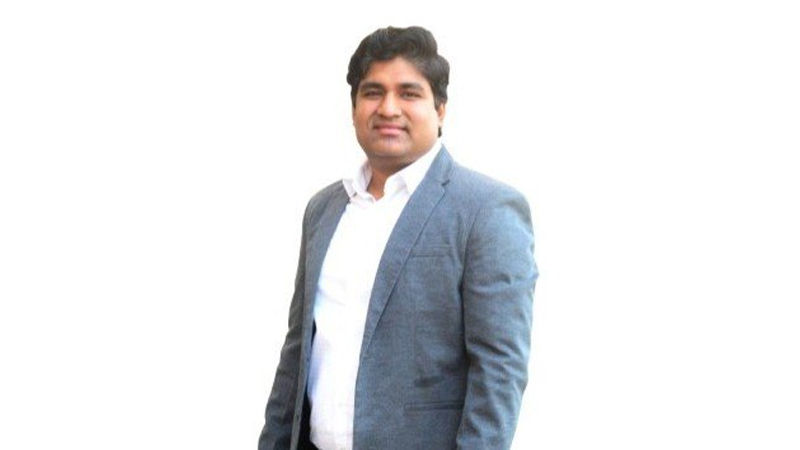
    The article has been authored by Tagglabs founder Hariom Seth.

  • Yuzvendra Chahal champions Pokémon GO in his latest reel

    Yuzvendra Chahal champions Pokémon GO in his latest reel

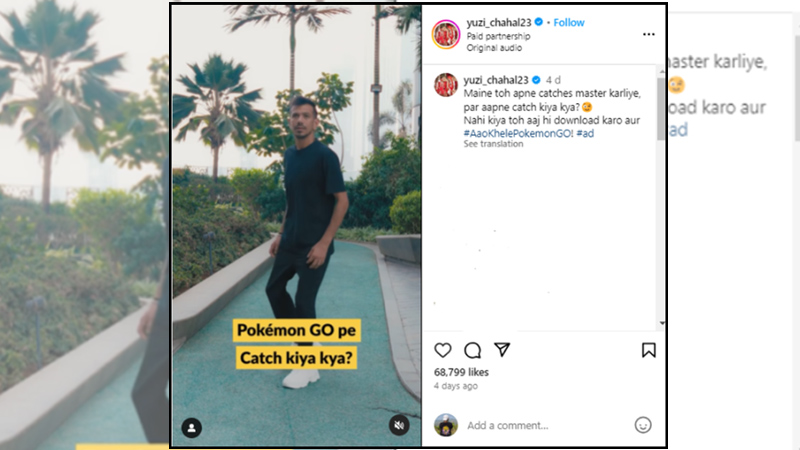
    Mumbai: You have seen him bewildering the batsmen with his spin bowling attack, you have seen him backing up his team with solid fielding and now you can see what he does when he is not on the cricket field.

    Niantic, the world’s leading augmented reality (AR) company, has teamed up with cricket superstar Yuzvendra Chahal showcasing his passion for Pokémon GO and encouraging fans worldwide to join him on this exhilarating adventure. With his trademark charisma and enthusiasm, Chahal effortlessly captures the essence of the Pokémon journey, inspiring players worldwide to embark on their own adventures. This collaboration not only celebrates the intersection of sports and gaming but also underscores the power of community and connection that Pokémon GO fosters.

    Yuzvendra Chahal: The ultimate spinner on and off the field! Join him in spinning Pokéballs to catch Pokémon in #PokémonGO, and let the adventure begin!


  • “Deltin has always been known as a brand which provides personalised experience to our guests”: Arindam Basu

    “Deltin has always been known as a brand which provides personalised experience to our guests”: Arindam Basu

    Mumbai: In the realm of hospitality and entertainment, few names shine as brightly as Deltin. Known for its commitment to luxury, impeccable service, and world-class gaming experiences, Deltin has carved a niche for itself as a leading brand in the industry.

    One of the key pillars of Deltin’s allure is its hospitality services and unique offerings. From lavish casino to suites and elegant rooms, every space is meticulously designed to exude comfort and style. Guests are enveloped in an atmosphere of indulgence, where every need is anticipated and catered to with utmost care.

    Continuing the celebrations of completing a decade of Deltin Royale, the brand organised a swanky event going by the name of “Deltin Star Weekend” from February 9thto 11th.

    For this event, Deltin rolled out tech-integrated campaign where personalised videos featuring Bollywood star – Tamannaah Bhatia were shared with their patrons in two phases; one video has been rolled out in wishing the patron a “Happy New Year” on New Years’ eve and second video which was rolled out in mid-January with the invitation and details about the event.

    For readers to know more about Deltin and the marketing strategies which have been incorporated into their campaign, Indiantelevision.com caught up with Mr. Arindam Basu, General Manager – Marketing, Delta Corp.

    Edited excerpts

    On the brief introduction of Deltin Royale

    Deltin as a brand, started in 2013, with our first flagship property called Deltin Royale in Goa. As we crossed 2023, Deltin Royale completed a decade ofthrill, excitement and entertainment. To celebrate that same, Deltin Royale hosted a month-long event with non-stop gaming, live entertainment and impeccable hospitality offerings. Not only that, the celebrations consisted of mega prices and celebrity visits from Bollywood celebs like Tejasswi Prakash, Hina Khan and Shamita Shetty. But as you know, Deltin is a place where celebrations never end. We party every day and the party is never going to end. So we aim to continue the ten-year celebration with such numerous event round the year.

    On the specialty of “Deltin Star Weekend” event

    The “Deltin Star Weekend” is one of ourIntellectual Property amongst the other events curated that are hosted in Deltin Royale and as the name suggests, it gives our guests a golden opportunity to mingle with the famous b-town faces. This time three day event kicks off from February 9th with Shilpa Shetty on board to add her charm. On the next day, we have a live performance of the Bollywood duo singers Salim-Sulaiman. On the last day, we have Tamannaah Bhatia coming in to add some lady luck along with meet and greet with the crowd. That’s not all, throughout the week, we are going to have lots of exciting entertainment options where guests can come and experience live performances from various local Goa bands and international dancers. Even the FnB part will be taken care of with meticulously crafted dishes of multiple Indian cuisines thereby catering the set of audiences coming on board to experience a mix of live entertainment and appetizing cuisine. Moreover, the event coincides with Goa carnival which has footfall from across the India and a lot of guests come in to experience the carnival. So this is going to be a jam packed weekend where people can come and have fun, mingle with the celebs, taste their favorite foods and beverages, try their hand in gaming, all at one destination in the middle of Mandovi river in Goa.

    On the role of AI and it’s integration in the campaign

    Deltin has always been known as a brand which provides a very customised and personalised experience to our guests. We always give this unrivaledservices to each of our guests, which they cherish forever. Levelling up the legacy of the Deltin offerings, we thought to make our guests feel even more special with personalised tech infused invitations. Hence leveraging AI we curated a customized video featuring Tamannaah Bhatia to roll out invitations for our signature event – Deltin Star Weekend!. We strategically rolled out the videos in two phases to create and sustain a chain of conversations and excitement for the event.

    Understanding the locality of a large set of our target group and that Tamannaah Bhatia being popular in Northern and Southern states of India, we were successful in creating a buzz around the event thereby receiving an array of queries and registrations.

    On analysing the segmentation of customer databases

    We have our customers segmented into various types.Though Deltin is primarily into casino business, it is not that only gamers who is our audience.We get customers from areas with various demographics and goals.Apart from the gaming enthusiast, we have a segment of customers coming in to experience the realm of casinos, the live entertainment along side lip-smacking food.We have yet another set of audience coming in to just a have leisure time with their friends and family while cherishing a unique blend gaming thrill, live entertainment and hospitality. Hence our campaigns and communications are carefully curated understanding the consumers preferences so as to meet the desired results and conversions. I think that has created a very distinguished bond of getting with the customer, which has helped us in keeping getting the eating position, the top of the mind portion of customers.

    On technology shaping the advertising and marketing industry in India

    Technology has been with us for last 10-20 years. However, recently the technology has been changing continuously and adding layers to it. With technology coming in, things are becoming more precise to where you can reach out to your customer base. One such advancement is that you can precisely target your audience. Second advancement is you can accurately measure your ROI for each and every undertaken task. With these technological advancements, we have been able to decode the data thereby understanding consumer pain points and preferences and with the help of this knowledge we have been successfully curating the campaigns thereby staying ahead of the curve in such a cluttered industry.

    Yet another gift of technology is digital marketing in almost every sector which I believe is disrupting the marketing scenarios in almost all sectors across the globe.Previously all these mainline mediums of marketing were not very precise in targeting the desired set of audiences, but in digital marketing with geographical, behavioral and intent based segmentationone can precisely reach out to the consumer and customer as well.

    The third revolution, which has happened with technology, is automation. Now over the years marketing communication strategy has been automated. Throughout the customer journey right from a customer is introduced to the brand till the purchase is made and even post that the brand can track their journey to automation and can issue precise communication so that the customer is intended to move up in the conversion funnel not just once but multiple times.This automation has helped a lot not only to Deltin but to the entire industry.

    Yet another blessing that we have is CRM.Whenthe CRM mechanism in place wherethe customers preferences are comprehended, highly effective strategy can be devised. With the advent of technology, the brand is able to let the audience can physically experience everything with the entire world being accessible at your fingertips.

    Last but not least, AI has proven to be a breakthrough in the marketing ecosystem. Though AI has been here for quite some time, the conversations around the same manifolded post the launch of OpenAI in November 2022. Within a week’s time, they got a million customers and billion users coming in.

    Generative AI is a category of AI that understands human languages, the way a human talks and it responds accordingly. Hence this tool, is quite beneficiary in the field of marketing where quite a concrete and precise communication strategy can be curated.

    On the current landscape of marketing in India’s hospitality sector and its growth trajectory

    It’s absolutely on the rise and all the data points are suggesting that; owing to multiple reasons.To my opinion, the travel restrictions born due to pandemic that stretched for over a couple of years, the urge to travel and spend quality time with friends and family has significantly surged. This has led to a spike in domestic and international tourists across the nation.

    Moreover, with the corporate eco-system adapting to hybrid and work from home working models, the business travel has also witnessed a surge in bleisure travel. This shift in the perception of travel has resulted in the change in customer expectations. People prefer to seek distinct experiences, ready to pay more for quality,look for an eco-friendly travel options and also has a quest for a personalised travel experience.

    In addition to the same, the government initiatives in hosting a large scale national and international event such G20 summit, National Games, sports tournaments, India Energy Week, etc across the locations in India has shoot up international tourism in India. Henceforth, I believe, this industry holds an immense potential.

    On other strategic campaigns that Deltin has lined up throughout 2024

    Goa is a vacation destination for a large chunk of people across the nation. Hence round the clock we have tourists coming in Goa to seek various experiences, be it night life, beach life or casino experiences. Therefore, we at Deltin, ensure to have an array of unique events round the year to provide our guests with an unparalleled experience – seamless blend of non-stop gaming, live entertainment and hospitality. With such events, we have been able to live up to the expectations of our patrons to be Asia’s largest offshore casino destination. Moreover, at Deltin, we have been leveraging performance marketing, SEO, SEM and social media marketing. Not only that, on a regular basis we collaborate with content creators to widen our reach.

    All in all, at Deltin, we are geared to continue ten-year celebrations throughout the year ultimately sparking a chain of conversations around Deltin and Deltin Royale. We would be, like I earlier mentioned, utilising a 360 degree marketing and communications approach to reach out to our customers and consumers. 

  • OTTs are regarded as one of the most important aspects that influence consumer behaviours: MMA Report

    OTTs are regarded as one of the most important aspects that influence consumer behaviours: MMA Report

    Mumbai: In India, OTTs are regarded as one of the most important aspects that influence consumer behaviors. In a recently published report, in collaboration with Warc, MMA Asia Pacific examines how the industry is approaching these challenges, focusing on current trends and future opportunities. To drive growth in the digital age, marketing needs to modernise a specific set of capabilities and mindsets.

    Findings from this study suggest that over a third (36 per cent) of Indian marketers will spend more than 60 per cent of their budgets on digital marketing, compared to 25 per cent of Apac marketers overall.

    19 per cent of Indian marketers are investing in AR/VR in efforts to promote marketing advancements, the report added.

    A majority of marketers are using data analytics and collection to drive improvements in their digital marketing. While 69 per cent marketers expect the metaverse to significantly impact the space, a budget of 36 per cent identified it as the biggest barrier to digital marketing growth in India.

    To drive growth in the digital age, marketing needs to modernise a specific set of capabilities and mindsets. But as complexity grows, marketers face increasingly difficult choices about where to allocate their investments, what objectives and tactics to choose, and what capabilities to develop in order to drive future growth.

  • GUEST ARTICLE: Impact of 5G in marketing and communication

    GUEST ARTICLE: Impact of 5G in marketing and communication

    Mumbai: While the 5G discourse has been mainly centred on autonomous vehicles and telecom capabilities, the truth is that there is more to this emerging technology than simply enhancing our mobile connectivity. To elaborate, 5G will accelerate technological innovation by enabling AI and machine learning (ML) at the edge, bringing with it unprecedented new enterprises and technological capabilities. According to the report, 1.4 billion devices will be connected to 5G by 2025, opening up a world of possibilities for explosive data. As new devices and technologies are created across industries, what used to take years or months to reach the market will now be accomplished at breakneck speed.

    5G network design and connectivity are rapidly becoming more widely available. It can benefit from the rising availability of this service in a variety of ways, including marketing and communications. The faster the customers and prospects can connect to and navigate the network, the happier they’ll be. 5G ensures that more people can connect to and utilise your network or website more quickly and consistently, even when traffic levels are higher than usual.

    So, what does this all ultimately mean for marketing and communication?

    Because many industries are expected to be impacted, marketing and communications professionals must be ready to develop their messaging and properly explain the results of 5G to key influencers and stakeholders. Here’s how it works:

    5G will help in enhancing experiential marketing

    The promise of 5G — from high-power edge computing to lightning-fast speed — is an opportunity for both consumers and companies. Communication can help brands to position themselves in the community as visionaries, discussing trends and projections while emphasising the growth of their business and generating interest and enthusiasm about the beneficial effects of brands in the community through 5G. Marketing will also assist in allowing the consumer to personally experience the brand or product and obtain brand rewards through 5G. Experiential marketing has always been known for highlighting a brand’s physical presence. With 5G, brands can use artificial intelligence (AI), virtual reality (VR), and augmented reality (AR) approaches to communicate with those who are still striving to reach consumers faster.

    5G technology opens up AR and VR

    Online interactions will increasingly revolve around immersive experiences, and 5G will make this transition more seamless. Virtual reality experiences can take the role of video in marketing by immersing the client in the experience rather than simply showing them what is available. For example, you could allow a customer to enter the store where they want to buy something; allow them to try on hundreds of different items of clothing without entering a changing room; or even allow them to dine with their favourite celebrity.

    Personalization

    Data collection is probably going to get much better under 5G. Discovering your customer might take less time. From this, marketing and communication will be able to help brands know how they can connect with their target audience and consumers faster. Due to such fast connectivity, they can also help brands connect with the media. Such technology will also help marketing by making brands more personalised and immersive experiences for their consumers.

    Marketing and communication will become more interactive

    With 5G’s high-speed capabilities, communication may become more appealing in addition to being more prevalent in the media. Marketing will become more interactive, which was previously thought to be impossible. However, 5G may make this tactic more feasible for marketing professionals. It will become more digital and immersive in the future.

    5G signifies that more individuals can connect to and use the companies’ experiences or goods more swiftly and reliably. The future of marketing and communication will help brands connect with customers and prospects faster and more passively, boosting the brand’s image and awareness with the aforementioned points.

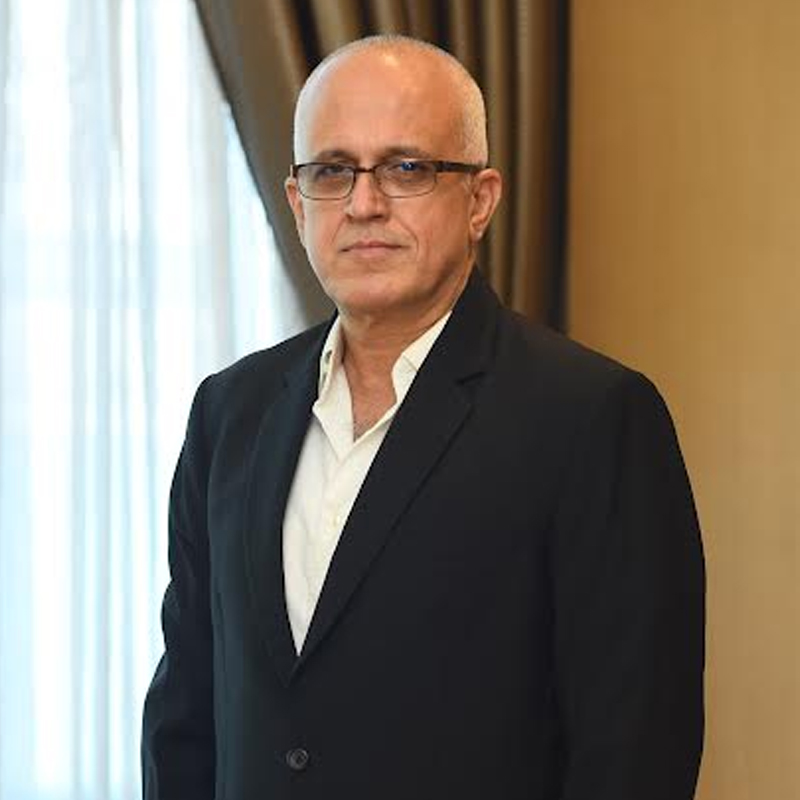
    The author of this article is Scenic Communication co-founder Anindita Gupta.

  • Vossle witnessed an average spike of 200% in its sign-ups over the last 6 months: cofounder Prafulla Mathur

    Vossle witnessed an average spike of 200% in its sign-ups over the last 6 months: cofounder Prafulla Mathur

    Mumbai: Augmented reality (AR) isn’t just a fancy term anymore. It has, in fact, become a much sought-after means of accomplishing brand goals. The major factors driving the growth of web AR are the booming gaming industry and the rapid penetration of the internet, which are driving brands across the world to adopt web AR to increase their engagement with customers on their websites.

    Here’s where Vossle, a cloud-based, no-code web AR development SaaS platform, comes into the picture.

    Launched in January 2021, Vossle was co-founded by Prafulla Mathur and Pulkit Mathur. According to the duo, with the platform, businesses can create augmented reality in under a minute. It requires no app downloads to experience world targets, image target-based campaigns, games, or face detection-based try-ons using Vossle’s core AR+AI engine. It reaches millions of users instantly with an app-less AR experience that works on every modern smartphone browser the moment you publish it.

    Prafulla Mathur and Pulkit Mathur are serial tech entrepreneurs, and are also the founders of Queppelin, a global metaverse development company.

    Vossle raised funds from Nimbuzz ex-CEO Vikas Saxena. Nimbuzz was acquired by the UK’s New Call Telecom for $250 million. Vossle grew quickly and now operates in Gurugram and New York.

    In an exclusive confab with Indiantelevision.com, Vossle co-founder Prafulla Mathur discusses the application of Web AR by various brands and across categories, how it is being used in the advertising and marketing space, and so much more.

    For starters, the global augmented reality (AR) and virtual reality (VR) market size was valued at Rs 1,222.7 billion in 2020 and is projected to reach Rs 37,073.65 billion by 2030, registering a CAGR of 40.7 per cent.

    Discussing the expansion plans of Vossle over the next two years, Mathur reveals, “We are expanding Vossle technology teams as we are releasing new product features. Our current teams are in India and New York (USA), and we will add further teams at these offices. We are also adding more customer support teams (both through email, phone, and the Vossle tech forum) to help our customers.

    “Elaborating on Vossle being a no-code platform, Mathur reveals that it democratises AR for everyone by removing the dependence on development/coding teams. “You can think of Vossle as Shopify for web AR. With Shopify, businesses can create websites without writing any code and do not have to bother with hosting them. Similarly, with Vossle, businesses can create various types of AR without any coding knowledge and use them out-of-the-box as the created AR experiences are also automatically hosted on Vossle,” he explains.

    About the subscription model: Apart from a free trial, Vossle offers two subscription plans, namely, commercial and enterprise plans. In the free trial, users can create unlimited AR experiences with 100 free views. The commercial plans are for $99 per month, wherein users can create various types of AR experiences like in-line AR, face filters, try-ons, games, world tracking experiences, image tracking experiences, green screen chroma key videos, and so on. Users can create unlimited experiences and are offered 10,000 views + $0.01 per extra view. In the enterprise plans, along with all the commercial plan benefits, users can avail themselves of the option for white labelling and custom branding.

    Use cases of Vossle’s technology

    One of the most eminent use cases of Vossle’s technology is that of in-line AR being used for improving website search engine optimization (SEO). Any effective SEO strategy aims to keep visitors on the website for longer session durations. Vossle’s inline AR Feature makes it possible by embedding AR experiences inside a website, which has a 90-times higher engagement rate from website visitors.

    Mathur emphasises that AR is also utilised for product packaging. Brands which integrate AR into their packages are able to capture the audience way more than their competitors. This also gives analytics and insights on customer profiles, store level sales, and customer engagement analytics and makes brands better prepared to update inventory at the highest engagement stores.

    Advertising and marketing also constantly utilise AR. “Traditional marketing strategies are no longer sufficient to stay up with the times. The key to creating a digitally transformed company is to build upon new strategies such as integrating AR into business models,” points out Mathur. For instance, Tanishq, a product of the Tata Company, is one such example of excellent AR marketing. The company used Vossle’s virtual try-on feature to make a gorgeous 3D reproduction of their newest jewellery and made it possible for users to virtually put it on.

    Gaming is another instance wherein AR is used extensively. Nothing compares to AR for attracting audiences, engaging their attention for longer sessions, and boosting click-through rates. Web AR games amplify this even further. For example, Pond’s, a major skincare brand from Hindustan Unilever (HUL), needed a smart, potent, and engaging marketing strategy to connect and influence the younger audience and expand their loyal customer base. Thus, the brand created a unique web AR game on Vossle—users have to pop the bubbles with their facial movements. With each bubble they pop, their skin becomes more radiant and glowing. The game also has an end-to-end ecommerce flow with integrated discount coupons.

    Another example is that of a web AR experience of a 3D basketball game that can be played by scanning the code. The player has to shoot baskets through the hoop with their finger. This is just one of the many examples of how any idea can be turned into a web AR game with Vossle.

    AR being heavily applied in e-commerce. Online retail has already started adopting 3D AR product visualisations. Amazon is already offering 3D product visualisations, Lenskart (a prominent eyewear e-commerce player in India) offers eyewear try-ons, and Tanishq has offered Vossle jewellery try-ons. Mathur says, “This not only improves the shopping experience by allowing customers to visualise and virtually try-on a product before buying, it also reduces returns as the customers are making an informed decision.”

    Education is also an additional use case of AR. Players in the education space are now integrating Vossle into their online courses to explain concepts in a unique way by providing a real-life context to the students through AR. This interactive way of learning results in faster understanding and higher knowledge retention.

    Web AR – led promotions and the effect of web AR on sales

    Mathur brings out, “We witnessed an average of a 200 per cent jump in our monthly Vossle sign-ups over the last six months. Many of these signups are from brand marketers or their agencies. Additionally, some of the largest marketing, advertising, and creative agencies have become Vossle’s service partners, clearly indicating the huge investments that the brands are making towards creating web AR campaigns.

    “Talking about the effect of web AR on sales, Mathur elucidates that as the users’ gaze times are very high when viewing AR, they stay for longer durations on brand websites when AR is embedded on the page. This improves the websites’ SEO rank and hence drives traffic, resulting in higher sales.

    Brands selling their products online also give ads on Google, which is called search engine marketing (SEM). Inline AR on its landing page increases the quality score of such ads, reducing the ad rates for the brand and resulting in more targeted users being able to see it within the same budget.

    Additionally, brands that integrate AR into their packages are able to capture the audience way more than their competitors. “One of the recent campaigns we did for an FMCG company received 500K views in a month on their web AR experience through their packaging. This resulted in higher sales for the brand,” says Mathur.

    Brands and categories utilising Vossle’s web AR technology

    Along with many others, some of the few brands that Vossle is already working in tandem with are Pond’s, Tanishq, and Emirates NBD, which is a banking behemoth in the Middle East and uses Vossle web AR to wish their users on every festival like Mother’s Day or Chinese New Year.

    Speaking about the categories implementing AR, Mathur states that it is used for inline AR—website owners from across education, retail, furniture, jewellery, and consumer goods like beauty products, etc. are taking a lead in using inline web AR.

    It is also employed for packaging-based AR implementations. Consumer packaged goods (CPG) are leading the way in offering web AR experiences to engage customers. They have millions of packages on superstore shelves and in consumers’ homes, which is a huge marketing opportunity they can leverage.

    Reach, target group and brand experiences for consumers

    While deliberating over the kind of reach that web AR has, Mathur says that it works in browsers (Chrome, Safari, etc.) on devices like smartphones (Android, iOS) and laptops/desktops. All combined, a total of 5-8 billion devices across the globe are compatible with web AR.

    What is kept in mind while creating web AR brand experiences for consumers? “No-code platforms for web AR like Vossle have eliminated the need to write code, which used to be a big task earlier. Additionally, Vossle offers a fully hosted web AR creation experience. Hence, website owners and brands who want to create a web AR experience only have to focus on creating interesting content. Vossle helps with that too, with its integrated content library and empanelled service partner to create custom content for Vossle users,” deciphers Mathur.

    Needless to say, web AR as technological advancement is more attractive to the youth. Do brands usually use such experiences to target Gen Y, Gen Z and millenials only? Or if such web AR experiences are also created for the higher age groups, how does Vossle bring in traction from such age groups? Mathur concludes, “Every medium such as movies, television, videos or stories has different user groups and demographics preferring different types of content regardless of the medium. Same is with web AR which can create different content types for different interest groups like fun and educational for kids, exciting stuff like face filters and games for 16-30 year olds, and product visualizations and try-ons for 30-60 year olds.”

  • GUEST ARTICLE: What are the advantages of the advertising industry with the new 5G technology

    GUEST ARTICLE: What are the advantages of the advertising industry with the new 5G technology

    Mumbai: In the recently ended spectrum sale, India auctioned 51,236 MHz of spectrum to incumbent operators for Rs 1,50,173 crore across several 5G networks. This implies a speedier experience for customers, with mobile devices interacting with wireless networks significantly faster and users seeing enhanced download and upload speeds. According to a Deloitte analysis, India’s digital economy is expected to reach one trillion dollars by 2025 as a result of growing smartphone use, fast internet penetration, and the acceleration of mobile broadband and data connectivity. However, 5G is expected to be the primary driver of this expansion.

    5G, like the radio, the internet, and other disruptive technologies before it, will allow advertisers to better engage customers by sending enormous amounts of data at speeds significantly quicker than current 4G technologies allow. Although 78 per cent believe 5G technology will be superior to 4G, 95 per cent are unaware of which 4G features are currently available on their devices. More than 70 per cent are prepared to pay for new technologies (with payment used as a proxy for perceived value). Faster downloads are significant for 71 per cent of 5G users. Respondents do not grasp the phrases “connectivity,” “capacity,” and “latency” and place a low value on these benefits. Here are the advantages for the advertising industry with the new 5G technology:

        Making your creatives suitable for 5G users.

    5G users interact with gadgets in a unique way, which can assist in personalising advertisements to what they’re most interested in. 5G has several concrete benefits, such as downloading a two-hour HD movie in roughly 18 minutes, live streaming a concert or live event to friends or family in HD, and low-latency gaming with 30-50 millisecond ping. However, tailoring your ads to fit consumers’ preferences is extremely critical for 5G over 4G. Users that have a strong interest in gaming, entertainment, and live streaming are more likely (92 per cent) to pay for 5G technology and purchase a 5G enabled phone early on, compared to the overall average (81 per cent). With all of the new 5G updates, there is also a huge opportunity to get creative with brand advertisements and innovate with new benefits.

        5G technology unlocks AR/VR advertising

    Because of 5G’s low latency and rapid download rates, advertisers and publishers will have more options to build new streaming media formats with better capabilities. As customers spend more time on 5G phones, they want new experiences to justify the higher cost. Therefore, advertising must capitalise on this. AR and VR have several applications. Over the next year, it is predicted that 100 million consumers will utilise augmented reality for purchasing. Creating increasingly meaningful, immersive experiences is the future of online engagement, and 5G will usher in those capabilities more naturally.

        Analytics will go real-time

    Already, a fraction of the data we can handle and analyse is considered real-time data. 5G will enable the integration of a broader variety of activities and impressions in real time. If a consumer makes a purchase in the future, they may no longer get any advertising connected to that product or product category. Fundamentally, this will improve targeting, segmentation, customer experience, and customer journey, as well as brand and consumer efficiencies.

        Serve advertisements that leverage 5G advantages

    Users may interact with adverts in novel ways thanks to the ability of 5G for advertisers to create more creative and original immersive content. Real, realistic on-device advertising experiences may be made possible in various ways with minimal latency. Advertisers may display full-screen commercials that let viewers see how a character or product appears in various settings that they can design and modify right from the creative. Additionally, brands may employ VR to present a 360-degree image of the gaming or social environment. Greater capacity also allows for the production of advertisements in a wide variety of audio and video formats. 5G technology has a tonne of unrealized potential, so businesses should be committed to coming up with fresh approaches to interacting with consumers through advertising.

    As with previous technological breakthroughs, advertisers will need to have their fingers on the pulse in order to fully capitalise on the new opportunities presented by 5G and avoid falling behind. Fundamentally, it’s fantastic for innovation that our most imaginative ideas may now confront fewer technological constraints. However, adapting our strategy to the new digital context will be a problem.

    The author of this article is Hotstuff Medialabs founder and CEO Arun Fernandes.

  • GUEST ARTICLE: How will metaverse shape the influencer and consumer engagement landscape

    GUEST ARTICLE: How will metaverse shape the influencer and consumer engagement landscape

    Mumbai: The internet is constantly evolving and has become more interactive. Soon, we will be able to experience it as a network of real-time virtual worlds. The metaverse is a three-dimensional virtual environment that allows your digital avatar to live, play, work, and socialise. It is a self-contained digital counterpart to the real world where you are engaged in your surroundings and experience and have access to various places, events, and activities while sitting in your living room.

    This next-generation version of the virtual space is a powerful tool. It offers excellent comfort, accessibility, interactions, and brand promotion opportunities, with user-generated content (UGC) playing an essential part in the form of text, images, audio, and videos. It will be a crucial building component for the metaverse in the coming years, providing uniqueness, credibility, and scalability.

    Brands and creators have acknowledged the first-mover advantage and are capitalising on consumer interest. As mega brands begin to leverage the metaverse, another trend that can stand to benefit is the realm of influencer marketing.

    Metaverse and influencer marketing

    Influencer marketing as a social media marketing tool emphasises product endorsements and recommendations from experienced influencers with a substantial social following. These influencers are highly regarded by their audience, and their product recommendations serve as social validation for brands’ prospective customers.

    Social media platforms have dramatically boosted the number of niche influencers and viewership in recent years. These creators have begun to engage with their audiences in new ways to widen the influencer-audience engagement time. They are eager to leverage the metaverse as a space to connect with a larger audience and provide a better consumer experience. Numerous opportunities exist for creators to collaborate and create engaging and multi-dimensional content to bond with their audience in the metaverse.

    Growth in virtual circles

    Social media platforms have significantly increased the number of influencers who interact with their audience. However, these interactions are frequently constrained to certain platform features.

    Metaverse can make the experience seamless and convenient for everyone. Creators can host virtual meetups and organise livestream sessions, fan fests, and other activities. Through metaverse, they can connect directly with their audiences’ digital avatars on the platform, garnering better engagement.

    Immersive influencer marketing

    The innovative use of technologies such as AR and VR expands the possibilities for generating immersive and engaging content while allowing creators to enter into new dimensions like the metaverse. For example, influencers in the music industry can stage virtual performances in the metaverse to attract viewers from all over the world, crossing all geographical boundaries.

    Similarly, artists can create and sell 3D art to display in virtual homes; fashion influencers can introduce their digital merchandise that their audience can purchase; and travel influencers can go on virtual world tours with their fans, making the experience more thrilling.

    The growing number of influencers has helped brands reach various demographics and engage with existing and potential consumers. Influencers can be present in more than one virtual space in the metaverse, which amplifies their reach. Brands can leverage this benefit to optimise their marketing strategies and interact with larger consumer segments.

    The future of influencer marketing

    Although celebrity influencers have pioneered influencer campaigns, micro influencers’ growth has expanded and will continue to strengthen business opportunities. Brands can easily connect with their consumers by leveraging a network of smaller influencers rather than investing in one or two big influencers.

    In addition, social media has witnessed an increase in AI influencers across sectors. Interestingly, brands have started creating virtual influencers, aka meta-influencers. This strategy enables brands to have ambassadors who can interact with consumers.

    In the coming years, AI influencers will coexist with their human counterparts in the metaverse, with brands having the power to control how they communicate their message and narrative.

    Way forward

    The metaverse is set to bring about profound changes in how we all live. It will alter our interaction with the physical world, from perception to content creation. There is an enormous potential for all creators to harness technology to create outstanding content in the metaverse and thrive in their domains. Content creators will play a critical role in the development of the metaverse, which will be pivotal to their success in the long term.

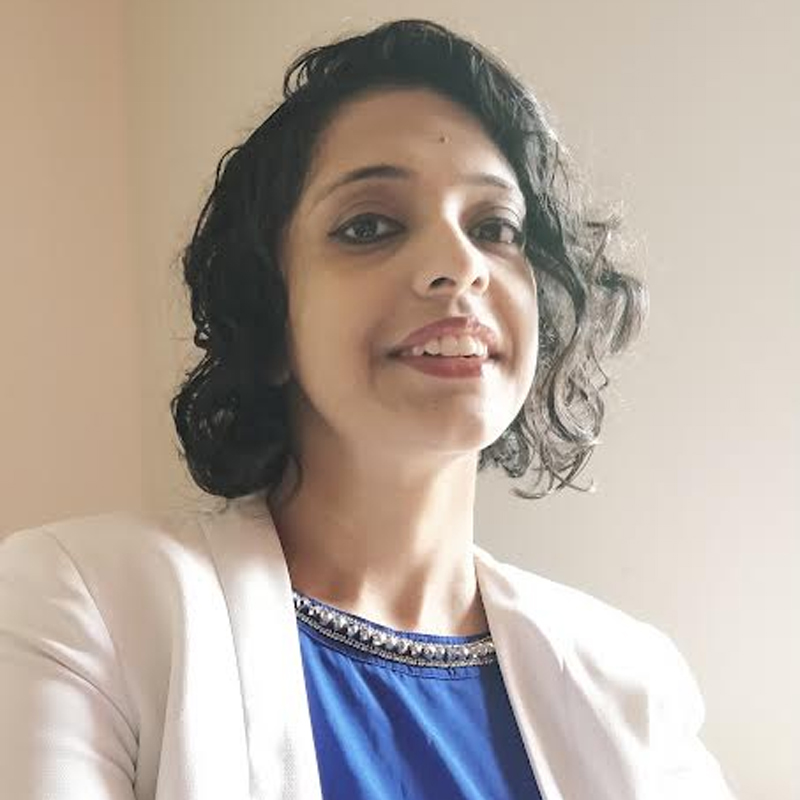
    The author of this article is AnyTag India Lead Shuchi Sethi.

  • Mimansa Malik, Sachin Arora & Poornima Mishra join Bharat 24 as news anchors

    Mimansa Malik, Sachin Arora & Poornima Mishra join Bharat 24 as news anchors

    Mumbai: The upcoming National Hindi News channel Bharat 24 has appointed popular Hindi news anchors Mimansa Malik, Sachin Arora and Poornima Mishra ahead of its launch next month. Newly-appointed anchors bring together years of credibility and editorial instincts, elaborating Bharat 24’s editorial line up further.

    Bharat 24 aims to bring its vision of ‘New India’ to reality soon. Bharat 24 emphasises on highlighting significant news from all Indian states and being a ‘National Voice of Real India’ in true sense. The news channel is also the first to introduce augmented reality to its studios offering an immersive engagement for its viewers.

    These strings of new appointments have only added to the growing buzz around the Noida-based upcoming national Hindi news channel, which is set to make giant strides with its launch in August 2022.