Tag: Audit Bureau of Circulation

  • Advertising veteran Srinivasan Swamy returns for fourth stint as industry chief

    Advertising veteran Srinivasan Swamy returns for fourth stint as industry chief

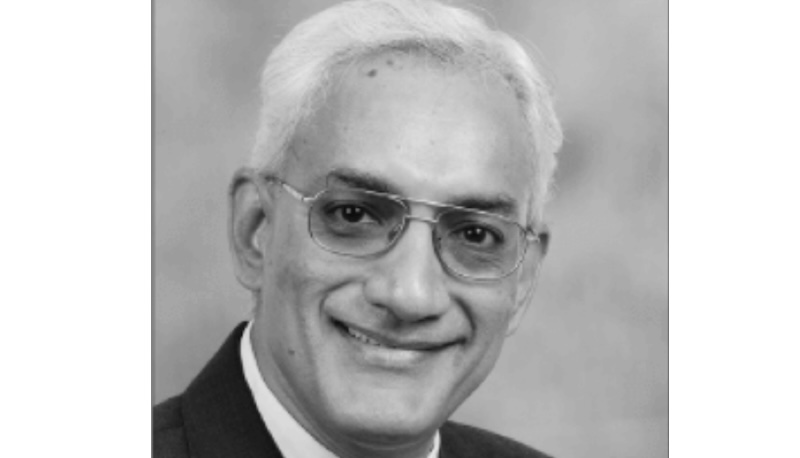
    MUMBAI: India’s advertising industry loves a comeback story—and Srinivasan K Swamy is giving it one. The executive group chairman of R K Swamy has been elected president of the Advertising Agencies Association of India for 2025-26, marking his fourth term in the role after an 18-year hiatus.

    Swamy, also known as Sundar Swamy, previously ran the 80-year-old trade body from 2004 to 2007, when India’s advertising market was a fraction of its current size. His return suggests the industry wants experienced hands to navigate an increasingly complex landscape of digital disruption, regulatory scrutiny and changing consumer behaviour.

    “I am deeply humbled that this marks my fourth term in this role,” said Swamy, whose lengthy CV reads like a who’s who of industry bodies. He has chaired everything from the International Advertising Association to the Audit Bureau of Circulation, earning a lifetime achievement award from AAAI along the way.

    Jaideep Gandhi was elected vice-president, while the 15-member board includes heavyweights from agencies spanning Leo Burnett to Grey Worldwide. The roster reflects the fragmented nature of India’s advertising market, where global networks jostle with homegrown shops for a slice of the action.

    Outgoing president Prasanth Kumar, who served three years during the turbulent post-pandemic period, handed over the reins with typical corporate grace. “I am confident that, with his vast experience and vision, he will steer AAAI to even greater achievements,” he said.

    Whether Swamy can repeat his earlier success remains to be seen. The advertising world he inherits is vastly different from the one he left in 2007—social media has upended traditional media planning, privacy regulations are reshaping data collection, and artificial intelligence threatens to automate creative work.

    Still, at an age when most executives are eyeing retirement, Swamy clearly believes there’s more work to be done. For an industry built on selling dreams, that kind of optimism is probably just what the doctor ordered.

    Other elected members of the Board in alphabetical order and the companies they represent on AAAI are: 
    * Anupriya Acharya,  Leo Burnett (TLG India Pvt Ltd) 
    * Sam Balsara, Madison Communications Pvt Ltd 
    * Tanya Goyal, Everest Brand Solutions Pvt Ltd 
    * Tapas Gupta, BEI Confluence Communication Ltd. 
    * Vishandas Hardasani, Matrix Publicities and Media India Pvt Ltd 
    * Mohit Joshi, Havas Media India Pvt Ltd 
    * Santosh Kumar, Innocean Worldwide Communication Pvt Ltd 
    * Kunal Lalani, Crayons Advertising Ltd 
    * Chandramouli Muthu, Maitri Advertising Works Pvt Ltd  
    * Vikram Sakhuja, Platinum Advertising Pvt Ltd 
    * Kartik Sharma,  Omnicom Media Group India Pvt Ltd 
    * Anusha ShettY,  Grey Worldwide (India) Pvt Ltd 
    * Shashi Sinha, Initiative Media (India) Pvt Ltd 
    * K Srinivas, Sloka Advertising Pvt Ltd  
    * Paritosh Srivastava, Law & Kenneth Saatchi & Saatchi Pvt Ltd 

  • TV in India may grow 10.3%, overall AdEx by 11.5% in ’17: IPG Magna

    MUMBAI: India is recovering from the aftereffects of demonetisation, and the currency deficit faced during this period has helped the country leap frog towards a lesser cash economy.

    The country is set to move towards a uniform tax regime with Goods & Services Tax (GST), effective July 2017, while this fuels growth it is likely to create a fleeting disruption in the short term when the industry realigns and adapts to the new tax structure. GDP in real terms is estimated to grow +7.2% in 2017 compared to +6.8% in 2016 according to International Monetary Fund (IMF). Within the next decade India will gallop to become one of the largest consumer markets in the world according. Rising affluence, ease of doing business, urbanization and enabling infrastructure will contribute to this status.

    Advertising revenue which is accounts for 0.38% of GDP (gross domestic product) is likely to grow CAGR of +12.6% to touch INR 992 bn by 2021. Within Advertising, offline is estimated to grow at a CAGR of +9.7%, while digital will grow at +25.5% CAGR in the next five years. Mobile is projected to overtake desktop by 2020. Television will still be the largest media in 2021 with a market share of 39%.

    In 2017, Adex is estimated to grow +11.5% to touch INR 611bn, predicts Magna, the intelligence, investment and innovation strategies agency of IPG Mediabrands. Ad spends will be driven by sectors like social, fin-tech, and payment banks, telecom service, content distribution platforms etc., in addition to FMCG, Auto and Ecommerce.

    Television, the foundation of advertising spends, continues to dominate the industry with its market share of 41% and will grow+10.3%.  With BARC release of rural audience data, new revenue stream in the form of FTA channels have gained significance. Quality localized content and HD experience will help regional TV to keep their audiences hooked. Sporting leagues outside of Cricket is finding way to generate mass involvement and Television will play a larger role. Star Sports Tamil demonstrating tangible results will increase fandom for local/state level formats.

    Print in India has been successful in guarding its revenues well with revenue expected to grow by +5.7% and India is one of the large markets where circulation is still growing thanks to rising literacy. The second biggest category with 36% share despite growing is losing its share to Digital year-on-year. Traditional sectors like auto, telecom and education will contribute to ad spend growth.  After a gap of 3 years, the category will invigorate with the release of new IRS and help publishers realize merit based value. Audit Bureau of Circulation (ABC) measuring digital consumption will lend authority and help in monetization. We expect the ad spends to grow beyond the estimated +5.7% in 2017 thanks to government’s focused campaign to popularize their marquee initiatives.

    Digital will grow +28%, and, within digital, mobile is driving spends with a growth rate of +65.7%. The launch of 4G triggered low price data products there by increase in usage. With improved speed Video, native and customized content has tremendous potential to grow.  BARC putting out a road map on digital panel takes India one step closer to a robust measurement not only for digital but also to showcase capabilities in incremental metrics. With expanding content library, OTT viewing is no more restricted to national languages. Aggressive push by Amazon and Netflix to address the original content gap will attract larger base of audience. With mobile increasingly being the choice of access, traffic will be higher than desktop resulting in advertising propelled by mobile which is estimated to expand at CAGR of 48%. E-commerce, Telecom, Auto, BFSI, Durables are large contributors to the revenue.

    Radio reach with around 150 new frequencies sold during phase III is set to deepen further and will help generate incremental revenue. We estimate radio to grow +13% and continue to grow at CAGR of 13.8% in the next 5 years. Currently the measurement is limited to 4 cities, widening this will help radio increase its share from the current 4%

    OOH will grow +12% in 2017. Technology integration will increase effectiveness and helps DOOH to drive ad spends. Urbanization in the form of new Metro lines and smart cities, modernization of Indian Railways and their new advertising policy etc., will provide opportunities for a planned development of quality assets and also push the industry to innovate and move beyond billboards. Regional cinema is pushing boundaries to outdo Bollywood cinema which augurs well for the industry.

    Table 1 – Media owner revenue by category in INR Cr Net

    public://F1_12.jpg

    Table 2 – Traditional Vs Digital Adex growth rate

    public://F2_5.jpg

    Table 3 – Mobile gaining shares over desktop

    public://F3_0.jpg


  • Verified print publications to get higher rates for DAVP ads

    Verified print publications to get higher rates for DAVP ads

    NEW DELHI: A new marking system has been introduced for the first time in the government’s advertisement policy to incentivise newspapers which have better professional standing and get their circulation verified by the Audit Bureau of Circulation (ABC) or the Registrar of Newspapers in India (RNI). This will also ensure transparency and accountability in the release of advertisements by the Directorate of Advertising and Visual Publicity which is the nodal advertising agency of the government.

    The marking system is based on six objective criteria with different marks allotted to each criterion. The criterion includes circulation certified by ABC/RNI (25 marks), EPF subscription for employees (20 marks), number of pages (20 marks), subscription to wire services of UNI/PTI/Hindustan Samachar (15 marks), own printing press (10 marks), annual subscription payment to PCI (10 marks). Advertisements shall be released by DAVP to newspapers based on marks obtained by each newspaper.

    The innovation is part of the new advertisement policy for the print media issued by the Information & Broadcasting ministry with the objective to promote transparency and accountability in issuing of advertisements in print media.

    The policy focuses on streamlining release of government advertisements and to also promote equity and fairness among various categories of newspapers/periodicals. The key highlights of the policy are as follows:

    The policy framework includes circulation verification procedure for empanelment of newspapers/journals with DAVP. The procedure involves certification by RNI/ABC if circulation exceeds 45,000 copies per publishing day. A certificate from Cost/Chartered Accountant/ Statutory Auditor Certificate/ ABC is mandated for circulation up to 45,000 copies per publishing day. The policy states that RNI circulation certificate shall be valid for a period of two years from the date of issue and in case of ABC, the current certificate shall be used for circulation certificate.

    It is stated in the policy that the director general of DAVP reserves the right to have figures of circulation checked through RNI or its representative.

    The policy also stipulates the empanelment procedure for multi-editions of a newspaper. It states that according to the Press and Registration of Books Act whenever copies of one edition of a newspaper are printed from more than one centre, the newspapers would be treated as different editions if the content is different. Each edition of a newspaper is required to have a separate RNI registration number and RNI shall treat each edition as separate entity while verifying the circulation.

    However, the policy guidelines mention that if a newspaper is printing its copies of an edition in more than one printing press for sake of convenience without adding any additional content, DAVP may take the circulations of such printing centres into consideration for giving rate of that edition.

    The policy framework provides a premium for prominent placing of ads in newspapers and journals whose circulation is certified by ABC/RNI. The directorate would pay a premium of 50 percent above DAVP rates for colour/black and white for front page, 20 percent premium to third page, 10 percent premium to fifth page and 30 percent premium for back page to only those newspapers whose circulation is certified by ABC/RNI.

    The policy stipulates that the rate structure for payment against advertisements released by DAVP will be according to the recommendations of the Rate Structure Committee.

    The policy has classified newspaper/journals into three categories namely small ( less than 25,000 copies per publishing day), medium (25,001-75,000 copies per publishing day) and big ( greater than 75,000 copies per publishing day).

    Big category newspapers which are willing to publish the advertisements of educational Institutions at DAVP rates are being incentivised by giving additional business of 50 percent in volume terms as compared to those which are not willing to accept.

    DAVP will release payment of advertisement bills in the name of newspaper/company account directly through ECS or NEFT.

    A newspaper will publish DAVP advertisement only on receipt of the relevant release order by DAVP. All release orders issued can be accessed electronically at the DAVP website.

    The new policy has structured the empanelment procedure to ensure fairness among various categories of newspapers/journals. The policy also mentions relaxation in empanelment procedure to provide special encouragement for regional language/dialect small and medium newspapers, mass circulated newspapers (circulation above 100,000), newspapers in North Eastern states, Jammu & Kashmir and Andaman & Nicobar Islands.

    DAVP has been asked to make efforts to release more social messages and related advertisements which are not date specific to periodicals.

    To promote equity based regional outreach, the policy emphasizes that the budget for all India release of advertisements shall be divided among states based on total circulation of newspapers in each state /language.

    Public sector undertakings and autonomous bodies may issue the advertisements directly at DAVP rates to newspapers empaneled with DAVP. However, they all have to follow the criteria laid down by DAVP for release of all classified and display advertisements in different categories of newspapers viz. small, medium and big.

    To cut down on arrears, all clients of DAVP have been directed to issue Letter of Authority/cheque/ DD/NEFT/RTGS up to 80 percent of the actual expenditure in the previous year within the first month of the new financial year and clear all the remaining payments before 28 February of the financial year. Alternatively, the client ministries may provide 85 percent advance payments of the estimated expenditure of the advertisements.

  • Verified print publications to get higher rates for DAVP ads

    Verified print publications to get higher rates for DAVP ads

    NEW DELHI: A new marking system has been introduced for the first time in the government’s advertisement policy to incentivise newspapers which have better professional standing and get their circulation verified by the Audit Bureau of Circulation (ABC) or the Registrar of Newspapers in India (RNI). This will also ensure transparency and accountability in the release of advertisements by the Directorate of Advertising and Visual Publicity which is the nodal advertising agency of the government.

    The marking system is based on six objective criteria with different marks allotted to each criterion. The criterion includes circulation certified by ABC/RNI (25 marks), EPF subscription for employees (20 marks), number of pages (20 marks), subscription to wire services of UNI/PTI/Hindustan Samachar (15 marks), own printing press (10 marks), annual subscription payment to PCI (10 marks). Advertisements shall be released by DAVP to newspapers based on marks obtained by each newspaper.

    The innovation is part of the new advertisement policy for the print media issued by the Information & Broadcasting ministry with the objective to promote transparency and accountability in issuing of advertisements in print media.

    The policy focuses on streamlining release of government advertisements and to also promote equity and fairness among various categories of newspapers/periodicals. The key highlights of the policy are as follows:

    The policy framework includes circulation verification procedure for empanelment of newspapers/journals with DAVP. The procedure involves certification by RNI/ABC if circulation exceeds 45,000 copies per publishing day. A certificate from Cost/Chartered Accountant/ Statutory Auditor Certificate/ ABC is mandated for circulation up to 45,000 copies per publishing day. The policy states that RNI circulation certificate shall be valid for a period of two years from the date of issue and in case of ABC, the current certificate shall be used for circulation certificate.

    It is stated in the policy that the director general of DAVP reserves the right to have figures of circulation checked through RNI or its representative.

    The policy also stipulates the empanelment procedure for multi-editions of a newspaper. It states that according to the Press and Registration of Books Act whenever copies of one edition of a newspaper are printed from more than one centre, the newspapers would be treated as different editions if the content is different. Each edition of a newspaper is required to have a separate RNI registration number and RNI shall treat each edition as separate entity while verifying the circulation.

    However, the policy guidelines mention that if a newspaper is printing its copies of an edition in more than one printing press for sake of convenience without adding any additional content, DAVP may take the circulations of such printing centres into consideration for giving rate of that edition.

    The policy framework provides a premium for prominent placing of ads in newspapers and journals whose circulation is certified by ABC/RNI. The directorate would pay a premium of 50 percent above DAVP rates for colour/black and white for front page, 20 percent premium to third page, 10 percent premium to fifth page and 30 percent premium for back page to only those newspapers whose circulation is certified by ABC/RNI.

    The policy stipulates that the rate structure for payment against advertisements released by DAVP will be according to the recommendations of the Rate Structure Committee.

    The policy has classified newspaper/journals into three categories namely small ( less than 25,000 copies per publishing day), medium (25,001-75,000 copies per publishing day) and big ( greater than 75,000 copies per publishing day).

    Big category newspapers which are willing to publish the advertisements of educational Institutions at DAVP rates are being incentivised by giving additional business of 50 percent in volume terms as compared to those which are not willing to accept.

    DAVP will release payment of advertisement bills in the name of newspaper/company account directly through ECS or NEFT.

    A newspaper will publish DAVP advertisement only on receipt of the relevant release order by DAVP. All release orders issued can be accessed electronically at the DAVP website.

    The new policy has structured the empanelment procedure to ensure fairness among various categories of newspapers/journals. The policy also mentions relaxation in empanelment procedure to provide special encouragement for regional language/dialect small and medium newspapers, mass circulated newspapers (circulation above 100,000), newspapers in North Eastern states, Jammu & Kashmir and Andaman & Nicobar Islands.

    DAVP has been asked to make efforts to release more social messages and related advertisements which are not date specific to periodicals.

    To promote equity based regional outreach, the policy emphasizes that the budget for all India release of advertisements shall be divided among states based on total circulation of newspapers in each state /language.

    Public sector undertakings and autonomous bodies may issue the advertisements directly at DAVP rates to newspapers empaneled with DAVP. However, they all have to follow the criteria laid down by DAVP for release of all classified and display advertisements in different categories of newspapers viz. small, medium and big.

    To cut down on arrears, all clients of DAVP have been directed to issue Letter of Authority/cheque/ DD/NEFT/RTGS up to 80 percent of the actual expenditure in the previous year within the first month of the new financial year and clear all the remaining payments before 28 February of the financial year. Alternatively, the client ministries may provide 85 percent advance payments of the estimated expenditure of the advertisements.

  • INS gives ultimatum; MRUC to meet tomorrow

    INS gives ultimatum; MRUC to meet tomorrow

    NEW DELHI/MUMBAI: The revamped Indian Readership Survey (IRS) was supposed to create a new paradigm, but has instead turned out to be a nightmare for Media Research Users Council (MRUC).


    The Indian Newspaper Society (INS) today issued an ultimatum to MRUC, a not-for-profit body of advertisers, advertising agencies, publishers and broadcasters, to withdraw IRS 2013 within 24 hours or face total rejection of the findings of the survey by the publishers.


    Indiantelevision.com had reported earlier that the INS representatives would be meeting officials from MRUC today to discuss issues raised by publishers. Today’s meeting was held in two rounds: the first meeting had print publishers discuss the future course of action while the second one delivered the ultimatum to MRUC.


    The INS is unwilling to climb down from its demand for complete withdrawal of the survey within 24 hours, the contract for which was given to Nielsen.


    The INS representatives attending the meeting were unanimous in their demand for complete withdrawal of the IRS 2013 survey as the first corrective step. The publishers raised several questions regarding the methodology and mechanism based on which the survey findings were arrived at.


    To decide on what should be MRUC’s next course of action, its officials will have a meeting with the Readership Studies Council of India (RSCI), a joint body of MRUC and Audit Bureau of Circulation (ABC). INS Newspaper Society Chairman Mohit Jain confirmed the news and said: “We have also asked MRUC to conduct an extraordinary meeting tomorrow at 11.30 am and decide about today’s discussions.”


    “What happens next will be decided tomorrow by the RSCI,” says IRS Technical Committee Chairman Paritosh Joshi, who is personally saddened by the way things are taking shape.


    Sources say if MRUC fails to take action, INS may issue an advisory to its members asking them not to subscribe to IRS in the future and also not to use the mast heads of their newspapers in future surveys, and may consider supporting some newspapers going to court against the findings to get a stay order on the use of the latest IRS numbers by media planners and advertisers.


    A group of 18 publishers, which include The Times of India, Dainik Jagran, Bhaskar, India Today, Ananda Bazar Patrika, Lokmat, Outlook, Daily News and Analysis (DNA), Sakshi, The Hindu, Amar Ujala, The Tribune, Bartaman Patrika, Aaj Samaj, The Statesman, Mid Day, Nai Duniya and Dinakaran, have been vocal about their dismay with the numbers.


    The publishers felt that there was arbitrary decline in aggregate readership of certain publications. A majority of the publications are negatively affected by the 2013 survey which is based on a new methodology.


    Sources from the print industry shared the data, which shows how particular publications lost their Average Issue Readership (AIR) in a drastic way in some states.

  • IRS 2013 fate to be decided on Monday

    IRS 2013 fate to be decided on Monday

    MUMBAI: Early this week, when Indian Readership Survey (IRS), which was published after a year, the Indian print media waited with bated breath to see how has it done – good, bad or ugly?


    Since the survey conducted by Media Research Users Council (MRUC) and its new vendor Nielsen has been made public, things have turned ugly.


    A lot of publishers are not happy with the data and the new methodology used this time.  Many of them have openly voiced their dismay with it. For instance, the Hindu carried a piece from its editor-in-chief saying, “IRS, in relation to The Hindu, is riddled with inconsistencies and with findings that defy common sense and reach the level of absurdity that its credibility has been totally damaged.”


    Across the country, leading newspapers have said the new methodology used in the IRS has a lot of glitches and contradicts the figures of the Audit Bureau of Circulation (ABC), which shows the number of copies printed.


    The issue has taken a serious turn. A group of 18 leading newspaper groups, including the Times of India, Jagran, Bhaskar, Outlook, Lokmat and The Hindu, on Jan 30 issued a joint statement rubbishing the findings of the 2013 IRS survey.


    The group of publishers has called upon MRUC to immediately withdraw the latest IRS results and put a stop to all future editions of the survey based on the new methodology.


    The Indian Newspaper Society (INS) will meet with the MRUC on Monday (3 January) to discuss the issues in the IRS survey.


    The chairman of MRUC, Ravi Rao, was unavailable for comment.


    Paritosh Joshi, the Chairman of IRS’ Technical Committee, didn’t hide his disappointment and said if data is recalled or any other similar step is taken, it will be “shattering” for him. “All I want to say is that technology-wise we have used the best methodology. We also checked upon it routinely. What is surprising is that publishers were aware of the process used and it wasn’t a bolt from the blue. It was all out in the open and we delivered best to our capabilities.”


    The fate of the survey would be decided on Monday, till then we can only wait to see what happens next.