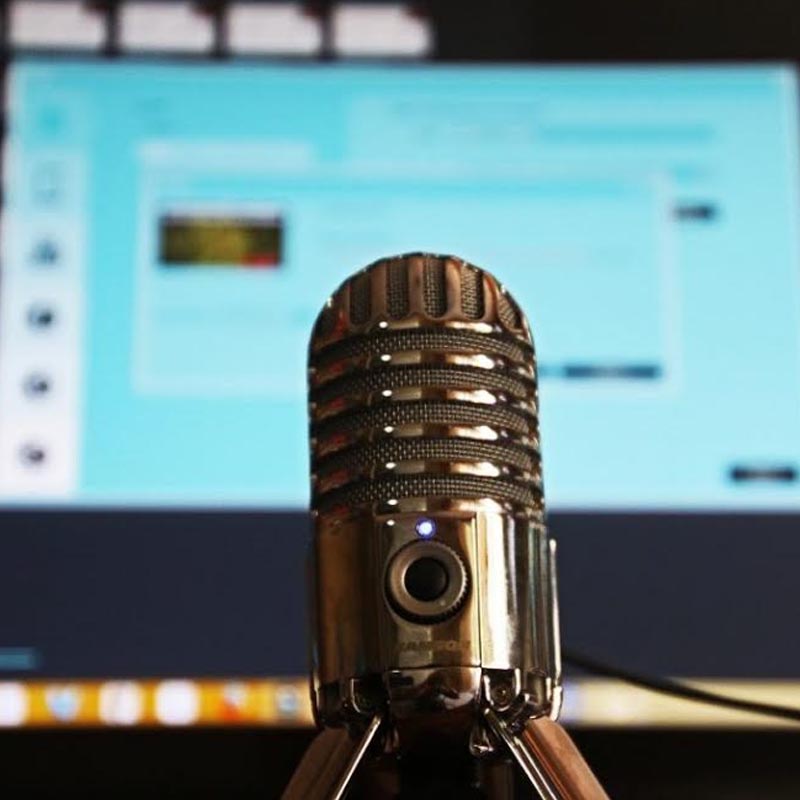
Tag: audio

  • As podcasts take off in India, how can the medium win more consumers & brands?

    As podcasts take off in India, how can the medium win more consumers & brands?

    KOLKATA: There are stories to listen to, lessons to learn, advice to follow – podcasts have all sorts of content in store. The plethora of genres, the intrusive experience are among many reasons that have made the audio format fairly popular all across the world, especially with millennials. Though podcasts kicked off the block in the Indian market relatively later, they have nevertheless amassed a loyal following here. India has emerged as the third largest podcast listening market, after the US and China, according to reports.

    Podcasts might be relatively novel and known to a fewer number of people here, but the country has a long history of listening to content disseminated through the spoken word. Audio has been widely accepted by the Indian audience as well as brands at large. But are businesses showing interest in the podcast trend? Aawaz.com CEO Sreeraman Thiagarajan believes the medium offers an interesting avenue to reach consumers.

    “Every single person loves anything audio whether its podcast, whether its audio stories, audio shows, they are really committed to listening to those,” said Thiagarajan during a panel at Pixels 2021, hosted by IAMAI and moderated by Hubhopper CEO & founder Gautam Raj Anand.

    “It may not be as big as video. Podcast definitely appeals to an affectionate audience. It is longer in format and can be curated by the users as per their own choice. You need to think of telling an audio story, creating compelling audio experiences, living your brand into it and not just think of it as ad insertions, not equate it with a display campaign, performance campaign,” he added.

    Gaana podcasts & monetisation products VP Vipul Bathwal noted that when music streaming platforms introduce podcasts, there is some sort of captive audience available to leverage the medium. It may not be as large as the user base that turns up solely for music, but there is an overlap that can be leveraged. The role a platform like Gaana has to play, he said, is of taking this format to a larger audience.

    Although a small portion of music listeners engage through podcasts but those who do, they engage very deeply, shared Bathwal, basing this nugget off of the trends they have witnessed. Hence, the metric brands should look at advertising via podcast should be more related to a very strong brand recall from the audience which is highly engaged but may not have the same sort of volume as music. It is more about quality of the audience rather than the quantity, he explained.

    “If I am an advertiser, my goal is to reach the audience. Most of our targeted campaigns are across formats. Music is bigger than any format. But each format offers some sort of advantages in exposing the brand to a certain set of audience but does the brand care through which format I am reaching? Not till now,” he highlighted.

    Opportunity for creators has also increased as podcasts are easier to produce. Hungama senior vice president Soumini Sridhara Paul mentions that good storytelling and authenticity are extremely important for this format. It is also important to build a community and good content library for small podcasters to monetise their content. Moreover, they should look at collaborations as well.

    At the initial stage, podcasts are going to need some popular faces to get more attention from consumers as well as to give ideas about what can be created. From a business point of view, and platform point of view, there is a need to have content with popular faces whether that is from Bollywood or other fraternities. While creativity and uniqueness are mandatory, there is no harm in a novelty value, be it face or a name, opined Paul.

    While all other online content is gradually marching towards interactivity with the audience, interactive podcasts are still a tough nut to crack, mentioned Thiagarajan. Either there is synchronous communication like Clubhouse or asynchronous communication like podcasts. Anything that comes in between should look at features like polls, Q&A, comments for interactive experience, he suggested. Another way to do this is creating a podcast by getting people to offer ideas on what they want to hear. However, podcast as a content format is meant to be heard uninterruptedly, she emphasised.
  • DAVP ads: Audio-visual medium gets lion’s share

    NEW DELHI: A sum of Rs 12.8577 billion was spent in 2016-17 in advertisements on various media by the Directorate of Advertising and Visual Publicity, the Parliament has been told.

    As against this, the total expenditure in 2014-15 was Rs 9.9834 billion, and Rs 11.888.5 billion in 2015-16, the minister of state for information and broadcasting Rajyavardhan Rathore said.

    Of this, the expenditure in the audio-visual medium was the largest: Rs 6.0914 billion in 2016-17, Rs 5.316 billion in 2015-16 and Rs 4.7367 billion in 2014-15.

    DAVP is the nodal advertising agency of the government for releasing advertisements only on behalf of various ministries/ departments to disseminate information in respect of government policies, schemes, programmes and other projects and events of the government.

    AlsO Read :

    Give more funds to DAVP for empowering people: Parliamentary Committee

    DD invites short films on Govt schemes, ‘DAVP producers’ preferred

  • ZyXEL Launches 802.11ac Adapter Line to Deliver Enhanced Speed and Range to Desktops, Laptops, and Mobile Devices

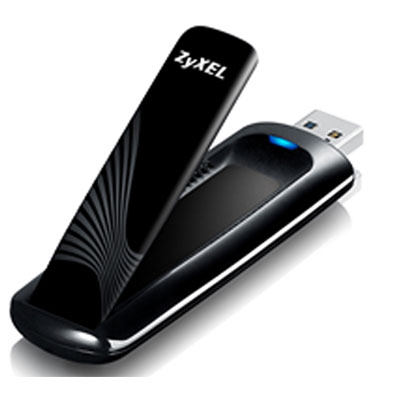
    ZyXEL Launches 802.11ac Adapter Line to Deliver Enhanced Speed and Range to Desktops, Laptops, and Mobile Devices

    NEW DELHI– ZyXEL Communications, a world-class broadband networkingcompany providing a wide-ranging portfolio of Internet-enabled wired and wireless solutions, has introduced its NWD6505 and NWD6605 802.11ac Dual-Band Wireless USB adapters. The inconspicuous little devices enable home users and travelers to upgrade their desktops, laptops 

    and portable devices to the latest 802.11ac Wi-Fi technology, greatly improving media streaming and online communications.

    The ZyXEL NWD6605 Dual-Band Wireless AC1200 USB Adapter delivers data transfer rates of up to 300 Mbps on the 2.4 GHz channel or 867 Mbps on the 5 GHz channel . It features two antennas, enabling it to deliver wider coverage and provide better wireless performance. It’s ideal for HD video streaming, online gaming, multiple downloading, and sharing multiple large files simultaneously.

    The NWD6605 also uses a USB 3.0 interface for the fastest networking experience. USB 3.0 interface is 10 times faster than USB 2.0 with transfer data rates of up to 5 Gigabit per second.

    ZyXEL’s NWD6505 Dual-Band Wireless AC600 USB Adapter delivers data transfer rates of up to 150 Mbps at 2.4 GHz or 433 Mbps at 5 GHz1. Both the NWD6505 and NWD6605 Dual-Band Wireless USB Adapters take advantage of the latest 802.11ac technology. The accelerated throughput of 802.11ac over the less congested 5-GHz frequency band offers optimal, lag-free experience with streaming video, audio, VoIP, gaming, web browsing, and other entertainment and communication applications. Each is fully backward compatible with 802.11a/b/g/n wireless networks.

    The NWD6505 and NWD6605 adapters are geared for desktop and laptop users who require a dual-band wireless AC network connection for faster HD video, media streaming and online gaming. The compact, stylish, and lightweight design of the ZyXEL NWD6505 and NWD6605 also offers excellent portability for road warriors, vacationers, students, and others on the move.
    The units are Microsoft Windows 8 certified, so users may use them with the latest systems. With the included WPS (Wi-Fi Protected Setup), it offers a fast and simple secured connection at the touch of a button.

  • Avid unveils upgraded digital audio and video technology at NAB

    Avid unveils upgraded digital audio and video technology at NAB

    MUMBAI: Avid, the creator of digital audio and video technology, has introduced a new and upgraded solution for audio production, professional editing, multi-platform content distribution, on-air graphics production, and asset management at the Nab television technology trade convention in Las Vegas.

    The company also shared its strategic vision, termed “Avid Everywhere,” which expresses the company‘s commitment to create the most fluid end-to-end, distributed media production environment in the industry.

    ‘Avid Everywhere‘ recognises that flexible deployment options, including remote and cloud-based collaboration technology, have become critical to content creators and distributors as they face relentless pressure for operational excellence.

    Intense cost pressures and content creation complexity are key challenges for media and content professionals in this ever more mobile and social world. ‘Avid Everywhere‘ helps our customers meet these challenges by empowering distributed work teams, multi-platform delivery, and the ability to work in any production environment.

    Avid president, CEO Louis Hernandez Jr said, “Over the past 25 years, Avid has built a strong heritage of industry leadership; we‘re proud of the role we play in empowering our customer community to create the most compelling media in the industry. As a critical element of Avid‘s growth strategy, Avid Everywhere inspires our next phase of innovation around our entire product suite. We look forward to sharing more announcements over the next year.”

    Specific new and upgraded products announced at Nab include:

    Creative Tools-Avid‘s professional creative tools set the industry standard for the highest quality content creation and production solutions to power the complete professional content creation environment.

    • Avid Media Composer 7 – The nonlinear editing solution is now available and the aim is to bring value to post production editors. The new version features accelerated and simplified file-based workflows including optimised HD delivery from high-res source material and automated media operations. The new release also offers Interplay Sphere for Mac support, extending real-time production everywhere.
    • Avid Pro Tools 11 – Avid‘s digital audio workstation features audio and video engines, 64-bit architecture, expanded metering, and direct HD video workflows.
    • Avid Motion Graphics 2.5 – Avid‘s next-generation platform of on-air graphics production includes a new dual-channel configuration option and stand-alone playout engine to increase deployment flexibility and speed graphic workflows, to create stunning imagery and get work quicker to air.
    • Avid Fast Track Solo and Duo – Avid‘s two new portable audio interfaces for composing and recording high-quality audio come equipped with Pro Tools Express software for Mac and PC, and connect directly to the iPad, providing high-quality I/O for any iOS app.Media Management Solutions-From the largest media enterprises to independent professionals, Avid provides the most open, flexible, and scalable solutions in the industry.
    • Avid Interplay Production 3.0 – Avid‘s latest version of the production asset management solution simplifies and speeds file-based workflows for post production and broadcast customers, and offers Interplay Sphere with full Mac support.
    • Avid Interplay Pulse – Avid‘s enhanced multi-platform content distribution solution delivers content to online, mobile, and social platforms everywhere, in the right form and format for each, while featuring integration with Avid‘s connected newsroom solution set and unified web client.
    • Avid AirSpeed 5000 2.5 – Avid‘s latest-version video server delivers slow motion playback for SD and HD, fast media replay, and continuous record.
  • ‘We expect that HD will arrive in India with sports and general entertainment’ : Krishan Sanghi – Avid country head

    ‘We expect that HD will arrive in India with sports and general entertainment’ : Krishan Sanghi – Avid country head

    As India enters a digital environment with more delivery platforms like direct-tohome (DTH) scheduled for launch this year, television technology firms are looking to service broadcasters who will face new challenges. One such firm is Avid. It offers products and services for digital nonlinear media creation.


    Indiantelevision.com’s Ashwin Pinto caught up with Avid country head Krishan Sanghi to find out more about the company’s plans.


    Excerpts:

    When Avid says that it is a pioneer in digital nonlinear media creation, what does it mean?
    Nonlinear media creation allows one to transfer all the shot material or “rushes” onto a computer hard disk. Unlike linear editing where editing can only be done in a chronological order, the hard disk is a “random access” device which can play your shots one after another regardless of the order they were on your tape.


    Through its Unity storages and Interplay, Avid has pioneered this further to allow multiple users to simultaneously work on the same media and edit, modify and create them in a collaborative environment. This allows processes to be conducted independent of a particular sequence and is, therefore, nonlinear in nature. This technology has revolutionised content creation in video, audio, film, animation, gaming and TV broadcast industries.

    Could you give me an overview of the products and solutions in Avid’s portfolio?
    Our products are used to make television and news shows, commercials, music videos and CDs, corporate/industrial productions and major motion pictures. We deliver solutions that make, manage and move media.


    Avid provides solutions in areas like video, news editing, film editing, special effects for video and films. We also offer integrated newsroom solutions as well as networked storages for workgroup editing. Besides, we offer broadcast and playout automation as well as on-air graphics and animation.

    What is the global broadcast technology market worth?
    The global broadcast technology market is estimated to be worth more than $10 billion, and is set to grow at an expected rate of 11 per cent with the pace being set in Europe, Middle East and Africa.

    What is Avid’s share in this?
    Avid has converted the highest number of broadcasters to digital news workflows in the industry with more than 250 end-to-end news work group installations. Our broadcast and cable customers include national and international broadcasters, such as NBC, Reuters, CBS News, Fox Television, the BBC, NDTV, CNBC, Times Now and DirectTV. Our clients also include network affiliates, local independent television stations, web news providers, and local and regional cable operators that produce news programming.


    We are currently present in 22 countries including India, the US, Canada, Japan and Korea.

    In terms of revenue and business generation, how much do India and Asia contribute?
    India is part of the Middle East and Africa region in Avid. Although we have been well represented here by our dealers, it’s only now that we have started to properly focus on the region.


    Our customers, installed base and revenues have been steadily growing, especially in the broadcast industry. Customers’ confidence in Avid’s technology, products and services is reflected in repeat orders for their new projects. We have invested in trainings and have the best trained manpower in broadcast support and as a result we are targeting a very healthy growth.

    It’s only now that we have started to properly focus on the region. Our customers, installed base and revenues have been steadily growing, especially in the broadcast industry

    What growth is being targeted from here?
    A healthy and sustainable revenue growth is being targeted and has been achieved. This has resulted in healthy demand for people who are able to use our software and systems. So it is not just a question of selling products for us. We are also investing to ensure that training in Avid products is available countrywide.


    Till date, Avid provides training which is available at more than 50 training institutes, a high percentage of which is part of graduation in mass media. We expect to double this number this year, and to achieve this we are partnering with leaders in the IT industry.

    Who are Avid’s major clients in India and could you give me examples of how your solutions are being used by them?
    Avid targets business solutions and not products alone. Some of our major clients in India are NDTV, Star TV Network, Network18, Neo Sports, Kalignar and Kasthuri.


    These customers use Avid’s Unity Isis shared storage media networks which is focussed on the real-time requirements of broadcast production workflows. The new file system and storage architecture combine to provide industry-leading availability, and dramatically increase storage capacity, bandwidth, and client connectivity.

    In terms of providing technical support and servicing, what does Avid offer its clients?
    We ensure that our business partners are well trained and we are proud that our Indian partner Real Image provides support round the clock through its team of engineers. They are in turn supported by our team of product and workflow experts.


    We understand our responsibility to update the technical expertise of the industry. We are, therefore, investing in providing specialised trainings to technical resources available here so that the project implementation is quick and economical.


    Support training on equipment requires a huge pile of equipment, and that’s why traditionally we have been imparting technical support training only at our regional headquarters. However, realising the regional need, we are bringing the experts and required kits to the region at high costs in the second quarter of this year. This will help add to the local knowledge and expertise, and in turn improve the support level considerably. This will be an opportunity for customers to train their own team, and keep the equipment and workflow efficient, at a fraction of traditional costs.

    Would you say that cost-effectiveness is an advantage that Avid offers clients vis-?-vis competition?
    Absolutely! All our efforts and products strive to increase our customers’ cost-effectiveness, which in itself is based on broadly on three operating parameters. Our tools and processes are aimed at enhancing the workflows efficiency and to address the rising cost of manpower and facilities. We reduce the operational cost by increasing efficiency of the employees. Today, it is more important how people collaborate than calculate on cost per machine.


    At the same time, we minimise the loss in revenues by building resilience and reliability in the system and processes. Furthermore, today it is important for media companies to market their assets in more ways than one. We enable our customers monetise their assets in multiple ways. For example, the film captured for production can be easily re-purposed in TV, mobile, IPTV and net, etc. Sharing the media across states and across nations has become important, and Avid makes this possible and easy.

    The technical departments of channels globally often do not understand fully the technology they have bought and its capabilities. Does Avid face this problem vis-?-vis clients?
    Today, the business has changed considerably. The technical department needs to have a vision and understanding of the business as a whole. Deciding on a product without looking at the full workflow is being shortsighted. Many companies fail to see the big picture.


    Yes, we face the challenge wherein the purchases are highly box driven. Judicious customers look at the big picture and visualize, and thereafter make provisions for growth in the very beginning. If you will look around, you will find Avid customers whom we have helped migrate technologically to the latest and are now using their resources for multiple revenue streams. For these companies, growth has been a painless process while others are struggling with incompatible products or obsolete technologies and have to bear the cost of running various parallel operations.


    It is important for broadcasters to bear in mind that technology is changing so fast that even experts may lack information. Therefore, we educate companies in current technologies. Selecting a right product is more important for small companies who cannot afford to take a wrong step.

    Insofar as advancements in broadcast technology are concerned, what are the trends noticeable in India and Asia?
    Broadcast has gained a much wider meaning. Trends in India and Asia are no different than the world. There is pressure of quality as well as quantity. In all, it’s a dynamic industry. Broadcasters and people who have the strength to be flexible and dynamic will survive on the technical front.


    Traditional broadcast is growing by leaps and bounds. Every broadcast station is now a network of a few channels. We are seeing that international content and participation is increasing. We are also seeing a proliferation of small regional channels.


    Sports and entertainment are looking at HDTV. Compression will play an important role here. Avid is the first company to have solutions fully compliant with SMPTE VC3 that allows HD handling at lower rates. News broadcasting will spread to the mobile and internet as well.


    Tape will loose further ground with all acquisition and distribution being digital. The post-production houses will be next to use the digital wave.

    As we move towards a digital environment in India and Asia where new platforms like online and mobile will emerge, what are the challenges that broadcasters will face on the technical front?
    Reliability and resilience is the key to all technology requirements for the broadcast industry and this is where the biggest challenge lies. This is mainly because broadcast businesses rely on stories and footage as their asset; so the technology they adopt has to be reliable.


    Speed is another criterion that is a challenge as the news industry depends on it. As seen in the World Trade Center bombing, the news channels with modern workflows were faster than the ones with traditional workflows. Sky News and Fox were the first to broadcast the bombing and both use Avid solutions.

    Has Avid signed deals with Indian broadcasters that are launching new channels to create their on-air look, graphics, etc?
    On-air looks and graphics reflect a channel’s personality and business space they are in. It is very individualistic. We provide tools and technology to bring out thoughts and creativity.


    However, at the same time we do not recommend any particular on-air look or feel. We have an on-air graphic solution called Deko, which creates on-air graphics in real time.

    What are the new solutions that Avid has recently introduced in India?
    Avid constantly updates its products. Therefore, whenever there is a version change, it is like a new product and we have released new versions in 2007. Our highly expandable storage system Isis and Interplay are recent introductions.


    We expect some more products to be announced in the near future. The future is good.

    In terms of the news genre, how do your solutions facilitate the expanding roles of journalists?
    Our newsroom solutions are used by journalists, producers, assignment editors, reporters and presenters for researching, creating, managing and delivering television news programmes. Avid iNews newsroom computer systems give producers and assignment editors control of an entire news production, including gathering and reading wires, e-mail and other messages, organising assignments, writing stories and preparing news programmes.


    Another product iNews Instinct is a storytelling tool with scriptwriting, shot selection and video and audio editing specifically designed for journalists.

    HD is an area of intense focus for Avid. How long do you feel it will take for HDTV to come to India?
    Avid offers a complete HD workflow, and in fact is playing a leading role. From ingest, storage to playout, Avid can handle HD in all its forms. HDTV compression will play an important role.


    HD has already taken off in a big way outside. However, in India it may take a while. Our expectation is that HD will arrive with sports and general entertainment.

    Could you shed light on Avid’s research and development (R&D) facilities? How much investment goes into this activity?
    Our R&D activities are focused on the development of digital media content-creation tools and workgroup solutions that operate primarily on the Macintosh and Windows platforms. Avid is committed to delivering best-in-class video, film, 3D animation, and audio editing systems to meet the professionals in the television, film, music, broadcast news production, and industrial post-production markets. We have always provided path-breaking technologies and visions, and have patents on a number of technologies.


    Our efforts also include networking and storage initiatives to deliver standard-based media transfer and media asset management tools, as well as stand-alone and network-attached media storage systems for workgroups.


    Avid spends one of the largest percentages of its income, of any company in the sector, on R&D. For instance, our R&D expenditures for 2006 were $141.4 million.