Tag: audience

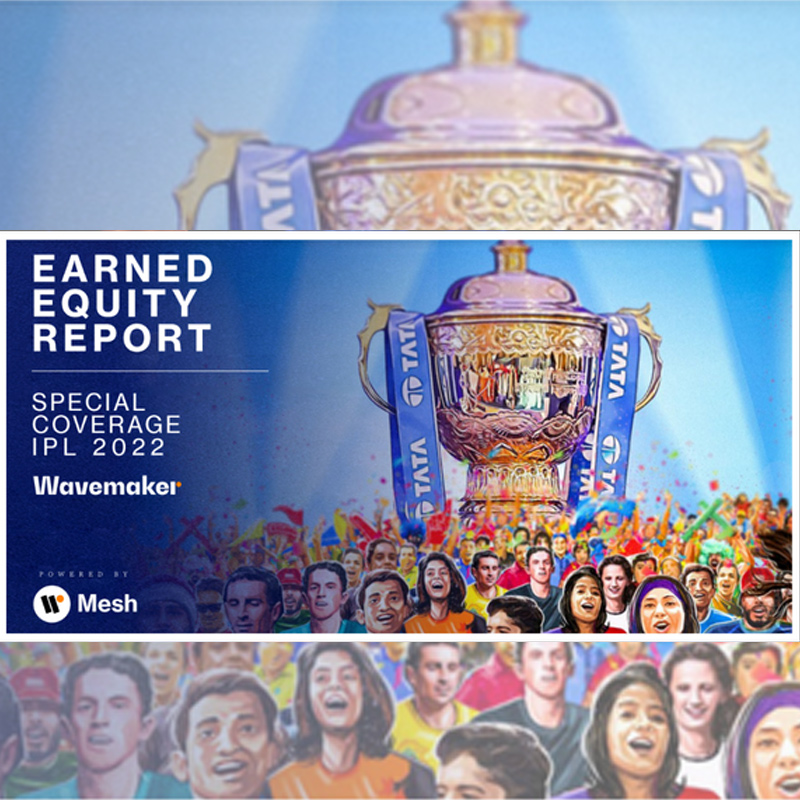
  • Wavemaker India unveils earned equity report on IPL 2022

    Wavemaker India unveils earned equity report on IPL 2022

    Mumbai: The real-time data intelligence solution provider, Wavemaker MESH, has revealed an earned equity report on IPL 2022. The report captures the social conversations around IPL 2022 based on multiple data points collated to create meaningful and actionable insights. The report analyses how the audience perception of IPL has evolved over the years. It focuses on the digital audience and uses data points like consumption data around digital content and also social and search insights.

    The report has data sources from multiple consumer touch points across the digital ecosystem, ranging from social listening, video analytics in partnership with intuitive intelligence, and interaction data points collected from Facebook, Twitter, Instagram, and YouTube. The methodology behind measuring earned equity draws from social listening, content analytics, and audience measurement.

    Wavemaker plans to bring out an earned equity report on key properties, which will help brands add a qualitative layer to their decision-making process.

    Talking about the report, Wavemaker India chief content officer & GroupM India head of branded content Karthik Nagarajan said, “The perceived value of a property today is measured in a uni-dimensional way. ‘Earned Equity’ is Wavemaker’s way of quantifying the ‘digital perception’ and sentiment around it. Along with complementing the traditional media metrics, these earned equity reports will help brands decide their associations with premium events.”  

    Key highlights of the report:

    • When we talk about sporting events across the globe, the English Premier League emerges as the buzziest sporting event in the world. Just behind the EPL, we have the IPL, which has become the second-largest in the world and the buzziest sporting event in India. The popularity has been growing year on year and in 2022, with growth of over 300 per cent last year, the season garnered 334 million buzz, making it ahead of other global sporting events like the NBA, NFL, and Major League Baseball.
       
    • This season of IPL was unique in multiple ways, which is why the audience engagement was at its peak. After trailing in the number two spot for the past three consecutive seasons, RCB broke the jinx and emerged as the most popular team this season. The winner, ‘Gujarat Titans,’ was the sixth most popular team this season.  One more interesting fact is that RCB has only seven per cent of fans from Karnataka cheering for the team. This clearly shows that in this event, the loyalty is not with the city/state team but with the franchise.
       
    • IPL is growing as an opportunity for content creators and advertisers to engage with the audience. This season, the IPL received over 6.5 billion video views on digital platforms, representing a nearly 50 per cent increase over the previous year.
       
    • This rise in popularity corresponds to the media’s assessment. The popularity of this sporting extravaganza, along with potential growth rates of digital, is the reason why digital rights were sold more than TV for 2023–27.
       
    • For the third time in a row, Virat Kohli is the most popular player in the IPL 2022. The top three player spots have been the same for the last three years, with Virat, Dhoni, and Rohit on the leaderboard.
       
    • Amongst the advertisers, Vi continues to lead the advertiser leaderboard by being the buzziest brand around IPL 2022 for the fourth time in a row. The “Fan of the Match” campaign has become a critical engagement event for the audience. Tata, the title sponsor, garnered the second spot this season, followed by Vivo, Dream 11 and Unacademy.
       
    • IPL is synonymous with India’s Super Bowl and is the time of year when advertisers create engaging advertisements to make an impression on the audience. Creds had the top two most viral ads for “#Credbounty” this season, according to our technology partner Intuition Intelligence (Viral analytics and Insights provider). The nostalgia of the 90s content theme was the driving factor for the success. This was followed by the Cadbury 5 Star “#DoNothingLegend” ad, which incorporated humour around cricket’s third umpire.
  • GUEST COLUMN: The role of AI and ML in the media industry

    GUEST COLUMN: The role of AI and ML in the media industry

    Mumbai: There is truly no such thing as “show business!” We have seen the world of entertainment and media shape shift over the last few years, and more dramatically ever since the world around us changed in the wake of the pandemic. The entertainment industry showed a massive fillip during the lockdown years, but not in the way that was expected. The new age of media and social media platforms have transformed the way entertainment is consumed today, and the role of technology has become far more intrinsic along the way too. Everything from how we create, publish, and share textual, audio, and video content to the increasing accessibility of production technologies such as high-resolution cameras, content development software, and smartphones is changing. The landscape is burgeoning with tech-driven innovation both from the delivery and consumption ends of the spectrum.

    With revenue expected to exceed $9.5 billion in 2022 when video ad tech is taken into account, the importance of AI and ML in the media and entertainment sector can no longer be dismissed. While it may not have been an obvious use case earlier, today, harnessing AI and ML to better target homes with advertisements, automate more operations, and secure the operators’ content and services is only the tip of the iceberg. AI has already demonstrated its promise in the music business by producing beautiful tunes and in the world of art with a strong aesthetic influence. It will be interesting to see how AI in entertainment is likely going to have a marked influence on how people interact with movies, television shows, videos, sports, and games.

    Glimpses of this shift are already apparent today. Media firms realise the growing competition they face with new players in the market, right from OTT platforms to social media platforms, vying for the consumer’s attention. There is a swelling urgency to not only produce more content more rapidly but also ensure that the quality and intrigue of the content produced remains top-notch.

    Enter AI and ML.

    There are myriad applications for these two cutting edge technologies, to enable a massive uptick for media and entertainment businesses, right from beta testing of content to gauge interest to creating interactive content to even assessing the right platform for maximum success and viewership. There is a role for AI and ML to play the hero that saves the day at every juncture.

    Some of the emerging areas of application for AI and ML are:

    Knowing your audience: With increased choices comes the problem of plenty too. Audiences that were previously limited to a few platforms for satiating their entertainment appetite are inundated with a plethora of choices. In such a landscape, knowing audience preferences becomes business critical, and media companies that can harness the power of machine learning to understand their audiences more keenly are going to have a definite advantage as we move ahead by being able to provide relevant and engaging content to each individual every single time.

    Feel with your audiences: It’s not enough to just know who your audience is. A step up from the data intelligence that AI and ML provide is understanding how audiences feel each time they view content that is produced by you. Testing your audience’s emotions can help you dive deeper into how the content was consumed and perceived in order to make future bets that are likely to help you win viewer share and also ensure stickiness in an era when customer/viewer acquisition costs are only climbing up.

    Deliver to your audiences: How many times have you heard the phrase “right place, wrong time”? Marketing leaders understand the critical importance of timing in reaching out to customers. The same content that finds resonance at a particular time can have a diametrically opposite response when you catch the consumer at the wrong hour. Emotion AI can help you not only understand how much of the content delivered is falling on the right side of the scale to ensure better results for your targeted campaigns. Retiring the spray and pray approach could be very possible if advertisers and marketers can tap into the hidden potential that emotion AI helps unlock for all the video content that is being produced for their brands’ success currently.

    Engage your audience: If only we could read the minds of our users to know exactly what they have understood and where the gap remains, all our efforts to produce better content in any context would be multiplied. This function is offered by all major corporations, like YouTube, Netflix, Spotify, etc., to improve the dependability and usability of their services.

    AI is also capable of adjusting video quality for internet speed. AI can analyse the internet connections of various viewers in various regions to handle this issue, and it can compress videos without sacrificing their quality to provide a buffer-free streaming experience.

    Advertising and the media

    Advertising, design, and content promotion are just a few of the marketing and trade applications of artificial intelligence in the entertainment industry. The greatest AI algorithms to use when developing solutions for advertising and marketing that are results-driven. With the use of AI-driven marketing software apps, companies may address the needs and preferences of their audience, develop marketing plans, and create efficient customer-centric digital solutions. For instance, AI in the media sector may quickly produce hundreds of eye-catching graphic designs for advertising. Thanks to such cutting-edge and revolutionary technology, manual labour has been substantially reduced, and productivity has increased. Using emotion AI, the advertiser can understand the best demographic to pinpoint their campaign towards to get maximum output.

    For example, if the emotion AI indicates that a person gets the feelings of passion and attachment while watching a football match, it can help the sportswear company understand that this particular audience and this medium work best to reach them through their campaign. By checking the pre-launch creative intelligence output and post-launch creative intelligence output, the campaigns will become more focused.

    Development of AR/VR

    As we are already seeing with the usage of AR in advertising, it’s important to note that in addition to the fundamental use of AI in entertainment, AR and VR app development will also make this area more compelling and immersive. We will be able to watch events from all angles, enabling us to have experiences that are richer and better. AI will assist us in comprehending the sensation of the actual, live event. AI may, however, be used to produce interactive content for AR and VR. With a set of goggles and AI technology, the entertainment sector may work miracles and produce magnificent scenes.

    Consumer interest is naturally drawn to the creation of virtual reality content for cooking shows, reality shows, and live events and programmes based on artificial intelligence. Watching television and movies with true emotional effects won’t be a pipe dream with all these modern technological advancements; it will certainly become a reality. To make this a reality and to understand the concrete effect of the content, Emotion AI will be a tool that will be pathbreaking and extremely important for advancements in terms of what kind of content would be precise for different pieces and scenarios.

    Harnessing Emotion AI

    For any piece of content to succeed, gaining and sustaining the attention of the audience in question is key. If the audience isn’t engaged from the beginning, one has already lost the plot. It, therefore, becomes imperative that the industry puts its best foot forward by testing creatives before the final launch—it helps to gauge the potential. Pre-testing content using Emotion AI helps empower the creators to better understand how pre-launch video creative intelligence can help drive better business outcomes. Emotion AI testing with a pre-defined target audience helps content creators ascertain whether the content is evoking the right kind of reciprocal emotional response. It empowers the creators to understand zones of high and low engagement and modify content for maximum engagement. The organisations can have the emotional AI response outputs mapped to multiple variables of age, gender, geography, time of day, etc., ensuring that the content is never out of flavour.

    Subtitles and automatic transcription

    International media companies should provide material that is relevant to audiences in different locations. As a result, businesses must offer precise and appealing multilingual subtitles for their video content platforms. It may take thousands of hours and effort to hand write subtitles for several films and TV series in a variety of languages. Additionally, finding the ideal applicant to accurately translate text into several languages is challenging.

    Thus, to bridge this existing gap, the powers of AI-based technologies like deep learning and machine learning are harnessed for natural language processing to transcribe movies, music videos, and TV episodes into many languages. To reach a larger audience and foster user engagement, the voice of the movie is translated into several languages with subtitles and audio commentaries.

    For instance, YouTube’s artificial intelligence helps its publishers easily access their material by automatically generating closed captions for videos posted to the platform.

    Metadata tagging

    With the huge amount of content being created every minute, making this content visible to viewers can be an unnerving task for media and entertainment companies. Distributors and media producers like CBS Interactive are utilising artificial intelligence-based video intelligence technologies to thoroughly analyse the footage by detecting and framing things in order to add appropriate tags in order to carry out this task on a wide scale. As a result, any content held by media firms is easily discoverable, regardless of its bulk.

    Due to the intense rivalry and the changing nature of the market, the economic and business models needed to flourish in the digital world are difficult and call for a considerable change in mentality and approach. Customers are the core of the media industry because they are now more powerful than ever. Organisations all across the world are realising that the customer is really the king and cannot be disregarded. By unravelling and experimenting with AI and ML, media and entertainment houses are maximising their business performance and enhancing the user experience and entertainment value with greater efficiency.

    The author of the article is Lightbulb.ai co-founder and CPO Vishal Soni.

  • GUEST ARTICLE: How is the growth of podcasts changing the media landscape and consumption?

    GUEST ARTICLE: How is the growth of podcasts changing the media landscape and consumption?

    Mumbai: Amidst a video-obsessed world where ‘shorter is nicer,’ a quiet revolution has been brewing—of audio content that is immersive, habit-forming, and poised for greater growth.

    Long stories are here to stay

    The pandemic changed a lot in terms of our consumption habits. This also extended to our content preferences. With theatres shut, shopping going online, and content being on tap-OTT took over. And this has extended to audio content as well.

    What’s changed?

    Over the last two years, consuming entertainment and information through audio has become a viable option. What has been driving this growth?

    “Better content” is the simple, most important factor. Equally important is the availability of local content, which has attracted more listeners. But what is the impact of this growth on the media landscape and how content is being consumed?

    Before we answer this, it’s important to understand who’s listening to this content. A large chunk of podcast content is being heard by a younger audience—typically 18–30 years old. This audience is based in urban and semi-urban areas. The content they truly love to listen to includes self-help, motivational, fiction (crime and love do well together!) and a whole lot of content created by the people they like, look up to, or want to know more about—in short, influencers.

    The impact

    For most digital content, we are now attuned to thinking that ‘shorter is better’. Thanks to TikTok and other short-form video content platforms, short content rules the roost. But in podcasts, length is not a deterrent. A typical interview-format podcast can range from 20 minutes to 5 hours! Yes, five hours! And it has a large audience too.

    Why are so many youngsters listening to long-form podcasts? A quick survey revealed that this mode allows them to go into depth about the topics they really care about. Plus, the fact that it is coming from a place of credibility and a source they trust makes it more compelling.

    Another major reason for the increase is the ability to consume podcasts and audio content passively. Press play, stow away the mobile, and you’re good for a while. For price-sensitive consumers, data consumption is also less than video.

    Should we all talk for hours?

    Of course not! Especially if you aren’t an authority on your subject of choice! Long form audio will do well for knowledge-based content—whether it is a monologue or a dialogue. For fiction podcasts, keeping it short (in the podcast context) to about 20–30 minutes per episode is a sweet spot. Let the listener pace their listening… like with a good TV series, develop the story and put in hooks to keep the listener coming back for more.

    This also begs the question of whether there is any place for short-form content (like with video) in the audio space. The answer is a resounding yes! But choose topics carefully. We are still in the early stages of discovering what works and what doesn’t. So expect a lot more experimentation in formats, lengths, genres, and topics.

    In the last few years, a lot of news outlets have also taken to podcasts actively. The ease of reaching a large audience (about 95 million) that is engaged is a strong pull. The audio-led feature story will soon start to be an important part of content strategies. Whereas creating video documentaries can be cumbersome, expensive and time-limiting, audio will be able to offer a strong alternative.

    And the money?

    The short answer is that there is money for creators. Over the next few months, audio-first influencers will emerge. As the audience grows, brands have started exploring the medium.

    Many have already made investments and had their first taste of the medium. Branded content, brand integrations, pureplay sponsorships, and advertising have all started the cycle of monetisation for creators and publishers.

    To sum up, the biggest change that podcasts are bringing to the media landscape and how we consume content is they are putting the limelight back on in-depth storytelling and immersive experiences for audiences.

    The author is Ideabrew Studios co-founder & CEO Aditya Kuber.

  • GUEST ARTICLE: Audience insights empower OTT businesses to gain competitive advantage

    GUEST ARTICLE: Audience insights empower OTT businesses to gain competitive advantage

    Mumbai: India is witnessing a monumental shift in the consumption of entertainment with the emergence of OTT platforms dominating traditional television and big screens. The heightened demand to access quality content conveniently, has led digital video content to rise in popularity. According to a recent report by CII and BCG, between 2019 to 2022, India noticed a growth of only two per cent in the adoption of TV services by households, but a 51 per cent rise in SVoD (subscription video on demand) services, in comparison. Additionally, given the exponential rise in internet access and the rapid developments in online video streaming platforms, India’s OTT streaming market is anticipated to become the sixth largest by 2024, as per the PwC report.

    This growth has resulted in tremendous opportunities for all OTT companies in the country, widening the business landscape for OTT players to grab adequate market share/outwit competition. To stay ahead of the curve, companies are increasingly looking for ways to deliver as per consumer’s appetite for entertainment and improve online video viewer growth.

    How can businesses identify their best content and uncover actionable audience behaviours across devices and geographies to track customer interest and engagement?

    Customer engagement is the primary driving force behind the SVoD ecosystem. SVoD providers in the space are largely emphasising on data to improve the end-user experience by providing recommendations based on customer preferences more effectively. However, companies need a more innovative way to bring their value to the market and set them apart from their competitors. By taking analytics to the next level, businesses can have a greater understanding of audience dynamics and customers’ lifetime value, build more successful personalisation, acquisition, and retention strategies from data.

    Another consideration is user experience. This is an important factor in getting viewers to subscribe to an OTT service. This, of course, is taking into account that the content is engaging, and the genre is of interest to the audience being targeted. The user friendliness of the app and its seamless flow needs to be taken into account while building an OTT service. If not, it can become a deterrent for consumers to subscribe, preventing audiences from seeing the curated content.

    Unlocking ‘Audience Insights’ to create ‘Measurable Results’

    Audience data is necessary to drive revenue and business value for OTT companies, particularly those operating with an SVoD model. By leveraging a robust intelligent video platform, businesses can collect and analyse data from multiple sources in a single, reliable, secure, and scalable platform to produce valuable insights. Bringing these data sources together enables business leaders to make data-driven decisions to optimise content, marketing, and product strategies. When video performance metrics are coupled with the audience insight data, the video works better for the business and for its revenue goals.

    With this approach, businesses can unlock new insights to achieve the much-needed edge in an increasingly saturated market. For example, in order to lower customer acquisition costs and churn rates, while maximising investment in content, companies should augment data metrics with content and subscriber insights to drive the following business strategies successfully:

    •  Focus on high lifetime value (LTV) customers – Net-new acquisition costs for OTT companies are high but audience insights can lower acquisition costs by identifying which marketing sources have the highest conversion rate and lowest cost per acquisition.
    •  Engage stalled trialists – Audience data can indicate which subscribers signed up for the service but have yet to stream a video. Such viewer insight can inform automated marketing emails to those viewers, prompting them to watch and engage.
    • Reduce churn of at-risk customers – Businesses can prevent churn by identifying which audience chorts are declining in their engagement and have a high likelihood of cancelling based on behavioural patterns in their viewer history.
    • Increase loyalty – Creating the most value for customers is critical to build loyalty. Businesses can leverage insights for targeted, personalised marketing campaigns to promote relevant  content based on viewer behaviour.
    • Optimise content investment – Content acquisition costs are a huge investment. Audience insights can help understand what content is driving the most subscribers and the most consumption. Businesses can further licence more similar content that bring additional value to its customers.
    • Promote the videos that will drive the most revenue – Using content performance intelligence can direct audiences to the content assets and maximise the revenue achieved through the acquisition of content.

    Winning in the era of transformation

    Marketers have taken advantage of lots of data points over the years: subscriptions, video views, customer payments, marketing touchpoints, video metadata, marketing channel investment. All of the metrics speak to critical business needs. However, in today’s fast-paced market, having the right data is no longer enough. Businesses need intelligence from that data. They need centralised solutions that not only house that data but translate it into measurable results. With an additional layer of machine learning on top of the data infrastructure, businesses can integrate diverse data sources together and apply advanced analytics to predict customer dynamics and fuel profitable growth.

    By aggregating the data, businesses can achieve a comprehensive, 360-degree view of the video performance tied to customer engagement. Aggregated intelligence is thus becoming a critical component for business success. This next evolution of audience and content insights are central to engage customers, monitise content, and prepare OTT businesses to make the most of the changing dynamics in the entertainment industry.

    The author is Brightcove managing director – sales, India & SAARC region Subhasish Gupta.

  • The Q’s client list has grown 6 times since its launch on DD Free Dish: CEO Simran Hoon

    The Q’s client list has grown 6 times since its launch on DD Free Dish: CEO Simran Hoon

    Mumbai: Since its launch in December 2017, growing the channel’s distribution has been a top priority for The Q. Realising the potential of small-town India for which television is still either the only or main source of entertainment, the media start-up hopped on to DD Free Dish in March-April and the numbers thereafter are a testimony to the plan’s success.

    Earlier this year, the Company issued a statement declaring that it has “reached its 2021 goal of distribution to 100 Million TV Households as a result of launching on both DD Free Dish and Dish TV in April. The Q India has gone live to 50 million additional TV homes in the month of April.”

    As regards GRPs – the vital metric used to project revenue growth – The Q recorded the highest-ever GRP of 53 in Barc Week 21 (June) in addition to an eight-week average of 46.23, indicating it’s heading into the big league of channels. Buoyed by the growth the ‘start-up’ is gradually expanding into a full-fledged network. It has also ventured into content production with the first TV original ‘Jurm Ka Chehra’ launching in September.  

    While the figures speak for themselves, Indiantelevision.com decided to decode the recent developments on the creative, business, and organisational front in a candid interaction with The Q CEO- Simran Hoon who joined the Company in April. With over two decades of experience in the industry having worked for leading brands including Viacom18, ZEEL, STAR, and SET, Hoon is responsible for driving The Q’s overall growth and vision. The marathoner and animal lover CEO charts the brand’s trajectory post coming on to DD Free Dish.

    Programming for a Changing Audience

    From VOD to DTH and now DD Free Dish, the path trodden by The Q has been quite unlike any other in the Hindi GEC space. Yet, says Hoon the “journey became more interesting April onwards, since launching on DD Free Dish.” Previously, the channel’s programming was targeted at an urban audience, but with the footprint expanding into the hinterland, the content evolved into a more massy and family-inclusive tone. “The moment we came on to DD Free Dish we had to address the big households in Tier 1 and 2 towns without antagonising the urban viewer who obviously has a lot in common with the smaller towns; the differentiation is more pronounced in the minds of the marketers.”

    The change has translated into a preponderance of shows such as ‘Yo-Yo Yogesh’ and ‘Baklol’ over the likes of ‘Tantra by Vikram Bhatt’ and ‘Living in Trends’ (LIT) in the content mix.

    Through all the experimenting with family-oriented shows and now with content production, the channel has been able to successfully uphold its brand ethos of ‘Zara Hat Ke’ and having a ‘social element’ in all its programming. While other players in the FTA space are running repeat content consisting mostly of family dramas that are over a year old, The Q has no plans of going the ‘saas-bahu way’ which according to Hoon is suited for an older audience. “Though finally family-inclusive, we have stuck to our core TG of 15 to 35-year-olds and the promise of offering them more fun, differentiated and easy kind of programming. Our content is carefully curated to suit all age groups,” she shares adding that comedy is a big genre on the channel now.

    Since its launch as an independent advertiser and influencer-marketing-supported Hindi youth entertainment channel, The Q has been redefining TV to mean ‘social’ by delivering digital programming to the medium. For the unorthodox FTA player, the description of ‘Connected TV’ entails not just a connection to the internet, but to the network of people as well. Going forward, even as the Company steps up original production, it will ensure a social connect for all its content. Sharing an example, Hoon reveals, “The casting for our upcoming crime show ‘Jurm Ka Chehra’ was done on ‘Chingari’ (the short video app). In the future, the audience will see a lot of stuff where we bring social to TV.”

    The Advertising Windfall

    Hoon shares that as a brand offering fresh (on TV) content, The Q has not faced the problem of discounted ad rates like other FTA players, and now, with the steady growth in viewership post launching on DD Free Dish, there has been an increase in advertiser onboarding, awareness and acceptance of the channel.

    From around five clients in the first quarter of CY 2021, the numbers have grown six times to include 30 advertisers in the current list. “The mainstay of the FTA channels is FMCG, but we have a lot more e-commerce, pharma, and digital payment companies coming in, even as our client list continues to grow further,” shares Hoon.

    In order to service the increasing demand, the Company hired Ashish Kotekar as head of ad sales for South & West regions in May, and Pankaj Rai for North & East in August. The channel also has plans to go regional, but for now, the focus will be on the HSM.

    Recently, The Q and Chtrbox (an influencer marketing platform acquired by The Q in June) announced the launch of an integrated marketing platform BharatBox which will deliver integrated advertising solutions across linear and digital platforms to marketers, thus maintaining the channel’s ‘social DNA’ even on the business front. “It’s a unique proposition where we will be offering to brands integrated advertising solutions that synergise the reach of social media influencers with The Q’s TV reach.  BharatBox will reach out to tier 2 and 3 towns,” Hoon elaborates.

    Future-ready

    Moving ahead from content and business, The Q has a lot of action happening on the organisational front as well. In addition to Krishna Menon’s elevation as the COO in May, and the new hires for ad sales, the Company appointed Sujata Samant as head of marketing this month. It is pertinent to note here that The Q has not launched any extensive marketing campaigns till now. Further, a distribution consultant and HR head were brought on board recently.

    Hoon credits Tanya Shukla, the programming head, for bringing the brand to where it stands today in that context. Shukla has been in the role for a year now. Giving an understanding of the Company’s overall vision, Hoon remarks, “We are in the process of maturing from a small operating company, a start-up that we still are, to a full-fledged organisation. More people are starting off in different roles and departments even as we speak right now. The recognition that The Q has got has been a little overwhelming for us, but with the right elements in place, we are ready to be seen as a ‘network for the future.”

  • Rama goes unnoticed; ‘Ae Dil…’ made Rs 78 cr, Shivaay Rs 28 cr in first week

    Rama goes unnoticed; ‘Ae Dil…’ made Rs 78 cr, Shivaay Rs 28 cr in first week

    This week had a solo release, Mahayoddha Rama (Animation); the week after Diwali saw two releases, namely, Shivaay and Ae Dil Hai Mushkil. However, the film, lying in cans for eight years now, failed to draw audience. Lacking in publicity and promotion, the film went unnoticed.

    Ae Dil Hai Mushkil had a below par opening and, as the reports that came out from the early audience went against the film, it deteriorated on Saturday and Sunday leading to a weak opening weekend of Rs 35.25 crore. However, after Diwali, the film peaked on Monday almost doubling its opening day figures. The collections remained strong even on Tuesday, being a holiday and a day of family outing. Wednesday onwards, the film found its own level to match its merit as the collections dropped for the film to close its first week with a tally of Rs 78.2crore.

    hivaay, Ajay Devgn’s second attempt at direction with this action adventure, did not generate the expected anxiety and faced a poor opening day response. The collections remained static on the lower side on Saturday and Sunday as the film could put together just Rs 27.8 crore for its first weekend braving dull Diwali days.

    However, the next two days into the new week, the film made the most of two holidays on Monday and Tuesday as the collections on both days took a massive leap. By then, Devgn had also deleted about 10 minutes of length from the film following reports of the 172 minute length affecting collections.

    Collections dropped thereafter on Wednesday and Thursday as the film collected Rs 65.1crore for its first week.

    Minor releases like 31st October (tax free in Punjab), My Father Iqbal, Ek Tera Saath, Gandhigiri rated as total loss projects.

    Motu Patlu (3-D; Animation) added about Rs 10 lakh in its third week to take its three week total to Rs 4.25 crore.

  • Rama goes unnoticed; ‘Ae Dil…’ made Rs 78 cr, Shivaay Rs 28 cr in first week

    Rama goes unnoticed; ‘Ae Dil…’ made Rs 78 cr, Shivaay Rs 28 cr in first week

    This week had a solo release, Mahayoddha Rama (Animation); the week after Diwali saw two releases, namely, Shivaay and Ae Dil Hai Mushkil. However, the film, lying in cans for eight years now, failed to draw audience. Lacking in publicity and promotion, the film went unnoticed.

    Ae Dil Hai Mushkil had a below par opening and, as the reports that came out from the early audience went against the film, it deteriorated on Saturday and Sunday leading to a weak opening weekend of Rs 35.25 crore. However, after Diwali, the film peaked on Monday almost doubling its opening day figures. The collections remained strong even on Tuesday, being a holiday and a day of family outing. Wednesday onwards, the film found its own level to match its merit as the collections dropped for the film to close its first week with a tally of Rs 78.2crore.

    hivaay, Ajay Devgn’s second attempt at direction with this action adventure, did not generate the expected anxiety and faced a poor opening day response. The collections remained static on the lower side on Saturday and Sunday as the film could put together just Rs 27.8 crore for its first weekend braving dull Diwali days.

    However, the next two days into the new week, the film made the most of two holidays on Monday and Tuesday as the collections on both days took a massive leap. By then, Devgn had also deleted about 10 minutes of length from the film following reports of the 172 minute length affecting collections.

    Collections dropped thereafter on Wednesday and Thursday as the film collected Rs 65.1crore for its first week.

    Minor releases like 31st October (tax free in Punjab), My Father Iqbal, Ek Tera Saath, Gandhigiri rated as total loss projects.

    Motu Patlu (3-D; Animation) added about Rs 10 lakh in its third week to take its three week total to Rs 4.25 crore.

  • Shop CJ has been launched in Tamil Nadu as Shop CJ Tamil

    Shop CJ has been launched in Tamil Nadu as Shop CJ Tamil

    MUMBAI: Shop CJ Network has been launched in Tamil Nadu as Shop CJ-Tamil, on a 24X7 home shopping channel in Tamil Nadu.

    Shop CJ Tamil will offer tailored content for the audience including exclusive offers on popular regional brands like Butterfly India and Preethi.

    In India, Shop CJ says that it reaches over 8.5 crore households currently. Several leading brands such as United Colours of Benetton, Thomas Cook, Samsung, Electrolux, Prestige, Reebok, Maharaja, Puma and Intex are associated with Shop CJ.

    Shop CJ CEO Kenny Shin said, “We are pleased to expand further via the fourth home shopping channel in such a short span of time. The Tamil channel will not only enhance our customer base, but will also offer a great platform for regional brands to expand their penetration. Our strategy is to build on the principle of bringing great choices with quality assurance, at the doorstep of our viewers”.

    Shop CJ network CFO N. Ramakrishnan said, “The home shopping market is growing in India and Shop CJ is poised to cross Rs 1200 crores gross merchandise value this year, recording a 40 percent growth over its gross merchandise value  of Rs 850 crores last fiscal. We are confident that the Tamil channel will be one of the major contributors to our revenue growth.”

    Unveiling Shop CJ-Tamil, actress Trisha Krishnan said, “I am thrilled to be launching the foray of Asia’s No. 1 home shopping network in the Tamil region. People from Tamil Nadu will now have access to world class shopping experience from the convenience of their home with a connect and comfort of our own language.”

    Commenting on the Tamil Nadu expansion, Shop CJ chief operating officer Dhruva Chandrie said, “Television shopping helps customers appreciate the features and benefits of the products and coupled with amazing offers makes better and trendier living affordable. Shop CJ will bring a range of products that are tried, tested and well researched to match local preferences. Shop CJ-Tamil will strengthen its presence in India and we are expecting to generate Rs. 500 crores GMV from Tamil Nadu in the next couple of years.”

  • Shop CJ has been launched in Tamil Nadu as Shop CJ Tamil

    Shop CJ has been launched in Tamil Nadu as Shop CJ Tamil

    MUMBAI: Shop CJ Network has been launched in Tamil Nadu as Shop CJ-Tamil, on a 24X7 home shopping channel in Tamil Nadu.

    Shop CJ Tamil will offer tailored content for the audience including exclusive offers on popular regional brands like Butterfly India and Preethi.

    In India, Shop CJ says that it reaches over 8.5 crore households currently. Several leading brands such as United Colours of Benetton, Thomas Cook, Samsung, Electrolux, Prestige, Reebok, Maharaja, Puma and Intex are associated with Shop CJ.

    Shop CJ CEO Kenny Shin said, “We are pleased to expand further via the fourth home shopping channel in such a short span of time. The Tamil channel will not only enhance our customer base, but will also offer a great platform for regional brands to expand their penetration. Our strategy is to build on the principle of bringing great choices with quality assurance, at the doorstep of our viewers”.

    Shop CJ network CFO N. Ramakrishnan said, “The home shopping market is growing in India and Shop CJ is poised to cross Rs 1200 crores gross merchandise value this year, recording a 40 percent growth over its gross merchandise value  of Rs 850 crores last fiscal. We are confident that the Tamil channel will be one of the major contributors to our revenue growth.”

    Unveiling Shop CJ-Tamil, actress Trisha Krishnan said, “I am thrilled to be launching the foray of Asia’s No. 1 home shopping network in the Tamil region. People from Tamil Nadu will now have access to world class shopping experience from the convenience of their home with a connect and comfort of our own language.”

    Commenting on the Tamil Nadu expansion, Shop CJ chief operating officer Dhruva Chandrie said, “Television shopping helps customers appreciate the features and benefits of the products and coupled with amazing offers makes better and trendier living affordable. Shop CJ will bring a range of products that are tried, tested and well researched to match local preferences. Shop CJ-Tamil will strengthen its presence in India and we are expecting to generate Rs. 500 crores GMV from Tamil Nadu in the next couple of years.”

  • MTV ‘Unplugged’ season 3: A raw and acoustic musical experience

    MTV ‘Unplugged’ season 3: A raw and acoustic musical experience

    MUMBAI: MTV is all set to take their fans on a new musical high. Come November, the channel will premiere the season 3 of its popular music series Unplugged, which promises to be exclusive, intimate and personal through a live gig format experience to audience.

    Standing true to its theme of ‘Mega Artists, Mega Hits’ the last season of Unplugged brought prodigious possibilities like Rahman for the first time on world television; Sunidhi Chauhan’s performance which was another stellar one backed up the sentiment; the ever-charismatic Lucky Ali also made his comeback on the show.

    Boasting of an impressive line-up of artists, fans are in for a treat as each episode will feature one renowned artist who is all set to regale the audience with his vocals – Bollywood director, actor and singer Farhan Akhtar with Farhan LIVE, Bollywood singing superstars Sonu Niigaam, Mika and KK, Indie rockstars Pentagram and The Raghu Dixit Project and the next gen superstars Arijit Singh and Benny Dayal; all in all, a great mix.

    With the who’s who on the 3rd season of Unplugged, the list is sure to get the music buffs jumping with joy… but the excitement doesn’t end here.

    So what’s happening on the promotions front? To engage the fans in this musical revelry, MTV is having fans picked up in an official Unplugged gig bus from prime locations across the city to give them a front row view of some of the biggest music acts. All that fans need to do is put on their dancing shoes and hop on the bus to catch their favourite artists live in concert and the passes will be free.

    Speaking about going back to the roots, MTV India, EVP and business head Aditya Swamy, exults: “MTV Unplugged is a property that both artists and music lovers look forward to. Across three seasons, we have featured legends across every genre and their unplugged compositions have become instant hits. This year we have integrated real music fans into the show and this energy will really lift the experience for viewers and performers. Brand new versions of your favourite hits are coming at you.”

    There are activities planned on the digital front as well; in the third season of Unplugged, giving fans a special treat; MTV will run a contest across its social media platforms to give 10 lucky fans a chance of being part of the MTV Unplugged experience. Each fan participating in this experience will get a wrist band which will not only serve as a memory of the experience but also as an entry badge. The band will also have a QR Code on it that leads to a personalised profile of all his activities at MTV Unplugged.