Tag: Atul Shrivastava

  • OOH to reach 50-60% of last year’s billing by festive season: Laqshya Media Group’s Atul Shrivastava

    OOH to reach 50-60% of last year’s billing by festive season: Laqshya Media Group’s Atul Shrivastava

    NEW DELHI: Remember those hoardings from a few days ago, which led to much curiosity and speculation across Delhi and Mumbai?  FMCG brands including Maggi, Cadbury Dairy Milk, Red Label Tea and Amul Lassi put up hoardings that read: “#13thKiTayyari Kijiye. __ Stock Kar Lijiye” with each brand telling people to stock its product. It was Laqshya Media that executed the campaign for Zee TV's upcoming shows. 

    Laqshya Media Group is one of the largest comprehensive marketing communications group In India functioning primarily in outdoor, events and digital ecosystem. The group was praised on social media for its latest campaign with Zee TV.

    While there is no denying that the whole world is reeling from the major upheaval caused by the Covid2019 pandemic, the OOH industry has taken the maximum hit. In a candid conversation with Laqshya Media Group CEO Atul Shrivastava shared about the company's revival plan and more.

    Edited excerpts:

    With unlock 2.0, have you witnessed an uptick in the OOH industry? 

    We have already received queries from brands waiting to resume advertising – particularly those who had long-term contracts with us and had put their campaigns on hold. We are also seeing demand from regional brands who rely heavily on OOH for advertising.

    We are anticipating a healthy rebound during the festive season, extending to the end of the calendar year. Since several brands have a huge inventory pile-up, they will be looking at liquidating that inventory during the festive season. And sales are very much dependent on visibility and marketing.

    What has been the impact on the out-of-home media industry?

    As the easing phase has begun, we have regained our sites (from the government’s Covid2019 awareness campaigns) and advertising has started.

    The March-June 2020 quarter saw an estimated 20 per cent of the previous year’s billings. If there are no further restrictions from the government, the sector will see a revival during the festive season. It is expected to reach 50-60 per cent of last year’s billing by that time.

    What is your plan on revival? It seems the next 6 months will also be grim? 

    Our plan on revival has been in the works since day one. Our team has been dedicatedly involved in deep market research. We have created research reports that were focused on OOH’s revival. We have analysed which sectors were going to invest in OOH advertising once the lockdown was over. In addition, we did a lot of consumer research. We studied aspects like – will people take public transport or private? Are people going to buy gold? Which products will people buy more? Are people only thinking about buying essentials? What was their food eating patterns and are they willing to eat out after lockdown?

    The aforementioned questions helped us to sketch a figure of our potential client base. Apart from rigorous research since the initial days of lockdown, we worked on brand building and PR activities.

    This helped us in carving a niche and helped us in deepening our already existing niche in the market. We, as a team never paused during the lockdown.

    It is understood that to overcome the current landscape some hardcore strategies are required. The next six months are crucial for us. We are working on connecting the dots, doing market research, reaching out to the potential clients who are working to start business immediately and keeping a track on people who are up for buying.

    How drastic is the impact on ad rates?

    Advertising rates for OOH inventory have declined. Since fewer people were on the roads, advertisers were unwilling to pay the same rates as they were in January and February. Brands were certainly looking for discounts. Ad rates for the next quarter will continue to be challenged for a little longer.  However, we are not reducing the rates of super-premium displays that have exceedingly high visibility and demand, too.

    How much uptake do you foresee for inventory at metro stations, suburban stations and shopping malls?

    Even though the government has initiated a phased opening of markets, people may be hesitant to visit them. For the next three months, demand for ambient media will continue to be muted.

    Footfall in malls that have opened in cities like Bengaluru, Hyderabad and Noida has been about 10 per cent that of pre-Covid2019 numbers. Therefore, media owners are focusing on occupancy, rather than looking for better ad rates in places like malls.

    Sites inside metro stations are still off since the services are not functional, but outside branding of stations is already making a difference. Since brands have begun showing interest in airports, even though airlines are not running at full capacity, we expect similar demand for inventory in metro and local train stations when operations resume.

    Which categories are going to be back on OOH? 

    We expect all sectors to come back and embrace OOH now that the country has embarked on the unlock phase. Many brands like Apple, Vivo, Asian Paints, Kotak, etc., have already started and are gaining first-mover advantage. Our research study stated that more than 84 per cent of consumers across our metros will notice OOH as much or even more after the lockdown period and that they will reduce the consumption of conventional media, post lockdown.

    A few categories that gained prominence during the lockdown are going to be bigger spenders on OOH. For example, e-commerce firms and digital payment gateways have greater demand now. We are also expecting a surge in advertising from manufacturers of two-wheelers and entry-level cars.

    While OTT video streaming platforms were booming in terms of consumption during the lockdown, we expect a slowdown in OOH advertising from this category over the next few months because they are out of fresh content. However, we are expecting them to return with a bang soon.

    Mobile phone brands that used to be fixtures on hoardings in and around airports, continue to advertise even now. However, real estate brands, which were also keen on airport display, are hesitant. Since airport media is priced at a premium, brands may take longer to return.

    With domestic air travel slowly picking up are you gearing up to resume advertising at airports?

    Air travel is seen as the safest mode of travel at the current times. With the opening up of domestic flights, brands are looking to quickly re-engage with their high-value customers. The time spent at airports has increased with not much to do once they reach the airports. So, advertising at strategic locations, like at the entry gate, waiting areas, etc. will ensure greater visibility and brand recall. Airports are an important medium, especially since the use of DOOH is more here. So, more investments at airports will garner greater benefits for the agencies.

    What is the big shift you have witnessed during the lockdown? 

    Our transformation from an OOH to a multi-media conglomerate has followed a carefully coordinated strategy of delivering the most optimised consumer-contact solution to our clients by combining digital, OOH and experiential. Another exciting transition has been the transformation of business models within the media verticals that we operate in. In order to make our OOH and experiential offerings more interactive, we added a digital marketing company to our network, which gives us the bandwidth to offer our clients an unbeatable offline-online combination. Though the current situation is challenging, our events teams have created and conducted large-scale online seminars and performance-arts events which have been well received by some of our blue-chip clients. It creates an opportunity for us to give a bundled offering to our clients, which is unique and distinct from what any other media company is offering in India.

  • Covid2019 communication: Is it time to change OOH messaging?

    Covid2019 communication: Is it time to change OOH messaging?

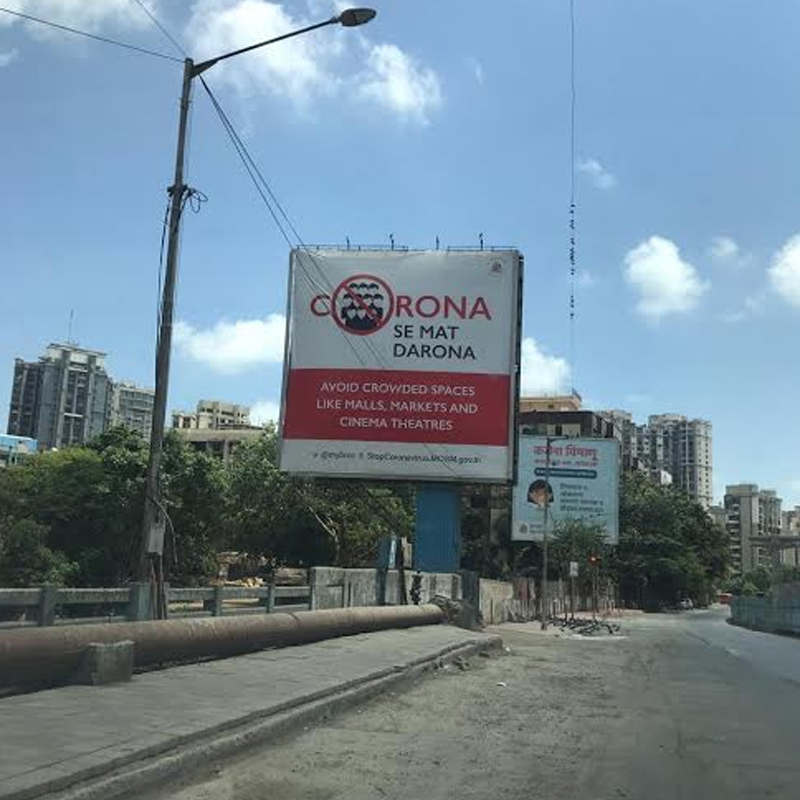
    NEW DELHI: It has been close to three months since the announcement of a nationwide lockdown in the wake of Covid2019 and even longer since the governments across states have been trying to promote the necessary social distancing and other precautionary measures via advertising. While there has been constant innovation in digital and TV commercials, with the constant addition of newer faces and updating of messaging with changing scenarios, OOH hoardings are still covered in the initial set of messaging. Case in point, the following hoardings spread across Mumbai, which have been a constant for months now!

    Posterscope India director Fabian Cowan believes that for communication to be effective it needs to be refreshed with time, based on the current environmental cues and prevalent truths. Therefore, a refreshed set of creatives and communication is most certainly required to be promoted by the civic bodies.

    “The elements and tone need to be in line with the current stage of the pandemic. If staying at home was the single-minded focus at the start of the pandemic, maintaining the right kind of social distancing could be the line of thought in the current context as restriction begins to ease.”

    Laqshya Media group CEO Atul Shrivastava adds, “The Covid2019 communications had utilised the OOH space for over two months. However, awareness is still needed especially in the larger cities where the curve is still climbing. Therefore, a few strategic locations with high visibility should be chosen for specific Covid2019 communications. As people start going back to offices across the country and supply chains open up, there needs to be a healthy balance between public service and commercial activity.”

    Kinetic India co-CEO Charanjeet Arora feels while it is important to refresh the messaging, it is totally the government’s call to do it or not. “Honesty, it is a pandemic and the government understands the magnitude of it. In their long list of priorities, I think saving lives is on top right now.”

    He continues, “If I talk about just Delhi and Mumbai, they are much evolved markets and internet penetration is quite high. People are aware but there is a constant need for communication because the memories in our country are constantly shuttling. It is important to have this (Covid-centric) communication but there is a need to work on the frequency as we have to build the sentiments of businesses back. For example, in Delhi, at least 30 per cent of all OOH billboards should have this communication but the areas should be chosen based on the need.”
    So, should the brands be taking the onus of acquiring OOH space and share Covid-related messaging?

    Arora doesn’t think it will be wiser for brands to constantly keep talking about the pandemic in their messaging. “Brands need to be subtle and empathetic in their communication, surely. It shouldn’t look like a high-decibel sales pitch. But they should be talking about their own brand experience and usage.”

    If Cowan as to be believed, brands too are looking forward to incorporating the same style of out-of-home messaging going ahead. He says, “Currently there are encouraging signs with regards to the increased number of enquiries and considerations being made on possible open markets, especially with respect to green zones. We see this as a positive development. While these discussions currently are in the realm of media possibilities and its deployment our sense is that the communication will largely be centred around sales and benefits of ownership of such products given the current context.”

    Shrivastava says that most brands are trying to strike a balance between awareness and sales pitch and the pure commercial advertising will take a few more weeks to come back. “They are keeping marketing communications sensitive, meaningful, relevant and optimistic. Many companies have launched new initiatives to give them an edge in the age of the New Normal. The brands are communicating these initiatives more to portray to the consumers that they care for their employees and their consumers.”

  • OOH ad industry could take a hit due to COVID-19

    OOH ad industry could take a hit due to COVID-19

    MUMBAI: The pandemic of COVID19 continues to take a toll on every possible industry; the advertising world is no exception. With people being asked to stay indoors, the impact on the OOH industry could be huge. Though the cases are currently restricted to just a few cities in the country, further escalation could damage the OOH segment.

    Laqshya Media  group CEO Atul Shrivastava says: “OOH ad spending could feel a negative impact if the social distancing and isolation measures that have emerged in some cities expand to larger territories. Consumers in India with significant numbers of reported COVID-19 cases are already actively avoiding large public places and gatherings, and that may eventually impact advertisers’ willingness to advertise there as well. For now, however, we are not making any other major adjustments to our business forecasts because of the COVID-19 outbreak. Our forecasts are for the full year, and there is still a strong possibility that the virus could be contained in the coming months, allowing for a rebound in H2 2020. Most of the times, the bulk of ad spending takes place in the latter part of the year for the holiday & festive season.”

    Meanwhile, the impact of COVID-19 is likely to cause a significant growth in viewership on YouTube, OTT platforms and television. This will come as an alternative to the 3-hour travel journey each day.

    "With the disappointment of IPL being postponed, OTT and other online content platforms will be the only space. People will catch up with series, movies and podcasts they have missed and explore new content. Online classes will prosper as people may set out to learn a new language or skill, as will a lot of the content on YouTube, especially children's content as parents will try to find a way to keep kids indoors and busy,” says GoBisbo Broadcasting Network founder Shakir Ebrahim.

    Akund Communications founder Sadiya Khan differs in her view. She says that considering the self-imposed isolation that we are all moving towards, people in the coming days would spend more time at home with family while watching news channels. Most online content that's viewed on mobile devices in transit would be a second priority to this.

    “As consumers try to keep themselves informed and entertained at home, advertisers too would bring down ad spends on online platforms and opt for mainstream coverage,” she further adds.

    The spread of coronavirus has caused a sense of unprecedented uncertainty for Indian advertising. The ad world is already pivoting and adapting a few measures as a result of the outbreak. Overall brand spending could take at least a temporary hit, and agencies and brands need to think proactively about how to tackle the situation.

  • Laqshya Solution’s OOH campaign for Flipkart’s #TheBigBillionSale

    Laqshya Solution’s OOH campaign for Flipkart’s #TheBigBillionSale

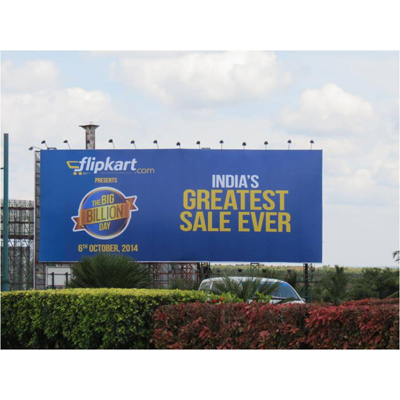
    MUMBAI: It was going to be ‘India’s Greatest Sale Ever’. Therefore, Laqshya Solutions had 24 hours to devise and implement the campaign in such a way that it would take everyone by surprise. The group inundated Bangalore and Delhi with larger-than-life hoardings to grab the attention not only of Flipkart’s competitors but also of the national media.


    Laqshya Solutions, the agency division of the Laqshya Media Group, was given a brief by Flipkart, one of India’s leading e-commerce platforms, to create a radical and bold campaign across Delhi and Bangalore. Laqshya Solutions worked to develop and execute the campaign using as much as 70,000 square feet of branding space in the two cities. The media mix included a large format of billboards, mall facades, airport media and digital signages.


    Talking about the newly launched campaign, Laqshya Media Group COO Atul Shrivastava said, “We were honoured when India’s e-commerce leaders Flipkart approached us to work on what has been their biggest, boldest campaign ever! Since this was such a crucial campaign for the brand, we took great care in formulating and executing a plan that would create a powerful impact. The very fact that there has been a tremendous reaction from consumers and the media alike, makes us feel like we have definitely accomplished Flipkart’s brief of doing something novel and dramatic.”


    Laqshya Solutions has also executed several other campaigns for Flipkart before their Greatest Sale Ever campaign.


  • Outdoor ad spends register 8% growth in H1 FY 2013

    Outdoor ad spends register 8% growth in H1 FY 2013

    MUMBAI: Laqshya Media Group’s media research wing that caters to the OOH research and analysis has revealed the H1 fiscal analysis of 2013, while comparing it with the same period in 2012.

    According to the report, despite the lingering economic uncertainty, OOH continues to grow – giving a positive sign to advertisers who plan to reach out to people with billboards, bus shelters, huge gantries, foot-over bridges, and any other outdoor vehicles.

    According to Laqshya Media Research statistics on the outdoor advertising ad revenues, there has been a growth of 11 per cent for Q1 and 4 per cent growth during Q2 of 2013 over the same period in 2012, making it a total of 8 per cent growth for the H1 fiscal 2013 over 2012.

    The sector-wise analysis reveals that real estate has upped its OOH investments most rapidly as compared to any other sector making it the most dynamic category for the first half of 2013. The sectors’ spends grew by 51 per cent as compared to H1 of 2012. The report states that the realty players from Mumbai and Delhi have been spending heavily in traditional OOH, whereas south based players are also actively visible in premium ambient media like airports.

    The education sector with large focus on Q1 dominates the other category spends though their spends have reduced compared to H1 of 2012. In the media & entertainment category, TV channels particularly the GECs hold a substantial pie in the OOH share of spends. Jewellery brands like Tanishq has been spending heavily along with south based brands like Malabar and Kalyan on their store launch across various towns using OOH to create awareness. There has been a 28 per cent rise in their spends observed this year as compared to H1 2012.

    Many other sectors slightly exceeded their spends in the first half this year as compared to last year making the overall OOH share of spends bigger and thus creating an 8 per cent growth as compared to 2012. Categories like banking, mobile handsets, airline operators, housing finance, life insurance, retail (particularly the innerwear segment) and healthcare saw greater growth as compared to last year’s first half.

    Two-wheelers have emerged as one of the most active spenders in the first half of 2013 as compared to the same time in 2012, registering a growth of at least 50 per cent. Brands like Hero Motocorp, Bajaj and Honda have captured the roads with larger than life displays for their two-wheelers.

    The first half of fiscal year 2013 also saw a decrease in spends by the top OOH spenders like automobiles (four wheelers) and mobile services.

    Laqshya Media Group COO Atul Shrivastava said, “The overall OOH pie has grown 8 per cent this year as compared to same period last year. There has been a moderate growth in various other sectors but OOH that has traditionally thrived on automobiles and mobile services took a hit. Big players in the four- wheeler category like Hyundai and Tata Motors-owned Jaguar Land Rover have been successfully banking on OOH long term sites to create brand salience. The only spike observed in the category was during the brand launch of Honda Amaze and Chevrolet Sail.”

  • Laqshya Media Solutions creates nationwide buzz for Maruti Suzuki Stingray launch

    Laqshya Media Solutions creates nationwide buzz for Maruti Suzuki Stingray launch

    Laqshya Media Solutions (formerly known as OMI), the division of India’s leading OOH advertising company – the Laqshya Group, planned and executed a nationwide campaign for the launch of the new Wagon R Stingray. The car is the newest model launched by Maruti Suzuki and the purpose of the campaign was to create maximum visibility and interest in the car across the country. The campaign, which lasted an entire month, was one that involved a great deal of research and planning.

    The brief provided by the client was to generate maximum impact by using hoardings and spaces in relevant locations. Even though visibility was a crucial factor in the client brief, the idea was to ensure that the brand and the product stood out in a stylish and tasteful way without being too intrusive. The campaign designed by the Laqshya Media Solutions team therefore included a mix of various media from billboards, gantries, unipoles, bridge panels and toll brandings.

    Talking about the new campaign, Atul Shrivastava, the COO for the Laqshya Group, said, “We are happy with the efforts the team has put in to innovate and create a powerful OOH campaign for the new Stingray launch. The locations chosen have been excellent and ideal for such an important campaign. Since Maruti Suzuki has been a client with us for several years, we wanted to do something exceptional and different to make the launch a success.”

    Vinay Pant, Media Head for Maruti Suzuki, also commented on the new Stingray launch campaign, “The brief for the campaign was to create good visibility through outdoor advertising for the Stingray Launch that would capture the attention of young, trendy people in the metros and even in the Tier II cities. We knew that creating such a large scale campaign would be quite a challenge but we are very pleased with the ideas and execution from Laqshya Media Solutions.”

    Avinash Singh, Media Manager for Maruti Suzuki, also spoke about the outdoor media campaign executed by Laqshya Media Solutions. “Our aim was to ensure maximum visibility for the new Wagon R Stingray and I am happy to say that Agency has delivered well on that front. I am especially pleased with some of the unique innovations like the branding at the Noida toll plaza. We look forward to many more exciting outdoor campaigns in time to come,” he said.


    The campaign made extensive use of as many as 250 media units across 20 cities, at main arterial routes, high traffic zones and key touch points.