Tag: Atul Saraf

  • VBS 2024: Stopping the leakages in the pay TV ecosystem

    VBS 2024: Stopping the leakages in the pay TV ecosystem

    Mumbai: India is in the grips of seisnic changes regarding video and broadband consumption. Pay TV cord-cutting is rampant even as free TV subscriptions are on the rise and OTT buy-ins are churning with the signs up for certain platforms stagnating even as others are seeing rapid increases and some are seeing cataclysmic drops. Aggregators of OTTs are popping up on the horizon promising cheap bundles along with value-added services for cable TV and DTH. There’s a rush to set up free advertising-supported TV channels by TV set manufacturers and smart TV device makers. There’s the Jio factor where it seeks to convert most pay TV customers to free streaming of video content by offering free access to consumers at no cost. The consumer continues to demand bandwidth higher than ever imagined even as prices drop. Margins are under pressure as every player goes one-up on each other to acquire and retain customers.

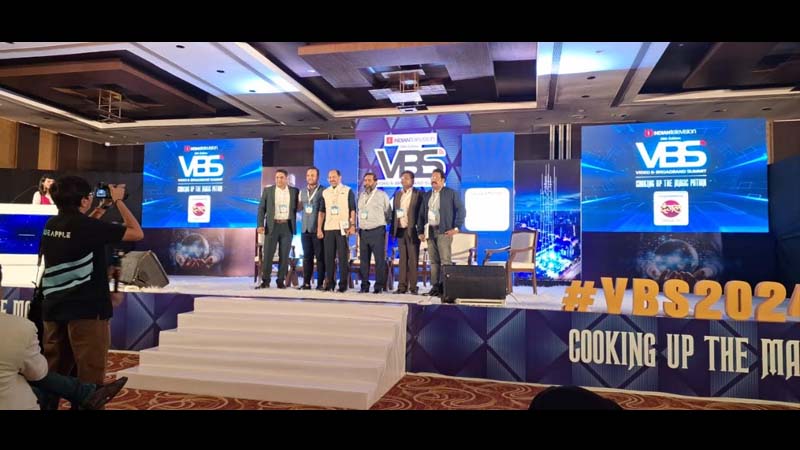
    The video and broadband distribution landscape has not been as vibrant as it is now.. How long will this pot-boiling continue? What will the magic potion of video and broadband look and taste like? And what’s the end game? Indiantelevision.com has held the 20th edition of Video and Broadband Summit better known as VBS at Sahara Star Hotel, Mumbai.

    The session chair for this panel is Elara Capital senior VP Karan Taurani along with the panellists: NXT Digital COO Rouse Koshi, MetroCast Network India promoter Nagesh Chhabria, Sabot One Pvt. Ltd. chairman & managing director Atul Saraf, Epic On & Stream-Sense CEO Sourajya Mohanty and KCCL and KVBL CEO Padmakumar N.

    In this session, Taurani discussed the TV industry, issues of piracy, decrease in pay TV subscribers, shift from traditional TV to connected TV.

    He asked Koshi on the assessment of piracy and the kind of loss the industry is suffering to which he said, “ Piracy has come down. On the linear side of it, I don’t see piracy as much of a problem right now. After digitisation, piracy has come down. Also on the technological front, we have good regulations in place. There is a concern though in a lot of illegal streaming apps rather than in the pay TV side. “

    Taurani then turned around towards Chhabria where he asked him his perspective on any innovation or data tracking he might have done towards his subscribers to see if piracy is there to which he said piracy is there first through our net and secondly in cable TVs where privacy is there in rural areas. In those areas, whichever state you go, there are small MSOs who are running with 2000 and 1500 base. When a businessman sees that they question how do they survive with such a small base? It is through privacy.”

    After an elaborating response, Taurani asked Padmukar on the lack of digitisation and household penetration level in South markets to which he said, “In protecting the content, we have done all the steps so there’s no chance of privacy as we give correct reports to the broadcasters and there is no suppressing data. As far as Kerala Vision is concerned, we are doing a good business. I’m Kerala our total cable TV homes will be 70 lakhs and out of this around 35 lakhs is dominated by Kerala Vision. We have more than 50 per cent market share in Kerala TV and more than 50 per cent in broadband also.

    Saraf said on the issue, “Piracy has been happening for the last three decades. As an OTT aggregator, we are not allowing anybody to download our app if they are not able to put their telephone number. We are doing B2B and doing B2C. There is one thing sure from our OTT department that piracy won’t happen from our end.

    Last but not the least, Mohanty replied, “First of all we will acknowledge the fact that piracy has been a menace not only in India but globally also. We have a three fold approach that we have adopted. First is to take initiatives around DRM. Secondly, we have taken our initiatives with the video URLs which are very minimal yet very effective. Third is we have taken initiatives in deploying agencies.

    Taurani ended the session by saying bundling is the way ahead and consolidation which will be beneficial to the platforms and distributors. 

  • ABS Seven Star launches hybrid STBs; targets 2 lakh consumers in Mumbai by Dec 2015

    ABS Seven Star launches hybrid STBs; targets 2 lakh consumers in Mumbai by Dec 2015

    MUMBAI: Innovation is the key to a successful business and realizing this is Mumbai based multi system operator (MSO) ABS Seven Star. 


    As reported earlier by Indiantelevision.com, ABS Seven Star, which so far had been operating MPEG 2 headend, has now launched its MPEG 4 headend with as many as 500 national and international channels. Additionally, the MSO has started rolling out MPEG 4 set top boxes (STBs) as well. 


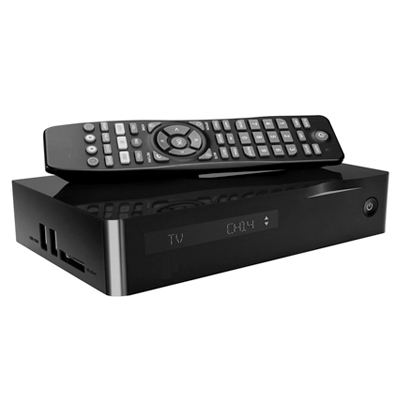
    In keeping with Prime Minister Narendra Modi’s ‘Make in India’ initiative, these indigenous STBs manufactured by ABS Productions are hybrid boxes with both Ethernet and cable. The STBs have been loaded with facilities like YouTube, web TV, video on demand (VOD), internet browsing, TV Everywhere and cloud computing among others.


    “Our offering will convert your television set to a smart TV. The box will have 75 HD and 3D channels. We are also creating content, apart from the ones we have taken the rights for. The box will have 75 of our own channels, which includes education channel among others,” informs ABS Seven Star CMD Atul Saraf.


    Priced at Rs 3500, the hybrid box also comes with 5GB online space. “This allows consumers to use their TV set as a computer and save data as well,” he adds. The company has also come up with a HD only box loaded with VOD and internet, which is priced at Rs 2500. 


    While 10,000 hybrid boxes have so far been manufactured, ABS Productions has rolled out 30,000 HD boxes and is looking at manufacturing 30,000 boxes every month. 


    In order to give a fillip to VAS, ABS Seven Star will provide the services to consumers at a fixed fee of Rs 30 per month. “Consumers will then have to pay for the content they choose to watch,” he says. 


    ABS Seven Star has also tied up with content distribution network (CDN) to have a multi screen presence. 


    The MSO through these services is looking at an average revenue per user (ARPU) of Rs 1200. “Today, consumers are anyways paying separately for cable and internet. With our new offering, we will be giving them both the services with just one equipment,” informs Saraf. 


    ABS Seven Star is connecting through national long distance (NLD) players to have a presence in Rajasthan, UP, Haryana, Bihar and Orissa. “We are looking at acquiring 200,000 consumers in Mumbai by December 2015,” points out Saraf.

  • ABS Group ties up with BSNL for on-demand services

    ABS Group ties up with BSNL for on-demand services

    MUMBAI: In a bid to expand its services in a highly competitive environment, the Atul Saraf led ABS Group has lined up a spree of developments. The company, which is all set to launch its MPEG 4 headend, is now strengthening its value added services (VAS) offering.


    ABS has entered into an agreement with telecom giant BSNL. As part of this, BSNL’s 10 million broadband subscribers can access the VAS and movies-on-demand services of ABS through its portal www.absplay.in.


    “We are working on setting up the servers in the BSNL premise for our value added services,” ABS CMD Atul B Saraf tells Indiantelevision.com.


    The portal will go live in August, 2015 after which BSNL broadband subscribers can access the library that contains more than 1000 movies, 60,000 songs and videos and approximately 70-80 web channels. “It is a subscription based model. There will be a revenue share between BSNL and us,” informs Saraf.  


    The content will range from Bollywood, Hollywood, Tollywood, regional, sports, devotional, comedy, horror, action to music, short length videos and full length videos. While refraining to divulge the pricing of the content, Saraf says, “It will be in a very cost effective manner.”


    Close to 25 per cent of the catalogue has been purchased by ABS, while 75 per cent of the content will be on revenue sharing basis with content creators. “We have bought content from both national and international content providers. We will have a revenue share with them,” he informs.


    “We saw a gap in the VAS space and so tried to tap into it. This is part of our new revenue generating launches,” says Saraf.

  • ABS Seven Star to launch MPEG 4 headend; targets phase III, IV cities

    ABS Seven Star to launch MPEG 4 headend; targets phase III, IV cities

    MUMBAI: ABS Seven Star is all set to make its next big move. The Mumbai based multi system operator (MSO), which so far had been operating MPEG 2 headend, will now launch its MPEG 4 headend with as many as 500 channels.


    While it is currently in the testing phase, the official launch is slated for 25 July.


    The new headend will be placed at Andheri West in Mumbai. “We have taken a new premise for setting up the MPEG 4 headend,” ABS Seven Star CMD Atul Saraf tells Indiantelevision.com.


    The MPEG 4 headend will have 75 high definition (HD) channels. “We will be swapping the MPEG 2 set top boxes (STBs) with the MPEG 4 HD boxes in the next four months,” added Saraf.


    Priced at Rs 2500, the STBs are hybrid with both cable and Ethernet. The boxes have been manufactured under ABS Productions Pvt Ltd, which has contracted Videocon Group’s Trend Electronics to manufacture them at its Aurangabad plant. “The box is on Broadcom chipset,” informed Saraf.


    The company has already tested 2000 boxes on its network. “We will continue our old MPEG 2 headend till all the boxes are swapped,” he said.


    With this launch, the MSO is now targeting phase III and IV cities of digitisation. “At the time of launch, we will be present in at least three-four states,” he informed.


    ABS Seven Star is aiming at reaching 10 million households in the next two years. “India is huge, and another 17 million STBs are needed to digitize the whole country. We will have our own pipe in that,” he informed.


    In order to expand, the MSO is also taking the acquisition route in phase I. “We will acquire lots of networks in phase I, talks for which are already on,” concluded Saraf. 

  • Indigenous STBs, courtesy ABS Productions

    Indigenous STBs, courtesy ABS Productions

    MUMBAI: Efforts have been on to spur Indian companies to manufacture cable TV set top boxes (STB) domestically – the government has been encouraging and nudging the private sector to do so.  The Mumbai-based ABS Seven Star group – which runs a health channel and a cable TV network in Mumbai – seems to have taken the bait. It has set up a new company called ABS Productions Pvt Ltd which has designed standard definition (SD), high definition (HD) and hybrid STBS – both MPEG2 and MPEG4 – and contracted Videocon group company Trend Electronics to manufacture them at its Aurangabad plant.


    “Trend Electronics also makes STBs for Videocond2h and it has very good experience doing so. Hence we have struck up a manufacturing alliance with it,” says ABS Seven Star CMD Atul Saraf.


    Saraf has hired a 20 member team for the STB manufacturing initiative – 14 of these are working on the software while the rest will be looking after the hardware. While the manufacturing unit has a 30,000 STBs per day capacity,  its first order will roll out of the assembly lines by 15 May.  “The first order is for our cable TV network ABS Seven Star, which is close to 50,000 boxes,” he says.


    Saraf points out that close to $1 million has been pumped into R&D while designing the STBs locally.


    Saraf is a firm believer of indigenous manufacturing of STBs. “When the government mandated implementation of digitisation, it was since then, that I was against importing boxes from abroad. These plain vanilla Chinese boxes are of poor quality and need to be replaced every couple of years. Also, a big disadvantage is that there are no service centers,” he says.


    He reveals that local manufacturing will ensure better service standards apart from generating employment.  “Phase III and IV markets will need approximately 100 million STBs.I hope to capture about 5 per cent of this by next year” he says.


    Based on the Broadcom chipset – ensuring better video quality – the higher end boxes will have a recording facility as well, apart from being able to deliver internet.  The Hybrid STB will also deliver a video on demand service. “We are not tying up with any OTT platform for this, but will create our own platform to facilitate the VOD service,” says he.


    In order to ensure better service, 200 Videocon d2h service centers, across India, have been roped in to bandage and spruce up the STBs should they face any problems in close proximity to their installation.


    ABS Productions has priced the  MPEG2 SD box at  Rs 1200-1300, the MPEG4 SD box at Rs 1400-1600, the MPEG4 HD box at  Rs 2,300-2,400 while Hybrid Box is priced at  Rs 3,500-3,800. 

  • MCOF conclave stresses on importance of broadband for LMOs

    MCOF conclave stresses on importance of broadband for LMOs

    MUMBAI:  It has been touted as one of the leading get together of the last mile owners (LMOs) in Maharashtra. The Maharashtra Cable Operators Federation (MCOF) National Conclave on Broadband and Cable (NCBC) 2014 saw its president Arvind Prabhoo put his best foot forward in trying to get the LMOs to buy into his vision of a digitised cable TV India where they are also prospering. Apart from formally launching Synergy Cable Operators Private Limited (SCOPE), the first Cable Virtual Networks Operator (CVNO), Prabhoo and a handful of industry vets and consultants, stressed on the importance of broadband and how LMOs could increase their business five-fold, using this tool.


    Prabhoo pointed out that number of active broadband subscribers in India is expected double in the next two to three years according to a Telecom Regulatory Authority of India report.  In Mumbai alone, the figure is expected to go up from the current 1.2 million to 4.5 million in the next couple of years. “Broadband will grow, and we need to utilize this opportunity,” Prabhoo said.


    Drawing comparisons with the US where 50 per cent of broadband services are provided by cable operators, he said, “We need to implement the same in India. As things stand, only a fraction of the broadband subscriber base is delivered by cable operators.”


    Apart from the emphasis on broadband, day one of NCBC 2014 saw heated debate over the existing three models i.e. MSO:LMO, HITS and the newly-minted CVNO, which seeks to provide white label cable TV services to smaller operators in phase III and phase IV.


    Presided over by indiantelevision.com founder, CEO and editor-in-chief Anil Wanvari, the session had all parties putting forth their points of view. The panel comprised Kulbhushan Puri of BR Cable Network, Atul Saraf of ABS Seven Star, Vynsley Fernandes of Castle Media, and Prabhoo.


    During the discussion, Wanvari expressed the view that the full rewards of digitisation have yet to trickle down to the broadcaster, MSO or LMO – as they viewed each other with suspicion, though things have improved in recent times. “There is a need for greater communication and understanding among the stakeholders,” said Wanvari. “The LMOs and MSOs need to understand that broadcasters are investing in content and they need to recoup that investment.  Broadcasters need to understand MSOs are investing in setting up infrastructure and that LMOs want a sustainable future. The cable ecosystem also needs to understand that broadband can be extremely rewarding as compared to simple video signals where subscribers tend to be wary of price increases.”


    To this, Prabhoo invited all stakeholders to come together to discuss issues and take the industry forward while benefitting everyone. “Proper constructive pricing model can be worked out if broadcasters, MSOs and LMOs discuss issues on the same platform,” he said.


    Fernandes, who is involved in the upcoming HITS project of the Hinduja Group, said, “Packaging of content should be in the hands of the LMOs. Additionally, the LMOs need to invest in set top boxes which they will deliver to their subscribers so that ownership stays with them. And this is what the HITS project is set to do.”


    Prabhoo said that while there will be areas covered by the CVNO in phase III and IV of DAS called Headend on the Ground (HOGS), there would be some covered by HITS (Headend In The Sky). “There could also be areas where HITS and HOGS can work together to take digitisation forward,” proposed Prabhoo.


     Saraf said the future of DAS phase III and IV lay in MPEG4 and not MPEG2 STBs that were currently being seeded by operators. On the issue of low ARPUs in phase I and II, he said, “ARPUs can go up only by introducing value added services like Video on Demand (VOD), Movie on Demand and YouTube. We need hybrid STBs, which can provide both cable and internet services.”

  • Now, MSOs to collect entertainment tax in Maharashtra

    Now, MSOs to collect entertainment tax in Maharashtra

    MUMBAI: Cable operators in Maharashtra have been fighting tooth and nail to reduce the Rs 45 entertainment tax (ET) levied on them by the state government but nothing seems to be working. Now, in a fresh move, the state cabinet has approved an amendment which makes the multi-system operators (MSOs) responsible for the collection of ET from the Last Mile Owners (LMOs).


    Earlier, the onus was on the LMOs, who were supposed to collect the ET along with the service tax and give it to the state. In December, the Maharashtra Cable Operators Federation (MCOF) moved the Court challenging the Maharashtra state government’s amended gazette resolution (GR) regarding entertainment tax. According to the amended GR, it was mandatory for the LMOs to file a joint affidavit with the MSOs while paying entertainment tax. However, last month the Bombay High Court ordered an interim stay on the amended gazette resolution (GR) of ET.


    MSOs and LMOs are all wondering whether this amendment will come into effect or  will it be regarded as as contempt of court, since the High Court’s stay order is in place. As of now, no notification or communication has been issued to the parties involved. “We can only comment after the notification is passed. But we wonder what will happen since the matter is sub judice and the LMOs are stating that it is their business to deposit the tax,” says Hathway president Milind Karnik.
     

    Indusind Media (InCable) managing director  Ravi Mansukhani is puzzled about  the government’s move.  “”How can they pass this?,” he asks. “The case is pending in several courts.” But he adds that he is  “absolutely fine if the LMOs want to do it. It will be difficult for us to reach out to subscribers the way they do. The reason why the government has taken this step is  because it is easier to collect it from a few MSOs rather than so many LMOs”


    MCOF is looking at approaching either the High Court or the Supreme Court depending on the circumstances. “We will definitely not comply and will continue giving the tax to the High Court only,” says MCOF task manager Bobby Shah.


    The Maharashtra government expects MSOs in the state to give their customers bills that will include an additional Rs 45 as entertainment tax besides the service tax of 12.36 per cent following the notification. “Majority of people will have to shed more money for the cable TV service while a few will have to give marginally more than what they are currently paying,” says Shah.


    However, the operators are still protesting against the high ET rate and want it to be reduced. “The amendment is not bothering us much, but what is important is the high rate of entertainment tax that needs to be brought down,” says Cable Operators and Distributors Association (CODA) president Anil Parab.


    MOS ABS Seven Star CMD Atul Saraf says that he is fine with collecting ET from the LMOs. “But the amount needs to be reduced to just Rs 10 to Rs 15 so that the customer isn’t burdened with the extra cost,” he opines.


    Now, it’s a wait and watch situation if the Maharashtra cabinet’s decision is regarded  as contempt of court, or if it will come into effect from the date of notification! Whatever happens, it’s surely going to bring clarity on the revenue that the government earns. 

  • LCOs, independent MSOs unhappy with digitisation

    LCOs, independent MSOs unhappy with digitisation

    MUMBAI: Back in 2012, when India kicked-off the process of digitisation, local cable operators (LCOs) were an unhappy lot; approaching state high courts for respite from what they perceived as a threat to their business.


    Today, one would imagine cable ops to be happy, considering the first two phases of DAS are almost complete and India is on the threshold of the final phases (III and IV) of the big switch (analogue to digital feed).


    However, the truth is: cable ops are not happy with the Telecom Regulatory Authority of India (TRAI) ruling on consumer application forms (CAF) and billing, which according to LCOs, makes multi system operators (MSOs) owners of consumers. In this connection, a group of LCOs and independent MSOs met the Parliamentary Committee on Information and Technology in New Delhi and put forth their views.


    ABS 7 Star CMD Atul Saraf told the committee: “The ownership of the consumers should be with the LCOs and not with the MSOs. The TRAI and the Information and Broadcasting Ministry (I&B Ministry) should amend the DAS rules keeping in mind the interest of all stake holders.”
    Almost 90 per cent of the STBs are imported from China, we propose that 70 per cent of the STBs should be Indian, says Atul Saraf


    Saraf pointed out that though there were 60,000 LCOs and 8,000 MSOs across the country, the task force formed for the process did not include a single LCO or MSO. “A new task force should be formed with all stake holders and not a couple of MSOs and broadcasters who are in vertical monopoly,” he remarked.


    Drawing attention to the low quality of the Chinese set top boxes (STBs) being used, he said cable ops who had already spent close to USD 4 billion in the first two phases would be forced to spend another USD 4-5 billion in the last two phases of DAS. “Currently, most of the STBs being seeded are Chinese. The boxes which are of low quality may have to be replaced in the next couple of years, which means more cost for the operators,” Saraf said, cautioning against implementing phases III and IV before the completion of the first two phases.


    “There should be a Broadcast Act to monitor broadcasters. Also, only after both the consumers and cable operators reap the benefits of DAS phase I and II, phase III and IV should be implemented,” he said.

    Increasing import duty on STBs will discourage the MSOs from importing STBs from China, points Arvind Prabhoo


    On behalf of the cable op community, Saraf demanded: “We want the committee to question the government as to why these loopholes were not looked at before importing such STBs,” pointing toward the growing need for indigenous box manufacturing. “Currently, almost 90 per cent of the STBs are imported from China; we propose that 70 per cent of the STBs should be Indian,” said he.


    He proposed that while the current import duty on STBs is 10 per cent, it should be raised to 50 per cent. “Wasn’t digitisation meant to uplift Indian STB manufacturers and also create more jobs for them? What I fail to understand is how the TRAI and I&B Ministry did not see these loopholes before implementing digitisation,” Saraf questioned.


    Seconding Saraf on the hike in import duty as well as indigenous manufacture of STBs was Maharashtra Cable Operators Federation president Arvind Prabhoo. “Of course, importance should be given to the national STB manufacturers. If the import duty is increased, it will surely discourage the MSOs from importing STBs from China and also encourage Indian manufacturers. That digitisation should have helped generate revenue and employment for Indians, are issues the government should have thought about,” he said.
    We plan to go and meet the members of parliament once the winter session commences,says Pramod Pandya


    He opined that the government had been misled at some point. “I think that a certain section of the industry presented a wrong picture to the government. But, I am sure they will work on it now.”


    Gujarat Cable Operators Association president Pramod Pandya wanted to know if any consumer survey had been conducted before implementing digitisation. “I do not understand the need to force the implementation of DAS, if the country doesn’t have infrastructure to support it,” he thundered, pointing out that cable ops are hopeful the Broadcast Bill will be proposed during the winter session of the Parliament. “We plan to go and meet the members of parliament once the winter session commences,” he rounded off.

  • LCOs give their views to parliamentary committee on IT

    LCOs give their views to parliamentary committee on IT

    MUMBAI: If one thought that the local cable operators (LCOs) would give up without a good fight for their rights, one was surely mistaken. When around 10 LCOs from across states met the Parliamentary Committee on Information and Technology today in New Delhi, they ensured that their voices were heard on digital addressable systems (DAS). The meeting that went on for two and half hours was attended by 20 members of parliament.


    While each LCO was heard by the committee, it was ABS 7 Star CMD Atul Saraf who said that the LCOs were not against digitisation, but against mandated digitisation. “Digitisation should be voluntary,” he said in the meeting.


    The LCOs represented the trials and tribulations of the cable TV consumer to the committee. “We spoke on consumer interest and what they had gained with digitisation,” informed Cable Operators Federation of India president Roop Sharma. The operators opined that the consumer should be able to choose his set top box (STB).


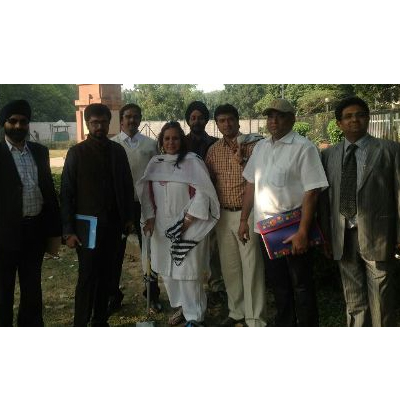
    Apart from Saraf and Sharma, the others who were a part of the committee included: Pramod Pandya, Swapan Chowdhary, Jeevan Khanna, Ajeet Singh, Sudhish Kumar, GS Oberoi, Gaurav Gupta, Chandradeep Bhatia and Paramjit Singh.


    “The consumer should be able to buy portable STBs which gives him access to internet, video-on-demand and other facilities. Why should every consumer be burdened with the same quality of STB. There should be a provision that if someone wants to buy an expensive STB they should be able to do so,” said Sharma.


    The operators also suggested that since it is the consumer who pays for the STB, they should be allowed to own it. “Also consumer should have the option to change STBs and his service provider. Currently if Hathway seeds a STB in a consumer’s house, they cannot switch to another MSO,” said Sharma to the committee.


    The LCOs also raised concern over their own existence. Many in the meeting felt that the LCOs have been left at the mercy of the MSOs. They also said that the process of billing and the power to switch off STBs should be with the LCOs and not MSOs.


    The operators put a point stating that TRAI should first successfully complete digitisation of phase I and II and then start the work in phase III and IV.


    On the issue of entertainment tax, the LCO representatives opined that there should be uniformity in taxation throughout. “Also we told them that entertainment tax should be collected per household and not per TV set,” informed Sharma.


    The MPs asked the LCOs for solutions to the issues with digitisation, to which the LCOs suggested that the long pending Broadcasting Bill and the DTH Act needs to be brought in to regulate and control the  the broadcasters and DTH players respectively.


    Also a point on implementation of vertical monopoly and cross media holding on immediate basis, before going ahead with further digitisation was made.
    The committee will also be meeting Information and Broadcasting Minister Manish Tewari in a couple of days, after which they will come out with a recommendation which will be submitted to the I&B Ministry.

  • Soon: Care World TV online

    Soon: Care World TV online

    MUMBAI: Post Diwali, six-year-old health and fitness television channel – Care World TV – is expected to go LIVE on its website http://www.careworldtv.com. In so doing, it will become the first global health care TV channel to be simultaneously available online and offline.


    Currently in the testing phase of simulcasting its television content on its website, Care World TV is looking to expand audience reach with this initiative. Care World TV managing director Ajit Gupta exults: “With this initiative, we become the first global health care television channel to be simultaneously available both online and offline.”


    The channel has already started getting response from countries like Spain, according to ABS 7 Star CMD Atul Saraf, who says: “Even though we haven’t made it LIVE yet, and are still in the testing phase, anyone who comes to our website for information on health or contact details of doctors etc. can see the simulcast of the channel. We are already getting good response from people based in different parts of the world.”


    With the simulcast, Care World TV hopes to reach out to a travelling audience as well as the many Indians settled across the globe.


    Simulcast apart, the channel is also developing an app to further connect with its audiences to be launched by November. “The app will be ready by month-end. We will then test the app and so, it should be available for free download by November. It will be available on Android and iOS first. We will further expand to other operating systems like Windows,” says Saraf.


    According to Gupta: “The app will have an eye-catching interface, with easy functionality, and will cater to the premium market segment.”


    Available for free download, the app can be used even if one has slow internet connectivity. “We have put the content on a very low bit rate and so, a person can watch it even with a 256 or 512 mbps internet connection speed,” informs Saraf.


    So is the channel looking at monetising its website content? “Well! We haven’t thought of it currently, but we may in future, we are not ruling out the opportunity,” replies Saraf.


    TAM weekly TV ratings reveal that Care World TV reaches four to five million viewers every week. “The channel has bridged the gap between functionaries and beneficiaries. With a 24×7 presence on television and now also on the web, the channel provides various formats of programming that include awareness segments, talking heads, panel discussions, in-depth reports, presentations, infomercials, audio visuals, documentaries, bulletins, campaigns etc, in both fiction and non-fiction formats,” says Gupta.


    While the channel has taken a bold step in an internet-driven world, only time will tell if the move will help expand its viewer base or eat into its existing television viewership?