Tag: Atul Kulkarni

  • The Attack On Ghazi…..Worth watching but….

    MUMBAI: A lot of things seem to be going right for India and its people in various fields and, suddenly, people have learnt to take pride in achievements of her people in sports, space science, IT, coupled with a newly acquired sense of patriotism over past couple of years. This has been making many filmmakers cater to this new fervour with different genre films.

    For instance, films on sports or the biographical films on sportspersons, which never worked earlier, have found favour with the audience to varying degrees, including one, Dangal, even proving to be a blockbuster. That is because these films are based on success stories. As for patriotism, few attempted them but the ones following the 1965, 1971 wars and one after the Kargil did work. The problem with this theme is that the spirit of patriotism is usually comes in phase.

    The “Attack On Ghazi” is a film about the single submarine that the Pakistan Navy boasted of during the 1965 and 1971 wars India fought with that country. The submarine, Ghazi, acquired by the Pakistan Navy from the US in 1963, was destroyed during the India-Pakistan war of 1971, following which East Pakistan seceded from Pakistan to become Bangladesh. There is more than one version as to how this super powerful sub sank.

    As the Indian Navy claimed it destroyed the sub, the counter version from Pakistan claims it was a case of accident and self-destruction.

    The film, The Attack On Ghazi, takes the angle that the sub was destroyed by the Indian Navy.

    Ghazi was sent to fight the East Pakistan insurgency, as Pakistan described it then, to enable other ships to carry on with the supply of essentials to the Pakistan army in the East. The only way to deliver these supplies was through sea route around India and Sri Lanka. However, the only impediment for Ghazi was INS Vikrant, India’s multipurpose giant of an aircraft carrier ship, which was blocking the sea route to East Pakistan. Ghazi was meant to destroy Vikrant. However, before it could come anywhere near Vikrant, Ghazi was destroyed.

    Kay Kay Menon plays the role of an assertive commander of an Indian Navy submarine which has been ordered to recce the eastern coast of India during the 1971 war. It was not supposed to attack if an enemy ship was sited, just report to the Navy HQ. Menon does not like the idea. His second-in-command is Atul Kulkarni’s character, is in awe of his commander. Also on a special assignment on this sub is Rana Daggubati, who believes in going by the book and never crossing the line of command. Since Menon is a defiant officer, Daggubati is on the job to keep a check on him.

    As Menon is the protagonist and Daggubati the antagonist, the early bit of this first ever Indian Navy war drama is about cold war and conflict of ideas between these two. Menon wants to torpedo the first enemy ship he spots because he has seen many jawans, including his young army man son, die because of the politicians’ apathy and indifference. Daggubati wants to wait for orders.

    That is when the crew spots the mighty sub, Ghazi. Menon wants to torpedo it immediately while Daggubati is against the idea pending orders from high command. Their torpedo operates on two keys, one each with Menon and Daggubati.

    The second half is all about maneuvers between Ghazi and the INS sub outsmarting and out-guessing each other’s positions as torpedo after torpedo is fired. The Ghazi, after all, is supposed to have their best commander in charge, and should not be easy to overcome. The Indian sub has fallen victim to the Ghazi-laid mines, yet the war between the two continues.

    The Attack On Ghazi is noble effort to arouse the patriotism. What is wrong is that it attempts all that with a garbled screenplay; while this stuff may not have been seen on an Indian screen, there are quite a few films made in Hollywood about a ship in dire straits.

    Since the Indian audience is unfamiliar with the real warfare, let alone underwater submarine duals, some distractions would have helped but there are none: the whole film is about two enemy ship commanders trying to outwit each other. Things get repetitive in the second half.
    The underwater filming is not easy, and most of this film is set below the waves but the cinematography is praiseworthy. The direction, though imaginative, falls prey to the elongated script. In the name of music, the film has two mandatory patriotic numbers in the national anthem and Saarejahan se achha….

    The performances are sincere and convincing from all concerned. Shining through the lot are Kay Kay Menon, Rana Duggubati, Atul Kulkarni and Rahul Singh. Nassar and Om Puri have brief roles.

    Tapsi Pannu has been brought in to the cast for some glam but has really nothing to do; she does not even merit an introduction or a background story.

    The Attack On Ghazi is an interesting film worth a look but such films need some encouragement in the form of reasonable admission rates. Otherwise, tough to attract audience as is the case so far with this film which has had poor opening.

    Producers: Matinee Entertainment, PVP Cinema.

    Director: Sankalp Reddy.

    Cast: Kay Kay Menon, Rana Daggubati, Atul Kulkarni, Om Puri, Milind Gunaji, Tapsi Pannu, Nassar, Rahul Singh.

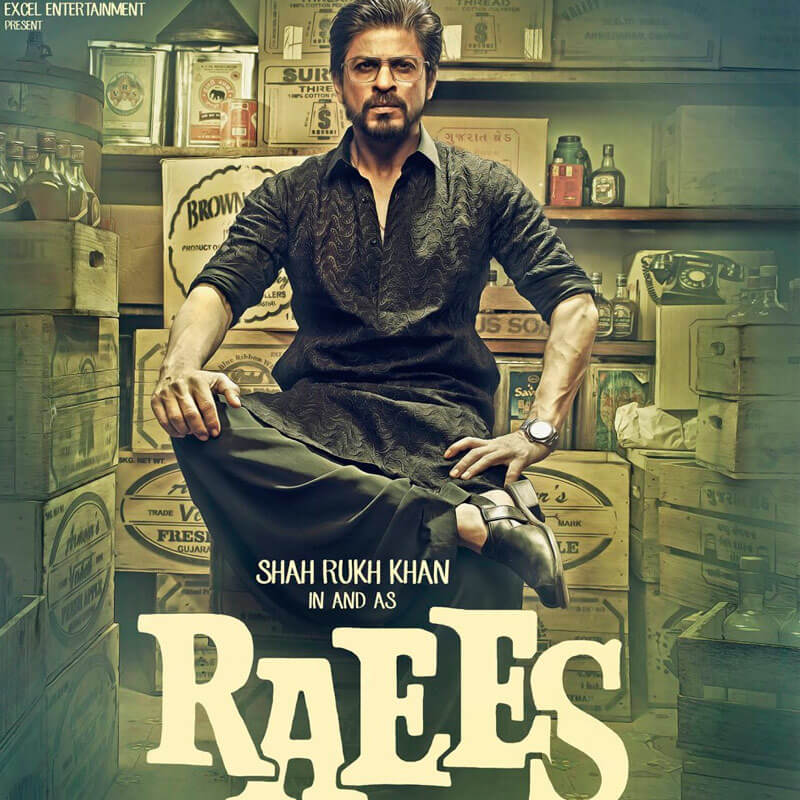
  • Raees…..Don: The twisted tale

    Raees…..Don: The twisted tale

    MUMBAI: Playing a fictional don is not good enough, every hero wants a Deewar of his own, the film that cemented Amitabh Bachchan’s arrival as a star after Zanjeer. Deewar was the legendary film based on the life of Haji Mastan, Mumbai’s first don. But, Deewar was only inspired by Haji’s life with clever writing by the Salim-Javed duo which, without depicting violence in anyway, charted the life of a don more as a family drama as well as a conflict between law and outlaw.

    There have been more attempts recently at adapting real life criminals’ stories for films. None of these films tried to pass judgment on the criminal in its theme or paint him other than what he was. To see where things go wrong with Raees, it is necessary to know what the real don was and how the film presents him.

    Raees, though it does not credit the film as one based on the notorious Ahmedabad based criminal Latif, tries to present him as a benevolent do-gooder, a Robin Hood kind of don. Latif was a petty bootlegger in the city of Ahmedabad who, with the backing of various other criminals started out as a courier boy for a major bootlegger, eventually turning into one independently. Since alcohol in the totally dry state of Gujarat was the privilege of rich and influential,Latif seemed to be dealing with the right kind of people when it came to furthering his career.

    Latif specialized in inciting communal riots and soon became a tool in the hands of politicians. The city faced regular bouts of communal tensions during two occasions: the annual Rath Yatra and Makar Sankranti, the kite festival. Latif was known to play the lead role in inciting these riots. The local goon Latif graduated to become a don when he came into contact with Dawood and was instrumental in transporting the RDX used in the Mumbai bomb blasts. He later took refuge in Karachi with the aid of Dawood.

    Shah Rukh Khan plays the character based on the life of Latif. Suffering from weak eyesight, he can’t read the blackboard in school when asked. The family is very poor and can’t afford to buy him specs. Latif goes and steals the frame from a statue of Mahatma Gandhi. Poverty and his mother’s helplessness lead him to a local bootlegger, Atul Kulkarni, delivering bottles in his school sachet. As he grows up, he plans to start his own business. Talking about “Baniye ka deemag” and “Miyabhaiki daring”, it is strange that he plans to buy supply from Kulkarni himself to compete with him!

    Shah Rukh is now rich as well as influential. Everybody loves him be it Hindu or Muslim for he is a messiah who always stands for the poor and needy. He donates sewing machines to local women and gets justice for unpaid workers. He even plans a huge colony to settle poor people of his locality. So what if they are well settled in the heart of the city!

    There are riots in the city and Shah Rukh has nothing to do with it. He, in fact, is worried about people and children and provides food and milk for families and kids affected by the riots and the curfew-bound city.By now, Hindu and Muslim, both the communities adore him. Shah Rukh attacks an opposition leader’s rally and is asked by the CM to agree to go to jail to save face. He soon realises that the CM has betrayed him. He decides to fight the local municipal elections and wins to avail him bail from jail. (The real Latif fought the elections from six wards and won five.)

    But, now the CM is irritated with Shah Rukh and makes his life miserable. All his resources dry up and he is forced to seek financial help from a Mumbai don who asks him to run an errand for him: deliver a certain amount of smuggled gold which turns out to be RDX used for Mumbai bomb blasts of 1993. 

    There is nothing about Shah Rukh aka Latif running away to Dubai and later finding refuge in Pakistan.

    The film comes across all throughout as making a martyr out of a bad man. And, even otherwise, if one watches the film as a total work of fiction, it is a poorly conceived and executed film. A score of movies have been made on similar don stories and they only get worse with each attempt.

    There are two other tracks, both predictable; one is that of romance. Romance in this film is given. Shah Rukh and Mahira Khan seem to be in love with each other from the first time they meet. Soon they marry and Mahira joins in his illegal business as a helping hand. The other is that of the cop, Nawazuddin Siddiqui, who has sworn not to spare Shah Rukh, wherever he is transferred for doing that.The rest of the characters are mere caricatures. The first half of the film comes across as any making of a don story, the second half turns into a typical South Indian film where the bad man is good man.

    Raees has just about everything going wrong for it, from the choice of subject and the way it is moulded to make Shah Rukh a larger than life character, to the choice of female lead. While Shah Rukh plays his two faced personality sans conviction, Mahira Khan neither charms with her presence nor impresses with her performance. Nawazuddin promises to salvage the proceeds initially but the script holds him back as things proceed. However, he is the best part of the film. 

    The direction is patchy and attempts to portray the 1980s lacks conviction. Sets are shabby. Music is of no help. There is little scope for the editor. The film makes a hero out of criminal Latif in the process of making the film’s hero, Shah Rukh, larger than life.

    Raees has the advantage of a decent opening and a Republic Day holiday as a bonus but adverse reports will soon catch up with its box office status.

    Producers: Ritesh Sidhwani, Gauri Khan, Farhan Akhtar.

    Director: Rahul Dholakia.

    Cast: Shah Rukh Khan, Nawazuddin Siddiqui, Atul Kulkarni, Mahira Khan, Mohammed Zeeshan Ayyub.

    Kaabil….For select audience..

    Sanjay Gupta’s inspiration usually comes from South-East Asian films at times blended with a film from the West. Kaabil finds resemblance with Blind Fury (1989) and Broken (2014), from the US and Korea, respectively.

    That said, the film turns into a typical vendetta film, a trend started by South Indian films.When an injustice is done to a loving couple or a hero’s sister or mother falls prey to the villains, the hero seeks revenge. What is different here is that the lead actors, Hrithik Roshan and his lady love, Yami Gautam, are both blind.That adds a sympathy factor to the revenge saga. The handicap of momentary blindness has been used in various Kung Fu films over the years so the viewer would be quite familiar with the idea.

    Hrithik is a blind man living on his own. He has a talent for using different voices and is a popular dubbing artist for animation films. Through a common friend who is a matchmaker, he is introduced to Yami, who is also blind. She works for an NGO and also plays piano at a dance academy. While both are independent and reluctant to marry, they plan to meet again. What both also have in common is a sense of perception, a strong sixth sense.

    So far the going is good as there are some nice as well as emotional moments as both discover each other. The initial friendship turns into love and the couple decide to marry. The proceeds become heavy thereafter as a troublemaker, Rohit Roy, has bad intentions for Yami.

    Once while Hrithik is away at work, Rohit along with his sidekick, Md Sahidur Rehman, rapes Yami knowing both are blind and there is little they could do. Going to the police is of no help since Rohit’s politician brother, Ronit Roy, is a local councilor and can pull strings. Encouraged, Rohit decides to make it a routine to take advantage of Yami’s helplessness leading her to end her life.

    Frustrated by the police inaction, Hrithik decides to take matters in his own hands to settle score. This is what the film is about; a blind man plotting and taking revenge while making sure there is no way the cops can nail him. For he challenged the police that he will get even on his own.

    He plots each villain’s death differently using his talent of modulating his voice.
    Kaabil starts off well but the idea of bringing in a local politician, and a municipal councilor at that, makes the villain angle weak. That such a politician should be able to call the shots with a major metro police force does not quite convince. 

    Seeking revenge one by one is also oft seen in many films. That a blind man does all this is the USP of the film which may not be enough. The film’s music is a plus with the title song, Mai tere kaabil hun…… being the pick of the lot while Kuchh din se….. and Kissise pyar ho jaaye…. (Remix of old hit, Dil kya kare…. from film Julie) also being hummable. The cinematography is good. Editing could have been crisper. Action is commendable.

    The best part of the film is the performances by the lead pair, Hrithik and Yami. Hrithik is totally convincing as a blind man carrying a blank sort of look in his eyes through the length of the film. Yami complements him though her role is shorter. Ronit, Rohit and Sahidur are routine. Girish Kulkarni and NarendraJha as the cops are effective.
    Kaabil has had a weak opening. Thursday holiday and the weekend are expected to fare better but the target for the film is too high.

    Producer: RakeshRoshan.

    Director: Sanjay Gupta.

    Cast: HrithikRoshan, YamiGautam, Ronit Roy, Rohiit Roy.

  • Raees…..Don: The twisted tale

    Raees…..Don: The twisted tale

    MUMBAI: Playing a fictional don is not good enough, every hero wants a Deewar of his own, the film that cemented Amitabh Bachchan’s arrival as a star after Zanjeer. Deewar was the legendary film based on the life of Haji Mastan, Mumbai’s first don. But, Deewar was only inspired by Haji’s life with clever writing by the Salim-Javed duo which, without depicting violence in anyway, charted the life of a don more as a family drama as well as a conflict between law and outlaw.

    There have been more attempts recently at adapting real life criminals’ stories for films. None of these films tried to pass judgment on the criminal in its theme or paint him other than what he was. To see where things go wrong with Raees, it is necessary to know what the real don was and how the film presents him.

    Raees, though it does not credit the film as one based on the notorious Ahmedabad based criminal Latif, tries to present him as a benevolent do-gooder, a Robin Hood kind of don. Latif was a petty bootlegger in the city of Ahmedabad who, with the backing of various other criminals started out as a courier boy for a major bootlegger, eventually turning into one independently. Since alcohol in the totally dry state of Gujarat was the privilege of rich and influential,Latif seemed to be dealing with the right kind of people when it came to furthering his career.

    Latif specialized in inciting communal riots and soon became a tool in the hands of politicians. The city faced regular bouts of communal tensions during two occasions: the annual Rath Yatra and Makar Sankranti, the kite festival. Latif was known to play the lead role in inciting these riots. The local goon Latif graduated to become a don when he came into contact with Dawood and was instrumental in transporting the RDX used in the Mumbai bomb blasts. He later took refuge in Karachi with the aid of Dawood.

    Shah Rukh Khan plays the character based on the life of Latif. Suffering from weak eyesight, he can’t read the blackboard in school when asked. The family is very poor and can’t afford to buy him specs. Latif goes and steals the frame from a statue of Mahatma Gandhi. Poverty and his mother’s helplessness lead him to a local bootlegger, Atul Kulkarni, delivering bottles in his school sachet. As he grows up, he plans to start his own business. Talking about “Baniye ka deemag” and “Miyabhaiki daring”, it is strange that he plans to buy supply from Kulkarni himself to compete with him!

    Shah Rukh is now rich as well as influential. Everybody loves him be it Hindu or Muslim for he is a messiah who always stands for the poor and needy. He donates sewing machines to local women and gets justice for unpaid workers. He even plans a huge colony to settle poor people of his locality. So what if they are well settled in the heart of the city!

    There are riots in the city and Shah Rukh has nothing to do with it. He, in fact, is worried about people and children and provides food and milk for families and kids affected by the riots and the curfew-bound city.By now, Hindu and Muslim, both the communities adore him. Shah Rukh attacks an opposition leader’s rally and is asked by the CM to agree to go to jail to save face. He soon realises that the CM has betrayed him. He decides to fight the local municipal elections and wins to avail him bail from jail. (The real Latif fought the elections from six wards and won five.)

    But, now the CM is irritated with Shah Rukh and makes his life miserable. All his resources dry up and he is forced to seek financial help from a Mumbai don who asks him to run an errand for him: deliver a certain amount of smuggled gold which turns out to be RDX used for Mumbai bomb blasts of 1993. 

    There is nothing about Shah Rukh aka Latif running away to Dubai and later finding refuge in Pakistan.

    The film comes across all throughout as making a martyr out of a bad man. And, even otherwise, if one watches the film as a total work of fiction, it is a poorly conceived and executed film. A score of movies have been made on similar don stories and they only get worse with each attempt.

    There are two other tracks, both predictable; one is that of romance. Romance in this film is given. Shah Rukh and Mahira Khan seem to be in love with each other from the first time they meet. Soon they marry and Mahira joins in his illegal business as a helping hand. The other is that of the cop, Nawazuddin Siddiqui, who has sworn not to spare Shah Rukh, wherever he is transferred for doing that.The rest of the characters are mere caricatures. The first half of the film comes across as any making of a don story, the second half turns into a typical South Indian film where the bad man is good man.

    Raees has just about everything going wrong for it, from the choice of subject and the way it is moulded to make Shah Rukh a larger than life character, to the choice of female lead. While Shah Rukh plays his two faced personality sans conviction, Mahira Khan neither charms with her presence nor impresses with her performance. Nawazuddin promises to salvage the proceeds initially but the script holds him back as things proceed. However, he is the best part of the film. 

    The direction is patchy and attempts to portray the 1980s lacks conviction. Sets are shabby. Music is of no help. There is little scope for the editor. The film makes a hero out of criminal Latif in the process of making the film’s hero, Shah Rukh, larger than life.

    Raees has the advantage of a decent opening and a Republic Day holiday as a bonus but adverse reports will soon catch up with its box office status.

    Producers: Ritesh Sidhwani, Gauri Khan, Farhan Akhtar.

    Director: Rahul Dholakia.

    Cast: Shah Rukh Khan, Nawazuddin Siddiqui, Atul Kulkarni, Mahira Khan, Mohammed Zeeshan Ayyub.

    Kaabil….For select audience..

    Sanjay Gupta’s inspiration usually comes from South-East Asian films at times blended with a film from the West. Kaabil finds resemblance with Blind Fury (1989) and Broken (2014), from the US and Korea, respectively.

    That said, the film turns into a typical vendetta film, a trend started by South Indian films.When an injustice is done to a loving couple or a hero’s sister or mother falls prey to the villains, the hero seeks revenge. What is different here is that the lead actors, Hrithik Roshan and his lady love, Yami Gautam, are both blind.That adds a sympathy factor to the revenge saga. The handicap of momentary blindness has been used in various Kung Fu films over the years so the viewer would be quite familiar with the idea.

    Hrithik is a blind man living on his own. He has a talent for using different voices and is a popular dubbing artist for animation films. Through a common friend who is a matchmaker, he is introduced to Yami, who is also blind. She works for an NGO and also plays piano at a dance academy. While both are independent and reluctant to marry, they plan to meet again. What both also have in common is a sense of perception, a strong sixth sense.

    So far the going is good as there are some nice as well as emotional moments as both discover each other. The initial friendship turns into love and the couple decide to marry. The proceeds become heavy thereafter as a troublemaker, Rohit Roy, has bad intentions for Yami.

    Once while Hrithik is away at work, Rohit along with his sidekick, Md Sahidur Rehman, rapes Yami knowing both are blind and there is little they could do. Going to the police is of no help since Rohit’s politician brother, Ronit Roy, is a local councilor and can pull strings. Encouraged, Rohit decides to make it a routine to take advantage of Yami’s helplessness leading her to end her life.

    Frustrated by the police inaction, Hrithik decides to take matters in his own hands to settle score. This is what the film is about; a blind man plotting and taking revenge while making sure there is no way the cops can nail him. For he challenged the police that he will get even on his own.

    He plots each villain’s death differently using his talent of modulating his voice.
    Kaabil starts off well but the idea of bringing in a local politician, and a municipal councilor at that, makes the villain angle weak. That such a politician should be able to call the shots with a major metro police force does not quite convince. 

    Seeking revenge one by one is also oft seen in many films. That a blind man does all this is the USP of the film which may not be enough. The film’s music is a plus with the title song, Mai tere kaabil hun…… being the pick of the lot while Kuchh din se….. and Kissise pyar ho jaaye…. (Remix of old hit, Dil kya kare…. from film Julie) also being hummable. The cinematography is good. Editing could have been crisper. Action is commendable.

    The best part of the film is the performances by the lead pair, Hrithik and Yami. Hrithik is totally convincing as a blind man carrying a blank sort of look in his eyes through the length of the film. Yami complements him though her role is shorter. Ronit, Rohit and Sahidur are routine. Girish Kulkarni and NarendraJha as the cops are effective.
    Kaabil has had a weak opening. Thursday holiday and the weekend are expected to fare better but the target for the film is too high.

    Producer: RakeshRoshan.

    Director: Sanjay Gupta.

    Cast: HrithikRoshan, YamiGautam, Ronit Roy, Rohiit Roy.

  • Akira promises but fails in execution

    Akira promises but fails in execution

    MUMBAI: Akira ventures into the woman-oriented action genre where few have dared to tread. There have only been a few films where a woman lawperson takes on the underworld, with Dimple Kapadia, Vijayashanti, Rani Mukerjee et al. The trend has been more popular with the southern filmmakers.

    In Akira, the remake of a Tamil film, Mouna Guru, there is a sort of role reversal in that, Sonakshi Sinha, playing the protagonist, Akira, gets into a situation where she is pitted against a bunch of corrupt, unscrupulous policemen led by Anurag Kashyap.

    Kashyap is corrupt to the core and does all the unlawful things he is actually supposed to stop. He drinks while on duty, smokes weed and randomly kills footpath dwellers with his rash driving. He is the typical South brand of evil film baddie. Kashyap is smart enough not to dirty his own hands and makes the three stooges under his command in the force pull the trigger when needed.

    Sonakshi is introduced in the film with the meaning of her name, Akira is derived from Sanskrit and mostly used as a girl’s name in Indian languages. The word denotes Graceful Strength. And, to live up to her given name, she is enrolled into a martial art institution by her deaf and mute schoolteacher father, Atul Kulkarni.

    A mentally tough Sonakshi moves to Mumbai where her brother works. Seeing that her bhabhi is not comfortable with her presence, Akira decides to stay at the school hostel. Here, as happens in all schools in films, she meets with a hostile group which likes to torment and rag freshers. Having had enough of the bunch, Akira takes them on. This part consumes unnecessary footage in the film just to demonstrate Sonakshi’s prowess with martial arts and toughness.. And that she won’t take injustice.

    Kashyap and his cronies come across a big cache of money from the car of an accident victim. Their greed takes over and instead of taking the dazed accident victim to a hospital, Kashyap speeds up his demise by hitting him with a jack. So far so good since Kashyap is adept at wiping his footprints. But, unknown to him, his paramour shoots a video of Kashyap discussing the crime with his stooges.

    The handycam is stolen and finally ends up at the door of the hostel room of Sonakshi. The typical south brand scheming and plotting start from here as Sonakshi goes through all sorts of torture and deterrents to keep her from leaking the content of the video. She is consigned to a mental asylum while her family as well as friends are convinced that she has lost her sanity. So much so that Sonakshi is totally isolated, with just about everybody believing in her traits and ailment.

    As the film deals with all this drama, it loses its main purpose of showing a strong woman protagonist. It borrows heavily from old films when it comes to props and ploys as per the convenience of the next scene. Even her martial arts background becomes secondary and gets very limited exposure in the climax.

    Akira has a grossly depressing story. It is a crime story the likes of which you watch on crime-based TV serials on a regular basis, but stretched beyond comfort with not an iota of relief from the negativity. Direction has an all-South touch and is predictable, the director AR Murugadoss’ record of Hindi hits, Ghajini and Holiday: A Soldier Is Never Off Duty besides over a dozen South films, notwithstanding. Songs have no place in the film and, thankfully, they are avoided. Dialogue is routine. Editing is weak.

    Sonakshi Sinha does better than her previous films; this being an author backed role. Anurag Kashyap does not have to do much to look evil, otherwise, he does okay. Konkona Sen Sharma is good in a small role. Rest just fill the bill.

    Akira has had a poor opening and the word of mouth is not expected to help it pick up either.

    Producer: AR Murugadoss.
    Director: AR Murugadoss.
    Cast: Sonakshi Sinha, Anurag Kashyap, Konkona Sen Sharma, Amit Sadh, Atul Kulkarni.

  • Akira promises but fails in execution

    Akira promises but fails in execution

    MUMBAI: Akira ventures into the woman-oriented action genre where few have dared to tread. There have only been a few films where a woman lawperson takes on the underworld, with Dimple Kapadia, Vijayashanti, Rani Mukerjee et al. The trend has been more popular with the southern filmmakers.

    In Akira, the remake of a Tamil film, Mouna Guru, there is a sort of role reversal in that, Sonakshi Sinha, playing the protagonist, Akira, gets into a situation where she is pitted against a bunch of corrupt, unscrupulous policemen led by Anurag Kashyap.

    Kashyap is corrupt to the core and does all the unlawful things he is actually supposed to stop. He drinks while on duty, smokes weed and randomly kills footpath dwellers with his rash driving. He is the typical South brand of evil film baddie. Kashyap is smart enough not to dirty his own hands and makes the three stooges under his command in the force pull the trigger when needed.

    Sonakshi is introduced in the film with the meaning of her name, Akira is derived from Sanskrit and mostly used as a girl’s name in Indian languages. The word denotes Graceful Strength. And, to live up to her given name, she is enrolled into a martial art institution by her deaf and mute schoolteacher father, Atul Kulkarni.

    A mentally tough Sonakshi moves to Mumbai where her brother works. Seeing that her bhabhi is not comfortable with her presence, Akira decides to stay at the school hostel. Here, as happens in all schools in films, she meets with a hostile group which likes to torment and rag freshers. Having had enough of the bunch, Akira takes them on. This part consumes unnecessary footage in the film just to demonstrate Sonakshi’s prowess with martial arts and toughness.. And that she won’t take injustice.

    Kashyap and his cronies come across a big cache of money from the car of an accident victim. Their greed takes over and instead of taking the dazed accident victim to a hospital, Kashyap speeds up his demise by hitting him with a jack. So far so good since Kashyap is adept at wiping his footprints. But, unknown to him, his paramour shoots a video of Kashyap discussing the crime with his stooges.

    The handycam is stolen and finally ends up at the door of the hostel room of Sonakshi. The typical south brand scheming and plotting start from here as Sonakshi goes through all sorts of torture and deterrents to keep her from leaking the content of the video. She is consigned to a mental asylum while her family as well as friends are convinced that she has lost her sanity. So much so that Sonakshi is totally isolated, with just about everybody believing in her traits and ailment.

    As the film deals with all this drama, it loses its main purpose of showing a strong woman protagonist. It borrows heavily from old films when it comes to props and ploys as per the convenience of the next scene. Even her martial arts background becomes secondary and gets very limited exposure in the climax.

    Akira has a grossly depressing story. It is a crime story the likes of which you watch on crime-based TV serials on a regular basis, but stretched beyond comfort with not an iota of relief from the negativity. Direction has an all-South touch and is predictable, the director AR Murugadoss’ record of Hindi hits, Ghajini and Holiday: A Soldier Is Never Off Duty besides over a dozen South films, notwithstanding. Songs have no place in the film and, thankfully, they are avoided. Dialogue is routine. Editing is weak.

    Sonakshi Sinha does better than her previous films; this being an author backed role. Anurag Kashyap does not have to do much to look evil, otherwise, he does okay. Konkona Sen Sharma is good in a small role. Rest just fill the bill.

    Akira has had a poor opening and the word of mouth is not expected to help it pick up either.

    Producer: AR Murugadoss.
    Director: AR Murugadoss.
    Cast: Sonakshi Sinha, Anurag Kashyap, Konkona Sen Sharma, Amit Sadh, Atul Kulkarni.

  • Essel Vision’s ‘Jazbaa’ starring Aishwarya Rai Bachchan to go on floors on 20 Jan

    Essel Vision’s ‘Jazbaa’ starring Aishwarya Rai Bachchan to go on floors on 20 Jan

    MUMBAI: Zee Entertainment Enterprises Limited’s (ZEEL) creative and production studio Essel Vision Productions is gearing up for its much anticipated film – Jazbaa. The movie, which is touted as Aishwarya Rai Bachchan’s comeback film, is slated to go on floors on 20 January.


    Essel Vision Productions will be producing the movie in association with Sanjay Gupta’s White Feather Films and Sachiin Joshi’s Viiking Entertainment. The movie also stars Shabana Azmi, Irrfan Khan, Anupam Kher, Chandan Roy Sanyal, Atul Kulkarni, Siddharth Kapoor, Baby Sara Arjun and Priya Banerjee. It will be directed by Gupta.


    Speaking on its foray, Essel Vision CEO Nittin Keni said, “Jazbaa is an amazing story intertwined with superlative action, drama and mystery. It is the kind of entertaining and meaningful cinema that we want our audience to associate us with. Supported with keen creative & business acumen we are confident that we deliver compelling, profitable entertaining content to global audiences.”


    Jazbaa is a crime thriller and filled with unpredictable twists in the plot hence it was imperative for the actors to be completely in sync with their characters. With the film all set to go on the floors on 20 January, the makers organised a script reading session, which gave an opportunity for the cast and crew to come together to understand and prepare their roles thoroughly.


    The script reading session was helmed by Gupta along with scriptwriters Kamlesh Pandey and Robin Bhatt. It opened interesting conversations among the actors about the concept in India for a Bollywood film. This was later followed by a detailed dialogue with the creative team including sound designer Resul Pookutty and cinematographer Sameer Arya.


    Commenting on the narration, Gupta said, “The script reading session of Jazbaa with the entire cast and crew went off very well. Internationally, it’s the norm and I think it helps the cast bond with each other before the shooting starts. It’s a better arrangement than having the actors meet each other only when they reach the sets when the shoot begins. Writers sometimes tend to miss out certain elements when they are so close to the script. The inputs I received from the actors were fresh as they have interesting perspectives when they hear the story at one go like this and will only help us make a better film. It was also an ice breaker for the talent on the film since most of my cast are working with each other for the first time.”


    Keeping the lead actress’ parenting duties in mind, Gupta, who is also father to a young child, plans to shoot the film only on weekdays.


    Shabana and Aishwarya hit if off instantly as they waited for Irrfan to join them. It was not surprising to see Aishwarya go up to and welcome the young child actor, Sara, on board the film by hugging her. Even as Sara smiled and told her that was her huge fan, the actress responded by saying, “Don’t be my fan, you’re my daughter!”


  • MPA APSA Academy Film Fund to help aspiring film makers

    MPA APSA Academy Film Fund to help aspiring film makers

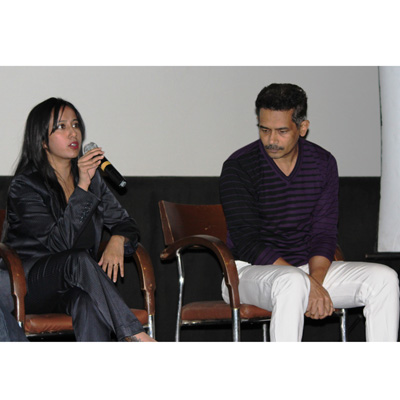
    MUMBAI:  The Motion Picture Association (MPA) and the Asia Pacific Screen Awards (APSA) gives an opportunity to aspiring filmmakers with the MPA APSA Academy Film Fund. MPA APSA Academy Film Funds is a unique initiative which has aided aspiring film makers in a lot of development in new film projects. A panel discussion was hosted at the 13th  Pune Internation film festival on January 10th, 2014, to create awarness about the Asia Pacific Screen Awards and MPA APSA Academy Film Funds . The panelelist for the discussion comprised of celebrated actor, Atul Kulkarni & Lohita Sujith, Director, Corporate Communications, Motion Picture Dist. Association (India) Pvt. Ltd. Panelists also discussed how upcoming filmmakers/ professionals can benefit from the MPA APSA Academy Film Fund worth USD 100,000.


    MPA APSA Academy Film Fund has been a hugely successful initiative taking the number of successful projects funded to a total of twenty feature films over the last six years. The projects now count amongst them winners of an Academy Award®, APSAs and an International Emmy Award. Grants have been awarded to projects from.


    India, Bangaldesh, Republic of Korea,People’s Republic of China, Iraq,Kazakhastan, Israel and the Islamic Republic of Iran.  In 2014, over 100 submissions were received for the film fund. Four grants were awarded to two documentary film projects from Israel and Denmark and twofilm projects from Bangladesh and the Islamic Republic of Iran.


    Speaking on the occasion, Atul Kulkarni, Actor, says “The MPA APSA Academy Film Fund is a great stepping stone for aspiring filmmakers, enabling them to develop their film projects from script to screen. I encourage aspiring filmmakers from Pune and the rest of India to expand their horizons and opportunities by submitting their projects to the film fund this year.


    Adding to this, the panelist also discussed how The MPA APSA Academy Film Fund stimulates collaboration between filmmakers across Asia Pacific. The $100,000 development fund which provides four US$25,000 grants each year is wholly supported by the Motion Picture Association (MPA).The Fund supported the development of Iranian writer/director AsgharFarhadi’s film A SeparationI, which went on to win an Academy Award, and an APSA Best Feature Film Award. 

  • Dubai Censors rejects screening of The Attacks of 26/11

    Dubai Censors rejects screening of The Attacks of 26/11

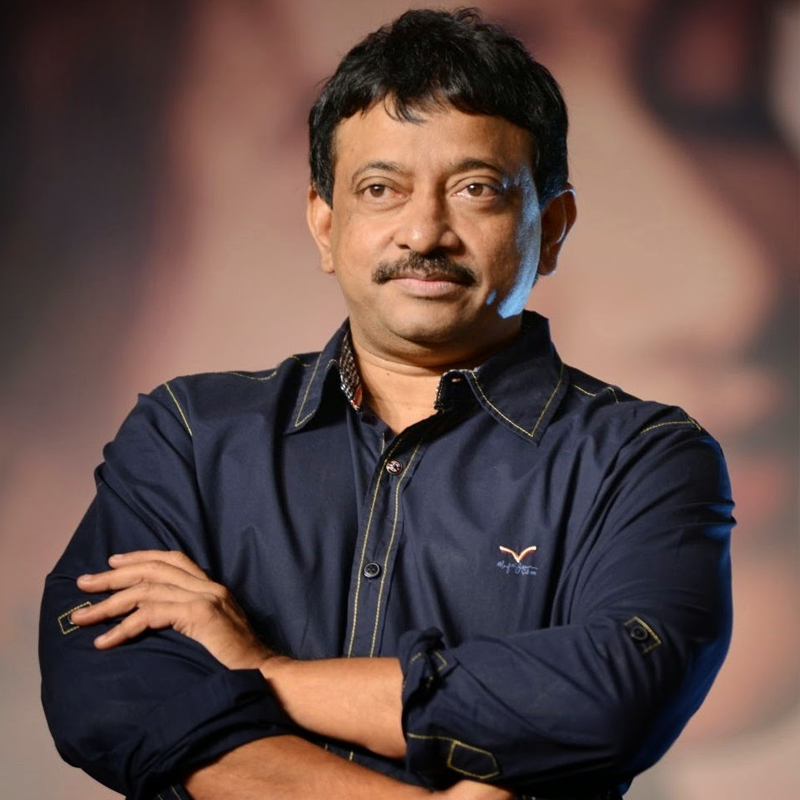
    MUMBAI: While there is news that several people including several film people including a few politicians and film personalities have raved about Ram Gopal Varma‘s ambitious project The Attacks of 26/11, the film has hit a rough patch with the UAE Censor Board. It has been rejected after it was reviewed by the Dubai Censors.

    "It is a well known fact that the 10 terrorists from the terror outfit Lashkar-e-Taiba from Pakistan had attacked Mumbai, and that is something that the Dubai censors have been shying away from showing," exclaimed a source from the film unit.

    The Bahrain and the Oman governments have however cleared the film and viewers from Emirates may travel to Oman over the weekend to watch the film.

    The film is a recount of the 2008 Mumbai terror attack which left 166 people dead.

    While Nana Patekar plays a joint commissioner of police facing an enquiry over the attacks, Sanjeev Jaiswal essays the role of terrorist Ajmal Kasab, who was executed recently. The film also features Atul Kulkarni and Ganesh Yadav.

  • Bhandarkar mulls movie on film awards

    Bhandarkar mulls movie on film awards

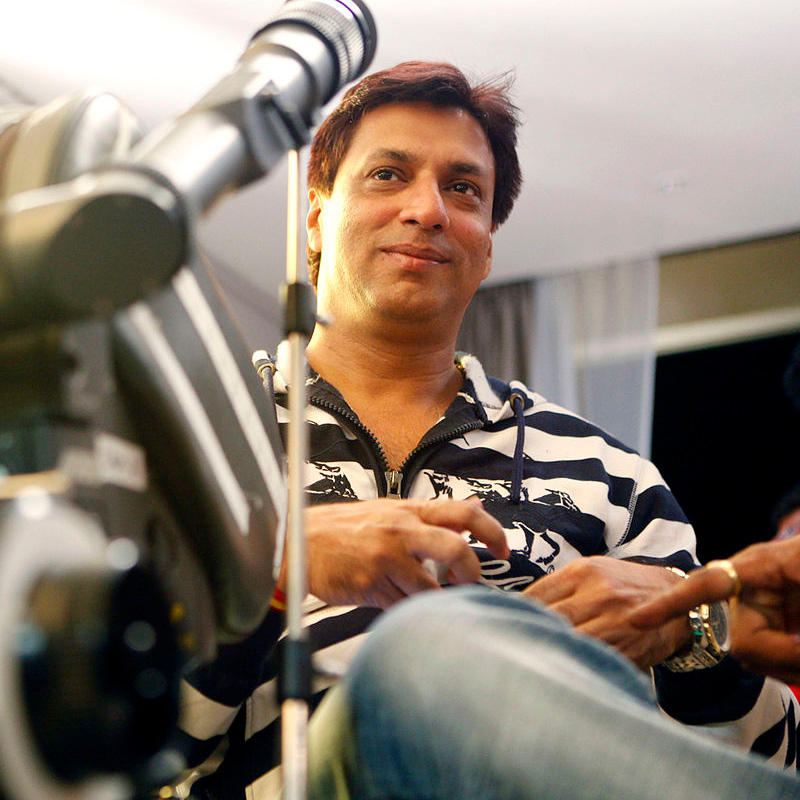
    MUMBAI: Known for making hard-hitting realistic films, Madhur Bhandarkar has indicated his desire to make a movie on film awards.

    Film awards is a story by itself. “Lots of people have been asking me to make a film on awards. I am thinking of this subject as no one has made a film on the topic so far,” Bhandarkar observed.

    Bhandarkar shot to fame with the Tabu and Atul Kulkarni-starrer, Chandni Bar, in 2001. He then went to make realistic films like Page 3, Traffic Signal, Jail, Fashion and Corporate.

    In 2011, Bhandrakar made Dil Toh Bacha Hai while this year he has launched his ambitious film Heroine.